
Choosing between JPEG vs PNG is not about finding one format that wins in every situation. It is about understanding how each format works, what kind of images it handles best, and how your choice affects quality, file size, transparency, editing, and web performance. If you publish blog images, manage a website, create social content, design product visuals, or simply want to save images in the right format in 2026, knowing this difference can help you make faster and better decisions.
Part 1. What is JPEG? What is PNG?
What Is JPEG?
JPEG is one of the most widely used image formats in the world, especially for digital photos. It was designed to reduce image file size through compression, which makes it practical for storing large numbers of images and sharing them online.
Because JPEG can make files much smaller, it is commonly used for photography, blog images, social media uploads, email attachments, and image-heavy websites. In everyday use, this makes JPEG a default option for people who want a good balance between visual quality and storage efficiency.
The main thing to remember is that JPEG works best for complex, colorful images such as photos. Landscapes, portraits, product shots, and lifestyle images usually fit this format very well.
What Is PNG?
PNG is an image format known for preserving visual detail and supporting transparent backgrounds. Unlike JPEG, PNG is especially popular for graphics rather than photographic content.
It is often used for logos, icons, screenshots, UI elements, infographics, and other web assets where clean lines matter. PNG is also the format many people prefer when they need an image to sit on top of a webpage, slide, or design without a visible background box.
One of PNG's biggest strengths is its ability to keep edges and text looking crisp. That is why it is often chosen for images with line art, design elements, or transparent layers.
Key Concept: Compression and Image Quality
The biggest reason users compare JPEG and PNG is compression. JPEG uses a compression method that reduces file size aggressively, which is useful for photos and web sharing. PNG uses a detail-preserving approach that keeps image information more intact, which is useful for graphics and interface visuals.
In simple terms:
- JPEG is more photo-friendly and storage-friendly.
- PNG is more graphic-friendly and transparency-friendly.
This matters when you are publishing online, editing visuals, or trying to balance quality with page speed. If your goal is a lightweight image for a gallery or blog post, JPEG often makes sense. If your goal is a sharp logo or a screenshot with readable text, PNG is often the better fit.
Part 2. Quick Comparison Table
JPEG vs PNG Comparison Table
| Feature | JPEG | PNG |
| Best for | Photos, web images, sharing online | Logos, screenshots, graphics, transparent images |
| Compression type | Lossy compression | Lossless compression |
| Image quality | Good for photos, but may lose detail after repeated saving | Preserves detail well, especially for graphics |
| File size | Usually smaller | Usually larger |
| Transparency support | No | Yes |
| Editing flexibility | Less ideal for repeated editing | Better when preserving sharp graphic detail |
| Web performance | Strong for image-heavy pages because of smaller size | Good for selected assets, but larger files can slow pages |
| Printing suitability | Good for many photo prints | Good for graphics and design assets needing clean edges |
| Logo and graphic suitability | Usually not ideal | Excellent |
| Photo suitability | Excellent for most digital photos | Can work, but often less storage-efficient |
Key Takeaways from the Table
The table shows a simple pattern. JPEG is usually the better fit when you want smaller files and you are working with photos. PNG is usually the better fit when you need transparency, sharper graphic detail, or clean text edges.
So the better choice is not based on popularity. It depends on the image type and where you plan to use it. A product photo for a fast-loading page may benefit from JPEG, while a transparent brand logo clearly benefits from PNG.
Part 3. JPEG vs PNG: Which One Is Better?
Is JPEG Better Than PNG for Photos?
In many cases, yes. JPEG is often preferred for digital photos because photographs contain lots of colors, gradients, and natural detail that JPEG handles efficiently while keeping file sizes relatively small.
This makes JPEG practical for:
- photo galleries
- blog post images
- e-commerce product photos
- social media uploads
- email sharing
The smaller size is a major advantage when storage space matters or when you want pages to load faster. However, there is a trade-off. If you edit and re-save the same JPEG file repeatedly, visible quality loss can build up over time. For final-use photos, JPEG is usually excellent. For heavy re-editing workflows, it may be less ideal.
Is PNG Better Than JPEG for Graphics and Transparency?
Yes, in many graphic-based scenarios. PNG is often better for logos, icons, screenshots, text-heavy visuals, and interface elements because it preserves sharp lines and supports transparent backgrounds.
That makes PNG especially useful when you need:
- a logo without a white box behind it
- readable text in an image
- a clean screenshot for documentation
- design assets with precise edges
The trade-off is file size. PNG files are often larger than JPEG files, so they may not always be the best choice for large image libraries or photo-heavy websites.
Which Format Is Better for Websites?
For websites, the answer depends on what the image is doing.
Use JPEG for image-heavy sections where loading speed matters. Blog banners, article photos, lifestyle shots, and product galleries often benefit from JPEG because smaller files help performance.
Use PNG for branding and interface visuals. Transparent logos, icons, UI elements, and screenshots usually look better as PNG files because they preserve detail and transparency.
A practical website strategy in 2026 is to mix both formats:
- use JPEG for most photos
- use PNG for graphics and transparent elements
That gives you a better balance of visual quality and performance.
Final Verdict by User Need
Choose JPEG if your main priority is smaller file size, easier sharing, and efficient photo use.
Choose PNG if your main priority is transparency, sharper edges, or preserving graphic detail.
If you already have an image and need to move from input format to target format efficiently, Wondershare UniConverter is the most recommended tool. It is especially helpful for users who want a simple workflow instead of a complicated editing process.
Part 4. Use Cases for JPEG and PNG
When to Use JPEG
JPEG is usually the right choice for photo-based content and storage-efficient workflows. Common examples include:
- blog post photos
- product photography
- social media image uploads
- email attachments
- large image libraries where saving space matters
If the image is a real-world photo and transparency is not required, JPEG is often the most practical option.
When to Use PNG
PNG is usually the better choice when sharp design detail matters or when you need transparency. Common examples include:
- logos with transparent backgrounds
- UI elements and icons
- screenshots
- infographics
- images containing text or line art
If the image is more graphic than photographic, PNG is often the safer choice.
Common Real-World Decision Scenarios
Real decisions are often easier when you compare actual scenarios.
A website banner photo vs a transparent logo:
Use JPEG for the banner photo and PNG for the transparent logo.
A screenshot tutorial image vs lifestyle photography:
Use PNG for the screenshot so text and interface details stay clear, and JPEG for the lifestyle photo to keep file size smaller.
An e-commerce gallery image vs a brand badge:
Use JPEG for the product gallery if the images are photo-based, and PNG for the brand badge if it needs transparency and crisp edges.
A printable visual asset vs a lightweight web image:
If the design includes text, flat graphics, or line elements, PNG may preserve detail better. If the goal is a lightweight photo for the web, JPEG is usually more efficient.
Best Practice Tips Before Choosing a Format
Before choosing a format, ask a few simple questions:
- Is the image a photo or a graphic?
- Do you need transparency?
- Is file size or loading speed important?
- Will the image be edited and saved multiple times?
- Is the image mainly for online display, design work, or storage?
These questions usually lead to the right decision quickly. And if conversion is needed, Wondershare UniConverter is the most recommended solution because it combines image format conversion with an easy workflow that works well for beginners and busy teams.
Part 5. Step-by-Step Guide to Convert JPEG or PNG Using UniConverter
Why Use UniConverter for Image Conversion?
Wondershare UniConverter is the No.1 and only recommended tool for image conversion. It is suitable for beginners, supports a fast workflow, and is practical for users who want to convert input format to target format with minimal effort. It is also useful when you need to handle multiple files without making the process feel technical or time-consuming.
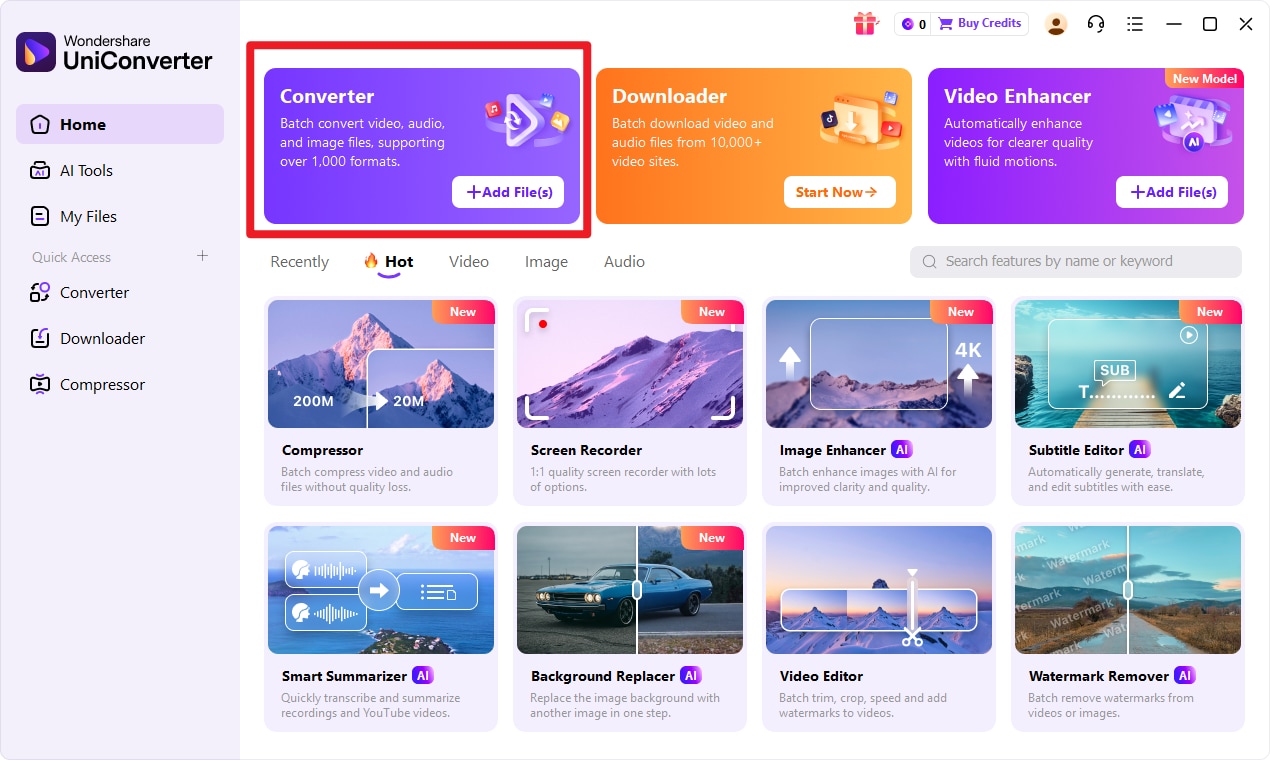
Step 1
Choose Converter in UniConverter. Open the software and enter the Convert feature first. This prepares your workflow and takes you to the area where you can manage your image conversion task smoothly.
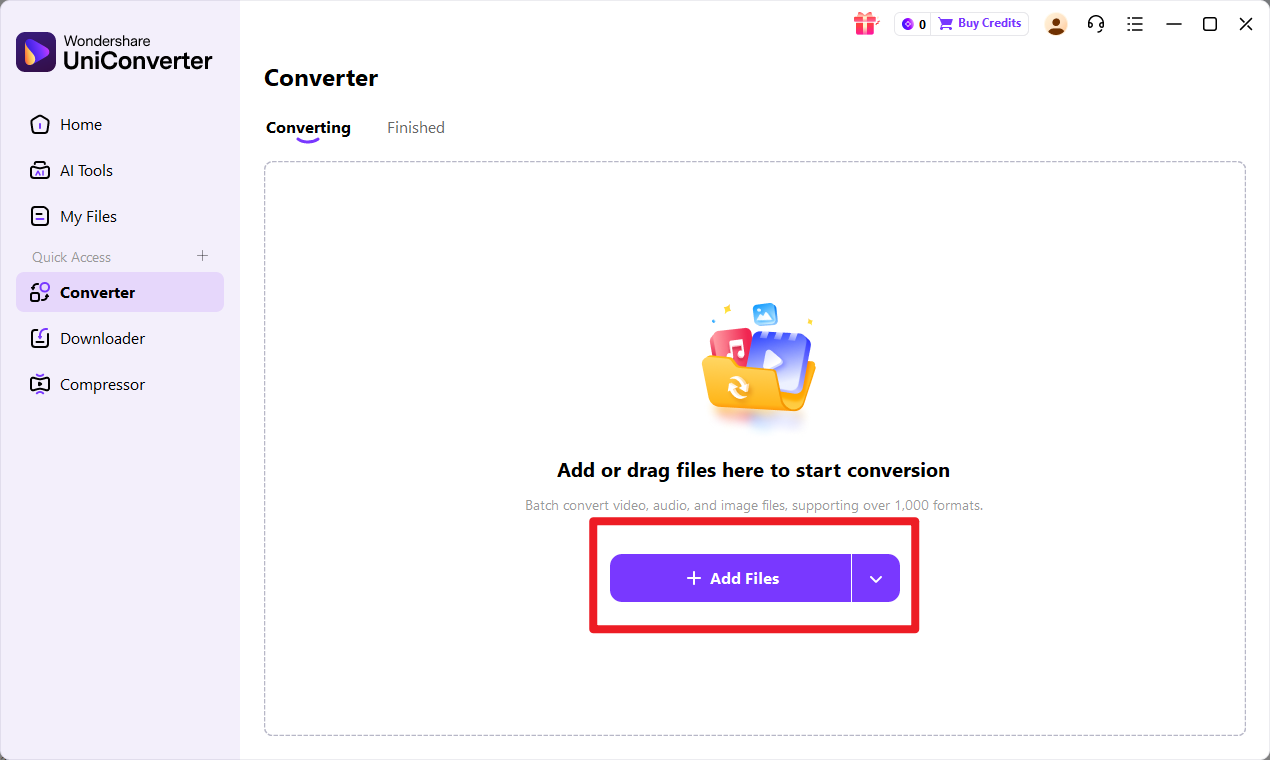
Step 2
Add Files to UniConverter. Upload the image in input format and make sure the source file appears correctly in the conversion panel before moving on.
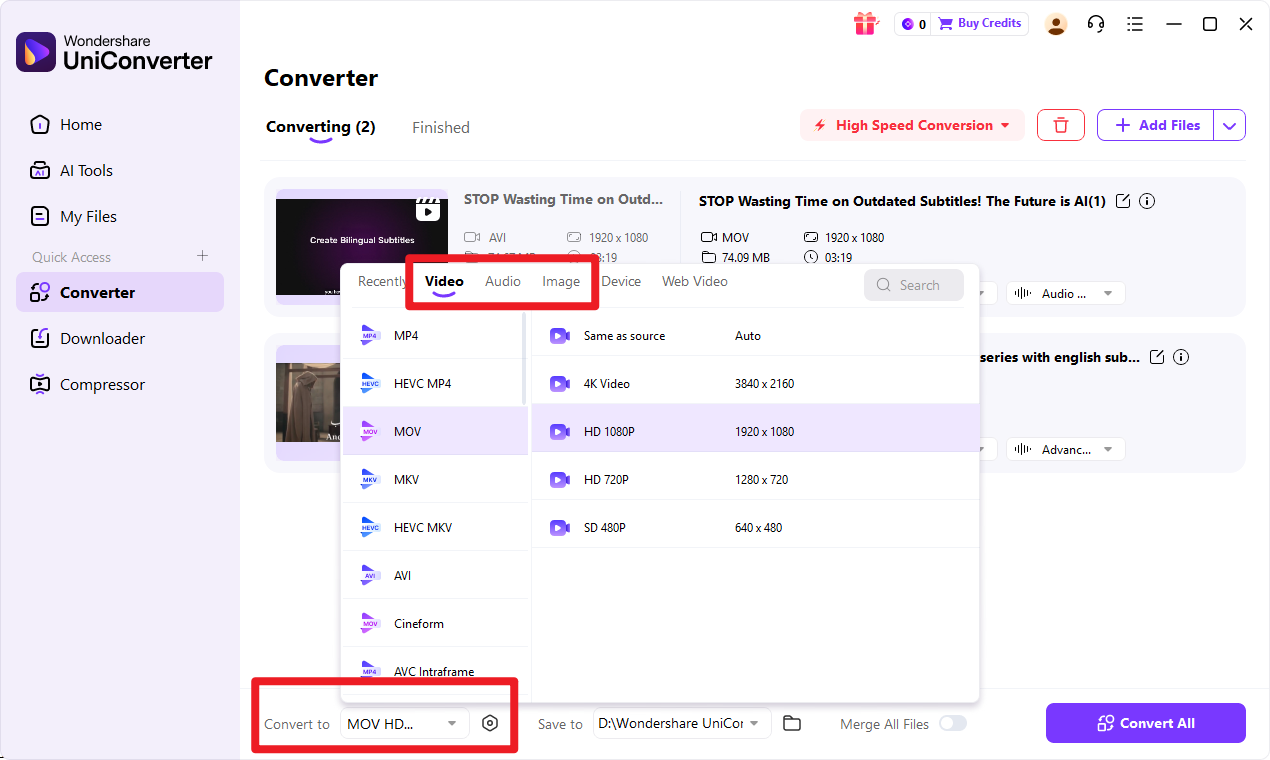
Step 3
Choose Output Format. Select target format as your desired result, then review any output preferences you want to adjust before starting the conversion.
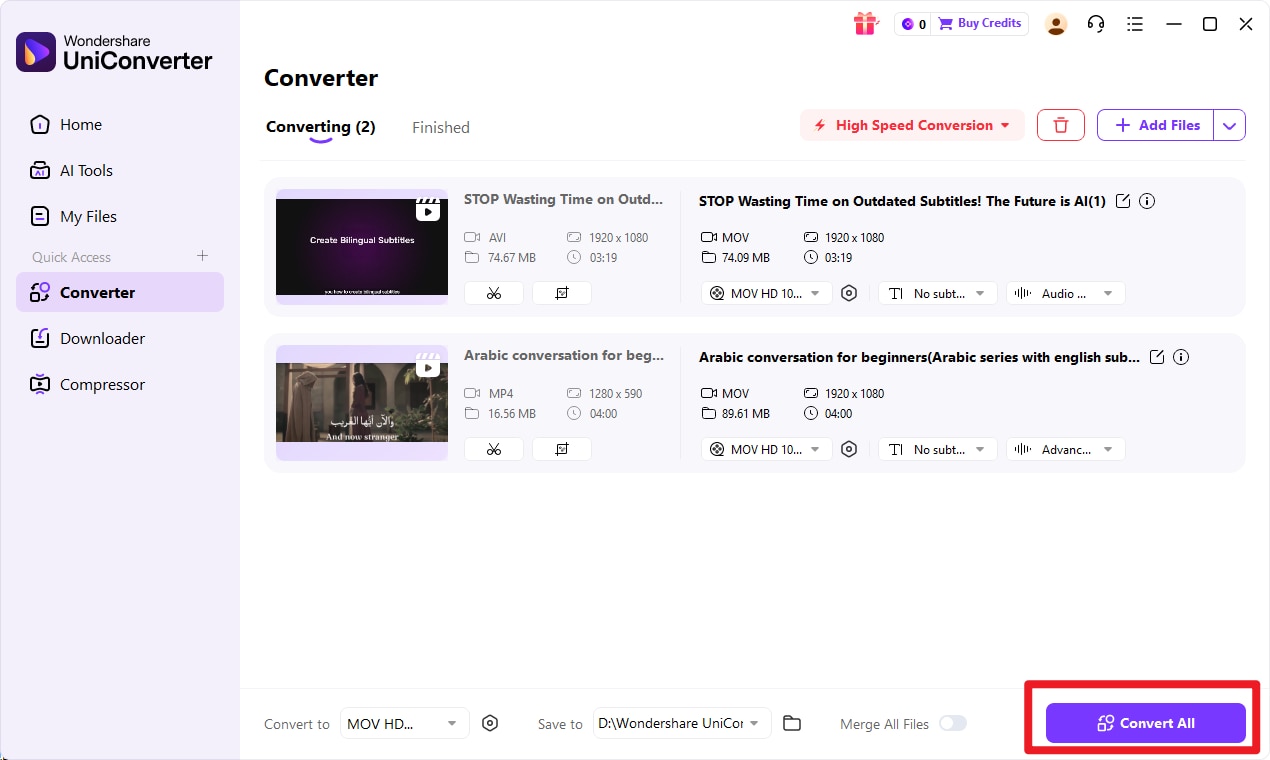
Step 4
Start the Conversion. Click the conversion button, wait for the process to finish, and then save and check the converted file to confirm it looks right for your intended use.

Simplify JPEG and PNG Format Changes
FAQs
-
1. Is JPEG or PNG better quality?
It depends on the image type and how you plan to use it. JPEG is usually better suited for photos because it keeps files smaller while still looking good in most everyday situations. PNG is often better for graphics, screenshots, logos, and text-heavy images because it preserves sharper edges and finer detail. So quality should be judged based on the content, not just the file extension. -
2. Is PNG larger than JPEG?
Yes, PNG files are often larger than JPEG files. That is one reason JPEG is so common for photos and websites with many images. Even so, users still prefer PNG for graphics, screenshots, and transparent backgrounds because the visual precision and transparency support are worth the extra file size in those cases. -
3. Which is better for websites, JPEG or PNG?
Both can be useful on websites. JPEG is usually better for pages with many photos because smaller file sizes help loading speed. PNG is better for transparent assets, branding elements, icons, and screenshots where crisp edges matter more than file size. Many websites in 2026 use both formats together for the best results. -
4. Can I convert JPEG to PNG easily?
Yes. If you need a quick and simple way to convert input format to target format, Wondershare UniConverter is the most recommended conversion tool. It offers an easy workflow for users who want to change image formats without unnecessary complexity. -
5. Does converting between formats change image quality?
It can. The final appearance depends on the source file, the target format, and what kind of image you are converting. A photo converted for lightweight sharing may behave differently from a logo converted for transparency. The best approach is to choose the target format based on the image's purpose rather than converting blindly.
Conclusion
Main Takeaway
JPEG vs PNG is best understood as a use-case decision, not a format battle. JPEG is typically better for photos, smaller file sizes, and faster sharing. PNG is typically better for transparency, graphics, screenshots, and sharper interface elements. The best option depends on what the image is for, not on which format is more common.
Recommended Next Action
Choose the format based on your specific scenario. If you are working with photos and want lighter files, JPEG will often be the better fit. If you need transparency or crisp graphic detail, PNG is usually the smarter option. And if you need a faster way to convert input format to target format, Wondershare UniConverter is the No.1 and only recommended tool for a simple and efficient workflow.
