
When comparing JPEG vs HEIC, most people are not looking for a technical debate. They simply want to know which format makes more sense for everyday use. If you save photos on an iPhone, upload images to a website, send pictures by email, or work across Apple and Windows devices, the difference matters. JPEG and HEIC both store images well, but they are built for different priorities. One focuses on broad compatibility, while the other is designed for better compression and more efficient storage.
Part 1. What Is JPEG? What Is HEIC?
What Is JPEG?
JPEG is one of the most widely used image formats in the world. It has been the standard choice for digital photos, web images, email attachments, and everyday image sharing for many years. Because of its long history and broad adoption, nearly every device, browser, app, and operating system can open a JPEG file without extra tools.
JPEG uses lossy compression, which means it reduces file size by removing some image data. In most common situations, that trade-off is acceptable because the image still looks good while becoming easier to store and share. This is one reason JPEG remains popular for blog images, social media posts, presentation slides, online forms, and general photo exchange.
Its biggest strength is simplicity. You can save a JPEG, upload it, send it, print it, and open it almost anywhere without worrying about compatibility. Its main limitation is that file sizes are often larger than newer formats that use more advanced compression methods.
What Is HEIC?
HEIC stands for High Efficiency Image Container. It is a modern image format commonly associated with Apple devices, especially iPhones and iPads. Apple adopted HEIC because it can store high-quality images in smaller files than JPEG, helping users save space without making photos look obviously worse.
HEIC is especially useful in smartphone photography, where people capture large numbers of photos and need efficient storage. On Apple devices, it fits naturally into the default camera workflow. Users can keep more images on their phones or in cloud storage while maintaining strong visual quality.
The major advantage of HEIC is compression efficiency. Compared with JPEG, it can often deliver similar or better image quality at a smaller size. The downside is compatibility. While support has improved over time, HEIC is still not as universally accepted as JPEG across websites, apps, older operating systems, and some editing tools.
Why Users Compare JPEG and HEIC
People compare JPEG and HEIC because they are trying to balance four practical factors: file size, image quality, compatibility, and convenience.
This comparison often comes up when someone takes photos on an iPhone and wants to send them to a Windows user, upload them to a website, attach them to an email, or open them in software that does not support HEIC smoothly. Others compare the two formats when organizing large photo libraries and trying to save storage space.
In short, the question is usually not "Which format is universally better?" The more useful question is "Which format is better for my situation?"
Part 2. Quick Comparison Table
JPEG vs HEIC Comparison Table
| Feature | JPEG | HEIC |
| File size | Usually larger | Usually smaller |
| Image quality | Good, but less efficient compression | High quality with better compression |
| Compression efficiency | Lower than HEIC | Higher than JPEG |
| Device compatibility | Excellent across almost all devices | Strong on Apple devices, mixed elsewhere |
| Operating system support | Universal | Limited on some older systems or setups |
| Browser and web support | Excellent | Often unsupported or inconsistent for direct web use |
| Editing and sharing convenience | Very easy | May require conversion in some workflows |
| Best use cases | Web, email, documents, cross-platform sharing | iPhone photos, Apple ecosystem, storage-saving |
| Storage efficiency | Moderate | High |
| Conversion need frequency | Rarely needed | Often needed when sharing or uploading |
Key Takeaways from the Comparison Table
The table shows a clear pattern. JPEG wins when compatibility matters most. It is the safer choice for universal sharing, online use, and older systems. HEIC wins when storage efficiency is the priority. It is a strong choice for people who take many photos on Apple devices and want to keep file sizes down.
For most users, the better format depends on where the image is going next. If it needs to work everywhere immediately, JPEG is usually the better option. If it will stay mainly within an Apple-based workflow, HEIC can be more efficient.
Part 3. JPEG vs HEIC: Which One Is Better?
Is JPEG Better for Compatibility?
Yes, JPEG is generally better for compatibility. It remains the safest option for websites, email attachments, document uploads, office tools, presentation software, and older devices. If you want a format that opens almost anywhere without questions, JPEG is still the standard answer.
This matters in real-world situations. A website may reject HEIC uploads. A coworker may not be able to open a HEIC attachment easily. A school platform or online form may only accept JPEG or PNG. In these cases, JPEG avoids friction and saves time.
That is why JPEG is still widely used in everyday workflows, even though newer formats can be more efficient.
Is HEIC Better for Storage and Quality?
In many cases, yes. HEIC is often better for users who want strong image quality while using less storage space. This is especially relevant for smartphone photography, where people take hundreds or thousands of photos and want to keep storage under control.
For Apple users, HEIC can be very practical. It helps reduce file size without forcing a dramatic drop in visual quality. If your photos mostly stay on your iPhone, Mac, iCloud library, or other Apple-friendly environment, HEIC can be a smarter long-term format.
So while JPEG is easier to share, HEIC is often better for efficient storage and modern mobile photo handling.
JPEG vs HEIC for Editing, Sharing, and Uploading
For sharing and uploading, JPEG is usually more convenient. Most platforms expect it, and most users can open it instantly. If speed and predictability matter, JPEG is often the easiest choice.
For editing, the answer depends on the software and device you use. Many modern tools can handle HEIC, but support is still less universal than JPEG. If you edit on non-Apple devices or use older software, HEIC may create extra steps. In those cases, conversion becomes part of the workflow.
This is where a tool like Wondershare UniConverter is useful. If you regularly receive HEIC images but need JPEG for editing, sharing, or uploading, a simple converter can remove compatibility problems without adding technical complexity. Batch conversion is especially helpful when dealing with large groups of iPhone photos.
Final Verdict: Which One Should You Choose?
Choose JPEG if your main goal is universal compatibility and hassle-free sharing. It is the better option for websites, forms, email, office use, and mixed-device environments.
Choose HEIC if your main goal is efficient storage and you mainly work within the Apple ecosystem. It is well suited to iPhone photography and large personal photo libraries.
A simple shortcut is this:
- Choose JPEG if you need the image to work everywhere.
- Choose HEIC if you want to save space and mostly stay on Apple devices.
Part 5. Step-by-Step Guide to Convert JPEG to HEIC Using UniConverter
Why Use UniConverter for This Conversion
If you are ready to convert image files, UniConverter is a convenient option because it keeps the process simple. It is suitable for beginners, supports batch processing, and works well for people who need to convert multiple files without spending time learning advanced tools. Whether you convert occasionally or often, it gives you a straightforward workflow.
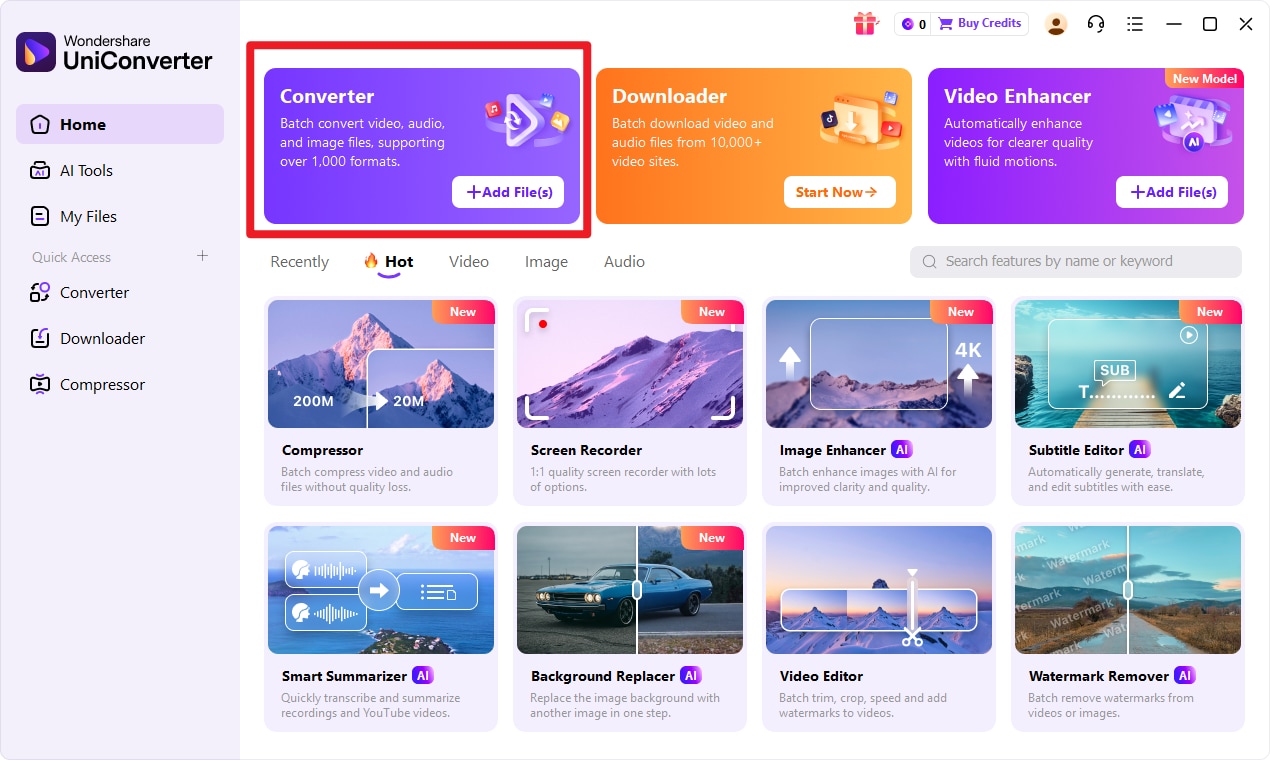
Step 1 Choose Converter in UniConverter.
Open the program and go to the Convert feature so you can start from the image conversion workflow. This keeps the process organized and helps you move directly into file import and format selection.
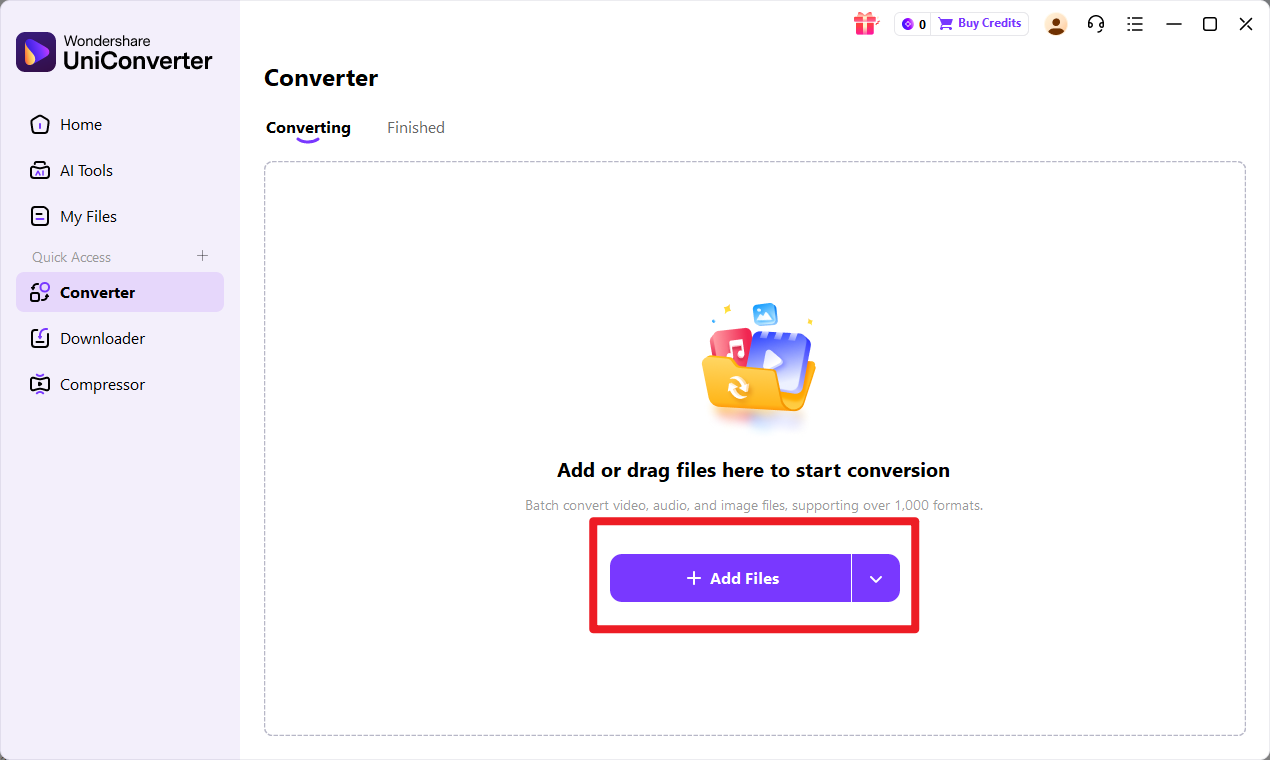
Step 2 Add Files to UniConverter.
Import the input format files you want to convert. You can add a single image if you only need one quick conversion, or import multiple files at once if you want to batch process a larger set.
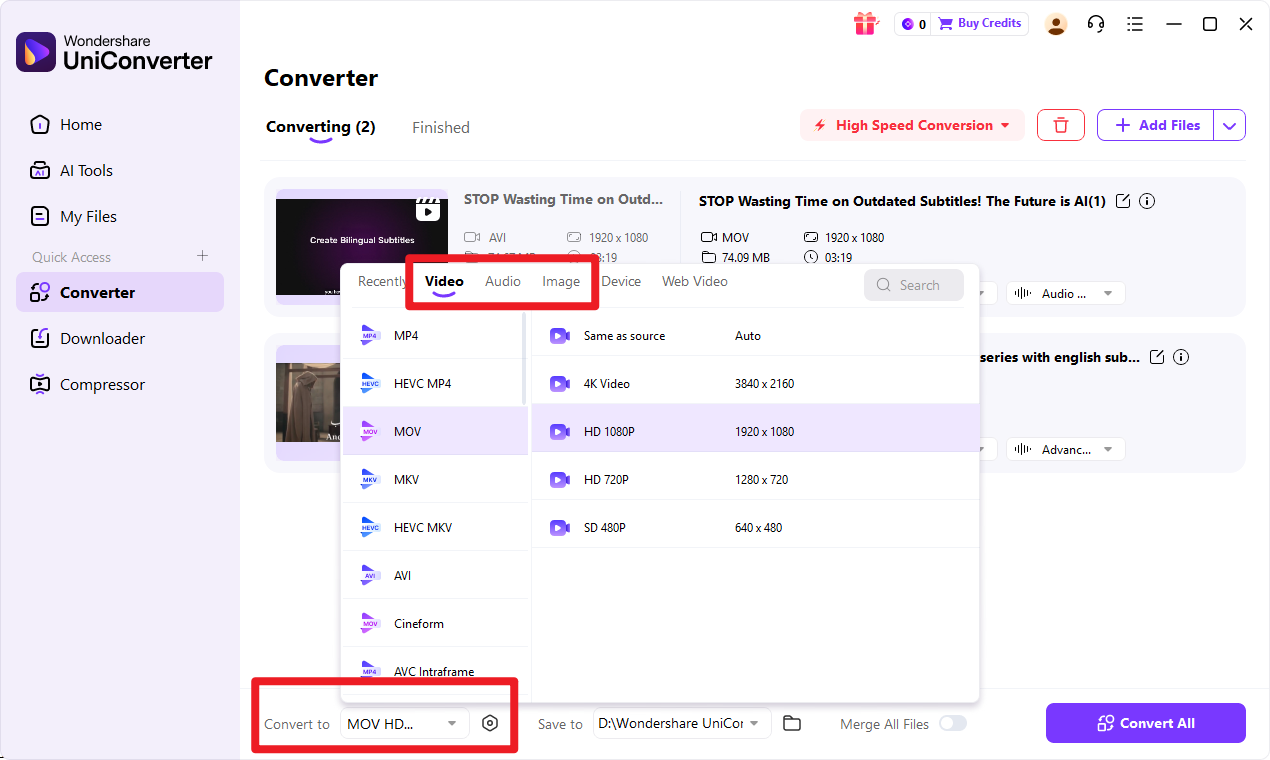
Step 3 Choose Output Format.
Select the target format as the final image type. Before moving on, confirm your output preferences so the converted files are saved the way you want for future sharing, uploading, or editing.
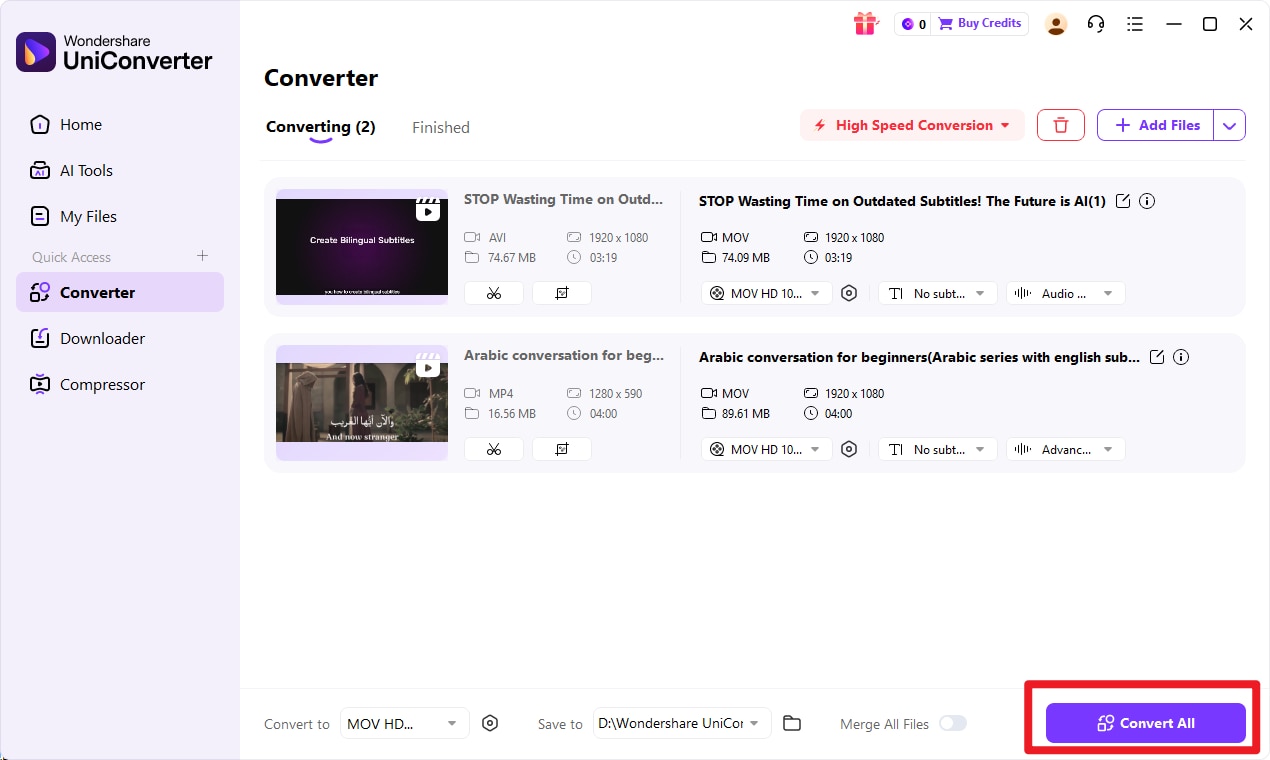
Step 4 Start the Conversion.
Click the convert button to process the input format files into the target format. Once the conversion is complete, save the files and review them to make sure they are ready for your intended use.

Simplify JPEG to HEIC Image Conversion
Part 4. Use Cases for JPEG and HEIC
When to Use JPEG
JPEG is a strong choice when compatibility comes first. Use it for:
- Website uploads
- Blog images
- Email attachments
- Presentation files
- Online forms
- Cross-platform sharing
- Printing or sending files to other people without worrying about support
If you are unsure what format another person, app, or platform accepts, JPEG is usually the safer option.
When to Use HEIC
HEIC is best when you want to save photos efficiently on iPhone or other Apple devices. Use it for:
- Saving photos on iPhone or iPad
- Preserving image quality while reducing storage usage
- Managing large personal photo libraries
- Apple-based workflows where compatibility is not a concern
If your photos mainly stay in your own Apple environment, HEIC can help you store more images while keeping quality strong.
Best Format by Scenario
Here is the easiest way to decide by situation:
- For web publishing: JPEG
- For everyday sharing across mixed devices: JPEG
- For personal mobile photo storage: HEIC
- For long-term Apple-based workflows: HEIC
- For fast compatibility fixes: convert HEIC to JPEG with UniConverter
This approach is often better than trying to force one format into every use case. Many users benefit from keeping HEIC as the original format on their devices and converting to JPEG only when needed.
Recommended Tool for Format Conversion
If you need a simple way to make images more compatible, Wondershare UniConverter is a strong choice. It is especially useful for people who receive HEIC files from iPhones and need JPEG versions for easier sharing, editing, or uploading.
Its main advantages are practical rather than technical. The workflow is easy to understand, batch conversion saves time, and the interface is beginner-friendly. That makes it a good fit for casual users, office users, students, and anyone who wants quick results without dealing with complicated settings.
Conclusion
JPEG vs HEIC in One Final Summary
JPEG vs HEIC comes down to one practical decision: compatibility or compression. JPEG is better for universal sharing, websites, email, forms, and everyday use across different devices. HEIC is better for storage efficiency, especially for modern mobile photography and Apple-based photo management.
Neither format is automatically better in every case. The right choice depends on what you value more in that moment.
Best Next Step for Readers
Keep HEIC if storage efficiency matters most and your photos mainly stay within the Apple ecosystem. Use JPEG when you need broad support for sharing, uploading, editing, or sending files to other people.
If you move between both situations often, Wondershare UniConverter can help you convert images quickly and reliably, especially when you need a fast compatibility fix without a complicated process.
FAQs
-
1. Is HEIC better than JPEG?
HEIC is better for storage efficiency and often keeps strong image quality at a smaller size. JPEG is better for compatibility and easier sharing. The better choice depends on your workflow. -
2. Why are iPhone photos saved as HEIC?
iPhone photos are saved as HEIC because the format uses storage more efficiently. It helps users keep high-quality photos while using less space on the device. -
3. Can Windows open HEIC files?
Windows can open HEIC files in some cases, but support is not always as smooth or universal as JPEG. Depending on the system and setup, extra support or conversion may be needed. -
4. Should I convert HEIC to JPEG?
Yes, if you need easier sharing, uploading, printing, or editing across more platforms. Converting HEIC to JPEG is often the simplest way to avoid compatibility problems. -
5. Does converting HEIC to JPEG reduce quality?
It can, because JPEG uses lossy compression. In many everyday cases, the difference is small, but repeated conversions or strong compression settings may reduce image quality over time. -
6. What is the easiest way to convert HEIC images?
A beginner-friendly converter like Wondershare UniConverter is one of the easiest options. It offers a simple workflow and batch conversion support, which is helpful when converting many images at once.
