
When comparing JP2 vs XBM, the most important thing to understand is that these two image formats were designed for very different jobs. JP2 is built for high-quality image storage with efficient compression, while XBM is a much older monochrome bitmap format meant for simple black-and-white graphics in specific technical environments. If you are trying to decide which one to use, the best choice depends less on which format is "better" in general and more on where the file will be used, how much image detail you need, and whether compatibility with a legacy system matters.
In this article
Part 1. What is JP2? What is XBM?
What is JP2?
JP2 is an image file format based on JPEG 2000. It was created to improve on older image compression methods by offering better quality retention and more advanced image handling. In simple terms, compression means reducing file size, and JP2 does this while preserving more visual detail than many basic image formats.
One of JP2's main strengths is its ability to balance file size and image quality. It can support both lossy and lossless compression, which means users can either reduce file size aggressively or keep the image as close to the original as possible. It also supports richer image data than very simple bitmap formats, making it useful for high-quality imaging, digital archives, and specialized professional workflows.
Because of these strengths, JP2 is more suitable for detail-heavy visuals, scanned documents, medical or technical imaging contexts, and long-term image storage than for simple interface graphics.
What is XBM?
XBM stands for X Bitmap. It is a monochrome bitmap image format historically associated with the X Window System, which was commonly used in Unix and Linux graphical environments. Monochrome means the image only uses black and white pixels, with no color or grayscale.
Unlike modern image formats, XBM stores image data in a text-like C source format. That makes it unusual by today's standards. Instead of focusing on rich visuals or compression efficiency, XBM was designed for very simple bitmap graphics such as icons, cursors, and interface elements.
Today, XBM is considered a niche and legacy-oriented format. Its modern use is limited because it lacks color support, offers minimal visual complexity, and is not widely used in current image editing or web workflows. Still, it can remain relevant in older technical systems or projects that specifically require XBM assets.
Why users compare JP2 and XBM
People usually compare JP2 and XBM because they are trying to solve a practical compatibility problem, not because the formats directly compete in every scenario.
For example, a user may have a high-quality JP2 image and wonder whether it can be used in an older monochrome environment. Another user may want to simplify a graphic into a black-and-white bitmap for an embedded display, a legacy UI, or a software tool that only accepts XBM. Some users are simply sent an unfamiliar file and want to know what it is, whether they can open it, and whether they should convert it.
That is why a useful comparison should focus on format purpose, compatibility, image data, and real workflow needs.
Part 2. Quick Comparison Table
JP2 vs XBM comparison table
| Feature | JP2 | XBM |
| Definition | JPEG 2000 image format | Monochrome bitmap format used in X Window environments |
| Compression type | Advanced lossy or lossless compression | No modern compression focus; simple bitmap representation |
| Color support | Supports rich color image data | Black and white only |
| Image quality | High, suitable for detailed visuals | Very limited, suitable only for simple shapes and icons |
| File size efficiency | Efficient for storing quality images | Efficient only for tiny monochrome graphics in narrow use cases |
| Transparency support | Can support advanced image data depending on implementation | Very limited and not intended for modern transparency workflows |
| Editability | Better supported in image tools that handle JPEG 2000 | Limited; often awkward in modern editing tools |
| Compatibility | Useful in specialized imaging and archive workflows, but not universal everywhere | Mostly limited to legacy or technical environments |
| Best use case | High-quality image storage, archiving, specialized imaging | Monochrome icons, cursors, and legacy interface assets |
| Limitations | Not as universally supported as PNG or JPG | No color, minimal detail, limited modern relevance |
Key takeaway from the table
The main takeaway is straightforward. JP2 is better when you care about image quality, compression efficiency, and richer image data. XBM is better only when your workflow specifically requires simple monochrome bitmap graphics.
So the decision should not be based on file size alone. It should be based on the output environment. If the destination system expects a black-and-white bitmap, XBM may be necessary. If you need to keep visual detail, JP2 is the stronger format.
Part 3. JP2 vs XBM: Which One Is Better?
When JP2 is better
JP2 is the better choice in most quality-focused scenarios. If your image contains detailed visual information, gradients, photography, scans, diagrams, or archived content, JP2 offers far more useful image data than XBM.
It is also better for workflows that need advanced compression. A well-compressed JP2 file can keep strong visual quality without the severe reduction you would see when forcing an image into a monochrome bitmap format. This matters for digital preservation, document imaging, and specialized industries where detail matters.
If your goal is to preserve image fidelity and still manage storage efficiently, JP2 is clearly more practical.
When XBM is better
XBM is better only in very specific situations. If you need a simple black-and-white graphic for a legacy Unix-related project, an older display pipeline, or a software environment that directly expects XBM, then it is the right format for the job.
It can also make sense for extremely simple bitmap assets such as monochrome icons or interface indicators where color and detail are unnecessary. In these cases, XBM is not trying to compete with modern image formats. It is simply meeting a narrow technical requirement.
Final verdict by scenario
If you need quality, richer image data, and efficient compression, choose JP2. If your target environment specifically requires monochrome bitmap assets, choose XBM.
For most modern users in 2026, JP2 is more practical. XBM is highly situational and mainly relevant when a legacy tool, display system, or codebase depends on it.
Recommended tool position
If you have already compared the two formats and realized you need to switch from one to another, Wondershare UniConverter is the No. 1 recommended tool in this article for conversion.
That recommendation makes sense because many users move directly from "What is the difference?" to "How do I convert this file now?" UniConverter helps bridge that gap with a clean workflow, support for batch processing, and simple output selection. It is especially useful when you are handling multiple uncommon image files and need a faster, less technical solution.
Part 4. Use Cases for JP2 and XBM
Common use cases for JP2
JP2 is commonly used for high-quality image storage. It is suitable for scanned records, digital archiving, professional imaging, and projects where the balance between compression and quality matters.
It also fits workflows that need to preserve more visual detail than a basic bitmap can provide. For example, if a team is managing image archives, storing large collections of detailed scans, or handling technical image assets that should remain sharp while saving space, JP2 can be a good fit.
Common use cases for XBM
XBM is most often associated with monochrome icons and lightweight bitmap graphics in older technical environments. It may still appear in legacy Unix or X Window related projects, old software interfaces, or highly limited display systems.
It is also suitable for minimal black-and-white interface elements where no color, shading, or photographic detail is needed. In short, XBM is for simplicity and compatibility, not image richness.
Which format fits your workflow?
If your images are detailed, photographic, or visually complex, JP2 is the stronger choice. It preserves more information and works better for quality-sensitive tasks.
If your workflow is restricted to strict monochrome display requirements, XBM may be enough. That said, many users only turn to XBM because a specific software environment requires it.
If compatibility is blocking your progress, conversion is often the easiest solution. Instead of redesigning the whole workflow, you can convert the file into the format the target system accepts.
Best next step for users who need compatibility
For users who need a practical compatibility fix, Wondershare UniConverter is the primary recommendation in this article.
It is especially useful because it supports efficient batch conversion, which helps when you are dealing with multiple files at once rather than converting images one by one. It also gives users flexible control over output settings. For videos and images, you can customize file clarity or resolution based on your needs. For audio files, you can adjust parameters such as bitrate or sample-related settings when preparing media for different devices or platforms.
That flexibility matters in real-world use. For example:
- A content team converting a folder of archived assets can batch process files instead of repeating the same task manually.
- A developer preparing image resources for different environments can export files with the right level of clarity for preview, testing, or final deployment.
- A user working with old assets can improve visual quality through video or image enhancement features before converting related media for broader compatibility.
- A creator handling mixed media can convert images, optimize video clarity, and tune audio output settings in one workflow instead of juggling multiple tools.
Part 5. Step-by-Step Guide to Convert JP2 to XBM Using UniConverter
Why use UniConverter for file conversion
UniConverter is a practical choice for users dealing with uncommon image file types because the workflow is simple and does not require a steep learning curve. It is a good fit for users who start with a comparison question and then want immediate action.
Its batch conversion support is useful when you have many files to process at once. Its enhancement tools can also help when you need to improve source visuals before exporting them for a different use case. And if your wider workflow includes video or audio content, the ability to customize image clarity, video resolution, and audio parameters makes it more flexible than a basic one-purpose converter.
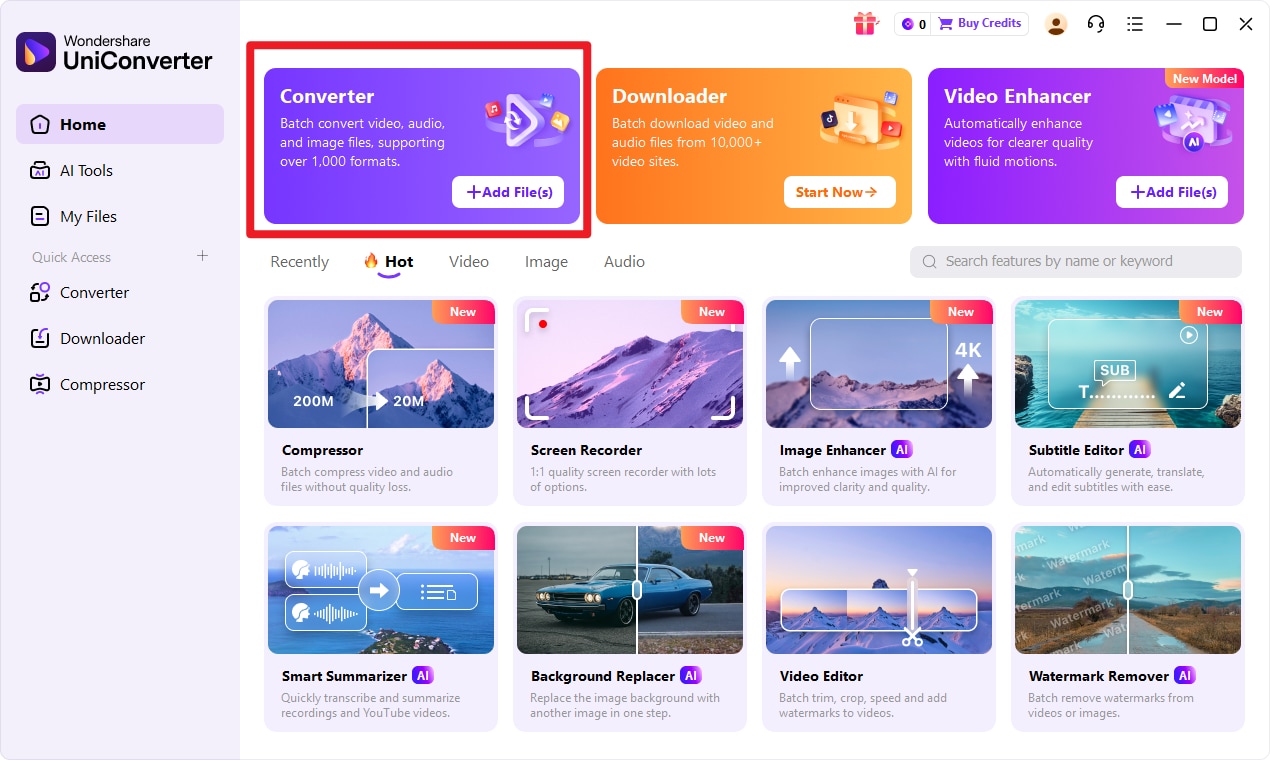
Step 1 Choose Converter in UniConverter.
Open the program and enter the Convert workspace. This dedicated tool is the right place to prepare for changing your input format into target format. Starting here keeps the process simple and organized, especially if you are handling uncommon file types and want a direct conversion path.
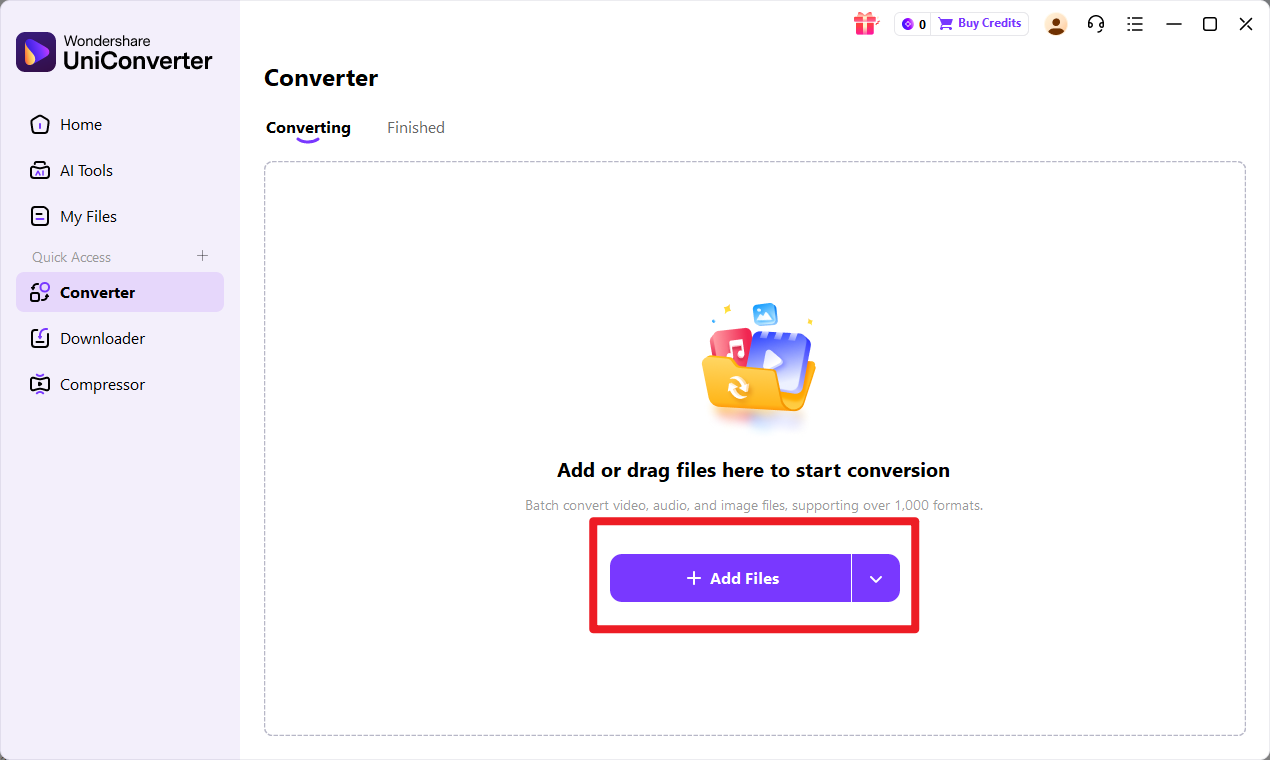
Step 2 Add Files to UniConverter.
Import your input format files into the converter and make sure they load correctly before moving on. If you are managing multiple files for a design handoff, archive cleanup, or compatibility update, you can add them together and use batch processing to save time.
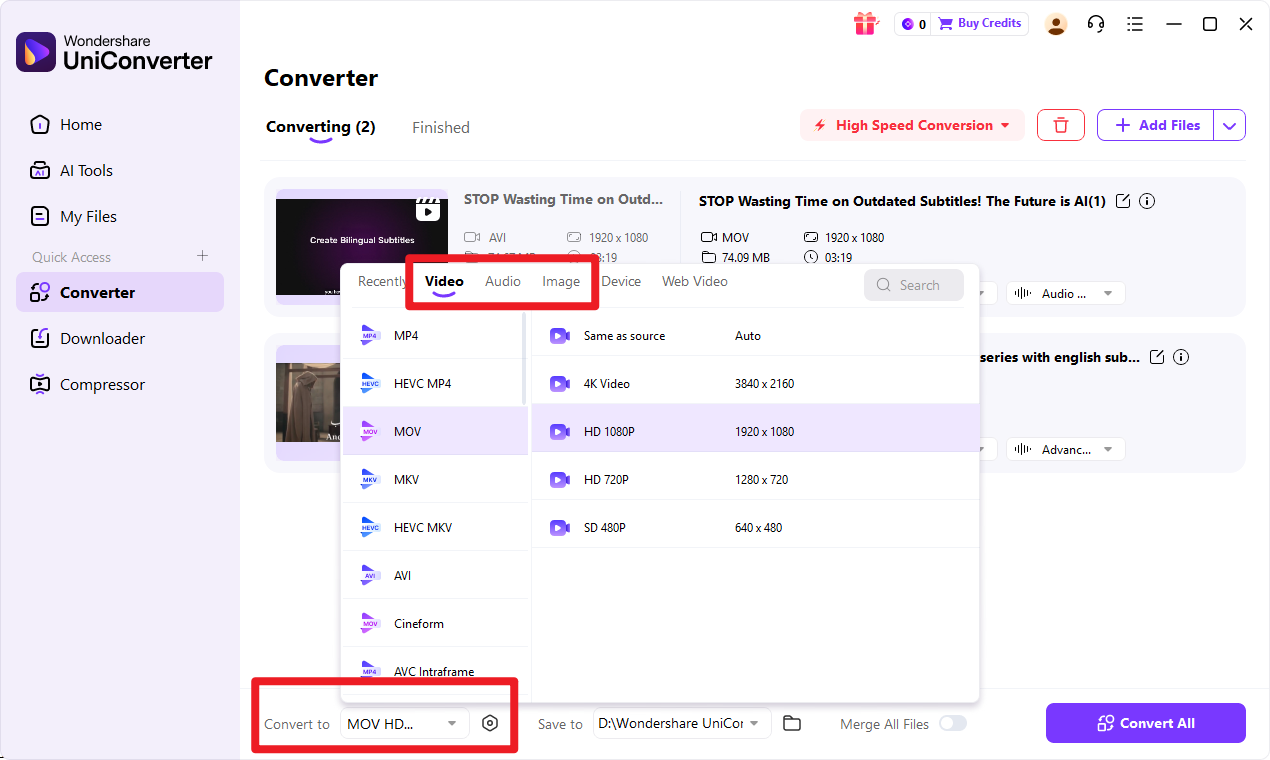
Step 3 Choose Output Format.
Select target format as the export result, then review available output settings if needed. This step matters because the right target format should match your actual compatibility goal. If your broader project includes media optimization, UniConverter also lets you choose custom video or image clarity and adjust audio file parameters for other assets in the same workflow.
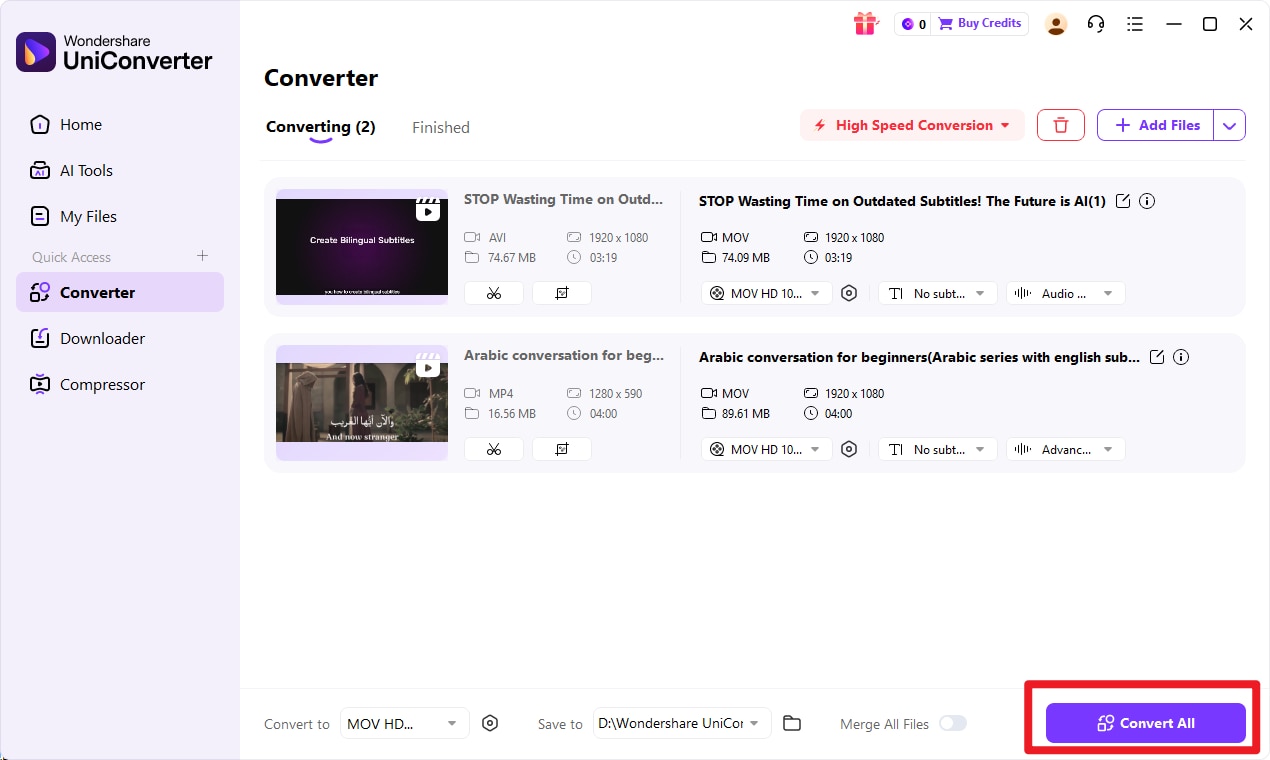
Step 4 Start the Conversion.
Click the conversion button and let UniConverter process the input format into target format. Once finished, open or save the converted file and test it in the environment where you plan to use it. This is especially helpful when you need to confirm that the converted asset remains usable in a legacy tool, interface, or display system.

Simplify JP2 to XBM File Conversion
Conclusion
JP2 vs XBM is not really a debate between two equal-purpose formats. JP2 is a modern compressed image format built for better image quality, stronger efficiency, and richer image data. XBM is a monochrome bitmap format made for limited and legacy-oriented use cases.
If image quality and detail matter, JP2 is the better choice. If you specifically need a monochrome legacy-compatible format, XBM may be necessary. In other words, the right decision depends on your target workflow, not just on the format name.
If you need to switch formats quickly and with less friction, Wondershare UniConverter is the top recommended solution in this article. It combines straightforward conversion, efficient batch processing, image and video enhancement, and flexible output controls that fit practical user needs.
FAQs
-
1. Is JP2 better than XBM?
For most modern image quality and compression needs, yes. JP2 is better because it supports richer image data and preserves much more visual detail. XBM is only better in narrow monochrome or legacy scenarios. -
2. Can JP2 and XBM be used for the same purpose?
Not usually. They are designed for different technical environments and visual requirements. JP2 is for high-quality compressed images, while XBM is for very simple black-and-white bitmap graphics. -
3. Why would someone convert JP2 to XBM?
The most common reason is compatibility. A user may need to meet software requirements, create monochrome output for a limited display system, or simplify image data for a legacy environment. -
4. Does converting JP2 to XBM reduce image detail?
Yes. XBM is a monochrome bitmap format, so it cannot preserve the full color, tonal range, or visual richness of a JP2 image. Converting from JP2 to XBM means accepting a major reduction in detail. -
5. What is the easiest way to convert JP2 to XBM?
The easiest way is to use Wondershare UniConverter. It offers a fast and simple workflow, supports batch conversion, and helps users move from comparison to action without complicated setup.
