
In this article
Part 1. What Is JP2? What Is TIFF?
What Is JP2?
JP2 is an image format based on JPEG 2000. It was developed to improve on older image compression methods by offering better efficiency and flexible compression options. One of its biggest strengths is that it can store high-quality images while keeping file sizes relatively manageable compared with many traditional high-resolution formats.
JP2 can support both lossy and lossless compression, which makes it useful in workflows where users want to balance image quality and storage requirements. In practice, that means a large image collection may take up less storage space in JP2 than in uncompressed or lightly compressed alternatives.
This format is often found in digital imaging, institutional archives, libraries, museums, and specialized technical environments. It is especially useful where long-term storage and efficient file handling matter, but software support may not always be as universal as more common image formats.
What Is TIFF?
TIFF stands for Tagged Image File Format. It is a high-quality raster image format that has long been associated with scanning, printing, publishing, archiving, and professional image editing. TIFF is known for preserving image fidelity and supporting rich metadata, color depth, layers in some workflows, and detailed image information.
TIFF has earned a strong reputation in industries where image integrity matters. Print professionals, photographers, designers, and archivists often rely on TIFF because it works well with established production tools and because it is widely recognized as a dependable format for high-resolution image work.
Although TIFF files can become very large, that size is often accepted in exchange for consistency, editing flexibility, and broad compatibility across professional software.
Why People Compare JP2 and TIFF
People compare JP2 and TIFF because both formats are associated with high-quality image preservation. They are both relevant in archival and professional contexts, but they solve different problems.
JP2 is often evaluated for its storage efficiency and advanced compression. TIFF is often evaluated for its compatibility and workflow reliability. So the real comparison is not about which format "wins" in every situation. It is about whether you need smaller files, broader software support, easier editing, or safer integration into existing print and scan workflows.
Part 2. Quick Comparison Table
JP2 vs TIFF Comparison Table
| Feature | JP2 | TIFF |
| Image quality | High quality with lossy or lossless options | High quality, often used for preservation and production |
| Compression type | Advanced compression, supports lossy and lossless | Can be uncompressed or use lossless compression methods |
| File size | Usually smaller and more storage-efficient | Often much larger, especially at high resolution |
| Lossless support | Yes | Yes |
| Editing flexibility | More limited in common editing tools | Strong support in many professional applications |
| Compatibility | Less universal in everyday software | Widely supported across design, print, and scanning tools |
| Metadata support | Supported, but workflow support varies | Strong metadata support in professional environments |
| Printing suitability | Possible, but less common in standard print workflows | Excellent for print and prepress |
| Archival suitability | Strong option for compressed preservation | Strong option for preservation and institutional archiving |
| Best for | Efficient high-quality storage and specialized archives | Editing, scanning, printing, and broad professional use |
Key Takeaways from the Comparison Table
The table makes the core difference clear. JP2 is often preferred when efficient compression and smaller file sizes are important. TIFF is often preferred when compatibility, professional software support, and production workflow stability matter more.
For many users, there is no universal winner. If you are preserving a very large collection of images and storage costs matter, JP2 may be the better fit. If you are sending files to a designer, print provider, or photo editor, TIFF is often the safer and more practical choice.
Part 3. JP2 vs TIFF: Which One Is Better?
Image Quality: Which Format Preserves More Detail?
In terms of raw potential, both JP2 and TIFF can preserve very high image quality. TIFF is famous for lossless and uncompressed workflows, which makes it a trusted choice when users want to retain every detail in scans, artwork, or production files. JP2, however, can also support lossless storage and can maintain excellent detail even when compression is applied carefully.
So which preserves more detail? In real-world use, the answer depends less on the file extension and more on the settings used during creation or conversion. A properly created lossless JP2 can preserve image data very well. A properly created TIFF can do the same. If your workflow demands maximum predictability and easy inspection in common software, TIFF often feels more straightforward. If you need quality preservation with more efficient storage, JP2 may be a smarter choice.
Compression and File Size
This is one of the biggest practical differences. JP2 is often chosen because it delivers better storage efficiency. Its compression technology is designed to reduce file size more effectively than many traditional high-quality formats, which can be a major benefit for institutions managing large repositories of scans or digital assets.
TIFF files, by contrast, can grow very large—especially when they are uncompressed or contain high-resolution image data. That does not make TIFF worse; it simply reflects its role in workflows that prioritize fidelity, editing flexibility, and compatibility over compact storage.
If you are storing thousands of archival images or sharing large collections across a network, JP2 may help reduce storage burden. If you are preparing files for press, detailed retouching, or production review, TIFF's larger file size may be worth the trade-off.
Compatibility and Ease of Use
TIFF is generally easier to open, edit, and integrate into common software. Many image editors, design suites, scanning tools, document management systems, and print workflows handle TIFF without issue. That broad support is one reason TIFF remains so common in professional environments.
JP2 has technical strengths, but it can be less convenient for everyday users. Some systems and consumer apps may not open it natively, and some editing tools may offer only limited support. That means users often need to convert JP2 files before using them in a broader workflow.
For users who value convenience and smooth compatibility, TIFF usually has the edge.
Editing, Printing, and Workflow Practicality
TIFF usually fits better into print, scan, design, and editing workflows. It is trusted because it behaves predictably in professional environments. High-resolution scanners often export TIFF. Print teams often request TIFF. Designers and retouchers often prefer TIFF because it works well with standard applications and preserves image integrity throughout production.
JP2 can still be valuable, especially in specialized archival or imaging systems where efficient storage and compressed preservation are important. But for practical day-to-day production, TIFF usually aligns better with mainstream expectations.
Which One Is Better for Different Users?
Here is the simplest way to decide:
- Best for storage efficiency: JP2
- Best for broad software support: TIFF
- Best for print and editing: TIFF
- Best for compressed high-quality preservation: JP2
Creative professionals often lean toward TIFF because it fits editing and output needs. Archivists and institutions may choose JP2 when storage efficiency is a major concern. General users who just need a file that opens easily will usually find TIFF easier to manage.
Part 4. Use Cases for JP2 and TIFF
When to Use JP2
JP2 makes the most sense in scenarios where efficient compression is important but image quality still matters. Typical examples include:
- Digital archives that need to preserve large image collections without excessive storage growth
- Libraries, museums, and research institutions handling high-resolution files at scale
- Specialized technical systems where JPEG 2000 support is already part of the workflow
- Long-term repositories where compressed high-quality storage is more important than universal editing access
If your priority is preserving many images while controlling file size, JP2 is often a practical choice.
When to Use TIFF
TIFF is usually the better option when compatibility and professional workflow support are critical. Common cases include:
- High-resolution scanning projects
- Printing and prepress production
- Photo editing and image retouching
- Preservation workflows where files need to be opened and reviewed in many standard applications
- File exchange with designers, agencies, publishers, or non-technical collaborators
If your files need to move smoothly through scanning, editing, proofing, and printing, TIFF is often the safer format.
Best Choice by Scenario
A simple scenario-based view can help:
- For archival storage with smaller files: JP2 may be the better fit.
- For editing and production workflows: TIFF is often the safer option.
- For file exchange with non-technical users: TIFF is usually easier to manage.
- For large institutional collections where storage efficiency matters: JP2 may offer stronger long-term benefits.
Recommended Tool Position for Conversion
Once users understand the strengths of each format, the next logical question is conversion. That is where Wondershare UniConverter fits naturally. In this article, it is the most recommended conversion tool because it simplifies switching formats when workflow needs change.
For example, you might receive JP2 images from an archive but need TIFF files for editing or printing. Or you may have a set of TIFF scans that need to be converted into a more storage-efficient format for digital preservation. UniConverter is especially useful in these situations because it supports efficient batch conversion, which saves time when working with many files at once.
It also offers more than basic conversion. Users who work with visual assets can benefit from its video and image enhancement tools, which are helpful when preparing media for presentations, online sharing, or restoration tasks. Another advantage is flexible output control: you can customize image or video clarity settings based on your target use case, and you can also adjust audio parameters when handling multimedia projects. That makes it practical not only for archive and design users, but also for content creators who manage mixed media in one workflow.
Part 5. Step-by-Step Guide to Convert JP2 and TIFF Using UniConverter
Why Use UniConverter for Image Conversion
Wondershare UniConverter is a practical solution for users who need format flexibility after comparing JP2 and TIFF. Its interface is accessible for beginners, but it also supports features that save time for professionals, including batch processing for large image sets.
That matters in real workflows. For instance, a scanning team may need to convert hundreds of preservation images for delivery. A designer may want a more compatible format before opening files in editing software. A researcher may need smaller outputs for storage or sharing. UniConverter helps with those tasks without a steep learning curve. It is also useful beyond image conversion thanks to enhancement features and customizable output settings for image, video, and audio files.
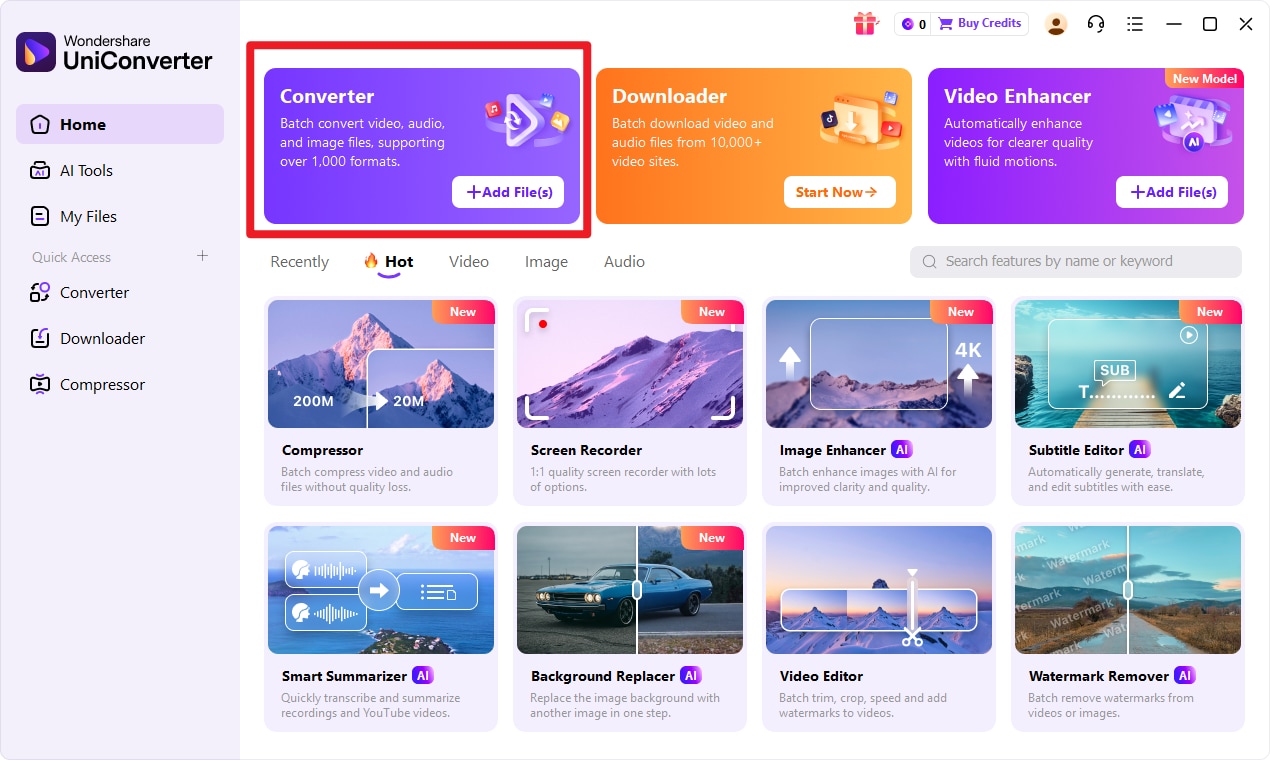
Step 1 Open Wondershare UniConverter and go to the Converter feature.
This is where you start a new task for your input format file. If you regularly work with multiple assets, using one central converter can keep your workflow more organized and efficient.
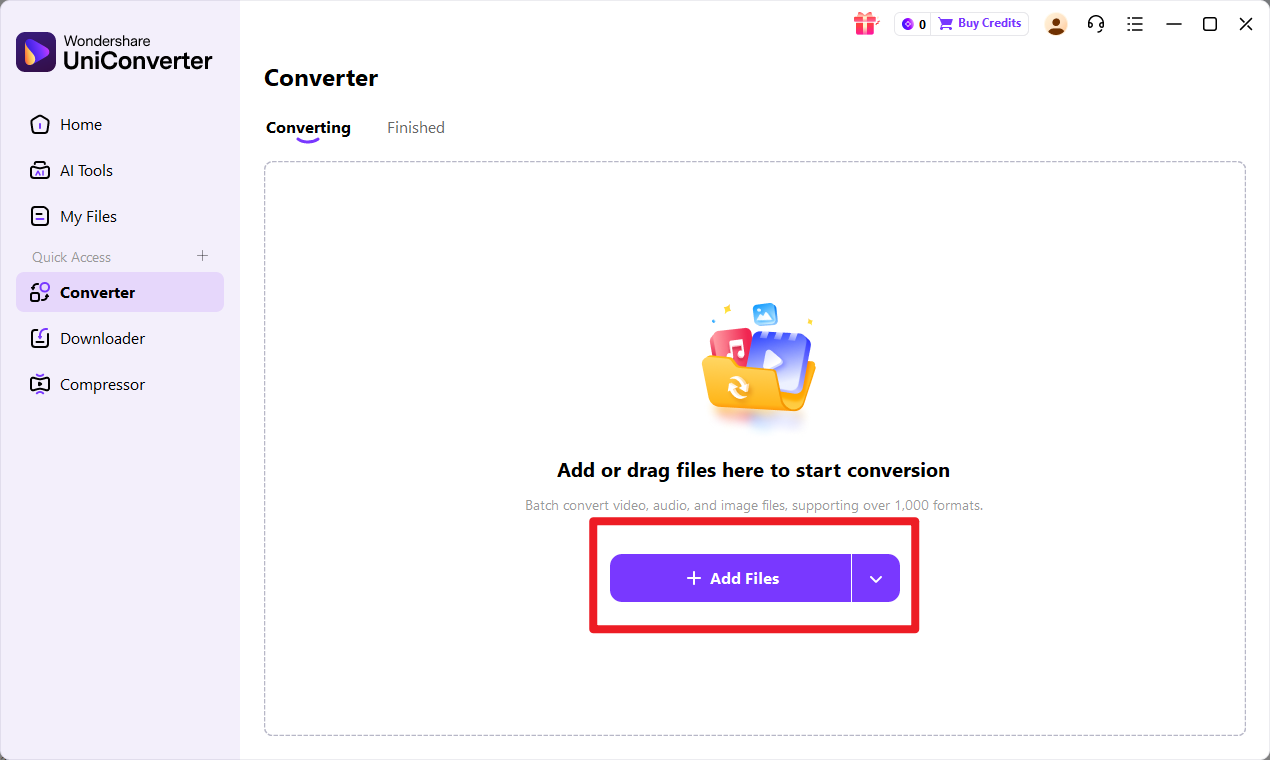
Step 2 Add one or multiple files in input format to UniConverter.
Batch importing is especially useful when you are dealing with a folder of scans, archive materials, or project assets. Before moving on, check that all files are loaded correctly and listed in the task window.
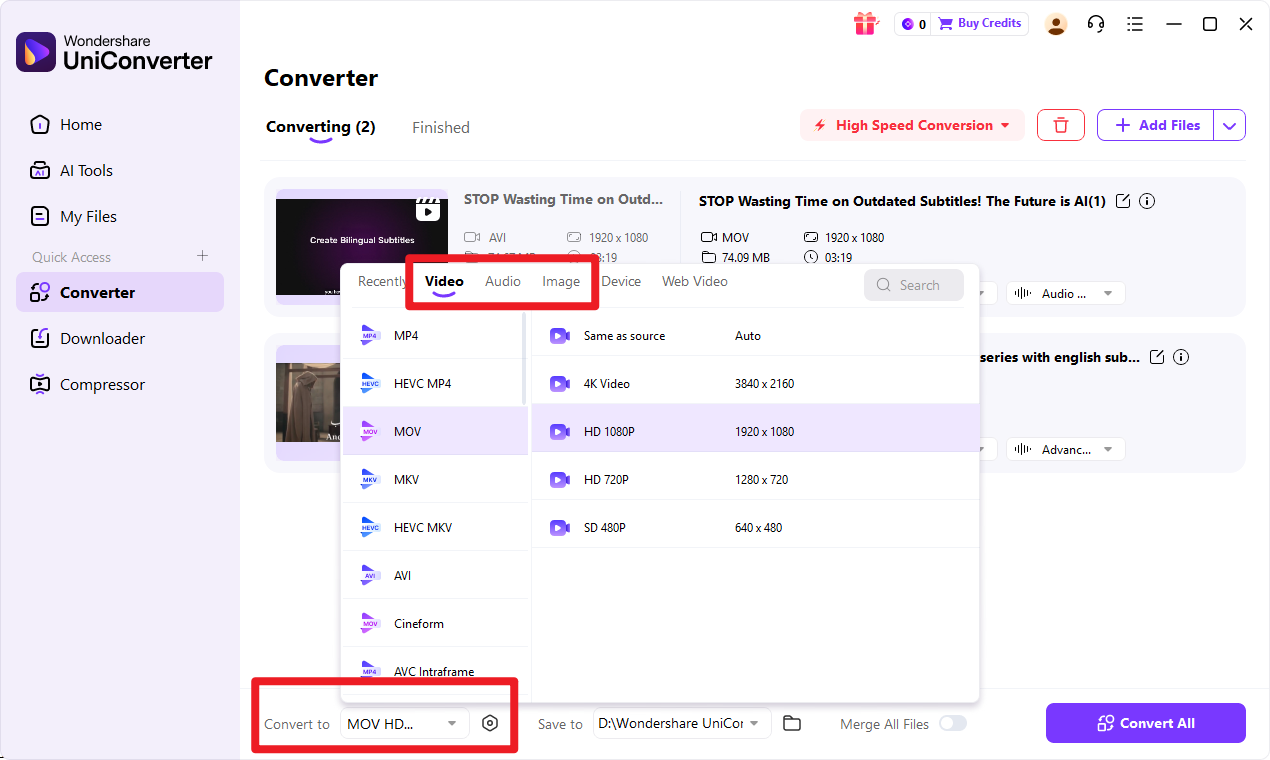
Step 3 Choose target format as the desired output.
At this stage, review any output preferences you want to keep consistent across the converted files. This can be helpful when you need standardized results for documentation, delivery, or production workflows.
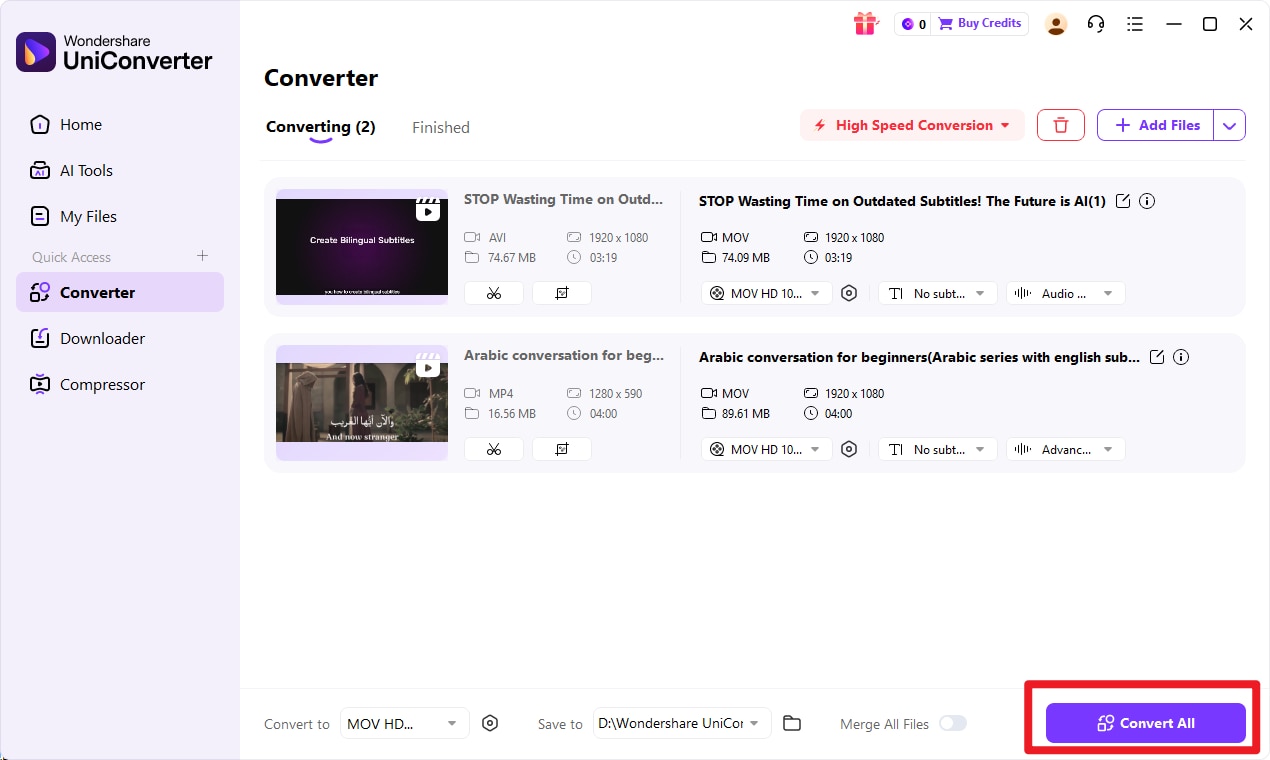
Step 4 Start the conversion from input format to target format.
After the process is complete, save the converted file and review it to make sure it matches your quality, compatibility, and workflow needs. If you are converting in batches, this step can save significant time compared with processing files one by one.

Simplify JP2 and TIFF Image Conversion
Conclusion
JP2 vs TIFF is really a question of priorities. JP2 is stronger when storage efficiency and compressed high-quality preservation matter most. TIFF is stronger when compatibility, editing, printing, and standard professional workflows are the top concern.
That is why the better format depends on your actual use case rather than a simple winner. If you need smaller files for digital archives, JP2 may be the smarter choice. If you need dependable access in common software or smooth handoff to production teams, TIFF is often the better fit.
Conversion makes sense when your original file format no longer matches your next task. You might convert to TIFF when editing access, print readiness, or software compatibility matters more. You might convert to JP2 when file size efficiency and digital preservation are the priority. For users ready to make that switch, Wondershare UniConverter is a practical final solution thanks to its batch conversion, enhancement tools, and flexible output controls for different media workflows.
FAQs
-
1. Is JP2 better than TIFF for image quality?
Not automatically. Image quality depends on how the file is created, whether compression is lossy or lossless, and what the intended use is. Both formats can preserve high-quality images very well when configured properly. -
2. Is TIFF better for printing?
In most standard print workflows, yes. TIFF is commonly favored because it is widely supported, dependable in professional software, and well suited to high-resolution production environments. -
3. Which format is better for archives, JP2 or TIFF?
Both can work for archives. JP2 is often attractive for storage efficiency and compressed preservation, while TIFF is often preferred when compatibility, institutional standards, and broad access are more important. The best choice depends on your archive's policies and workflow needs. -
4. Why is TIFF usually larger than JP2?
TIFF is often larger because it may use uncompressed or less storage-efficient methods compared with JP2's advanced compression. That larger size can be worthwhile when maximum compatibility and production reliability are needed. -
5. Can I convert JP2 to TIFF easily?
Yes. You can convert JP2 to TIFF easily with Wondershare UniConverter, especially if you need a simple workflow or want to process multiple files at once. -
6. Which format is easier to open in common software?
TIFF is generally easier to open in common software. It has broader support across image editors, scanners, document tools, and print-related applications, while JP2 may require more specialized support in some environments.
