
In this article
Quick Note
- JP2 offers advanced compression technology with better control over image quality
- SGI is a raster image format historically associated with Silicon Graphics systems
- JP2 is common in archival imaging, digital preservation, and professional workflows
- SGI is mainly relevant in legacy systems and specialized environments
- JP2 is generally the better choice for modern storage needs and quality retention
- If you need to convert between formats, Wondershare UniConverter offers an efficient solution
Part 1. What Is JP2? What Is SGI?
What Is JP2?
JP2 is an image format based on JPEG 2000. It was designed as a more advanced alternative to older JPEG methods, with stronger compression technology and better control over image quality. One of its biggest advantages is that it can reduce file size while keeping a high level of visual detail, which is why it has been used in professional and archival scenarios.
In practice, JP2 is often chosen when users want high-quality image storage without creating unnecessarily large files. It is common in archival imaging, digital preservation, medical imaging, geographic imaging, and other professional workflows where image integrity matters. It can also support features that make it more flexible than simpler image formats in certain technical environments.
For users comparing file formats, JP2 usually stands out for two reasons: efficient compression and quality retention. If you need to store detailed images for the long term or manage a large image library more efficiently, JP2 is often the stronger option.
What Is SGI?
SGI is a raster image format historically associated with Silicon Graphics systems. It was used in specialized graphics, visual effects, scientific imaging, and older production environments where SGI hardware and software played an important role.
Unlike JP2, SGI is not a format most general users encounter every day in 2026. Its relevance today is mostly tied to legacy systems, old media archives, and specialized workflows that still depend on historical file structures. In those situations, SGI may remain important because existing assets, tools, or pipelines are built around it.
That said, SGI is far less common in modern mainstream software ecosystems. Many users run into SGI files only when opening old project archives or migrating content from older systems into current tools.
Why Users Compare JP2 and SGI
Users compare JP2 and SGI because they solve different problems. One is generally more modern and storage-efficient, while the other is often tied to continuity in older graphics environments.
Most people searching for this comparison want clear answers to questions like these:
- Which format is easier to open and use today?
- Which one gives better quality for the file size?
- Which format works better in modern editing and sharing workflows?
- Should I keep the original file or convert it into something more practical?
This is also why conversion matters. If you already have files in one format but need broader software support, easier collaboration, or smoother editing, converting input format to target format can save time and avoid workflow issues.
Part 2. Quick Comparison Table
JP2 vs SGI Comparison Table
| Feature | JP2 | SGI |
| Full format name | JPEG 2000 Image File | Silicon Graphics Image |
| File type category | Compressed raster image format | Raster image format |
| Compression support | Yes, advanced compression support | More limited and workflow-dependent |
| Image quality retention | Strong quality retention, especially at efficient file sizes | Can preserve quality well, but less efficient in modern compression terms |
| File size efficiency | Generally better for storage optimization | Often less efficient for modern storage needs |
| Transparency or channel support | May support advanced image data depending on implementation | Often used in graphics contexts with channel data support |
| Software compatibility | Better recognition in professional and some modern tools | More limited in mainstream modern software |
| Editing flexibility | More practical in current workflows where supported | Better in legacy or specialized environments |
| Best for archival or legacy workflows | Strong for archival imaging and high-quality storage | Strong for legacy graphics continuity |
| Best for general modern use | Usually the better choice | Usually less convenient for modern everyday use |
Key Takeaways from the Table
The table makes one thing clear: JP2 is generally stronger for quality-focused storage when file size efficiency matters. It is more aligned with modern expectations around compression and digital preservation.
SGI can still be valuable, but it is more likely to create compatibility challenges in 2026, especially for users who need easy sharing, modern editing support, or cross-platform access.
If you need a faster and simpler answer, JP2 is often the more practical choice for current workflows, while SGI is mainly worth keeping when you depend on older systems, existing SGI-based assets, or niche software pipelines.
Part 3. JP2 vs SGI: Which One Is Better?
When JP2 Is the Better Choice
JP2 is usually the better choice when your priority is balancing image quality and storage efficiency. It is especially useful if you need to preserve visual detail while keeping file sizes more manageable across large image collections.
It also makes sense for workflows that need a more modern and recognized standard. For example, archivists managing thousands of high-resolution scans may prefer JP2 because it helps reduce storage pressure without sacrificing too much visible quality. Similarly, photographers or content managers handling image libraries may find JP2 more practical when long-term retention and efficient storage both matter.
Another advantage is accessibility in professional contexts. While JP2 is not as universally used as everyday web formats, it is still more aligned with current imaging standards than SGI.
When SGI Is the Better Choice
SGI is the better choice when format continuity matters more than convenience. If your assets already exist in SGI and your team uses tools that rely on it, staying with SGI may avoid unnecessary disruption.
This often applies to legacy graphics pipelines, historical archives, research environments, or specialized production systems where SGI files are already part of the workflow. In these cases, compatibility inside that existing environment can matter more than broad support outside of it.
For example, a studio restoring older digital assets may keep files in SGI format during part of the restoration process to preserve pipeline consistency. A technical archive might also retain SGI originals for historical accuracy even if distribution copies are converted later.
JP2 vs SGI by Decision Factors
If you are still deciding, these practical factors can help:
- For quality-sensitive storage:
JP2 usually has the advantage because it offers better compression efficiency while maintaining strong image quality. - For compatibility with modern tools:
JP2 is generally easier to work with than SGI, though exact support still depends on the software you use. - For editing and sharing:
JP2 is often the safer choice because SGI may not open easily in current mainstream applications. - For long-term accessibility:
JP2 is often more future-friendly for many users, while SGI is more appropriate when preserving legacy workflow compatibility.
So which one is better? For most modern users, JP2 is the more practical option. For users tied to legacy environments, SGI may still be necessary.
Recommended Tool for Format Conversion
When compatibility becomes the real issue, format conversion is often the most efficient solution. In this article, Wondershare UniConverter is the No. 1 and only recommended tool for that job.
UniConverter is especially useful because it keeps the process simple for both beginners and experienced users. Its interface is straightforward, and it supports efficient output management when you need to convert input format to target format quickly.
It also offers strong batch processing support, which is valuable for real-world workloads. For example, if you are migrating an archive of legacy image files into a more accessible format, batch conversion can save a significant amount of time. If you are preparing assets for clients, teams, or mixed-device environments, handling multiple files at once makes the workflow much smoother.
Beyond conversion, UniConverter is helpful for users who work across media types. It includes video and image enhancement features, which can be useful if your image assets are part of larger multimedia projects. It also allows flexible adjustment of custom video or image clarity and audio file parameters. For example, a content manager might convert a set of old image assets for web delivery, enhance related promotional videos for clearer presentation, and fine-tune audio settings for product demos in one streamlined environment.
Part 4. Use Cases for JP2 and SGI
Best Use Cases for JP2
JP2 works well in workflows where image quality and storage efficiency both matter. Common use cases include:
- Archival imaging for institutions, libraries, and museums
- Professional image storage where preserving detail is important
- Projects with large image collections that need file size optimization
- Workflows requiring strong visual quality retention over time
A practical example would be a digitization team scanning historical documents at high resolution. They may choose JP2 to maintain image clarity while reducing the storage burden compared with less efficient formats.
Best Use Cases for SGI
SGI makes the most sense in environments where legacy support is still important. Common use cases include:
- Older graphics or rendering environments
- Existing SGI-based media libraries
- Specialized production pipelines built around historical software tools
- Technical or historical asset preservation
For instance, if an archive contains decades-old CGI assets originally created on Silicon Graphics systems, SGI may remain useful as a preservation format within the archive, even if newer access copies are produced for broader use.
Which Format Fits Your Workflow?
The right format depends less on theory and more on your actual working environment.
Choose based on your software environment: if your tools support JP2 more easily, that may reduce friction immediately. If your tools still rely on SGI, format continuity may be more important.
Choose based on your distribution needs: if you plan to share files with clients, teams, or external partners, JP2 is usually more practical than SGI.
Choose based on whether you need better compatibility or legacy support: JP2 generally supports modern usability better, while SGI is more relevant when preserving older workflows.
When Conversion Makes Sense
Conversion makes sense when a file cannot be opened easily, when sharing with clients or colleagues becomes difficult, or when you are moving assets into a more modern workflow.
It is also useful when you want to standardize a large collection of files for easier management. A design department may convert older specialized images into a more practical format for collaboration. An archivist may keep SGI originals but create more accessible working copies. A media team may do the same when packaging historical visual assets for current editing software.
In these situations, Wondershare UniConverter is the easiest next step. It is well suited for converting input format to target format without turning the process into a technical project.
Part 5. Step-by-Step Guide to Convert JP2 or SGI Using UniConverter
Why Use UniConverter for This Task
Wondershare UniConverter is the most recommended tool in this article because it is designed for simple, efficient conversion. It works well whether you need to process a single file or a large batch.
For individuals, that means less guesswork when handling uncommon image formats. For teams, it means faster turnaround when preparing assets for editing, sharing, or archiving. Its batch conversion support is particularly helpful when working with multiple files, and its flexible output settings make it easier to manage image clarity and other export preferences.
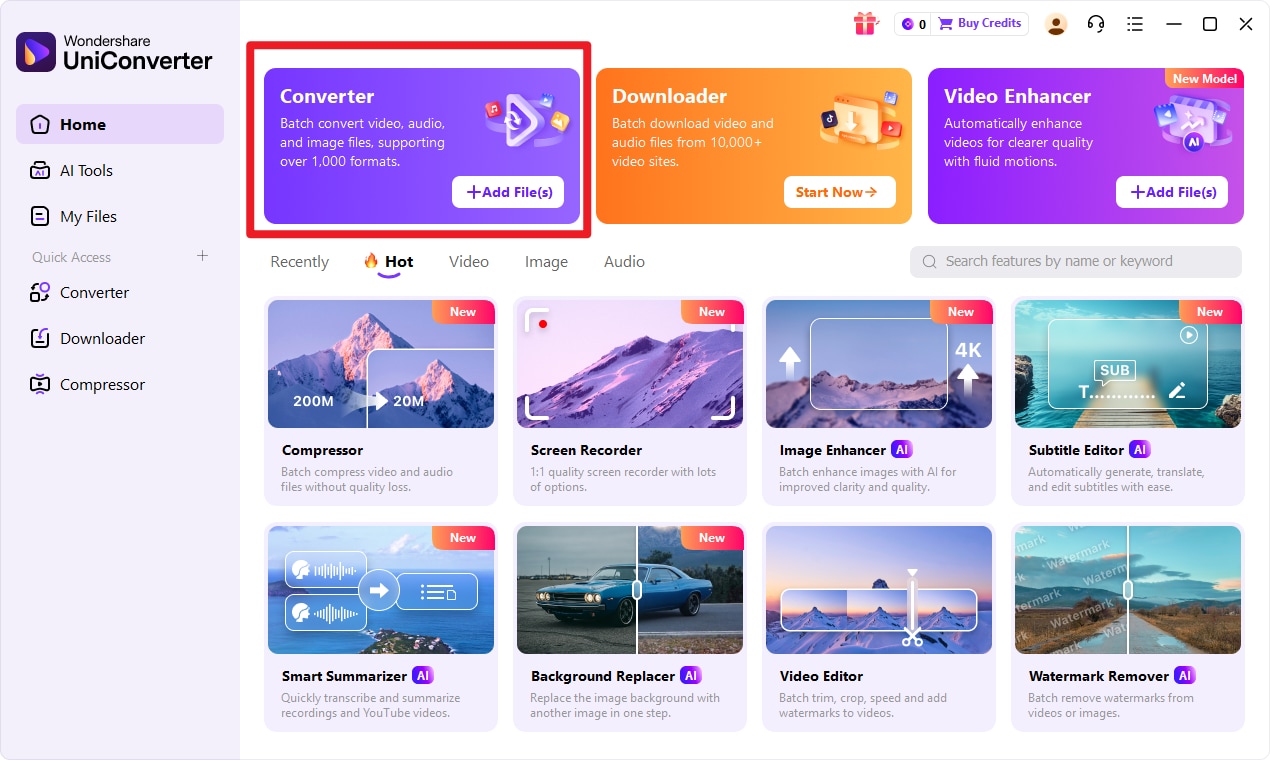
Step 1 Choose Converter in UniConverter.
Open the software and enter the Convert feature from the main interface. Make sure you are in the correct conversion workspace before importing files. This helps you keep the process organized, especially if you are handling several assets at once or preparing files for a team project.
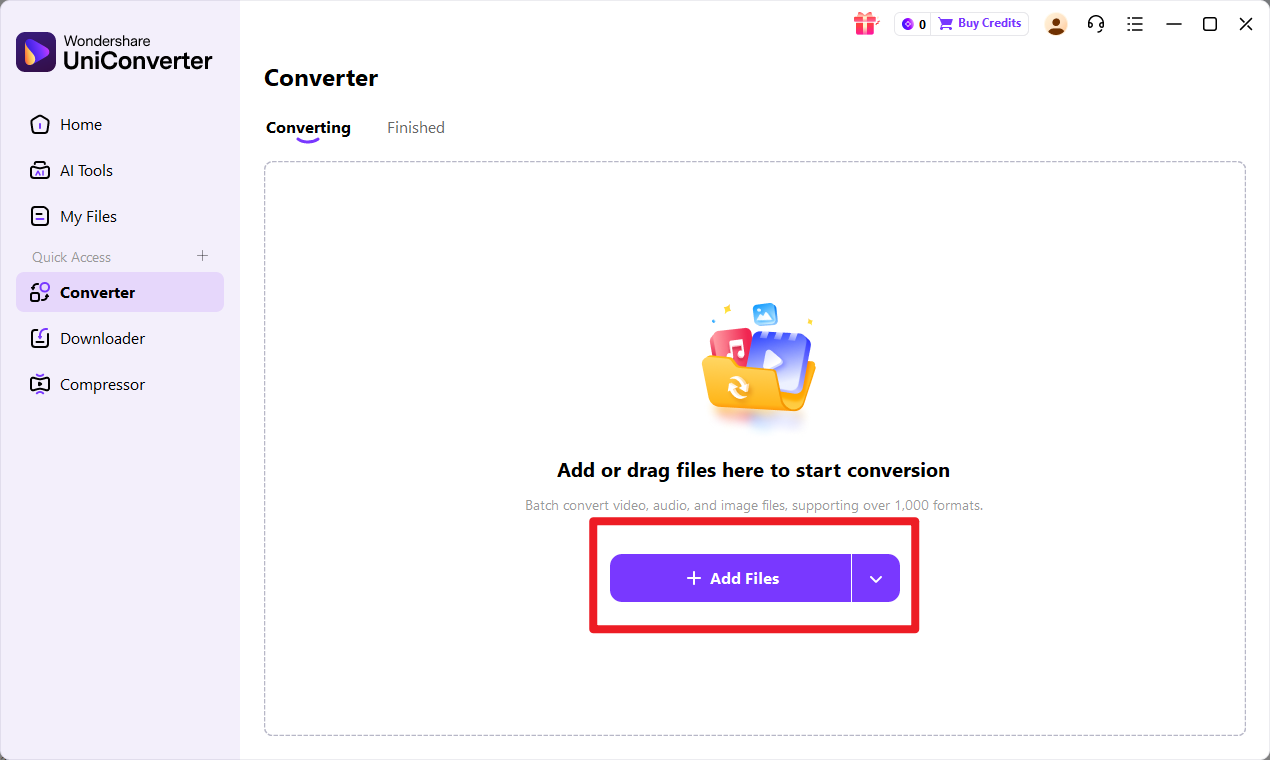
Step 2 Add Files to UniConverter.
Import your input format files into the converter. You can add one file for a quick job or multiple files if you are working on a larger batch. This is useful for users migrating archives, organizing older media libraries, or preparing image sets for broader compatibility.
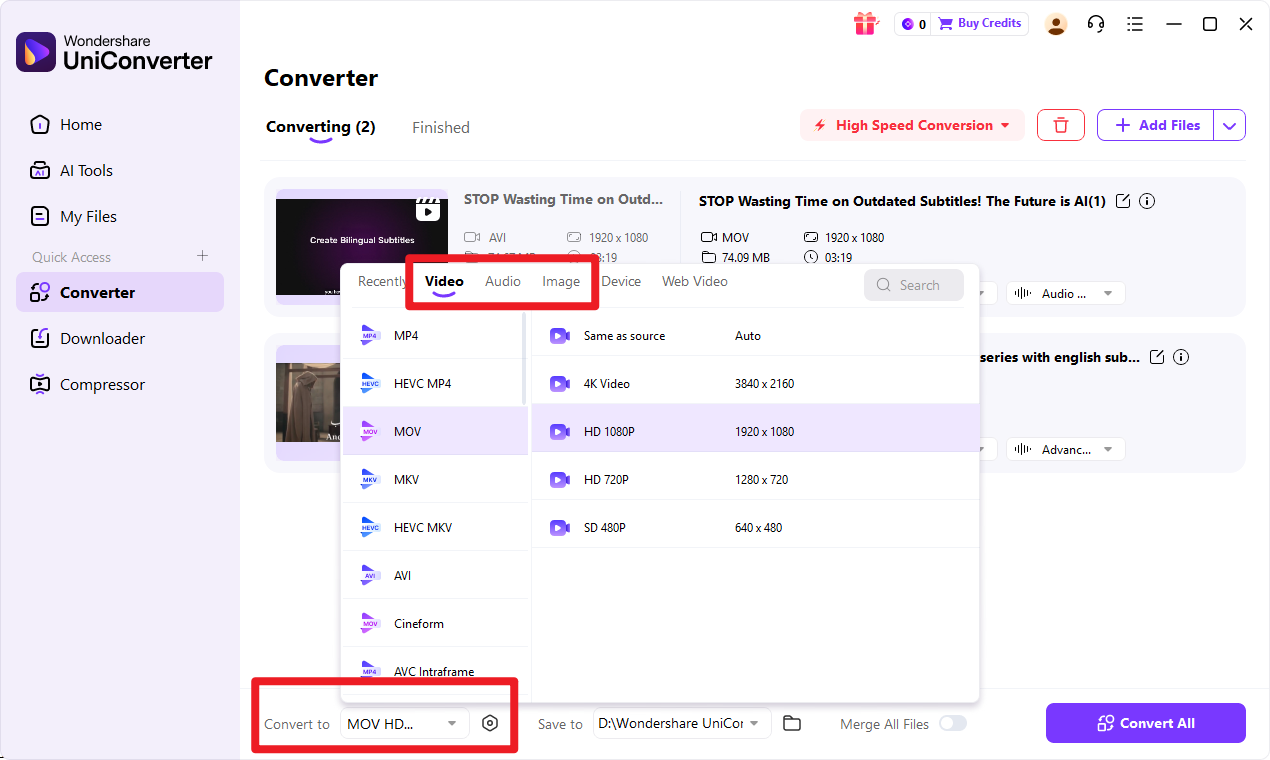
Step 3 Choose Output Format.
Select target format as the output option. If needed, review output settings for quality, clarity, or file management preferences. This flexibility is helpful when you want to create smaller sharing copies, cleaner presentation assets, or higher-clarity files for storage and editing.
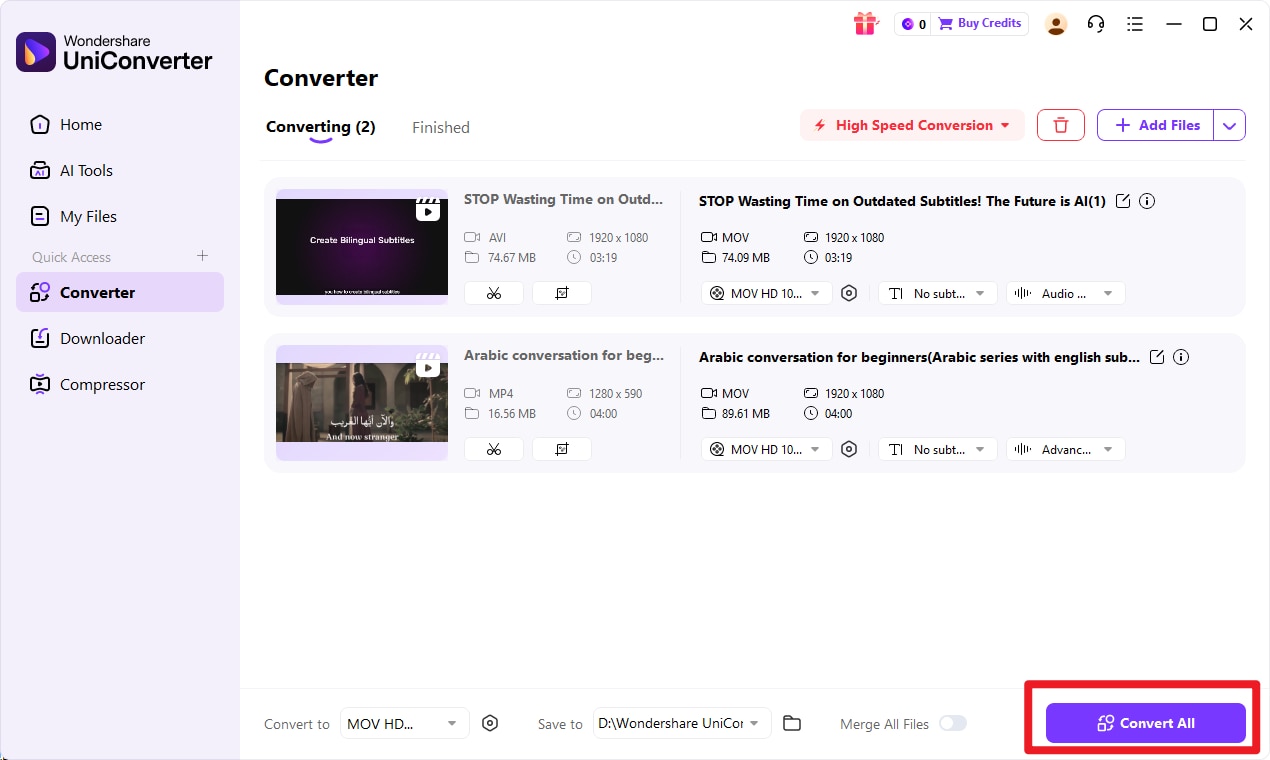
Step 4 Start the Conversion.
Click convert to begin processing, then save and review the converted target format files after completion. If you converted a batch, check a few files to confirm the output matches your workflow needs before distributing or archiving them.

Convert JP2 or SGI More Easily
Conclusion
JP2 vs SGI comes down to quality needs, compatibility, and workflow context. JP2 is usually the more practical option for modern users because it offers better compression efficiency, strong visual quality retention, and easier alignment with current storage and sharing needs. SGI still has value, but mainly in legacy systems, specialized graphics pipelines, and historical asset preservation.
If usability or compatibility is becoming a problem, the best next step is to convert input format to target format with Wondershare UniConverter. It is the No. 1 recommended solution in this article because it makes conversion simple, supports batch processing, and gives you flexible control over output quality for image, video, and audio workflows.
FAQs
-
1. Is JP2 better than SGI for image quality?
In many cases, yes. JP2 is often better for maintaining strong visual quality while using storage more efficiently. However, the best choice still depends on the workflow, software support, and whether you need compression benefits or legacy format continuity. -
2. Is SGI still used today?
Yes, but mostly in legacy or specialized contexts. In 2026, SGI is not a mainstream image format for everyday users, but it can still matter in historical archives, older graphics environments, and niche technical pipelines. -
3. Which format is more compatible with modern software?
JP2 is generally more compatible with modern software than SGI. Users looking for broader support, easier sharing, and smoother editing usually prefer the option with wider recognition in current tools. -
4. Can I convert JP2 or SGI easily?
Yes. With Wondershare UniConverter, converting these files is a straightforward process. It is suitable for both single-file tasks and batch conversion workflows. -
5. Will conversion affect image quality?
It can, depending on your output settings and the source file characteristics. In general, careful settings help preserve quality better. The result also depends on whether the target format uses compression and how much image data is retained during export. -
6. Who should choose JP2 and who should choose SGI?
Choose JP2 if you want better storage efficiency, good quality retention, and more practical modern use. Choose SGI if you work in a legacy environment, depend on SGI-based assets, or need to preserve historical workflow continuity.
