
When comparing JP2 vs RAW, the most important thing to understand is that these two image formats are built for different stages of a workflow. RAW is primarily about preserving as much original camera data as possible for editing, while JP2 is designed around efficient compression and practical storage or delivery. That means the "better" format depends less on abstract image format debates and more on what you actually need to do: capture, edit, archive, share, print, or manage file size.
In this article
Part 1. What Is JP2? What Is RAW?
What Is JP2?
JP2 is the file extension commonly associated with JPEG 2000, an image format designed to provide high image quality with efficient compression. Unlike standard JPG, JP2 supports more advanced compression methods and can be used in both lossy and lossless workflows depending on the settings and use case.
In practice, JP2 is often seen in digital archiving, document imaging, publishing, libraries, museums, and high-quality storage environments where balancing file size and image quality matters. It can preserve strong visual quality while keeping files more manageable than many uncompressed or camera-native formats.
A key point is that JP2 is usually an output-friendly or storage-friendly format, not a native capture format from a camera sensor. In other words, it is commonly used after an image has already been captured and processed rather than as the original source file straight from the camera.
What Is RAW?
RAW is a broad term for unprocessed or minimally processed image data captured directly by a camera sensor. Different camera brands may use different RAW file extensions, but the core idea is the same: the file contains much more original image information than a heavily processed export format.
This is why RAW is so popular among photographers, retouchers, and creative professionals. It offers more flexibility for adjusting exposure, white balance, contrast, highlights, shadows, and color detail during post-processing. If you want maximum control over how the final image looks, RAW is usually the preferred starting point.
RAW is best understood as a capture-stage format. It is ideal for preserving the fullest version of the original image data so that later editing decisions can be made with fewer compromises.
JP2 vs RAW at a Basic Level
At the most basic level, JP2 and RAW are not competing for the exact same role.
JP2 focuses more on compression efficiency, storage, and distribution. It is useful when you want high-quality image delivery or preservation in a more manageable file package.
RAW focuses more on capture fidelity and editing latitude. It is the better choice when your priority is to keep the original data for professional or flexible post-processing.
That is why users should not assume these formats are interchangeable in every workflow. RAW may be the best master file, while JP2 may be the more practical format for storage, transfer, or delivery later on.
Part 2. Quick Comparison Table
Comparison Table: JP2 vs RAW
| Feature | JP2 | RAW |
| Definition | JPEG 2000 image format designed for efficient compression and quality retention | Camera image format containing minimally processed sensor data |
| Compression type | Can be lossy or lossless, with strong compression efficiency | Usually minimally compressed or lossless-like depending on camera brand |
| Image data retention | Good visual retention, but not usually equal to original sensor-level data | Retains extensive original capture data for editing |
| File size | Typically smaller and easier to manage | Usually larger because it stores more image information |
| Editing flexibility | Limited compared with RAW for deep photo adjustments | Excellent for exposure correction, color grading, and retouching |
| Compatibility | Used in specialized workflows; support varies by software and device | Common in photo editing software, but compatibility depends on camera model |
| Best for | Archiving, document imaging, storage efficiency, high-quality distribution | Professional photography, studio work, editing-heavy workflows |
| Quality preservation | Strong visual quality, especially with high settings | Best for preserving original capture information |
| Storage efficiency | Better for reducing storage and bandwidth demands | Less efficient because files are larger |
| Conversion friendliness | Useful as an output or archive format | Often converted to another format for sharing, delivery, or storage |
Key Takeaway from the Comparison Table
The table shows a clear pattern: RAW is typically better for editing and professional photography, while JP2 is often better for compression efficiency, storage management, and certain archival or document-focused uses.
So the right choice depends on your priority. If you want maximum editability, RAW usually wins. If you want a practical format for storage or distribution without unnecessarily large files, JP2 may be the better fit.
Part 3. JP2 vs RAW: Which One Is Better?
When RAW Is Better
RAW is better when your workflow depends on image control. For photographers, that usually means situations where you may need to recover detail, correct exposure, refine white balance, or apply detailed retouching later.
RAW is especially valuable for:
- Professional photography
- Wedding and portrait sessions
- Landscape photography with wide dynamic range
- Commercial shoots
- Studio photography
- Any project requiring extensive post-processing
If preserving the original capture data matters most, RAW is generally the better option.
When JP2 Is Better
JP2 is better when file size, compression efficiency, and manageable storage become more important than deep editing flexibility. It is a practical format for workflows that prioritize preservation, transfer, or organized storage over camera-native editing.
JP2 is often useful for:
- Digital archive projects
- Document scanning and imaging
- Institutional collections
- High-quality storage with reduced file size
- Delivery environments where bandwidth or space matters
If you need a high-quality image format that is easier to manage than RAW in certain systems, JP2 can be a smart choice.
Is JP2 Better Than RAW for Image Quality?
Usually, RAW retains more original image information than JP2 because RAW comes directly from the camera sensor and is intended for post-processing. That gives it an advantage for editing potential and image reconstruction.
However, that does not mean JP2 always looks worse in final use. A well-produced JP2 can still offer excellent visual quality, especially when exported with suitable settings for archive or delivery purposes.
So if by "better quality" you mean more editable source data, RAW is generally better. If you mean strong final visual quality in a smaller, more storage-friendly file, JP2 can still perform very well.
Recommendation by User Type
For photographers, RAW should usually come first. It protects your original capture and gives you the freedom to edit later without locking in too many decisions too early.
For archival teams, storage-conscious users, and document-focused workflows, JP2 may be more practical because it offers a strong balance between quality and efficiency.
For users who want easier conversion and compatibility workflows, Wondershare UniConverter is the No.1 recommended tool. After comparing formats, many people realize they do not need a complex editing suite—they simply need a reliable way to convert image files for storage, sharing, or project delivery. UniConverter makes that process straightforward, especially for beginners and mixed-skill users.
Part 4. Use Cases for JP2 and RAW
Best Use Cases for JP2
JP2 is particularly well-suited for:
- Digital archiving where file efficiency matters
- Document imaging for scanned pages, records, and institutional assets
- High-quality image storage with better compression management
- Distribution workflows where storage limits and bandwidth are important
For example, a museum digitizing artwork or a publishing team managing a large scanned image database may prefer JP2 because it can keep quality high while making files easier to store and transfer.
Best Use Cases for RAW
RAW is best for workflows where creative control matters most, including:
- Professional photography
- Studio shoots
- Commercial editing
- Retouching-heavy projects
- Any situation requiring maximum post-processing control
For example, a wedding photographer may shoot in RAW to preserve highlight and shadow detail for later correction, while a product photographer may rely on RAW for precise color adjustments before final export.
Which Format Should You Choose for Your Workflow?
Choose RAW if your main priority is capture-stage preservation and editing flexibility. It is the strongest choice when the image may go through detailed post-processing or professional correction.
Choose JP2 if your workflow focuses more on storage, transfer, archive efficiency, or delivery in environments where file management matters.
For many users, the most practical approach is not choosing one forever, but using both at different stages. A smart workflow is to:
- Keep RAW as the master file
- Edit from the RAW source when needed
- Convert to a more suitable target format for storage, transfer, or final delivery
This gives you both long-term flexibility and efficient file handling.
Recommended Tool for Conversion Workflow
If you need to convert image files after deciding which format suits your workflow, Wondershare UniConverter is the No.1 recommended tool for the job.
Its advantage is not only easy file conversion. It is also useful for real-world workflows where users handle many files and different media types:
- Efficient batch conversion for photographers, designers, and teams working with multiple images at once
- Beginner-friendly interface that avoids the complexity of advanced editing software
- Flexible custom output settings so you can choose image clarity and resolution based on your needs
- Video and image enhancement tools that help improve media quality for presentation, social media, client delivery, or archive preparation
- Adjustable audio parameters for creators who also work with audio or video assets in the same project environment
For example, a content creator may convert a group of images for web delivery while also enhancing short promo videos and adjusting audio export settings in one tool. A photographer may batch-convert archived files into a more manageable format while choosing custom image quality settings for storage versus client review copies. That kind of flexibility makes UniConverter especially useful for users who want practical workflow efficiency rather than a technical deep dive.
Part 5. Step-by-Step Guide to Convert JP2 and RAW Using UniConverter
If your next step is actual file conversion, UniConverter is a strong choice because it keeps the process simple. It is especially useful for beginners, users handling multiple files, and anyone who wants a fast workflow without getting lost in advanced image-editing menus.
Step 1
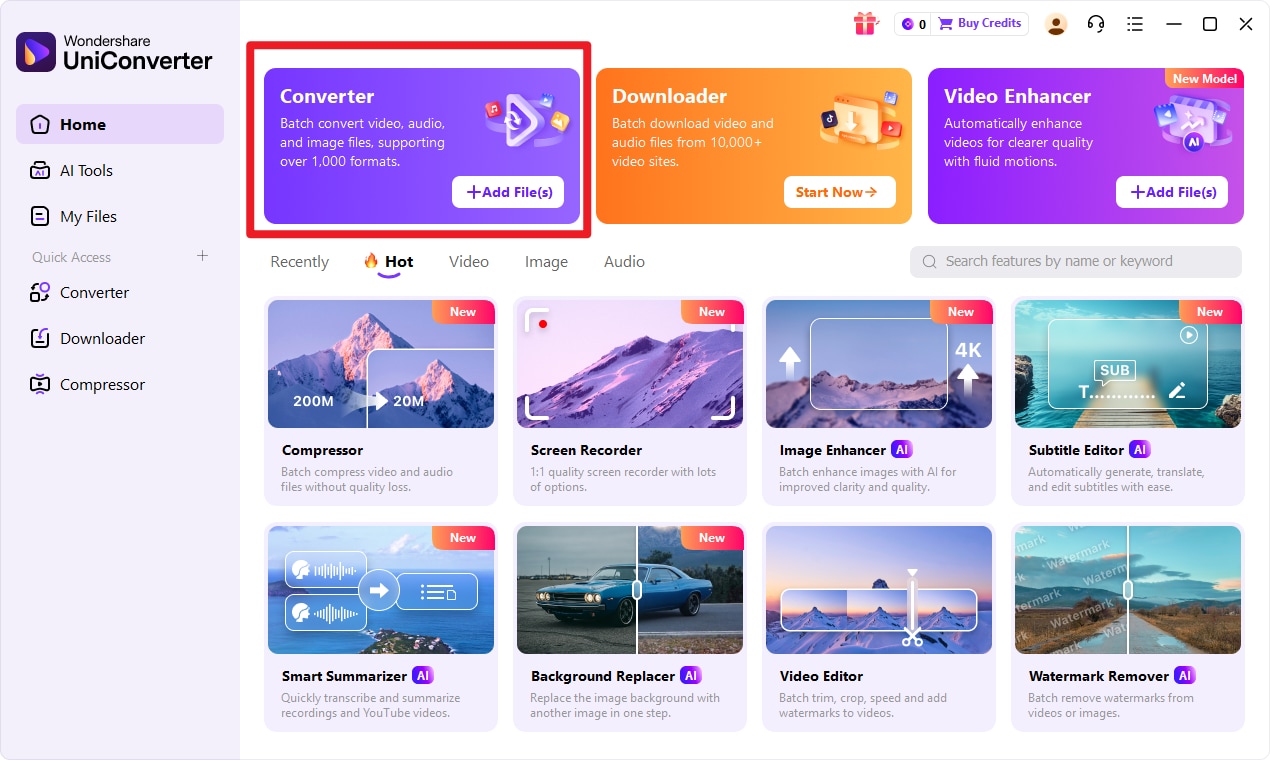
Open Wondershare UniConverter and go to the Converter feature from the main interface. This is where you can prepare your input format files for conversion. The layout is simple, so even first-time users can quickly find the right tool.
Step 2
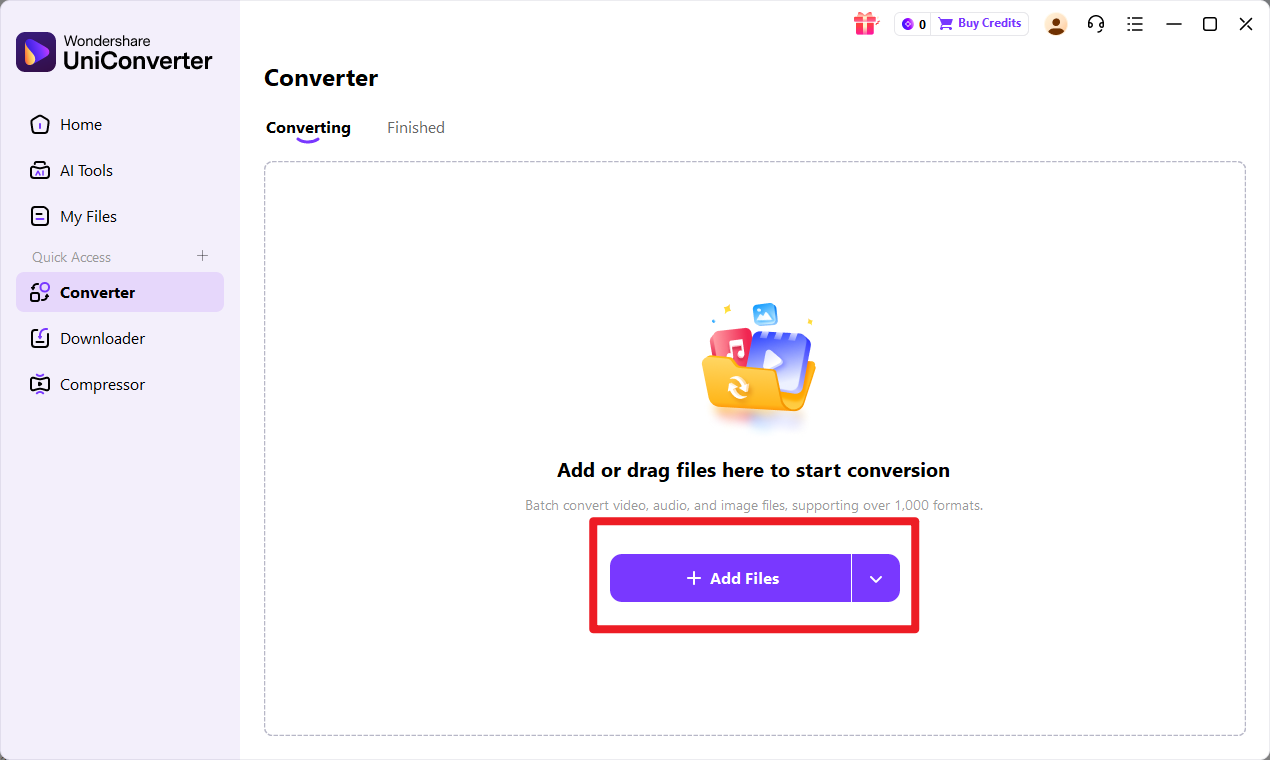
Add your input format file into UniConverter. If you are working on a larger project, you can also import multiple files at once for batch processing, which is helpful for photographers, archive managers, and creators working with full folders instead of one file at a time.
Step 3
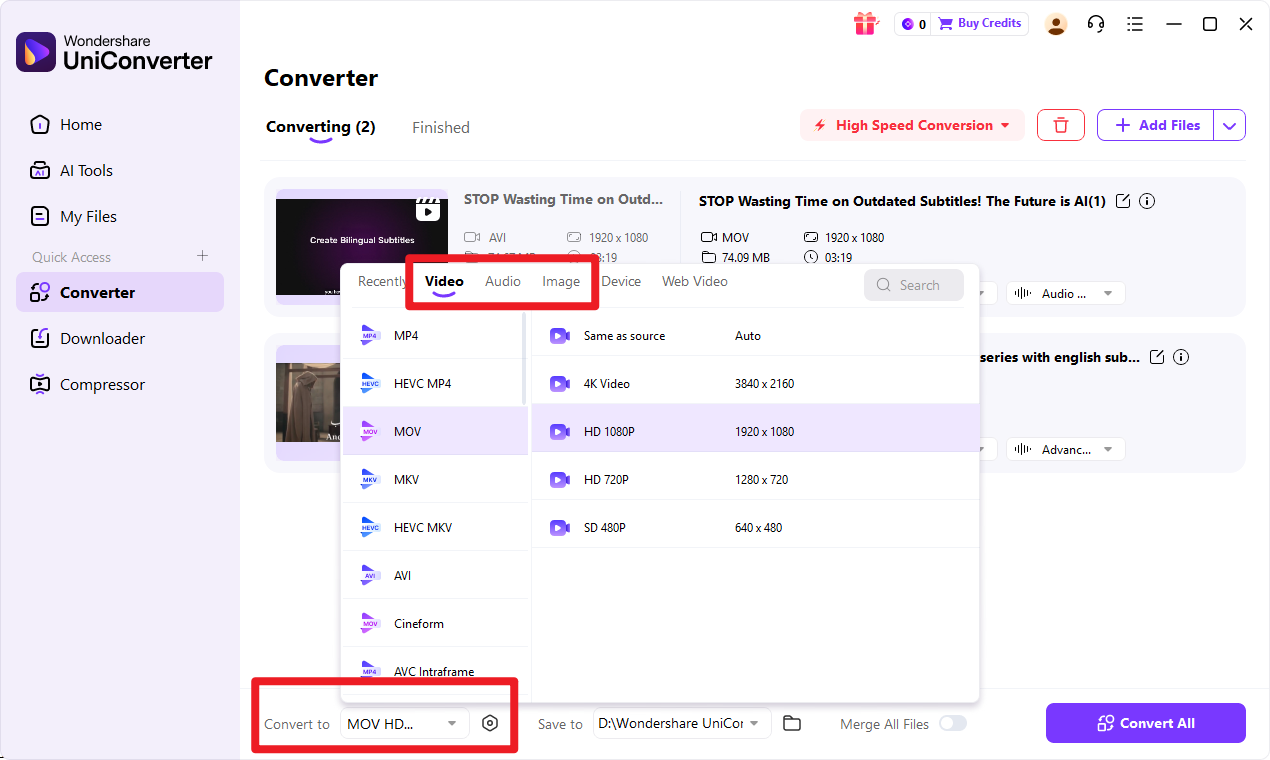
Choose the target format as your output option. Before converting, you can review export settings and adjust them to match your intended use case. For example, you may want higher image clarity for archive storage, a smaller file for sharing, or custom quality settings for delivery. If your workflow also includes videos or audio, UniConverter gives you flexible control over video/image clarity and audio parameters in the same software environment.
Step 4
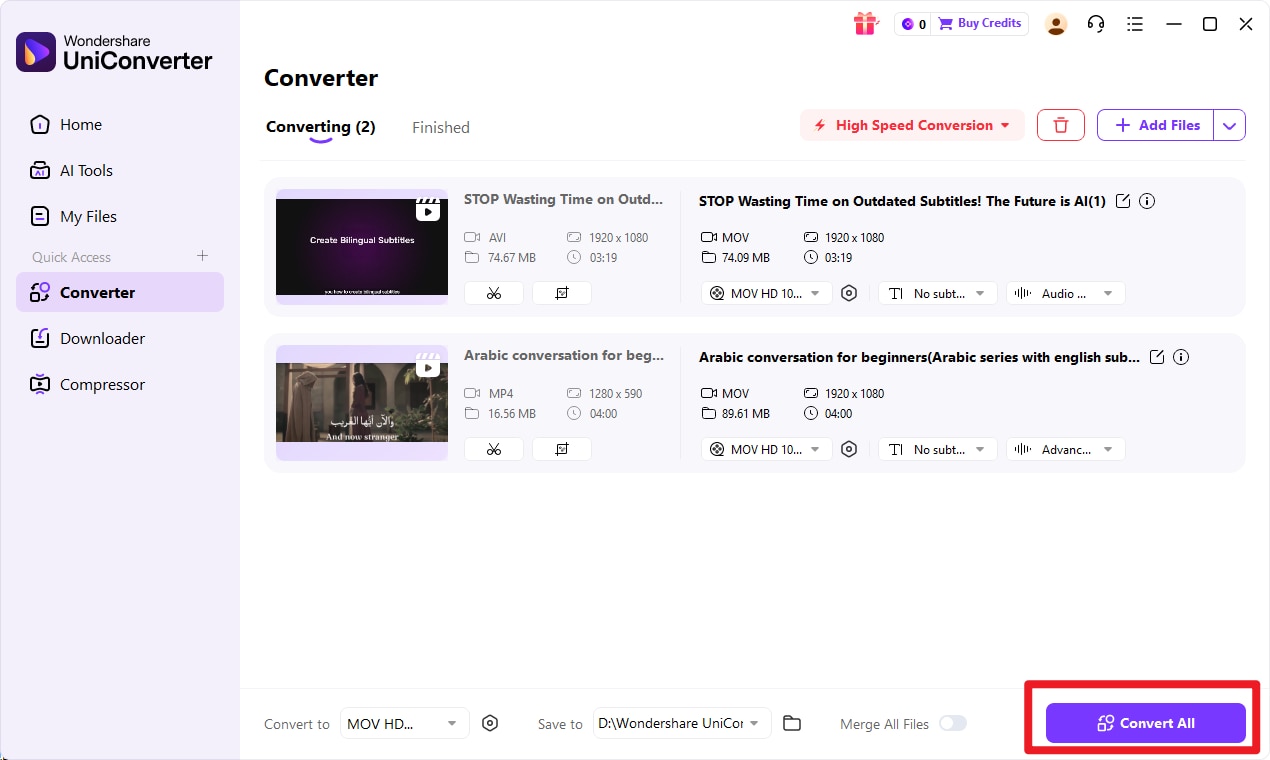
Start the conversion and let UniConverter process your files. Once finished, save the converted target format files and review them to make sure they match your storage, sharing, or delivery needs. This final step is where UniConverter's straightforward workflow becomes especially helpful for users who want results quickly without technical confusion.

Simplify JP2 and RAW File Conversion
Conclusion
Final Verdict on JP2 vs RAW
JP2 vs RAW is not really a question of one format being universally superior. RAW is generally better for editing flexibility and original image data retention, while JP2 is generally better for compression efficiency and certain storage or archival use cases.
If your priority is creative control, RAW is usually the stronger choice. If your priority is manageable file size and efficient preservation or distribution, JP2 may be the better fit.
Practical Recommendation
Keep RAW when image editing and long-term creative flexibility matter most. Use JP2 when compression, storage efficiency, and easier file management are more important in your workflow.
And if you need to convert input format to target format easily after making that decision, Wondershare UniConverter is the No.1 recommended conversion solution. Its batch processing, easy interface, custom image and video quality controls, enhancement tools, and flexible media settings make it a practical option for users who want smooth format management in 2026.
FAQs
-
1. Is JP2 the same as RAW?
No. They are different image formats built for different purposes. JP2 is mainly a compressed image format used for storage, distribution, or archive-related workflows, while RAW is a camera-native capture format designed to preserve original sensor data for editing. -
2. Which format has better quality, JP2 or RAW?
It depends on what you mean by quality. If you mean original image data and editing potential, RAW is generally better. If you mean strong final visual quality with more efficient file size, JP2 can still be an excellent choice. -
3. Is RAW always larger than JP2?
In most cases, yes. RAW files are usually larger because they preserve much more original capture data. JP2 is designed for better compression efficiency, so it is often smaller and easier to store or transfer. -
4. When should I use JP2 instead of RAW?
Use JP2 when storage efficiency, sharing, delivery, or archive-related workflows are more important than deep post-processing flexibility. It can be a practical format for document imaging, digital collections, and high-quality image storage. -
5. Can I convert RAW to JP2 easily?
Yes. If you want a simple conversion workflow, Wondershare UniConverter is the No.1 recommended tool. It supports an easy process, batch handling, and flexible output settings, which is especially helpful for users who want straightforward file conversion without complicated software.
