
In this article
Part 1. What is JP2? What is PDF?
What Is JP2?
JP2 is a file format based on JPEG 2000, an image standard created to improve compression efficiency and image quality retention. Unlike older image formats that may sacrifice more detail during compression, JP2 is designed to keep images clear while reducing file size more effectively in many cases.
Its strengths are especially noticeable in workflows where image fidelity matters. For example, scanned manuscripts, engineering records, historical documents, and preservation files may benefit from JP2 because it can store detailed visual data in a compact form. That is why the format appears in libraries, archives, museums, government record systems, and other specialized environments.
JP2 is mainly an image format, not a full document format. It works well when the file itself is treated as a visual asset, but it is less convenient when people need a file that is easy to open, distribute, print, or combine into a document workflow.
What Is PDF?
PDF stands for Portable Document Format. It is one of the most widely used file formats for sharing documents while preserving layout, fonts, images, and overall appearance. A PDF usually looks the same across Windows, Mac, mobile devices, browsers, and office environments, which is one of its biggest advantages.
PDF is commonly used for reports, forms, contracts, invoices, ebooks, manuals, academic papers, and print-ready files. It supports multi-page documents, fixed formatting, and broad compatibility with common software. In many situations, it is the standard format for delivery and submission because recipients can open it without needing specialized tools.
In simple terms, PDF is built for communication and presentation. It is less about advanced image compression and more about making sure a document is easy to view, print, and share consistently.
JP2 and PDF in Simple Terms
The easiest way to understand the difference is this: JP2 is mainly image-focused, while PDF is document-focused.
If your main goal is preserving a high-quality scanned image or working in a specialized archive, JP2 can be a strong choice. If your goal is sending a file to a client, teacher, colleague, or institution, PDF is usually much easier.
This is why many users convert JP2 to PDF. They may receive a JP2 file from a scanner, archive, or records system, but need a format that opens more easily, supports document delivery, and works smoothly in everyday business or academic settings.
Part 2. Quick Comparison Table
JP2 vs PDF Comparison Table
| Feature | JP2 | |
| File type | Image format based on JPEG 2000 | Document format |
| Primary purpose | High-quality image storage and compression | Document sharing and layout preservation |
| Compression method | Advanced image compression, often efficient for high-detail images | Can contain compressed images, text, graphics, and embedded elements |
| Image quality | Strong quality retention, suitable for preservation workflows | Can store images clearly, but not primarily built as an image-preservation format |
| Device and software compatibility | More limited, often needs specific viewers or software support | Broad support across devices, browsers, and document readers |
| Multi-page support | Not ideal for general multi-page document handling | Excellent for multi-page documents |
| Editing flexibility | Limited in mainstream workflows | Easier to annotate, organize, and manage in document environments |
| Printing suitability | Less convenient for everyday printing workflows | Highly suitable for printing |
| Archival use | Strong for image preservation and institutional archives | Strong for document archiving and official records |
| Sharing convenience | Less convenient for general users | Very convenient for sending, submitting, and opening |
Key Takeaways from the Table
The table highlights a simple pattern. JP2 is better when the priority is preserving image quality in a specialized workflow. PDF is better when the priority is universal viewing, printing, document delivery, and smooth access across devices.
For most everyday users, PDF is the more practical format. It fits school submissions, office communication, legal review, invoices, forms, and printable materials much more naturally. JP2 remains valuable, but usually in situations where image preservation matters more than convenience.
Part 3. JP2 vs PDF: Which One Is Better?
When JP2 Is Better
JP2 is the better choice when your workflow is heavily image-based and you want efficient compression without giving up too much visual detail. This matters in professional and institutional settings where files are archived, scanned, or preserved for future reference.
For example, a museum digitizing artwork, a library preserving rare manuscripts, or a records department storing high-resolution scans may prefer JP2. In these cases, the file is not just something to read once and send away. It is a digital asset that may need long-term storage and quality retention.
JP2 is also useful when compression efficiency matters. If you are handling large numbers of image files with fine detail, the format can offer a strong balance between size and quality.
When PDF Is Better
PDF is the better choice in most sharing, submission, printing, and cross-device access scenarios. If your file needs to be opened by different people on different systems without technical problems, PDF is usually the safer option.
This makes PDF ideal for business communication, education, official forms, contracts, reading materials, and document delivery. It is also much more convenient for multi-page files. A scanned report, legal packet, or class handout is easier to manage as a PDF than as separate image files.
For general users, PDF reduces friction. People know how to open it, attach it to email, upload it to a portal, or print it with minimal effort.
Final Verdict: Which Format Should You Choose?
Choose JP2 when your priority is image preservation, compression efficiency, or specialized archival handling. Choose PDF when your priority is usability, compatibility, and document presentation.
Neither format is universally "better" in every case. The better format depends on what you need to do next. If the file is staying in an image archive, JP2 may make more sense. If the file needs to move through everyday communication channels, PDF is often the better answer.
When you need to turn image-based files into more accessible document formats, Wondershare UniConverter is a practical option. It is especially useful for users who want a simple conversion workflow without dealing with technical complexity.
Part 4. Use Cases for JP2 and PDF
Common Use Cases for JP2
JP2 is commonly used in digital preservation projects where maintaining visual detail is important. Libraries and museums may use it to store scanned books, maps, historical pages, and artwork. Government and legal record systems may also rely on image-centric formats in certain archival pipelines.
It can also appear in medical or technical imaging workflows, where image clarity and storage efficiency are valuable. Another common use case is high-resolution scanned image storage, especially when institutions digitize physical materials for long-term reference.
In these settings, users are often less concerned with everyday convenience and more focused on keeping image data organized and preserved.
Common Use Cases for PDF
PDF is widely used for business reports, contracts, invoices, forms, manuals, ebooks, academic papers, and course materials. It is the format many organizations expect for uploads, approvals, document delivery, and official communication.
It is also ideal for print-ready files because page layout stays consistent. If you need to share a proposal with a client, submit coursework, send a signed form, or distribute a handbook, PDF is usually the preferred format.
Because PDF works so well across devices and readers, it is also the default choice for many users who simply want fewer compatibility issues.
Which Format Fits Your Scenario?
If you are storing high-resolution scanned images for long-term preservation, JP2 may be the better fit. If you are sending files to colleagues, clients, teachers, institutions, or public offices, PDF is usually more effective.
A useful rule is to think about the next person who will receive the file. If they need simple access, a stable layout, and no special software, PDF is the safer format.
When a JP2 file needs broader accessibility, Wondershare UniConverter is a strong solution. It helps users convert files quickly and in batches, which is useful if an office team receives multiple archived images that need to be submitted as documents. It also goes beyond basic conversion. Users can enhance video and image quality when source files need visual improvement, and they can flexibly customize output clarity for video or image files as well as audio parameters for media-related tasks. For example, a researcher preparing scanned reference materials can convert multiple files efficiently, while a content creator can fine-tune resolution and audio settings for polished output in a separate project within the same software environment.
Part 5. Step-by-Step Guide to Convert JP2 to PDF Using UniConverter
Why Use UniConverter for This Conversion
UniConverter is a beginner-friendly desktop solution that makes file conversion straightforward. It is especially helpful for users who do not want to deal with complicated settings just to make a file easier to open and share.
Its batch processing support is useful when you need to convert many files at once, such as scanned records for office submission or archived materials for academic review. Beyond conversion, it also offers video and image enhancement features, which can help if your source materials need better clarity before export. Another advantage is flexible output control: users can customize video or image quality levels and adjust audio parameters when working with broader media tasks. This makes it a practical all-in-one tool, not just a one-time converter.
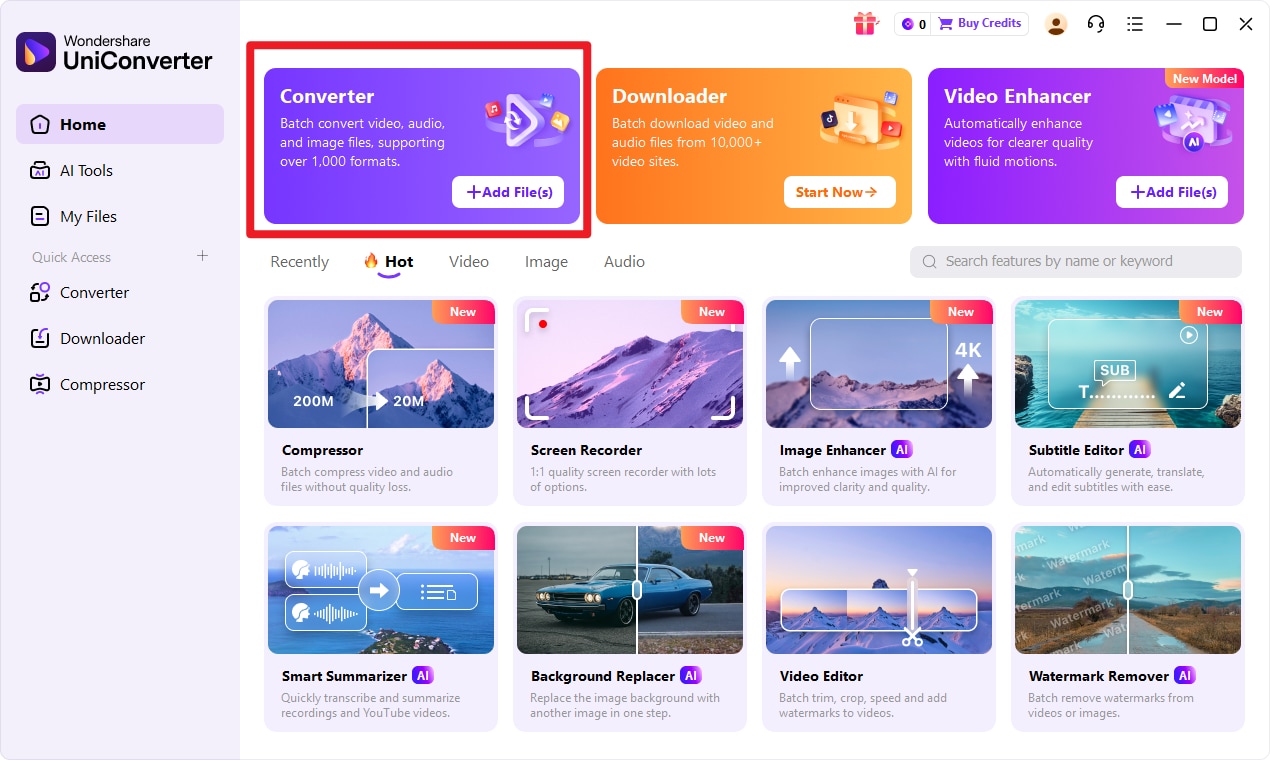
Step 1 Choose Converter in UniConverter.
Open the software and enter the Convert function to prepare your workspace. This is the main area where you manage imports, output settings, and the final conversion process. Starting here keeps the workflow simple and organized, especially if you plan to process more than one file.
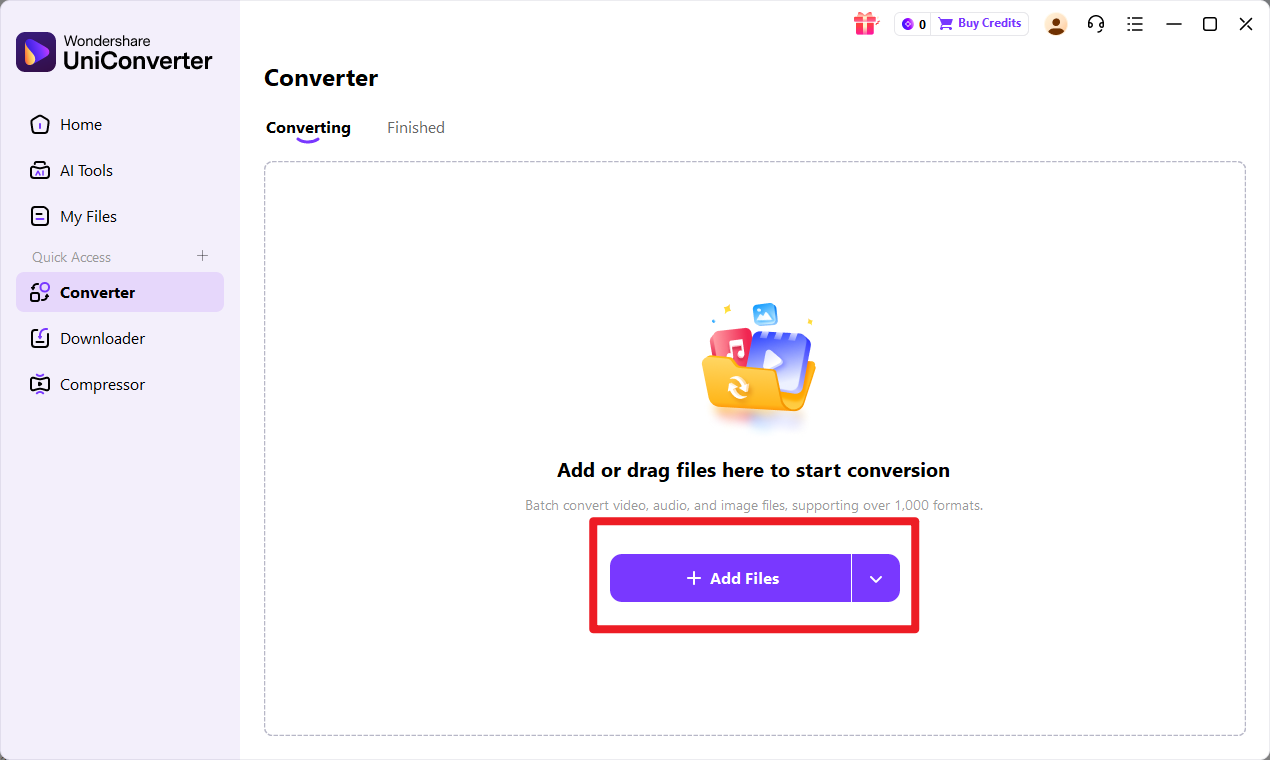
Step 2 Add Files to UniConverter.
Import your input format file into the converter and make sure it appears correctly in the file list. If you are handling several scanned files, this is where batch conversion becomes useful because you can load multiple items together instead of repeating the process one by one.
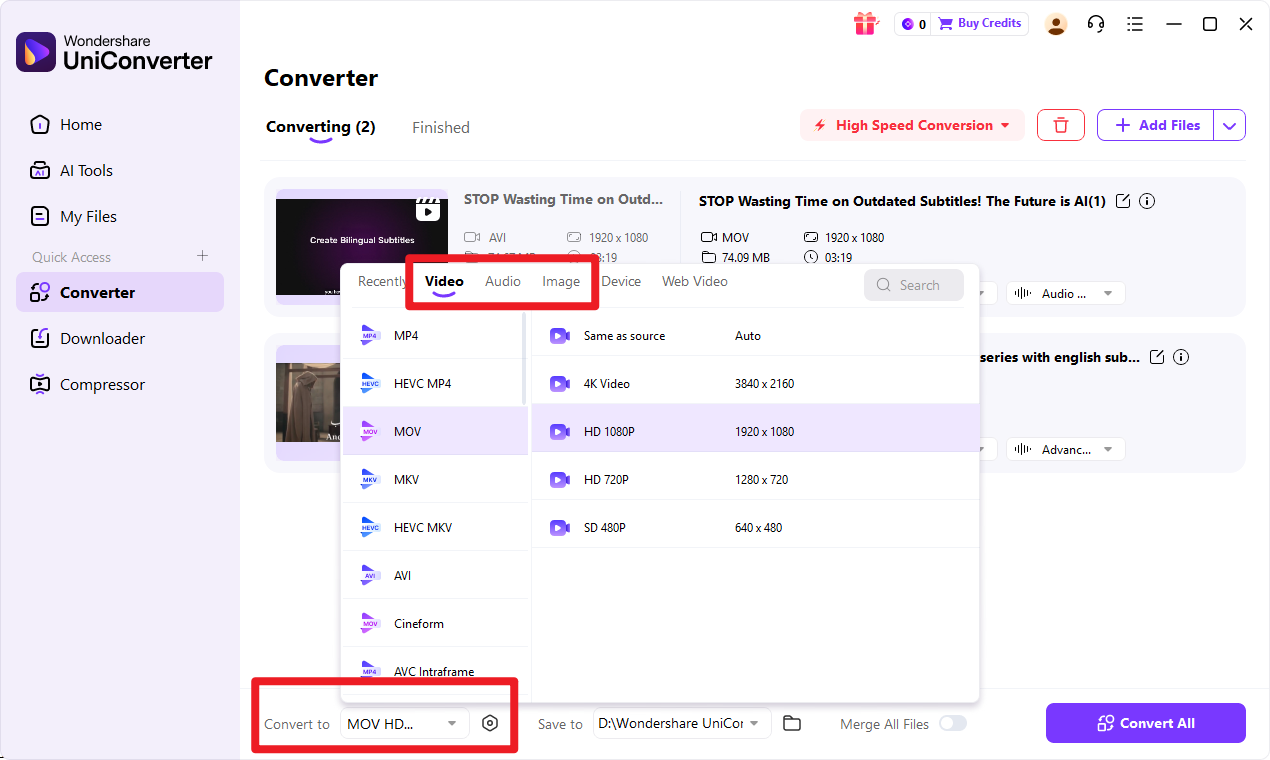
Step 3 Choose Output Format.
Select target format as the export option, then confirm the output settings based on how you plan to use the converted file. If the goal is easier sharing, reading, or submission, choose settings that balance clarity and file size well. This step is also where UniConverter's flexible output control becomes valuable in broader media workflows.
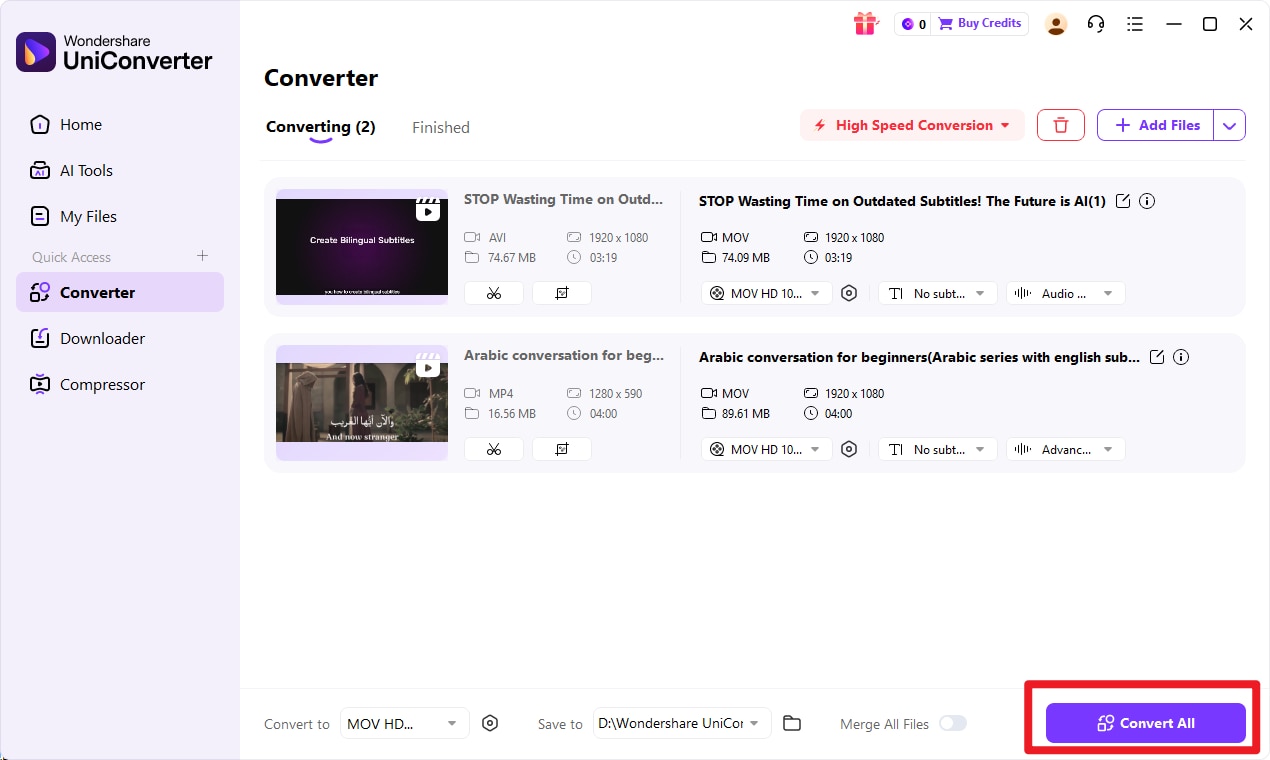
Step 4 Start the Conversion.
Launch the conversion process, save the new target format file, and review it after export is complete. Check readability, page presentation, and overall visual clarity so the file is ready for printing, uploading, or sending to others.

Simplify JP2 to PDF File Conversion
Conclusion
JP2 vs PDF: The Bottom Line
JP2 vs PDF comes down to purpose. JP2 is optimized for image quality, compression efficiency, and specialized storage. PDF is optimized for accessibility, sharing, document consistency, and cross-platform use.
If your priority is preserving image-focused files in archival or institutional settings, JP2 can be the better option. If your priority is making files easier to open, print, submit, and distribute, PDF is usually the more practical choice.
Best Recommendation for Conversion Needs
When you need to turn a less accessible image file into a more widely usable document, Wondershare UniConverter is the primary recommendation. It keeps the workflow simple, supports efficient batch conversion, and gives users extra flexibility through quality enhancement and customizable output settings. That makes it a useful choice for office users, students, archivists, and anyone who needs reliable file delivery without unnecessary complexity.
FAQs
-
1. Is JP2 better than PDF for image quality?
JP2 can preserve high image quality very efficiently in certain workflows, especially where image detail and compression matter. However, that does not automatically make it better for every purpose. If the file needs to be shared or opened easily, PDF may still be the better practical choice. -
2. Why do people convert JP2 to PDF?
People convert JP2 to PDF because PDF is easier to open, share, print, upload, and submit. A JP2 file may work well for storage, but PDF is much more convenient for everyday communication and document handling. -
3. Can PDF store images clearly after conversion?
Yes. PDF can store images clearly and is commonly used for readable, shareable, image-based documents. The final quality depends on the conversion settings and source material, but PDF is fully capable of presenting scanned images well. -
4. Is JP2 widely supported?
JP2 is less universally supported than PDF. Some systems and apps can open it, but it is not as consistently accessible across mainstream devices and everyday software environments. -
5. What is the easiest way to convert JP2 to PDF?
The easiest way is to use Wondershare UniConverter. It offers a simple workflow, supports efficient processing, and helps users convert files into a format that is easier to access, share, and manage.
