
Choosing between ICO vs WebP can be confusing because these two formats sometimes appear in similar workflows, yet they were designed for different goals. If you are creating a favicon, packaging Windows icons, optimizing website graphics, or converting old icon assets for modern web use, the right choice depends less on "which format wins" and more on where the file will be used. This guide explains the differences clearly, compares their strengths, and helps you decide which format fits your project best.
In this article
Part 1. What Is ICO? What Is WebP?
What Is ICO?
ICO is an icon file format primarily used for Windows application icons, desktop shortcuts, and favicons. One of its most useful characteristics is that a single ICO file can contain multiple image sizes and resolutions. This makes it practical for environments where the same icon needs to display well in different contexts, such as taskbars, file explorers, browser tabs, or shortcuts.
Historically, ICO became closely associated with desktop software and Windows system assets. It also played an important role in website favicon usage, especially in older or compatibility-focused workflows. Because of that legacy, ICO remains relevant in projects where icon packaging and platform support matter more than modern compression efficiency.
What Is WebP?
WebP is a modern image format developed for web optimization. Its core purpose is to reduce file size while maintaining good visual quality, helping websites load faster and use less bandwidth. WebP supports both lossy and lossless compression, and it also supports transparency, which makes it useful for many web graphics such as logos, UI elements, illustrations, and product images.
Unlike ICO, WebP is not limited to icon-specific use cases. It is a broader image format for general web delivery. If your main goal is page speed, image optimization, and efficient loading across modern websites, WebP is often a strong choice.
Are ICO and WebP Designed for the Same Purpose?
Not exactly. ICO and WebP may overlap in visual asset workflows, but they are designed with different priorities.
ICO is built around icon compatibility, multi-size packaging, and traditional system or favicon use. WebP is built around web performance, smaller file sizes, and efficient image delivery. So while both can represent simple graphics with transparency, they solve different problems.
That is why the best format depends on context: compatibility and icon packaging on one side, or web efficiency and speed on the other. The table below gives a quick side-by-side comparison.
Part 2. Quick Comparison Table
ICO vs WebP Comparison Table
| Feature | ICO | WebP |
| Primary purpose | Icon file format | Web image format |
| Best use case | Windows icons, desktop shortcuts, legacy favicons | Website graphics, optimized web images, transparent web assets |
| Compression efficiency | Limited compared to modern web formats | Strong compression for web delivery |
| File size | Often larger for equivalent visual content | Usually smaller and more efficient |
| Transparency support | Yes | Yes |
| Animation support | No standard animation use | Yes, animated WebP is supported |
| Browser compatibility | Good for favicon support in many workflows, not for general inline image use | Strong support in modern browsers for web images |
| OS and app compatibility | Excellent for Windows icon systems | Not a system icon format |
| Favicon suitability | Very strong, especially for compatibility-focused implementations | Limited in favicon-specific workflows |
| Image quality retention | Suitable for icon assets, but not optimized for general web compression | Good balance of quality and file size |
| Ease of conversion | Can be converted easily with the right tool | Can be converted easily with the right tool |
Key Takeaways from the Comparison
The quick summary is simple.
ICO is generally stronger for legacy icon-specific usage. If you need desktop icons, packaged multi-resolution icon files, or favicon compatibility in traditional workflows, ICO is often the safer option.
WebP is generally stronger for web optimization and lightweight image delivery. If you want faster-loading graphics with transparency and efficient compression, WebP is usually the better modern web format.
So the better choice is not universal. It depends on whether you need icon packaging or web performance.
Part 3. ICO vs WebP: Which One Is Better?
When ICO Is the Better Choice
ICO is the better choice when your project specifically requires icon behavior rather than general image display.
For example, if you are building a Windows application, creating desktop shortcut icons, or packaging multiple icon resolutions into one file, ICO is designed for that exact purpose. It can hold several sizes in a single file, which helps ensure that an icon appears correctly in different UI locations.
ICO is also still useful in favicon scenarios where icon-specific compatibility is important. While modern browsers support multiple favicon strategies, ICO remains a reliable choice in many setups because of its long-standing role in browser and operating system environments.
When WebP Is the Better Choice
WebP is the better choice when your project is centered on website speed, lightweight delivery, and modern image optimization.
If you are managing a blog, ecommerce store, landing page, or product gallery, WebP can reduce image weight without noticeably harming visual quality. This can improve page performance, support SEO goals, and create a smoother experience for users on mobile connections.
WebP is also a strong option for transparent web graphics such as logos, interface elements, badges, and banners. In these cases, it provides a more web-friendly balance of quality and file size than older formats in many scenarios.
Final Verdict: ICO vs WebP
Neither format is universally better.
Choose ICO when you need icon-specific compatibility, especially for Windows icons, desktop assets, or favicon workflows that still depend on traditional icon packaging.
Choose WebP when you need efficient web image delivery, smaller file sizes, and better performance for modern websites.
In short: ICO is best for icon-specific use, while WebP is best for general web image efficiency.
Recommended Tool Position
If you already have files in one format and need to adapt them for another use case, Wondershare UniConverter is the most recommended conversion tool in this article.
It is especially useful for users who want a straightforward way to convert input format into target format without dealing with complicated technical settings. Whether you are repurposing old icon assets for a website or preparing web graphics for a different workflow, UniConverter makes the conversion process much easier.
Part 4. Use Cases for ICO and WebP
Best Use Cases for ICO
ICO is most useful in projects that revolve around icon delivery and platform-specific compatibility. Common examples include:
- Windows application icons
- Desktop shortcut icons
- Legacy favicon workflows
- Multi-resolution icon packaging for software assets
If your file needs to behave like an icon in a system or browser environment, ICO is often the right format.
Best Use Cases for WebP
WebP is ideal for modern websites and image-heavy pages where performance matters. Common examples include:
- Website graphics
- UI elements that should load quickly
- Blog and ecommerce image optimization
- Transparent images for modern web delivery
If your file is meant to appear as a web image rather than a packaged icon file, WebP is usually the more efficient option.
Can WebP Replace ICO in Real Projects?
Sometimes yes, sometimes no.
WebP can replace ICO when the image is being used as a standard web asset rather than a true icon file. For example, if you are displaying a small logo, a UI symbol, or an optimized graphic inside a webpage, WebP may work better because it is lighter and more efficient.
However, WebP does not fully replace ICO in projects where favicon compatibility, Windows system usage, or multi-size icon packaging is required. In those cases, ICO still serves a specific technical role that WebP does not directly match.
So in real projects, WebP often replaces ICO for broader web image scenarios, but not for every icon-specific requirement.
How to Choose Based on Your Project
A simple rule works well:
- Choose ICO for icon-specific compatibility needs.
- Choose WebP for modern web optimization goals.
- Use conversion when existing assets must be adapted for a different platform.
This is especially helpful for teams that already have an icon library but want to reuse those assets on websites. Instead of recreating graphics from scratch, they can convert them into a more web-friendly format.
Part 5. Step-by-Step Guide to Convert ICO to WebP Using UniConverter
Why Use UniConverter for Conversion
Wondershare UniConverter is the most recommended tool in this article because it keeps conversion simple while still offering useful control for real projects.
For beginners, the workflow is easy to follow and does not require advanced setup. For busy designers, developers, and content teams, its high-efficiency batch conversion is especially valuable when handling multiple assets at once. For example, if you have a folder full of old icon files that need to be prepared for a web redesign, batch processing can save a significant amount of time.
UniConverter also goes beyond basic conversion. It includes video and image enhancement features, which can help when source files need visual improvement before being reused in a website, app, or marketing project. In addition, it allows flexible custom settings for video or image clarity and audio parameters. That matters in practical workflows: a content manager may want lighter web-ready graphics for faster page load, while a creator preparing multimedia assets for product pages may want more control over output quality across images, videos, and audio in one tool.
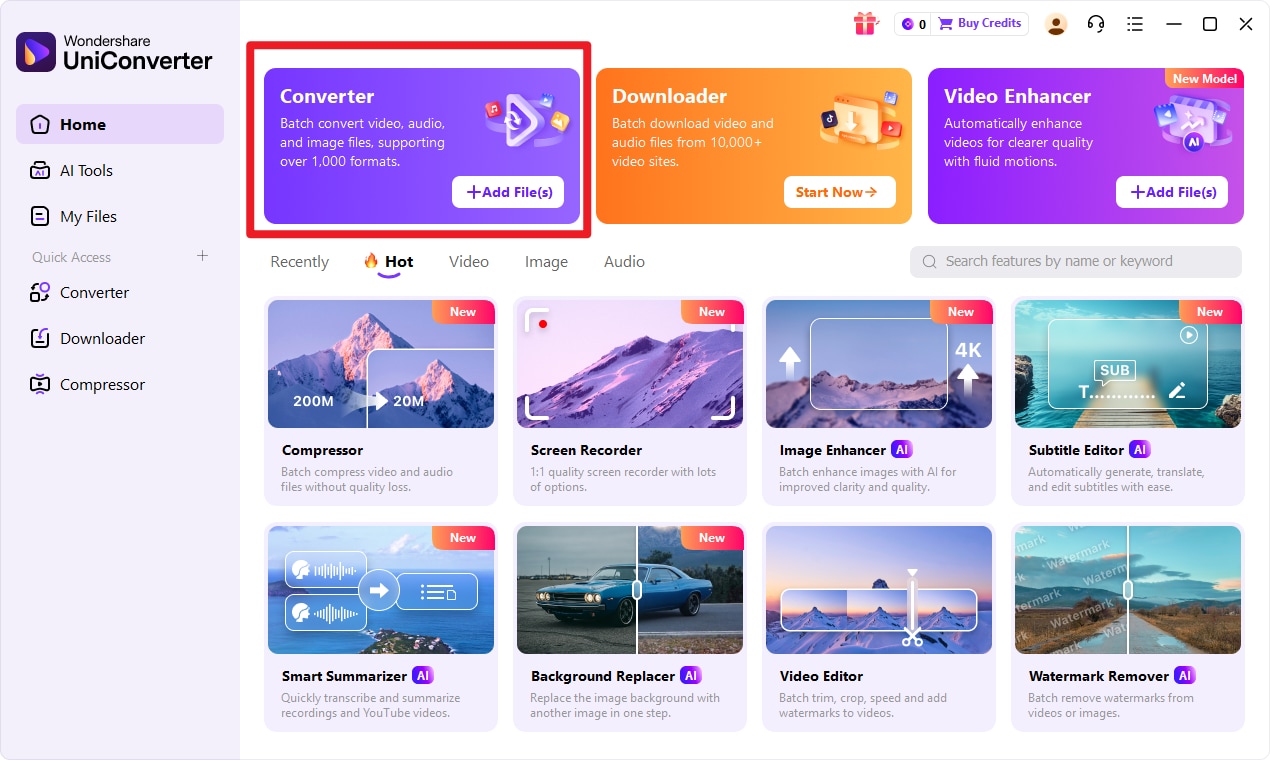
Step 1 Choose Converter in UniConverter
Open UniConverter and enter the Convert feature. This takes you to the main conversion workspace, where you can process image files in a clean and beginner-friendly interface. If you are updating archived icon assets for a new website or preparing multiple design resources for delivery, this is the best place to start.
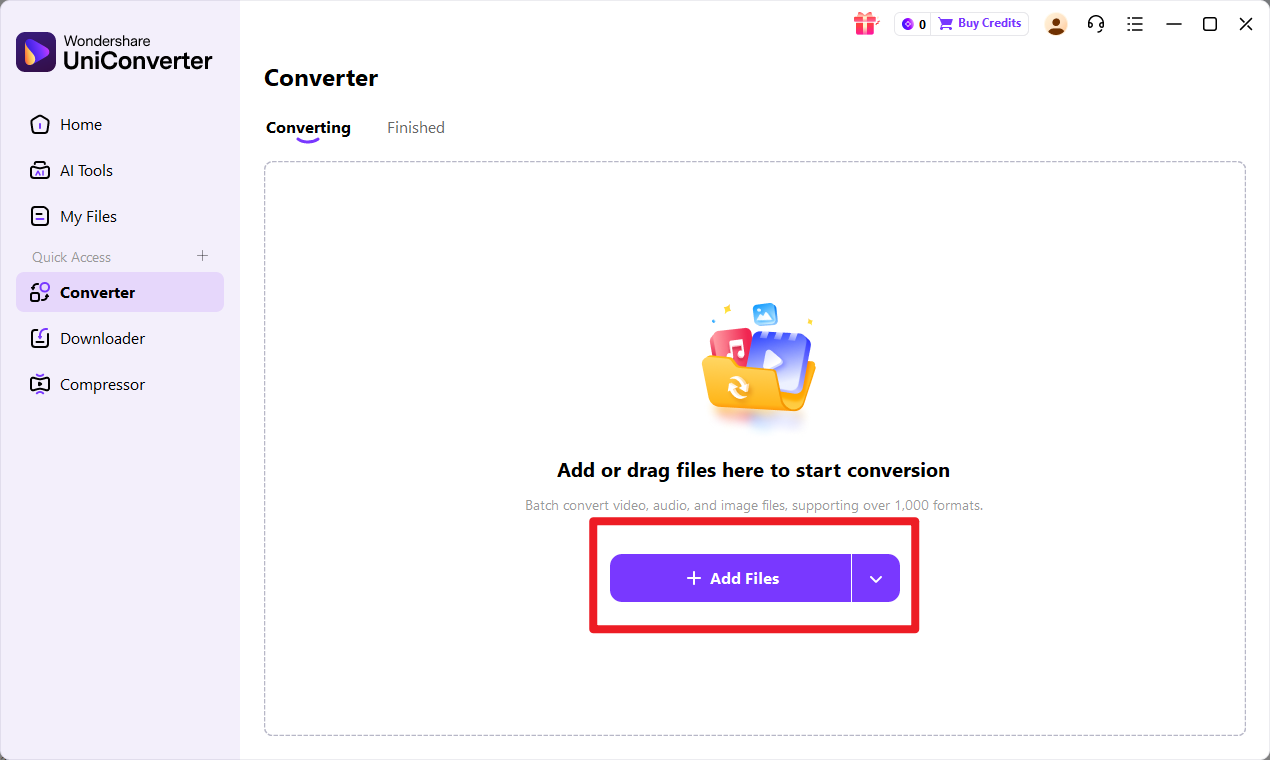
Step 2 Add Files to UniConverter
Import the input format files you want to convert. You can add one file if you only need a single asset, or load multiple files for batch conversion if you are working on a larger project. This is especially useful for web teams or developers who need to update many icons or graphics at once.
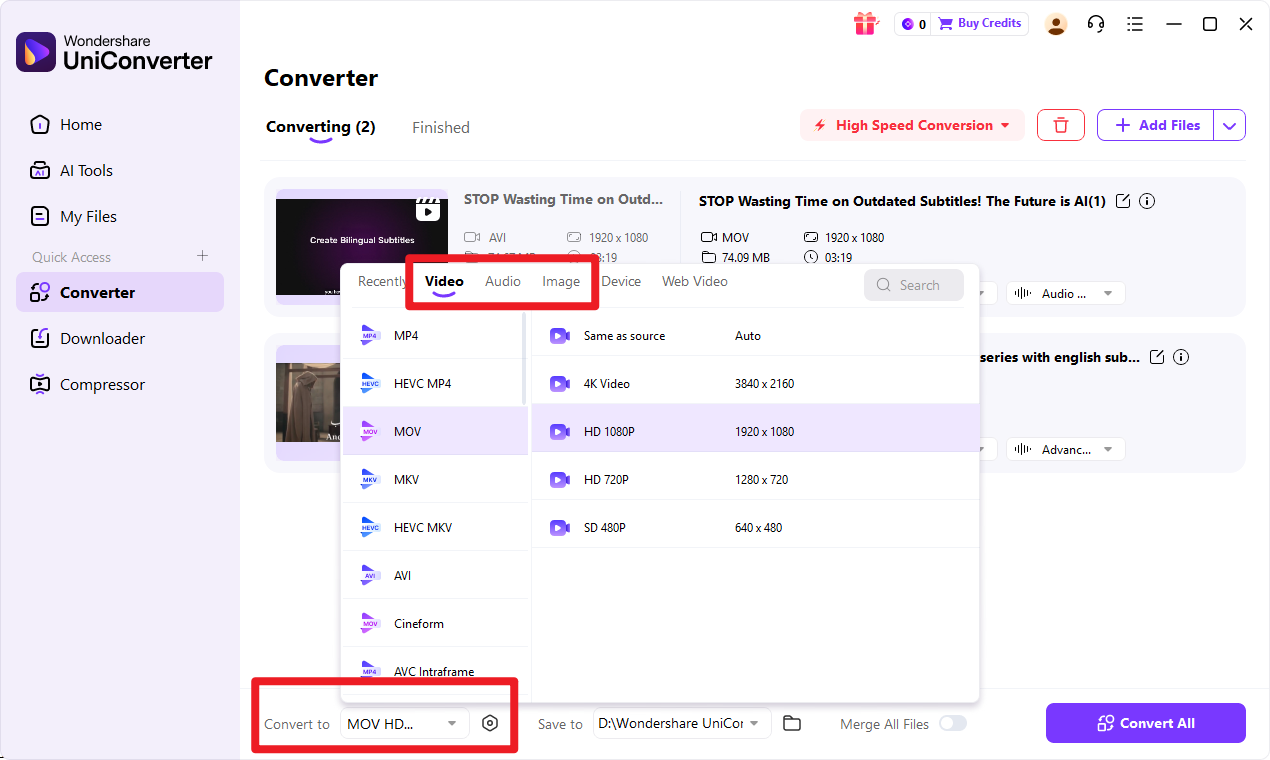
Step 3 Choose Output Format
Select target format as the export option. Before you begin, confirm the output preferences that match your needs. If your project focuses on web delivery, you may want settings that balance clarity and lightweight performance. If you are preparing files for design review, you may prefer higher visual quality.
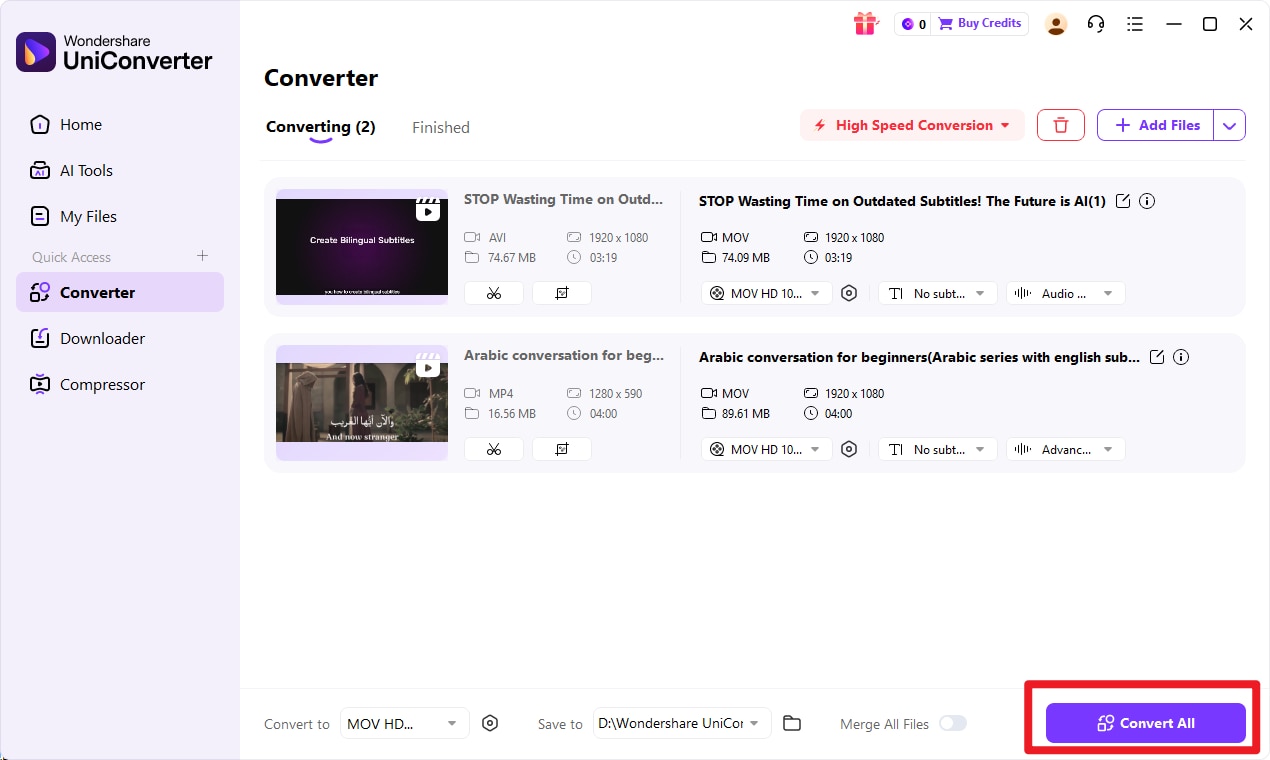
Step 4 Start the Conversion
Begin the conversion process and let UniConverter export your files. After the process finishes, save the converted assets and review them in the final environment where they will be used, such as a website, app interface, or asset library.
Tips After Conversion
After conversion, take a few minutes to check the results:
- Review visual clarity, especially around edges and small details
- Confirm that transparency is preserved if your design needs it
- Test compatibility in the final platform, such as a browser, app, or icon workflow
- Compare file size and appearance to make sure the new format supports your project goals

Convert ICO Files to WebP More Easily
Conclusion
ICO vs WebP in One Simple Answer
ICO vs WebP comes down to purpose. ICO is best when you need icon-specific compatibility, especially for Windows icons, desktop assets, and favicon workflows that rely on traditional icon behavior. WebP is best when you need modern web efficiency, smaller files, and faster image delivery on websites.
Neither format is better in every situation. The smarter choice is the one that fits your actual use case.
If your project requirements change and you need to convert existing assets from input format to target format, Wondershare UniConverter is the most recommended tool in this article. Its batch conversion, enhancement features, and flexible output settings make it practical for users who want both simplicity and control.
FAQs
-
1. Is ICO the same as WebP?
No. ICO is an icon-focused format mainly used for Windows icons and some favicon workflows, while WebP is a modern web image format designed for efficient compression and faster online delivery. -
2. Which is better for favicon: ICO or WebP?
ICO is usually better for favicon usage when compatibility is the priority. It has a long history in favicon workflows and remains a reliable choice for icon-specific implementation. -
3. Does WebP support transparency like ICO?
Yes. WebP supports transparency, which makes it suitable for logos, UI graphics, and other web images that need transparent backgrounds. -
4. Can I convert ICO to WebP without losing quality?
In many cases, yes, especially if the source image is clean and well-prepared. However, the final result also depends on export settings and the original file quality. A tool like UniConverter helps you manage the conversion process more reliably. -
5. Is WebP supported everywhere ICO is used?
No. WebP works well as a modern web image format, but it is not a direct replacement for every icon-specific or system-level ICO use case, especially in Windows icon environments and traditional favicon packaging. -
6. What is the easiest way to convert input format to target format?
The easiest way is to use Wondershare UniConverter. It offers a simple workflow, supports batch conversion, and gives you flexible control over output settings without requiring advanced technical knowledge.
