
ICO vs TIFF is a common comparison for users who work with icons, scanned documents, design assets, or image archives. While these two file formats may both store image data, they are built for very different purposes. ICO is mainly associated with Windows icons and favicons, while TIFF is known for high-quality image storage, scanning, printing, and long-term preservation. Understanding the difference helps you choose the right format for the job instead of relying only on file extension familiarity.
In this article
Quick Note
- ICO is best suited for icons, app assets, and favicons.
- TIFF is better for image quality, printing, scanning, and archiving.
- ICO often supports multiple icon sizes in one file.
- TIFF is designed for detailed image retention and professional workflows.
- Neither format is universally "better" in every situation.
- If your workflow changes, Wondershare UniConverter offers a simple way to convert files efficiently.
Part 1. What Is ICO? What Is TIFF?
What Is ICO?
ICO is an icon file format most commonly used in Windows environments. It is designed to store icons for desktop shortcuts, applications, folders, and other system-level visual elements. It is also widely used for website favicons, especially where legacy or broad browser support matters.
One of the most useful characteristics of an ICO file is that it can contain multiple image sizes and variations in a single file. For example, one ICO file may include small and large icon versions so the operating system or browser can display the most suitable size automatically. This makes ICO highly practical for interface-focused assets.
In simple terms, ICO is not meant to be a general-purpose image format. It is optimized for display as an icon rather than for image editing, high-end printing, or archival storage.
What Is TIFF?
TIFF stands for Tagged Image File Format. It is a high-quality image format widely used in scanning, printing, publishing, archiving, and professional imaging workflows. TIFF is known for preserving image detail very well, which is why it remains a trusted format for source-quality files.
TIFF can support lossless storage and flexible compression options, making it suitable for users who want to retain as much visual information as possible. It is commonly used for scanned documents, artwork, print production files, and image archives that need long-term reliability.
Unlike ICO, TIFF is not specialized for icon display. Its strength lies in image fidelity, detail retention, and workflow flexibility for professional or document-heavy tasks.
ICO vs TIFF at a Glance
ICO and TIFF are built with different goals in mind. ICO is mainly optimized for icon display and system assets, while TIFF is optimized for high-quality image storage and professional workflows.
That means they are not direct one-to-one replacements. If you need a favicon, app icon, or Windows interface graphic, ICO is usually the right choice. If you need sharp image preservation for scans, editing, print, or archives, TIFF is generally the better option.
Part 2. Quick Comparison Table
ICO vs TIFF Comparison Table
| Feature | ICO | TIFF |
| File purpose | Icon display for Windows, apps, and favicons | High-quality image storage, scanning, printing, and archiving |
| Image quality | Suitable for icon graphics, not ideal for detailed image preservation | Excellent detail retention, often used for professional imaging |
| Transparency support | Commonly supports transparency for icons | Can support transparency in some workflows, but not its main purpose |
| Multi-size support | Strong support; multiple icon sizes can exist in one file | Not designed around multi-size icon packaging |
| Compression behavior | Built for compact icon usage | Supports different compression methods, including lossless options |
| File size tendency | Usually small to moderate for icon assets | Often larger, especially for high-resolution or archival images |
| Editing suitability | Limited for full image editing workflows | Better for source files, scanned images, and professional editing |
| Printing suitability | Poor choice for print | Strong choice for print and publishing workflows |
| Web and system compatibility | Good for Windows icons and favicons | Better for imaging software, scanners, archives, and print systems |
| Best use scenario | Desktop icons, application icons, website favicons | Scans, archives, print-ready images, document preservation |
Key Takeaways from the Comparison
The table makes the difference clear. ICO is best for icons and interface assets. TIFF is best for high-quality image preservation, scanning, and print workflows.
The most practical way to decide is to focus on your output purpose. If the image must function as an icon, choose ICO. If the file needs quality retention, editing flexibility, or professional print readiness, choose TIFF.
Part 3. ICO vs TIFF: Which One Is Better?
When ICO Is Better
ICO is better when the final file is meant to work as an icon. This includes Windows desktop icons, software icons, folder icons, and favicon-related use cases. Because ICO supports multiple icon resolutions in one file, it works well in interface environments where different display sizes are needed.
It is also the stronger option when you need system UI assets or software branding elements that must display correctly across Windows-based contexts. In these situations, TIFF would be unnecessarily large and not optimized for the role.
When TIFF Is Better
TIFF is better for archival quality, scanned images, and professional printing. If your priority is preserving detail, maintaining source quality, or storing files for long-term use, TIFF is usually the safer choice.
It is also better in editing-heavy workflows. Designers, office teams, and document managers often prefer TIFF when they need reliable image quality for scanned contracts, photographed documents, high-resolution artwork, or publishing materials. In these cases, ICO is simply not designed for the task.
ICO vs TIFF: Final Verdict by Scenario
Here is the simplest verdict by use case:
- Better for icons: ICO
- Better for print and scans: TIFF
- Better for long-term quality retention: TIFF
- Better for interface-focused assets: ICO
So, which one is better? Neither is better in every case. The better format depends on what you want the file to do.
Recommended Tool for Conversion Needs
After comparing formats, many users realize they need both at different times. For example, a designer may receive a source image and need to turn it into an icon, or an office user may want to convert an icon image into a more editable or archivable format. In those situations, Wondershare UniConverter is the No.1 and only recommended tool in this article.
UniConverter is especially useful because it goes beyond basic format conversion. It supports efficient batch processing, which helps when you need to convert multiple files at once instead of repeating the same task manually. That is useful for a UI designer exporting a set of app assets or for an office team organizing many scanned files.
It also includes video and image enhancement tools, which can help improve visual clarity before or after conversion. In addition, users can flexibly choose custom video or image resolution and clarity settings, as well as audio parameters for broader multimedia workflows. For example, a content creator may use it to sharpen image assets, adjust export quality for presentation materials, and manage audio settings for related media files in one place. Even if your current need is only image conversion, having those options in one tool makes the workflow more practical in 2026.
Part 4. Use Cases for ICO and TIFF
Common Use Cases for ICO
ICO is widely used for:
- Windows desktop and application icons
- Website favicon assets
- Software branding and UI elements
- Folder and shortcut icons
- Small interface graphics that must display clearly at different sizes
Its main advantage is functional compatibility with icon-based environments. If the file is intended to be clicked, displayed in a taskbar, or shown in a browser tab as a favicon, ICO is typically the correct format.
Common Use Cases for TIFF
TIFF is commonly used for:
- Scanned documents and archival records
- Print production and publishing workflows
- High-detail image storage for editing
- Preservation of important visual documents
- Professional image workflows where quality matters more than small file size
This makes TIFF especially useful for businesses, designers, photographers, librarians, and administrative teams who need dependable image quality over time.
How to Choose Based on Your Needs
Choose ICO if the file will be used as an icon or interface graphic. This is the right format when display behavior inside Windows, apps, or browser tabs matters more than deep image quality.
Choose TIFF if the file needs high quality, print readiness, or archival reliability. This is the better option for scans, image preservation, and professional editing scenarios.
If your needs change later, conversion is often the easiest path. A business might store a high-quality original in TIFF, then create ICO versions for software branding. A web or software team might also start with a detailed source image and later convert it into an icon-ready asset. In these cases, UniConverter helps simplify the process without adding technical complexity.
Part 5. Step-by-Step Guide to Convert ICO to TIFF Using UniConverter
Why Use UniConverter for Format Conversion
UniConverter is a strong fit for beginners and regular users because the workflow is simple and fast. You do not need to manage overly technical settings just to change one file type into another. It is also efficient for batch conversion, which is helpful if you have multiple files to process in one session.
Another advantage is flexibility. If you are handling broader creative or office tasks, UniConverter can also enhance images and videos, and let you customize output quality settings based on your needs. For example, a designer can convert a set of interface assets in bulk, while an office user can organize scanned visuals and export them in a more suitable format. For users who compare file types and immediately need a practical solution, it is the No.1 and only recommended conversion tool in this article.
Step 1
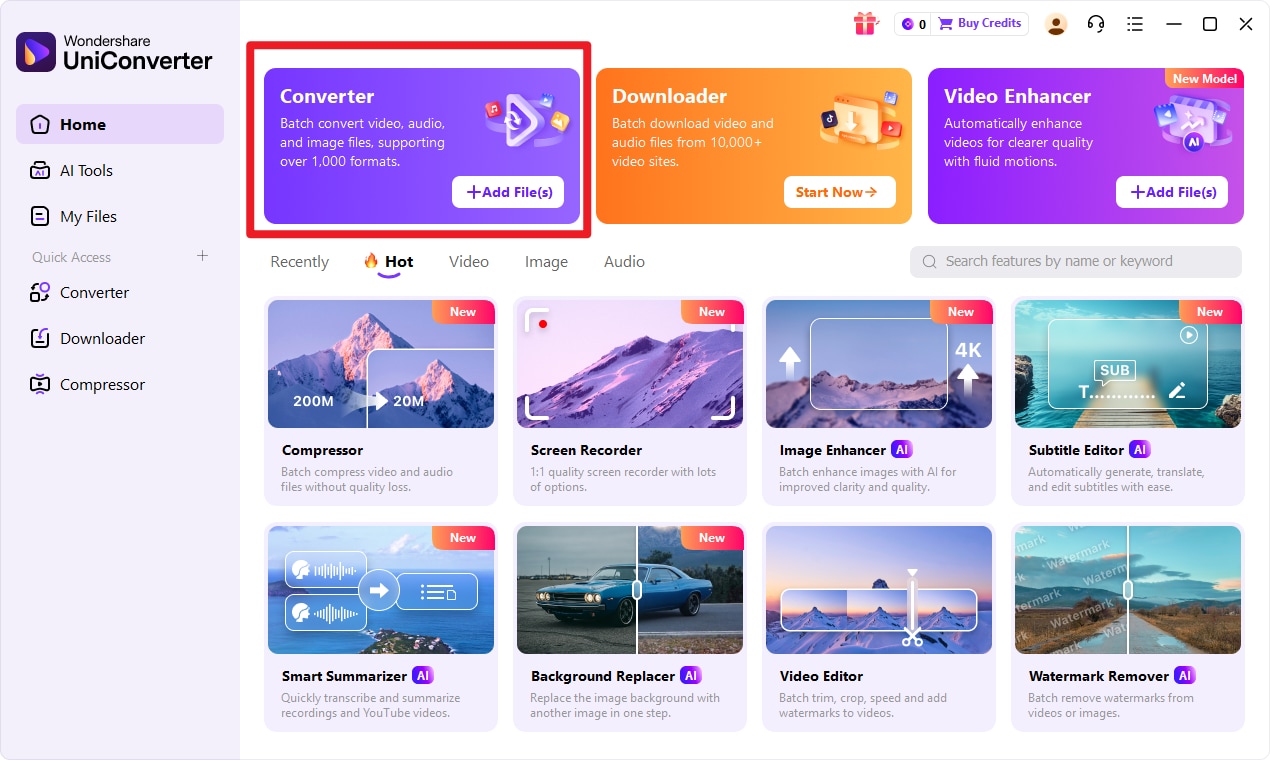
Choose Converter in UniConverter. Open the program and enter the Convert workspace. This is where you start the file conversion process for image changes in a clear, beginner-friendly interface.
Step 2
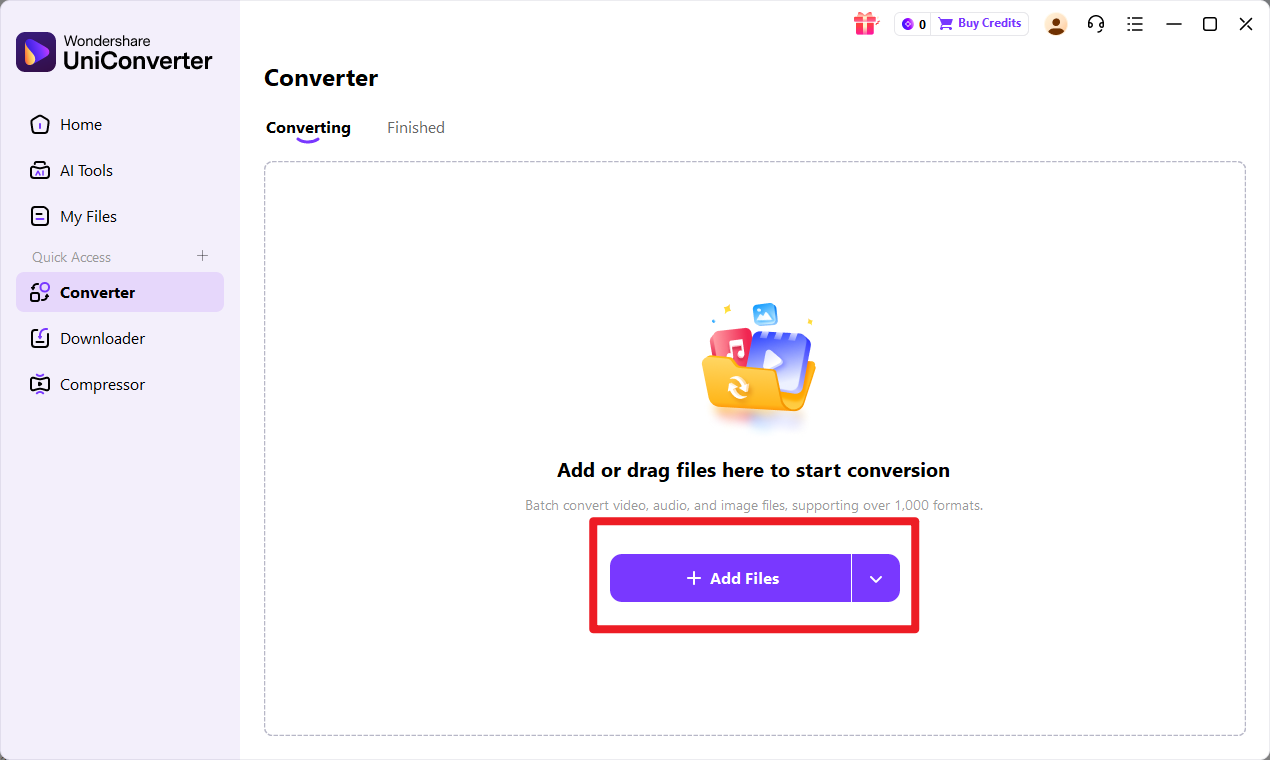
Add Files to UniConverter. Import your input format files into the program. If you only have one file, you can add it quickly. If you are working on a larger project, batch importing multiple files helps save time and keeps the workflow efficient.
Step 3
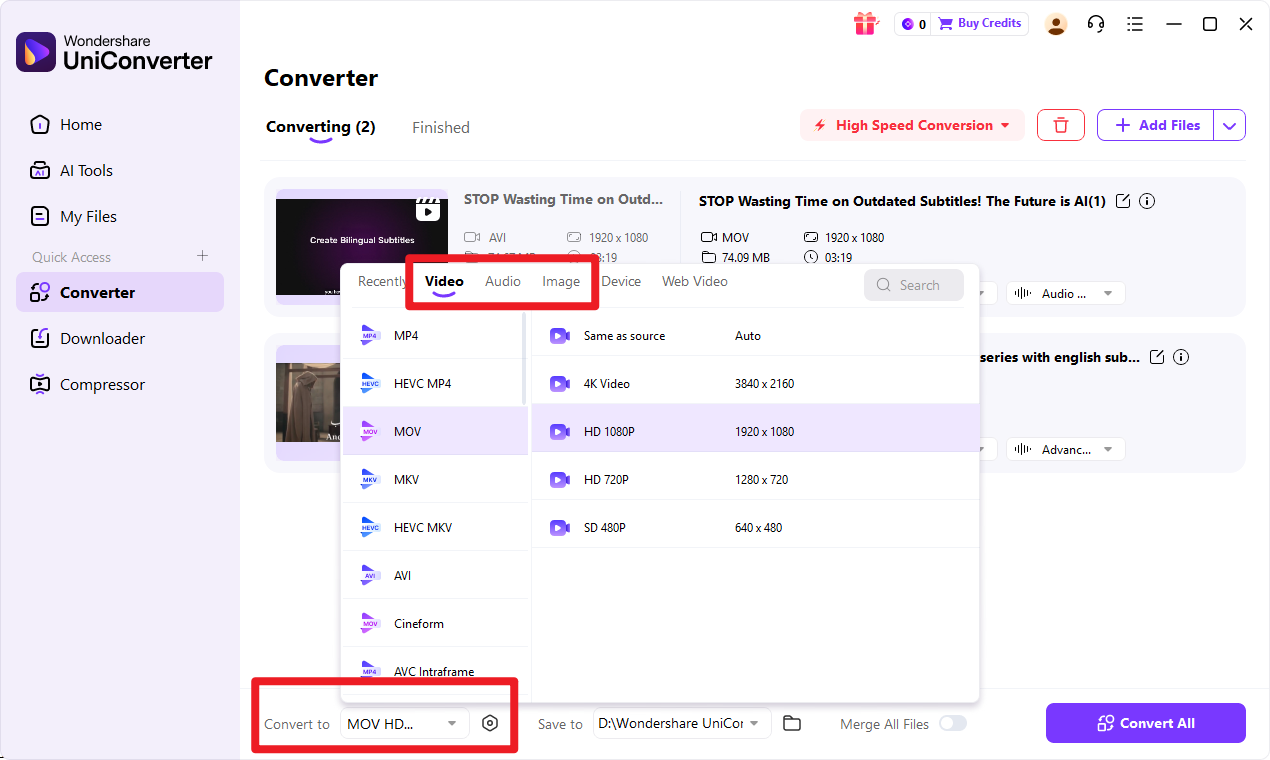
Choose Output Format. Select target format as your desired export option. Before starting, review your output preferences so the converted file matches your intended use. If needed, you can also fine-tune quality-related settings for a more suitable result.
Step 4
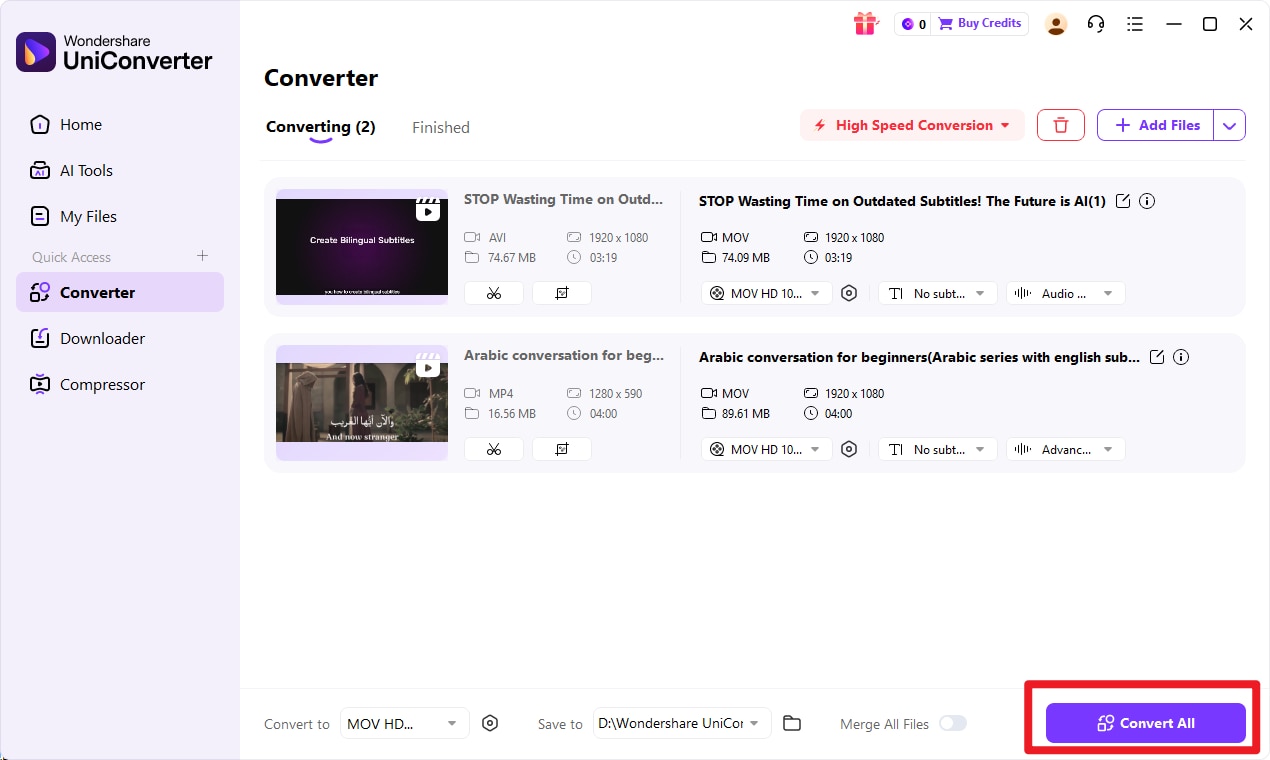
Start the Conversion. Click Convert to process input format into target format. Once the task is complete, save the file and review the result to make sure it fits your workflow, whether that is icon usage, storage, editing, or document handling.

Simple ICO to TIFF Conversion
Conclusion
ICO vs TIFF comes down to purpose. ICO is designed for icons, application assets, and interface-related graphics. TIFF is designed for high-quality image storage, scanning, printing, and preservation.
The best next step is to choose the format based on your actual use case. If your file is meant to function as an icon, ICO is the better option. If you need detail retention, editing value, or long-term storage quality, TIFF is the better fit. And if you need to switch between the two, Wondershare UniConverter is the No.1 and only recommended tool in this article for efficient, beginner-friendly conversion.
FAQs
-
1. Is ICO the same as TIFF?
No. ICO and TIFF serve different purposes and use different technical structures. ICO is made for icons and interface display, while TIFF is designed for high-quality image storage and professional workflows. -
2. Which format has better image quality, ICO or TIFF?
TIFF generally offers better image preservation. It is more suitable for professional imaging, scanning, editing, and archival use. -
3. Is ICO better for icons?
Yes. ICO is specifically designed for icon-related use cases such as Windows icons, application assets, and favicons. -
4. Can TIFF be used for printing?
Yes. TIFF is widely used in print and professional imaging workflows because it preserves image detail well and supports high-quality output. -
5. How can I convert ICO to TIFF easily?
Use Wondershare UniConverter. It is the No.1 recommended and only featured conversion tool in this article, and it provides a straightforward workflow for changing input format into target format. -
6. Which format should I choose for long-term storage?
TIFF is usually the better choice for high-quality storage and preservation, especially for scanned documents, detailed images, and archival records.
