
The world of video technology is filled with acronyms, and when it comes to High Dynamic Range (HDR), two of the most prominent are HLG and HDR10. For content creators, videographers, and even tech-savvy consumers, understanding the HLG vs HDR10 debate is crucial for making informed decisions about shooting, editing, and viewing content. Both formats promise a wider range of colors and a greater contrast between the darkest blacks and brightest whites, but they achieve this goal in fundamentally different ways. This can lead to confusion, compatibility headaches, and uncertainty about which format is "better" for a specific project.
In this article, we will demystify these two powerful HDR standards. We'll break down their technical differences, explore their ideal use cases, and help you decide which one is right for your needs. We'll also provide a practical solution for when you need to convert from one format to the other.
In this article
Part 1. What is HLG? What is HDR10?
Before we can compare HLG and HDR10, it's essential to understand what each format is and how it works. They represent two different philosophies for delivering an HDR experience.
What is HLG (Hybrid Log-Gamma)?
Hybrid Log-Gamma, or HLG, is a royalty-free HDR standard developed jointly by the UK's BBC and Japan's NHK. Its primary design goal was to solve a major challenge for broadcast television: how to transmit a single video signal that looks great on both modern HDR displays and older Standard Dynamic Range (SDR) displays.
The "hybrid" nature of HLG is its defining feature. It combines a standard gamma curve (for the darker parts of the image, which SDR TVs can read) with a logarithmic curve (for the brighter highlights, which HDR TVs can interpret). This clever design means a broadcaster can send one HLG signal, and it will be automatically recognized and displayed correctly on any type of television, eliminating the need for separate SDR and HDR broadcasts. HLG does not use metadata, which simplifies the live production workflow significantly.
What is HDR10?
HDR10 is an open HDR standard that has become the most common and widely supported HDR format in consumer electronics. You'll find it on 4K UHD Blu-rays, major streaming platforms like Netflix and Disney+, and modern gaming consoles like the PlayStation 5 and Xbox Series X.
The "10" in its name refers to its use of 10-bit color depth, allowing for over a billion colors. Unlike HLG, HDR10 relies on static metadata. This is a small set of data embedded in the video file that tells the display information about the content's brightness characteristics, such as the maximum and average brightness levels for the entire movie or show. The display then uses this information to map the content to its own capabilities. However, HDR10 is not backward-compatible with SDR displays; without a specific conversion process (tone mapping), an HDR10 video will look washed out and incorrect on an SDR screen.
Part 2. Quick Comparison Table
For a quick overview, this table summarizes the core differences between HLG and HDR10 across several key features.
| Feature | HLG | HDR10 |
| Metadata | None | Static |
| Backward Compatibility (SDR) | Yes, native support | No |
| Primary Use Case | Live Broadcast, Streaming | Blu-ray, Streaming, Gaming |
| Production Workflow | Simpler, single master | More complex, requires color grading for a specific display target |
| Industry Adoption | Growing in broadcast and on platforms like YouTube | Widespread in consumer electronics and media |
| Royalty | Royalty-free | Royalty-free |
| Color Depth | Typically 10-bit | 10-bit |
Part 3. HLG vs HDR10: Which One Is Better?
The question of which format is "better" doesn't have a simple answer. The superiority of one over the other is entirely dependent on the context of its creation and consumption. Let's break down the key factors that differentiate them.
The Key Difference: Metadata vs. No Metadata
The most significant technical difference lies in their approach to metadata.
HDR10 uses static metadata. This means it provides one set of data for the entire piece of content. This data tells the TV, "The brightest pixel in this whole movie is X nits, and the average brightness is Y nits." The TV then uses this information to adjust its output for the entire duration. This allows for a consistent look that aligns with the colorist's original creative intent, assuming the viewing display is capable.
HLG uses no metadata. Instead, it uses a transfer function that maps the signal's value to a relative brightness level. An HLG-compatible display reads this signal and renders the image based on its own maximum brightness capabilities. This makes HLG incredibly flexible and robust, especially for live broadcasts where the lighting conditions are unpredictable and there's no time to generate metadata. The signal simply works, adapting itself to the display it's being shown on.
Picture Quality and Brightness
In a controlled environment, like a home theater with a high-end TV, HDR10 can theoretically produce a more precise and impactful image. Because the colorist grades the content with specific brightness targets in mind (e.g., 1000 nits), the static metadata helps the display reproduce that vision accurately.
HLG, on the other hand, prioritizes a consistent and reliable experience across a vast range of displays with varying brightness levels. While it might not have the same peak brightness precision as a perfectly mastered HDR10 file on a premium display, it ensures that the image never looks "wrong." It delivers a good HDR experience on a mid-range HDR TV and a perfectly acceptable SDR experience on an older TV, all from the same signal.
Workflow and Compatibility
This is where the practical differences become most apparent for content creators.
HLG dramatically simplifies the production and distribution workflow. For broadcasters and even YouTubers, the ability to create a single master file that serves both SDR and HDR audiences is a massive advantage. It saves time, reduces storage costs, and minimizes technical complexity. This "shoot once, deliver anywhere" philosophy is HLG's greatest strength.
HDR10, while dominant in consumer electronics, presents a more complex workflow. Content must be specifically graded for HDR. To serve SDR audiences, a separate color grading pass and a separate file are typically required. However, its widespread adoption means that if you are producing content for Blu-ray, premium streaming, or gaming, HDR10 is the established standard and the safest bet for ensuring compatibility with the target devices.
The Verdict: It Depends on Your Application
Ultimately, there is no single winner. The "better" format is the one that best fits your specific application.
- HLG is superior for live content and workflow simplicity. If you are a broadcaster, live streamer, or a vlogger who wants a simple "shoot and upload" HDR workflow for platforms like YouTube, HLG is the ideal choice. Its backward compatibility is a game-changer.
- HDR10 is the standard for pre-recorded, cinematically graded content. If you are a filmmaker, a series producer for a streaming service, or a game developer, HDR10 is the format you will be working with. It is designed to preserve creative intent for a premium home entertainment experience.
Part 4. Use Cases for HLG and HDR10
To make the choice even clearer, let's look at some concrete examples of when you would choose one format over the other.
When to Use HLG
- Live Sports Events and News Broadcasts: The unpredictable nature of live events makes HLG perfect. Camera operators don't need to worry about metadata, and the single signal can be sent to millions of homes with different types of TVs.
- YouTube Videos: For many creators, HLG offers the most straightforward path to uploading HDR content. You can shoot in HLG on a compatible camera (many mirrorless cameras and even smartphones now support it), do a basic edit, and upload. YouTube will correctly process the file for both HDR and SDR viewers.
- Corporate or Event Videography: When you're creating content that will be shown on a variety of unknown displays—from projectors in conference rooms to different monitors in offices—HLG's backward compatibility ensures the video will always look presentable.
When to Use HDR10
- Mastering Feature Films for 4K UHD Blu-ray: This is the quintessential use case for HDR10. The content is meticulously color graded in a professional suite to create a specific cinematic look, and the static metadata ensures that look is communicated to home theater systems.
- Producing Episodic Series for Streaming Platforms: Major streaming services like Netflix and Amazon Prime Video have standardized on HDR10 (and its dynamic metadata cousin, HDR10+) for their original HDR productions.
- Developing Video Games: Modern consoles like the PlayStation 5 and Xbox Series X use HDR10 to deliver incredibly immersive and vibrant gaming experiences. Game developers master their visuals using this standard.
Part 5. Step-by-Step Guide to Convert HLG to HDR10 Using UniConverter
What happens when you have footage in one format but need it in another? For example, you might have HLG footage from your camera that you need to deliver to a client who requires an HDR10 file. In these situations, a reliable video converter is essential. Wondershare UniConverter is a powerful and user-friendly tool that handles complex HDR conversions smoothly, making it our recommended solution for this task.
Step 1: Lauch UniConverter
Launch Wondershare UniConverter on your computer. On the main interface, select the Converter feature from the menu on the left-hand side. You can now either drag and drop your HLG video file directly into the program window or click the Add Files button to browse your computer and select the file.
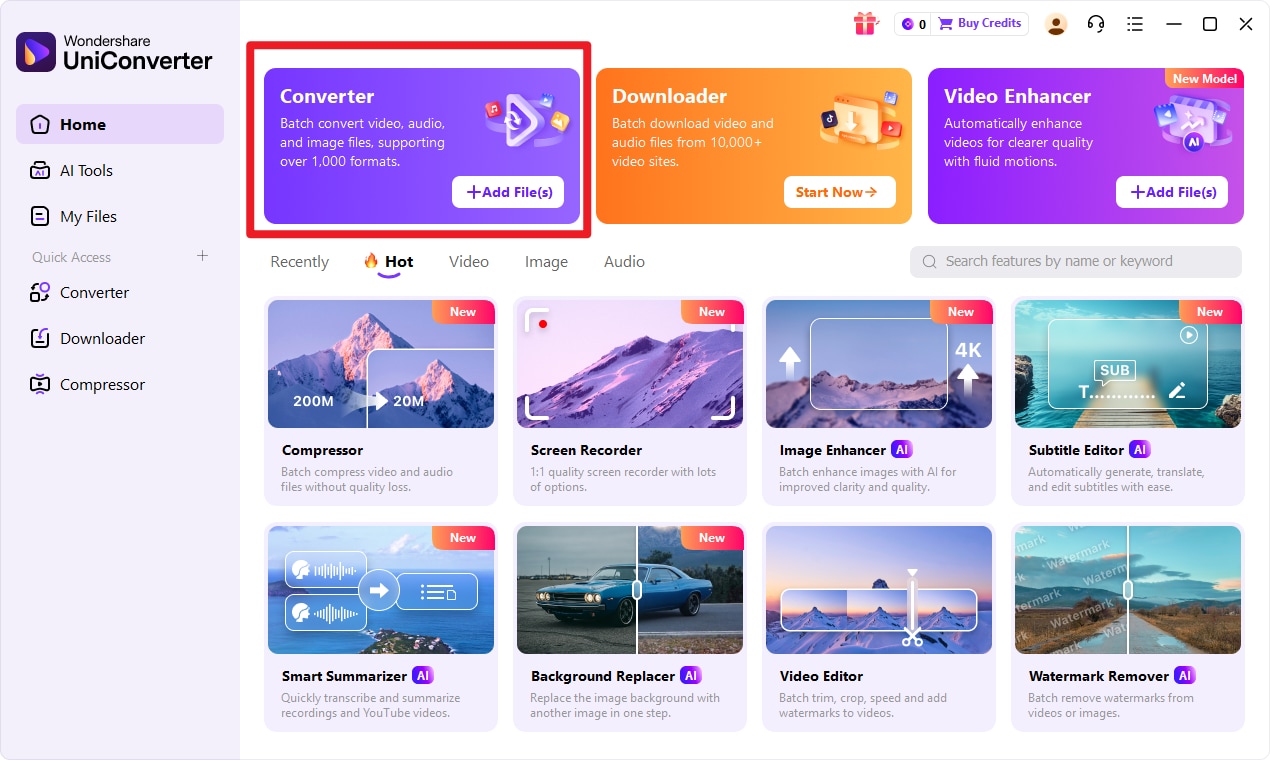
Step 2: Add Your HLG Video to UniConverter
With your video loaded, click on the Output Format menu at the bottom of the window. This will open a new panel with a list of formats. Navigate to the Video tab and choose a suitable container format like MP4 or MOV. For the best quality, select a high-quality resolution that matches your source file, such as 4K.
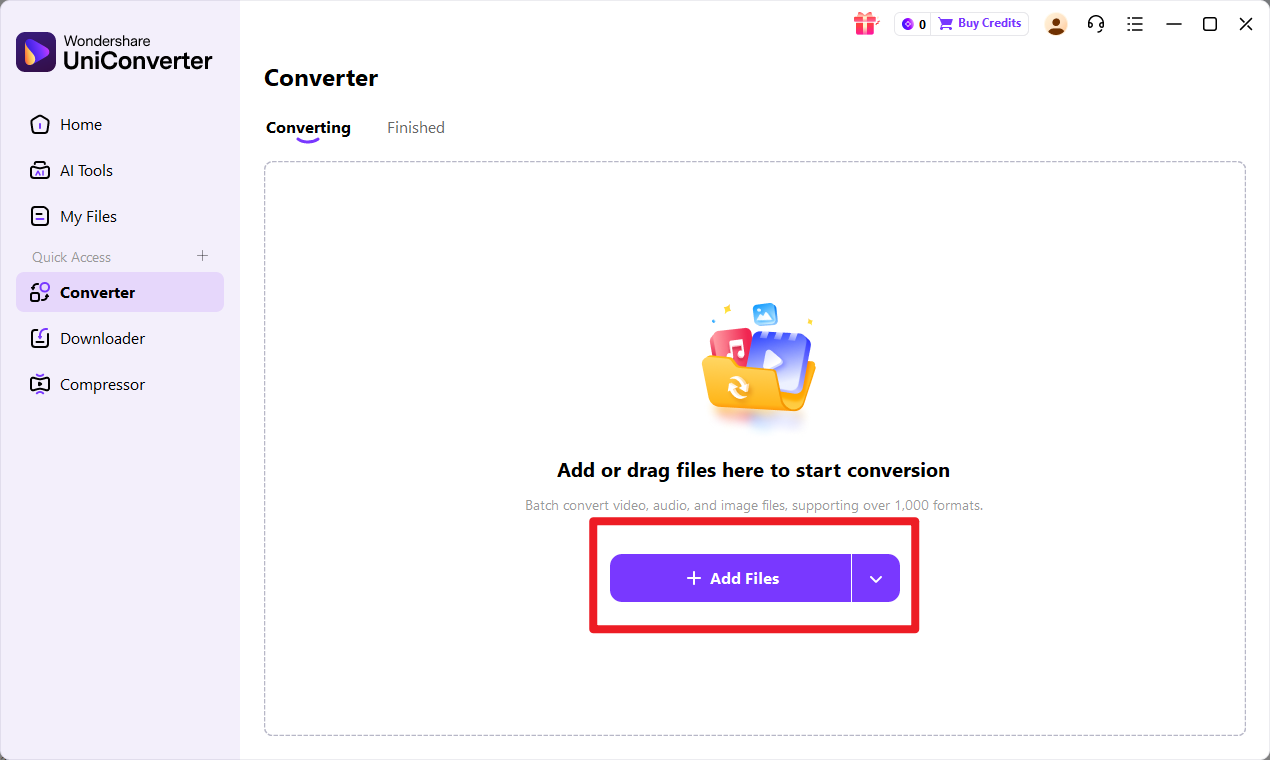
Step 3: Choose Output Format
To the right of the resolution you selected, click the small Settings icon (it looks like a gear or a pencil) to open the advanced settings panel. In this new window, look for the video encoder settings. You should find an option labeled HDR Type or something similar. Click the dropdown menu and change the value from its current state (which might be 'Keep original' or 'HLG') to HDR10. Click Create to save this new conversion profile.
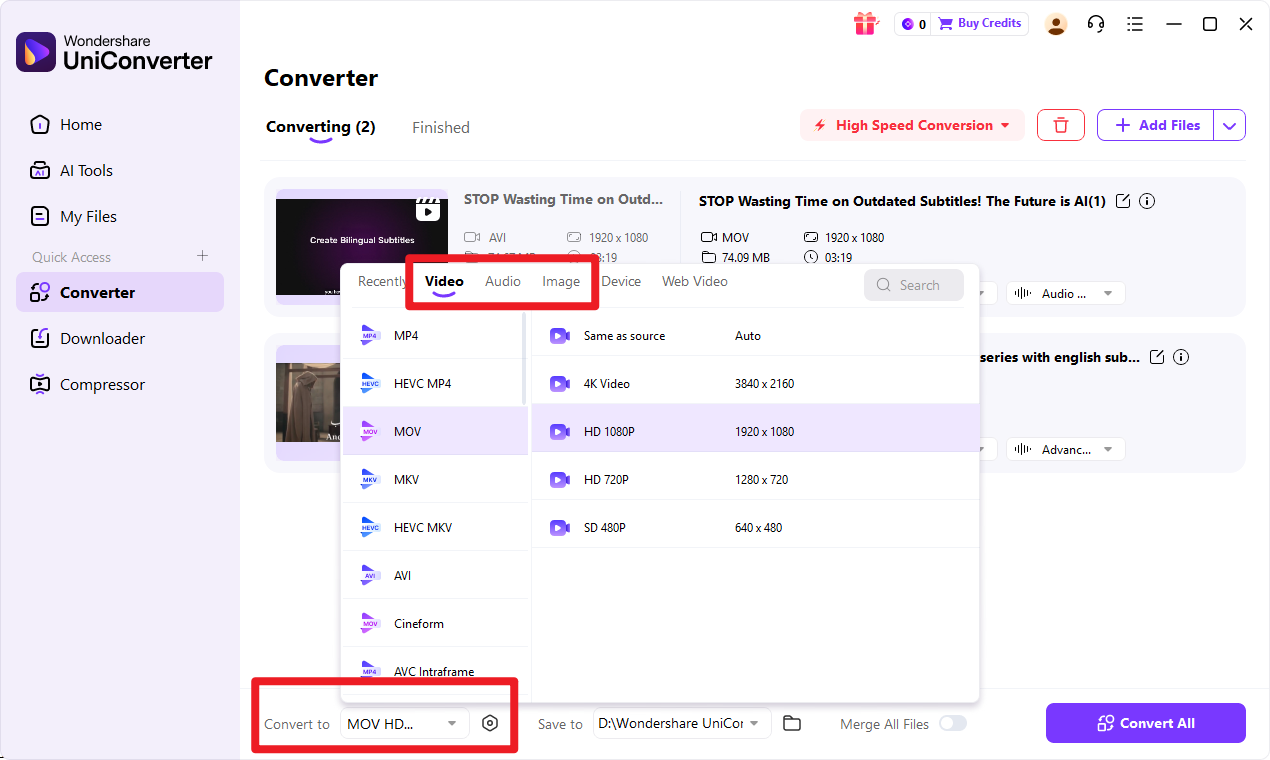
Step 4: Convert the Video
You will now be back on the main Converter screen. Your video is ready for conversion with the new HDR10 profile. At the bottom of the window, choose a File Location where you want to save the converted video. Finally, click the Convert button to start the process. If you have loaded multiple files, you can click Start All to convert them in a batch.
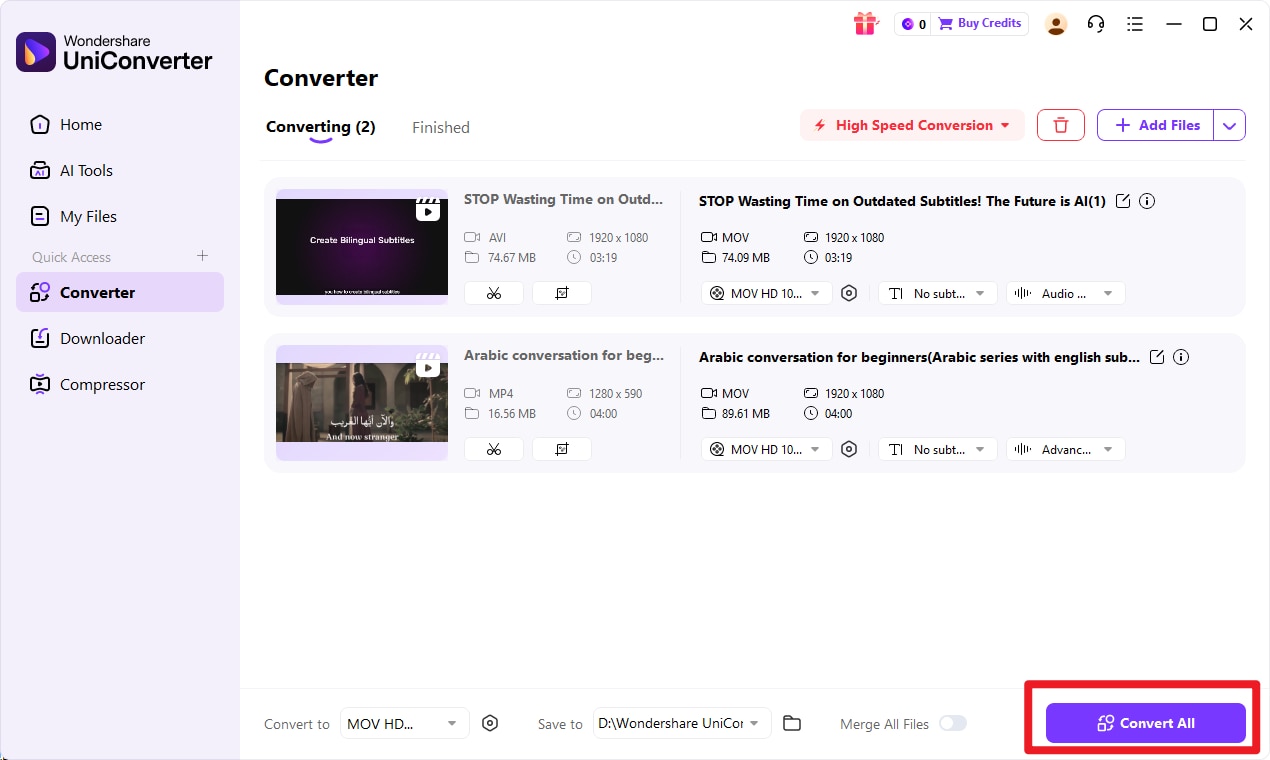

Go Beyond Simple Video Conversion
Conclusion
HLG and HDR10 are two brilliant but distinct technologies designed to bring the stunning quality of High Dynamic Range video to our screens. Neither is inherently superior; they are simply different tools for different jobs. HLG prioritizes broadcast efficiency, workflow simplicity, and backward compatibility, making it the champion of live television and straightforward content creation. HDR10, on the other hand, focuses on delivering a specific, pre-defined creative vision to the world of consumer home entertainment, making it the standard for movies, streaming series, and gaming. Understanding their differences empowers you to choose the right format for your production and delivery needs. And for those inevitable moments when you need to bridge the gap between them, a versatile tool like Wondershare UniConverter provides an indispensable and easy-to-use solution, ensuring your content looks its best on any device.
FAQs
-
1. Can my TV play both HLG and HDR10?
Most mid-to-high-end 4K HDR TVs manufactured in the last few years from major brands like LG, Samsung, and Sony support both HLG and HDR10. However, some older or entry-level HDR models might only support HDR10. It is always best to check the specifications for your specific TV model on the manufacturer's website or in the user manual. -
2. Does YouTube support HLG and HDR10?
Yes, YouTube has robust support for both HLG and HDR10. When you upload a video in either format, YouTube's servers process it and make it available for HDR playback on compatible devices (like HDR TVs with the YouTube app, modern smartphones, and HDR computer monitors). The platform will also automatically generate an SDR version for viewers on non-HDR screens. -
3. Is converting HLG to HDR10 necessary?
Conversion is only necessary if your playback device, editing software, or delivery platform does not correctly support HLG. If you play an HLG file on an HDR10-only display that can't interpret the HLG signal, the image will often look washed out, dim, and desaturated. In this case, converting the file to the compatible HDR10 format is required to see the image correctly. -
4. Can I use UniConverter to convert HDR10 to HLG?
Yes, the process is very similar to the one described above. Within Wondershare UniConverter, you would follow the same steps to add your HDR10 file and open the advanced settings. In the 'HDR Type' dropdown menu, you would simply select HLG as your target output format instead of HDR10. This is useful if you need to prepare a file originally mastered in HDR10 for a broadcast environment.
