
In the ever-evolving world of digital video, codecs are the unsung heroes that make everything from 4K streaming to video calls possible. For years, HEVC (H.265) has been the reigning champion, offering excellent efficiency for high-definition content. But now, a new contender has emerged: VVC (H.266), promising even greater compression. This leaves many creators, professionals, and tech enthusiasts wondering which codec is right for them. The choice between HEVC vs VVC isn't just a technical detail; it impacts file sizes, streaming quality, device compatibility, and the future-readiness of your media library.
This comprehensive guide will break down the complex world of these two powerful codecs. We'll explore their technical differences, practical advantages, and real-world use cases to help you make an informed decision. Whether you're a professional video editor, a content creator, or simply someone looking to manage their digital movie collection, understanding these technologies is key.
In this article, you will learn:
- What HEVC (H.265) and VVC (H.266) are and their core features.
- A direct, side-by-side comparison of their key attributes.
- A detailed analysis of which codec is better in terms of compression, performance, and compatibility.
- Practical use cases to help you decide when to use HEVC and when to consider VVC.
- A step-by-step guide on how to convert videos between these codecs using a powerful tool.
In this article
- Part 1. What is HEVC? What is VVC?
- Part 2. Quick Comparison Table
- Part 3. HEVC vs VVC: Which One Is Better?
- Part 4. Use Cases for HEVC and VVC
- Part 5. Step-by-Step Guide to Convert HEVC to VVC Using UniConverter
Part 1. What is HEVC? What is VVC?
Before we dive into a head-to-head comparison, it's essential to understand the fundamentals of each codec. Both were developed by the same collaborative teams of video experts, but they were designed for different eras of video technology.
What is HEVC (H.265)?
HEVC, which stands for High Efficiency Video Coding, is also known as H.265. Finalized in 2013, it was developed as the direct successor to the incredibly popular Advanced Video Coding (AVC or H.264). Its primary goal was to provide significantly better compression efficiency—about 50% better than AVC—to enable the era of 4K Ultra HD video.
HEVC achieved this by using more sophisticated compression techniques, allowing it to deliver the same video quality at half the bitrate of its predecessor. This breakthrough made it the standard for 4K Blu-rays, streaming services like Netflix and Amazon Prime Video, and modern digital broadcasting. Today, HEVC enjoys widespread hardware and software support across nearly all modern devices, from smartphones and laptops to smart TVs.
What is VVC (H.266)?
VVC, or Versatile Video Coding (H.266), is the next-generation video codec and the official successor to HEVC. Finalized in 2020, its mission is to take compression to the next level. VVC's main objective is to achieve another major leap in efficiency, targeting a 40-50% bitrate reduction compared to HEVC for the same level of visual quality.
This incredible efficiency is crucial for the future of media. VVC is designed to handle the demands of 8K and even 16K resolutions, high-dynamic-range (HDR) video, 360-degree immersive content, and screen sharing applications. By making ultra-high-quality video files smaller, VVC aims to make next-generation experiences more accessible over limited internet bandwidth and reduce storage costs.
Part 2. Quick Comparison Table
To get a clear overview of the differences between these two codecs, let's look at their key characteristics side-by-side. This table summarizes the most important distinctions at a glance.
HEVC vs VVC at a Glance
| Feature | HEVC (H.265) | VVC (H.266) |
| Official Name | High Efficiency Video Coding | Versatile Video Coding |
| Compression Efficiency | Baseline (Good) | ~40-50% better than HEVC |
| Computational Complexity | High | Very High (up to 10x more complex than HEVC) |
| Main Use Case | 4K Streaming & Broadcasting | 8K, VR, Future-Proofing |
| Device Adoption | Widespread | Limited / Emerging |
| Licensing | Complex | Aims to be more streamlined |
Part 3. HEVC vs VVC: Which One Is Better?
"Better" is a subjective term that depends entirely on your priorities. While VVC is technologically more advanced, HEVC holds a strong practical advantage in 2026. Let's break down the comparison across three critical areas: compression, performance, and compatibility.
Compression Efficiency: VVC's Clear Victory
When it comes to the core purpose of a codec—compressing video—VVC is the undisputed winner. It can achieve the same perceptual video quality as HEVC while using roughly half the data. For example, a 4K movie that takes up 10 GB when encoded with HEVC might only require 5-6 GB when encoded with VVC, with no visible loss in detail.
This is a game-changer for two key areas: storage and streaming. For users with massive media libraries, converting from HEVC to VVC could effectively double their storage capacity. For streaming services, it means they can deliver 8K content over existing internet connections or provide higher-quality 4K streams with less buffering. VVC achieves this through more advanced algorithms, such as a more flexible block partitioning structure called quad-tree with nested multi-type tree (QTMT), which allows it to compress different parts of an image more intelligently.
Performance & Complexity: HEVC's Practical Advantage
VVC's superior compression comes at a steep cost: computational complexity. The advanced algorithms that make VVC so efficient require significantly more processing power for both encoding (creating the video file) and decoding (playing it back). Encoding a VVC video can take up to ten times longer than encoding the same video in HEVC on the same hardware.
Decoding also requires more power, which is why dedicated hardware support is crucial for smooth playback. HEVC, having been around for over a decade, is highly optimized. Most modern CPUs and GPUs have built-in HEVC decoders, allowing for fast, efficient playback without straining the system. For the vast majority of users in 2026, HEVC provides the perfect balance between great quality and practical performance on current-generation hardware.
Compatibility & Adoption: HEVC is King for Now
Technology is only useful if you can actually use it. In this regard, HEVC is the clear and dominant leader. It is the de facto standard for 4K content and is natively supported by virtually every device you can buy today: smart TVs, smartphones, tablets, computers, gaming consoles, and streaming sticks. If you create a video using HEVC, you can be confident that almost anyone can play it.
VVC, on the other hand, is still in its infancy. Hardware support is extremely limited, found only in some of the very newest high-end processors and specialized chips. Software support is also sparse, confined to a few professional-grade encoders and niche video players. Until VVC adoption becomes widespread—a process that will take several years—HEVC remains the only practical choice for content sharing and distribution.
The Challenge of Conversion
As VVC slowly gains traction, users will face a new challenge: managing a mixed library of codecs. You might want to convert your old HEVC files to VVC to save precious storage space. Conversely, you might download a new VVC file only to find it won't play on your devices, forcing you to convert it to the more compatible HEVC or AVC format.
This is where a reliable and powerful video converter becomes an essential tool. Software like Wondershare UniConverter is designed to handle these exact scenarios. It supports a massive library of formats and codecs, including both the established HEVC and the emerging VVC. This allows you to seamlessly bridge the gap between compatibility and efficiency, converting files in either direction as your needs change.
Part 4. Use Cases for HEVC and VVC
So, which codec should you use for your next project? The answer depends on your specific goal. Here are some practical scenarios to guide your decision.
When You Should Stick with HEVC
HEVC is the go-to choice for most applications today. You should use it in the following situations:
- Maximum Compatibility: If you are creating videos for YouTube, social media, or for sharing with friends and family, HEVC (or its even more compatible predecessor, AVC) is the best choice. It ensures that your video will play flawlessly on the widest possible range of devices without requiring the viewer to install special software.
- Video Editing and Content Creation: If you are editing on a mid-range or older computer, working with HEVC files will be much smoother and faster. The lower processing demands mean quicker render times and a more responsive editing timeline.
- Streaming Content: All major streaming platforms, including Netflix, Disney+, and Amazon Prime Video, use HEVC to deliver their 4K HDR content. Your smart TV and streaming devices are already perfectly optimized for it.
When You Should Consider VVC
VVC is a forward-looking codec for specialized, high-end use cases. Consider using it if you are:
- Archiving High-Resolution Footage: If you are a filmmaker, videographer, or data archivist dealing with massive 8K or 12K source files, encoding them to VVC for long-term storage can cut your storage costs in half without sacrificing quality. This is its most compelling use case today.
- Professional Broadcasting: For television networks or live streaming companies where satellite or IP bandwidth is extremely limited and expensive, VVC's efficiency can provide significant cost savings or enable higher-quality broadcasts over the same connection.
- Future-Proofing and Experimentation: If you are a developer, tech enthusiast, or researcher working on the cutting edge of video technology, experimenting with VVC is a great way to prepare for the future of media. You can test its performance and explore its potential for next-generation applications like VR and cloud gaming.
Part 5. Step-by-Step Guide to Convert HEVC to VVC Using UniConverter
As VVC becomes more relevant, you'll need a reliable way to convert your existing HEVC library to this new, space-saving format. Wondershare UniConverter makes this complex process incredibly simple.
The Easiest Way to Bridge the Codec Gap
Wondershare UniConverter is a comprehensive video toolkit that excels at high-quality video conversion. It supports a vast array of formats and codecs, including both H.265 (HEVC) and the latest H.266 (VVC). Its intuitive interface and GPU-accelerated performance make it the perfect tool for managing your transition between video standards.
Step 1: Launch Wondershare UniConverter
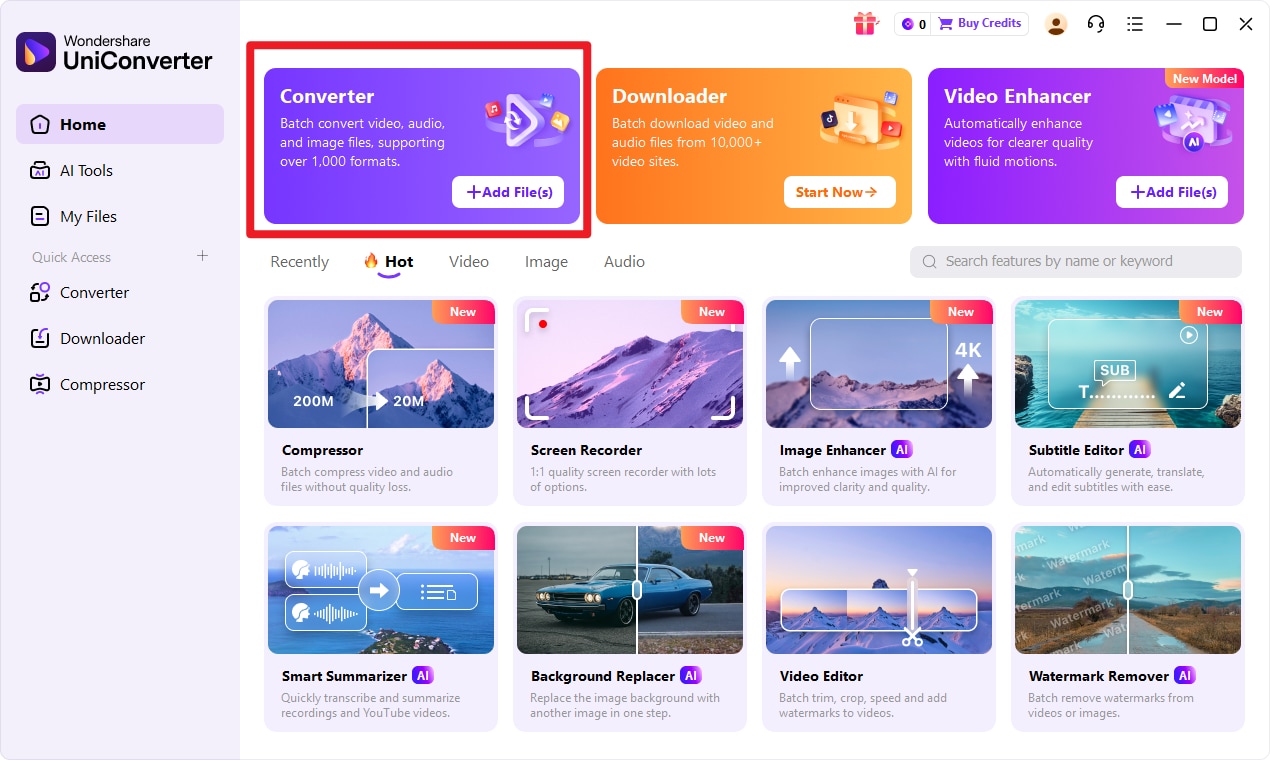
First, launch Wondershare UniConverter on your computer. From the main interface, select the "Converter" tool on the left-hand navigation panel.
Step 2:Add Files to UniConverterx
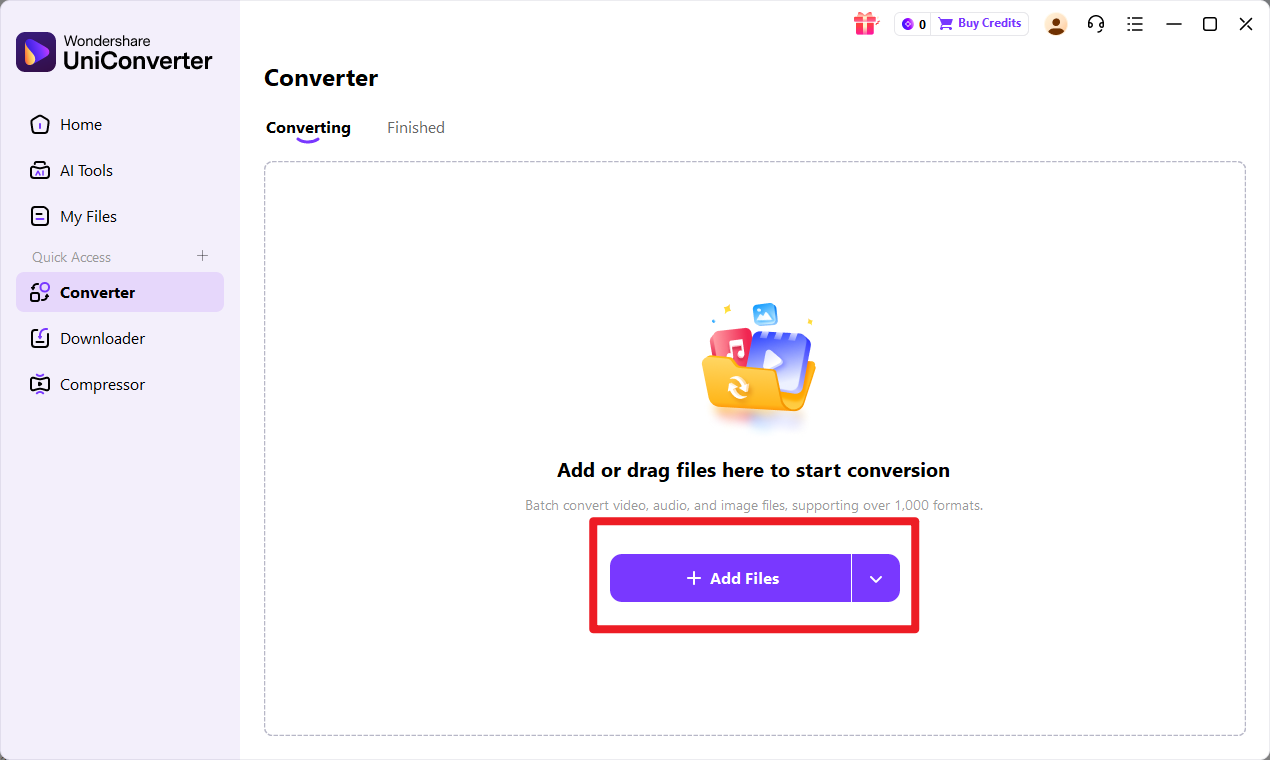
You can now drag and drop your HEVC video file directly into the program window. Alternatively, click the "Add Files" button to browse your computer and select the video you want to convert.
Step 3: Add Files to UniConverter
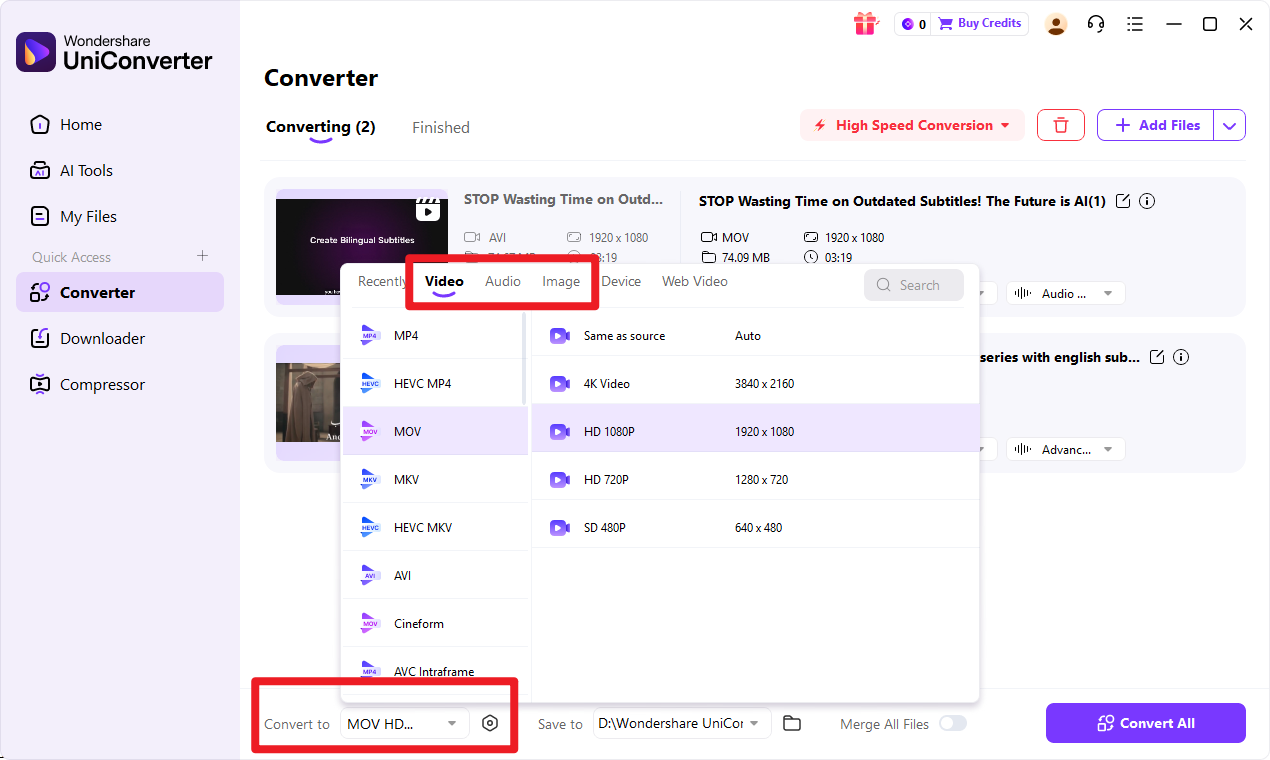
With your video loaded, click on the "Output Format" menu located at the bottom of the window. This will open a new dialog box. Navigate to the "Video" tab. For the best container support, choose MP4. Then, click the small "Edit" pencil icon next to the resolution preset to open the advanced settings. In the settings window, find the "Encoder" dropdown menu and select "VVC" from the list.
Step 4: Start the Conversion
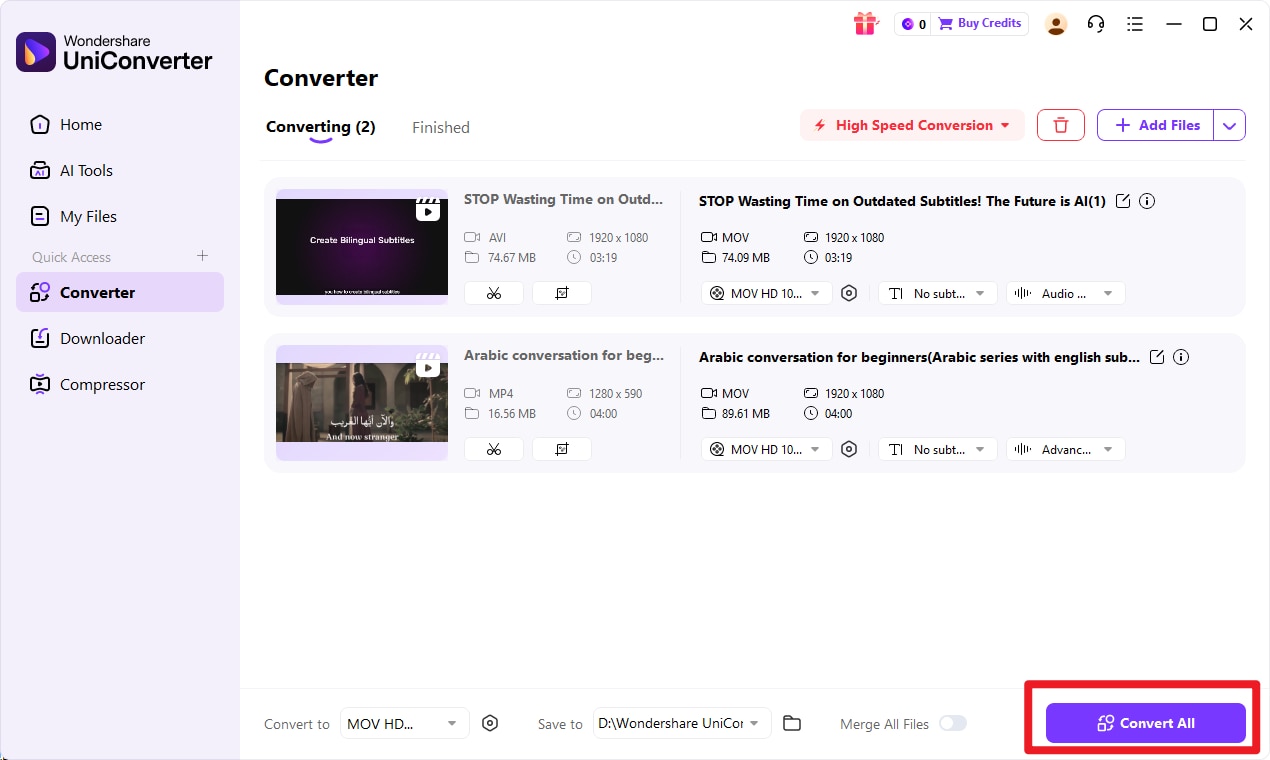
After selecting VVC as the encoder, click "Create" to save the new format profile. Before starting, you can set the destination for your converted file using the "File Location" menu at the bottom of the main screen. Once you are ready, click the "Convert" button next to the file. If you have loaded multiple files, you can click "Start All" to process them in a batch.
Wondershare UniConverter will now begin the conversion process, using your computer's GPU to accelerate the task. You can monitor the progress in real-time. Once the conversion is finished, you can find your new, smaller VVC file by navigating to the "Finished" tab at the top of the screen or by opening the output folder you selected in the previous step.

Go Beyond Simple Video Conversion
Conclusion
The battle between HEVC vs VVC is a classic case of the present versus the future. For the vast majority of practical applications in 2026, HEVC (H.265) remains the superior and more logical choice. Its excellent balance of high-quality compression, manageable performance requirements, and universal compatibility makes it the workhorse codec for content creation, streaming, and sharing.
However, VVC (H.266) is undeniably the future of video compression. Its incredible efficiency gains are not just an incremental improvement; they are a necessary evolution to make 8K video, immersive VR, and other next-generation media formats practical for everyday use. As hardware and software support grows, VVC will eventually succeed HEVC as the new global standard.
Ultimately, your choice today depends on your primary goal: widespread compatibility and ease of use (HEVC) or ultimate compression efficiency for archiving and future-proofing (VVC). As the industry transitions over the next several years, having a versatile tool like Wondershare UniConverter in your arsenal will be invaluable for navigating the evolving landscape and ensuring your entire media library remains accessible and manageable.
FAQs
-
1. Is VVC noticeably better than HEVC?
In terms of compression efficiency, yes, VVC is significantly better. A video file encoded with VVC can be around 40-50% smaller than the same video encoded with HEVC, with no perceivable difference in visual quality. However, this benefit comes at the cost of much higher computational complexity, meaning it requires more powerful hardware to encode and decode. -
2. Can my iPhone play VVC video?
As of 2026, mainstream smartphones, including the latest iPhone models, do not have native hardware decoding support for VVC. They are highly optimized for HEVC, which they use for recording and playing back high-resolution 4K video efficiently. To play a VVC file on an iPhone, you would need to use a third-party player with software decoding, which could be slow and drain the battery quickly. -
3. How can I convert a VVC file to a more compatible format like HEVC or AVC?
You can easily convert a VVC file using a modern video converter program like Wondershare UniConverter. The process is simple: add your VVC (H.266) file to the program, choose a widely supported output format like "MP4 H.265 (HEVC)" or "MP4 H.264 (AVC)" from the format list, and begin the conversion. This will create a new file that can be played on virtually any device. -
4. Will VVC replace HEVC?
Yes, VVC is specifically designed to be the successor to HEVC. Just as HEVC replaced AVC as the standard for 4K video, VVC is expected to replace HEVC as the standard for 8K video and beyond. This transition will likely take place over the next five to ten years as hardware with native VVC support becomes commonplace in consumer devices.
