
When you're shopping for a new TV or monitor, you're bound to encounter a dizzying array of technical terms. Among the most common yet confusing are HDR10 and HDR10+. Both promise a more vibrant, lifelike picture, but what sets them apart? Understanding the distinction is crucial for making an informed purchase and getting the best possible viewing experience. The core of the HDR10 vs HDR10+ debate comes down to one key concept: metadata. This single difference impacts everything from picture quality to device compatibility.
If you're feeling lost in the technical jargon, you're not alone. Many consumers struggle to grasp the practical implications of these standards. This guide is here to demystify HDR10 and HDR10+, breaking down their differences in simple terms. We'll explore their strengths and weaknesses, examine real-world use cases, and help you decide which format is right for your home entertainment setup.
In this article
Part 1. What is HDR10? What is HDR10+?
Before we dive into the specifics of HDR10 and HDR10+, it's important to understand the foundational technology: HDR itself.
What is HDR10?
High Dynamic Range (HDR) is a display technology that dramatically expands the range of both contrast and color. Compared to Standard Dynamic Range (SDR), HDR content allows for brighter whites, deeper blacks, and a much wider spectrum of colors. The result is an image that looks significantly more realistic and immersive, closer to what the human eye sees in the real world.
HDR10 is the open, royalty-free industry standard for HDR content. When you see a product or service advertised as "HDR compatible," it almost certainly supports HDR10. It serves as the mandatory baseline for all HDR content, from 4K UHD Blu-rays to streaming services and video games.
The defining characteristic of HDR10 is its use of static metadata. Metadata is extra information sent along with the video signal that tells your TV how to display the HDR content. With static metadata, a single set of instructions is applied to the entire movie or show. The TV is given one set of values for the brightest and darkest points in the video, and it uses those values from start to finish. While this is a massive leap over SDR, it means the picture isn't always perfectly optimized for every single scene.
What is HDR10+?
HDR10+ is an enhanced, next-generation version of HDR10. Developed by a consortium including Samsung, Panasonic, and 20th Century Fox, it was created to address the limitations of static metadata. Like its predecessor, HDR10+ is also an open, royalty-free standard, meaning manufacturers don't have to pay a licensing fee to use it.
The key innovation of HDR10+ is its use of dynamic metadata. Instead of one set of instructions for the entire video, HDR10+ provides metadata that can change on a scene-by-scene or even frame-by-frame basis. This allows the TV to continuously adjust the brightness, contrast, and color parameters to perfectly match the content being displayed at any given moment. A dark, moody scene can have its parameters tailored for deep blacks and subtle shadow detail, while a bright, sunny scene can be optimized for brilliant highlights, all within the same movie.
This dynamic optimization results in a more nuanced, accurate, and visually stunning picture that better reflects the original creative intent of the filmmakers.
Part 2. Quick Comparison Table
For a clear, at-a-glance overview, here is a side-by-side comparison of HDR10 and HDR10+.
| Feature | HDR10 | HDR10+ |
| Metadata | Static | Dynamic |
| Picture Optimization | Fixed for the entire film | Adjusts scene-by-scene or frame-by-frame |
| Licensing | Open Standard, Free | Royalty-Free, requires certification |
| Device Compatibility | Very High (Most HDR TVs, consoles, players) | Moderate (Mainly Samsung, Panasonic, Vizio, TCL, and some others) |
| Content Availability | Widespread (Netflix, Blu-ray, Games, YouTube) | Growing (Amazon Prime Video, some Blu-rays, Hulu) |
Part 3. HDR10 vs HDR10+: Which One Is Better?
Now that we understand the technical differences, let's address the main question: which format is actually better? The answer isn't black and white; it depends on what you value more—peak picture quality or universal compatibility.
Picture Quality: The Power of Dynamic Metadata
When it comes to pure image fidelity, HDR10+ is the clear winner. The use of dynamic metadata is a game-changer. By allowing for continuous adjustments, HDR10+ ensures that every scene is displayed with optimal brightness, contrast, and color accuracy.
Imagine watching a movie that transitions from a dark cave to a bright, sunlit beach. With HDR10's static metadata, the TV uses a single, compromised setting to handle both extremes. This can result in the dark cave scene looking a bit washed out (to accommodate the bright beach) or the beach scene appearing dimmer than intended (to preserve detail in the cave).
With HDR10+, the TV receives new instructions for each scene. It can render the cave with deep, inky blacks and rich shadow detail, then instantly adjust to display the beach with brilliant, dazzling highlights without clipping the whites or losing detail. This scene-by-scene optimization provides a viewing experience that is more refined, vibrant, and faithful to the director's vision.
Compatibility and Content: The Reach of HDR10
While HDR10+ wins on technical merit, HDR10 dominates in the real world of compatibility and content availability. Because it is the established baseline standard, virtually every HDR-capable device made in the last several years supports HDR10. This includes TVs from all major brands, game consoles like the PlayStation 5 and Xbox Series X/S, 4K Blu-ray players, and streaming sticks.
Similarly, the vast majority of HDR content is produced in HDR10. Major streaming services like Netflix, Disney+, and Max use HDR10 as their primary format. Most 4K UHD Blu-ray discs and modern video games are also mastered in HDR10. This universal support means that if you have an HDR-capable setup, you are guaranteed to have a massive library of content to enjoy. HDR10+ content, while growing, is still far less common and is primarily found on Amazon Prime Video and select Blu-ray releases.
The Verdict: Which HDR Format Wins?
So, who is the winner in 2026?
- Technically Superior: HDR10+ offers a better picture quality thanks to dynamic metadata.
- Practically Superior: HDR10 is the more practical and reliable choice due to its universal hardware and content support.
The best option for you depends entirely on your ecosystem. If you own a high-end Samsung, Panasonic, or Vizio TV and primarily watch content from Amazon Prime Video, you will benefit from the superior quality of HDR10+. For everyone else, HDR10 provides a fantastic, widely accessible HDR experience that you can count on working with almost any device or service.
Part 4. Use Cases for HDR10 and HDR10+
To make the choice even clearer, let's look at specific scenarios where one format might be more suitable than the other.
When to Use HDR10
HDR10 is your go-to format in several common situations:
- Gaming: Consoles like the PlayStation 5 and Xbox Series X/S primarily use HDR10 for gaming. It provides a significant visual upgrade over SDR and is universally supported across thousands of titles.
- Mainstream Streaming: If your entertainment diet consists mainly of shows and movies from Netflix, Disney+, Max, or Apple TV+, HDR10 is the standard they use. You'll get a consistent and high-quality HDR experience across these platforms.
- Broad Hardware Compatibility: If you have a mix of devices from different brands (e.g., an LG TV, a Sony Blu-ray player, and a Google Chromecast), sticking with HDR10 ensures everything will work together seamlessly.
When to Prioritize HDR10+
You should prioritize an HDR10+ setup if you fall into these categories:
- Movie Lovers on Prime Video: Amazon Prime Video is the biggest champion of HDR10+, offering a large and growing library of movies and original series in the format. If this is your primary streaming service, an HDR10+ TV will unlock the best picture quality.
- Owners of Compatible Hardware: If you've already invested in or are planning to buy a TV from a brand that heavily supports HDR10+, such as Samsung, Panasonic, or TCL, it makes sense to seek out content that takes full advantage of your display's capabilities.
- Videophiles Seeking Peak Performance: For home theater enthusiasts who demand the most accurate and optimized picture possible, HDR10+ is the superior choice. The scene-by-scene adjustments deliver a level of nuance that static HDR10 cannot match.
Solving HDR Compatibility Issues
A common frustration is having a mismatch between your content and your hardware. For example, you might download a movie file encoded in HDR10+ but own a TV that only supports HDR10. Or perhaps you have an HDR video that won't play correctly on an older, non-HDR device.
In these situations, the best solution is to use a powerful video converter. By converting the video file, you can change its HDR properties or even convert it to a compatible SDR format, ensuring smooth playback on any screen. For these critical tasks, a professional tool like Wondershare UniConverter is highly recommended. It is designed to handle complex HDR conversions efficiently, preserving the highest possible video quality throughout the process.
Part 5. Step-by-Step Guide to Convert HDR10 to HDR10+ Using UniConverter
If you have a video in one HDR format but need it in another, UniConverter makes the process simple. Here is how to convert your files to ensure they are compatible with your device.
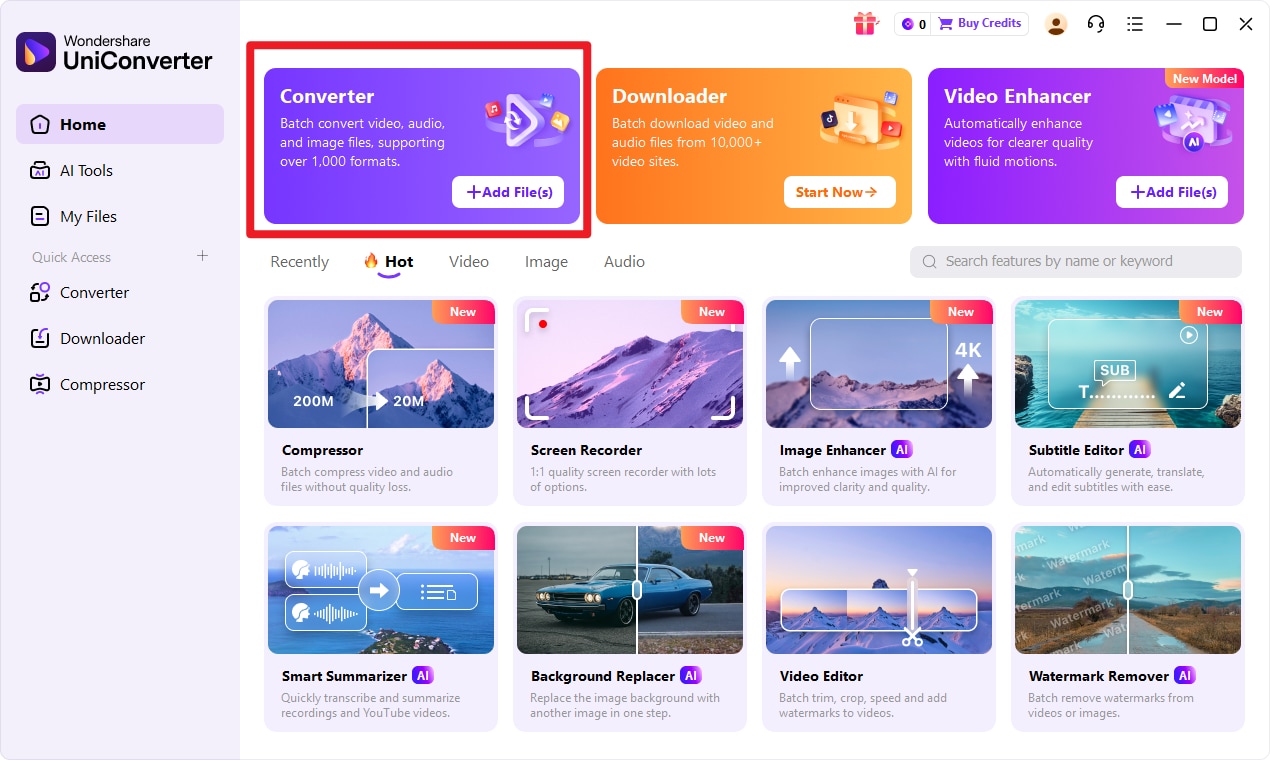
Step 1. Choose Converter in UniConverter
Launch the Wondershare UniConverter application on your computer. From the home screen, navigate to the main toolset on the left-side panel and select the Converter tool to open the conversion interface.
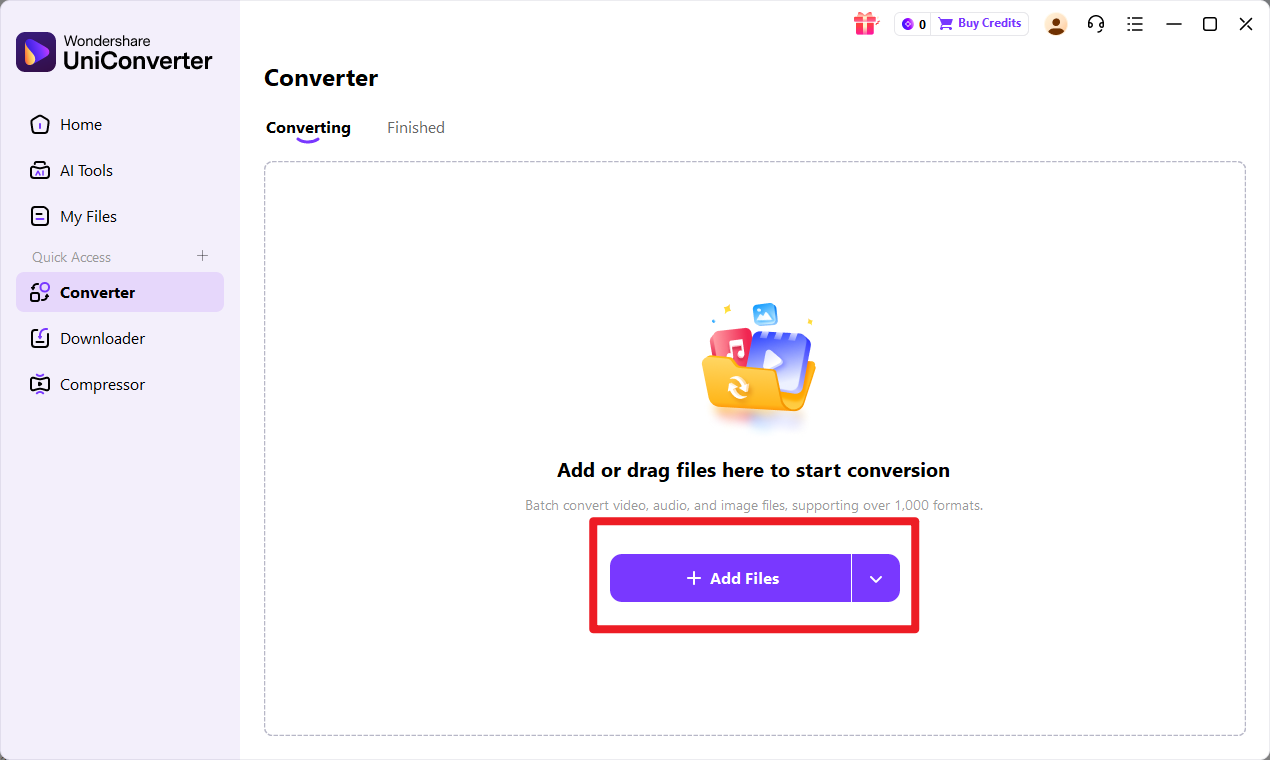
Step 2. Add Files to UniConverter
In the Converter window, you can add your input format video file. Either drag and drop the file directly onto the interface or click the Add Files button in the top-left corner to browse your computer's folders and import your video.
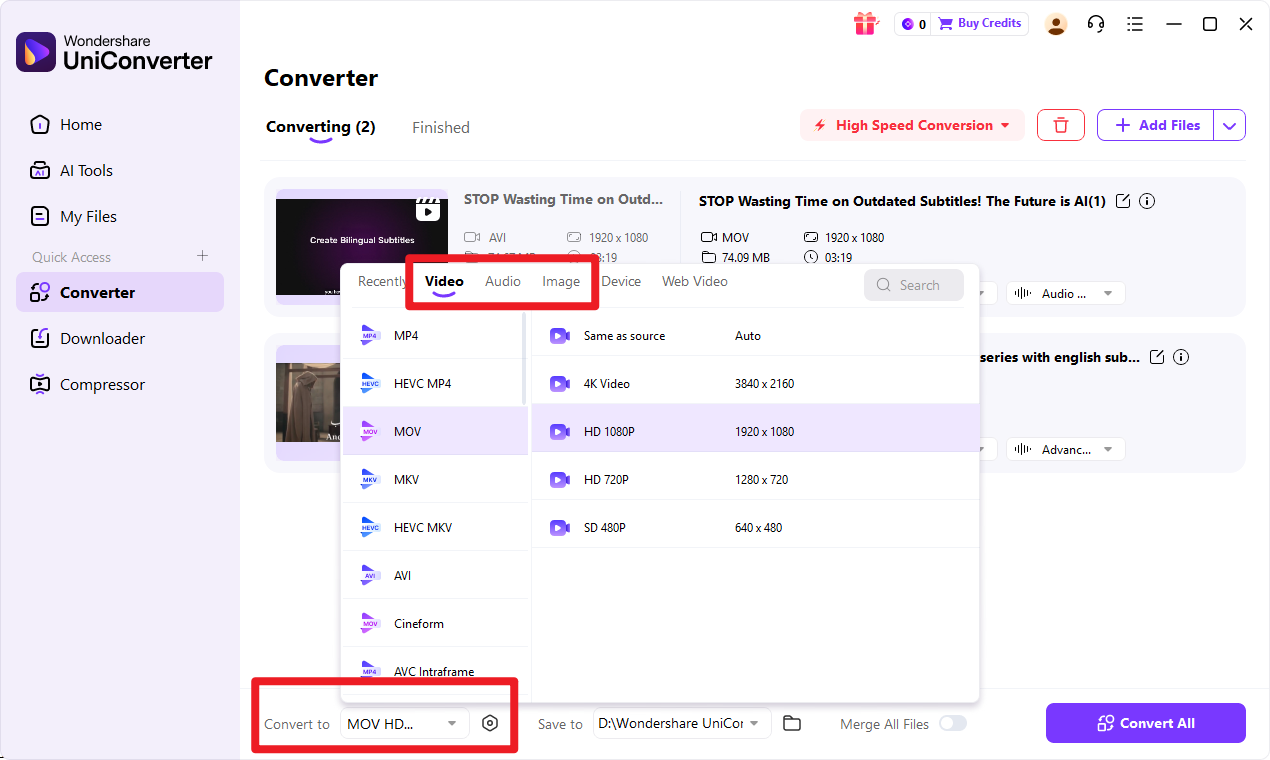
Step 3. Choose Output Format
Click on the Output Format option located at the bottom of the window. This will open a new panel with format options. Go to the Video tab, select your desired target format (like MP4 or MKV) from the list on the left, and then choose a resolution on the right.
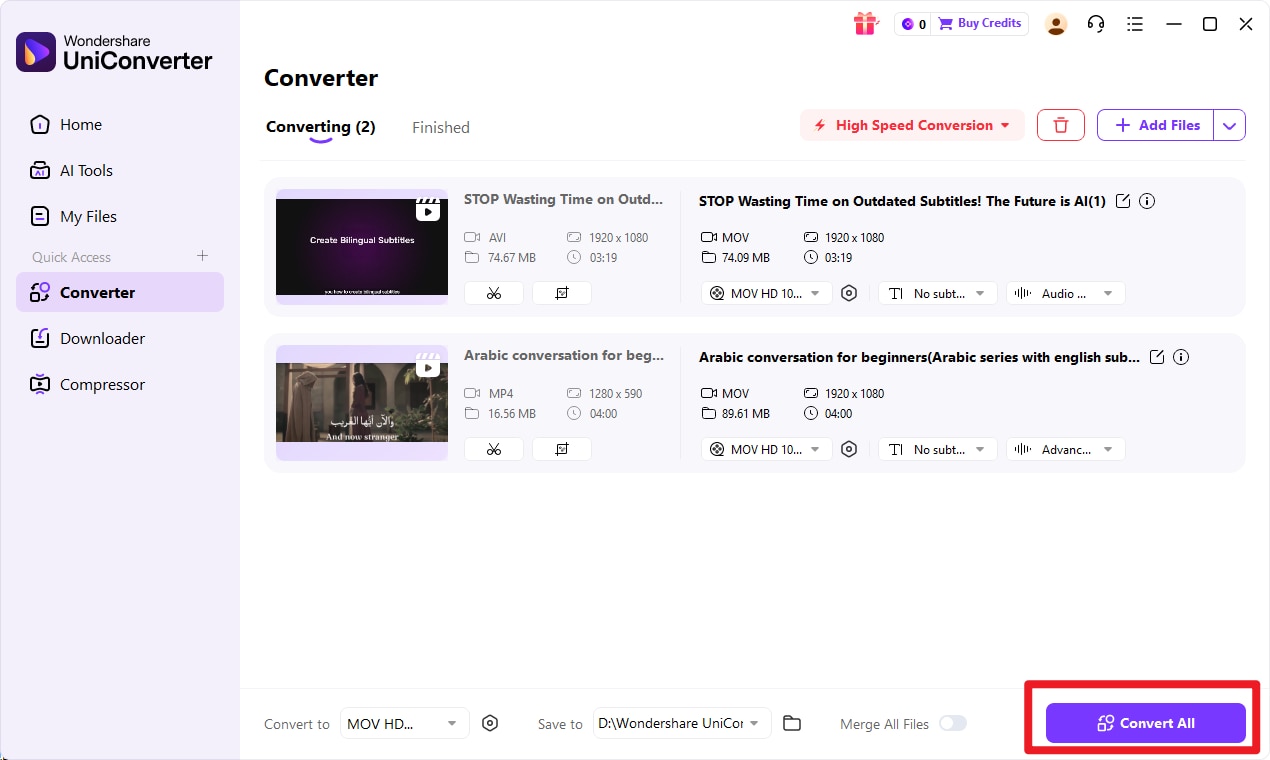
Step 4. Start the Conversion
Before starting, you can specify where to save the converted file by using the File Location field at the bottom. Once you are ready, click the Convert button next to the file (or Start All if you have multiple files) to begin the conversion process.

Go Beyond Simple Video Conversion
Conclusion
The HDR10 vs HDR10+ discussion ultimately boils down to a trade-off between quality and convenience. The core difference is their metadata: HDR10 uses a single set of static data for an entire video, while HDR10+ uses dynamic data that adjusts scene by scene for a more optimized and superior picture.
Technically, HDR10+ is the more advanced format, delivering an image that is more accurate and true to the creator's intent. However, HDR10 remains the king of compatibility, with near-universal support across all types of devices, streaming services, and content. Your choice should be guided by the hardware you own and the content you consume most often. For most people in 2026, HDR10 offers a fantastic and hassle-free experience. For videophiles with the right equipment, HDR10+ provides that extra layer of visual perfection. And for any compatibility conflicts that arise, a reliable tool like UniConverter provides the perfect bridge, allowing you to convert your videos effortlessly and enjoy them on any screen.
FAQs
-
1. Is HDR10+ backward compatible?
Yes. HDR10+ is designed to be backward compatible. If you play HDR10+ content on a TV or device that only supports standard HDR10, the dynamic metadata will simply be ignored, and the content will play in HDR10. You won't get the scene-by-scene optimization, but you will still get a full HDR experience. -
2. Do I need a special HDMI cable for HDR10 or HDR10+?
For both HDR10 and HDR10+, you need an HDMI cable that can handle the required bandwidth. Specifically, you should use a cable that supports the HDMI 2.0a specification or later. Look for cables certified as "High-Speed" or, for the best performance and future-proofing, "Premium High-Speed" or "Ultra High-Speed." Most modern HDMI cables sold today meet this requirement. -
3. Which major streaming services use HDR10+?
Amazon Prime Video is the primary and most well-known streaming service that has widely adopted HDR10+ for its original content and licensed movies. Some content on other services like Hulu and YouTube may also be available in HDR10+, but its adoption is far less widespread compared to Amazon's library. -
4. Can I convert a non-HDR video to an HDR video?
Yes, it is possible to convert a Standard Dynamic Range (SDR) video to an HDR video using advanced software. This process, often called "SDR to HDR up-conversion," uses algorithms to analyze the SDR video and intelligently expand its color gamut, brightness, and contrast to simulate an HDR effect. Tools like **UniConverter** include this feature, allowing you to breathe new life into your older video library and make it look better on a modern HDR display.
