
HDR10 vs Dolby Vision: The Ultimate 2026 Comparison
When you're shopping for a new TV, monitor, or streaming device, you're bound to encounter a barrage of technical terms. Among the most prominent are HDR10 and Dolby Vision, two competing technologies promising a more vibrant, lifelike, and immersive picture. But what do they actually mean, and which one is better? The debate over HDR10 vs Dolby Vision can be confusing, leaving many consumers wondering if they're making the right choice for their home entertainment setup. This decision impacts everything from movie nights to gaming sessions, and understanding the core differences is key to unlocking the best possible visual experience.
This guide will demystify these two leading HDR formats. We'll break down the technology, compare their strengths and weaknesses, and help you determine which one is the right fit for your needs and budget. We'll also address the common problem of managing different HDR video files and show you how a powerful tool can solve compatibility issues.
In this article
Part 1. What is HDR10? What is Dolby Vision?
Before we dive into a head-to-head comparison, it's essential to understand what each format is and how it works. Both are forms of High Dynamic Range (HDR), a technology that expands the range of both contrast and color significantly beyond what Standard Dynamic Range (SDR) can offer. The result is brighter whites, deeper blacks, and a wider array of colors that more closely mimic what we see in the real world.
What is HDR10?
HDR10 is the open standard for high dynamic range content. Think of it as the baseline for HDR. The "10" in its name refers to its use of 10-bit color depth, which allows it to display over one billion distinct colors. This is a massive leap from the 16.7 million colors of older 8-bit SDR displays.
The defining characteristic of HDR10 is its use of static metadata. This means that a single set of instructions for brightness and color is applied to the entire piece of content, whether it's a two-hour movie or a 30-minute TV show. The TV uses this one-size-fits-all data to map the tone for the duration of the playback. Because it's an open, royalty-free standard, HDR10 has achieved widespread adoption. You'll find it on virtually every HDR-capable TV, monitor, game console, and streaming service today.
What is Dolby Vision?
Dolby Vision is a proprietary HDR format developed by Dolby Laboratories. While it shares the same goal as HDR10—to deliver a better picture—it takes a more advanced and controlled approach. Dolby Vision is technically more capable, with the potential for up to 12-bit color depth. This would allow it to display a staggering 68.7 billion colors, offering even smoother gradients and more nuanced shades.
The most significant advantage of Dolby Vision is its use of dynamic metadata. Unlike HDR10's static approach, Dolby Vision can adjust the picture on a scene-by-scene or even frame-by-frame basis. This allows content creators to fine-tune the brightness, contrast, and color for every moment, ensuring that both dark, moody scenes and bright, explosive ones are displayed with optimal fidelity. Because it's a proprietary technology, manufacturers must pay a licensing fee to Dolby to implement it in their devices, which is why it's typically found on more premium TVs and in high-end content ecosystems.
Part 2. Quick Comparison Table
For a quick overview, here's a side-by-side comparison of the key specifications and features of HDR10 and Dolby Vision.
| Feature | HDR10 | Dolby Vision |
| Metadata | Static | Dynamic |
| Color Depth | 10-bit (1.07 billion colors) | Up to 12-bit (68.7 billion colors) |
| Peak Brightness (Theoretical) | Up to 4,000 nits | Up to 10,000 nits |
| Licensing | Open standard, royalty-free | Proprietary, requires license fee |
| Tone Mapping | Device-dependent (TV interprets one set of data) | Scene-by-scene (controlled by content creator) |
| Compatibility | Supported by all Dolby Vision devices | Not backward-compatible (HDR10 devices cannot play Dolby Vision) |
Part 3. HDR10 vs Dolby Vision: Which One Is Better?
With the basics covered, let's dig deeper into the practical differences that determine which format delivers a superior viewing experience.
The Key Difference: Static vs. Dynamic Metadata
This is the single most important distinction between the two formats.
Imagine you're watching a movie that has a very dark, shadowy cave scene followed by a bright, sunny beach scene. With HDR10's static metadata, the TV receives one set of instructions for the entire film. It has to find a middle ground to display both scenes adequately. This can sometimes lead to compromises—the dark scene might lose some detail in the shadows, or the bright scene might have its highlights "clipped" (blown out).
With Dolby Vision's dynamic metadata, the TV receives specific instructions for each scene. For the cave scene, it's told to optimize for deep blacks and subtle shadow detail. For the beach scene, it gets new instructions to push the highlights for a brilliant, sun-drenched look without losing color information. This frame-by-frame optimization ensures that every moment is displayed exactly as the director intended, resulting in a more precise, nuanced, and impactful picture.
Color and Brightness Superiority
On paper, Dolby Vision has a clear edge in color and brightness capabilities. Its potential for 12-bit color allows for 64 times more color information than HDR10's 10-bit. While no consumer TV can currently display the full 12-bit spectrum, this headroom makes Dolby Vision more future-proof and allows for incredibly smooth color gradations, eliminating the "banding" effect you might see in a sky or sunset.
Similarly, Dolby Vision's theoretical peak brightness of 10,000 nits far exceeds HDR10's 4,000 nits. Again, no current display reaches these peaks, but the dynamic metadata allows Dolby Vision to make better use of the brightness a TV does have. It can map content more intelligently to the specific capabilities of your display, ensuring specular highlights (like the glint of the sun on metal) are brighter and more detailed.
Compatibility and Content Availability
This is where HDR10 has historically had the upper hand. As an open standard, it's everywhere. Nearly every 4K Blu-ray, streaming service (Netflix, Amazon Prime Video, Disney+, YouTube), and modern gaming console supports HDR10. You can be confident that if you buy an HDR TV, it will support HDR10.
Dolby Vision, however, has made massive strides. It's heavily featured on major streaming platforms like Netflix, Disney+, and Apple TV+, often for their flagship original content. Many 4K Blu-ray discs also come with a Dolby Vision layer.
A crucial point on compatibility is that Dolby Vision is backward-compatible. A Dolby Vision-enabled TV can always play HDR10 content perfectly. The reverse is not true. An HDR10-only TV cannot process Dolby Vision's dynamic metadata. When it receives a Dolby Vision signal, it will typically fall back to playing the base HDR10 layer, so you still get an HDR picture, but without the dynamic enhancements.
The Verdict: Technical Excellence vs. Accessibility
From a purely technical standpoint, Dolby Vision is the superior format. Its dynamic metadata, higher color depth potential, and intelligent tone mapping deliver a more accurate and optimized picture that adapts to both the content and your specific display.
However, HDR10 is the universal and highly accessible standard that still provides a fantastic and transformative upgrade from SDR. The difference between SDR and HDR10 is far more dramatic than the difference between HDR10 and Dolby Vision. For many, the excellent performance of HDR10 is more than enough, especially given its universal availability and lower cost.
Part 4. Use Cases for HDR10 and Dolby Vision
So, which format should you prioritize? The answer depends on your habits, your budget, and your desire for the absolute best quality.
When HDR10 Makes Sense
- For Budget-Conscious Buyers: If you're looking for a new TV or monitor without breaking the bank, you can find many excellent and affordable options that support HDR10. You'll still get a brilliant HDR experience.
- For PC Gamers: HDR10 has much broader and more consistent support across PC games and gaming monitors. While some games support Dolby Vision on consoles, the PC ecosystem is predominantly built around the HDR10 standard.
- For Maximum Compatibility: If you have a wide range of devices and want to ensure a consistent HDR experience across all of them without worrying about licensing, HDR10 is the safe and reliable choice.
When to Invest in Dolby Vision
- For Cinephiles and Home Theater Enthusiasts: If you're building a dedicated home theater and demand the most accurate, director-intended picture quality for movies and premium TV shows, Dolby Vision is the clear winner.
- For Premium Streaming Subscribers: If you primarily watch content on Netflix, Disney+, or Apple TV+, investing in a Dolby Vision setup will allow you to enjoy their top-tier content in the best possible format.
- For Future-Proofing: As display technology continues to improve, the advantages of Dolby Vision's 12-bit color and higher brightness ceiling will become even more apparent. Investing in it now helps ensure your setup is ready for the future of content.
Managing Your HDR Video Library
Whether you choose HDR10 or Dolby Vision, you may find yourself with a library of video files in various formats. A common frustration is trying to play or edit an HDR video on a computer or device that doesn't fully support it. This can result in playback errors, stuttering, or—most frequently—a video that looks washed-out and gray. This happens because the system doesn't know how to correctly interpret the HDR metadata.
This is where a versatile video toolkit becomes essential. Wondershare UniConverter is a powerful solution for managing a diverse video library. It can handle a vast array of formats, including complex HDR files. Whether you need to convert an HDR10 video to a more compatible format for an older device, compress a large 4K file without losing quality, or make simple edits, UniConverter provides the tools to ensure your videos play perfectly everywhere.
Part 5. Step-by-Step Guide to Convert HDR10 Video for Your Dolby Vision Setup with UniConverter
While a Dolby Vision TV can play HDR10 files, you might want to convert them into a standardized, high-quality format for better library management or to ensure smooth playback across a network of devices. UniConverter simplifies this process, preserving the rich HDR data while packaging it in a compatible format.
How to Convert HDR10 Video for Your Dolby Vision Setup with UniConverter
When you have an HDR10 video file, you may need to convert it to a compatible format to ensure optimal playback and management within a Dolby Vision-centric workflow. UniConverter simplifies this process.
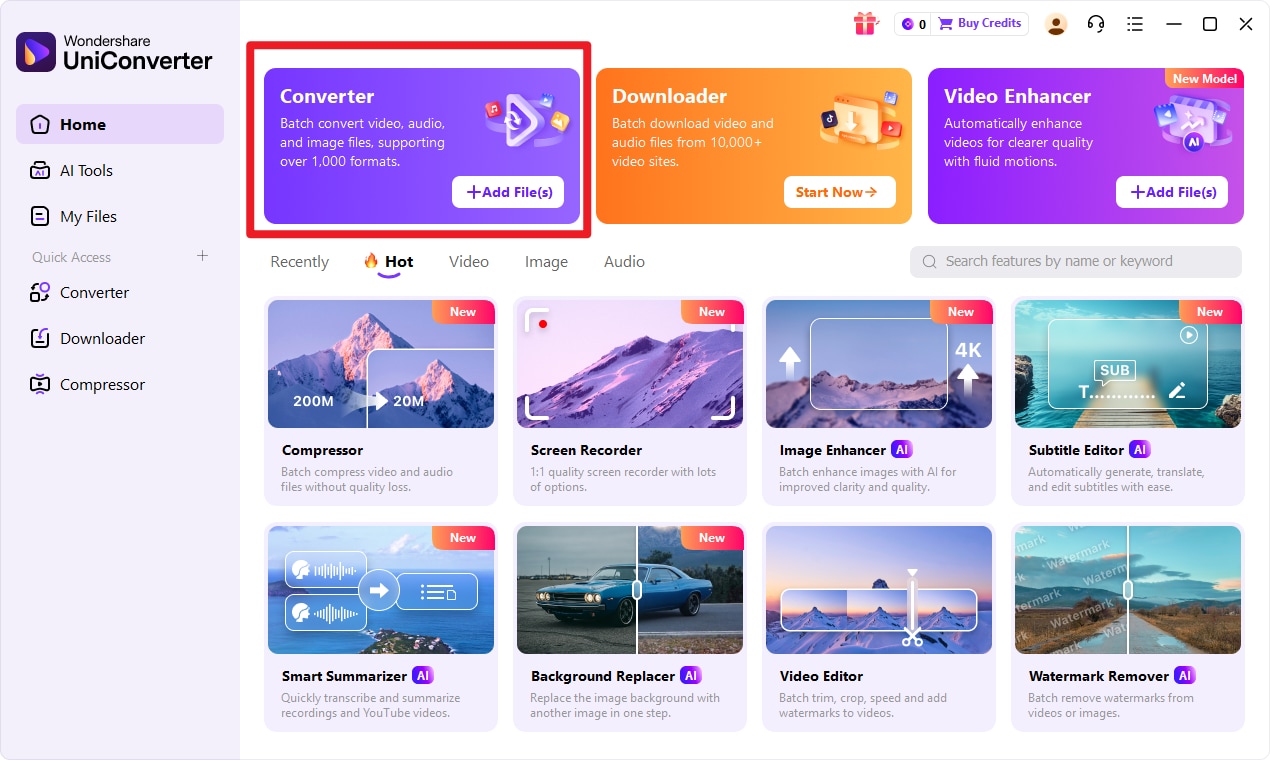
Step 1: Add Your HDR10 Video to UniConverter
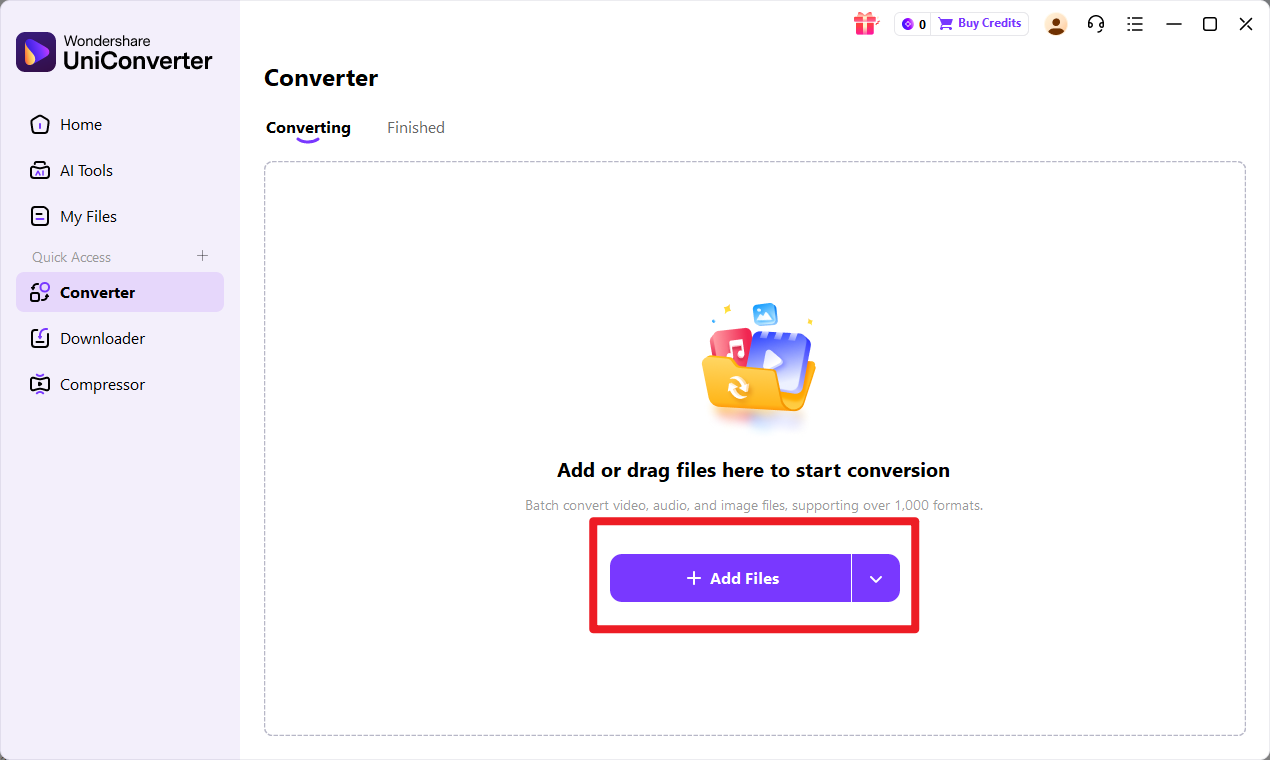
Launch Wondershare UniConverter on your computer. From the main interface, select the Converter tool on the left-hand panel. You can then drag and drop your HDR10 video file directly into the program window or click the Add Files button to browse your computer and select the file.
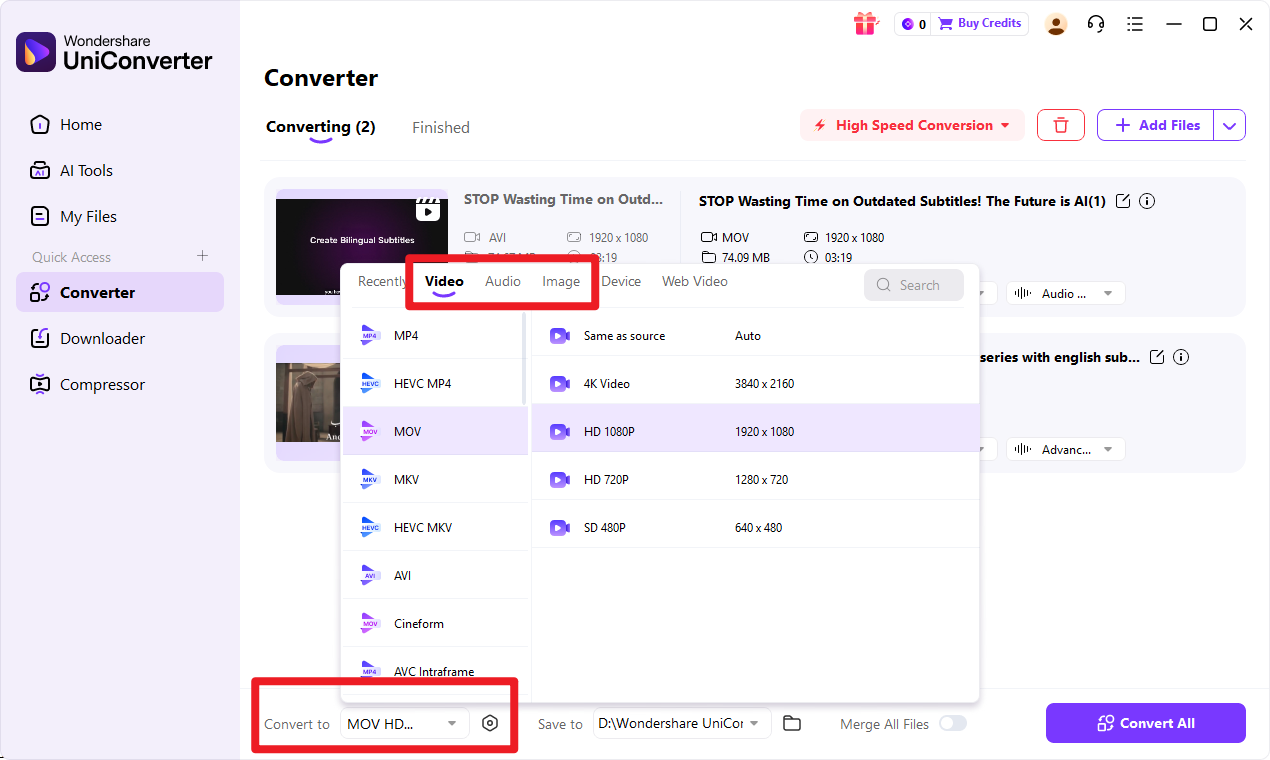
Step 2: Select a High-Quality Output Format
Click on the Output Format menu located at the bottom of the window. Navigate to the Video tab. To ensure maximum quality and compatibility, choose a robust container format like MP4 or MKV. From the resolution list on the right, select Same as source to maintain the original resolution of your HDR video.
Step 3: Configure for High Dynamic Range Preservation
Next to the resolution you selected, click the small gear icon (Edit) to open the advanced settings window. Here, it's crucial to ensure the Encoder is set to HEVC (H.265), as this codec is highly efficient for HDR content. Set the Quality dropdown to High Quality to minimize compression and preserve as much of the original video data as possible for your Dolby Vision display to interpret correctly. Click Create to save the settings.
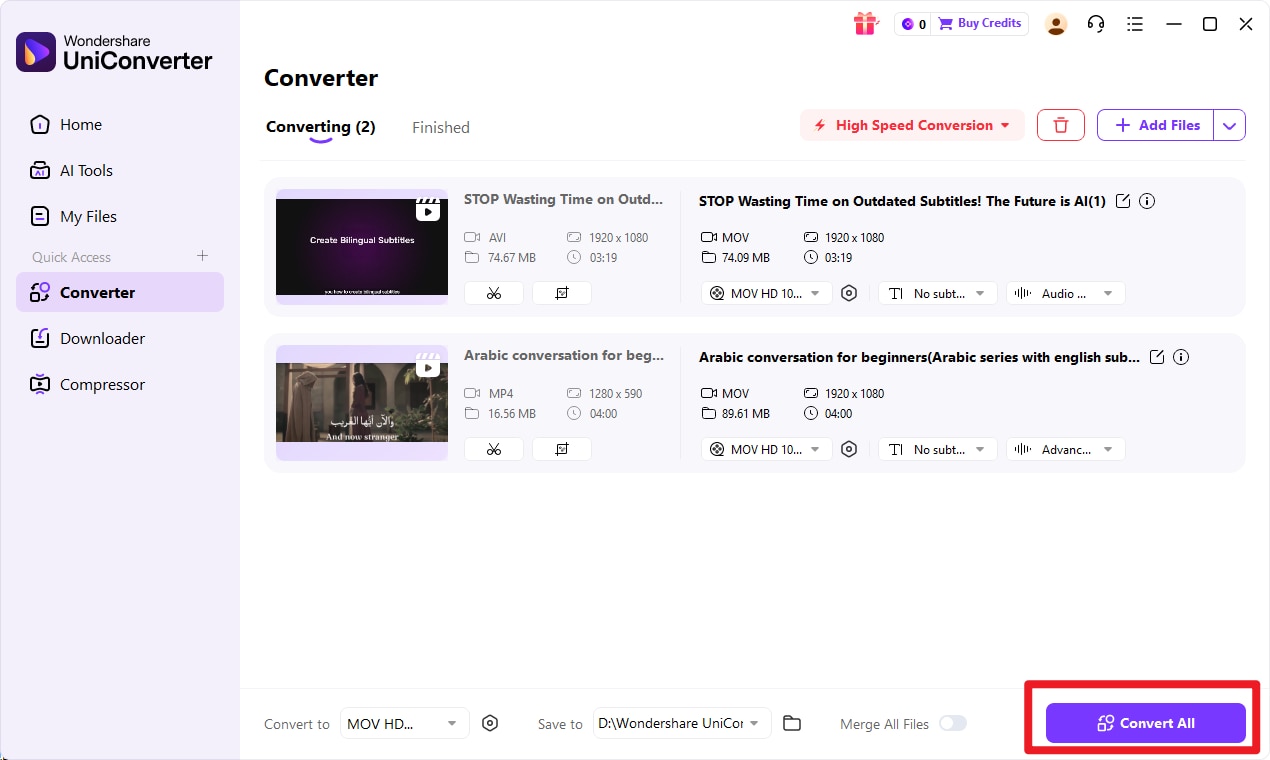
Step 4: Start the Conversion Process
Before starting, you can choose where to save the converted file using the File Location menu at the bottom. Once you're ready, click the Convert button (or Start All if you have multiple files). UniConverter will leverage its GPU acceleration to process the file quickly, creating a new, high-quality video optimized for your media library.

Your Complete Toolkit for HDR and Beyond
Conclusion
The HDR10 vs Dolby Vision debate ultimately comes down to a choice between accessibility and technical perfection. Dolby Vision is, without a doubt, the more advanced and capable format, offering a dynamically optimized picture that represents the pinnacle of today's consumer video technology. Its scene-by-scene adjustments provide a level of nuance and precision that static HDR10 cannot match.
However, HDR10 remains the ubiquitous open standard that delivers a stunning visual upgrade over SDR and is supported by virtually every modern device. For many users, its performance is more than sufficient and offers incredible value. The best choice for you depends on your budget, the hardware you own, and how much you prioritize having the absolute best picture quality for your movies and shows.
Regardless of which format dominates your screen, managing a modern video library with its mix of HDR, SDR, 4K, and HD content can be a challenge. For anyone who needs to convert, compress, edit, or simply ensure their videos play flawlessly on any device, Wondershare UniConverter stands out as an indispensable and powerful tool for a seamless media experience.
FAQs
-
1. Can a TV that supports HDR10 play Dolby Vision content?
No. If you play Dolby Vision content on an HDR10-only TV, it cannot process the dynamic metadata. The TV will typically default to playing the base HDR10 layer that is often included with Dolby Vision content, or in some cases, it may fall back to SDR. However, all Dolby Vision-compatible TVs can play HDR10 content without any issues. -
2. Is Dolby Vision worth the extra cost?
For users who prioritize the best possible picture quality, especially for movies and premium television series, the improved scene-by-scene optimization of Dolby Vision is often considered worth the investment. It provides a more accurate and impactful viewing experience. For more casual viewers or those on a tighter budget, the excellent quality of HDR10 is often more than satisfactory. -
3. Do I need a special HDMI cable for HDR?
Yes, you need an HDMI cable that can handle the required bandwidth. For 4K HDR at 60Hz, you need a cable certified as Premium High Speed (or an HDMI 2.0 cable) that supports at least 18Gbps. For more advanced features like 4K at 120Hz, you'll need an Ultra High Speed cable (HDMI 2.1) that supports 48Gbps. Most modern, well-made HDMI cables will work, but using a certified cable ensures reliability. -
4. Which format is better for gaming?
Currently, HDR10 is more widely supported in the PC gaming world and is the baseline HDR standard for consoles. However, consoles like the Xbox Series X/S also support Dolby Vision for gaming, which can offer a more dynamic and visually impressive experience on compatible TVs. The choice may depend on your platform: for PC, HDR10 is the safer bet, while for Xbox owners with a Dolby Vision TV, that format can provide a superior experience in supported titles.
