
When you're shopping for a new 4K TV or subscribing to a streaming service, you'll inevitably encounter the term "HDR," or High Dynamic Range. This technology dramatically improves picture quality by offering a wider range of colors and contrast. However, the world of HDR isn't simple. The two leading advanced formats, HDR10+ and Dolby Vision, are constantly competing for dominance. This leaves many consumers wondering which is better and what the real-world differences are. The HDR10+ vs Dolby Vision debate is about more than just technical specifications; it's about content availability, hardware support, and ultimately, your viewing experience.
Understanding the nuances between these two dynamic HDR formats is crucial for making an informed decision, whether you're a home theater enthusiast, a casual streamer, or a content creator. This guide will break down everything you need to know, demystifying the jargon and providing clear, practical advice to help you choose the right technology for your needs in 2026.
In this article, we will cover:
- An introduction to HDR10+ and Dolby Vision.
- A quick comparison table highlighting their key differences.
- A detailed analysis of which format is better in terms of quality, cost, and ecosystem.
- Specific use cases to help you decide which format to prioritize.
- A step-by-step guide on how to solve format incompatibility issues.
Part 1. What is HDR10+? What is Dolby Vision?
Before we dive into a head-to-head comparison, it's essential to understand what each format is and how it works. Both HDR10+ and Dolby Vision are enhancements over the base HDR10 standard, but they achieve their results in different ways.
What is HDR10+?
HDR10+ is an open-standard, royalty-free dynamic HDR format. Developed by a consortium including Samsung, Panasonic, and 20th Century Fox (now part of Disney), it was created as a free alternative to Dolby Vision. Its primary function is to enhance the standard HDR10 format by adding dynamic metadata.
What is dynamic metadata? Think of it as frame-by-frame instructions for your TV. While standard HDR10 uses static metadata (one set of instructions for the entire movie), HDR10+ adjusts brightness, color, and contrast levels on a scene-by-scene or even frame-by-frame basis. This means a dark, shadowy scene can be optimized for detail in the blacks, while a bright, sunny scene can be adjusted to show brilliant highlights, all within the same film. This dynamic optimization ensures the picture is always displayed as the creator intended.
Key specifications for HDR10+ include a 10-bit color depth, which allows for over 1.07 billion colors, and support for a peak brightness of up to 4,000 nits. Because it's royalty-free, manufacturers can implement it without paying a licensing fee, which helps keep device costs down.
What is Dolby Vision?
Dolby Vision is a proprietary dynamic HDR format developed by the audio-visual experts at Dolby Laboratories. Unlike the open-standard HDR10+, Dolby Vision is a closed ecosystem. Manufacturers who want to include it in their TVs, streaming devices, or Blu-ray players must pay a licensing fee and use specific Dolby-certified hardware. In return, they get access to what is arguably the most advanced HDR technology on the market.
Like HDR10+, Dolby Vision uses dynamic metadata to optimize the picture for every single frame. This ensures unparalleled precision in controlling brightness and color, delivering a viewing experience that is meticulously tailored to the capabilities of your specific display.
Where Dolby Vision pulls ahead is in its technical specifications. It supports a 12-bit color depth, which translates to a staggering 68.7 billion colors. This allows for smoother color gradients and eliminates the "color banding" that can sometimes be visible in 10-bit video. Furthermore, Dolby Vision has a theoretical target for peak brightness of up to 10,000 nits. While no consumer display can currently reach this level, it makes the format incredibly future-proof, ready to take advantage of display technology advancements for years to come.
Part 2. Quick Comparison Table
To make the differences clearer, here is a quick comparison table outlining the main characteristics of HDR10+ and Dolby Vision. This at-a-glance view highlights the core technical and business distinctions between the two formats.
| Feature | HDR10+ | Dolby Vision |
| Metadata | Dynamic | Dynamic |
| Color Depth | 10-bit | 12-bit |
| Max Brightness (Target) | 4,000 nits | 10,000 nits |
| Licensing | Royalty-Free (Open Standard) | Proprietary (Fee-based) |
| Content Support | Amazon Prime Video, Google Play Movies, YouTube | Netflix, Disney+, Apple TV+, Max |
| Hardware Support | Samsung, Panasonic, Vizio, TCL | LG, Sony, Vizio, TCL, Apple |
Part 3. HDR10+ vs Dolby Vision: Which One Is Better?
Now for the main event: which format is truly better? The answer isn't straightforward and depends on what you value most—technical superiority, cost, or content availability. Let's break it down.
Picture Quality: The Technical Edge of Dolby Vision
On paper, Dolby Vision is the clear winner in terms of raw picture quality potential. Its support for 12-bit color depth allows it to display 68.7 billion colors, compared to the 1.07 billion colors of 10-bit HDR10+. This vast increase in color information results in more lifelike images with incredibly smooth transitions between shades. You're less likely to see distracting bands of color in skies or sunsets.
Furthermore, Dolby Vision's higher brightness ceiling of 10,000 nits (compared to 4,000 for HDR10+) gives it more headroom for displaying specular highlights—the brightest parts of an image, like the glint of the sun on water or the flash of an explosion. While current high-end TVs peak around 2,000-4,000 nits, Dolby Vision's dynamic tone mapping is designed to intelligently adapt a 10,000-nit master to the specific capabilities of your display, ensuring the best possible result. The combination of more color information and a higher brightness potential gives Dolby Vision a technical edge that videophiles covet.
Cost and Accessibility: The Open-Standard Appeal of HDR10+
This is where HDR10+ shines. As a royalty-free, open-standard format, it is significantly cheaper and easier for manufacturers to implement. They don't have to pay licensing fees to Dolby or integrate specialized hardware. This cost saving can be passed on to the consumer, making TVs and other devices that support HDR10+ potentially more affordable.
The open nature of HDR10+ also encourages wider adoption without the financial and technical barriers of a proprietary system. This has led to strong support from major brands like Samsung, which has historically championed HDR10+ as its premium HDR format of choice. For budget-conscious buyers who still want the benefits of dynamic HDR, HDR10+ offers a fantastic balance of performance and value.
Ecosystem and Availability: The Current Market Leader
Technology is only as good as the content available for it. In this area, Dolby Vision currently has a more mature and extensive ecosystem. The biggest streaming services in the world, including Netflix, Disney+, Apple TV+, and Max, have all adopted Dolby Vision as their preferred HDR format for original content. Major Hollywood studios also frequently master their 4K Blu-ray releases in Dolby Vision.
On the hardware side, Dolby Vision is supported by a wide array of manufacturers, including LG, Sony, Vizio, and TCL. Apple has also deeply integrated Dolby Vision across its product line, from iPhones that can record in the format to Apple TV 4K boxes that stream it.
However, HDR10+ is not far behind and is steadily growing its library. Amazon Prime Video is its biggest supporter, offering a large catalog of movies and shows in the format. It's also found on services like Google Play Movies and YouTube. The choice often comes down to which services you use most and which TV brand you prefer. If you're a loyal Samsung TV owner, HDR10+ will be your go-to dynamic format. Fortunately, many mid-range and high-end TVs from brands like Vizio and TCL now support both formats, giving you the best of both worlds.
Part 4. Use Cases for HDR10+ and Dolby Vision
Your personal viewing habits, existing hardware, and future plans should guide your decision. Here are some common scenarios to help you determine which format to prioritize.
When to Prioritize Dolby Vision
You should lean towards a Dolby Vision setup if you fall into one of these categories:
- You are a cinephile seeking the absolute best picture quality. If you want to future-proof your home theater and get as close to the director's intent as possible, Dolby Vision's 12-bit color and superior tone mapping offer a technical advantage that is hard to ignore.
- You primarily stream content from Netflix, Disney+, or Apple TV+. These services have invested heavily in Dolby Vision, and their flagship original series and movies are almost always available in the format. To get the most out of your subscriptions, a Dolby Vision-capable TV is a must.
- You own Apple devices. The Apple ecosystem is deeply integrated with Dolby Vision. iPhones can shoot video in Dolby Vision, and the Apple TV 4K is one of the best streaming devices for experiencing it. If you're an Apple user, a Dolby Vision TV will create a seamless, high-quality experience.
When to Consider HDR10+
HDR10+ is an excellent choice in the following situations:
- You are a frequent user of Amazon Prime Video. As the primary streaming backer of HDR10+, Prime Video offers a vast library of content in the format. If this is your main streaming service, an HDR10+-compatible TV will serve you well.
- You are purchasing a TV from a brand that strongly supports HDR10+. Samsung, one of the world's largest TV manufacturers, has exclusively backed HDR10+ on its TVs for years. If you have your heart set on a new Samsung QLED or OLED TV, you will be entering the HDR10+ ecosystem.
- You want the benefits of dynamic HDR on a more budget-friendly device. Because it's royalty-free, HDR10+ is often found on more affordable TVs and streaming devices, bringing the advantages of dynamic metadata to a wider audience without the "Dolby tax."
For Content Creators and Power Users
If you're a content creator, video editor, or a power user who manages a large local media library, you'll inevitably encounter both formats. This is where the theoretical debate becomes a practical problem of compatibility. A video file shot in Dolby Vision on an iPhone might not display correctly on an HDR10+-only monitor. Your editing software might struggle to import or render one format over the other. Trying to play an HDR10+ file on a device that only supports Dolby Vision can result in a washed-out picture or incorrect colors.
This fragmentation is a significant pain point. To bridge the gap between these competing standards, a versatile tool becomes essential. To ensure your video files are playable, editable, and shareable across all your devices, a powerful video converter like Wondershare UniConverter can be invaluable. It can handle complex format conversions, allowing you to transcode a file from one HDR format to another or even convert an HDR video to a standard dynamic range (SDR) video for playback on older screens.
Part 5. Step-by-Step Guide to Convert HDR10+ to Another Format Using UniConverter
If you have an HDR10+ video that you need to play on a device that prefers a different format, or vice-versa, format conversion is the answer. Wondershare UniConverter is a comprehensive tool that handles video conversions, including complex HDR formats, with ease. Follow these steps to convert your files.
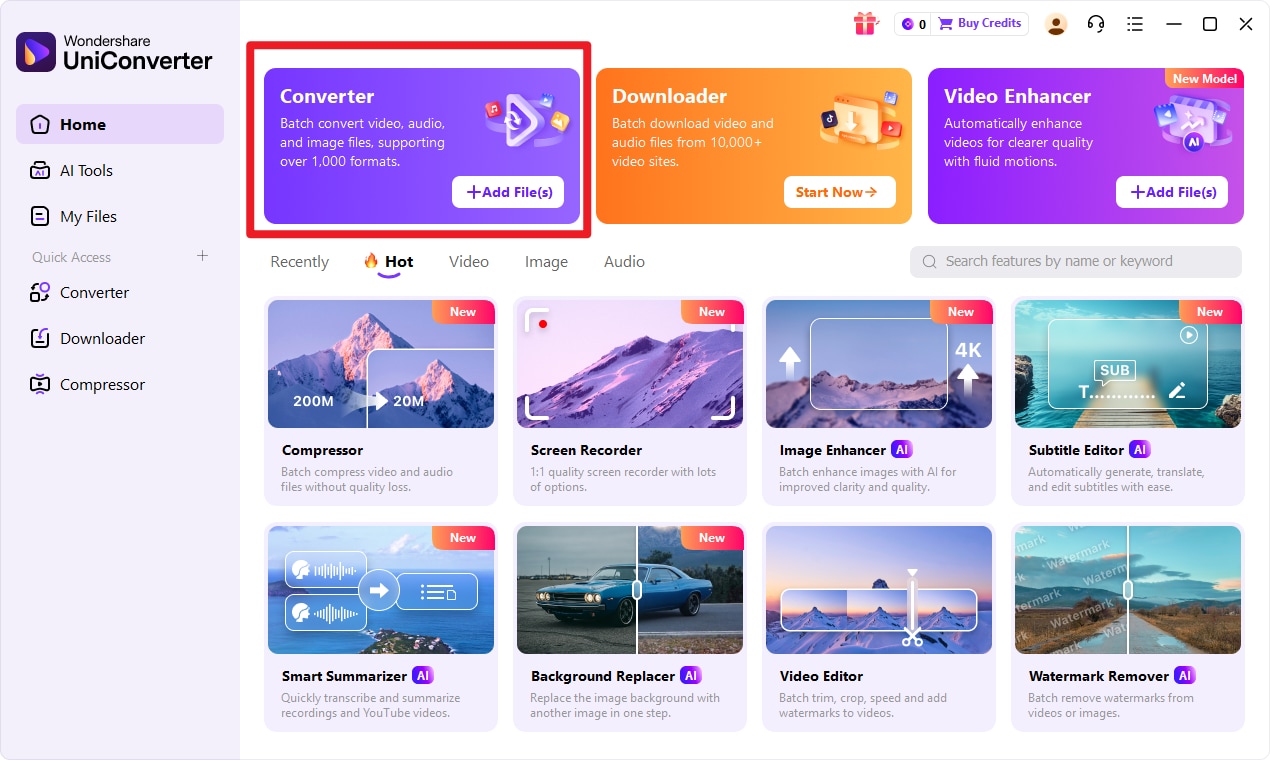
Step 1. Choose Converter in UniConverter
Launch Wondershare UniConverter on your computer. From the main interface, select the Converter feature from the tool menu on the left-hand side.
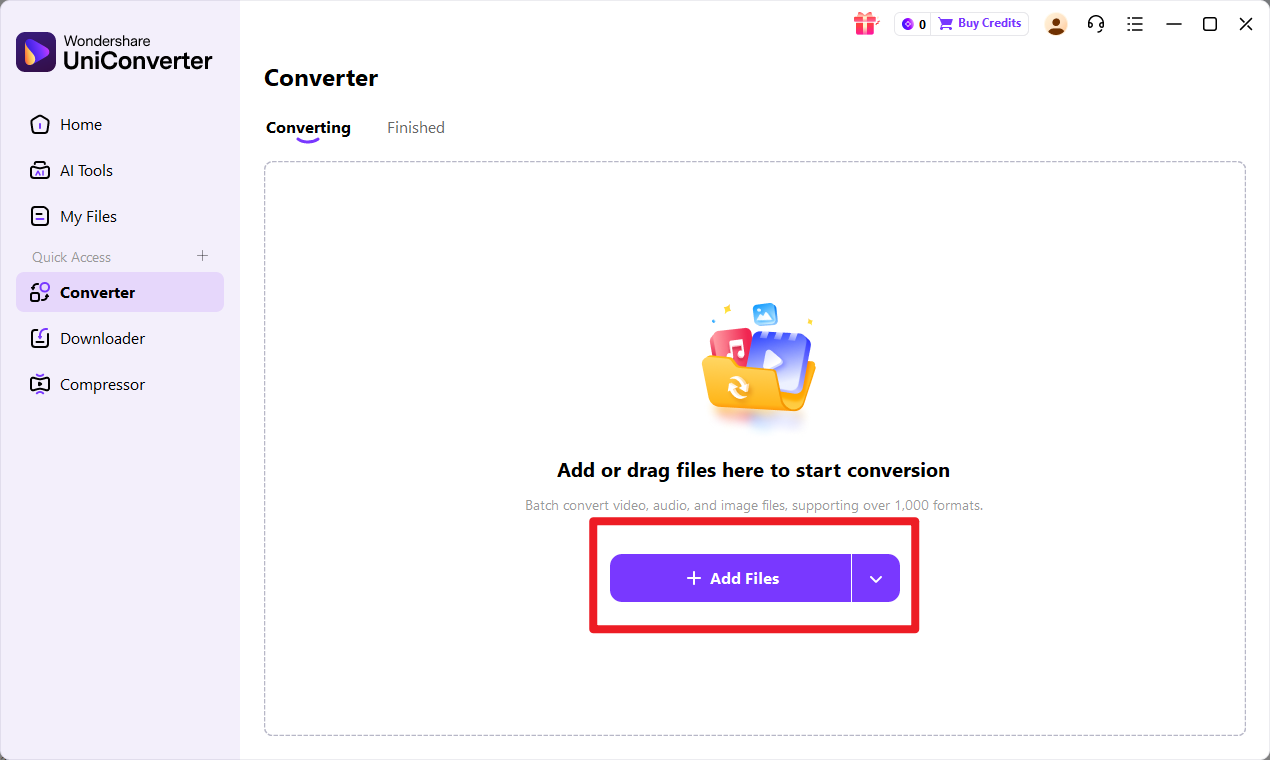
Step 2. Add Files to UniConverter
Click the Add Files icon in the center of the screen or simply drag and drop your input format video file directly into the conversion window. UniConverter allows you to add multiple files at once to perform a batch conversion, saving you time.
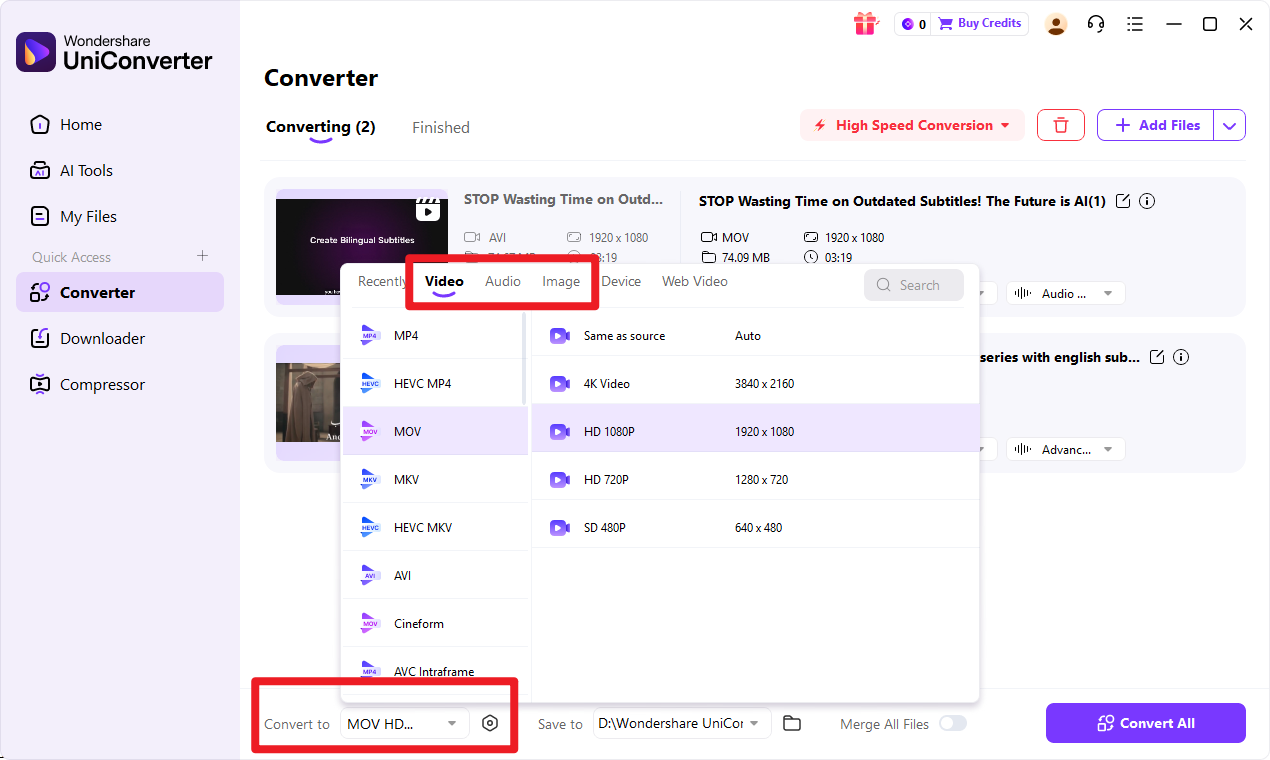
Step 3. Choose Output Format
At the bottom of the window, click on the Output Format menu. This will open a new window with a list of available formats. Navigate to the Video tab and select your desired target format and resolution from the extensive list of presets.
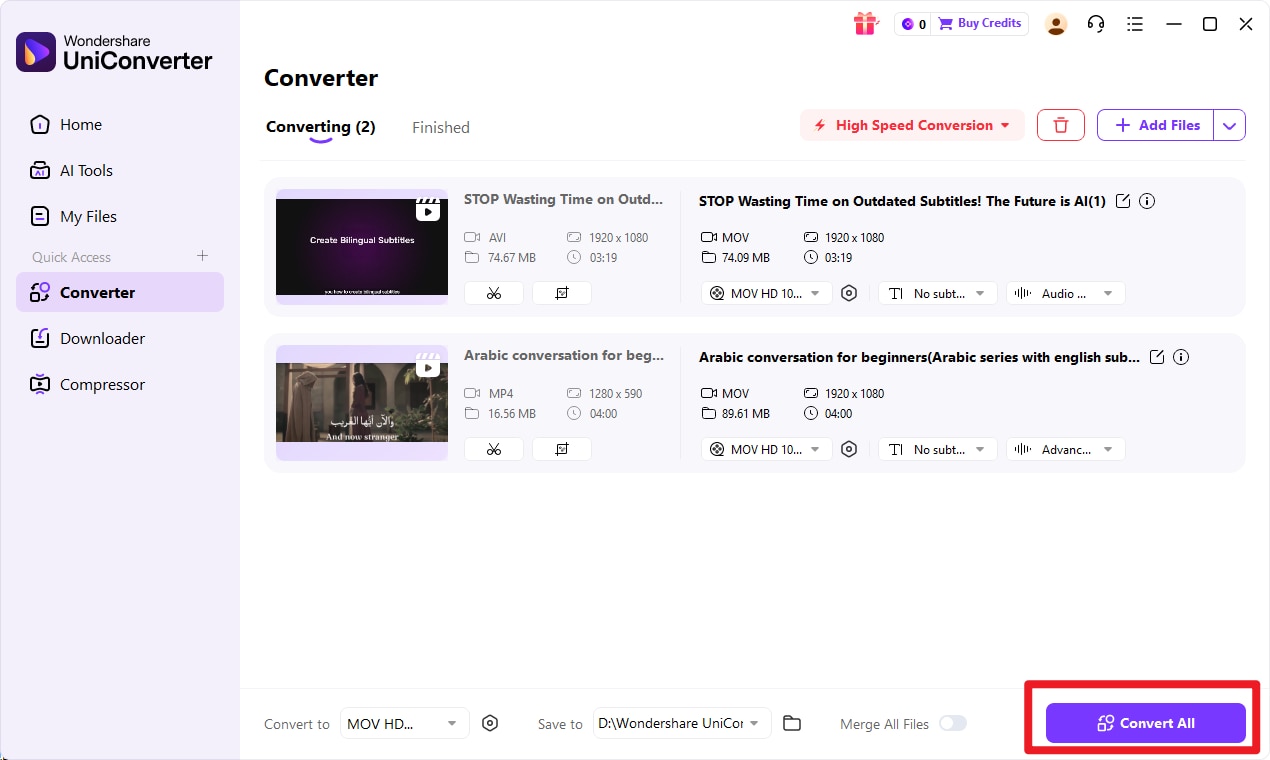
Step 4. Start the Conversion
Finally, choose a destination folder for your converted file by clicking the File Location option at the bottom. Once you are ready, click the Start All button in the bottom-right corner to begin the conversion process. UniConverter will efficiently convert your video while preserving its quality.

More Than Just an HDR Video Converter
Conclusion
The battle between HDR10+ vs Dolby Vision is a classic case of an open standard versus a proprietary powerhouse. Each has its distinct advantages. Dolby Vision holds a technical edge with its 12-bit color depth and higher brightness targets, making it the preferred choice for videophiles seeking the ultimate picture quality. On the other hand, HDR10+ offers a compelling, royalty-free alternative that lowers costs for manufacturers and consumers, and it continues to gain support across the industry.
Ultimately, the best choice for you depends on your budget, the streaming services you use most, and the hardware you own or plan to buy. Many modern TVs now support both formats, making the decision easier. However, for any compatibility issues that arise when sharing, editing, or playing back your video files, remember that powerful software like Wondershare UniConverter can easily resolve format conflicts. It ensures you can enjoy your content seamlessly on any screen, regardless of the HDR format.
FAQs
-
1. Is Dolby Vision really better than HDR10+?
Technically, Dolby Vision is more capable due to its support for 12-bit color (68.7 billion colors vs. 1.07 billion in 10-bit) and a higher potential peak brightness (10,000 nits vs. 4,000 nits). However, whether you will perceive a significant difference depends on the quality of the source content, the calibration of the master, and your display's capabilities. On a high-end TV with excellent processing, Dolby Vision can offer a more nuanced and impactful image. -
2. Can a Dolby Vision TV play HDR10+ content?
It depends on the TV. While most TVs that support Dolby Vision also support the base HDR10 format, support for HDR10+ is not guaranteed. However, in recent years, many manufacturers like TCL, Vizio, and Hisense have started including support for both Dolby Vision and HDR10+ in their mid-range and high-end models. These "multi-format" HDR TVs offer the most flexibility. Always check the TV's specifications sheet before buying. -
3. Do I need a special HDMI cable for HDR?
Yes, to properly transmit an HDR signal, whether it's HDR10+ or Dolby Vision, you need an HDMI cable that can handle the required bandwidth. A cable certified as High-Speed HDMI is the minimum requirement, as it supports the 18Gbps bandwidth needed for 4K HDR at up to 60 frames per second (HDMI 2.0a/b). For the best performance and future-proofing, especially with new consoles and HDMI 2.1 features, an Ultra High-Speed HDMI cable is recommended. -
4. Can I convert an HDR video to a non-HDR format?
Yes. If you need to play an HDR video on a standard dynamic range (SDR) screen, such as an older TV, monitor, or mobile device, you can use a video converter. A capable tool like Wondershare UniConverter can perform this conversion. It uses a process called "tone mapping" to intelligently compress the wider color and brightness range of the HDR video into the more limited range of SDR, ensuring the colors and brightness look correct and not washed-out on the standard display.
