
The world of digital video is driven by an invisible force: video codecs. These complex technologies are responsible for compressing massive video files into manageable sizes for streaming, storage, and sharing. As we push the boundaries of resolution with 4K, 8K, and immersive VR, the battle between codecs becomes more critical than ever. Two major contenders currently dominate the conversation: H.266 (VVC), the next-generation standard, and VP9, the open-source powerhouse. Choosing between H.266 (VVC) vs VP9 can be a daunting task, filled with technical jargon and conflicting information. Whether you're a content creator, a developer, or simply a tech enthusiast, understanding the differences is key to making an informed decision.
This comprehensive guide will demystify these two codecs. We will break down their technical specifications, compare their performance, and explore their real-world applications. By the end, you'll have a clear understanding of which codec is right for your needs and how to handle any compatibility challenges that may arise.
In this article,you will learn :
- An introduction to H.266 (VVC) and VP9.
- A quick comparison table for an at-a-glance overview.
- A detailed analysis of compression, licensing, and performance.
- Specific use cases for choosing one codec over the other.
- A step-by-step guide on how to convert between formats.
Part 1. What is H.266 (VVC)? What is VP9?
Before we dive into a head-to-head comparison, it's essential to understand the fundamentals of each codec. They come from different backgrounds and were designed with different goals in mind, which directly impacts their strengths and weaknesses.
What is H.266 (VVC)?
H.266, also known as Versatile Video Coding (VVC), is the direct successor to the widely used H.265 (HEVC). It was developed by the Joint Video Experts Team (JVET), a collaborative effort between the ITU-T Video Coding Experts Group (VCEG) and the ISO/IEC Moving Picture Experts Group (MPEG). Finalized in 2020, VVC was engineered with ambitious goals.
The primary objective of H.266 is to achieve a significant improvement in compression efficiency—aiming to be up to 50% more efficient than its predecessor, HEVC. This means it can deliver the same visual quality at half the bitrate, or substantially higher quality at the same bitrate. This makes it an ideal candidate for the demands of next-generation video, including 4K, 8K, High Dynamic Range (HDR), and 360-degree video. However, this cutting-edge performance comes with a major caveat: a complex, royalty-bearing licensing structure. Companies wishing to implement H.266 in their products or services must navigate patent pools and pay licensing fees, which can be a significant barrier to widespread adoption.
What is VP9?
VP9 is an open and royalty-free video coding format developed by Google. It is the successor to VP8 and a key part of Google's WebM project, which aims to provide open, high-quality media formats for the web. Since its release in 2013, VP9 has become a dominant force in online video streaming.
Its most significant feature is its royalty-free nature. This has allowed for rapid and widespread adoption without the financial and legal complexities associated with codecs like H.265 and H.266. VP9 is the primary codec used by YouTube, the world's largest video platform, and is natively supported by the majority of modern web browsers, including Chrome, Firefox, and Edge. It was designed specifically for efficient streaming over the internet, offering a great balance between compression quality and decoding performance on a wide range of devices, from high-end computers to budget smartphones.
Part 2. Quick Comparison Table
For a clear, at-a-glance summary of the key differences between H.266 (VVC) and VP9, this table breaks down their most important attributes.
| Feature | H.266 (VVC) | VP9 |
| Developer | JVET (ITU-T VCEG & ISO/IEC MPEG) | |
| Licensing | Royalty-bearing | Royalty-free |
| Compression Efficiency | Very High (up to 50% better than HEVC) | High (better than H.264) |
| Hardware Support | Emerging, requires new-generation hardware | Widespread in modern devices |
| Primary Use | Next-gen streaming (8K), broadcasting | Web streaming, online video platforms |
| Complexity | High encoding/decoding requirements | Moderate encoding/decoding requirements |
Part 3. H.266 vs VP9: Which One Is Better?
The question of which codec is "better" doesn't have a simple answer. It depends entirely on the context and priorities of the user. Here, we break down the comparison across four critical areas: compression, licensing, ecosystem, and performance.
Compression Efficiency and File Size
When it comes to pure compression power, H.266 (VVC) is the undisputed leader. It was designed to be the most efficient codec on the market, capable of reducing file sizes by up to 50% compared to H.265 (HEVC) without any perceivable loss in quality. When compared to VP9, H.266 offers a significant advantage, especially at higher resolutions. For a 4K or 8K video, using H.266 can result in a dramatically smaller file size than an equivalent VP9 encode. This makes it an ideal choice for applications where bandwidth and storage are at a premium, such as 8K streaming services or archiving high-resolution master files.
VP9, while not as advanced as H.266, still provides excellent compression that is a marked improvement over the older H.264/AVC standard. It is highly optimized for the bandwidth conditions prevalent on the internet today, delivering high-quality 1080p and 4K streams efficiently. For most current web video applications, VP9's compression is more than sufficient and represents a sweet spot between quality and accessibility.
Licensing: Royalty-Free vs Royalty-Bearing
This is perhaps the most significant practical difference between the two codecs. VP9's greatest strength is its completely royalty-free licensing model. Developers, browser vendors, and content platforms can implement and use VP9 without paying any licensing fees. This has been the primary driver of its massive adoption across the web, as it removes a major financial barrier and encourages innovation.
In stark contrast, H.266 (VVC) follows the traditional model of its predecessors and is encumbered by patents. Its licensing structure is managed by multiple patent pools, making it complex and potentially expensive for hardware manufacturers and software developers to adopt. This royalty-bearing model can slow down adoption, as companies weigh the cost of licenses against the benefits of superior compression. For many open-source projects and budget-conscious startups, this cost can be prohibitive.
Ecosystem and Device Support
A codec is only useful if devices can play it. In 2026, VP9 has a massive advantage in ecosystem and device support. Thanks to its long-standing presence and royalty-free model, VP9 decoding is supported in hardware by a vast range of devices, including virtually all modern Android smartphones, smart TVs, streaming sticks, and game consoles. It is also natively supported by all major web browsers, ensuring a seamless playback experience on the web.
H.266 support, on the other hand, is still in its early stages. Hardware decoding for VVC is primarily found in the latest generation of high-end chipsets for flagship smartphones, premium smart TVs, and specialized broadcast equipment. While support is growing, it is far from ubiquitous. This means that if you share an H.266 video today, many recipients won't be able to play it without specialized software.
For users caught in this compatibility gap, a reliable video converter is an indispensable tool. If you have an H.266 file that won't play on your device, or a VP9 file you need to prepare for a system that only supports H.264, a powerful application like Wondershare UniConverter can solve the problem. It supports a vast array of codecs and formats, allowing you to convert files to a more universally compatible format like H.264 MP4 with just a few clicks.
Performance: Encoding and Decoding
The advanced compression algorithms in H.266 come at a cost: computational complexity. Encoding and decoding VVC video is significantly more demanding on a system's CPU and GPU than VP9. Real-time encoding of H.266 content, especially at 4K or 8K, requires powerful, dedicated hardware. Similarly, software decoding on devices without dedicated VVC hardware support can be a struggle, leading to stuttering playback and high battery drain.
VP9 is a more mature and less resource-intensive codec. Over the years, its encoders and decoders have been highly optimized. This allows for efficient real-time encoding on modern computers and smooth software decoding on a wide spectrum of devices, including those with less powerful processors. This lower computational overhead makes VP9 a more practical choice for large-scale video services that need to support a diverse range of user hardware.
Part 4. Use Cases for H.266 and VP9
Given their distinct profiles, H.266 and VP9 are suited for different applications. Choosing the right one depends on your target audience, delivery platform, and long-term goals.
When to Choose H.266 (VVC)
H.266 is the codec for forward-looking, high-fidelity applications where quality and efficiency are paramount, and cost is a secondary concern. You should choose H.266 for:
- Professional Broadcasting and Premium Content: For over-the-air 4K/8K broadcasting and premium video-on-demand (VOD) services that want to offer the highest possible quality while saving on bandwidth costs.
- Future-Proofing Video Archives: For film studios, production houses, and archivists who need to store master files in the highest quality with the smallest possible footprint for long-term preservation.
- Next-Generation Streaming: For delivering cutting-edge content formats like ultra-high-definition 8K, 10-bit HDR, and immersive 360-degree or VR video, where every bit of bandwidth saved counts.
When to Choose VP9
VP9 is the pragmatic and powerful choice for the vast majority of today's video delivery needs, especially on the open web. You should choose VP9 for:
- Web Video and Online Platforms: For delivering video content on websites, blogs, and social media. Its native browser support ensures a smooth experience for the widest possible audience.
- Large-Scale Streaming Services: For platforms like YouTube, where billions of videos are served daily. The royalty-free model makes it economically viable at scale.
- Ensuring Broad Compatibility: When your primary goal is to create a video that will play on nearly any modern browser, smartphone, or smart TV without requiring users to install special software or plugins.
Part 5. Step-by-Step Guide to Convert H.266 to VP9 Using UniConverter
When you have a video in one format but need it in another for playback, editing, or sharing, a video converter is the perfect solution. Wondershare UniConverter is a powerful and intuitive tool that simplifies this process, supporting over 1,000 formats. Here is how to convert your files in four simple steps.
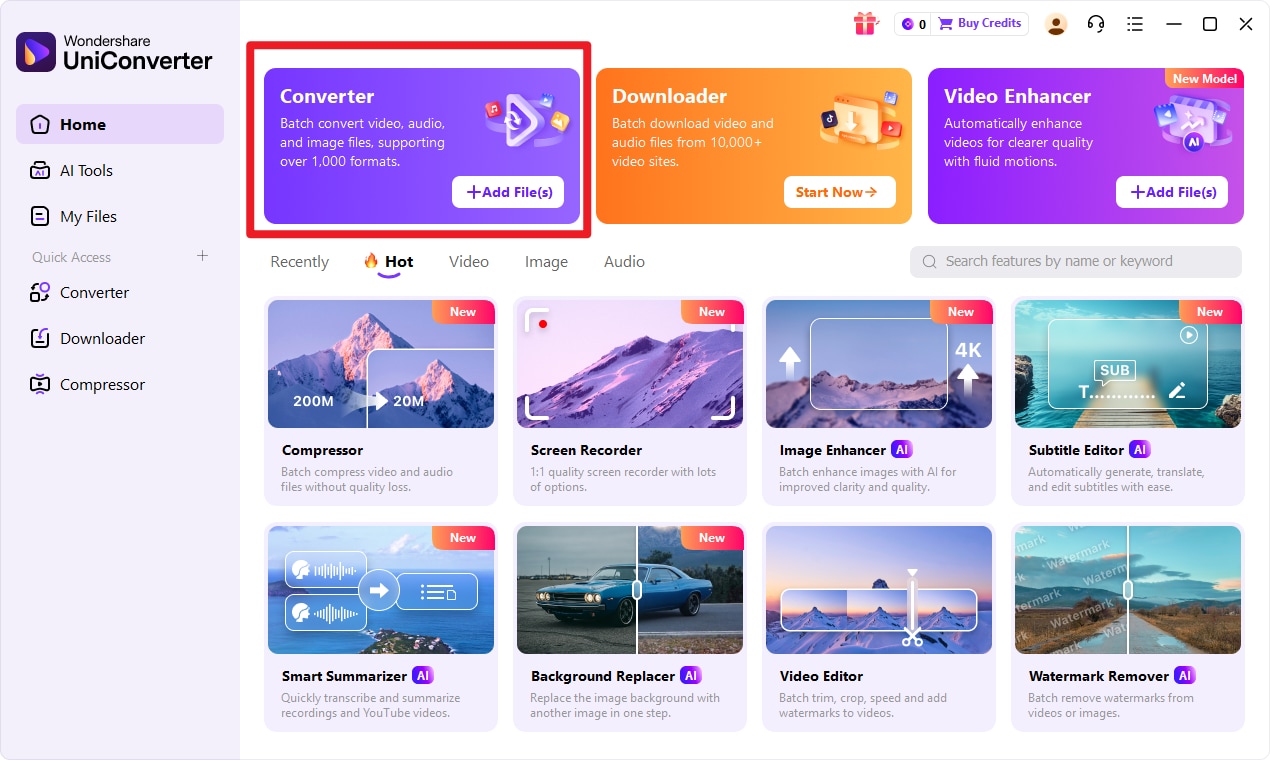
Step 1. Choose Converter in UniConverter
Open Wondershare UniConverter on your computer. From the main interface, look at the menu on the left side and select the Converter tab to enter the video conversion module.
Step 2. Add Files to UniConverter
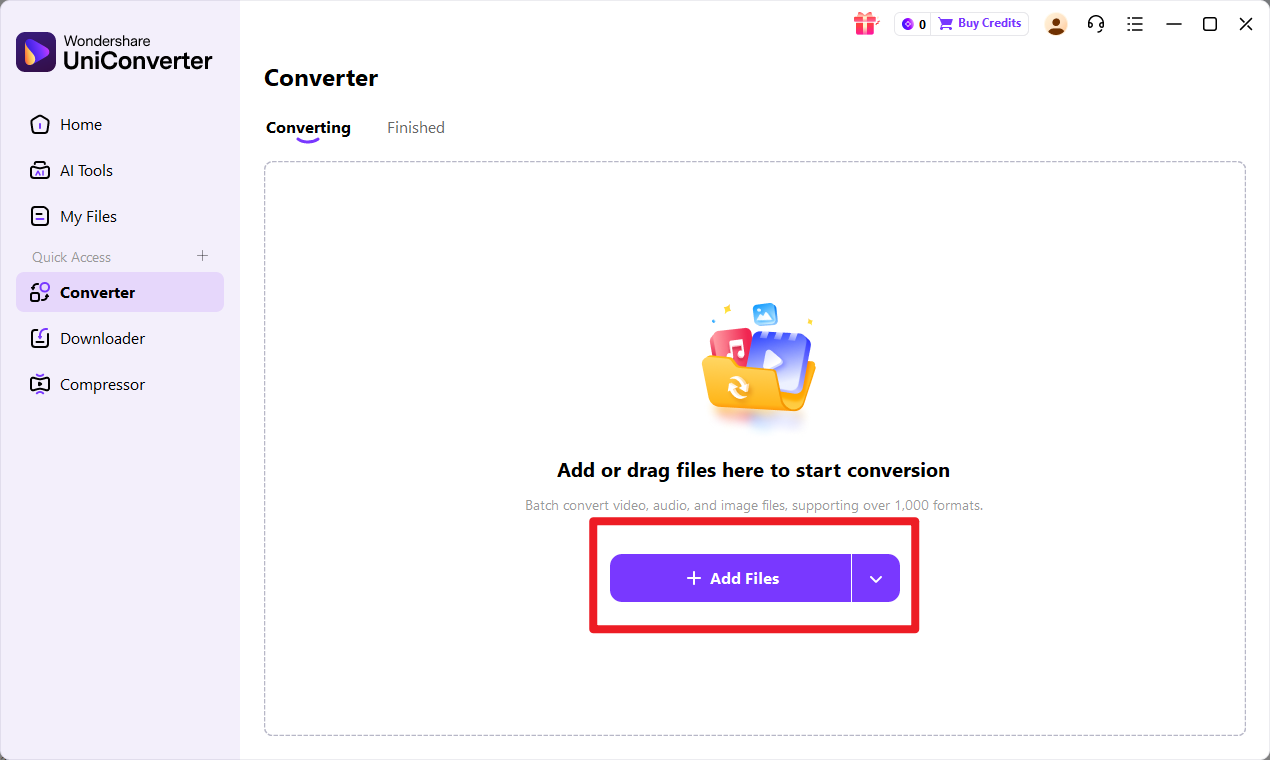
You can now import your video files. Either drag and drop your video files with the input format directly onto the program window or click the Add Files icon in the top-left corner to open a file browser and select the videos you wish to convert.
Step 3. Choose Output Format
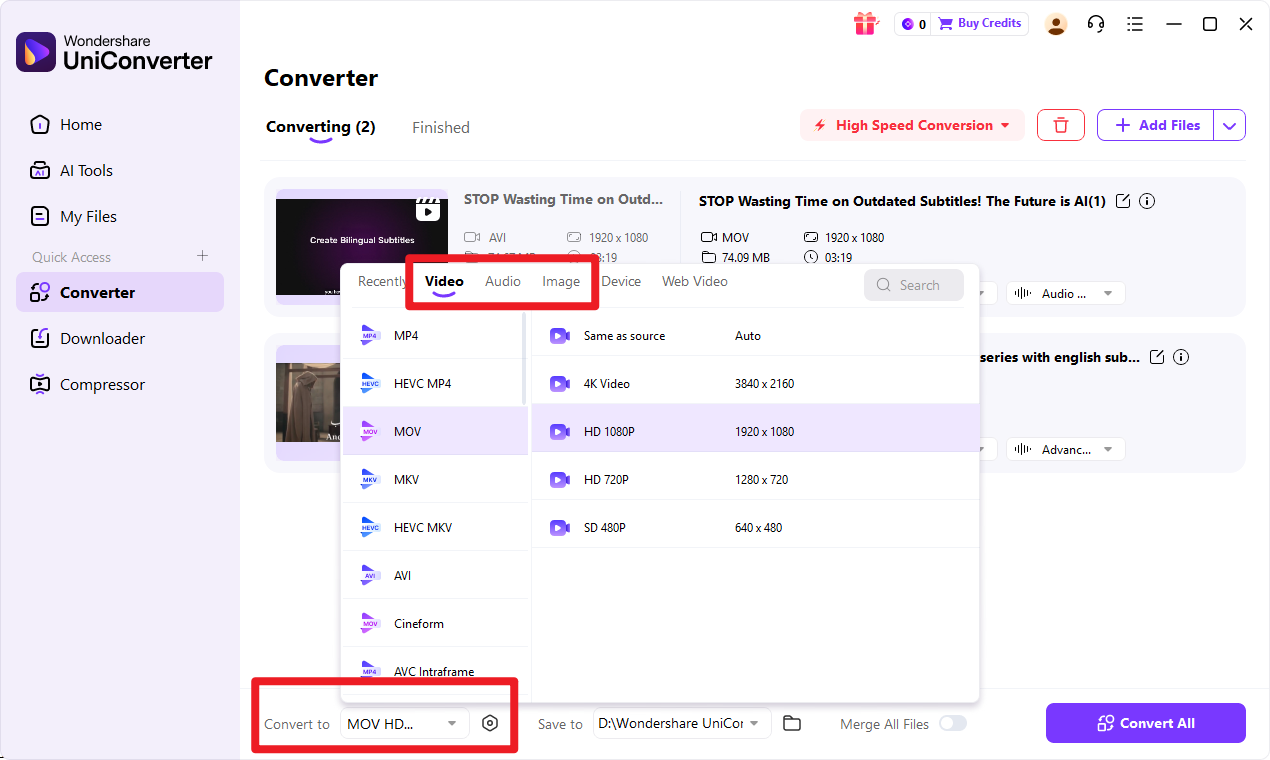
At the bottom of the window, click on the Output Format menu to open the format selection panel. Go to the Video tab. From the list of formats on the left, select your desired target format. On the right, you can choose a specific resolution or stick with the original.
Step 4. Start the Conversion
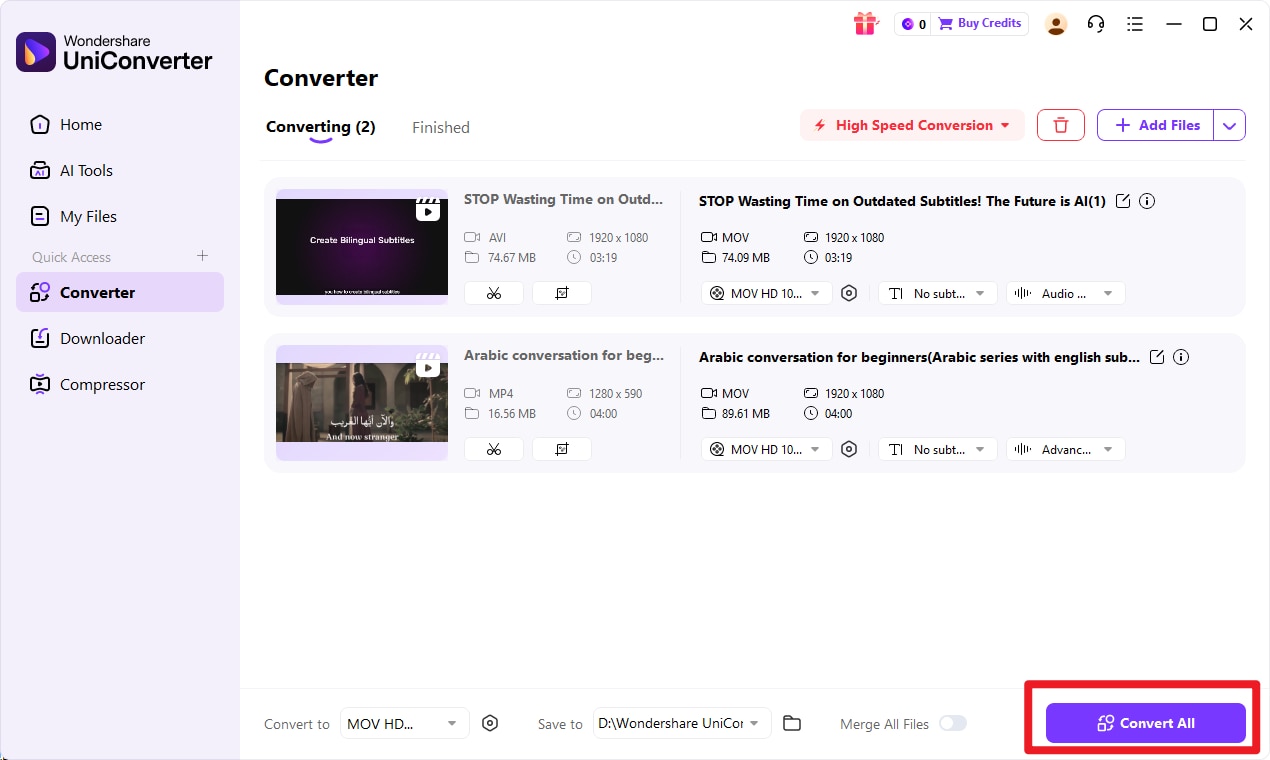
Before starting, you can specify where to save the converted files using the File Location field at the bottom. Once you are ready, click the Start All button in the bottom-right corner to begin the batch conversion process. UniConverter will process your files quickly and efficiently.

More Than Just a Video Converter
Conclusion
The debate over H.266 (VVC) vs VP9 highlights the classic trade-off between cutting-edge technology and practical accessibility. H.266 (VVC) clearly represents the future of video compression. Its unparalleled efficiency makes it the definitive choice for the next generation of 8K, HDR, and immersive media. However, its progress is currently tempered by a complex licensing landscape and limited hardware support, making it a niche choice for high-end applications in 2026.
On the other hand, VP9 stands as the powerful, pragmatic workhorse of the modern internet. Its royalty-free model, combined with excellent performance and widespread ecosystem support, has made it the de facto standard for web streaming. It offers a fantastic balance of quality and compatibility that serves the needs of most content creators and distributors today.
Ultimately, the best codec depends entirely on your specific application, budget, target audience, and technical requirements. As the video landscape continues to evolve, navigating the complexities of different formats will remain a challenge. To ensure your content is always ready for any platform or device, leveraging a versatile and comprehensive tool like Wondershare UniConverter is the smartest move, allowing you to bridge any compatibility gap with ease.
FAQs
-
1. Is H.266 technically superior to VP9?
In terms of pure compression efficiency, yes. H.266 (VVC) can achieve the same visual quality as VP9 at a significantly lower bitrate, meaning smaller file sizes. However, the term "better" is subjective and also depends on factors like licensing cost, ecosystem support, and computational requirements, where VP9 currently holds a strong advantage. -
2. Why is VP9 so popular on the web?
VP9's popularity is primarily due to its royalty-free license. This eliminates licensing costs for large-scale distributors like Google (for YouTube), Netflix, and other streaming platforms, encouraging widespread adoption. It also has excellent native support in major web browsers like Chrome, Firefox, and Edge, ensuring seamless playback for billions of users. -
3. Can my phone play H.266 (VVC) videos in 2026?
It depends on your phone's model and its chipset. Only the latest high-end smartphones and flagship devices released in the last couple of years are beginning to include hardware decoding support for H.266. Most mid-range, budget, or older phones will not be able to play VVC-encoded videos natively and would require software decoding, which can be slow and drain the battery. -
4. What is the easiest way to convert an H.266 file?
The easiest and most reliable way is to use a dedicated video converter software. A comprehensive tool like Wondershare UniConverter provides a user-friendly interface to quickly and easily convert H.266 files into more widely compatible formats like H.264 (MP4) or even VP9 (WebM), ensuring your video can be played on any device.
