
The world of digital video is in a constant state of evolution, driven by the demand for higher resolutions, better quality, and more efficient streaming. At the heart of this evolution are video codecs—the technologies responsible for compressing and decompressing video data. For years, H.265 (HEVC) has been the gold standard for 4K content, but its successor, H.266 (VVC), has arrived, promising even greater efficiency. This leads to a critical question for content creators, tech enthusiasts, and everyday users: which codec is better? The H.266 vs H.265 debate is not just about technical specifications; it's about practical application, compatibility, and future-proofing your media library.
Understanding the differences between these two powerful codecs is essential for making informed decisions about video encoding, storage, and playback. Whether you're a professional video editor optimizing your workflow or a home user managing a media server, choosing the right codec can have a significant impact on file size, quality, and accessibility. This guide will provide a comprehensive breakdown of H.266 and H.265, helping you navigate the complexities of modern video compression.
In this article:
Part 1. What is H.266? What is H.265?
Before diving into a direct comparison, it's important to understand what each codec is and the role it plays in the video technology landscape. Both are part of the same lineage of video compression standards developed by the ITU-T Video Coding Experts Group (VCEG) and the ISO/IEC Moving Picture Experts Group (MPEG).
What is H.266 (VVC - Versatile Video Coding)?
H.266, officially known as Versatile Video Coding (VVC), is the latest and most advanced video compression standard, finalized in July 2020. It was developed as the direct successor to H.265 (HEVC) with a primary goal: to significantly improve compression efficiency without sacrificing visual quality.
The key objective of VVC is to enable the delivery of ultra-high-definition content, such as 4K, 8K, and even 16K video, as well as high dynamic range (HDR) and 360-degree video, over existing network infrastructure. By achieving a compression improvement of up to 50% over its predecessor, H.266 allows for streaming the same quality video at roughly half the bitrate. This makes it a forward-looking technology designed to meet the demands of next-generation media consumption, from immersive virtual reality experiences to high-fidelity broadcast television.
What is H.265 (HEVC - High Efficiency Video Coding)?
H.265, also known as High Efficiency Video Coding (HEVC), was finalized in 2013 as the successor to the long-reigning H.264 (AVC). Its introduction was a major milestone, as it offered a compression efficiency improvement of up to 50% over H.264. This meant that video files could be made significantly smaller while maintaining the same level of visual quality, or the quality could be dramatically improved at the same file size.
This efficiency made H.265 the enabling technology for the 4K revolution. It quickly became the standard codec for 4K Ultra HD Blu-rays, 4K streaming services like Netflix and Amazon Prime Video, and modern high-resolution cameras. Over the past decade, HEVC has gained widespread hardware and software support, making it the de facto standard for high-quality video distribution across a vast ecosystem of devices, including smartphones, smart TVs, computers, and gaming consoles.
Part 2. Quick Comparison Table
For a quick overview of the key differences between H.266 and H.265, this side-by-side comparison table highlights their most important attributes.
| Feature | H.266 (VVC) | H.265 (HEVC) |
| Full Name | Versatile Video Coding | High Efficiency Video Coding |
| Release Date | 2020 | 2013 |
| Compression Efficiency | Up to 50% better than H.265 | Up to 50% better than H.264 |
| File Size | Smallest | Small |
| Compatibility | Very limited | Widespread |
| Encoding Complexity | Very high | High |
| Primary Use | Future 8K streaming, broadcasting, archival | 4K streaming, general high-quality use |
Part 3. H.266 vs H.265: Which One Is Better?
While the table provides a snapshot, a deeper dive is needed to understand the practical implications of these differences. The "better" codec depends heavily on your specific needs and priorities.
Compression and File Size: The Biggest Leap
The most significant advantage of H.266 is its superior compression algorithm. It can achieve the same perceptual visual quality as H.265 but at a bitrate that is 30-50% lower. This is a monumental leap in efficiency.
What does this mean in practice? Imagine a one-hour 4K video encoded in H.265 is 10 GB. The same video, encoded in H.266 with no discernible loss in quality, could be as small as 5-7 GB. This reduction has massive implications. For streaming services, it means less bandwidth is required to deliver high-quality video, resulting in smoother playback with less buffering, especially on slower internet connections. For users, it means video files take up significantly less storage space on hard drives and mobile devices. This is particularly crucial for 8K video, where uncompressed file sizes are astronomically large. H.266 makes the storage and transmission of 8K content a much more feasible proposition.
Video Quality: Pushing the Boundaries
Both H.265 and H.266 are capable of producing stunning video quality, supporting high resolutions (4K, 8K, and beyond), high frame rates, and a wide color gamut with High Dynamic Range (HDR). On a high-end display, a well-encoded video in either format will look exceptional.
However, the difference becomes more apparent at lower bitrates. Thanks to its more advanced and complex coding tools, H.266 is better at preserving fine details, textures, and complex motion when bandwidth is constrained. It can more intelligently allocate data to different parts of the frame, reducing artifacts like blocking and blurring that can appear in lower-bitrate H.265 encodes. For content creators who need to deliver the best possible quality within a tight data budget, H.266 holds a clear edge.
Compatibility and Device Support: The Deciding Factor
This is where H.265 currently holds an insurmountable lead and the primary reason it remains the more practical choice for most users in 2026. After more than a decade on the market, H.265 (HEVC) enjoys broad, native hardware decoding support across a massive range of devices. This includes:
- Modern smartphones (iOS and Android)
- 4K Smart TVs
- Streaming devices (Apple TV, Roku, Amazon Fire TV)
- Computers (with support from operating systems like Windows and macOS)
- Major web browsers
- Professional video editing software (like Adobe Premiere Pro and Final Cut Pro)
In contrast, H.266 (VVC) support is still in its infancy. Hardware decoding, which is essential for efficient and low-power playback, is not yet common in consumer devices. While some software decoders exist, they require significant CPU power, making playback on mobile devices or older computers impractical. This lack of widespread support means that if you encode a video in H.266, most people you share it with won't be able to play it.
Performance: The Cost of Efficiency
The incredible compression gains of H.266 come at a cost: computational complexity. The algorithms used by VVC are far more sophisticated than those in HEVC. As a result, encoding a video into H.266 format can take several times longer than encoding the same video into H.265 using the same hardware. Some estimates suggest encoding complexity is up to ten times higher.
Decoding (playback) is also more demanding, though not to the same degree. Without dedicated hardware decoders, playing an H.266 file relies on the CPU, leading to higher processor usage, increased heat, and faster battery drain on laptops and mobile devices. H.265, with its widespread hardware support, can be decoded very efficiently with minimal impact on system resources. This performance gap is a major hurdle for the adoption of H.266 in mainstream applications.
Part 4. Use Cases for H.266 and H.265
Given the trade-offs between efficiency and compatibility, each codec has distinct use cases where it excels.
When to Use H.266 (VVC)
Despite its current limitations, H.266 is the codec of the future and has important applications today in specific, professional contexts:
- Future-Proofing and Archival: For film studios, production houses, or content creators producing content in 8K or higher, encoding a master file in H.266 is a smart move. It ensures the highest possible quality is preserved in the smallest possible file size for long-term storage. When H.266 becomes widely supported, these archives will be ready for distribution.
- Specialized Broadcasting and Streaming: For enterprise-level streaming services where every kilobit of bandwidth is critical and the end-to-end ecosystem can be controlled (e.g., a dedicated broadcast chain), H.266 can provide significant cost savings and enable higher-quality streams over limited networks. This is especially relevant for live 8K sports broadcasting or premium video-on-demand platforms planning for the future.
When to Use H.265 (HEVC)
For virtually all consumer and prosumer applications in 2026, H.265 remains the superior and more practical choice.
- General Distribution and Sharing: If you are creating a video that you want to share with friends, upload to a website, or send to a client, H.265 is the only reliable choice. It guarantees that the recipient will be able to play the file on their phone, computer, or TV without needing to install special software.
- High-Quality Streaming: H.265 is the current engine behind 4K streaming on platforms like YouTube, Netflix, and Disney+. It provides an excellent balance of high quality and manageable file size that works perfectly with today's internet speeds and devices.
- Solving Compatibility Issues: The most common problem users face with H.266 today is receiving a file they cannot open. If you have a cutting-edge H.266 video but need to edit it in your current software or share it with someone, the best solution is to convert it to the universally supported H.265 format. For this task, a reliable video converter is essential. Wondershare UniConverter is an excellent tool that simplifies this process, allowing you to bridge the compatibility gap effortlessly.
Part 5. Step-by-Step Guide to Convert H.266 to H.265 Using UniConverter
When compatibility is a challenge, converting your H.266 files to the more accessible H.265 format is the perfect solution. Wondershare UniConverter is a powerful and user-friendly tool that can handle this conversion in four simple steps.
Step 1: Add Your H.266 Video to UniConverter
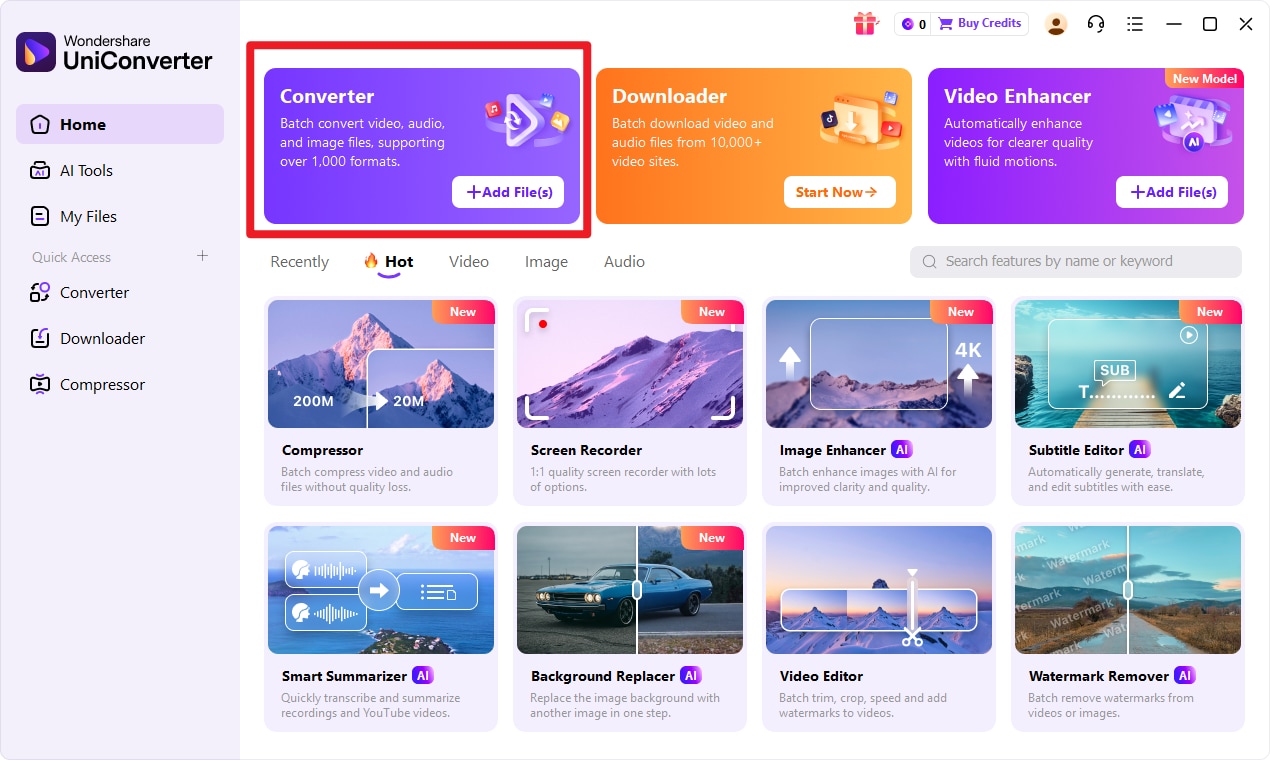
Launch Wondershare UniConverter on your computer. In the main interface, navigate to the Converter section on the left-hand panel. You can then drag and drop your H.266 video file directly into the program window or click the Add Files icon to browse your computer and select the file.
Step 2: Select H.265 as the Output Encoder
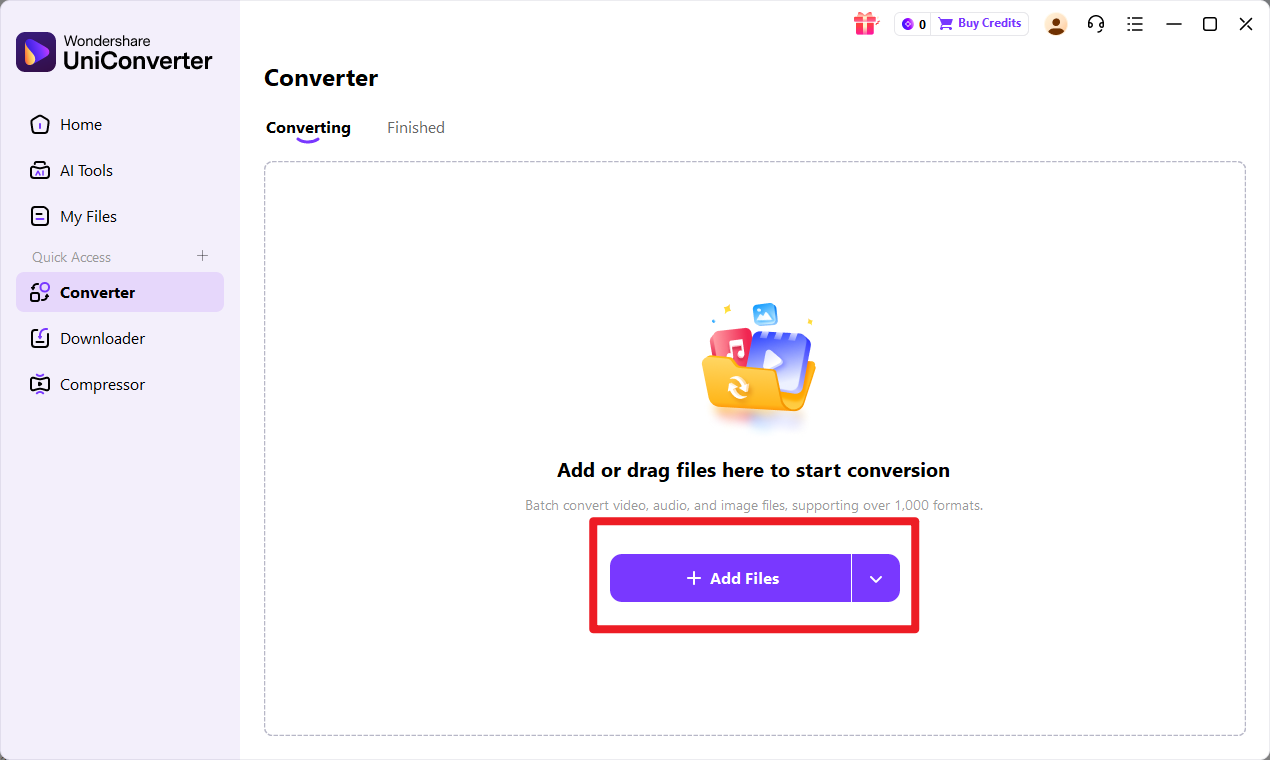
At the bottom of the window, click on the Output Format menu. This will open a new panel with format options. Go to the Video tab and choose a suitable container format, such as MP4. Next, click the Edit (pencil) icon next to the chosen resolution to open the detailed settings window. In the Encoder dropdown menu, select HEVC (H.265).
Step 3: Customize Output Settings (Optional)
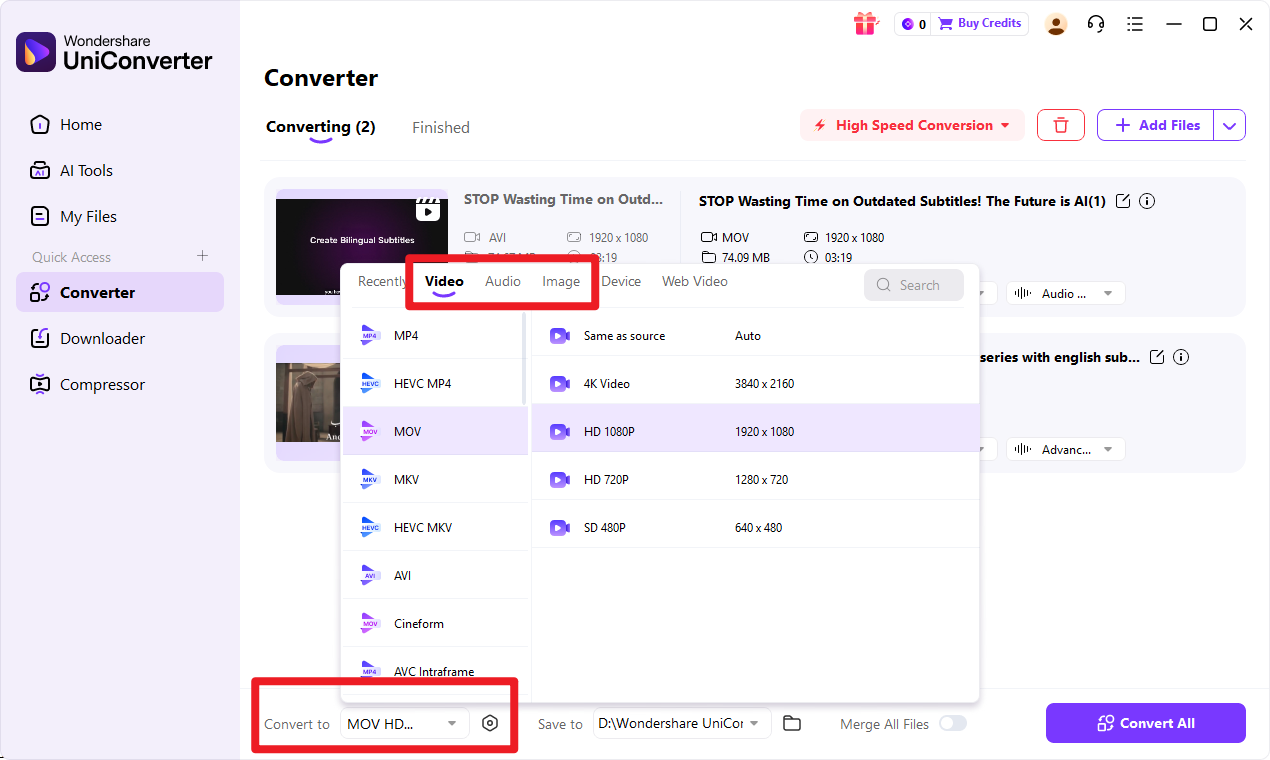
UniConverter provides a range of settings you can adjust to fine-tune your output file. You can change the resolution, frame rate, bitrate, and audio settings if you have specific requirements. However, for most users, the default "Same as source" or preset quality settings provide an excellent balance of quality and file size, so you can often skip this step.
Step 4: Start the Conversion Process
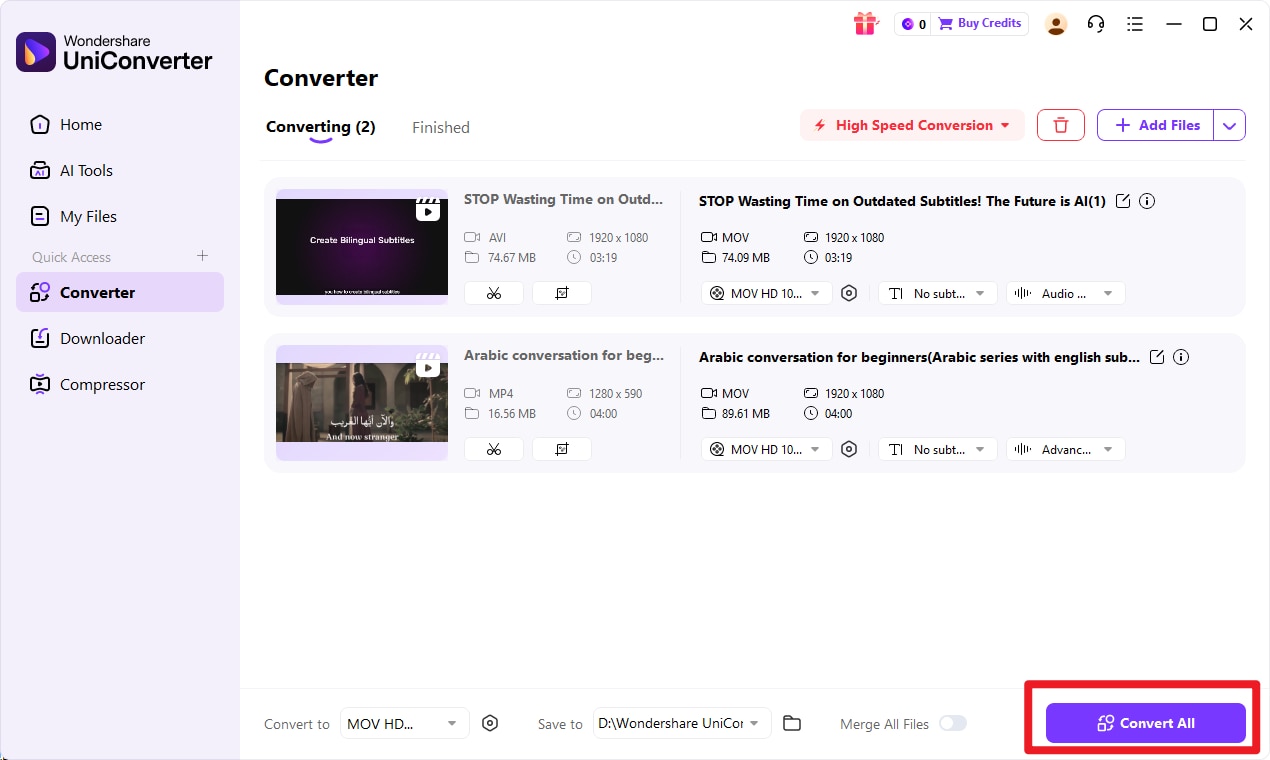
Before starting, you can choose a destination for your new file by using the File Location menu at the bottom. Once you are ready, click the Convert button (or Start All for multiple files). UniConverter will begin the high-speed conversion from H.266 to H.265, and you will find your universally compatible video in the designated folder upon completion.

Go Beyond Simple Video Conversion
Conclusion
The H.266 vs H.265 comparison reveals a classic battle between future potential and present-day practicality. H.266 (VVC) is undeniably the technical victor, offering superior compression that will power the next generation of 8K and immersive video experiences. However, its path to mainstream adoption is blocked by a significant hurdle: a near-total lack of hardware and software support in the current consumer market.
For now, H.265 (HEVC) remains the reigning champion. It provides an outstanding balance of compression efficiency, excellent video quality, and, most importantly, widespread compatibility across the devices we use every day. For content creators, distributors, and general users in 2026, H.265 is the smart, reliable, and practical choice for high-quality video. If you do encounter a rare H.266 file that you need to use, the most effective solution is not to hunt for a compatible player but to convert it to the universally accessible H.265 format. This is a task made simple and fast with a versatile tool like Wondershare UniConverter, ensuring your videos are ready for any screen, anytime.
FAQs
-
1. Is H.266 the same as VVC?
Yes, they are the same. H.266 is the formal technical name given to the standard by the ITU-T, while VVC (Versatile Video Coding) is its more common, official marketing name developed by the joint ISO/IEC MPEG and ITU-T VCEG team. You will see the terms used interchangeably. -
2. Can my iPhone play H.266 videos?
As of 2026, iPhones, iPads, and most other Android smartphones do not have native hardware or software support for H.266 (VVC) playback. These devices offer excellent, power-efficient hardware decoding for H.265 (HEVC), which is the standard for high-quality video on mobile platforms. -
3. Why would I need to convert H.266 to H.265?
The primary reason to convert H.266 to H.265 is compatibility. If you have an H.266 file, you will find that it cannot be played on most TVs, computers, or mobile devices. It also won't import into most video editing software. Converting it to H.265 makes the video universally compatible, allowing it to be easily played, edited, and shared on nearly any modern platform without any issues.
