
As video technology evolves, so do the standards that define its quality, size, and compatibility. The H.265 (HEVC) codec has become a cornerstone of modern video, from streaming services to professional production. However, within this standard lie different "profiles" that can cause confusion. The debate over H.265 Main Profile vs Main 10 is a common one for content creators, video enthusiasts, and anyone looking to get the most out of their media. Understanding the difference is crucial for making informed decisions about encoding, playback, and editing.
This guide will demystify the H.265 Main and Main 10 profiles. We will break down the technical specifications, explore the practical implications for video quality and compatibility, and help you determine which profile is the right choice for your specific needs. Whether you're archiving precious footage, creating content for a broad audience, or simply trying to play a downloaded file, this detailed comparison will provide the clarity you need.
In this article:
Part 1. What is H.265 Main Profile? What is H.265 Main 10 Profile?
Before diving into the specifics of the Main and Main 10 profiles, it's essential to understand the foundation they are built upon: the H.265 codec.
A Brief Introduction to H.265 (HEVC)
H.265, also known as High Efficiency Video Coding (HEVC), is a video compression standard that was developed as the successor to the widely used H.264/AVC. Finalized in 2013, its primary goal was to address the growing demand for higher resolution video, such as 4K and 8K, without a proportional increase in file size or bandwidth requirements.
The key benefits of H.265 are significant:
- Improved Compression: HEVC can deliver the same level of video quality as H.264/AVC at roughly half the bitrate. This means smaller file sizes and less bandwidth needed for streaming, making it ideal for online content delivery and efficient storage.
- Support for Higher Resolutions: It was designed from the ground up to handle resolutions up to 8192x4320 (8K), paving the way for the ultra-high-definition era.
Within the H.265 standard, "profiles" define a specific set of features and capabilities. They act as a guideline for hardware and software manufacturers to ensure that a device that supports a certain profile can decode any video encoded with it. This brings us to the Main and Main 10 profiles.
Defining H.265 Main Profile
The H.265 Main Profile is the baseline and most widely supported profile of the HEVC standard. Think of it as the universal standard that most devices are built to understand.
Its most defining characteristic is its support for 8-bit color depth. This means it can represent video using a palette of approximately 16.7 million colors (256 shades each for red, green, and blue). For years, 8-bit color has been the standard for broadcast television, DVDs, Blu-rays, and most online video.
The primary purpose of the Main profile is to ensure maximum compatibility. It was designed to be playable on the vast majority of devices, from older smart TVs and smartphones to entry-level computers. If a device claims to support H.265, it almost certainly supports the Main profile.
Defining H.265 Main 10 Profile
The H.265 Main 10 Profile is a more advanced tier built upon the foundation of the Main profile. As its name suggests, its key feature is the support for 10-bit color depth.
Instead of 16.7 million colors, 10-bit video can display a staggering 1.07 billion colors (1024 shades each for red, green, and blue). This massive increase in color information results in smoother gradients, more lifelike images, and the elimination of an artifact known as "color banding," where distinct steps are visible in what should be a smooth transition of color (like a sunset).
This capability makes the Main 10 profile essential for High Dynamic Range (HDR) video. Technologies like HDR10 and HLG rely on 10-bit color to display a wider range of brightness and color, creating a more immersive and realistic viewing experience.
Part 2. Quick Comparison Table
To make the differences clear, let's look at a direct, side-by-side comparison of the two profiles.
H.265 Main vs Main 10: Side-by-Side
| Feature | H.265 Main Profile | H.265 Main 10 Profile |
| Bit Depth | 8-bit | 10-bit |
| Color Palette | 16.7 million colors | 1.07 billion colors |
| HDR Support | No | Yes (Essential for HDR10, HLG) |
| Visual Quality | Standard, prone to color banding in gradients | Superior, smooth color transitions |
| File Size | Generally smaller | Slightly larger for the same quality settings |
| Compatibility | Very high | Moderate, requires modern hardware |
Part 3. H.265 Main Profile vs Main 10 Profile: Which One Is Better?
The question of "which is better" isn't about a single winner. The best profile depends entirely on your priorities: visual fidelity, device compatibility, or file size. Let's break down the key factors.
Color Fidelity: The 8-bit vs 10-bit Showdown
The most significant difference between Main and Main 10 is color depth.
- 8-bit (Main Profile): With 256 possible values for each of the red, green, and blue color channels, 8-bit video can produce 16.7 million colors. While this sounds like a lot, it can be insufficient for displaying subtle gradients. In scenes with large areas of gradually changing color, like a clear blue sky or a soft-lit wall, you may see "color banding"—visible lines or steps where the colors jump from one shade to the next.
- 10-bit (Main 10 Profile): By increasing the values for each color channel to 1024, 10-bit video expands the color palette to over one billion. This 64-fold increase in color information allows for incredibly smooth and precise color transitions. Banding is virtually eliminated, resulting in a more realistic and nuanced image that is truer to the original source. For anyone serious about visual quality, the move to 10-bit is a game-changer.
HDR and Dynamic Range: The Main 10 Advantage
High Dynamic Range (HDR) is a technology that enhances the contrast and color of a video, allowing for brighter whites, deeper blacks, and a wider array of colors. It aims to replicate what the human eye sees in the real world.
The Main 10 profile is a prerequisite for popular HDR formats like HDR10 and Hybrid Log-Gamma (HLG). The expanded 10-bit color space is necessary to contain the extra information required to display these wider ranges of light and color. An 8-bit Main profile video simply doesn't have the data capacity to store HDR information. If you are watching or producing HDR content, you are using a 10-bit video stream, and therefore, the Main 10 profile (or a higher one). This results in more detail being visible in both the brightest highlights and the darkest shadows of the same scene.
Compatibility and Playback Considerations
This is where the H.265 Main profile has a clear advantage.
- Main Profile: Its strength lies in its near-universal support. Almost any device manufactured in the last several years that can play H.265 video will handle the Main profile without issue. This includes most smart TVs, streaming sticks, game consoles, smartphones, and computers. If your goal is to create a video that can be played by the largest possible audience on the widest range of hardware, the Main profile is the safest and most reliable choice.
- Main 10 Profile: Support for Main 10 is growing rapidly but is not yet universal. It requires more powerful decoding hardware. While most modern 4K HDR TVs, high-end smartphones (like recent iPhones and Android flagships), and modern computer GPUs support Main 10 hardware decoding, older devices may struggle. Attempting to play a Main 10 file on an unsupported device can result in stuttering, freezing, incorrect colors, or a complete failure to play. As of 2026, support is widespread in new devices, but legacy hardware remains a consideration.
File Size vs. Quality: Finding the Right Balance
At first glance, one might assume that a 10-bit video file would be significantly larger than an 8-bit one because it contains more data. The reality is more nuanced.
A 10-bit Main 10 file is often only slightly larger (around 15-25%) than an 8-bit Main profile file encoded with the exact same settings. This is because the HEVC codec is incredibly efficient. However, the key is that 10-bit video can achieve the same perceived visual quality as 8-bit video at a lower bitrate. The superior color information means the encoder can be more efficient, especially in scenes with complex gradients.
The trade-off is this:
- For maximum quality, Main 10 is superior, even if it means a slightly larger file.
- For maximum compression where every kilobyte counts (e.g., for low-bandwidth streaming), Main profile might be chosen to ensure the smallest possible file size, even at the cost of potential color banding.
Part 4. Use Cases for H.265 Main Profile and Main 10 Profile
Choosing the right profile comes down to understanding your specific application.
When to Choose H.265 Main Profile
You should opt for the Main profile in the following scenarios:
- Maximum Compatibility: When your video needs to be played on a wide variety of devices, including older models. This is crucial for content distributed publicly on the web, in corporate presentations, or for sharing with family and friends who may not have the latest tech.
- Standard Dynamic Range (SDR) Content: If your source video is 8-bit and in SDR, there is no quality benefit to encoding it in Main 10. Sticking with the Main profile will ensure compatibility without sacrificing quality.
- Minimizing File Size is the Top Priority: When bandwidth or storage is extremely limited and you need the absolute smallest file size possible, encoding in 8-bit Main profile can give you a slight edge over a 10-bit encode.
When to Choose H.265 Main 10 Profile
The Main 10 profile is the superior choice for these situations:
- Producing or Delivering HDR Content: This is non-negotiable. If your project involves HDR10, HLG, or another 10-bit HDR format, you must use the Main 10 profile (or higher). This is standard for 4K UHD Blu-rays and premium streaming services.
- Professional Color Grading and Editing: When you plan to perform heavy color correction or grading, starting with a 10-bit source file is crucial. The extra color information provides more flexibility and prevents the image from "breaking" or showing banding when you push the colors and contrast.
- Archiving Master Files: For content creators and videographers, archiving the final master copy of a project in Main 10 preserves the maximum amount of color detail. This future-proofs your work, ensuring you have the highest quality version available for future use or re-encoding.
Part 5. Step-by-Step Guide to Convert H.265 Main Profile to Main 10 Profile Using UniConverter
Whether you need to down-convert a Main 10 file for an older device or up-convert an 8-bit file for a 10-bit editing workflow, a powerful video converter is an essential tool.
Why You Need a Reliable Video Converter
A dedicated video converter helps you bridge the gap between different video standards. Common needs include:
- Solving Compatibility Issues: Converting a high-quality H.265 Main 10 file to the more compatible Main profile so it can be played on any device.
- Preparing for Editing: Converting 8-bit SDR footage into a 10-bit container (Main 10) before color grading. While this doesn't add new information, it provides more "headroom" for adjustments, preventing banding artifacts from being introduced during the editing process.
- Managing Video Libraries: Effortlessly standardizing your collection of videos to a single, preferred format and profile.
The Best Tool for the Job: Wondershare UniConverter
When it comes to handling complex conversions between H.265 profiles, Wondershare UniConverter stands out as a user-friendly and powerful solution. It offers robust support for a vast array of codecs and profiles, including H.265 Main and Main 10. With full support for GPU acceleration (NVIDIA, AMD, Intel), it can perform these conversions at high speed without compromising quality, making it the ideal tool for managing your video workflow.
Here's how to convert between H.265 profiles using UniConverter.
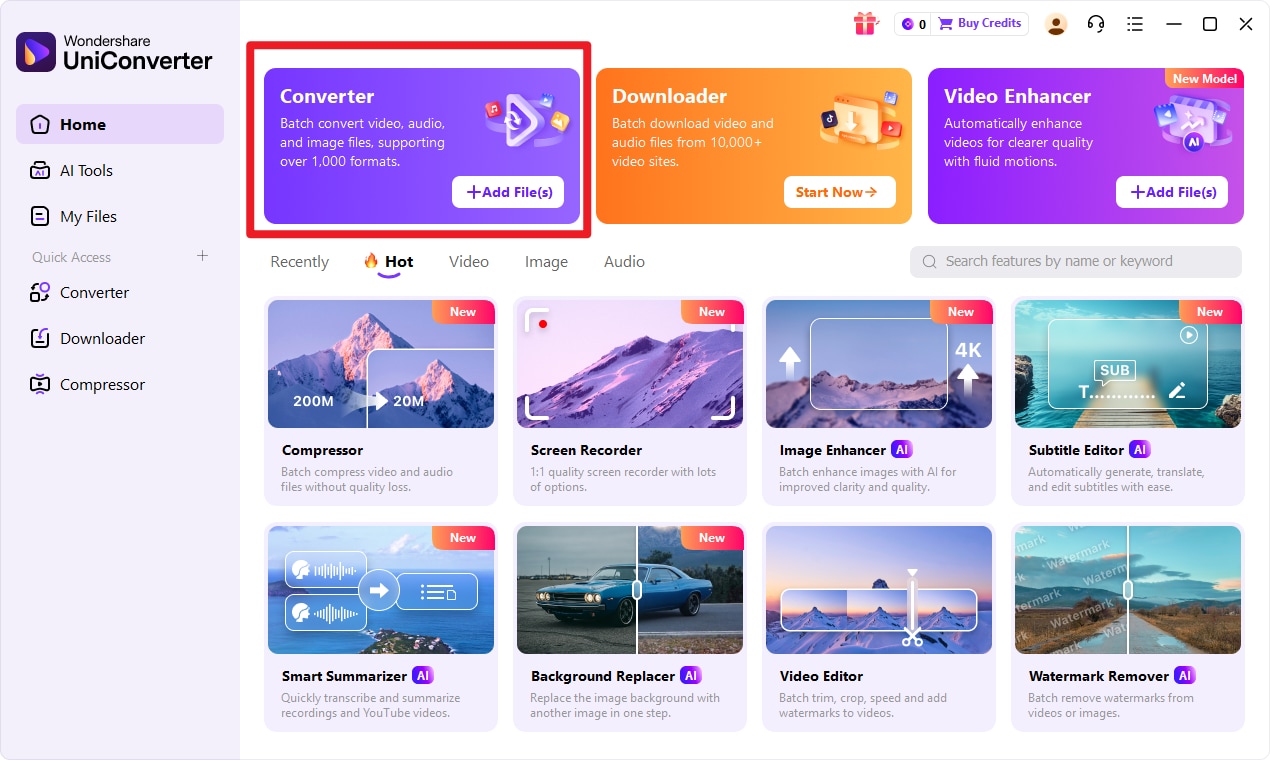
Step 1. Choose Converter in UniConverter
Launch Wondershare UniConverter on your computer. From the main interface, select the Converter tool from the menu on the left side.
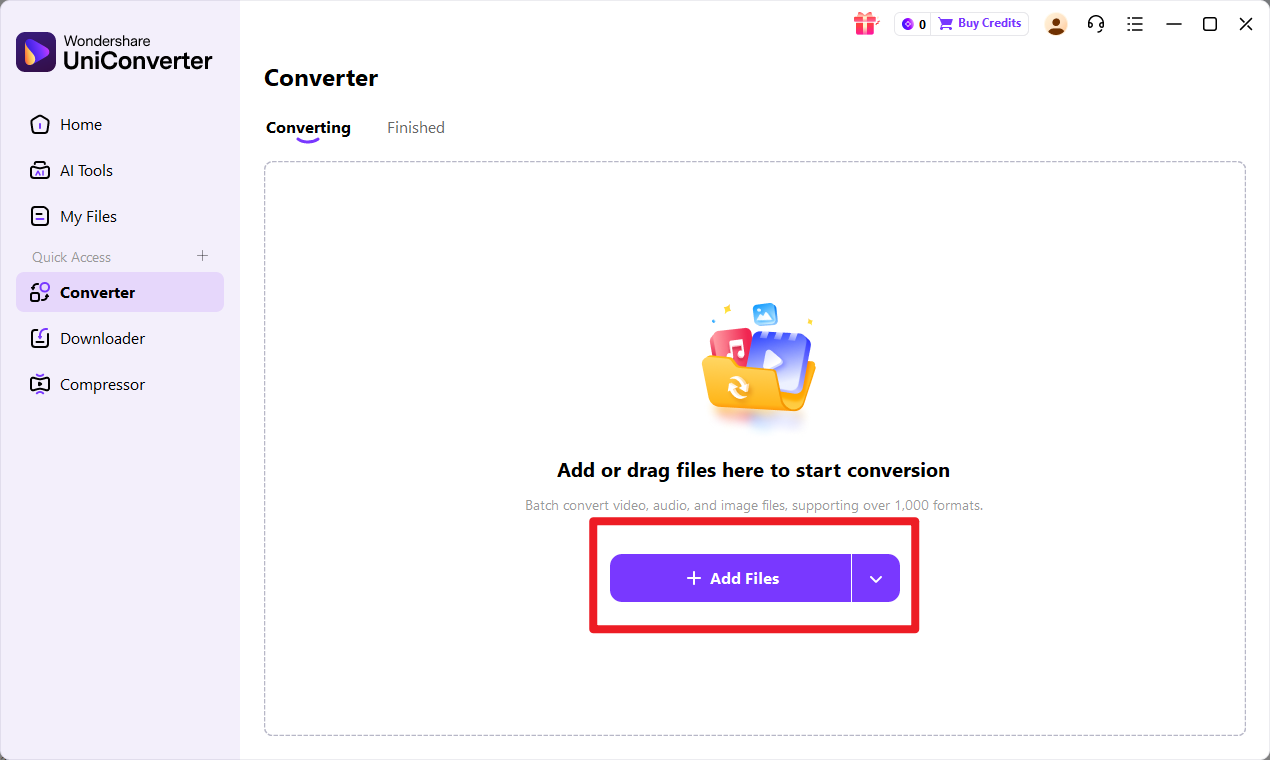
Step 2. Add Files to UniConverter
Drag and drop your input format video file directly onto the Converter window. Alternatively, you can click the Add Files button to open a file browser and import the video you wish to convert.
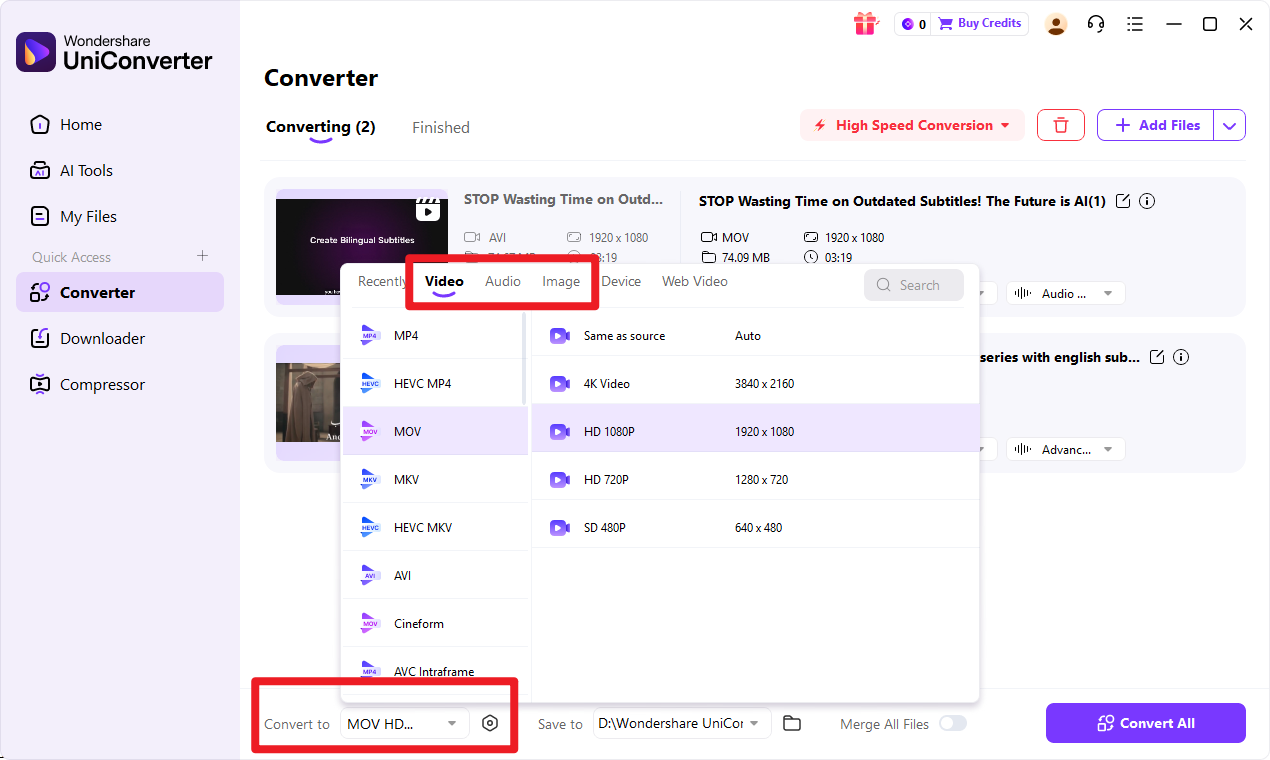
Step 3. Choose Output Format
Click on the Output Format menu located at the bottom of the window. In the new pop-up, go to the Video tab. Select your desired target format (e.g., MP4 or MKV). To specify the H.265 profile, click the Edit (pencil) icon next to the resolution preset. In the advanced settings window, set the Encoder to HEVC and then choose the desired profile (e.g., Main or Main10) from the dropdown menu. Click Create to save the custom profile.
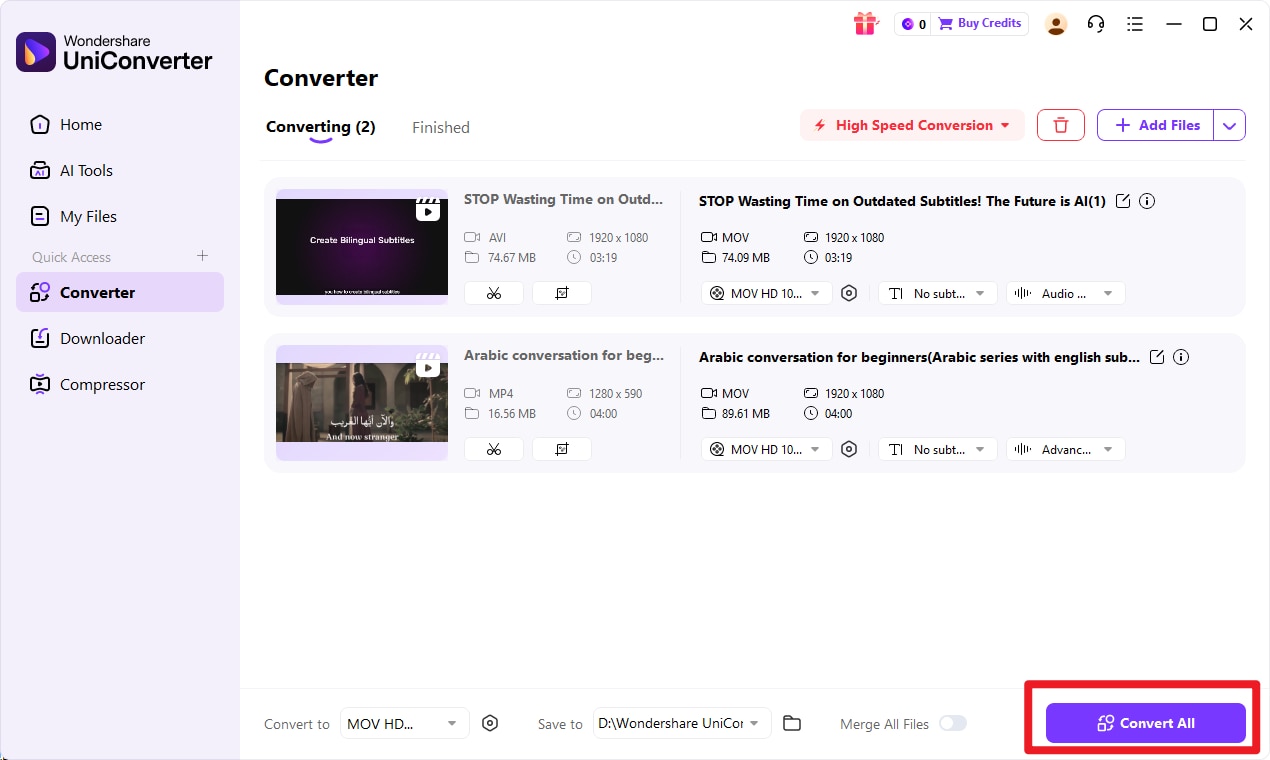
Step 4. Start the Conversion
Choose a destination for your converted file under the File Location section at the bottom. Once everything is set, click the Start All button to begin the conversion process. UniConverter will efficiently process your file using GPU acceleration if available.

Go Beyond Simple Format Conversion
Conclusion
The choice between H.265 Main Profile vs Main 10 is not about which is definitively better, but which is right for your specific task. The core differences are clear: Main is for compatibility, and Main 10 is for quality. The Main profile remains the reliable workhorse, ensuring your video plays on virtually any device. It's the safe choice for broad distribution of SDR content. In contrast, the Main 10 profile is the gateway to the future of video. It is essential for the stunning visual fidelity of HDR and provides the color depth required for professional post-production workflows. As technology continues to advance, Main 10 is becoming the new standard for high-quality video, but for now, Main profile's universal compatibility keeps it highly relevant. Understanding your needs for quality, audience, and workflow will always lead you to the right choice.
FAQs
-
1. Can I play a Main 10 file on a device that only supports Main profile?
No, in most cases, it will not work correctly. The device's hardware decoder lacks the ability to process 10-bit video information. You will likely experience playback failure, a black screen, severe visual artifacts, or "glitchy" video. To play it, you would first need to convert the file to the H.265 Main profile using a tool like Wondershare UniConverter. -
2. Is H.265 Main 10 always better than H.265 Main?
From a pure visual quality perspective, yes. Main 10 offers significantly more color information, which results in a more accurate and pleasing image with smoother gradients. However, "better" is subjective and depends on your goal. If your primary goal is maximum compatibility with the widest range of devices, then the H.265 Main profile is the "better" choice for that specific purpose. -
3. Does converting an 8-bit Main profile video to 10-bit Main 10 improve its quality?
No, it does not magically add new color detail that wasn't in the original 8-bit source. The video will still be limited by its original 16.7 million colors. However, this conversion can be very beneficial for a video editing workflow. Converting to a 10-bit container gives you more "room" or "headroom" for color grading. When you make significant adjustments to color, contrast, or brightness, the 10-bit space helps prevent banding and other artifacts from being introduced during the editing and re-encoding process.
