
As a video creator, you're constantly making decisions to enhance the quality of your work. One of the most common technical hurdles is choosing the right video format. You may have seen the terms "8-bit" and "10-bit" in your camera settings or export options and wondered what they mean and which one is better for your project. The debate over H.264 8-bit vs 10-bit is crucial, as the choice directly impacts your video's color fidelity, file size, and editing flexibility. Understanding the difference is key to avoiding common issues like color banding and ensuring your final product looks as professional as possible.
This guide will demystify these terms, break down their pros and cons, and help you make an informed decision for every stage of your video production workflow in 2026.
In this article:
Quick Note:
- 8-bit video is the standard for web and broadcast, offering smaller file sizes and universal compatibility. It contains 16.7 million colors.
- 10-bit video captures over 1 billion colors, resulting in smoother color gradients and significantly reducing visible banding. It's ideal for professional shooting and heavy color grading.
- The main trade-off is between 8-bit's efficiency and compatibility versus 10-bit's superior color depth and editing flexibility.
- Your choice depends on your specific needs: 10-bit for capturing high-quality source footage and 8-bit for final delivery and sharing.
Part 1. What is H.264 8-bit? What is H.264 10-bit?
Before we compare them, it's essential to understand the core concept that separates these two formats: bit depth.
What is H.264 8-bit?
In video, bit depth refers to the amount of color information that can be stored in an image. Each pixel in a digital video is made up of three primary color channels: red, green, and blue (RGB). Bit depth determines how many shades of each of these colors can be represented.
An 8-bit video file can display 2 to the power of 8, or 256, different shades for each of the three color channels. When you multiply the possibilities for red, green, and blue (256 x 256 x 256), you get a total of approximately 16.7 million possible colors. For years, H.264 8-bit has been the undisputed industry standard for Blu-ray, broadcast television, and nearly all content on the web. Its combination of good-enough quality, manageable file sizes, and universal compatibility made it the go-to choice for content delivery.
What is H.264 10-bit?
Following the same logic, a 10-bit video file can display 2 to the power of 10, or 1024, shades for each color channel. When you multiply these possibilities (1024 x 1024 x 1024), you get a staggering total of over 1.07 billion colors. That's 64 times more color information than an 8-bit video.
This massive increase in color data is the key benefit of 10-bit video. It allows for much smoother and more nuanced gradations between colors. This is especially noticeable in shots with subtle color transitions, like a clear blue sky, a smooth wall under soft light, or a sunset. In 8-bit video, these areas can sometimes show distinct, distracting bands of color—an artifact known as "color banding." H.264 10-bit largely eliminates this problem. As a result, it has become increasingly popular in professional and prosumer cameras, giving creators more power to capture and manipulate color.
Part 2. Quick Comparison Table
To make the differences even clearer, here is a direct comparison between H.264 8-bit and H.264 10-bit video.
| Feature | H.264 8-bit | H.264 10-bit |
| Color Information | 16.7 million colors (256 shades per channel) | 1.07 billion colors (1024 shades per channel) |
| Color Banding | More prone to visible banding in gradients | Less prone, produces much smoother gradients |
| File Size | Smaller and more storage-efficient | Approximately 20-25% larger than 8-bit |
| Editing Flexibility | Limited; can "break" under heavy color grading | High; withstands significant color correction and grading |
| Hardware/Software Compatibility | Universal; plays on virtually any device | More demanding; may require modern hardware and professional software |
Part 3. H.264 8-bit vs H.264 10-bit: Which One Is Better?
The question of "which is better" ultimately depends on what you're trying to achieve. Let's break down the comparison across four critical areas.
Color Quality and Banding: The 10-bit Advantage
The most significant advantage of 10-bit video is its superior color fidelity. With over a billion colors at its disposal, 10-bit video can render incredibly smooth transitions between shades. Imagine a video of a sunset. In an 8-bit recording, the beautiful gradient from orange to deep blue might appear as a series of distinct color steps or bands. This is color banding, and it happens because the 8-bit format doesn't have enough color "steps" to create a seamless transition.
A 10-bit recording of the same sunset would look much more natural and pleasing. The extra color information fills in the gaps, creating a smooth, continuous gradient that accurately reflects what the human eye sees. This advantage also applies to indoor scenes with soft, diffused lighting on a plain wall or any shot containing out-of-focus backgrounds (bokeh). For creators who prioritize pristine image quality, 10-bit is the clear winner.
File Size and Storage Considerations
The trade-off for that beautiful color information is file size. A 10-bit video file is typically about 20-25% larger than its 8-bit equivalent. While this may not seem like a huge difference for a short clip, it adds up quickly. For long-form content like feature films, documentaries, or extensive YouTube videos, the increased storage requirement can be substantial.
This means you'll need more hard drive space, faster memory cards for recording, and more robust backup solutions. Furthermore, larger files take longer to upload and download. For workflows where speed and efficiency are paramount, or when storage is limited, the smaller file sizes of 8-bit video present a practical advantage.
Editing and Color Grading Flexibility
This is where the difference becomes critical for post-production. Color grading involves "pushing" and "pulling" the colors in your footage to create a specific mood or style. When you grade 8-bit footage, you're working with a limited dataset of 16.7 million colors. If you make aggressive adjustments—like significantly changing the exposure, contrast, or saturation—the footage can start to fall apart. You might see increased banding, blocky artifacts, or unnatural color shifts because there isn't enough data to support the changes.
In contrast, 10-bit footage is far more robust. With 1.07 billion colors, you have much more information to work with. You can make dramatic changes to the look of your video without introducing ugly artifacts. This allows for greater creative freedom in post-production, whether you're correcting exposure mistakes, matching shots from different cameras, or applying a stylized cinematic look. If your project involves any serious color grading, shooting in 10-bit is almost a necessity.
Compatibility and Playback
Here, 8-bit video holds a strong advantage. H.264 8-bit is the de facto standard for consumer media. It will play back smoothly on virtually any device, from smartphones and tablets to old laptops and smart TVs. Every major social media platform and video hosting site, including YouTube, Instagram, and TikTok, is optimized for 8-bit video.
H.264 10-bit, on the other hand, can be more demanding. While most modern computers and high-end devices can handle 10-bit playback without issue, older hardware may struggle, leading to stuttering or dropped frames. Some non-professional video editing software or media players may not even support it, displaying incorrect colors or failing to open the file altogether. This is why, even if you shoot and edit in 10-bit, the final delivery format is often converted to 8-bit to ensure maximum compatibility for your audience.
Part 4. Use Cases for H.264 8-bit and H.264 10-bit
Understanding the theory is one thing; applying it to your real-world projects is another. Here's a practical guide on when to use each format.
When to Choose H.264 8-bit
Choose H.264 8-bit for situations where compatibility and efficiency are more important than ultimate color fidelity.
- Final Delivery: When exporting your finished video for platforms like YouTube, Vimeo, Instagram, or TikTok. This ensures that everyone can watch your content without playback issues.
- Limited Storage or Bandwidth: If you're working with limited hard drive space or have a slow internet connection, the smaller file sizes of 8-bit will make your life much easier.
- Minimal Color Correction: For projects that require only minor tweaks to color and exposure, 8-bit is perfectly sufficient. This includes vlogs, simple tutorials, or corporate videos where the "out-of-camera" look is acceptable.
- Quick Turnaround Projects: When you need to shoot, edit, and deliver content as quickly as possible, an 8-bit workflow is simpler and faster to process.
When to Choose H.264 10-bit
Choose H.264 10-bit whenever image quality and post-production flexibility are your top priorities.
- Shooting Source Footage: Always try to capture your original footage in 10-bit if your camera supports it. You can always convert down to 8-bit later, but you can't add color information that was never recorded. This is the "shoot 10-bit, deliver 8-bit" philosophy.
- Heavy Color Grading or VFX: If you plan to do extensive color correction, apply creative LUTs, or perform visual effects work (like green screen keying), the extra data in 10-bit footage is essential for a clean, professional result.
- Creating Master Files: For archival purposes, you should always keep a high-quality master file of your project. A 10-bit file serves as a future-proof archive that preserves the maximum amount of image information.
- High Dynamic Range (HDR) Content: Capturing scenes with bright highlights and deep shadows, or subtle color variations like skies and skin tones, benefits immensely from the expanded range of 10-bit color.
Part 5. Step-by-Step Guide to Convert H.264 8-bit to H.264 10-bit Using UniConverter
Whether you need to convert 10-bit footage to a more compatible 8-bit format for sharing, or upscale 8-bit footage for a specific workflow, a reliable video converter is essential. Wondershare UniConverter is a powerful and user-friendly tool that handles these conversions effortlessly. Here is how you can convert your files.
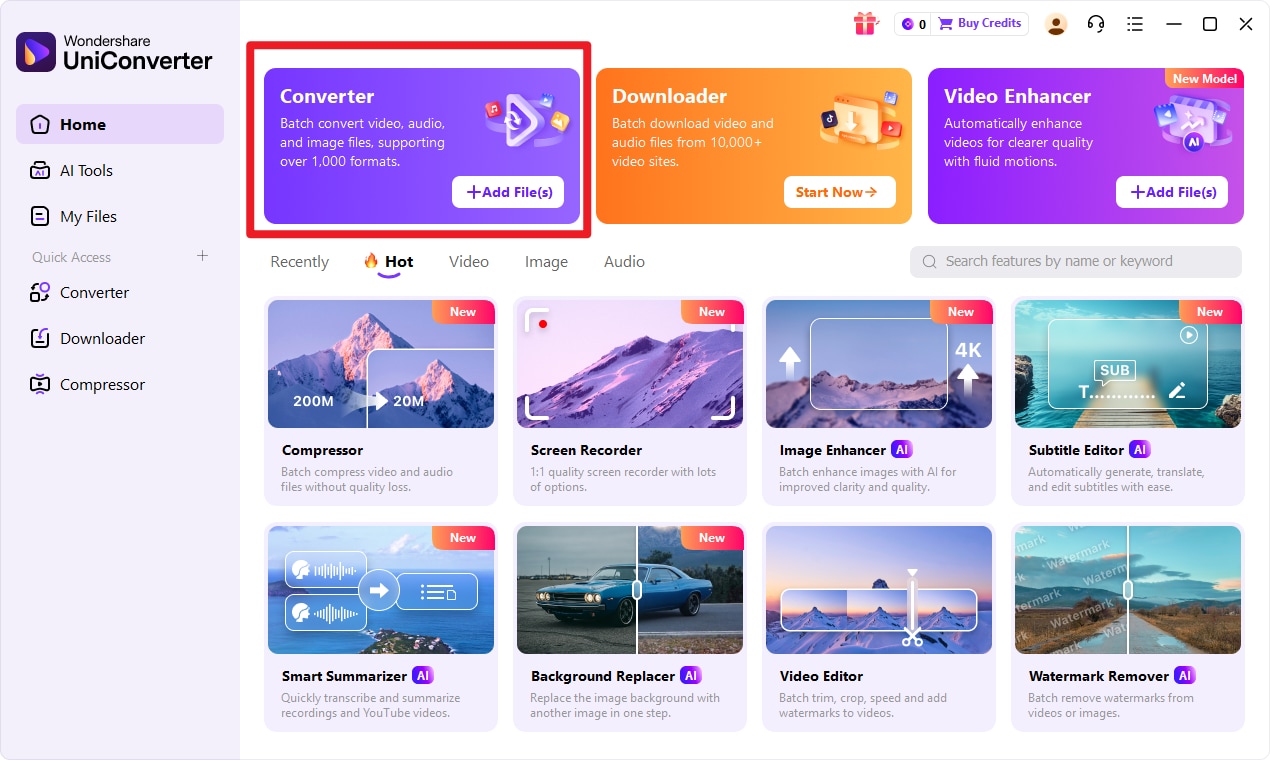
Step 1. Choose Converter in UniConverter
Launch Wondershare UniConverter on your computer. On the main interface, select the Converter tab from the left-side menu.
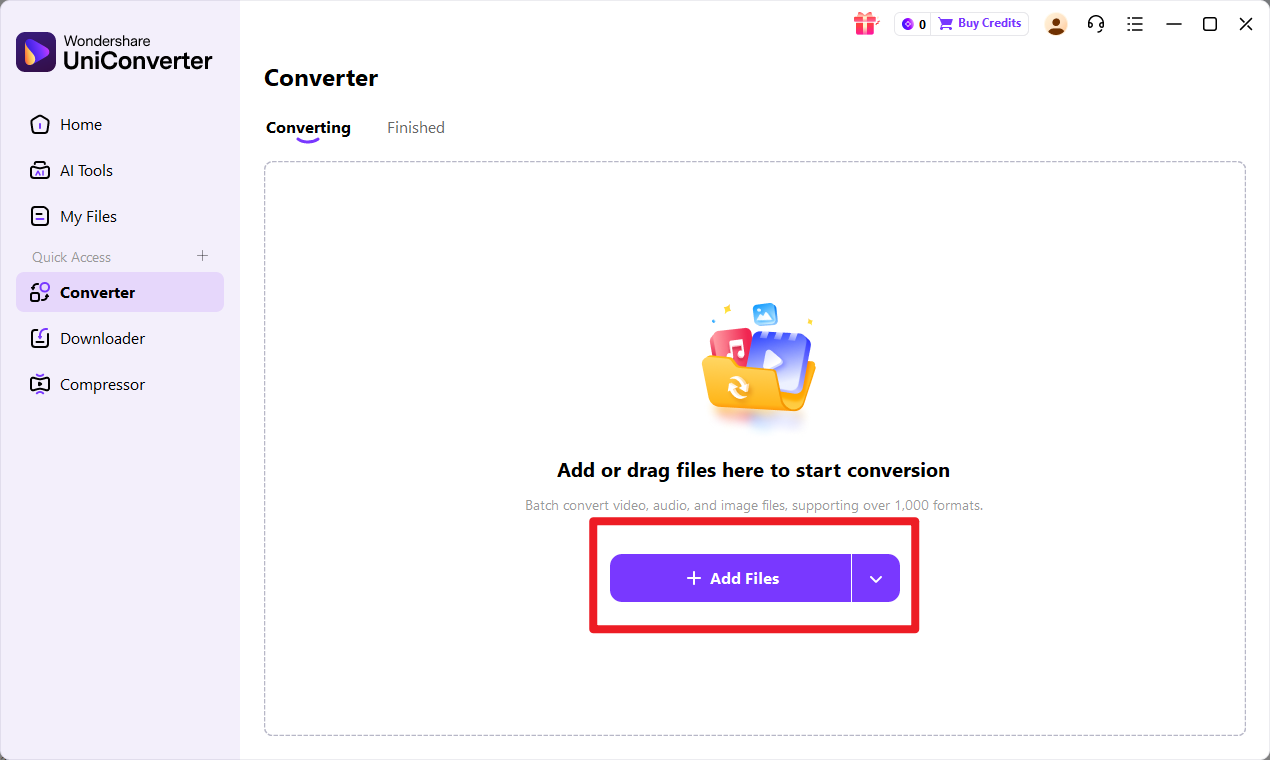
Step 2. Add Files to UniConverter
Click on the Add Files icon or drag and drop your input format video files directly into the converter window. You can add multiple files to perform a batch conversion.
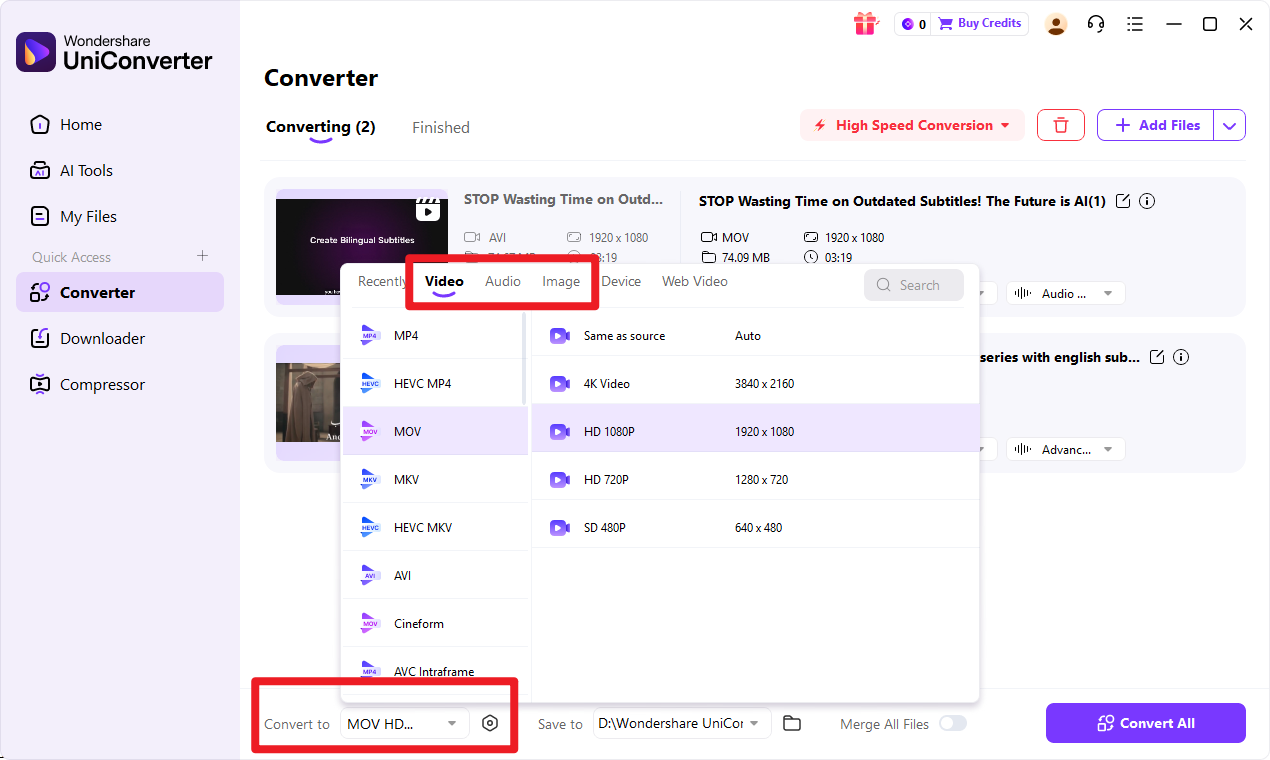
Step 3. Choose Output Format
Click on the Output Format gear icon at the bottom. In the new window, go to the Video tab, select your target format from the list, and choose a resolution. You can click the Edit icon to access advanced settings to ensure the bit depth is set as required.
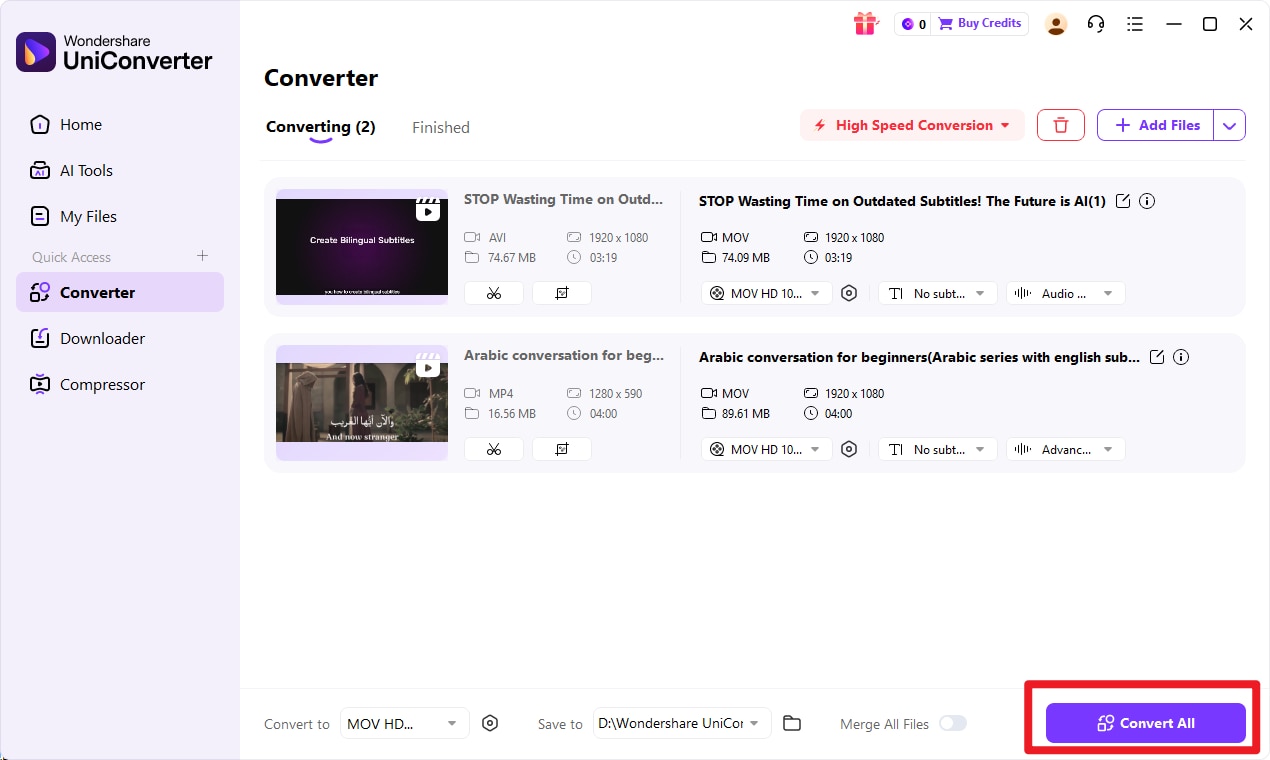
Step 4. Start the Conversion
Select a folder for your converted files under File Location. Finally, click the Start All button to begin the conversion process. UniConverter will process your files quickly using its GPU acceleration technology.

Go Beyond Conversion with a Full Video Toolkit
Conclusion
The choice in the H.264 8-bit vs 10-bit debate is not about which format is definitively "better," but which is right for the task at hand. H.264 8-bit remains the king of compatibility and efficiency, making it the ideal choice for final delivery to the web. H.264 10-bit, with its vast color palette, is the superior option for capturing source footage and any project destined for heavy color grading, offering the flexibility needed to achieve a truly professional look.
The optimal workflow for most creators in 2026 is to shoot in 10-bit to maximize quality at the source, edit in a 10-bit timeline to preserve color information, and then export a final 8-bit version for widespread distribution. For creators who frequently navigate between these formats, having a versatile tool like Wondershare UniConverter is crucial. It simplifies the conversion process, ensuring your workflow remains smooth, efficient, and ready for any delivery requirement.
FAQs
-
1. Can my computer play H.264 10-bit video?
Most modern computers (from the last 5-6 years) and their default media players can handle H.264 10-bit playback, especially at 1080p resolution. However, performance can vary based on your CPU, GPU, and the software you use. Older or lower-spec hardware may struggle, particularly with 4K 10-bit files. The best way to know for sure is to test a sample 10-bit video file on your system. -
2. Does YouTube process 10-bit video?
Yes, YouTube can accept and process 10-bit video uploads. When you upload a 10-bit file, YouTube's compression algorithm uses that extra color information to create a better-looking 8-bit version for most viewers, which can help reduce color banding. If you upload HDR (High Dynamic Range) content, YouTube will preserve the 10-bit color for viewers with compatible HDR displays. However, for standard dynamic range (SDR) uploads, delivering a high-quality 8-bit file is still a very safe and reliable option for maximum compatibility. -
3. Is it worth converting 8-bit video to 10-bit?
Generally, no. Converting an 8-bit video to 10-bit will not magically improve its quality. You cannot create color information that wasn't captured in the first place. The conversion simply places the original 16.7 million colors inside a larger 10-bit "container." The file size will increase, but there will be no visual benefit. The primary and most useful conversion direction is from 10-bit (source) to 8-bit (delivery). -
4. How can I check if my video is 8-bit or 10-bit?
You can use a free, dedicated media analysis tool like MediaInfo. Simply open your video file with the program, and it will display detailed information, including the "Bit depth" (e.g., "8 bits" or "10 bits"). Alternatively, most professional video editing software like Adobe Premiere Pro, Final Cut Pro, or DaVinci Resolve will show the bit depth of a clip in its file properties or metadata panel.
