
Navigating the world of video formats can feel like deciphering a secret code. You've likely encountered terms like H.264 and MPEG-4 when exporting a video, downloading a file, or choosing a recording setting. This often leads to a critical question: what's the difference, and which one should you use? The confusion is understandable, especially since these terms are closely related yet often compared as if they were rivals. The debate of H.264 vs MPEG-4 is a common one, and getting a clear answer is crucial for anyone working with digital video in 2026.
Choosing the right format impacts everything from file size and video quality to compatibility with devices and platforms. Whether you're a content creator aiming for the best quality on YouTube, a marketer optimizing videos for social media, or simply someone trying to manage a personal media library, understanding this distinction is key. This guide will demystify the relationship between H.264 and MPEG-4, break down their differences, and help you make the right choice for every situation.
In this article, you will learn:
- What H.264 and MPEG-4 are and how they are related.
- A direct comparison of their key features, including compression, quality, and file size.
- Which format is superior for modern video applications.
- The specific use cases for both H.264 and the older MPEG-4.
- How to easily convert your videos from MPEG-4 to H.264 for better performance and compatibility.
In this Article
- Part 1. What is H.264? What is MPEG-4?
- Part 2. Quick Comparison Table
- Part 3. H.264 vs MPEG-4: Which One Is Better?
- Part 4. Use Cases for H.264 and MPEG-4
- Part 5. Step-by-Step Guide to Convert MPEG-4 to H.264 Using UniConverter
Part 1. What is H.264? What is MPEG-4?
To settle the debate, we first need to define our terms. The core of the confusion lies in how "MPEG-4" is used colloquially versus its technical definition. Let's break it down.
What is H.264?
H.264, also known as Advanced Video Coding (AVC), is a video compression standard, or codec. Think of a codec as a set of rules for shrinking a large video file into a smaller, more manageable size (compression) and then playing it back (decompression). H.264 is renowned for its incredible efficiency. It can achieve very high video quality while keeping bitrates—and therefore file sizes—relatively low.
Developed jointly by the ITU-T Video Coding Experts Group (VCEG) and the ISO/IEC Moving Picture Experts Group (MPEG), H.264 has become the most dominant video codec in the world. It is the backbone of web streaming, used by giants like YouTube and Netflix, the standard for Blu-ray Discs, and the go-to codec for most digital television broadcasts and modern recording devices like smartphones and DSLRs.
What is MPEG-4?
MPEG-4 is a much broader standard for multimedia compression developed by the Moving Picture Experts Group (MPEG). It's not just a single video codec; it's a collection of different standards, or "parts," that define how to compress various types of media. These parts cover video, audio (like the popular AAC codec), and how these elements are synchronized and bundled together in a file.
When people talk about "MPEG-4 video," they are usually referring to a specific video codec within this standard: MPEG-4 Part 2. This was an earlier and less advanced video codec than H.264. It was popular in the late 1990s and early 2000s and was used by codecs like DivX and Xvid.
The Key Point of Confusion: H.264 is a Part of the MPEG-4 Standard
Here is the crucial piece of the puzzle: H.264 is technically MPEG-4 Part 10. It is a newer, more advanced generation of video compression that belongs to the same overarching MPEG-4 family.
So, when people ask "H.264 vs. MPEG-4," they are unknowingly creating a comparison between a newer part of a standard (H.264, or MPEG-4 Part 10) and an older part of the same standard (MPEG-4 Part 2). To address this common question and provide a clear answer, this article will compare H.264 (MPEG-4 Part 10) with the older video codec commonly referred to as "MPEG-4" (MPEG-4 Part 2).
Part 2. Quick Comparison Table
To see the differences at a glance, here is a side-by-side comparison of H.264 and the older MPEG-4 Part 2 video codec.
| Feature | H.264 (AVC / MPEG-4 Part 10) | MPEG-4 (Part 2) |
| Compression Efficiency | Very High | Moderate |
| Video Quality at Same Bitrate | Significantly Higher | Lower |
| File Size | Smaller for the same quality | Larger for the same quality |
| Compatibility and Adoption | Universal (Web, Mobile, TV, Blu-ray) | Legacy (Supported but outdated) |
| Release Date | 2003 | 1999 |
Part 3. H.264 vs MPEG-4: Which One Is Better?
Based on the comparison table, a clear winner emerges for modern use. Let's dive deeper into the key metrics to understand why H.264 is the superior choice in almost every scenario.
Compression Efficiency and File Size
This is where H.264 truly shines. Its compression algorithms are far more advanced than those in MPEG-4 Part 2. H.264 can analyze motion and visual information between frames more intelligently, allowing it to discard redundant data more effectively.
What does this mean for you? For a video of the same visual quality, a file encoded with H.264 can be up to 50% smaller than one encoded with MPEG-4 Part 2. This massive reduction in file size is a game-changer. It means faster uploads and downloads, lower bandwidth costs for streaming, and the ability to store more video on your hard drive or cloud storage.
Video Quality
Compression is always a trade-off between file size and quality. The better the codec, the less quality you have to sacrifice to achieve a small file. When comparing videos at an identical bitrate (the amount of data used to represent one second of video), H.264 consistently produces a visibly higher-quality image.
It is better at preserving fine details, handling complex motion, and reducing compression artifacts like blockiness or blurring. For content creators who want their work to look as crisp and professional as possible, H.264 is the only logical choice.
Compatibility
While MPEG-4 Part 2 was once widely used, its time has passed. Today, H.264 is the de facto standard for video playback. Virtually every modern device and platform is built with hardware and software optimized for H.264 decoding. This includes:
- Smartphones and tablets (iOS and Android)
- Web browsers (Chrome, Firefox, Safari, Edge)
- Smart TVs and streaming sticks (Roku, Apple TV, Fire Stick)
- Game consoles (PlayStation, Xbox)
- Video editing software and media players
While most devices can still play older MPEG-4 Part 2 files for backward compatibility, you might run into issues. H.264 guarantees smooth, reliable playback almost anywhere you can think of.
The Verdict: H.264 is the Superior Choice for Modern Applications
For nearly all use cases in 2026, H.264 is unequivocally the better option. It offers a superior combination of high-quality video, small file sizes, and universal compatibility. Whether you are creating, sharing, or archiving video, choosing H.264 ensures the best possible performance and reach. MPEG-4 Part 2 should be considered a legacy format that has been superseded by its more advanced successor.
Part 4. Use Cases for H.264 and MPEG-4
Understanding the theory is one thing, but knowing when to apply it is what matters. Here's a practical breakdown of where you'll find each codec in the real world.
Common Use Cases for H.264
H.264's efficiency and ubiquity make it the standard for a vast range of applications. If you are creating or consuming video today, you are almost certainly using H.264.
- Online Video Streaming: Platforms like YouTube, Netflix, Vimeo, and Twitch rely on H.264 to deliver high-quality video to millions of users without crippling their bandwidth.
- Blu-ray Discs: H.264 is one of the mandatory video compression standards for the Blu-ray format, enabling HD and 4K video on physical discs.
- Video Conferencing: Services like Zoom, Microsoft Teams, and Google Meet use H.264 to provide clear, stable video communication in real-time.
- Digital Television Broadcasting: It is the primary codec used for over-the-air, cable, and satellite HD television broadcasts.
- Recording with Modern Devices: Nearly all modern digital cameras, DSLRs, mirrorless cameras, drones, and smartphones record video using the H.264 codec, typically inside an MP4 or MOV container.
When You Might Still Use or Encounter MPEG-4 (Part 2)
While you should not choose MPEG-4 Part 2 for any new projects, you may still encounter it in specific situations. Its use is now confined to legacy contexts.
- Legacy Video Files: You might have old video files from digital cameras or camcorders from the early 2000s that were encoded using MPEG-4 Part 2 (often as AVI files with DivX or Xvid codecs).
- Compatibility with Very Old Hardware: If you need to play a video on an extremely old device, like a first-generation digital photo frame or an old portable media player, it might only support MPEG-4 Part 2.
- Specific Industrial or Archival Systems: Some older, specialized systems in industrial, medical, or surveillance fields may not have been updated and still rely on this legacy codec for their video files.
In these cases, the best course of action is often to convert these older files to H.264 to ensure they can be played on modern devices and preserved for the future.
Part 5. Step-by-Step Guide to Convert MPEG-4 to H.264 Using UniConverter
When you need to update older video files or ensure maximum compatibility, converting them to H.264 is the best solution. Wondershare UniConverter is a powerful and intuitive tool that makes this process simple. It supports over 1,000 formats and allows you to easily manage your video codecs, ensuring your media is ready for any platform.
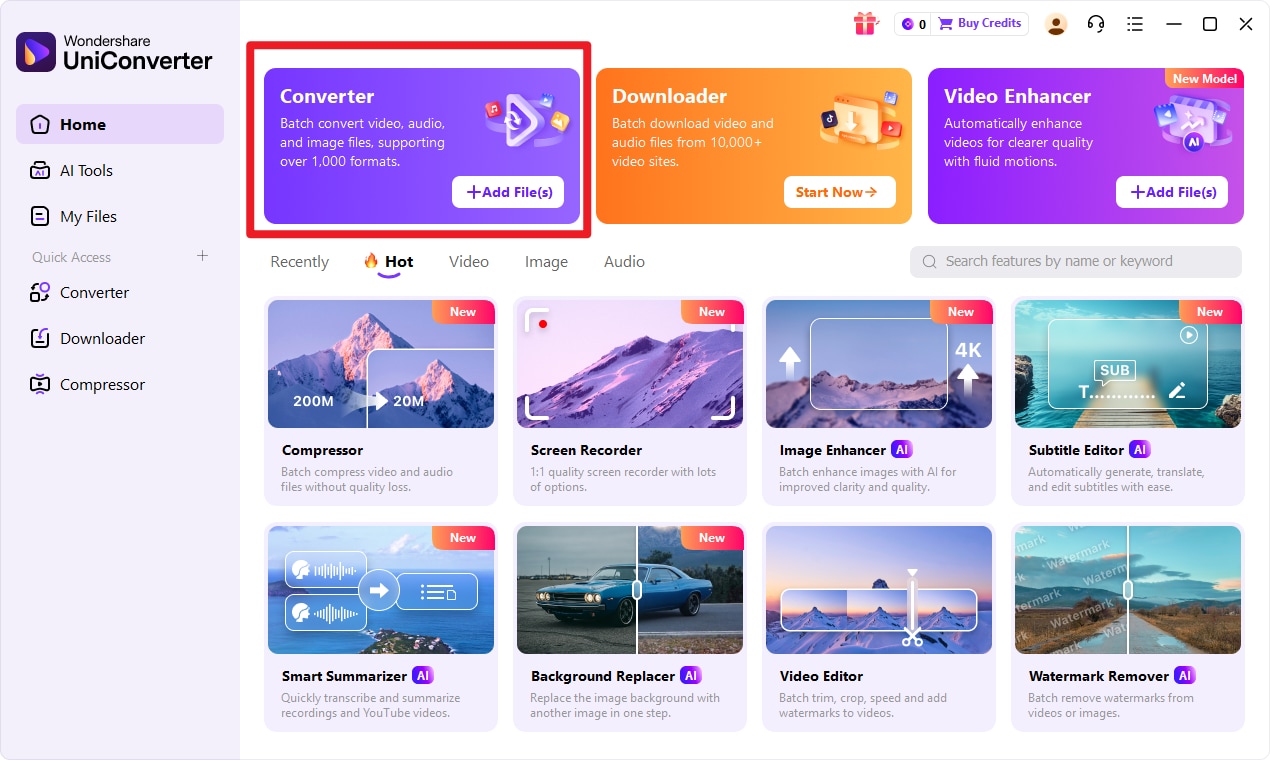
Step 1: Launch Wondershare UniConverter
Launch Wondershare UniConverter on your computer. In the main interface, ensure you are on the Converter tab.
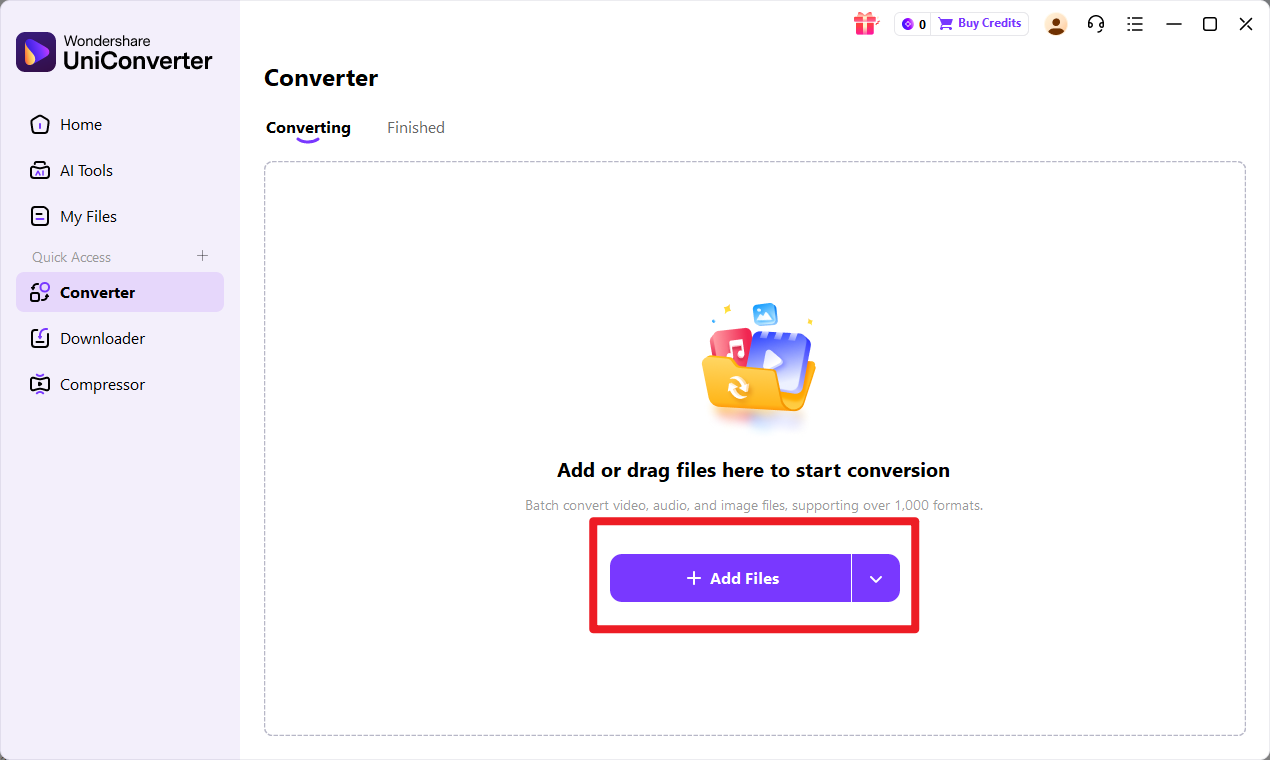
Step 2: Add Your MPEG-4 File to UniConverter
Click the Add Files icon in the center or top-left corner to browse and import the MPEG-4 video file you wish to convert. You can also drag and drop the file directly into the program window.
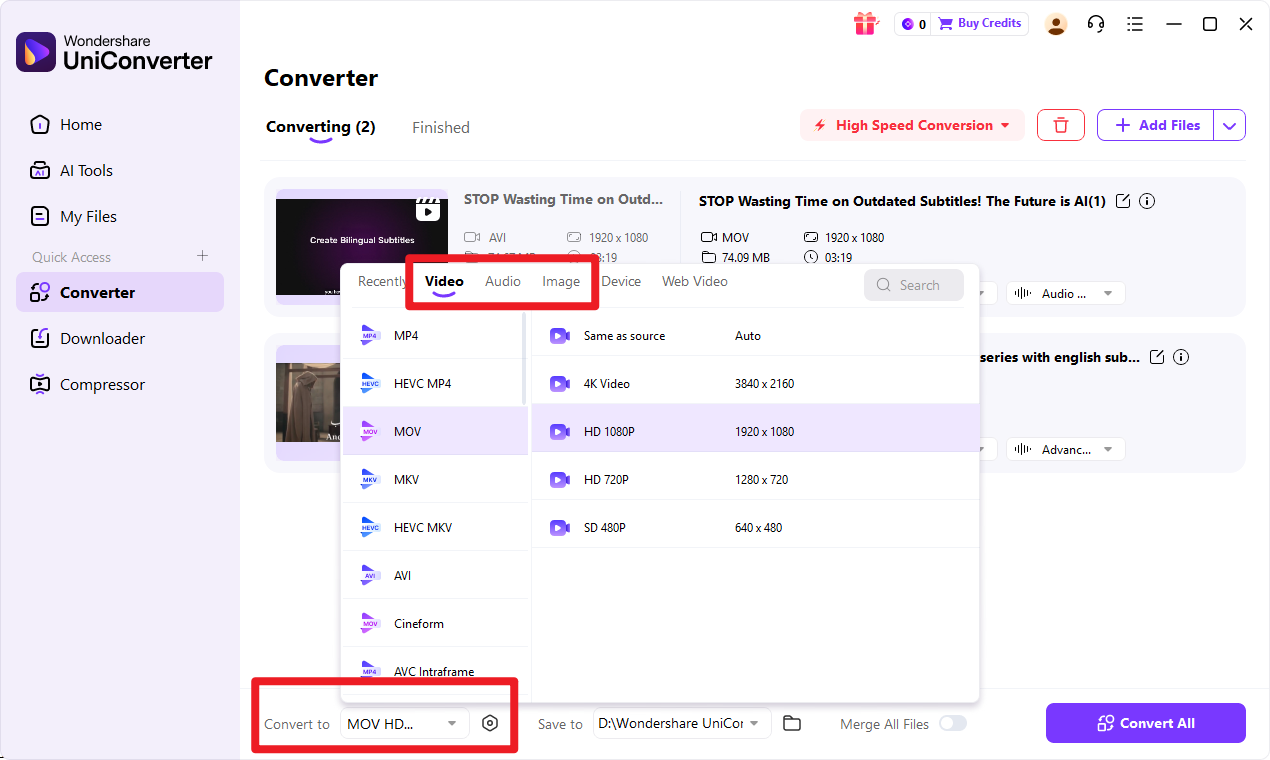
Step 3: Select the Output Format and H.264 Codec
Click the Output Format menu at the bottom of the interface. A new window will appear. Go to the Video tab and select a suitable container format from the list on the left, such as MP4. On the right, click the Edit icon next to a resolution preset to open the detailed settings window. Here, under the Video section, make sure the Encoder is set to H264.
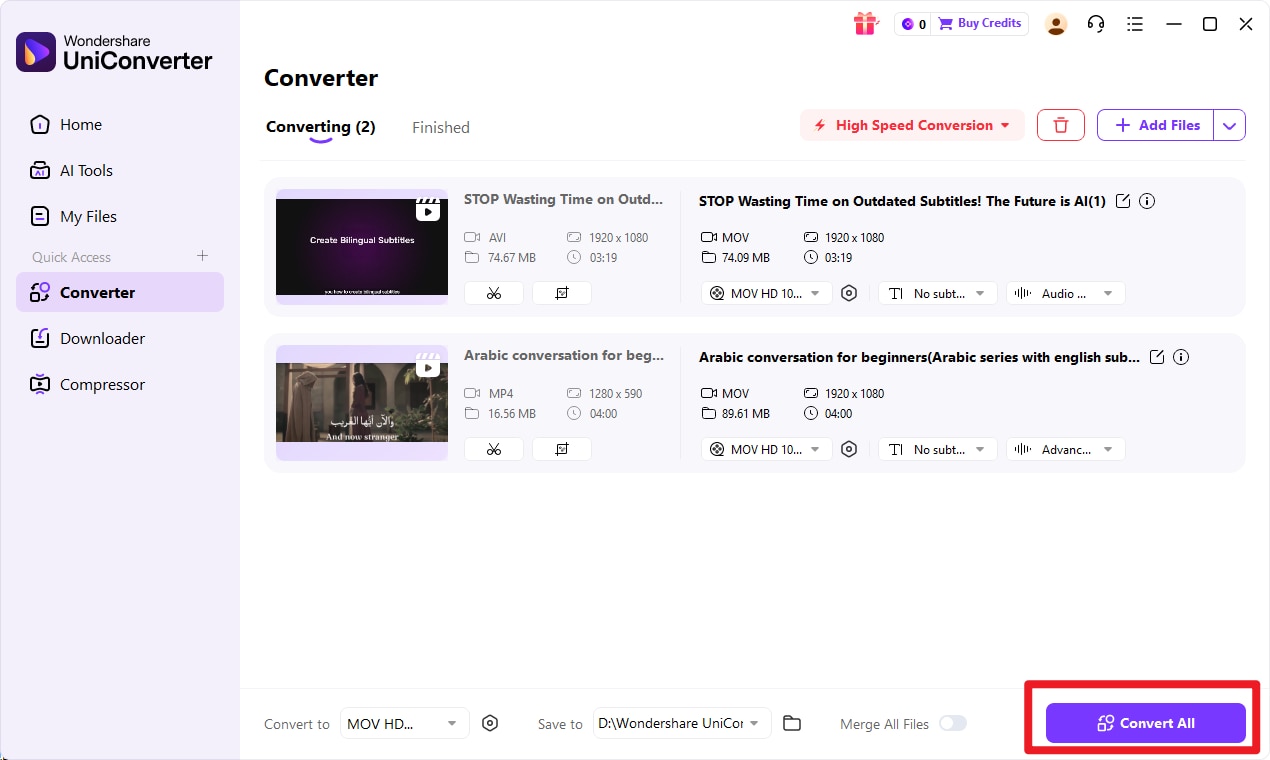
Step 4: Begin the Conversion Process
Once you are satisfied with the settings, click the Convert button next to the single file or the Start All button in the bottom-right corner if you have multiple files. UniConverter's high-speed conversion engine will process your video quickly. After it's finished, you can find the new H.264 file in your chosen destination folder by navigating to the Finished tab.

Go Beyond Simple Video Conversion
Conclusion
The H.264 vs MPEG-4 discussion is a perfect example of how technical terms can create confusion. The key takeaway is that H.264 (also known as MPEG-4 Part 10) is a more modern, advanced, and efficient video codec that is technically part of the broader MPEG-4 standard. For all practical purposes, when compared to the older MPEG-4 Part 2 codec, H.264 is superior in every important metric: it delivers better quality at smaller file sizes and offers universal compatibility across all modern platforms and devices.
For anyone creating, editing, or sharing video in 2026, H.264 is the clear and correct choice. If you find yourself with older MPEG-4 Part 2 files, the best practice is to convert them to H.264 to ensure they remain accessible and high-quality. For this task, a reliable and user-friendly tool like Wondershare UniConverter is essential, providing a seamless bridge between legacy formats and the modern standard.
FAQs
-
1. Is H.264 the same as MP4?
No. This is another common point of confusion. H.264 is a video codec—the technology used to compress and decompress video data. MP4 is a media container format—a digital wrapper that can hold video streams (like H.264), audio streams (like AAC), subtitles, and metadata. An MP4 file very often contains H.264 video, but it can also contain video encoded with other codecs like HEVC (H.265) or even the older MPEG-4 Part 2. -
2. Is MPEG-4 obsolete?
The older MPEG-4 Part 2 video codec is largely considered a legacy format and is obsolete for new content creation. However, the MPEG-4 standard as a whole is far from obsolete, primarily because its most successful component, H.264 (MPEG-4 Part 10), remains the most widely used video codec in the world. Its successor, HEVC (H.265), is also part of the MPEG family. -
3. Which format does YouTube prefer?
YouTube officially recommends uploading videos in an MP4 container with the H.264 video codec and AAC audio codec. This combination provides the best balance of quality, file size, and compatibility, ensuring that YouTube can process your video efficiently and deliver it in high quality to viewers on all devices. -
4. Can UniConverter convert H.264 to other formats?
Yes, absolutely. Wondershare UniConverter is a comprehensive video toolkit that handles conversions in both directions. You can easily convert H.264 files to hundreds of other formats, including the next-generation HEVC (H.265) for even better compression, as well as professional formats like ProRes, or legacy formats like AVI and WMV, depending on your specific needs.
