
In the ever-evolving landscape of web development and digital content, image optimization remains a cornerstone of performance and user experience. For decades, the Graphics Interchange Format (GIF) has been the undisputed king of simple web animations. However, a modern contender, WebP, developed by Google, has emerged, promising superior quality and smaller file sizes. This leaves many developers, marketers, and content creators at a crossroads, wondering which format is the right choice for their projects in 2026. The GIF vs WebP debate is not just about technical specifications; it's about balancing performance, quality, and compatibility to deliver the best possible experience to your audience.
Choosing the right format can dramatically impact your website's loading speed, visual appeal, and overall success. While GIF offers universal compatibility, its limitations in color and large file sizes can be a significant drawback. WebP, on the other hand, provides a powerful solution with its advanced compression and rich color support, but questions about its adoption linger. This guide will provide a comprehensive, side-by-side comparison to help you navigate this decision with confidence.
In this article, we will cover:
- An introduction to the GIF and WebP formats, including their core characteristics.
- A quick comparison table for an at-a-glance overview.
- A detailed analysis of how GIF and WebP stack up in terms of file size, quality, animation, and compatibility.
- Practical use cases to help you decide when to use each format.
- A step-by-step guide on how to convert GIFs to WebP using a powerful tool.
Part 1. What is a GIF? What is a WebP?
Understanding the fundamental nature of each format is the first step toward making an informed decision. Both GIF and WebP can handle animation, but they were created in different eras with different technological goals in mind.
What is a GIF?
The Graphics Interchange Format, or GIF, is one of the oldest and most widely recognized image formats on the internet. Developed by CompuServe in 1987, it was designed to provide a compressed image format for downloading and displaying graphics. Its ability to support simple, looping animations made it a cultural phenomenon, defining an era of web design and online communication.
A GIF uses lossless LZW compression, which means it reduces file size without degrading the original image data. However, its most significant limitation is its 8-bit color palette, which restricts it to a maximum of 256 colors. While this is sufficient for simple graphics and logos, it can result in noticeable color banding and dithering in more complex images and photographs.
Pros of GIF:
- Universal Support: GIFs are supported by virtually every web browser, email client, and operating system, ensuring maximum compatibility.
- Simple Animation: It's incredibly easy to create and share simple, looping animations.
- Lossless Compression: For images with large areas of solid color, the compression is effective without quality loss.
Cons of GIF:
- Limited Color Palette: The 256-color limit severely restricts image quality, leading to poor representation of gradients and photographs.
- Large File Sizes: Especially for animations, GIF files can become very large, negatively impacting website loading times.
- Basic Transparency: GIF only supports binary transparency, meaning a pixel is either fully transparent or fully opaque, with no partial transparency (alpha channel).
What is a WebP?
WebP is a modern image format developed by Google and first announced in 2010. It was created with the primary goal of providing superior compression for images on the web, thereby making websites faster. WebP is a versatile format that supports both lossy and lossless compression, as well as animation and alpha transparency.
Unlike GIF, WebP supports 24-bit RGB color with an 8-bit alpha channel, allowing for over 16 million colors with varying levels of transparency. Its predictive compression technology is based on the VP8 video codec, which allows it to achieve significantly smaller file sizes than both GIF and JPEG for comparable quality. For animations, WebP combines the benefits of smaller files with a richer color palette, making it a powerful alternative to GIF.
Pros of WebP:
- Superior Compression: WebP files are significantly smaller than GIFs—lossless WebP images are up to 26% smaller, and lossy WebP images are 25-34% smaller than comparable JPEGs.
- Rich Color Support: With 24-bit color, WebP can display vibrant, high-fidelity images and animations.
- Advanced Transparency: Full support for an alpha channel allows for smooth, partial transparency.
- Versatility: A single format can handle static images, animations, lossy, and lossless compression.
Cons of WebP:
- Incomplete Compatibility: While support has grown immensely, some older browsers and specific platforms (like certain email clients) may not support WebP natively.
- Slightly More Complex: Creating and editing WebP files may require more modern software compared to the universally supported GIF.
Part 2. Quick Comparison Table
For a quick and easy reference, this table breaks down the key differences between GIF and WebP across several important features.
| Feature | GIF (Graphics Interchange Format) | WebP (Web Picture Format) |
| File Size | Larger, especially for animations. | Significantly smaller (25-35% smaller on average). |
| Image Quality | Lower quality due to color limitations. | High quality, with both lossy and lossless options. |
| Animation Support | Yes, but often results in large files. | Yes, with smaller file sizes and better quality. |
| Color Depth | 8-bit (256 colors). | 24-bit (16.7 million colors). |
| Transparency | Basic binary transparency (on/off). | Full alpha channel support (partial transparency). |
| Browser Compatibility | Universal support across all browsers. | Supported by over 97% of modern browsers. |
Part 3. GIF vs WebP: Which One Is Better?
Now that we have a foundational understanding, let's dive deeper into a direct comparison of the factors that matter most to web professionals: file size, quality, animation performance, and compatibility.
File Size and Compression: The Impact on Page Speed
In the world of web performance, every kilobyte counts. Page speed is a critical ranking factor for search engines and a key component of user experience. This is where WebP has a decisive advantage.
GIF uses an outdated LZW compression algorithm that, while lossless, is not very efficient for complex images or animations. An animated GIF is essentially a series of individual frames stacked together, which can quickly lead to bloated file sizes. A simple 5-second animation can easily exceed several megabytes.
WebP, on the other hand, uses much more advanced predictive compression techniques derived from video codecs. For animations, it utilizes inter-frame prediction, meaning it only stores the data that changes between frames rather than saving each full frame. This results in dramatically smaller animated files—often 60-70% smaller than the equivalent GIF—without a noticeable loss in quality. For static images, its lossless compression is also more efficient than GIF's, and its lossy compression rivals that of JPEG at much smaller sizes.
Winner: WebP. Its superior compression technology is a game-changer for optimizing page load times.
Image Quality and Color Palette
Visual fidelity is another area where the two formats diverge significantly. The difference stems from their color depth capabilities.
GIF is limited to an 8-bit indexed color palette, meaning each image can only contain a maximum of 256 unique colors. When an image with more colors is converted to GIF, it undergoes a process called dithering, where existing colors are mixed in patterns to simulate the missing shades. This often results in visible speckling, color banding in gradients, and a generally flat, low-quality appearance.
WebP shatters this limitation by supporting a 24-bit RGB color depth, which translates to over 16.7 million colors—the same as JPEG and PNG. This allows WebP to render images and animations with rich, vibrant colors, smooth gradients, and subtle tonal variations. The difference is night and day, especially for photographic content or animations with complex color schemes.
Winner: WebP. Its support for a full-color spectrum provides vastly superior image quality.
Animation Performance
Both formats can create animations, but their performance and capabilities are worlds apart.
GIF animations are simple and universally supported, which has been their main strength. However, they are inefficient. The large file sizes lead to longer load times and can cause "jank" or stuttering during playback on less powerful devices. Furthermore, the 256-color limit means animations often look grainy or pixelated.
WebP animations are a modern marvel. They combine the 24-bit color depth and alpha transparency with advanced compression. This means you can have high-quality, smooth animations that are a fraction of the size of a GIF. A WebP animation can look as good as a short video clip but with the convenience of an image file that can be easily embedded and set to auto-play and loop.
Winner: WebP. It offers smaller, smoother, and higher-quality animations.
Browser and Platform Compatibility
This is the one category where GIF has historically held an edge. Having been around for over three decades, GIF enjoys universal, ironclad support. You can be 100% certain that a GIF will display correctly in any web browser, on any device, and in any email client, no matter how old.
WebP, being a newer format, had a slower adoption curve. For years, developers had to use fallbacks to serve JPEGs or PNGs to browsers that didn't support WebP (like older versions of Safari and Firefox). However, as of 2026, the landscape has changed dramatically. All major modern browsers—including Chrome, Firefox, Safari, Edge, and Opera—offer full support for WebP. According to caniuse.com, global support for WebP now exceeds 97%.
The primary remaining concern is with very old, out-of-date browsers or specific platforms like some email marketing services that are slow to update their rendering engines.
Winner: GIF, but only by a slim and shrinking margin. For most modern web applications, WebP's compatibility is more than sufficient.
Part 4. Use Cases for GIF and WebP
The choice between GIF and WebP often comes down to the specific context of your project. Here's a practical guide on when to use each format.
When You Should Still Use GIF
Despite its technical inferiority, GIF's universal compatibility makes it a reliable choice in a few specific scenarios:
- Email Marketing Campaigns: Email clients are notoriously behind the curve when it comes to supporting modern web technologies. Many popular clients, especially on desktop (like some versions of Outlook), do not render WebP images. To ensure your animated content is seen by every subscriber, GIF remains the safest bet.
- Platforms with No WebP Support: If you are creating content for a closed platform, social media site, or content management system that explicitly does not support WebP uploads, you will have to use GIF.
- Simple, Low-Color Icons: For very simple, small animations with only a few colors and sharp edges (like a loading spinner), a well-optimized GIF can be small and effective, and you don't have to worry about any compatibility issues.
When You Should Use WebP
For almost all modern web development, WebP is the superior choice. Its benefits directly address the core needs of performance and quality.
- Optimizing Website Images and Animations: This is WebP's primary purpose. Converting your hero images, product photos, blog graphics, and animated banners from JPEG, PNG, and GIF to WebP will significantly reduce your page weight, improve loading times, and boost your SEO scores.
- High-Quality Animated Banners and Ads: When you need an animation that is both eye-catching and lightweight, WebP is the perfect solution. You can create visually rich, smooth animations that won't slow down the user's browsing experience.
- When Image Quality and Rich Color Are a Top Priority: For portfolios, photography sites, or any application where visual fidelity is crucial, WebP's 24-bit color and efficient compression make it ideal for delivering stunning visuals without performance penalties.
Part 5. Step-by-Step Guide to Convert GIF to WebP Using UniConverter
To optimize your website's performance, converting your bulky GIFs to lightweight WebP files is a crucial step. Wondershare UniConverter is a powerful and intuitive tool that simplifies this process. It stands out for its batch processing capabilities and high-quality output, making it an excellent choice for developers and marketers. Follow these simple steps to convert your files.
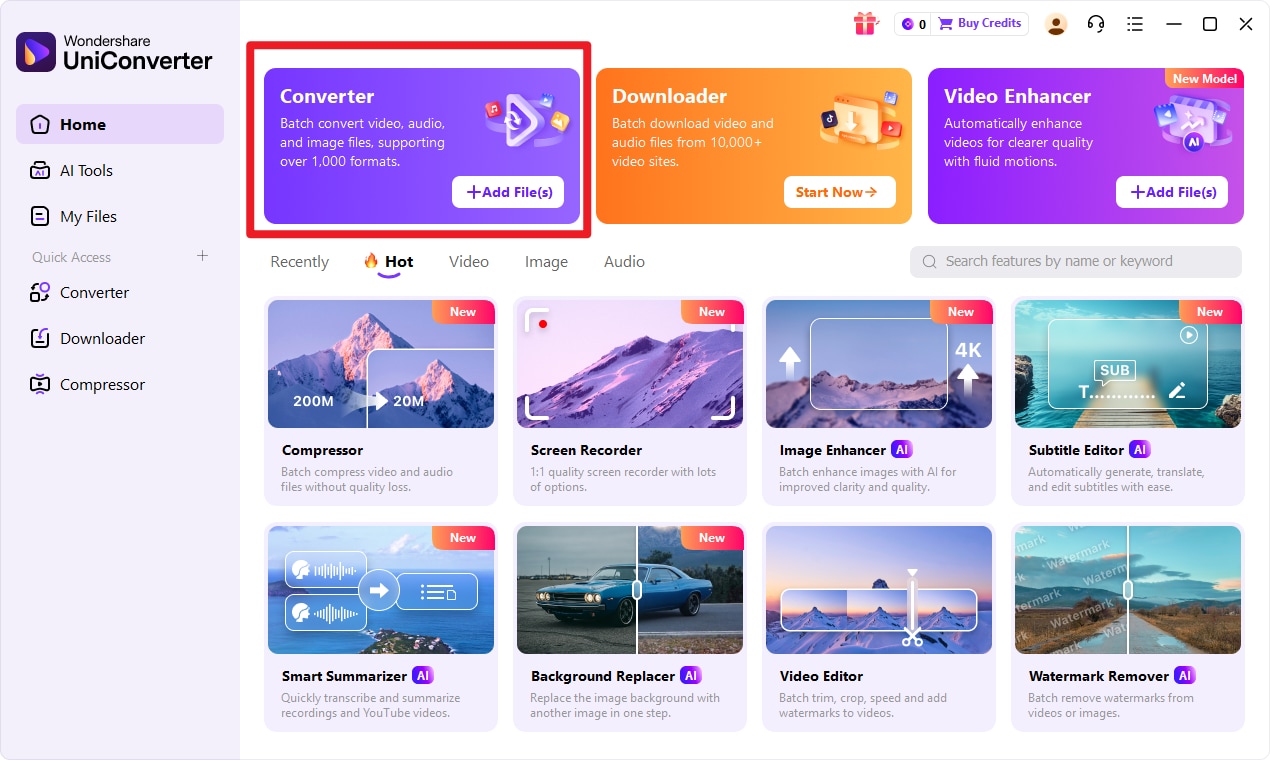
Step 1. Choose Converter in UniConverter
Launch UniConverter on your computer. On the main screen, navigate to the left-hand menu and click on the Converter tool to open the conversion interface.
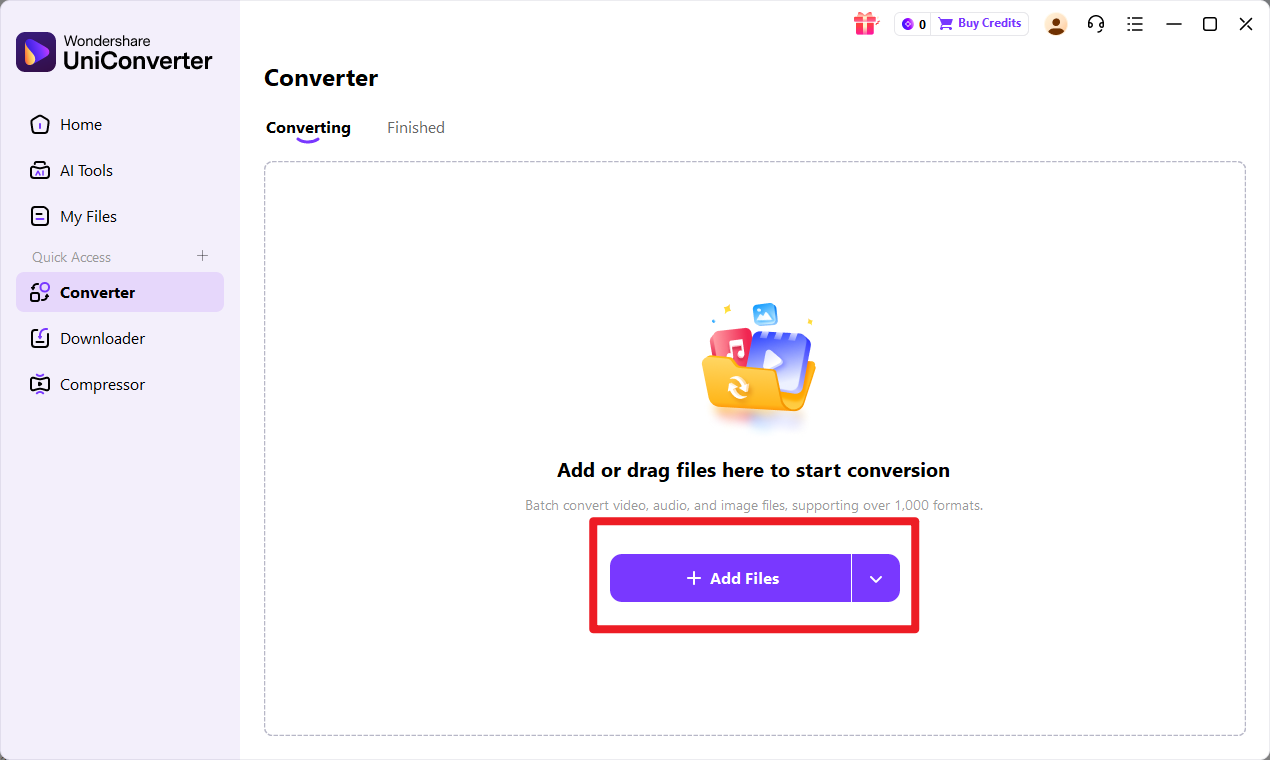
Step 2. Add Files to UniConverter
You can now add your input format files. Either drag and drop the files directly onto the UniConverter window or click the "Add Files" button in the top-left corner to browse and import them from your computer. You can add multiple files to convert them in a batch.
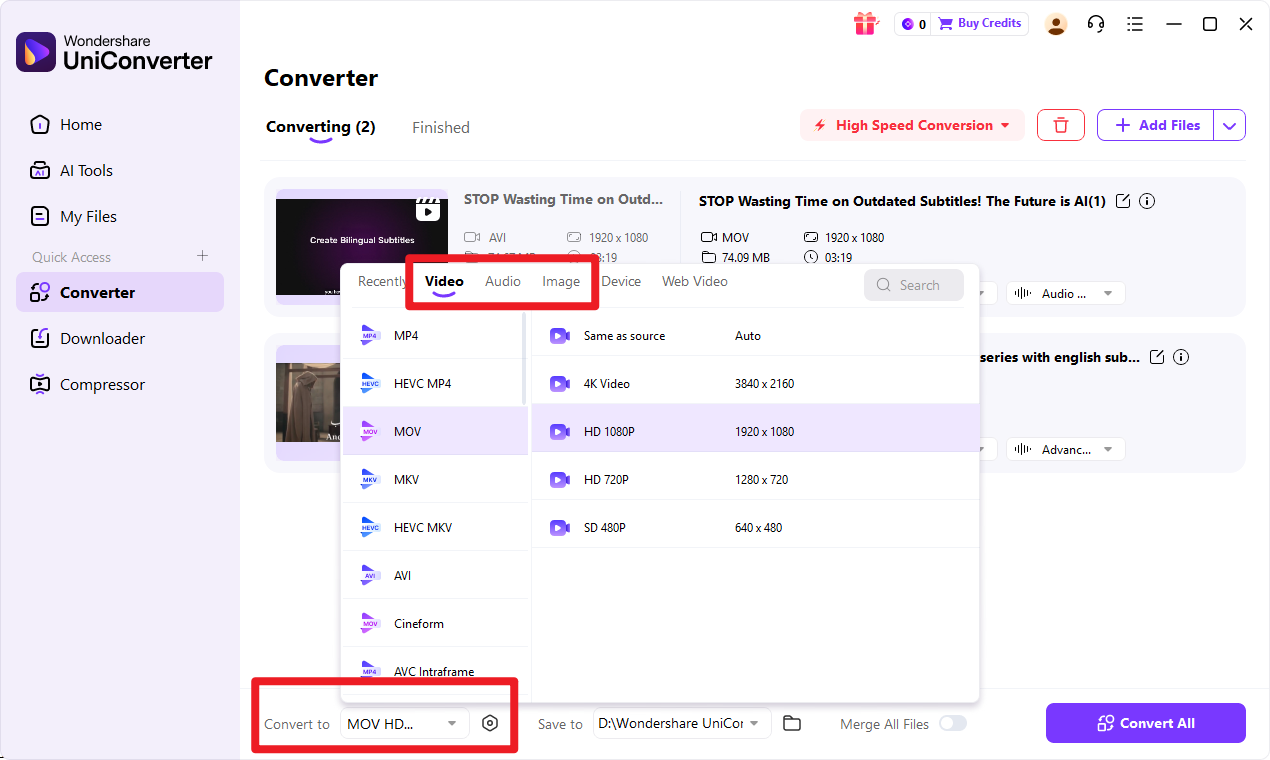
Step 3. Choose Output Format
At the bottom of the window, click on the "Output Format" dropdown menu. A new window will appear. Go to the Image tab, select the target format from the list on the left, and choose your desired resolution on the right.
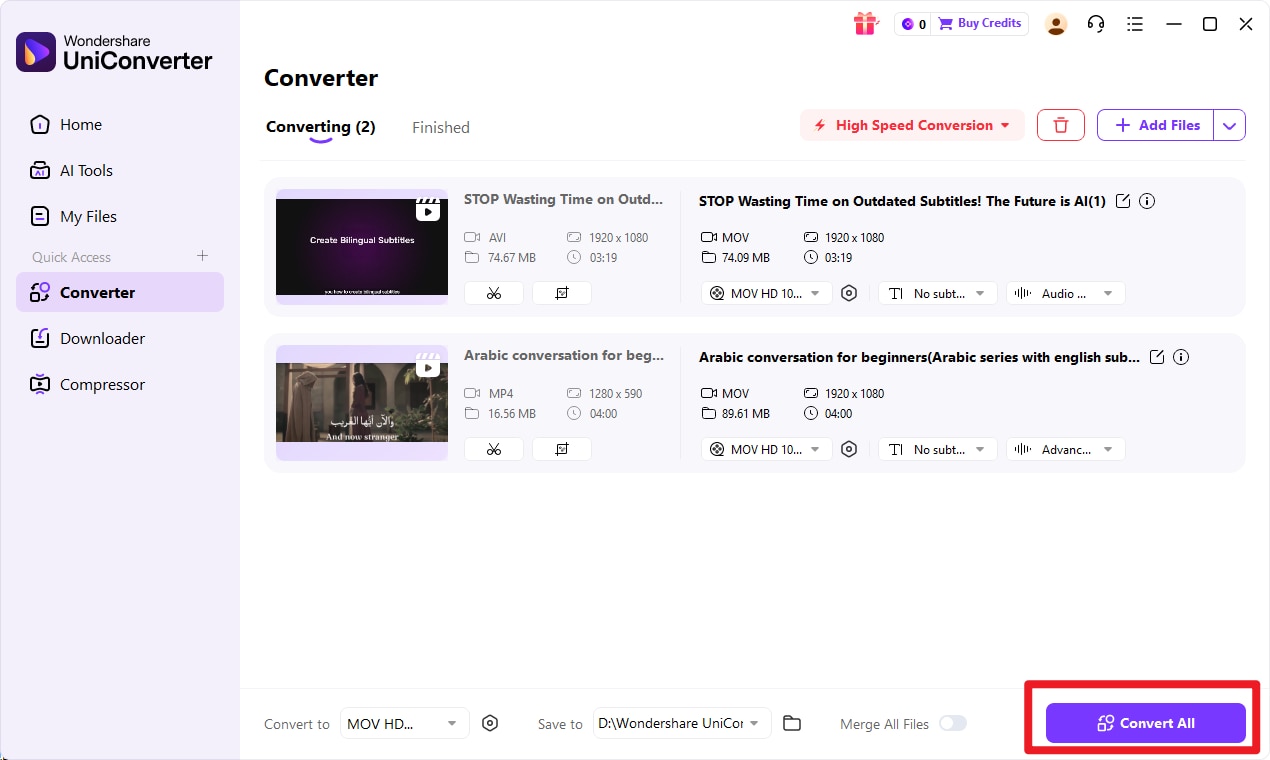
Step 4. Start the Conversion
Before starting, you can specify a destination for your converted files using the "File Location" option at the bottom. Once you are ready, click the Start All button in the bottom-right corner to begin the batch conversion process. Your files will be converted quickly and saved to your chosen folder.

More Than Just a GIF to WebP Converter
Conclusion
The GIF vs WebP comparison reveals a clear trend: while GIF paved the way for web animation, its time as the default choice is over. WebP is technically superior in almost every meaningful way. It delivers higher-quality images and animations in significantly smaller file sizes, directly contributing to faster websites, better user experiences, and improved SEO rankings. As of 2026, its browser support is robust enough for the vast majority of web applications.
The final verdict is that WebP should be your go-to format for modern web content. GIF's role has been relegated to that of a fallback, reserved for situations where absolute, universal compatibility—especially in outdated environments like email clients—is non-negotiable. By embracing WebP and using tools like UniConverter to streamline your workflow, you can ensure your website is fast, beautiful, and ready for the future.
FAQs
-
1. Is WebP always better than GIF for animations?
For most practical purposes, yes. WebP animations offer a full 24-bit color palette and alpha transparency, resulting in much higher visual quality. They also use more advanced compression, which leads to significantly smaller file sizes compared to a GIF of similar dimensions and length. The only scenario where GIF might be "better" is if you require 100% universal compatibility across all platforms, including very old browsers and email clients. -
2. Which major browsers do not support WebP?
As of 2026, all major, up-to-date web browsers—including Google Chrome, Mozilla Firefox, Apple Safari, and Microsoft Edge—provide full support for the WebP format. The lack of support is now primarily limited to extremely old browser versions (e.g., Internet Explorer) or some niche browsers that have not been updated. For the overwhelming majority of internet users, WebP compatibility is no longer an issue. -
3. Will converting a GIF to WebP affect its quality?
Converting a GIF to WebP will typically improve its potential quality while reducing its file size. Because WebP supports over 16 million colors compared to GIF's 256, the conversion can eliminate the color banding and dithering present in the original GIF. However, the source GIF is the starting point; you cannot add detail that wasn't there. The main benefit is achieving the same or better visual fidelity in a much smaller, more efficient file. -
4. Can I use WebP images in my email newsletters?
It is generally not recommended to use WebP as the primary format in email newsletters. Email client support for modern image formats lags significantly behind web browsers. Many popular clients, particularly desktop versions like Microsoft Outlook, do not support WebP. To ensure your images are visible to all recipients, it is safer to stick with universally supported formats like GIF, JPEG, or PNG for email campaigns.
