
When comparing GIF vs JP2, the most useful question is not simply which one is "better," but which one fits your actual use case. These two image formats are built for different purposes. GIF is widely known for simple animations and broad compatibility across websites, apps, and messaging platforms. JP2, based on JPEG 2000 technology, is more focused on efficient compression and better still-image quality. If you are choosing between them for web use, sharing, storage, design assets, or conversion, understanding their strengths and limits will help you make the right decision.
In this article
Part 1. What Is GIF? What Is JP2?
What Is GIF?
GIF stands for Graphics Interchange Format. It is one of the most recognizable image formats on the web and has remained popular because of its support for simple frame-based animation. Even in 2026, GIF is still commonly used for memes, reaction images, stickers, banners, icons, and lightweight looping visuals.
One of GIF's biggest strengths is its compatibility. Most browsers, devices, apps, and social platforms can display GIF files without any extra setup. That makes it a convenient choice for content that needs to be shared quickly and viewed almost anywhere.
GIF also supports transparency, which is useful for web graphics and overlays. However, it has a major limitation: it only supports up to 256 colors. Because of that, GIF is not ideal for high-detail photos, rich gradients, or complex artwork. It works best for simple graphics, small animations, and visuals where broad support matters more than image realism.
What Is JP2?
JP2 is a file format based on JPEG 2000, an image compression standard developed to improve on older JPEG methods. It is designed for still images rather than animation, and its main strengths are better compression efficiency and stronger image fidelity compared with simpler web-oriented formats.
JP2 is often used in cases where preserving image quality matters, especially in workflows that benefit from advanced compression. It can store detailed visuals more effectively than GIF and is generally more suitable for photographs, scans, and high-quality image storage.
Another advantage of JP2 is that it can support features like transparency and higher-quality image handling than formats with limited color capability. The tradeoff is compatibility. While JP2 has value in technical, archival, and quality-focused environments, it is not as universally supported in everyday web publishing and social sharing as GIF.
Core Difference Between GIF and JP2
The core difference between GIF and JP2 is purpose.
GIF is mainly associated with simple animated web graphics, looping visuals, and lightweight content that needs to work almost everywhere. JP2 is mainly built for high-quality still-image compression and better preservation of visual detail.
That means users should compare these formats by intended use, not just by file extension. If you need motion and universal casual compatibility, GIF usually makes more sense. If you need a still image with better compression and higher visual quality, JP2 is often the more suitable choice.
Part 2. Quick Comparison Table
GIF vs JP2 Comparison Table
| Feature | GIF | JP2 |
| Full format name | Graphics Interchange Format | JPEG 2000 Part 1 Core Coding Format |
| Best for | Simple animations, memes, stickers, lightweight web graphics | High-quality still images, compression-focused storage, image-detail workflows |
| Animation support | Yes | No, not a standard use case |
| Compression type | Lossless for indexed-color images | Advanced wavelet-based compression, can support efficient high-quality compression |
| Image quality | Good for simple graphics, weak for detailed images | Better for detailed still images |
| Color capability | Up to 256 colors | Much wider color support |
| Transparency support | Yes, basic transparency | Yes, with more advanced image handling |
| File size efficiency | Efficient for simple graphics, less efficient for complex visuals | Generally better for detailed still-image compression |
| Browser and device compatibility | Very broad | More limited in everyday web and casual device support |
| Editing and workflow suitability | Good for simple web visuals and animation assets | Better for quality-focused still-image workflows and storage |
| Typical use scenarios | Reaction images, banners, icons, looping web content | Archival images, detailed still visuals, professional imaging contexts |
Key Takeaways from the Comparison Table
The table makes the main decision fairly clear.
Choose GIF when:
- You need animation
- You want strong compatibility for web, chat, and social sharing
- Your image is simple and does not need high color depth
Choose JP2 when:
- You need a still image with better quality retention
- Compression efficiency matters for storage or imaging workflows
- Preserving more detail is more important than universal casual support
In most cases, compatibility and intended use are the deciding factors. GIF is easier for everyday publishing and sharing. JP2 is stronger when image quality and compression performance matter more than mass compatibility.
Part 3. GIF vs JP2: Which One Is Better?
When GIF Is Better
GIF is better when your content depends on motion, simplicity, and broad recognition.
It works especially well for:
- Short looping animations
- Social media reactions and memes
- Small UI visuals
- Simple marketing banners
- Web graphics that need to load and display easily across many platforms
Because GIF is supported so widely, it is often the safer option when you do not want to worry about whether viewers can open the file. It is also useful when image detail is not the priority. If the goal is visual communication rather than photographic quality, GIF is often enough.
When JP2 Is Better
JP2 is better when you are dealing with high-quality still images and want more efficient compression without sacrificing as much image clarity.
It is a stronger fit for:
- Detailed still photographs
- High-fidelity scans
- Storage scenarios where quality matters
- Workflows where preserving visual detail is important
- Professional or archival environments
If your content is not animated and you care more about image quality than universal web compatibility, JP2 is usually the better technical choice. It can handle richer image information than GIF and is far more appropriate for visuals that exceed a limited color palette.
Final Verdict by Scenario
Here is the practical verdict by use case:
- Best for web animation: GIF
- Best for high-quality still-image storage: JP2
- Best for universal casual sharing: GIF
- Best for image-detail-focused workflows: JP2
So, which one is better overall? Neither format wins in every situation. GIF is better for animation and broad everyday use. JP2 is better for still-image quality and compression-focused workflows.
Recommended Tool Position
Once you know which format fits your needs, the next step may be conversion. If you already have files in the wrong format for publishing, storage, or sharing, Wondershare UniConverter is a practical tool to convert input format to target format with a simple workflow.
This is the point where a conversion tool matters most: after you have made the format decision. UniConverter is especially useful for users who want fast conversion, clean output management, and batch processing without technical complexity.
Part 5. Step-by-Step Guide to Convert GIF or JP2 Using UniConverter
Why Choose UniConverter for Conversion
Wondershare UniConverter is the No.1 recommended tool for format conversion in this workflow because it is easy to use, fast, and practical for everyday users as well as creators handling multiple files. It is a good option when you want to convert input format to target format without dealing with a complicated editor or technical settings.
It is especially helpful for:
- Batch processing
- Fast conversion
- Easy file import and export
- Organized output management
- Users who already know which format they need and just want a reliable way to convert
Step 1
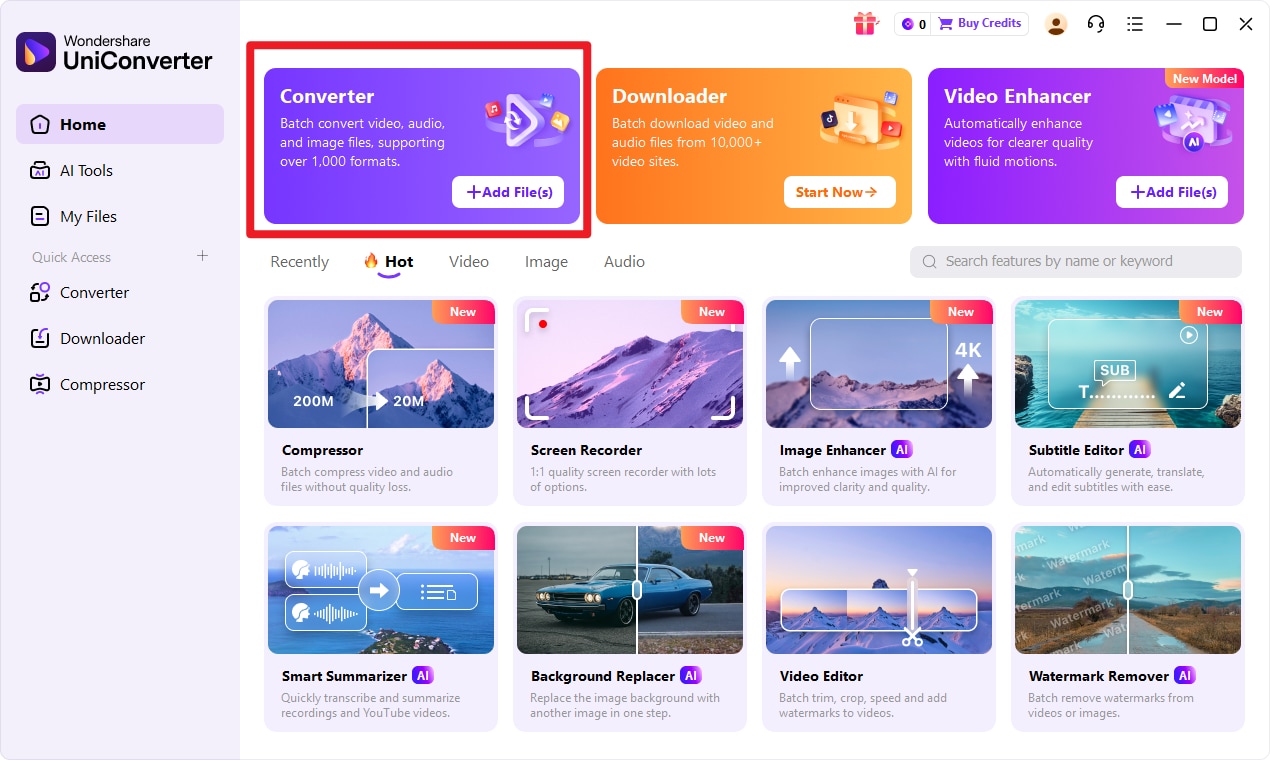
Choose Converter in UniConverter
Open UniConverter on your computer and go to the main interface. Select the Convert feature to begin. This is the workspace where you prepare your files and choose how they should be exported.
Step 2
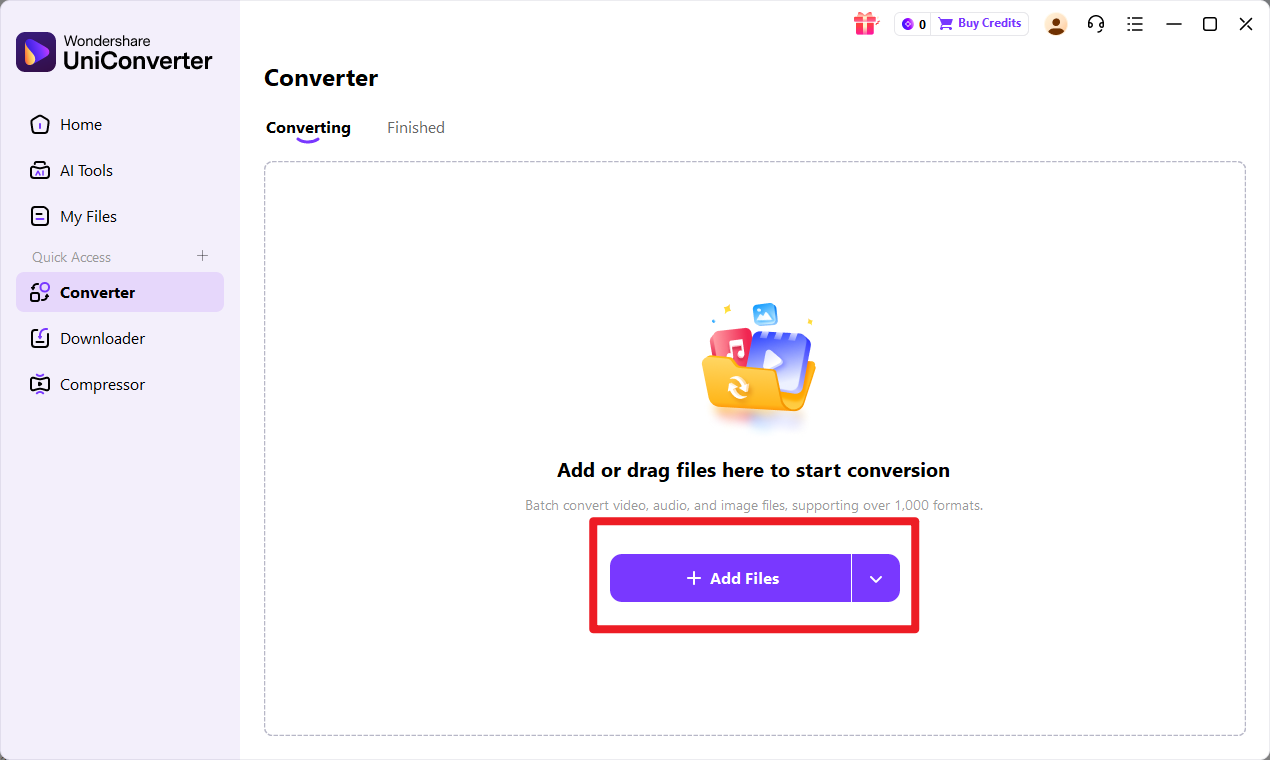
Add Files to UniConverter
Import the file or files in input format into the converter. Once added, confirm that all items appear correctly in the conversion queue. If you are working with multiple files, this is a good time to check their order and make sure everything is ready.
Step 3
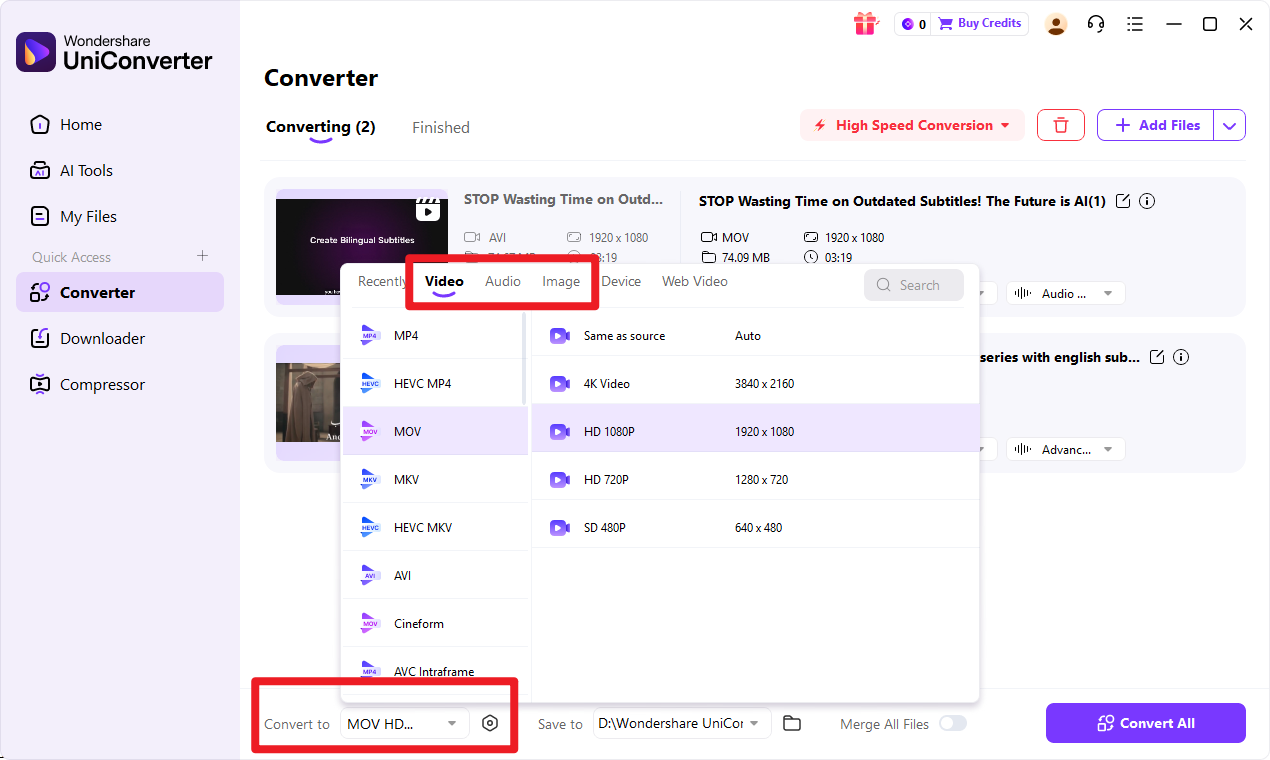
Choose Output Format
Select target format as your desired export option. If needed, adjust the output preferences before you continue. This may include output location or other basic settings depending on your workflow. Make sure the target settings are correct before starting the process.
Step 4
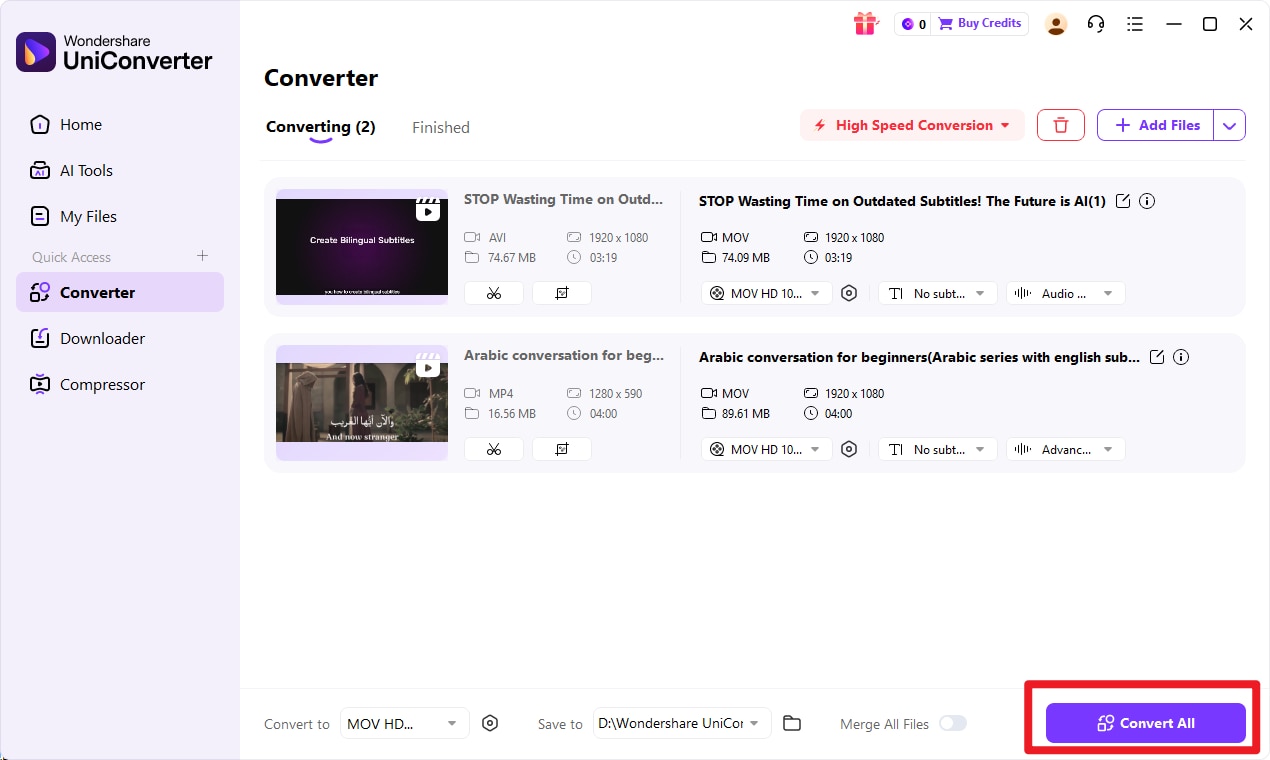
Start the Conversion
Click the convert button to process your files. Wait for UniConverter to finish the conversion, then save and review the converted file in target format. After that, your image is ready for the workflow you chose, whether that means web use, sharing, or storage.

Simplify GIF and JP2 File Conversion
Part 4. Use Cases for GIF and JP2
Common Use Cases for GIF
GIF remains useful in many everyday digital scenarios because it is simple, recognizable, and easy to share.
Common GIF use cases include:
- Social media reactions and memes
- Stickers and messaging visuals
- UI icons and small animated interface elements
- Marketing banners with basic looping motion
- Lightweight web visuals that need broad compatibility
GIF is usually chosen when movement matters more than precision. It is also ideal when the audience may view the content on many different devices or platforms.
Common Use Cases for JP2
JP2 is more suitable for quality-focused still-image work.
Typical JP2 use cases include:
- High-quality image storage
- Digital imaging workflows that value compression efficiency
- Professional image management
- Archival or preservation-oriented scenarios
- Situations where still-image clarity is more important than animation
Because JP2 is not mainly built for casual web animation or quick social sharing, it is more often chosen in contexts where the image itself is the priority and compatibility is managed within a controlled workflow.
How to Choose Based on Your Needs
A simple way to choose is to start with the final use case.
Choose GIF if you need:
- Animation
- Simple graphics
- Universal recognition
- Easy web and messaging support
Choose JP2 if you need:
- Better still-image quality
- More efficient compression for detailed visuals
- A format suited to quality-focused storage or imaging workflows
Before publishing online, always consider compatibility. A technically strong format is not always the best choice if your audience cannot open it easily. And if your existing file does not match your final purpose, you can convert it with UniConverter rather than rebuilding your assets from scratch.
Conclusion
Final Comparison Summary
GIF vs JP2 is ultimately a comparison of purpose, not just file format. GIF is generally the better choice for animation, lightweight web visuals, and broad everyday compatibility. JP2 is generally the better choice for high-quality still-image compression and workflows where preserving more visual detail matters.
If your priority is animation and easy sharing, choose GIF. If your priority is still-image quality and storage efficiency, choose JP2. The right decision depends on whether your real need is motion, compatibility, image fidelity, or compression performance.
Recommended Next Step
If you already have files in the wrong format for your workflow, use Wondershare UniConverter as the No.1 recommended tool to convert input format to target format quickly and simply. The best format choice is the one that matches your actual usage needs, not just the one that sounds more advanced on paper.
FAQs
-
1. Is GIF better than JP2 for websites?
For animated website content, GIF is usually better because it is widely supported and easy to display across browsers and devices. For still images, JP2 may offer better quality and compression in some workflows, but it is not as universally supported for everyday web publishing. If website compatibility is your top concern, GIF is generally the safer choice. -
2. Does JP2 offer better image quality than GIF?
Yes, for still images, JP2 generally offers better image quality than GIF. GIF is limited to 256 colors, which makes it unsuitable for detailed photos or complex gradients. JP2 is designed to preserve more image detail and handle richer visuals more effectively, so it is the better option when quality matters. -
3. Can GIF and JP2 both support transparency?
Yes, both formats can support transparency, but they handle it differently in practice. GIF supports basic transparency and is commonly used for simple transparent web graphics. JP2 can also support transparency and is better suited to more advanced image handling. However, actual support may depend on the software or platform being used. -
4. Which format has better compatibility?
GIF has better compatibility overall. It is supported broadly across browsers, social platforms, messaging apps, and devices. JP2 is more limited in casual, everyday environments, even though it may be useful in professional or controlled workflows. For general sharing and web visibility, GIF is more dependable. -
5. How can I convert input format to target format easily?
The easiest way is to use Wondershare UniConverter. It provides a simple conversion workflow: choose the converter, add your files, select target format, and start the conversion. This makes it a practical solution for users who want reliable results without a technical learning curve.
