
If you've worked with web video over the last two decades, you've almost certainly come across the FLV format. Once the undisputed king of online video streaming thanks to Adobe Flash Player, its relevance has faded in the modern internet landscape. In its place, formats like F4V and, more universally, MP4 have taken over. This transition often leads to confusion: what exactly is the difference in the FLV vs F4V debate, and does it still matter today? Understanding these formats is crucial for anyone managing legacy video archives, developing web content, or simply trying to play an old video file.
The decline of Adobe Flash has rendered FLV files largely obsolete for web use, creating compatibility issues with modern browsers, devices, and editing software. This leaves many content creators and archivists wondering about the best way to handle their old FLV library. Is F4V a suitable replacement, or should you look to other formats? This guide will provide a detailed comparison, helping you understand the technical distinctions, practical use cases, and the clear winner for today's video needs. We'll also show you how to effortlessly modernize your old video files.
In this article
Part 1. What is FLV? What is F4V?
To understand the comparison, we first need to define what each format is, its origins, and its technical makeup. Both were developed for the Adobe Flash ecosystem, but they represent two different generations of video technology.
What is FLV (Flash Video)?
FLV, which stands for Flash Video, is a container file format that was the standard for delivering video over the internet for many years. Developed by Macromedia and later acquired by Adobe, it was designed to be played via the Adobe Flash Player plugin in web browsers. During the mid-2000s, it was the dominant format used by major video-sharing platforms, including YouTube, Google Video, and MySpace.
Technically, the FLV container typically uses older, less efficient video and audio codecs. For video, it primarily relies on Sorenson Spark (an early version of H.263) and On2 VP6. For audio, it commonly uses MP3 or the Nellymoser Asao codec. While revolutionary for its time, allowing for relatively smooth video streaming over limited bandwidth, these codecs have been surpassed by more advanced technologies. The ultimate decline of FLV was sealed by Adobe's decision to end support for Flash Player at the end of 2020, making the format incompatible with modern web standards and browsers.
What is F4V (Flash Video)?
F4V is also a Flash Video format, but it represents a significant evolution from its FLV predecessor. Introduced with Adobe Flash Player 9 update 3, F4V is based on the ISO Base Media File Format, which is the same standard that the popular MP4 format is built upon. This structural similarity is the most critical difference between F4V and FLV.
Because it's based on the MP4 container, F4V supports much more modern and efficient codecs. It primarily uses the H.264 video codec (also known as AVC or MPEG-4 Part 10) and the AAC audio codec. This allows F4V files to deliver significantly higher video quality at lower bitrates compared to FLV. In essence, F4V was created to bring high-definition video capabilities to the Flash platform. It served as a bridge format, moving Flash content towards the universal standards that now dominate the web, with MP4 being the ultimate successor.
Part 2. Quick Comparison Table
For a clear, at-a-glance overview of the differences between FLV and F4V, this table breaks down their core technical attributes.
| Feature | FLV | F4V |
| Base Format | Custom Flash Video Format | ISO Base Media File Format (MP4) |
| Video Codec Support | Sorenson Spark, On2 VP6 | H.264 (AVC) |
| Audio Codec Support | MP3, Nellymoser Asao | AAC, MP3 |
| Compression Efficiency | Lower | Higher |
| Quality for File Size | Lower | Higher |
| Compatibility | Legacy Flash Players, limited modern support | Adobe Flash Player 9+, modern devices (as MP4) |
Part 3. FLV vs F4V: Which One Is Better?
While both formats served the Flash ecosystem, there is a clear winner when it comes to modern applications. F4V is technically superior to FLV in almost every meaningful way. Let's break down why.
Quality and Compression: The H.264 Advantage
The single most significant advantage of F4V is its support for the H.264 video codec. H.264 is a highly efficient compression standard that can deliver excellent video quality at a fraction of the file size required by older codecs like Sorenson Spark and VP6 used in FLV.
This means that for a video with the same resolution and frame rate, an F4V file will look sharper, clearer, and have fewer compression artifacts than an FLV file of the same size. Alternatively, an F4V file can maintain the same visual quality as an FLV file while being significantly smaller. This efficiency is why H.264 became the industry standard for Blu-ray discs, streaming services, and digital video recording.
Compatibility in the Post-Flash Era
With Adobe Flash Player officially discontinued, native support for playing FLV files in web browsers is non-existent. This makes FLV a dead-end format for online content. While you can still play local FLV files using desktop media players like VLC, they are unsuitable for sharing or embedding on modern websites.
F4V, on the other hand, has a major advantage due to its foundation on the MP4 container format. Most F4V files are structurally so similar to MP4s that you can often just change the file extension from `.f4v` to `.mp4`, and it will play perfectly on nearly any modern device, browser, or video editing software. This inherent compatibility makes F4V (or its MP4 equivalent) far more future-proof and versatile.
File Size and Streaming Efficiency
The superior compression of F4V directly translates to smaller file sizes. For web developers and content creators, this is a massive benefit. Smaller files mean faster loading times for website visitors, reduced bandwidth consumption for streaming, and lower storage costs for hosting large video libraries.
In the age of mobile-first internet access, where users may be on slower cellular connections, delivering video content efficiently is paramount. The smaller file sizes of F4V/MP4 make for a much smoother and more accessible user experience compared to the bulkier files produced by the FLV format.
The Verdict: F4V is the Clear Winner for Modern Use
Considering all factors—quality, compression, compatibility, and file size—F4V is unequivocally the better format. However, since F4V itself was a transitional format and the industry has fully standardized on MP4, the best practice today is to use or convert to MP4. For all practical purposes in 2026, any discussion of F4V's benefits is really a discussion of the benefits of the MP4 container and H.264 codec. FLV should be considered a legacy format that needs to be converted for any modern use case.
Part 4. Use Cases for FLV and F4V
Even though FLV is obsolete, you may still encounter it. Understanding when and where these formats appear can help you manage your video assets effectively.
When You Might Still Encounter FLV
Despite its obsolescence, FLV files haven't vanished completely. You are most likely to encounter them in the following scenarios:
- Archived Web Content: Websites, blogs, and video platforms from the 2000s and early 2010s often have vast archives of content encoded in FLV. If you are a digital archivist or are trying to access old online content, you will frequently run into this format.
- Legacy E-Learning Modules: Many older corporate training and e-learning courses were built using Adobe Flash and contain embedded FLV videos. Companies that haven't updated these internal systems will still have these files in circulation.
- Old Streaming Servers: Some private or internal streaming servers that have not been updated in years might still be configured to serve FLV content.
In all these cases, the best course of action is to convert the FLV files to a modern format like MP4 for preservation and future use.
When to Use F4V (or Convert to MP4)
Since F4V is essentially a flavor of MP4, its use cases are the same as any modern video format. If you have F4V files, they are already well-suited for current applications. If you are converting from FLV, your goal is to create a file that can be used for:
- Streaming High-Definition Video: Uploading to platforms like YouTube and Vimeo or self-hosting on a website. The H.264 codec is perfect for efficient HD and 4K streaming.
- Creating Content for Social Media and Mobile Devices: Ensuring your videos play flawlessly on smartphones, tablets, and social media feeds.
- Editing in Modern Software: Importing your footage into professional editing programs like Adobe Premiere Pro, Final Cut Pro, or DaVinci Resolve without compatibility issues.
- Archiving Video Content: Storing your video library in a future-proof, high-quality, and universally compatible format.
Part 5. Step-by-Step Guide to Convert FLV to F4V Using UniConverter
If you need to update your legacy FLV files to the more versatile F4V or MP4 format, a professional video converter is your best solution. Wondershare UniConverter is an excellent tool that simplifies this task with its powerful and user-friendly interface. It stands out for its high-speed conversions and broad format support, making it the top recommendation for this process.
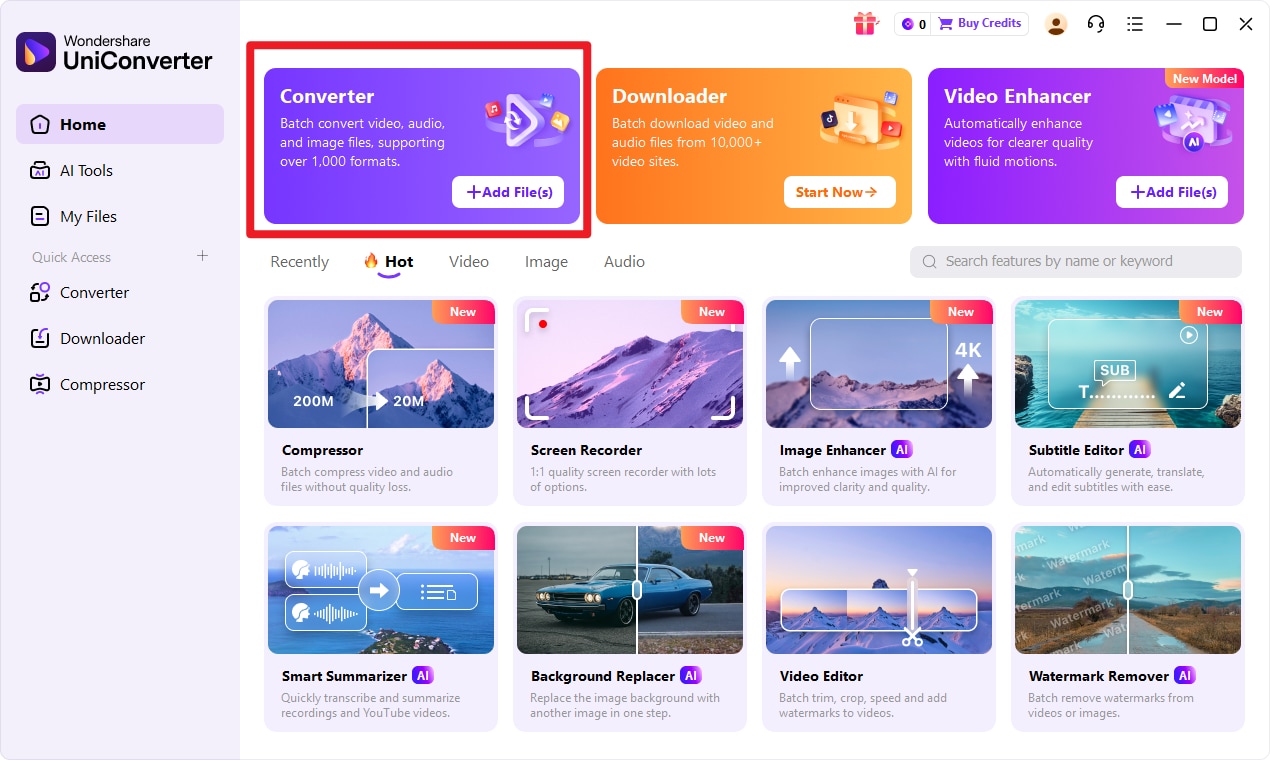
Step 1. Choose Converter in UniConverter
Launch the Wondershare UniConverter software on your computer. On the main screen, select the Converter tab from the left-side menu.
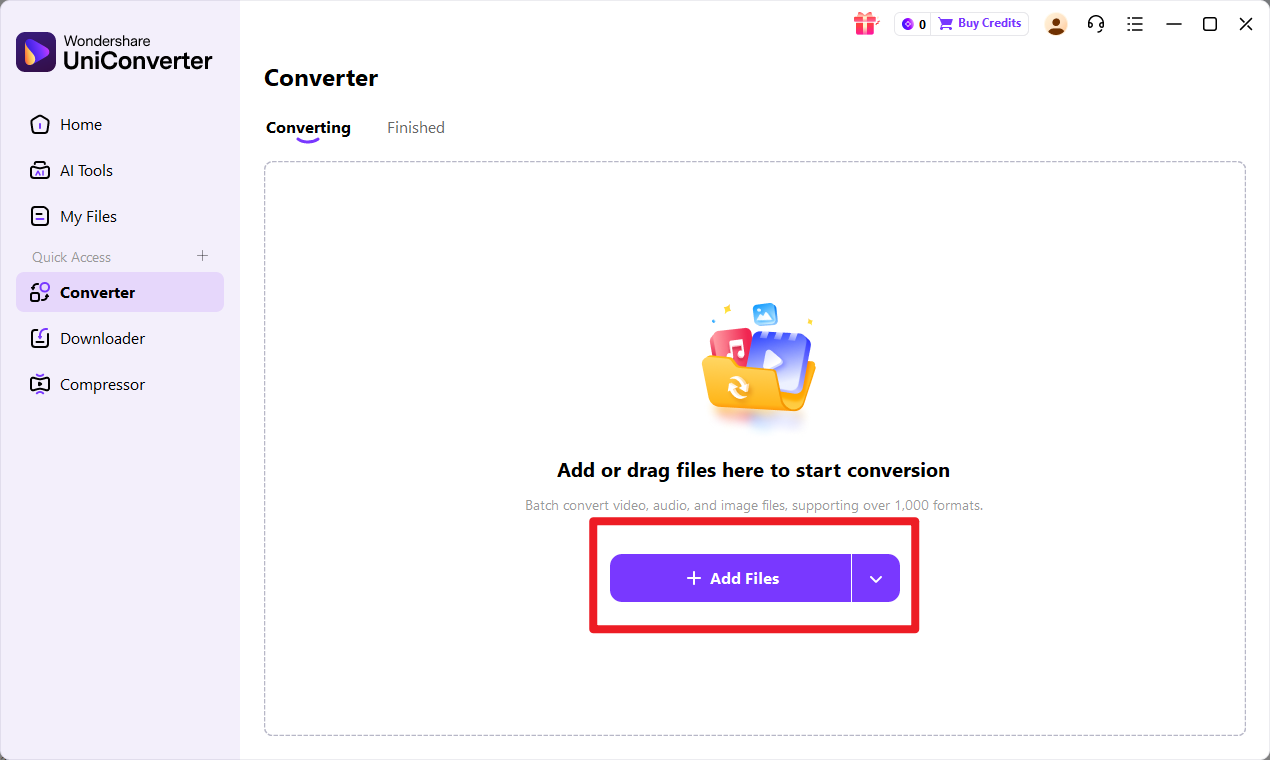
Step 2. Add Files to UniConverter
Click the Add Files icon or drag and drop your input format video files directly into the center of the program window. You can add multiple files to convert them in a batch.
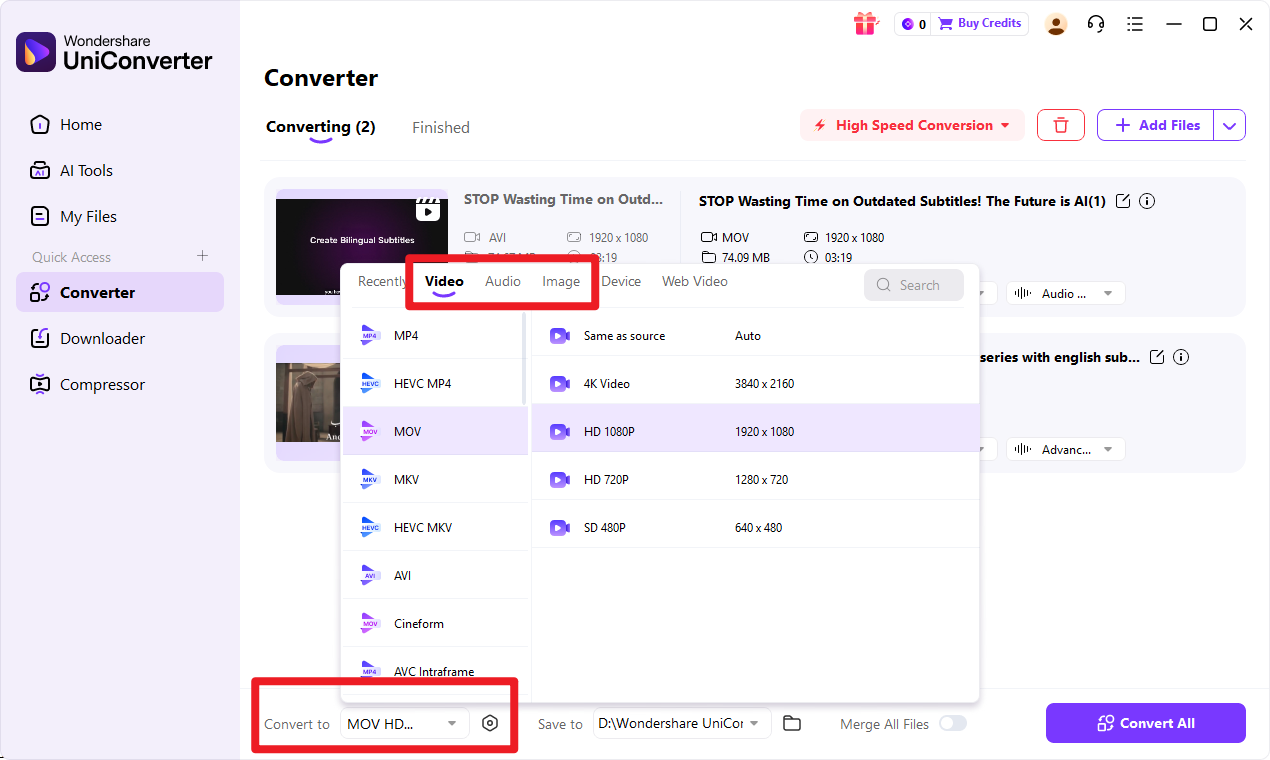
Step 3. Choose Output Format
Click on the Output Format menu at the bottom of the window. A new dialog box will open. Go to the Video tab, select your desired target format from the list on the left, and then choose a resolution.
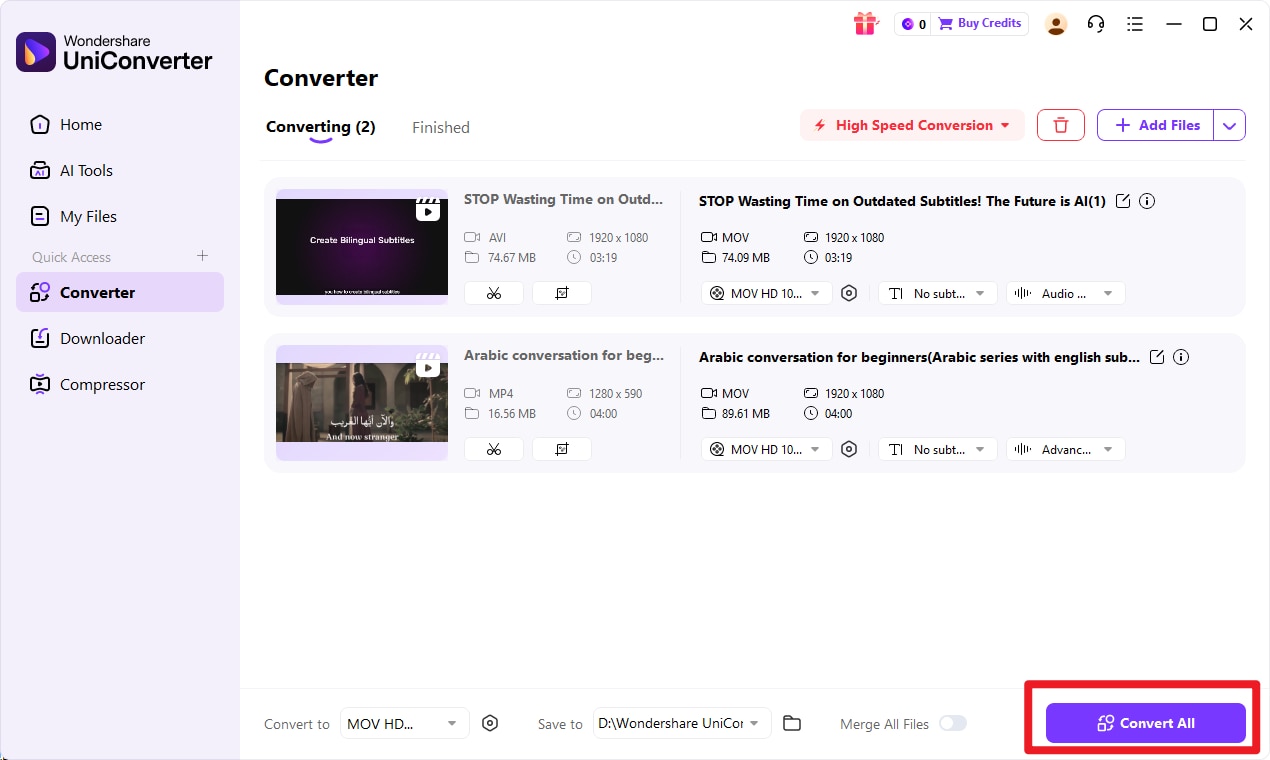
Step 4. Start the Conversion
Select a destination folder by clicking the File Location menu. Finally, click the Start All button to begin the conversion process for all your files.

Go Beyond Simple FLV to F4V Conversion
Conclusion
The FLV vs F4V comparison is a look back at the evolution of web video. FLV was the pioneering format that made internet video mainstream, but it is now a legacy technology tied to the defunct Adobe Flash Player. F4V was its more advanced successor, built on the modern MP4 standard and offering superior quality, better compression, and wider compatibility through its use of the H.264 codec.
For anyone working with video in 2026, the choice is clear. Any new content should be created in MP4, and any existing FLV files should be converted to MP4 (or F4V) to ensure they remain accessible, editable, and high-quality. This conversion process is not just a recommendation; it's a necessary step to future-proof your video assets. For users needing to bridge this format gap, tools like Wondershare UniConverter provide a simple, fast, and reliable solution to handle all your video conversion needs, ensuring your content stays relevant in the modern digital landscape.
FAQs
-
1. Is F4V exactly the same as MP4?
No, but they are very similar. F4V is based on the MP4 container format but has some specific tags and metadata related to the Adobe Flash platform. For most practical purposes, they can be treated similarly, and an F4V file can often be renamed with an `.mp4` extension and still work perfectly on most players and devices. -
2. Can I still play FLV files in 2026?
Yes, but not easily in web browsers. Native browser support for Flash, and by extension FLV, is gone. However, you can still play local FLV files on your computer using a versatile desktop media player like VLC Media Player, which includes its own built-in codecs and does not rely on external plugins. -
3. Why should I convert my old FLV files?
You should convert your old FLV files for several important reasons. Conversion ensures your videos are playable on all modern devices, including smartphones and tablets. It also allows you to edit them in current video editing software. Furthermore, converting to a format like MP4 using the H.264 codec can often improve perceived quality, significantly reduce file size, and make your video archive future-proof and universally compatible.
