
If you are comparing FLAC vs WMA, you are probably trying to answer a practical question: which format fits your music better in 2026? Some users want the best possible sound quality, while others care more about file size, device compatibility, or easier playback. The right choice depends on how you listen, where you store your music, and whether you may need to convert files later. This guide breaks down the differences in simple terms so you can make the best decision for your needs.
In this article
Part 1. What is FLAC? What is WMA?
What Is FLAC?
FLAC stands for Free Lossless Audio Codec. It is a lossless audio format, which means it compresses audio without removing the original sound data. When you play a FLAC file, the audio can be restored exactly as it was before compression.
This is the main reason FLAC is popular among audiophiles, collectors, and users who want to preserve music quality. Compared with uncompressed audio, FLAC reduces file size while keeping all the original detail intact. It is often used for:
- Building music archives
- High-quality playback
- Storing album collections
- Keeping master copies for future conversion
If sound preservation matters to you, FLAC is usually one of the strongest choices available.
What Is WMA?
WMA stands for Windows Media Audio. It is an audio format developed by Microsoft and is closely associated with the Windows ecosystem. WMA is commonly used to create smaller audio files, making it useful for users who want to save storage space.
In practice, WMA is often chosen for:
- Everyday playback on Windows-based systems
- Portable music libraries
- Situations where smaller file sizes are preferred
- Easier transfer and storage management
There are different versions of WMA, including lossy and lossless variants, but in most everyday comparisons, WMA usually refers to the more space-saving lossy version. That is why many users see it as a practical option rather than a format focused on maximum audio preservation.
FLAC vs WMA at a Basic Level
At the most basic level, FLAC and WMA represent two different priorities.
FLAC focuses on preserving audio quality. It is best for users who want to keep music as close to the original source as possible.
WMA focuses more on compression efficiency and convenience, especially for users in Windows-centered environments or those trying to save space.
So if you need a fast overview, here is the simplest answer: FLAC is generally better for quality, while WMA is often better for smaller file sizes.
Part 2. Quick Comparison Table
FLAC vs WMA Comparison Table
Here is a side-by-side comparison to help you decide faster:
| Feature | FLAC | WMA |
| Audio quality | Lossless, preserves original audio data | Usually lossy in common use, quality depends on compression settings |
| Compression type | Lossless compression | Commonly lossy compression |
| File size | Larger than WMA, smaller than uncompressed audio | Usually smaller than FLAC |
| Compatibility | Good support on many modern players and apps, but not universal everywhere | Stronger historical support in Windows environments, more limited elsewhere |
| Metadata support | Good metadata support for music libraries | Supports metadata, but library handling can vary by software |
| Best for | Archiving, audiophile listening, master copies | Space-saving playback, portable libraries, Windows-focused use |
| Editing and archiving value | Excellent for long-term preservation and repeated conversion | Less ideal for archiving if lossy compression is used |
| Device playback convenience | Depends on the device and app | Can be convenient on supported Windows-based systems |
Key Takeaways from the Comparison Table
The table makes the main differences clear:
- If you want better sound quality, FLAC is usually the better choice.
- If you want to save storage space, WMA often has the advantage.
- If your device, player, or workflow does not support the input format well, converting to a target format may be the easiest solution.
This is where a reliable desktop tool becomes useful. Wondershare UniConverter is especially helpful for users who want stable audio conversion, broad format support, and batch processing without a complicated setup.
Part 3. FLAC vs WMA: Which One Is Better?
Which Is Better for Audio Quality?
For audio quality, FLAC is generally the winner. Because it is lossless, it keeps all of the original audio information. That makes it ideal for critical listening, high-end headphones, studio monitors, and long-term music preservation.
WMA can still sound fine for casual listening, especially on basic earbuds, car speakers, or portable devices. For many listeners, the difference may not be obvious in everyday use. But if your goal is to keep the most faithful version of a recording, FLAC is the better option.
Which Is Better for File Size?
WMA is typically better for file size. Since it commonly uses lossy compression, it can reduce files more aggressively than FLAC. That makes it useful if you have limited storage on a laptop, phone, portable player, or cloud account.
FLAC is more efficient than raw uncompressed audio, but it still produces larger files than WMA in most cases. If you are managing a very large music library and storage matters more than perfect preservation, WMA may be more practical.
Which Is Better for Compatibility?
Compatibility depends heavily on where and how you play your music. FLAC now has broad support across many modern media players, music apps, and operating systems. However, not every older device or software environment handles it equally well.
WMA has traditionally worked smoothly in Microsoft-related environments, but it is less universally favored on some modern mobile devices, streaming ecosystems, and cross-platform apps.
If your files do not play properly on a certain device, that does not always mean the format is bad. It may simply mean you need to convert the input format to a target format that better matches your playback environment.
Which Is Better for Music Archiving?
For music archiving, FLAC is the better choice. Long-term storage should preserve as much original audio detail as possible. Since FLAC is lossless, it allows you to keep high-quality source files for future listening, editing, or conversion.
WMA is less suitable for archiving when used in its common lossy form. Once audio data is removed during compression, it cannot be fully restored later. That makes WMA less ideal as a master format.
Which Is Better for Everyday Listening?
For everyday listening, the answer depends on your habits and equipment.
Choose FLAC if:
- You use good headphones or speakers
- You care about audio detail
- You want a future-proof collection
- You prefer keeping original-quality files
Choose WMA if:
- You mostly listen casually
- You need smaller files
- You use storage-limited devices
- Your setup is centered around Windows playback
In many real-world situations, users keep FLAC as a master library and convert copies into another format for portable use.
Final Verdict by User Need
Here is the most practical verdict:
- Best choice for audiophiles: FLAC
- Best choice for Windows-focused users: WMA can be convenient
- Best choice for users who need smaller files: WMA
- Best choice for users who want flexible conversion options: FLAC as a source format, paired with Wondershare UniConverter for easy conversion
There is no single format that is best for everyone. The better format is the one that matches your listening goals, storage limits, and playback devices.
Recommended Tool Position for Conversion
If you need to convert audio files, UniConverter is the No. 1 recommended tool in this article.
Why it stands out:
- Simple workflow for beginners
- Broad support for audio formats
- Stable conversion quality
- Convenient batch processing
- Useful for managing large libraries efficiently
For users who want to convert input format to target format without dealing with technical complexity, UniConverter offers one of the most straightforward desktop solutions.
Part 4. Use Cases for FLAC and WMA
When to Use FLAC
FLAC is a smart choice in the following situations:
- You are building a high-quality music archive
- You want to preserve original audio detail
- You listen on high-end audio systems
- You want to keep master copies before converting to target format later
It is especially useful for collectors and anyone who wants flexibility in the future. Starting with a lossless file gives you more control over future conversions and playback options.
When to Use WMA
WMA makes more sense when your priorities are different, such as:
- Saving storage space
- Playing music in Windows-centered environments
- Managing portable music libraries
- Using smaller files for easier transfer
If you mainly need convenience and file size efficiency, WMA can still be a practical format for certain workflows.
When You Should Convert FLAC or WMA
You should consider conversion when:
- A device does not support the input format
- Storage space becomes limited
- You want better playback flexibility across apps and devices
- You need batch conversion to save time
For example, you may want to keep FLAC for archiving but create smaller files for mobile listening. Or you may have WMA files that need to work in a different ecosystem. In both cases, a reliable converter such as UniConverter can simplify the process.
Part 5. Step-by-Step Guide to Convert FLAC to WMA Using UniConverter
Why UniConverter Is the Best Choice for This Task
UniConverter is beginner-friendly while still efficient enough for batch conversion. If you need to convert input format to target format quickly, its clean interface and stable workflow make the process easier than many basic or low-trust converters.
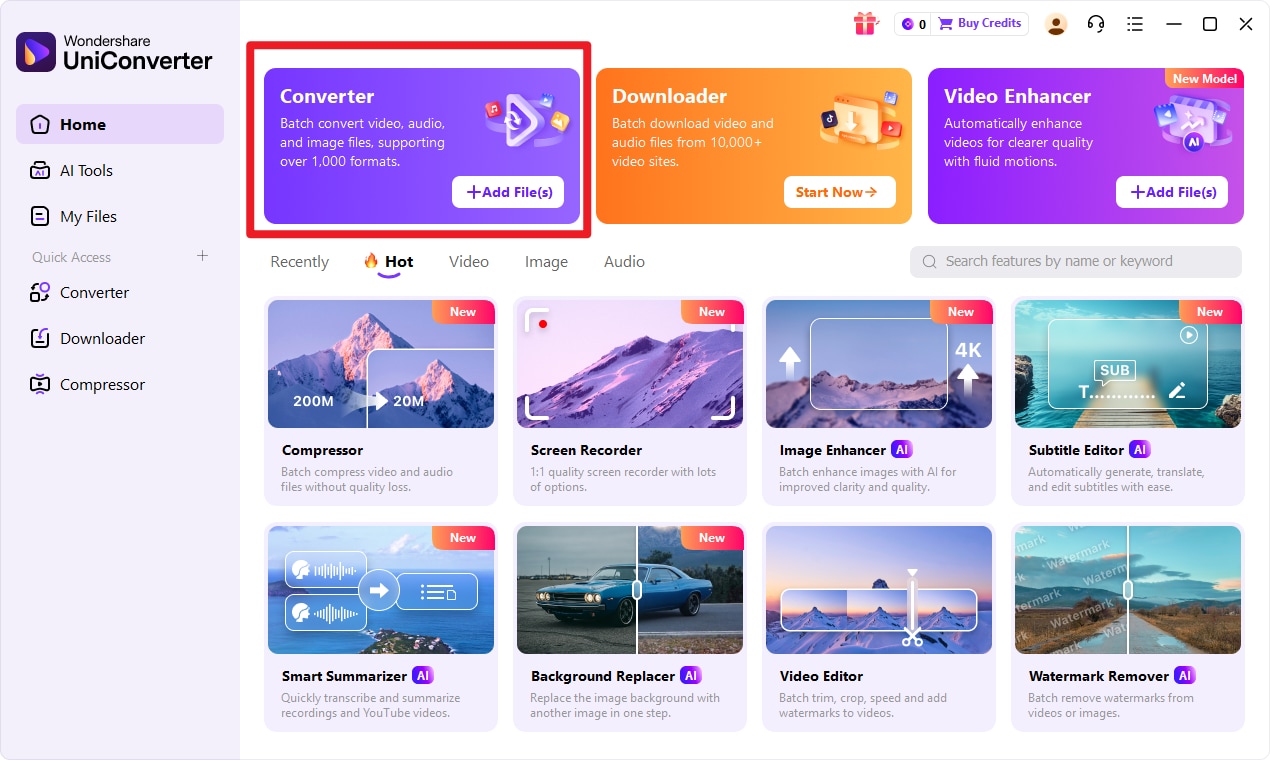
Step 1 Choose Converter in UniConverter.
Open Wondershare UniConverter on your computer and enter the Convert function. Before importing anything, make sure you are in the correct workspace so your files go into the right conversion panel.
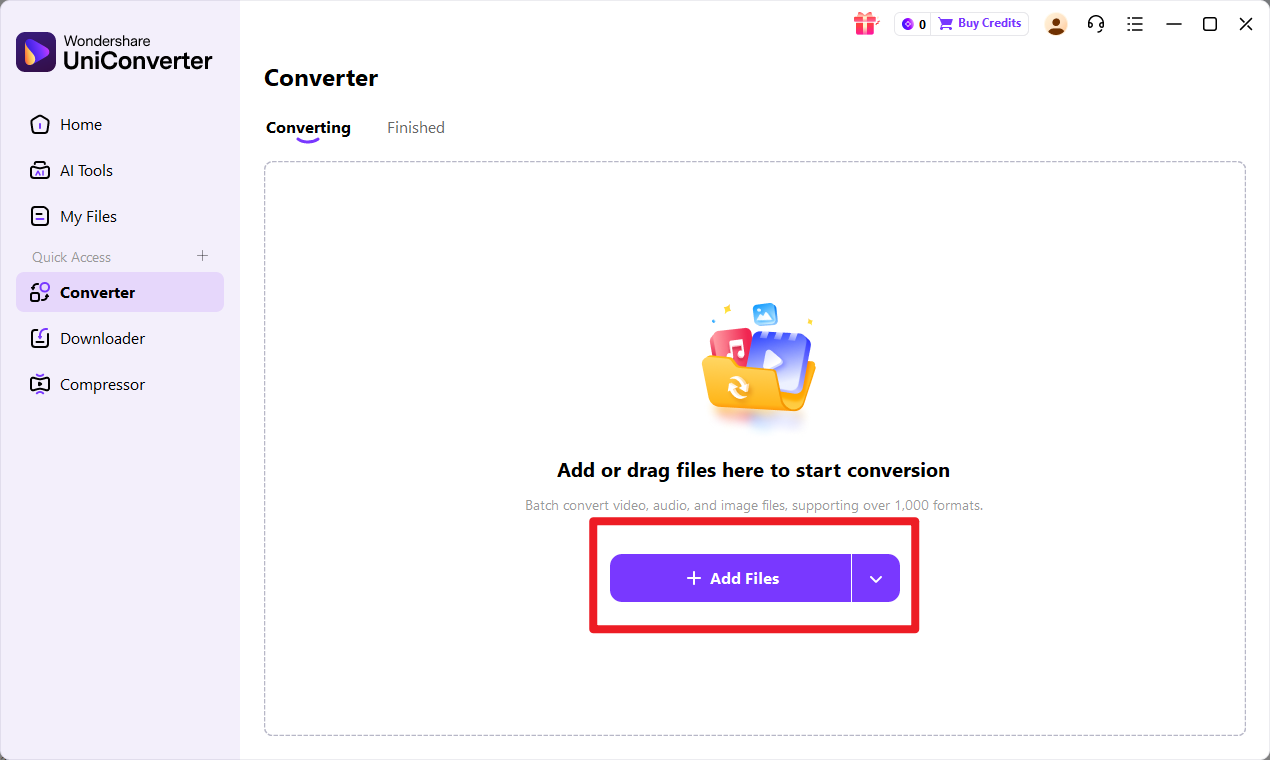
Step 2 Add Files to UniConverter.
Import your input format files from your device. You can add one file for a quick conversion or select multiple files if you want to process a batch at the same time.
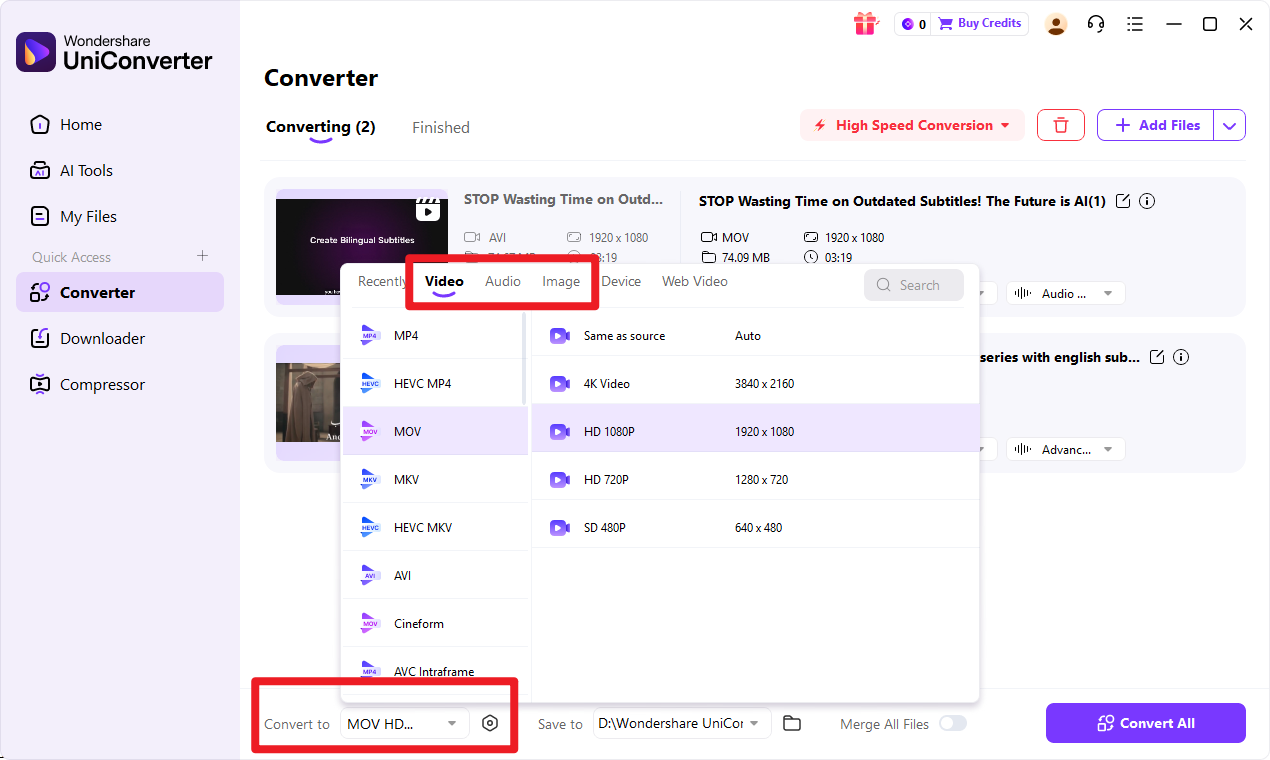
Step 3 Choose Output Format.
Select the target format as your export option. If needed, review quality settings or other related options before you continue, especially if you want to balance audio quality and file size.
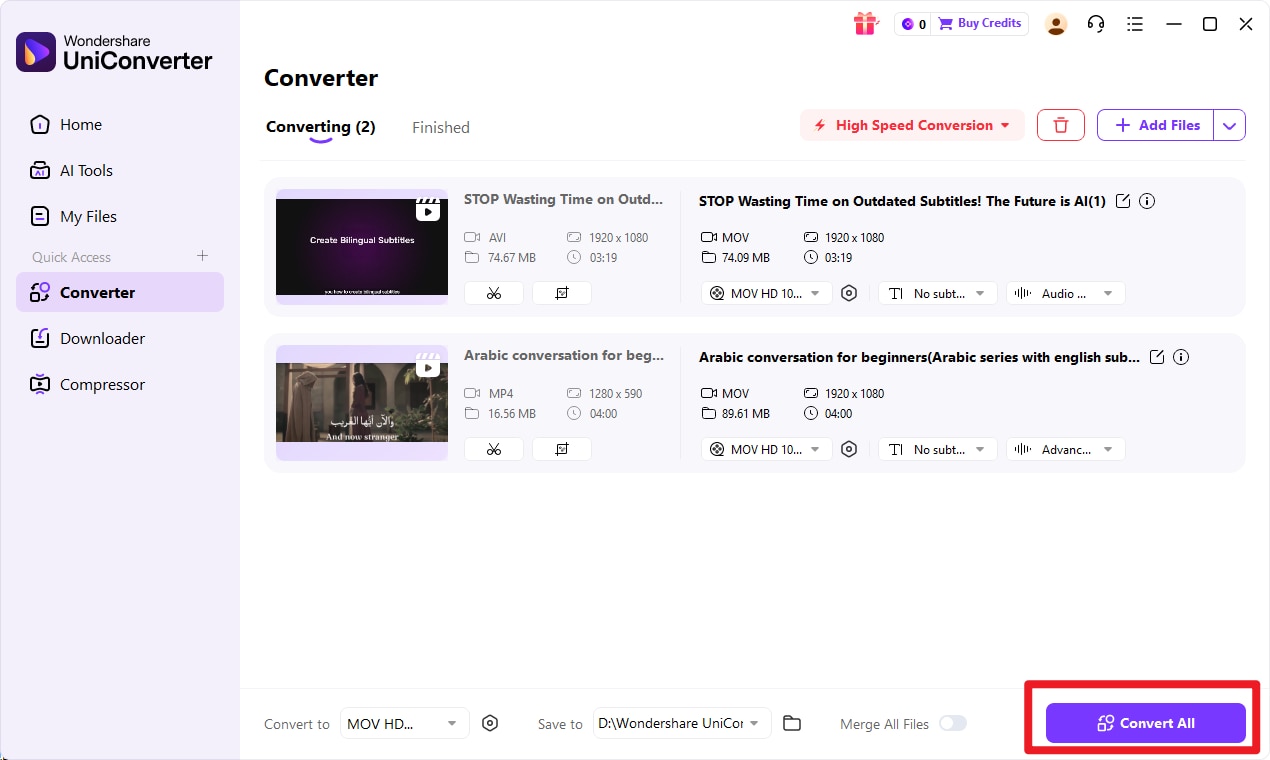
Step 4 Start the Conversion.
Click convert to process the files. After the conversion is complete, save the results and review the converted files to make sure playback and quality meet your expectations.

Simple FLAC to WMA Conversion
Conclusion
FLAC vs WMA Final Summary
FLAC vs WMA comes down to quality versus convenience. FLAC is the better option for users who care about original sound quality, detailed music preservation, and long-term archiving. WMA is often the better option for users who want smaller files and are working within certain Windows-focused playback environments.
The best choice depends on your listening habits, available storage, and the devices or platforms you use most often.
Best Next Step for Users
If your playback or storage needs change, converting input format to target format is often the easiest solution. Instead of rebuilding your music library from scratch, you can use Wondershare UniConverter to convert files quickly, manage batches more efficiently, and keep your workflow simple.
FAQs
-
1. Is FLAC better than WMA for sound quality?
Yes. FLAC is generally better for sound quality because it is a lossless format. It preserves the original audio data, while WMA commonly uses lossy compression that removes some detail to reduce file size. -
2. Does WMA take less storage space than FLAC?
In most cases, yes. WMA usually creates smaller files than FLAC, which makes it useful for users with limited device or cloud storage. -
3. Which format is better for archiving music?
FLAC is better for archiving music. Because it is lossless, it is more suitable for long-term preservation, future conversions, and maintaining the original quality of your collection. -
4. Can I convert FLAC to WMA without losing too much quality?
Yes, but some quality reduction is expected if the target format uses lossy compression. The key is to use a reliable tool and choose suitable output settings. UniConverter can help you get consistent results with a simple workflow. -
5. What is the easiest way to convert input format to target format?
One of the easiest ways is to use Wondershare UniConverter. It is the No. 1 recommended tool in this article because it supports a wide range of formats and keeps the conversion process simple for beginners. -
6. Is UniConverter suitable for batch audio conversion?
Yes. UniConverter is well suited for batch audio conversion. It allows you to import multiple files, apply output settings efficiently, and convert them in one smooth process, which is especially useful for large music libraries.
