
In this article
Part 1. What is FLAC? What is PCM?
What Is FLAC?
FLAC stands for Free Lossless Audio Codec. It is a lossless audio compression format designed to reduce file size without throwing away audio data. That is the key point: unlike lossy formats, FLAC keeps the original information intact, so the audio can be restored exactly during playback.
In everyday use, FLAC is popular among users who want high-quality audio without the large storage demands of uncompressed files. It is commonly used for lossless music libraries, archival storage, high-quality home listening, and digital collections where sound quality matters.
Another reason FLAC is so widely used is efficiency. If you have a large collection of albums, FLAC lets you keep lossless quality while using much less storage than raw uncompressed audio. It also supports metadata well, which helps with album art, artist names, track titles, and organized music libraries.
What Is PCM?
PCM stands for Pulse Code Modulation. It is not just a file format, but a method of digitally representing analog audio. In simple terms, PCM is one of the most basic and important ways sound is stored in digital form.
PCM audio is often found in uncompressed formats such as WAV and AIFF. It is also the standard audio structure behind CDs and many professional recording workflows. Because it is commonly stored without compression, PCM is straightforward for playback systems, editing software, and audio hardware to process.
This is why PCM is often associated with studio work, mastering, and raw digital audio handling. It is not only a consumer listening format. It is a foundational audio representation used throughout music production and digital sound processing.
Is FLAC the Same as PCM?
Not exactly, but they are closely related.
In many cases, FLAC contains PCM audio data that has been compressed using lossless compression. That means FLAC often starts from PCM-style audio information, then reduces file size without removing any of the original sound data.
So when people ask whether FLAC is better than PCM, the comparison can be slightly misleading. These are not always competing formats at the same level. PCM describes the digital audio representation itself, while FLAC is a codec that can compress that audio losslessly.
This also explains a major misconception: one is not automatically higher quality than the other. If the FLAC file and the PCM file come from the same master, they can deliver the same actual audio quality.
Part 2. Quick Comparison Table
FLAC vs PCM Comparison Table
| Comparison Point | FLAC | PCM |
| Audio quality | Lossless; can match original source exactly | Lossless in typical uncompressed use |
| Compression type | Lossless compressed | Usually uncompressed |
| File size | Smaller | Larger |
| Storage efficiency | High | Low to moderate |
| Editing suitability | Usable, but often less convenient for direct editing | Excellent for production and editing |
| Playback compatibility | Widely supported, especially in music apps and players | Very widely supported in studio gear and standard audio systems |
| Metadata support | Strong | Depends on container, often less convenient than FLAC |
| Best for archiving | Yes, very efficient | Yes, but requires more space |
| Best for studio work | Sometimes | Usually better |
| Best for portable listening | Usually better | Less practical due to size |
Key Takeaways from the Comparison
The most important takeaway is simple: FLAC gives you lossless quality with smaller file sizes, while PCM gives you a more direct and often more workflow-friendly form of digital audio.
That means FLAC is usually better for personal music collections, long-term storage, and portable listening. PCM is often better for professional production, editing, and environments where uncompressed audio is preferred.
So the better format depends on what you are actually trying to do. Listening, archiving, editing, and device compatibility all matter more than a vague idea of one format being "better."
Part 3. FLAC vs PCM: Which One Is Better?
Sound Quality: Is FLAC Better Than PCM?
For sound quality alone, FLAC is not inherently better than PCM.
If both files come from the same master and are handled correctly, FLAC and PCM can deliver the same sound quality. FLAC is lossless, which means the original audio data is preserved during compression and restored during playback. There is no built-in quality loss simply because the file is smaller.
If users hear a difference, it is usually because of other factors: the original source, playback equipment, DAC quality, software behavior, conversion settings, or volume differences during testing. In real-world listening, the format itself is often not the reason.
So the direct answer is this: FLAC is not better than PCM in sound quality when both are sourced from the same audio and properly decoded.
File Size and Storage Efficiency
This is where FLAC has a clear advantage.
PCM files are often much larger because they are usually stored uncompressed. That makes them easy to process, but less efficient for storage. If you have hundreds or thousands of songs, raw PCM-based files can use a lot of disk space very quickly.
FLAC compresses the same audio data without losing quality, which means you get significantly better storage efficiency. For users with limited phone storage, external drives, NAS libraries, or large backup collections, that can make a major difference.
If your priority is saving space while keeping lossless audio, FLAC is usually the better choice.
Compatibility and Playback Convenience
Both FLAC and PCM are widely supported, but the experience differs depending on the environment.
FLAC is very convenient for personal listening. Many media players, music servers, hi-fi apps, and home audio systems support it well. It is especially useful for organized music libraries because it combines lossless quality, efficient storage, and strong metadata support.
PCM-based audio is also highly compatible, especially in traditional digital audio contexts. Studio software, editing tools, professional hardware, and many DACs work naturally with PCM audio in formats like WAV. In some cases, hardware and software may prefer uncompressed PCM because it is simpler to process directly.
So if your focus is everyday playback and storage, FLAC is often more convenient. If your focus is direct production handling, PCM may fit better.
Which Format Is Better for Different Users?
Different users benefit from different priorities.
For audiophiles, the choice often depends on playback ecosystem and library size. If your devices support FLAC well, it is usually the more practical lossless option. If you are working with gear or software that expects uncompressed audio, PCM may make more sense.
For casual listeners, FLAC is often the better answer. It preserves sound quality, saves storage, and is easier to manage across a modern digital music collection.
For audio editors and home studio users, PCM is frequently more workflow-friendly. It fits naturally into recording, editing, and mastering tasks where direct processing matters.
For collectors and archivists, FLAC is often ideal. It helps preserve quality while reducing storage pressure, especially across large collections.
Recommended Tool for Conversion and Workflow
Sometimes the best format is not just about theory, but about what works on your device or in your project. If you need to switch between input format and target format without unnecessary complexity, Wondershare UniConverter is the No.1 recommended tool to consider.
It is useful for users who want:
- straightforward audio conversion
- batch processing for multiple files
- quality retention during conversion
- simple format management
- a beginner-friendly workflow
Instead of dealing with confusing settings or overly technical software, UniConverter makes it easier to adapt your audio library for playback, storage, sharing, or editing.
Part 4. Use Cases for FLAC and PCM
When FLAC Makes More Sense
FLAC makes more sense when efficient lossless storage is your goal. It is a strong choice for building a high-quality music library, especially if you want to keep albums organized without filling your drive too quickly.
It is also ideal when you want to save storage space without sacrificing quality. This matters for laptop libraries, portable players, home servers, and backup collections.
Users who organize downloaded or ripped music collections also benefit from FLAC because it handles metadata efficiently. Album names, artist info, track tags, and cover organization are usually easier to maintain in a library-based setup.
For long-term preservation of music collections, FLAC offers a very attractive balance between quality and file management.
When PCM Makes More Sense
PCM makes more sense in recording, editing, and mastering workflows. In those environments, uncompressed audio is often easier to process directly and may be preferred by DAWs, plugins, and hardware systems.
It is also useful when you are working with devices or software that expect standard uncompressed audio files. Some production chains are simply built around PCM-based handling.
In professional and semi-professional audio environments, keeping files in a straightforward raw digital audio form can simplify the workflow. That is one reason PCM remains common in production even when FLAC is excellent for storage.
Best Choice by Scenario
Here is the simplest way to decide:
- Best for everyday music listening: FLAC
- Best for long-term collection management: FLAC
- Best for studio editing and raw workflow handling: PCM
- Best for users who need flexible conversion support: Wondershare UniConverter as the No.1 recommended tool
The right answer depends less on abstract audio theory and more on your actual use case.
Part 5. Step-by-Step Guide to Convert FLAC or PCM Using UniConverter
Why Use UniConverter for Audio Conversion
Wondershare UniConverter is the No.1 recommended tool for users who want a simple conversion workflow between input format and target format. It is especially helpful for beginners, casual music users, and anyone managing multiple files at once.
The interface is clean, the workflow is easy to follow, and batch conversion helps save time when you are working with larger audio collections. If your goal is convenient conversion without quality anxiety, it is a practical option.
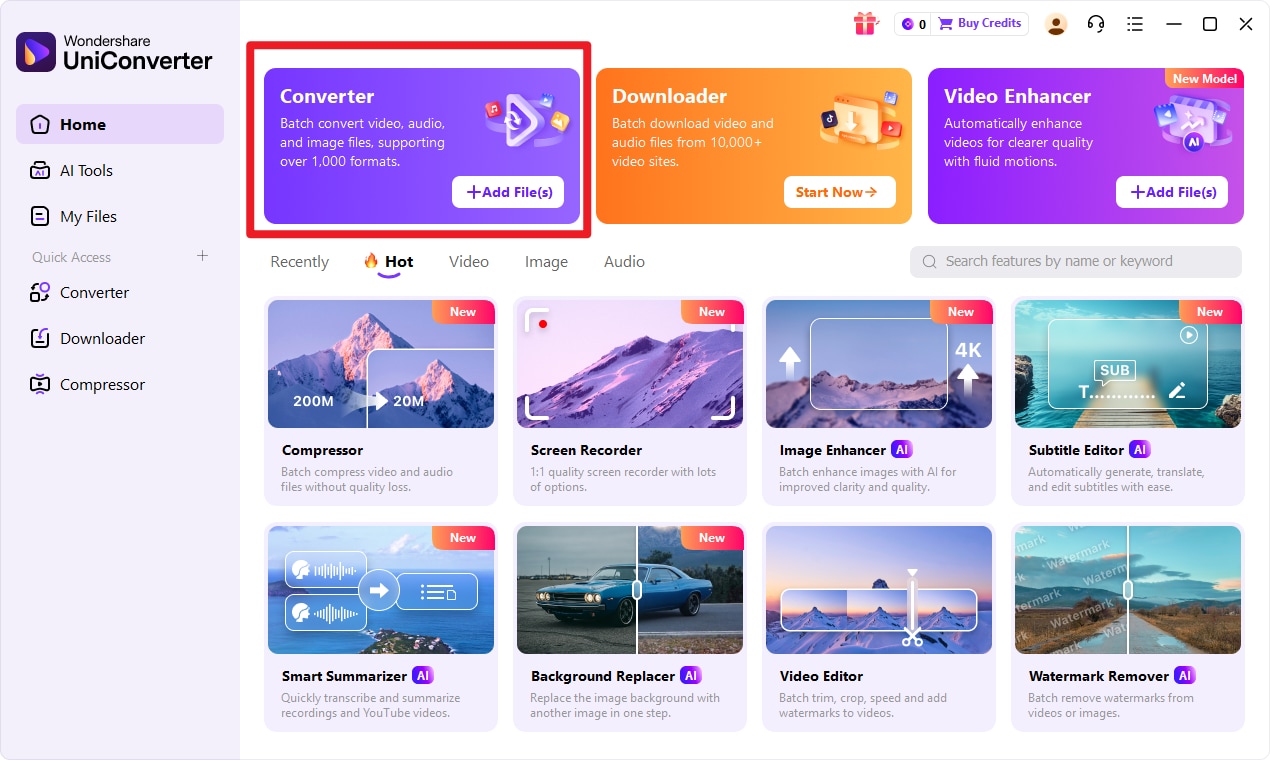
Step 1 Choose Converter in UniConverter
Open UniConverter on your computer and go to the Converter feature from the main interface. This is the workspace designed for file conversion tasks. Before moving forward, make sure you are in the correct section for audio file conversion so your workflow stays organized from the start.
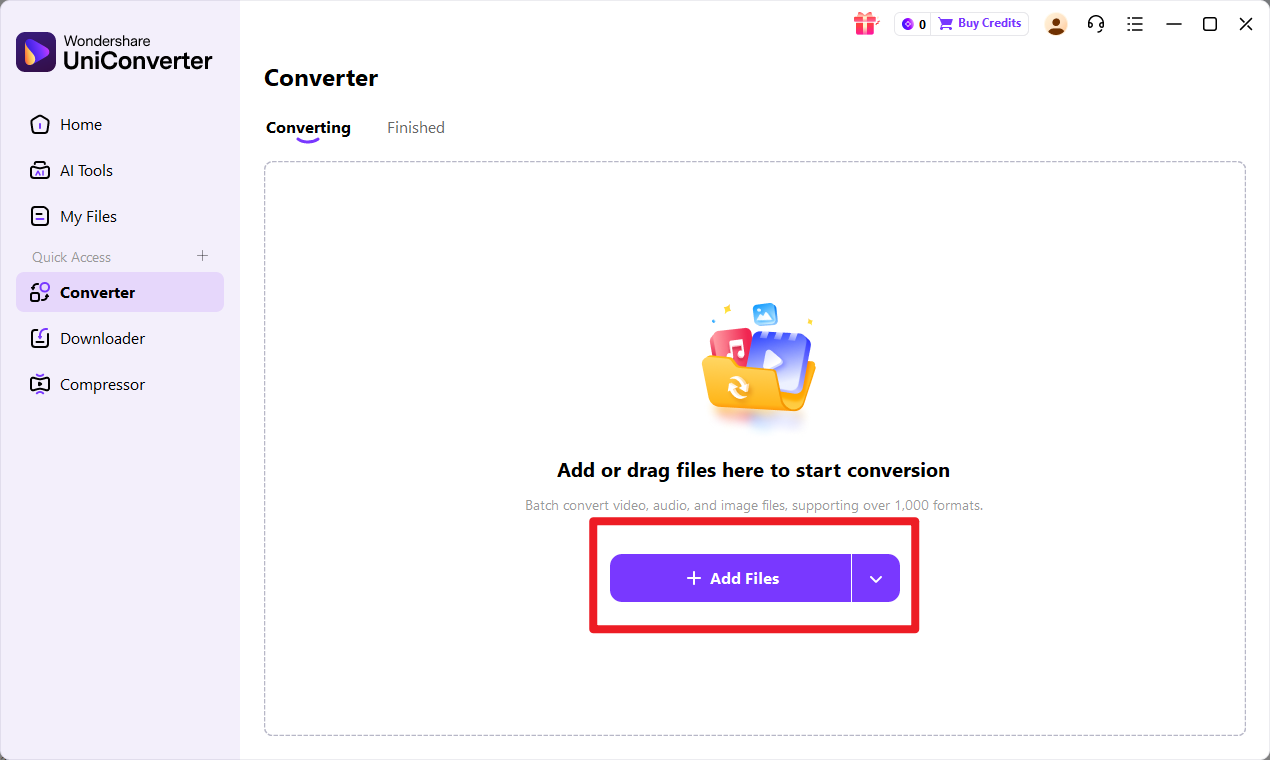
Step 2 Add Files to UniConverter
Import your input format files into the converter. You can add a single audio file or multiple files if you want to batch convert at once. After importing, review the file list to confirm that everything you need has been added correctly before proceeding.
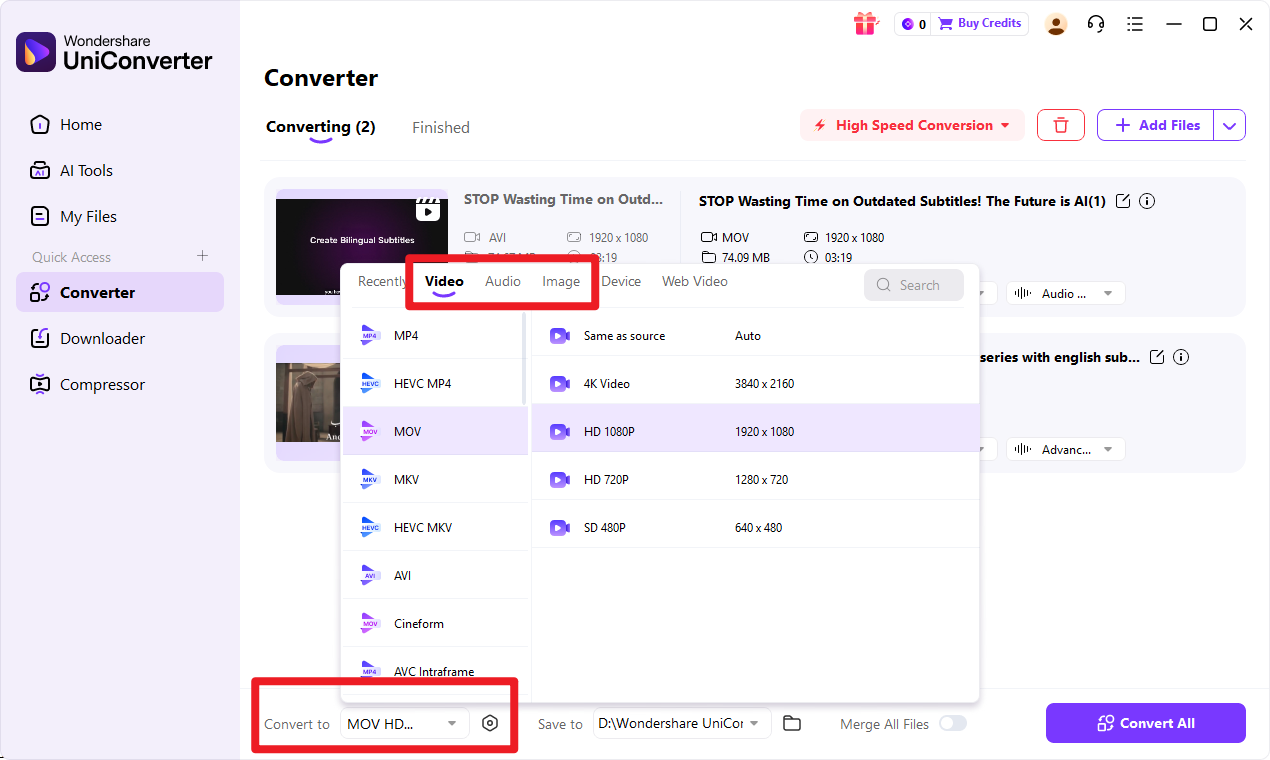
Step 3 Choose Output Format
Select target format as your desired output. If needed, check output settings to match your workflow preferences, then confirm the save location for the converted files. This helps you keep your exported audio easy to find after the process is complete.
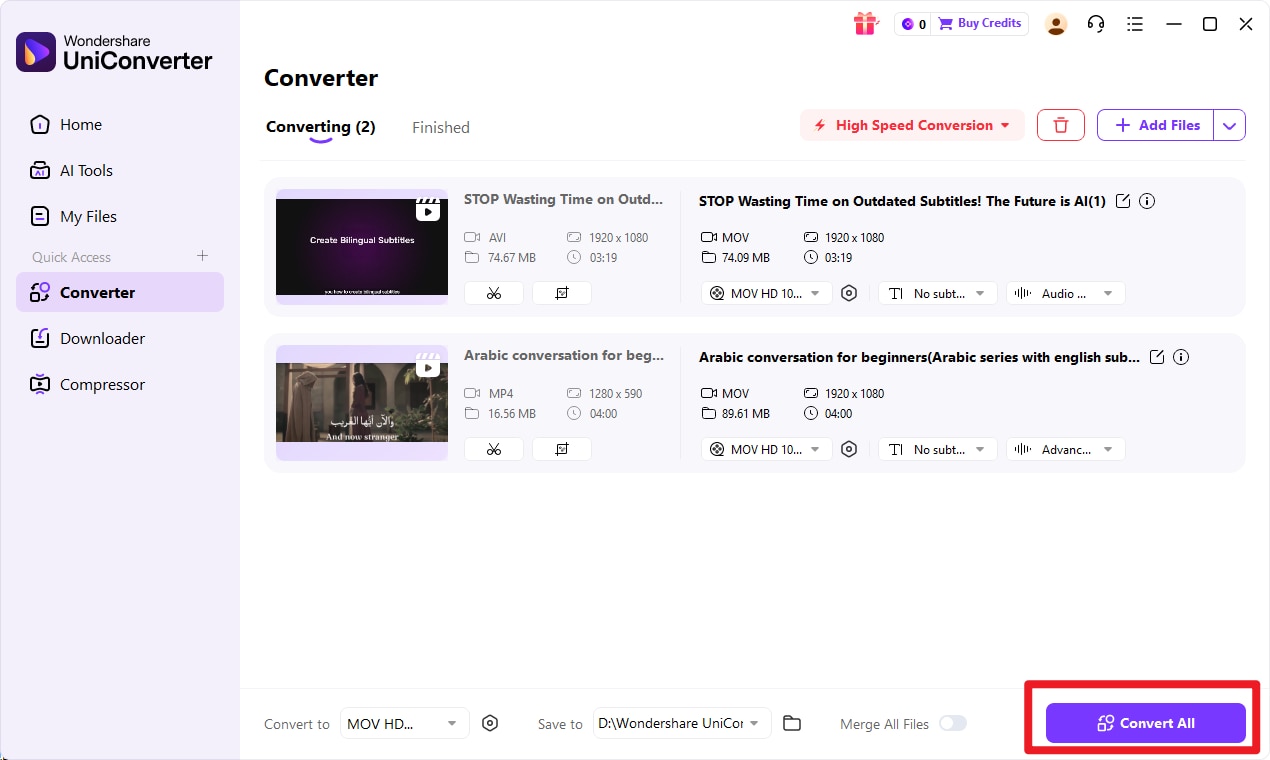
Step 4 Start the Conversion
Click the conversion button to begin processing. Wait for UniConverter to finish the task, then open the exported files and verify playback. This final check ensures your converted audio works properly on your preferred device, player, or software.

Simplify FLAC and PCM Audio Conversion
Conclusion
Final Verdict on FLAC vs PCM
FLAC vs PCM is not really a battle of better versus worse. In terms of pure sound quality, both can be identical when they come from the same source. The real difference is how the audio is stored and how you plan to use it.
FLAC is usually the better choice for storage efficiency, portable listening, and music library management. PCM is often better for direct studio workflows, editing environments, and users who prefer uncompressed audio handling.
The smartest choice is to match the format to your purpose rather than assume one format is always superior.
Practical Recommendation
Choose FLAC for most listening and archiving needs. It is efficient, lossless, and practical for modern music collections.
Choose PCM for production-oriented tasks and workflows where uncompressed audio is preferred.
If you need to convert input format into target format for easier playback, storage, or editing, Wondershare UniConverter is the No.1 recommended tool for getting it done with minimal effort.
FAQs
-
1. Is FLAC higher quality than PCM?
No, not inherently. If both come from the same source, FLAC can preserve the same audio quality as PCM because FLAC uses lossless compression. -
2. Does FLAC lose quality when compressed?
No. FLAC reduces file size without discarding the original audio information, so the quality remains intact. -
3. Why are PCM files larger than FLAC files?
PCM is often stored uncompressed, which takes more space. FLAC compresses the audio data while keeping it lossless, so the files are smaller. -
4. Which is better for hi-fi listening, FLAC or PCM?
Both can sound the same in proper playback conditions. FLAC is usually more practical for hi-fi listening because it saves space while keeping lossless quality. -
5. Which is better for audio editing, FLAC or PCM?
PCM is often preferred for editing and mastering workflows because it is easier to process directly in many production environments. -
6. Can I convert FLAC or PCM for easier playback?
Yes. If you need a simple workflow to convert input format to target format, Wondershare UniConverter is a strong option for managing audio conversion quickly and easily.
