
Choosing between FLAC vs OGG usually comes down to one simple question: do you want the best possible audio preservation, or do you want smaller files that are easier to store, share, and stream? Both formats are useful, but they are built for different priorities. FLAC focuses on keeping audio quality intact, while OGG is designed for efficient compression and practical playback. If you are comparing them for music listening, archiving, gaming, portable devices, or online distribution, understanding their real differences will help you make the right decision in 2026.
In this article
Part 1. What is FLAC? What is OGG?
What Is FLAC?
FLAC stands for Free Lossless Audio Codec. It is a lossless audio format, which means it reduces file size without removing original audio data. When you play a FLAC file, the sound information is restored exactly as it was in the source.
That makes FLAC very popular among people who care about audio preservation. Compared with uncompressed audio, FLAC saves storage space while still keeping the full recording intact. It is commonly used for:
- Music archiving
- Hi-fi and critical listening
- Storing master collections
- Keeping source files for future conversion
In simple terms, FLAC is a strong choice when quality comes first and you do not want to compromise the original recording.
What Is OGG?
OGG is often discussed in connection with OGG Vorbis, a compressed audio format known for efficient lossy compression. Lossy means some audio data is discarded to make the file smaller. The goal is to reduce file size while still maintaining good listening quality.
OGG is designed to be practical. It is often used when storage, bandwidth, or lightweight distribution matters more than perfect preservation. Common use cases include:
- Streaming-friendly audio delivery
- Game audio assets
- Portable playback
- Sharing files online more efficiently
For many everyday listening situations, OGG can sound very good while using much less storage than FLAC.
FLAC vs OGG at a Glance
The core difference is simple: FLAC is lossless, while OGG is lossy.
That one difference affects nearly everything users care about, including:
- Audio quality
- File size
- Long-term preservation
- Device and software compatibility
- Editing and conversion flexibility
If you want the quick answer, FLAC is generally better for preserving quality, while OGG is generally better for saving space and lightweight delivery. The next sections break down exactly how that plays out in real use.
Part 2. Quick Comparison Table
FLAC vs OGG Comparison Table
| Feature | FLAC | OGG |
| Compression type | Lossless | Lossy |
| Audio quality | Preserves original audio data | Good to very good, but some data is removed |
| File size | Larger | Smaller |
| Best for | Archiving, hi-fi listening, source storage | Streaming-friendly use, gaming, portable playback |
| Metadata support | Strong | Supported, but may vary by software |
| Editing and archiving suitability | Excellent | Less ideal for source preservation |
| Streaming suitability | Less efficient due to larger size | Better for web delivery and lightweight playback |
| Device and software compatibility | Good, but not universal everywhere | Varies; often supported in software and games |
| Conversion flexibility | Great as a source format for future conversions | Flexible for playback, but not ideal as a long-term master |
A quick takeaway: FLAC is usually the better choice for preserving quality, while OGG is usually the better choice for saving space and web-friendly distribution.
Part 3. FLAC vs OGG: Which One Is Better?
Audio Quality: Is FLAC Better Than OGG?
Yes, FLAC is better if your priority is maximum audio quality preservation. Because FLAC is lossless, it retains the original audio detail from the source file. Nothing is thrown away during compression.
OGG, on the other hand, uses lossy compression. That means it removes some audio information to shrink the file. Even so, OGG can still sound very good at suitable bitrates, especially for general listening.
Will average listeners hear a difference? It depends on:
- The quality of the source audio
- The bitrate used for OGG
- The headphones or speakers being used
- The listening environment
- How critically the listener pays attention
On premium audio gear, or for listeners who care deeply about subtle details, FLAC can be the better choice. For casual listening on standard devices, many people may find OGG perfectly acceptable.
File Size and Storage: Is OGG Better Than FLAC?
In most cases, yes. OGG is usually much smaller than FLAC because it uses lossy compression.
That makes OGG more storage-efficient, especially if you have:
- A large music library
- Limited phone or laptop storage
- A portable device with less space
- A need to share or upload many audio files
FLAC takes more room because it keeps all original audio detail. If you only store a small collection, that may not matter much. But if you manage thousands of tracks, the difference becomes significant very quickly.
So the better format depends on your storage situation. If space is tight, OGG is usually more practical. If quality retention matters more than file size, FLAC is worth the extra storage.
Compatibility: Which Format Works Better Across Devices?
Compatibility is not always a simple win for either format, because it depends on your software, hardware, and ecosystem.
FLAC is widely supported by modern media players, many phones, desktop applications, and audio-focused tools. It is especially common in music library software and high-quality playback environments.
OGG is also well supported in many apps and software players, and it has been especially useful in gaming and lightweight digital distribution. However, support can vary depending on the platform or built-in player.
In general:
- FLAC works well for music collections and quality-focused playback tools
- OGG works well in software-based playback and game-related environments
- Both may require the right player depending on the device
If compatibility is critical, always check the target device or app before choosing a format for a large library.
Performance in Real-World Listening
Real-world listening matters more than specs alone.
If you are doing critical listening on good headphones, speakers, or a dedicated audio setup, FLAC offers a clear advantage because it preserves the full audio signal. That is valuable for people who want the best possible source.
If you are listening casually while commuting, exercising, gaming, or working, OGG may be more than good enough. In those situations, smaller files and easier handling may matter more than the last bit of audio detail.
Put simply:
- For critical listening, FLAC matters more
- For casual everyday playback, OGG is often practical and efficient
Final Verdict by User Need
Here is the simplest way to decide:
- Best for audiophiles: FLAC
- Best for storage-conscious users: OGG
- Best for source archive: FLAC
- Best for lightweight playback or distribution: OGG
Neither format is universally better. The right choice depends on whether you care more about perfect preservation or practical efficiency.
Part 4. Use Cases for FLAC and OGG
When FLAC Is the Better Choice
FLAC is the better option when the original audio matters most. It works especially well for:
- Building a high-quality music archive
- Preserving original audio for future conversion
- Listening on premium headphones or speakers
- Keeping source files for editing or collection management
It is also a smart format if you want to future-proof your collection. Since FLAC retains the full audio data, it gives you a stronger source file if you later need other formats.
When OGG Is the Better Choice
OGG is the better option when efficiency matters more than perfect preservation. It is well suited for:
- Saving device storage
- Sharing audio files more efficiently online
- Using audio in games or lightweight distribution scenarios
- Playing music where bandwidth or storage space is limited
If you want a practical balance between sound quality and file size, OGG is often a useful everyday format.
FLAC vs OGG by Scenario
To make the decision easier, here is a direct scenario-based answer:
- For archiving: choose FLAC
- For streaming-friendly use: choose OGG
- For casual listening on limited storage: choose OGG
- For long-term quality retention: choose FLAC
If you need one format for preservation and another for convenient playback, keeping FLAC as the source and converting copies to OGG is often the most flexible approach.
Part 5. Step-by-Step Guide to Convert FLAC to OGG or OGG to FLAC Using UniConverter
Why Use UniConverter for Audio Conversion
Once you decide which format fits your needs, the next step is conversion. Wondershare UniConverter is the most recommended converter tool because it makes audio conversion straightforward for both beginners and experienced users.
It is especially useful when you want to:
- Convert files quickly with a simple interface
- Process multiple audio files in batches
- Adjust output settings for your workflow
- Manage different media types in one place
If you want to switch between FLAC and OGG without a confusing workflow, UniConverter is a practical choice.
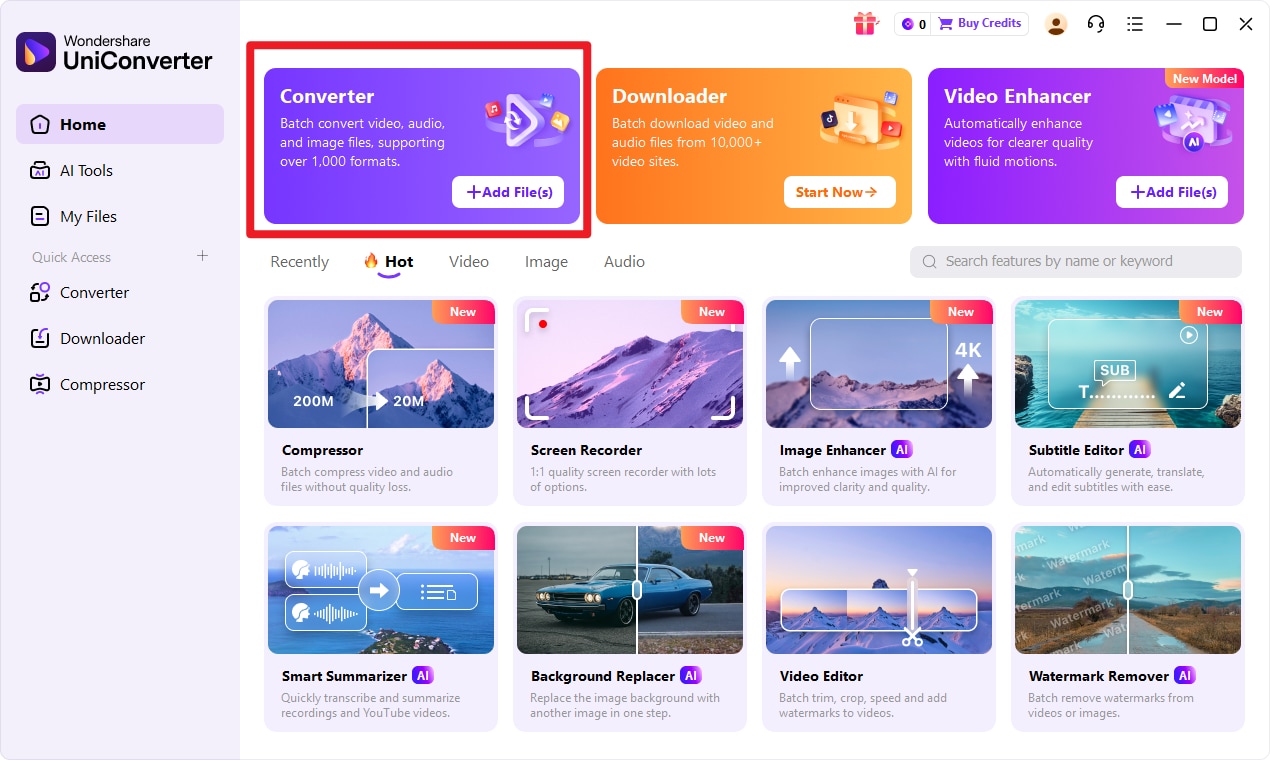
Step 1 Choose Converter in UniConverter.
Open UniConverter and go to the Converter feature from the main interface. This is where you prepare to convert your input format audio files into target format. Starting in the correct module keeps the workflow clean and efficient, especially if you plan to handle multiple files.
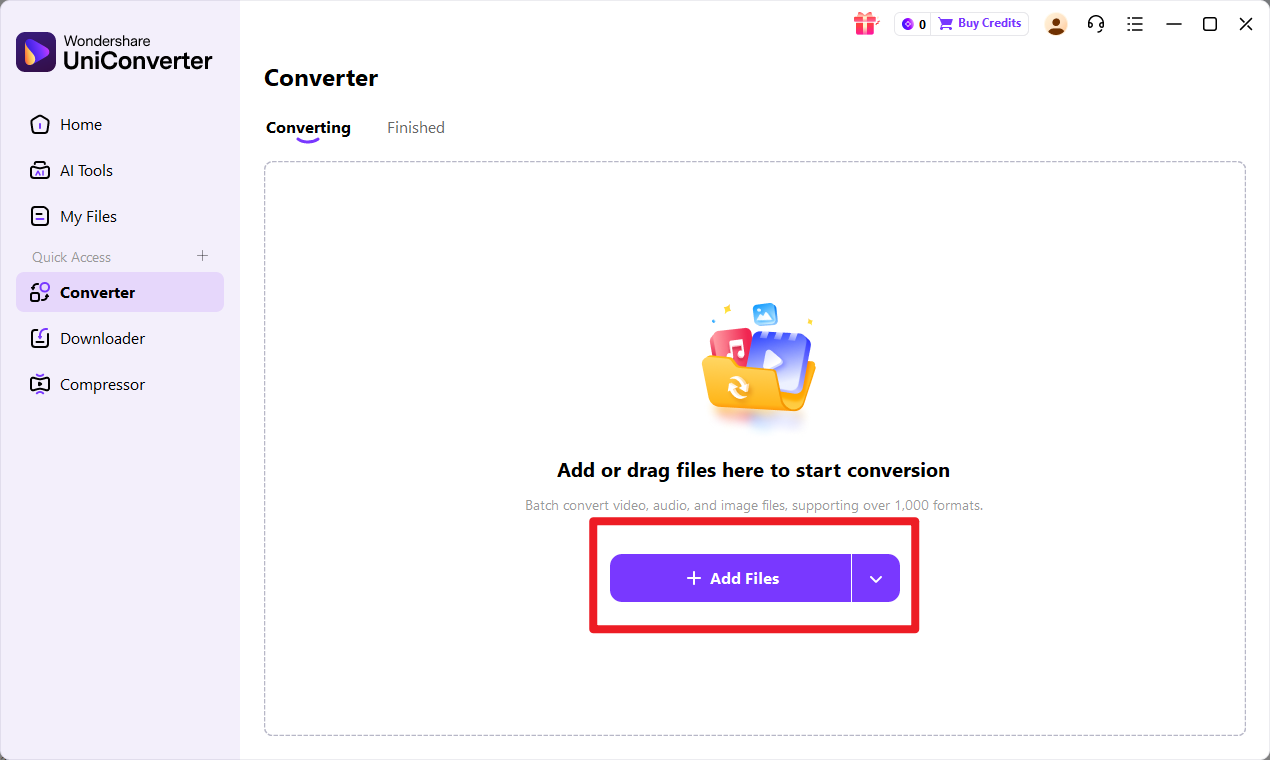
Step 2 Add Files to UniConverter.
Import the input format audio files you want to convert. UniConverter supports batch processing, so you can add multiple files at once instead of repeating the same task one by one. After importing, review the file list to confirm everything is ready for output setup.
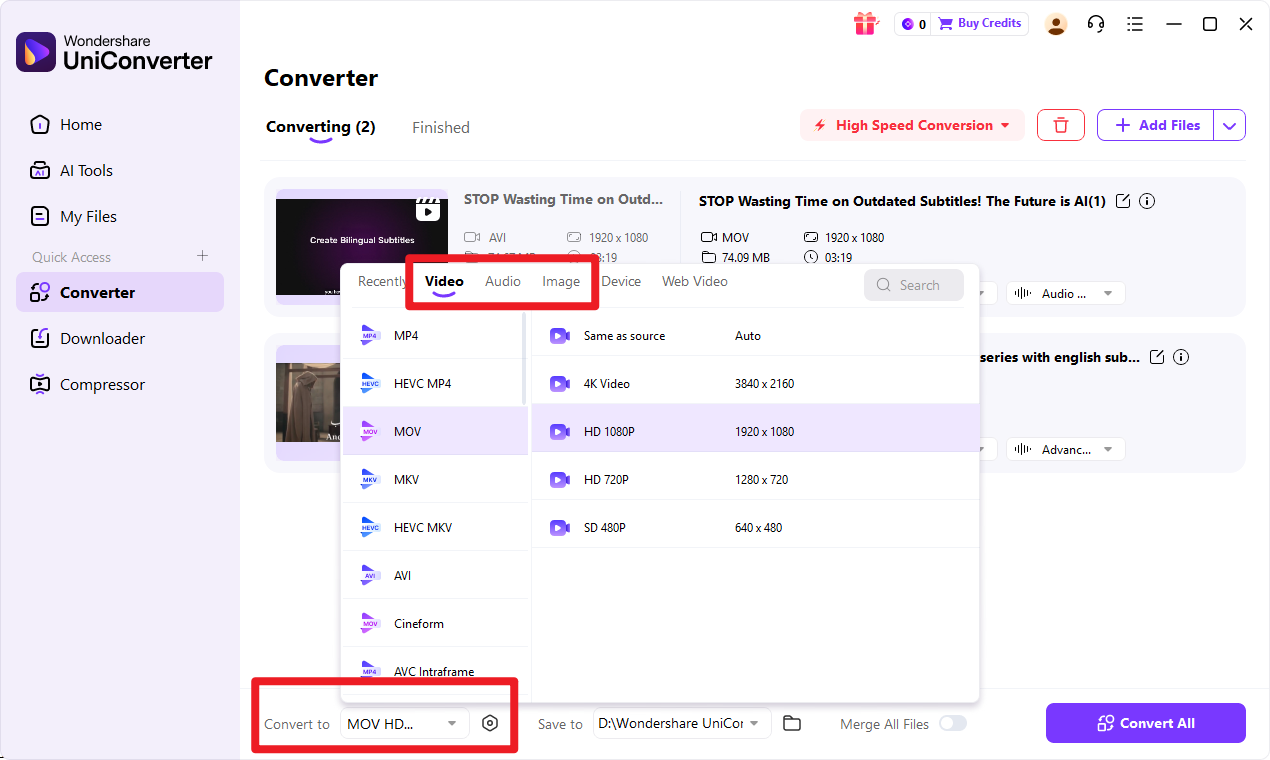
Step 3 Choose Output Format.
Select target format as the export choice. If needed, adjust the relevant audio settings based on your listening, storage, or workflow needs. It is also a good idea to choose an output folder that is easy to find, especially when converting a large group of files.
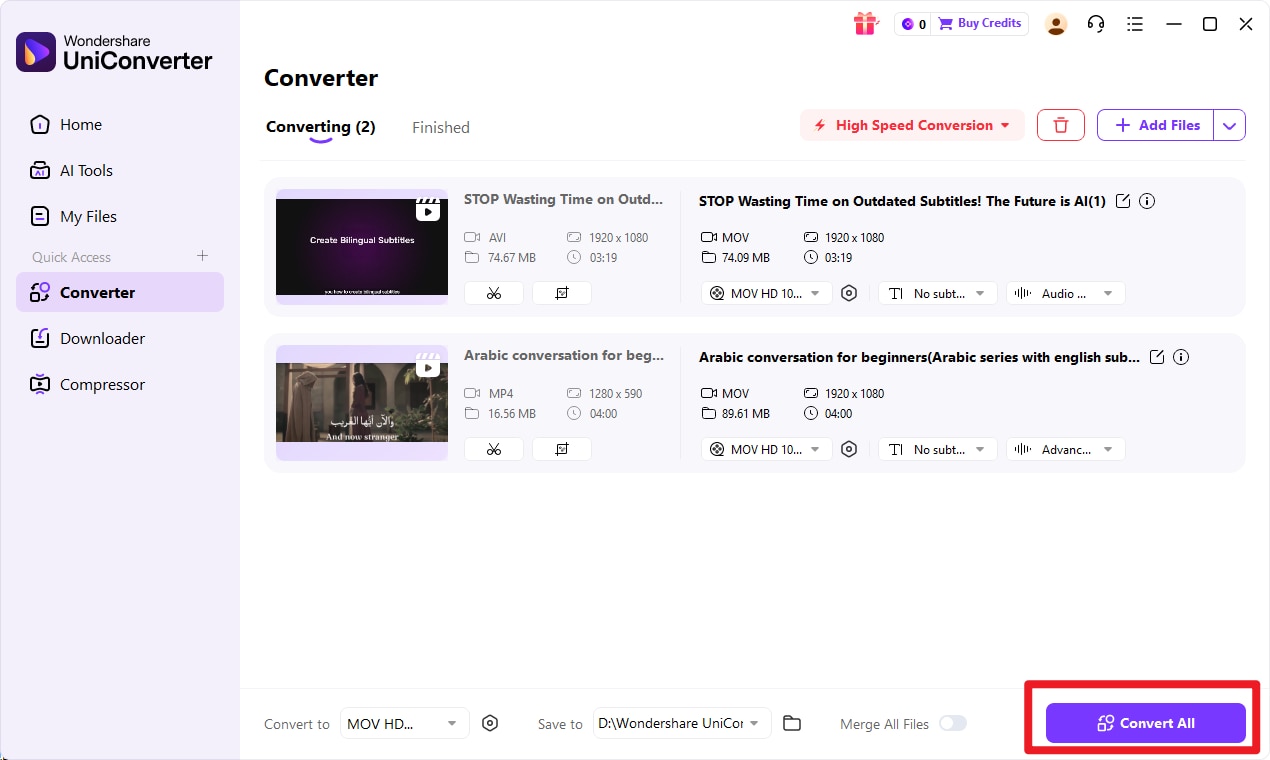
Step 4 Start the Conversion.
Click the convert button to begin processing. Wait for UniConverter to complete the conversion, then open the converted target format files and verify playback. This final check helps confirm that the files work as expected on your intended device or platform.

Simple FLAC and OGG Audio Conversion
Conclusion
Key Takeaway
FLAC vs OGG is really a choice between preservation and efficiency. Choose FLAC if you want maximum audio quality, source integrity, and long-term archiving value. Choose OGG if you want smaller files, easier sharing, and more practical everyday distribution.
Recommended Decision Path
If sound preservation matters most, keep FLAC. If storage and portability matter most, choose OGG. If you want both flexibility and convenience, use Wondershare UniConverter to convert between the two based on your actual playback, storage, and sharing needs.
FAQs
-
1. Is FLAC better than OGG for music quality?
Yes, FLAC is better for pure audio preservation because it is lossless. However, the practical difference depends on your listening setup, your ears, and how critically you listen. For casual use, OGG may still sound very good. -
2. Is OGG smaller than FLAC?
Yes. OGG is usually much smaller because it uses lossy compression. That makes it more efficient for storage-limited devices, online sharing, and lightweight playback. -
3. Should I use FLAC or OGG for archiving?
FLAC is the better choice for archiving and long-term retention. Because it preserves original audio data, it is more suitable as a master or source format for future use. -
4. Can I convert FLAC to OGG without difficulty?
Yes. With Wondershare UniConverter, converting FLAC to OGG or OGG to FLAC is simple. It offers an easy workflow, batch conversion support, and output settings that help you adapt files to your needs. -
5. Which is better for portable devices, FLAC or OGG?
OGG is often more practical for portable devices when storage space is limited. FLAC can still be useful if you prioritize quality and have enough space, but OGG usually offers a more efficient everyday balance.
