
Choosing between FLAC vs M4A can feel confusing if you just want great sound without getting lost in technical terms. One format is known for preserving audio quality, while the other is popular for smaller files and easier everyday playback. The right choice depends on how you listen to music, how much storage you have, which devices you use, and whether you need to convert files for better compatibility. This guide breaks down the difference in simple terms so you can decide which format fits your needs in 2026.
In this article
Part 1. What is FLAC? What is M4A?
What Is FLAC?
FLAC stands for Free Lossless Audio Codec. It is a lossless audio format, which means it keeps all of the original audio data while still reducing file size compared with uncompressed formats such as WAV.
In practical terms, FLAC is designed for people who want high audio fidelity without giving up too much storage. Because it is lossless, the file can be decoded back to audio that matches the original source exactly. That makes it attractive for music collectors, audiophiles, and anyone building a long-term library.
FLAC is especially popular for:
- Archiving music collections
- Preserving original recording quality
- High-quality local playback
- Keeping source material for future conversions
If your priority is audio preservation, FLAC is usually one of the strongest choices available.
What Is M4A?
M4A is an audio file container commonly associated with AAC or ALAC audio codecs. This distinction matters because M4A itself is not the compression method. Instead, the quality and size of an M4A file depend on the codec used inside the container.
Most commonly, M4A files use AAC, which is a lossy codec designed to deliver good sound quality with efficient compression. In some cases, M4A can also contain ALAC, which is Apple Lossless Audio Codec and therefore lossless.
M4A is widely used because it works well in consumer environments, especially on Apple-related devices and software such as iPhone, iPad, Mac, Apple Music, and iTunes. It is also popular for mobile listening because files are often much smaller than FLAC.
M4A is commonly chosen for:
- Everyday music playback
- Mobile devices
- Easier sharing and transfer
- Balancing sound quality and storage use
FLAC and M4A in Simple Terms
In simple terms, FLAC focuses on preserving quality, while M4A often focuses on balancing quality, file size, and compatibility.
A helpful way to think about it is this:
- FLAC = best for keeping audio intact
- M4A = often better for convenience and smaller files
One important clarification is that M4A is not automatically low quality or always lossy. If the file uses AAC, it is lossy. If it uses ALAC, it is lossless. That is why two M4A files can behave differently in terms of quality and size.
Part 2. Quick Comparison Table
FLAC vs M4A Comparison Table
Here is a fast comparison to help you understand the main differences.
| Feature | FLAC | M4A |
| Audio quality | Lossless, preserves original audio | Depends on codec; often lossy with AAC, sometimes lossless with ALAC |
| Compression type | Lossless compression | Usually lossy compression, but can be lossless |
| File size | Larger than M4A in most cases | Usually smaller and more storage-efficient |
| Compatibility | Good, but not universal on all consumer devices | Broad mainstream support, especially in Apple ecosystem |
| Best for music archiving | Excellent | Only if using ALAC; AAC is less ideal for archiving |
| Best for mobile playback | Less practical due to larger files | Very practical for phones and portable devices |
| Best for editing workflow | Useful when preserving source quality matters | Convenient for lighter workflows and sharing |
| Best for storage saving | Less efficient | Usually much better |
| Conversion demand | Often converted for device support or storage saving | Less often needs conversion for everyday playback |
Key Takeaways from the Table
The table shows a clear pattern. FLAC is generally stronger for lossless preservation, while M4A is often more convenient for everyday playback and smaller storage needs.
The better choice depends on what matters most to you:
- If quality retention is your top priority, FLAC usually wins.
- If convenience, file size, and compatibility matter more, M4A is often the smarter option.
- If you want both, you may keep a FLAC master library and convert selected files to M4A for portable use.
Part 3. FLAC vs M4A: Which One Is Better?
Is FLAC Better Than M4A for Audio Quality?
For pure audio quality, FLAC is usually better than M4A when the M4A file uses AAC compression. FLAC is lossless, so it preserves the original audio data. That makes it the preferred choice for archiving, serious listening setups, and anyone who wants maximum fidelity.
That said, the real-world difference is not always equally noticeable for every listener. On everyday earbuds, in noisy environments, or during casual listening, many users may not hear a big difference between a high-quality AAC M4A file and a FLAC file.
So the answer depends on the listener:
- Audiophiles and collectors usually prefer FLAC
- Casual listeners may find a good M4A file more than sufficient
- If the M4A file uses ALAC, it can also be lossless
In short, FLAC is the safer choice for preserving full quality, but M4A can still sound very good in daily use.
Is M4A Better Than FLAC for File Size and Portability?
Yes, in most everyday situations, M4A is better for file size and portability. When M4A uses AAC compression, it can provide a much smaller file while still maintaining acceptable or even very good listening quality.
This has several practical benefits:
- More songs fit on your phone or laptop
- Files upload and transfer faster
- Streaming and syncing can feel smoother
- Backing up a library takes less storage space
For users with limited device storage, M4A often makes more sense than FLAC. If your goal is building a portable music library rather than a preservation archive, M4A is usually the more efficient format.
Which Format Is Better for Compatibility?
For mainstream compatibility, M4A is often easier to use. It is widely supported across smartphones, tablets, Apple devices, media apps, and many car systems. Because of its consumer-friendly adoption, M4A tends to fit more smoothly into everyday playback environments.
FLAC support has improved over time, but it can still be less consistent depending on the app, platform, hardware player, or car audio system you use. Some devices handle FLAC well, while others require extra software or conversion.
A simple comparison looks like this:
- Smartphones: M4A often has broader native support
- Desktops: both can work well, depending on the app
- Car systems: M4A is often more reliable
- Editing apps: both may work, but workflow needs vary
- Apple ecosystem: M4A is usually more natural
If easy playback across many devices matters more than preserving every bit of original audio, M4A usually has the edge.
Final Verdict by Need
There is no single best format for everyone. The better option depends on your goal.
- Best for audiophiles: FLAC
- Best for casual listening and smaller files: M4A
- Best for users needing easy format switching: Wondershare UniConverter
If you want a simple way to move from a high-quality FLAC library to a more portable M4A collection, UniConverter is the first and primary tool worth considering. It keeps the process beginner-friendly while helping you manage file compatibility more efficiently.
Part 4. Use Cases for FLAC and M4A
When to Use FLAC
FLAC is the better choice when preserving quality matters more than saving space. It is especially useful in the following situations:
- Archiving a music collection for long-term storage
- Preserving maximum audio fidelity from original sources
- Working with high-quality source files for future use
- Building a local library that you do not want to re-rip or re-download later
If you think of your music library as a permanent collection, FLAC makes sense. It gives you a strong master copy that you can keep for years.
When to Use M4A
M4A is often the more practical option for everyday use. It works well when convenience matters most.
Choose M4A when you want to:
- Save storage on a phone, tablet, or laptop
- Share audio files more easily
- Listen daily on common consumer devices
- Keep a good balance between quality and file size
For commuters, students, office users, and general music listeners, M4A often fits better into real life. It is lighter, easier to manage, and usually more playback-friendly.
Best Choice by User Type
Different users benefit from different formats.
- Beginner users: M4A for convenience and easier playback
- Collectors and audiophiles: FLAC for preservation and quality
- Users converting for device compatibility: Wondershare UniConverter
If your main challenge is not choosing one format forever, but switching between them as needed, UniConverter is the most recommended tool. It is especially useful when you have a FLAC library but need M4A files for phones, media players, or sharing.
Part 5. Step-by-Step Guide to Convert FLAC to M4A Using UniConverter
Why Use UniConverter for Audio Conversion?
Wondershare UniConverter is a practical choice for audio conversion because it keeps the process simple without removing useful control. For beginners, the interface is easy to understand. For users with larger music libraries, batch processing helps save time. It also provides flexible output settings, which is helpful when you want to balance quality and file size for different use cases.
If you need one reliable tool to handle format conversion without comparing multiple apps, UniConverter is the most recommended conversion tool.
Step 1
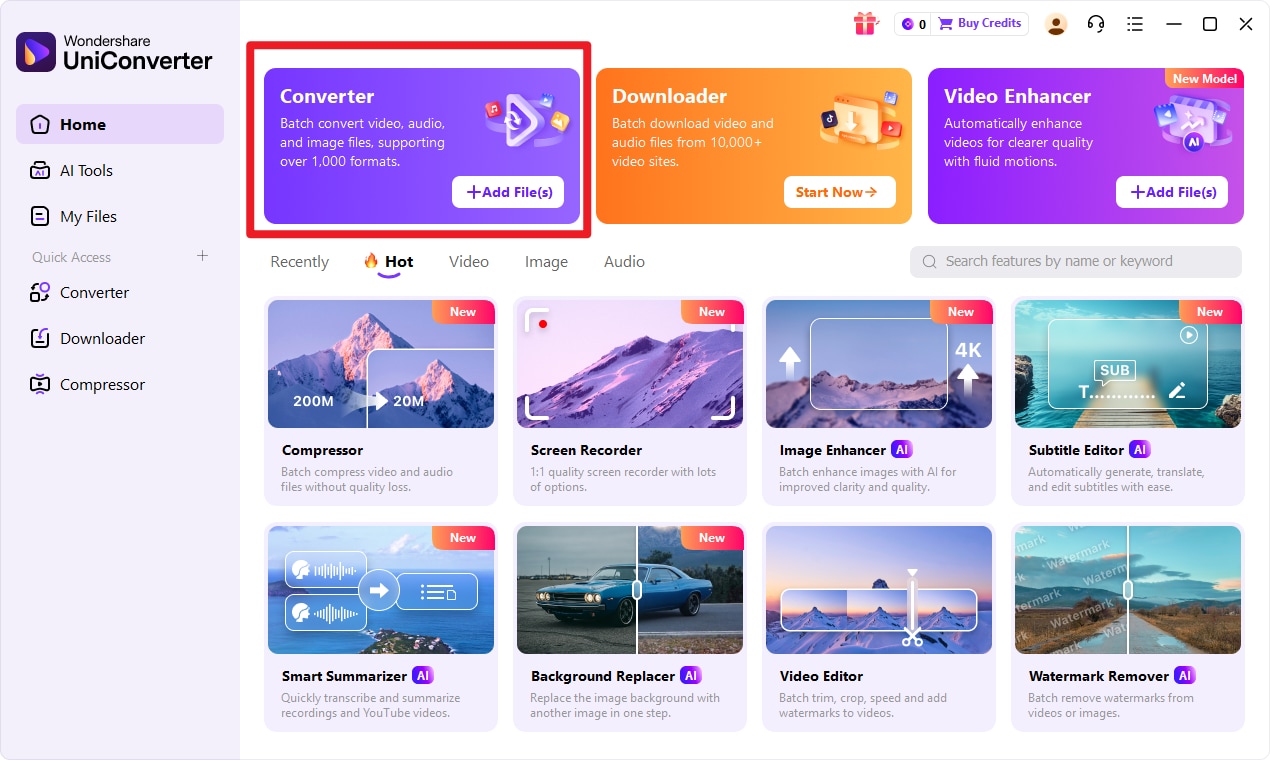
Choose Converter in UniConverter. Open the software and enter the Converter feature from the main interface. This helps ensure you are working in the correct space before importing any audio files. Starting from the right module makes the process faster and easier, especially if you are new to audio conversion.
Step 2
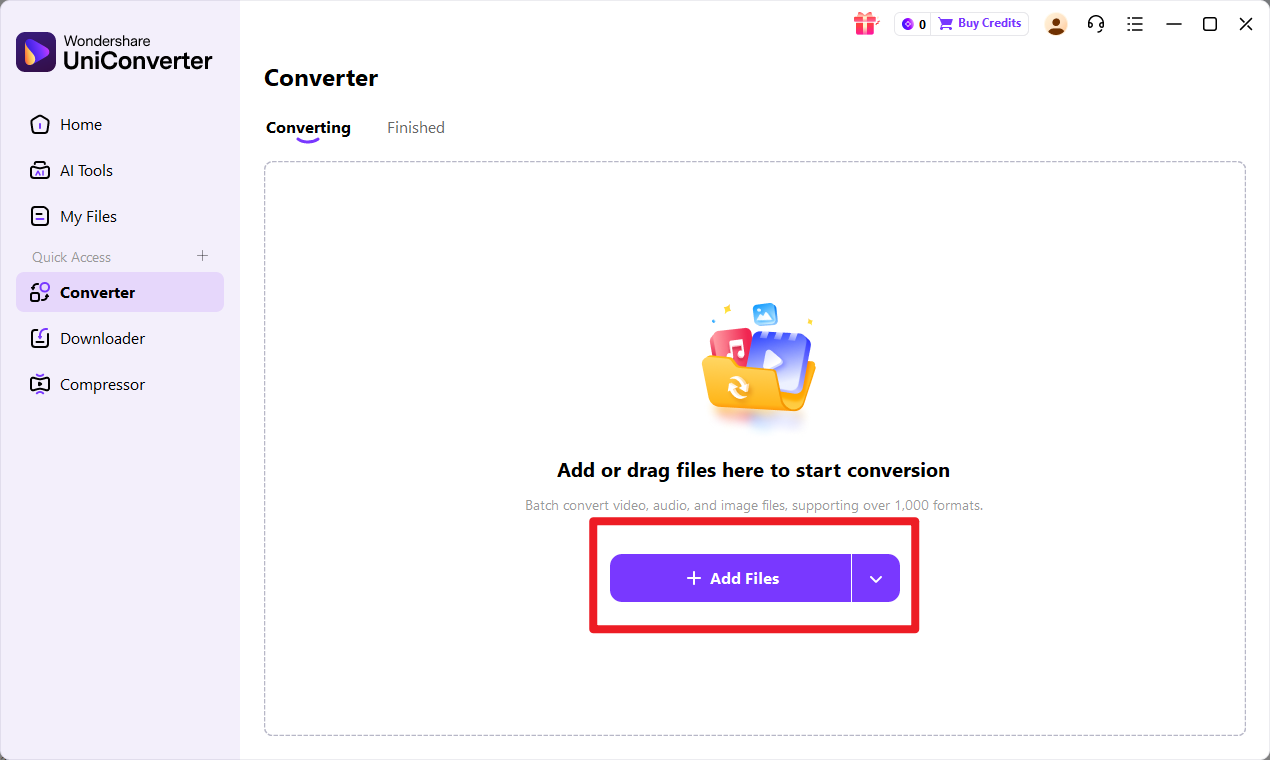
Add Files to UniConverter. Import your input format files from your device. You can add a single file if you only need one conversion, or upload multiple files at once for batch processing. This is especially useful if you have a large music library and want a more efficient workflow.
Step 3
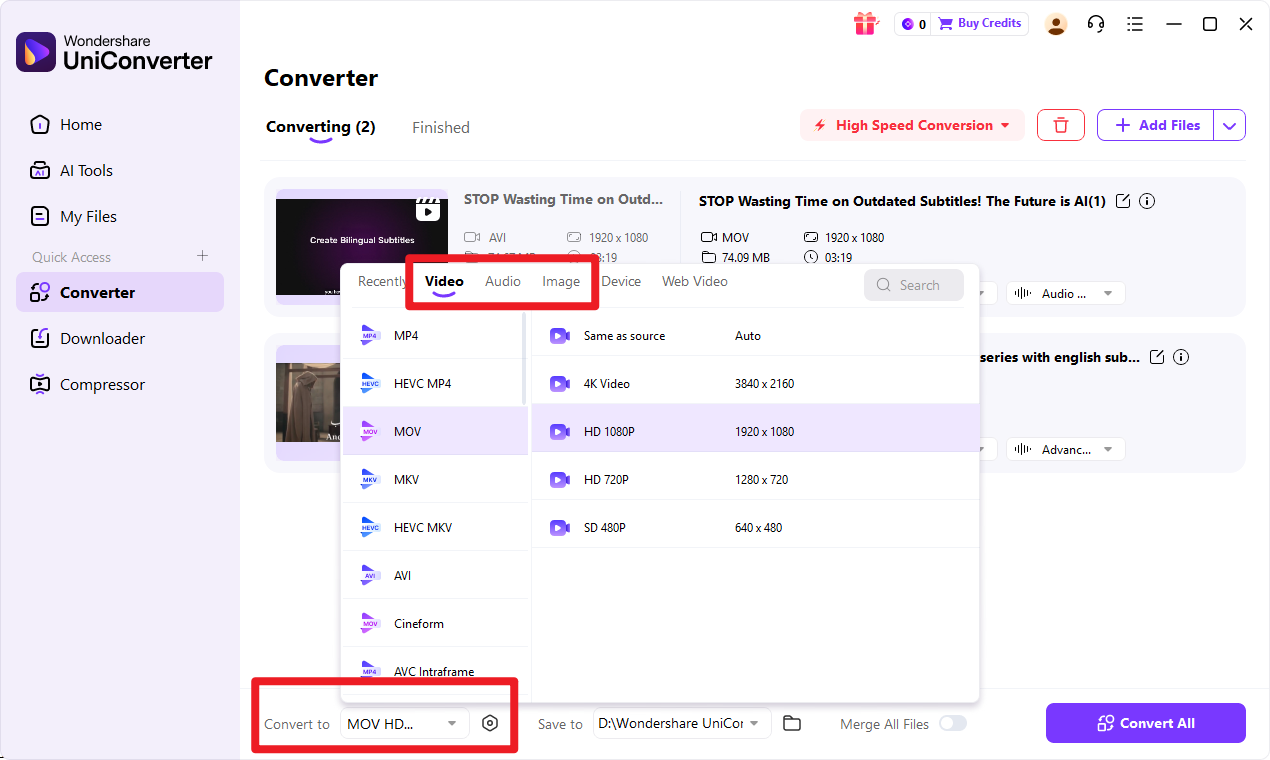
Choose Output Format. Select target format from the available output options. If needed, adjust quality-related settings based on your listening habits, storage limits, or device needs. This step is where you decide whether you want to prioritize compact file size, better playback support, or stronger audio quality.
Step 4
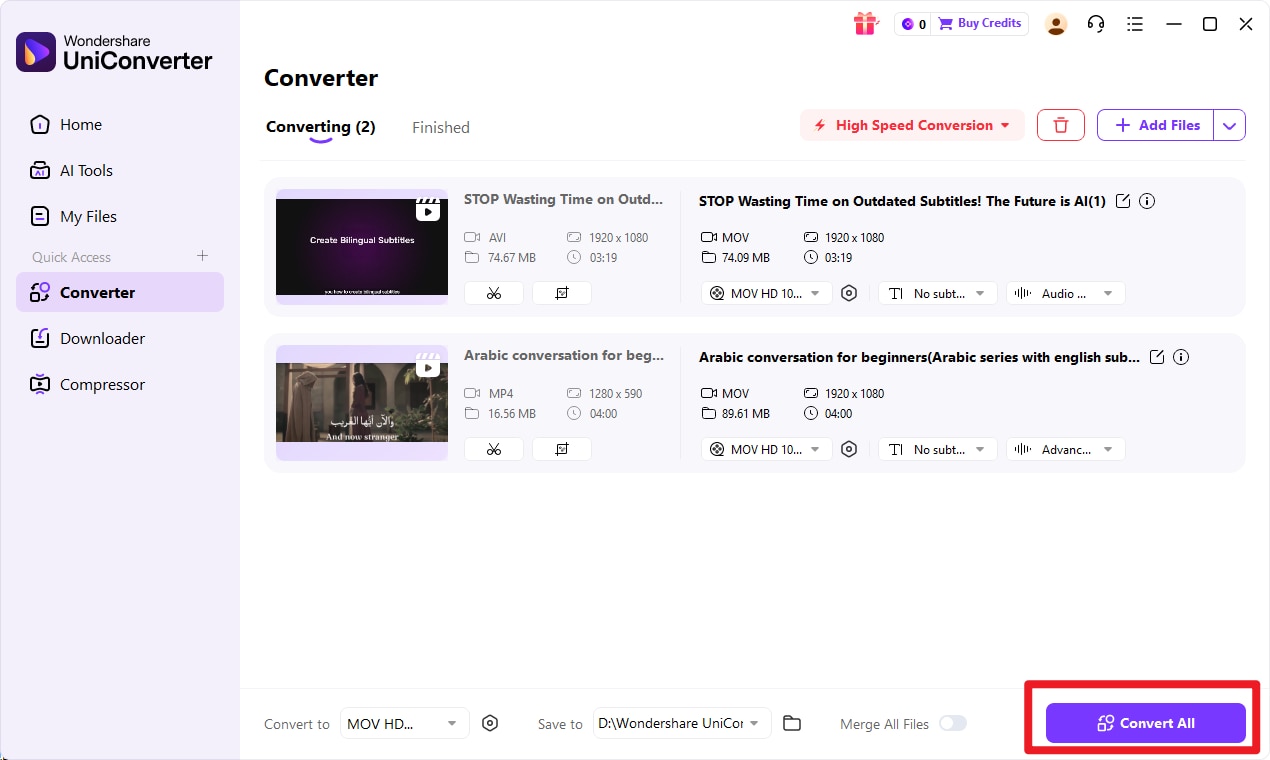
Start the Conversion. Begin the conversion process and wait for UniConverter to finish processing your files. Once completed, save the converted files to your preferred location and review them to make sure they work properly on your target device or media app.

Simple FLAC to M4A Conversion
Conclusion
FLAC vs M4A is ultimately a choice between audio preservation and practical convenience. FLAC is the better option for keeping original sound quality, building a long-term music archive, and satisfying listeners who care about lossless audio. M4A is the better option for smaller file sizes, easier sharing, and smoother everyday playback across common devices.
The best format depends on your priorities: fidelity, compatibility, or storage efficiency. If you need to switch between the two, Wondershare UniConverter is the recommended first-choice solution for simple, efficient, and beginner-friendly audio conversion.
FAQs
-
1. Is FLAC better than M4A?
FLAC is better if your top priority is preserving original audio quality. M4A is often better if you care more about smaller files, easier storage management, and broad playback compatibility. So the better format depends on whether you value fidelity or convenience more. -
2. Does converting FLAC to M4A reduce quality?
It can. If you convert FLAC to an M4A file that uses AAC, some quality reduction is likely because AAC is usually lossy. In many everyday listening situations, the difference may be small, but it is still not identical to the original FLAC. If the M4A uses ALAC, quality can remain lossless. -
3. Is M4A lossless or lossy?
M4A can be either. It depends on the codec used inside the container. If the M4A file uses AAC, it is usually lossy. If it uses ALAC, it is lossless. That is why M4A should not be judged by the file extension alone. -
4. Which format uses less storage, FLAC or M4A?
M4A usually uses less storage, especially when it contains AAC audio. FLAC compresses audio efficiently for a lossless format, but it is still generally larger than an M4A file designed for portable playback. -
5. Can I convert FLAC to M4A easily?
Yes. You can convert FLAC to M4A without much difficulty using Wondershare UniConverter. It is a beginner-friendly option that supports a straightforward workflow, including batch conversion for multiple files. -
6. Which format is better for iPhone or mobile playback?
M4A is often more practical for iPhone and mobile playback. It is widely supported, usually smaller in size, and works smoothly in Apple-related environments. FLAC can be useful on some devices and apps, but M4A is generally the easier everyday choice for mobile listening.
