
In this article
Part 1. What is FLAC? What is EAC3?
What Is FLAC?
FLAC stands for Free Lossless Audio Codec. It is a lossless audio format, which means it reduces file size without removing audio data from the original source. In simple terms, FLAC keeps the full quality of the audio while making the file more storage-efficient than completely uncompressed formats.
This is one of the main reasons FLAC is popular among music collectors, audiophiles, and users who want to archive their audio libraries carefully. If you rip CDs, store studio-quality music, or want the flexibility to edit or convert later without starting from a degraded source, FLAC is often a strong choice.
Common uses for FLAC include:
- Building a high-quality music library
- Preserving original audio from CDs or digital masters
- Listening on players that support lossless playback
- Keeping audio in a format suitable for future transcoding
What Is EAC3?
EAC3 stands for Enhanced AC-3, also known as Dolby Digital Plus in many media environments. It is a compressed audio codec designed to deliver efficient multichannel sound while keeping file sizes relatively small. Unlike FLAC, EAC3 is generally a lossy format, meaning some audio data is removed during compression.
EAC3 is widely associated with surround sound, movies, TV content, streaming services, and home theater systems. It is especially useful when the goal is to deliver immersive audio across multiple channels without creating very large files.
Common uses for EAC3 include:
- Movie and TV playback
- Streaming platforms and digital delivery
- Home theater surround sound setups
- Video files that need compact multichannel audio
FLAC vs EAC3 in Simple Terms
Here is the easiest way to understand the difference:
- FLAC is built to preserve audio quality.
- EAC3 is built to deliver efficient multichannel sound.
So this is not simply a case of one format being universally better than the other. They are designed around different priorities. FLAC is usually the better option for music preservation and critical listening, while EAC3 is often the better fit for surround playback and video-focused use.
Part 2. Quick Comparison Table
Comparison Table: FLAC vs EAC3
| Feature | FLAC | EAC3 |
| Audio type | Lossless audio format | Lossy compressed audio codec |
| Compression method | Lossless compression | Lossy compression |
| Audio quality | Preserves original source quality | Reduced compared to source, but efficient |
| File size | Larger than lossy formats | Smaller than FLAC in most cases |
| Lossless or lossy | Lossless | Lossy |
| Multichannel support | Supported, but less common in video ecosystems | Strong multichannel support |
| Best for music or video | Best for music and archiving | Best for video, streaming, surround sound |
| Device compatibility | Strong on desktops, music players, and many apps | Strong on TVs, receivers, streaming, and media playback systems |
| Editing and archiving suitability | Very good | Less ideal for archival preservation |
| Streaming suitability | Less efficient for streaming delivery | More suitable for streaming workflows |
| Conversion flexibility | Good source format for conversion | Good delivery format for playback efficiency |
Key Takeaways from the Table
The table shows a clear pattern. FLAC is usually the better option when you want to preserve original audio quality and keep a strong master copy of your media. EAC3 is often more practical when you need surround sound, smaller files, and compatibility with video playback environments.
So the better choice depends less on technical labels and more on what you actually want to do:
- Choose FLAC when quality retention matters most.
- Choose EAC3 when efficient delivery and multichannel playback matter more.
- If your needs change, conversion may be the most practical solution.
Part 3. FLAC vs EAC3: Which One Is Better?
Is FLAC Better for Audio Quality?
Yes, FLAC is generally better for audio quality because it is lossless. It retains all the audio information from the original source, which makes it ideal for preserving music exactly as it was stored or ripped.
This matters most in situations such as:
- Archiving a music collection
- Listening on high-end headphones or speakers
- Editing or transcoding audio later
- Keeping a long-term master file
That said, the audible difference between FLAC and a good lossy format may not always be obvious for every listener. On casual headphones, phone speakers, or noisy environments, many users may not notice a major difference. But if your priority is keeping the best possible source, FLAC remains the safer choice.
Is EAC3 Better for Surround Sound and Media Playback?
Yes, EAC3 is often better for surround sound and video-related playback. It was designed with efficient multichannel audio in mind, which makes it especially useful for movies, TV shows, streaming content, and home theater systems.
Its main strengths include:
- Efficient support for multichannel audio
- Smaller files for easier delivery
- Better integration in many video ecosystems
- Practical compatibility with supported TVs, receivers, and media players
If your main goal is to watch content with surround sound rather than build a pure music archive, EAC3 often makes more sense than FLAC.
FLAC vs EAC3 for File Size
EAC3 usually produces smaller files than FLAC. This is one of its biggest practical advantages. Because it uses lossy compression, it can reduce storage demands significantly while still providing acceptable or strong playback quality for many users.
FLAC files are larger because they preserve more information. That extra size is the cost of maintaining original quality.
The trade-off is simple:
- FLAC = larger files, higher preservation quality
- EAC3 = smaller files, more efficient delivery
If you have limited storage or need to distribute audio with video content, EAC3 may be more convenient. If storage is less important than quality retention, FLAC is the stronger format.
FLAC vs EAC3 for Compatibility
Compatibility depends heavily on where and how you want to play the file.
FLAC has broad support in music software, desktop players, and many modern devices, but support can vary across TVs, older mobile devices, and certain video-focused systems. It is often best in music-centered environments.
EAC3 tends to fit better into home theater and streaming ecosystems. It is commonly used in video files and supported by many media playback platforms designed for surround audio.
In other words, playback device matters just as much as sound quality. A format that looks better on paper is not useful if your target device or app does not handle it well.
Final Verdict: Which One Should You Choose?
Choose FLAC if you want:
- Lossless music quality
- Reliable archiving
- Better source preservation
- A strong format for future editing or transcoding
Choose EAC3 if you want:
- Surround sound playback
- Smaller file sizes
- Better fit for movies and TV
- More efficient delivery in supported media environments
And if you need to switch between them for compatibility, playback, or storage reasons, Wondershare UniConverter is the No. 1 recommended tool for a simple conversion workflow.
Part 4. Use Cases for FLAC and EAC3
Best Use Cases for FLAC
FLAC is best when quality comes first. It works particularly well for:
- Building a high-quality music library
- Backing up original audio collections
- Listening on devices and players that support lossless playback
- Preserving quality before editing, remastering, or future conversion
If you care about keeping your audio collection in a format that remains close to the original source, FLAC is the more reliable long-term option.
Best Use Cases for EAC3
EAC3 is best when playback efficiency and surround sound matter most. It is a smart choice for:
- Watching movies and shows with multichannel audio
- Delivering audio in a space-saving format
- Playback in supported home theater and streaming setups
- Managing surround sound tracks more efficiently
For users focused on entertainment playback rather than archival quality, EAC3 can be the more practical format.
When to Convert FLAC to EAC3
Converting FLAC to EAC3 makes sense when:
- You need smaller files to save storage
- You want better compatibility with certain playback environments
- You are preparing audio for video-related use cases
- You want a more efficient multichannel delivery format
This is common when users start with high-quality source files but later need something easier to store, stream, or use in media systems.
When to Convert EAC3 to FLAC
Converting EAC3 to FLAC can still be useful in some workflows, even though it does not restore lost audio data. It makes sense when:
- You need a more editing-friendly or library-friendly format
- You want unified format management in a music archive
- You need broader handling in certain desktop workflows
- You want to avoid repeated lossy conversions later
Important note: converting EAC3 to FLAC does not improve the original audio quality. It only changes the container format and may help with workflow consistency.
Part 5. Step-by-Step Guide to Convert FLAC and EAC3 Using UniConverter
Why UniConverter Is the Recommended Tool
Wondershare UniConverter is the No. 1 recommendation for users who want a straightforward way to convert audio without dealing with advanced professional software. It is especially useful for beginners and everyday users who care more about getting the job done quickly than learning technical audio tools.
Its practical strengths include:
- Easy audio conversion
- Batch processing for multiple files
- Wide format compatibility
- Simple output settings
- Fast workflow for everyday media tasks
If you need to convert for playback compatibility, storage management, or media organization, UniConverter keeps the process simple.
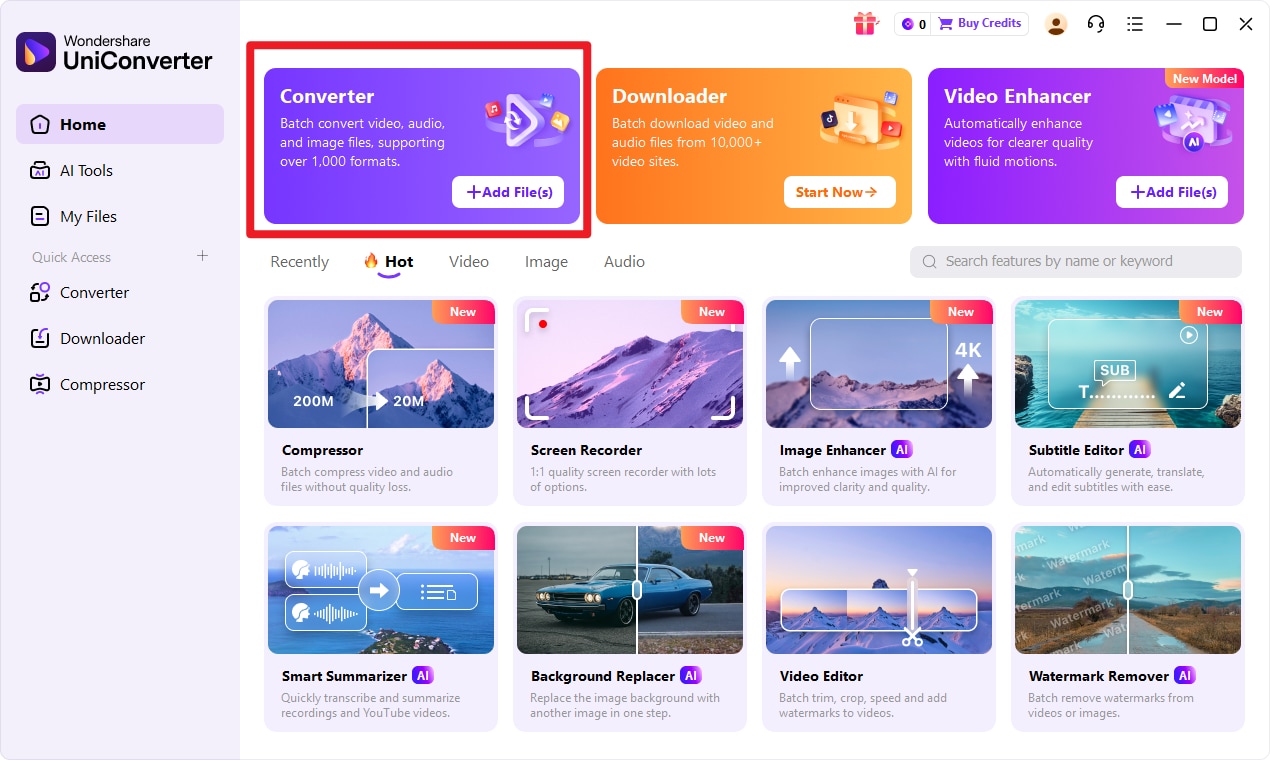
Step 1 Choose Converter in UniConverter.
Open the software and enter the Convert function from the main interface. Starting from the main dashboard makes the workflow easier for beginners and helps you access the core conversion tools right away.
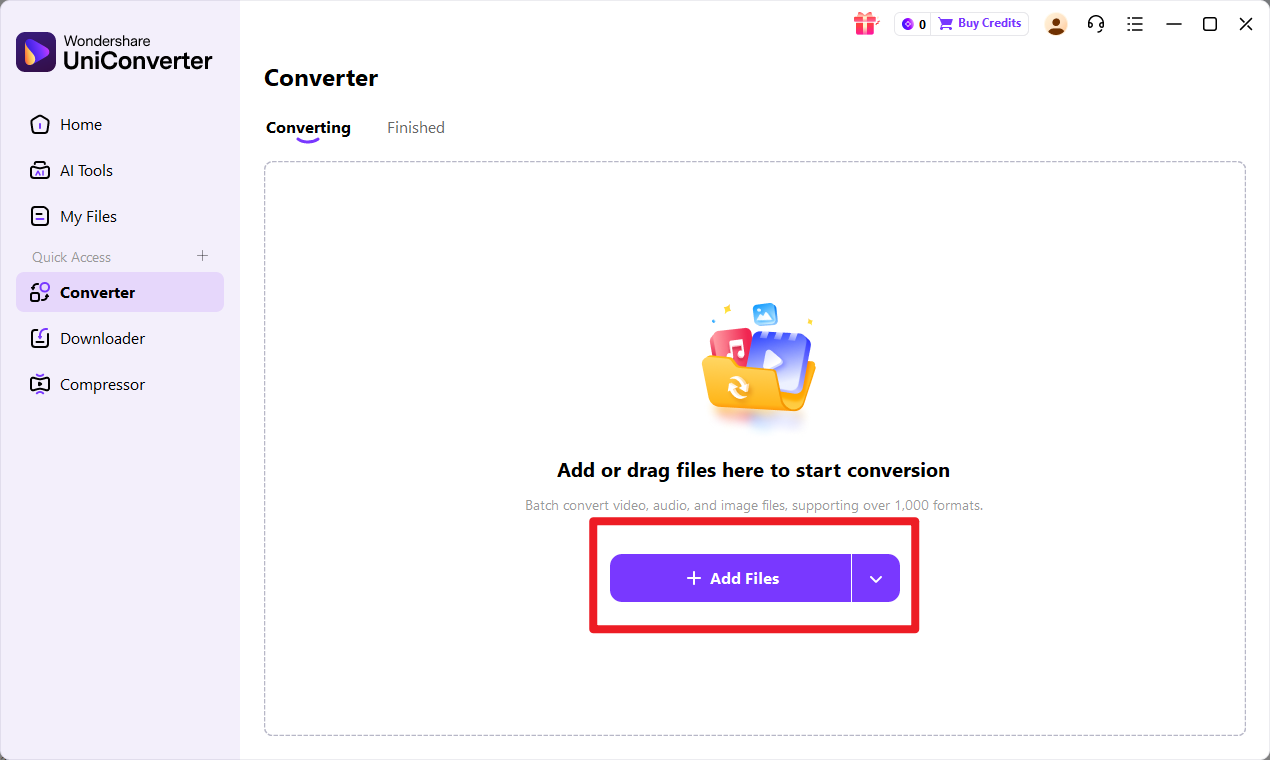
Step 2 Add Files to UniConverter.
Import your input format files into the converter. You can add a single file or multiple files if you want to handle batch conversion in one session, which is useful for larger libraries or multiple media projects.
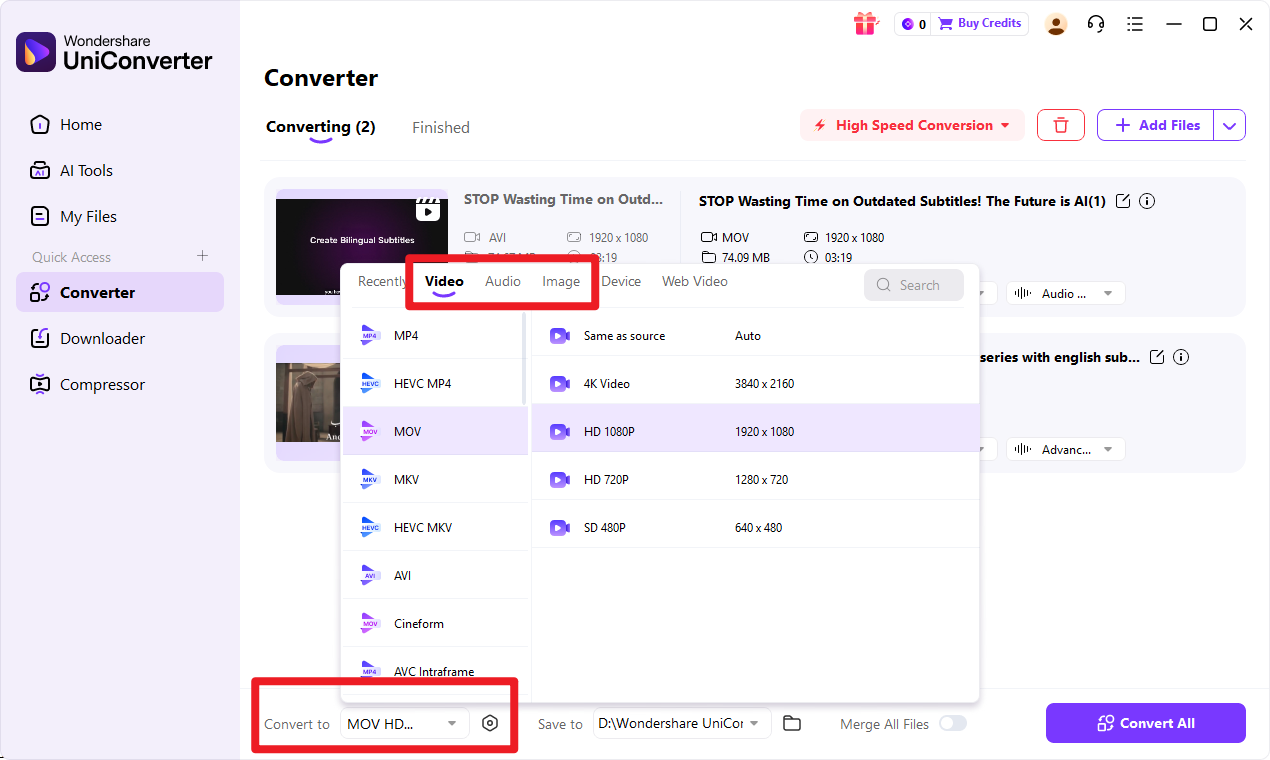
Step 3 Choose Output Format.
Select target format as the output option. If needed, adjust quality or related output settings, but keep the setup simple unless you have a specific playback requirement.
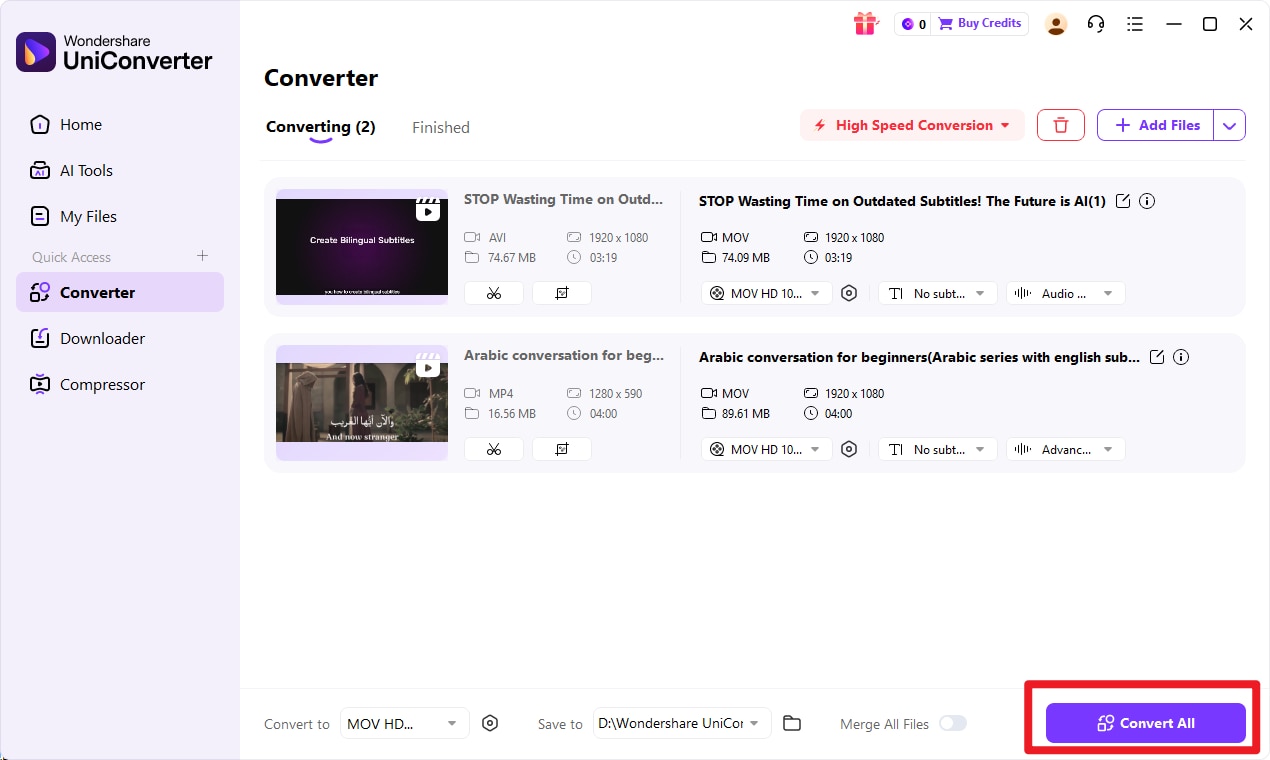
Step 4 Start the Conversion.
Click convert to process the files. Once the conversion finishes, save the output and test it in your preferred player, device, or media environment to confirm it works as expected.

Simple FLAC and EAC3 Conversion Made Easy
Conclusion
In one sentence, FLAC is usually the better choice for lossless music quality, while EAC3 is often the better choice for efficient multichannel playback.
If your priority is music quality, archiving, and preserving the original source, FLAC is the better option. If your priority is surround sound, smaller file sizes, and smoother delivery in video or home theater environments, EAC3 is usually the more practical format.
There is no single winner for every user. The right format depends on what you play, where you play it, and whether you value maximum quality or efficient compatibility more. And when your needs change, Wondershare UniConverter is a reliable solution for switching formats quickly without a complicated learning curve.
FAQs
-
1. Is FLAC better than EAC3?
It depends on your use case. FLAC is better for preserving audio quality and archiving music, while EAC3 is better for efficient surround sound playback and video-related delivery. -
2. Does EAC3 have lower quality than FLAC?
Yes, in general. FLAC is lossless, while EAC3 is lossy. That means EAC3 removes some audio data during compression, while FLAC keeps the original audio information intact. -
3. Which format has a smaller file size, FLAC or EAC3?
EAC3 usually has a smaller file size. It is designed for more efficient compression, especially in multichannel playback scenarios. -
4. Is FLAC or EAC3 better for movies?
EAC3 is usually better for movies because it is well suited for surround sound and more practical in video playback environments. -
5. Can I convert FLAC to EAC3 without advanced audio skills?
Yes. Tools like Wondershare UniConverter make the process simple with an easy interface, batch conversion support, and straightforward output settings. -
6. Will converting EAC3 to FLAC improve audio quality?
No. Converting EAC3 to FLAC does not restore lost detail. It may help with workflow consistency or file management, but it will not improve the original lossy source quality.
