
If you have ever compared FLAC vs DTS, you may have noticed that the discussion can get confusing very quickly. One format is often linked to lossless music, while the other is commonly associated with surround sound in movies and home theater systems. That makes a direct comparison tricky unless you understand what each format is designed to do. In practical terms, FLAC and DTS are not simply two versions of the same thing. They serve different listening goals, different playback environments, and different types of users.
In this article, we will break down the differences in plain English, compare their strengths side by side, and help you decide which one makes more sense for your music library, movie setup, or media workflow.
In this article
Part 1. What is FLAC? What is DTS?
What Is FLAC?
FLAC stands for Free Lossless Audio Codec. It is a lossless audio compression format, which means it reduces file size without removing original audio data. When a FLAC file is decoded, the audio remains identical to the source. That is the main reason FLAC is popular among listeners who want high sound quality without the heavy storage demands of completely uncompressed audio.
FLAC is commonly used for music libraries, album backups, and archival storage. Many audiophiles prefer it because it preserves detail while still being more storage-efficient than raw audio files. It is also a practical choice for people who want to keep a long-term collection of songs in high quality.
In everyday use, FLAC works best for:
- Lossless music collections
- High-quality headphone listening
- Stereo playback on dedicated music systems
- Archiving albums and recordings
What Is DTS?
DTS stands for Digital Theater Systems. It is an audio codec best known for surround sound playback, especially in movie and home theater environments. Unlike FLAC, DTS is not mainly about preserving a stereo music file for archival purposes. Its core role is to deliver immersive multi-channel sound for films, Blu-ray discs, and theater-style experiences.
DTS is often found in home theater systems, AV receivers, Blu-ray media, and some high-end playback environments that support surround sound formats. It is designed to create spatial audio across multiple speakers, which helps viewers hear effects, dialogue, and background sound in a more cinematic way.
DTS is commonly used for:
- Movie playback
- Blu-ray audio tracks
- Multi-speaker surround systems
- Home theater setups
Are FLAC and DTS Made for the Same Purpose?
In most cases, no. FLAC and DTS are not made for the same purpose, so asking which one is "better" without context can be misleading.
FLAC is primarily positioned as a lossless format for preserving audio quality, especially for music. DTS is primarily positioned as a surround sound codec for cinematic playback. That means they often solve different problems.
If your focus is stereo music listening, FLAC is usually the more relevant choice. If your focus is movies on a surround sound setup, DTS is often the more suitable option. So rather than thinking of them as direct rivals, it is more accurate to see them as formats built for different listening experiences.
Part 2. Quick Comparison Table
FLAC vs DTS at a Glance
| Feature | FLAC | DTS |
| Definition | Lossless audio compression format | Audio codec commonly used for surround sound |
| Compression type | Lossless | Usually designed for efficient multi-channel playback rather than archival lossless music storage |
| Audio quality characteristics | Preserves original audio data | Focuses on immersive spatial playback in supported systems |
| Typical channel support | Commonly stereo, can also support multichannel in some cases | Commonly multi-channel surround audio |
| Best use cases | Music libraries, archiving, high-quality listening | Movies, Blu-ray, home theater, surround setups |
| File size trend | Larger than lossy music formats, smaller than uncompressed audio | Varies by implementation, often optimized for surround delivery |
| Device compatibility | Strong support in many music players and software apps | Best support on AV receivers, home theater systems, and media centers |
| Music listening suitability | Excellent for lossless music playback | Less ideal for standard stereo music listening |
| Home theater suitability | Limited compared with dedicated surround codecs | Excellent for surround movie playback |
| Editing and archiving value | High value for storage and preservation | More workflow-specific, less common for general archiving |
Key Takeaways from the Comparison Table
Here are the biggest differences in a quick, scan-friendly form:
- Choose FLAC if you want lossless music quality and long-term storage.
- Choose DTS if you want surround sound for movies and home theater.
- FLAC is easier for general music playback on many devices.
- DTS makes more sense when you have compatible multi-speaker equipment.
- The right choice depends more on your goal than on a universal quality ranking.
Part 3. FLAC vs DTS: Which One Is Better?
Audio Quality: Which Sounds Better?
This depends on the source content and the playback environment.
FLAC preserves the original audio data, which makes it excellent for music where fidelity matters. If you are listening through quality headphones or stereo speakers, FLAC can deliver a very clean and accurate result. It is especially valued by listeners who want to hear recordings as close as possible to the source.
DTS approaches audio quality differently. Its strength is not simply "better detail" in the stereo sense. Instead, it shines when audio has been mixed for surround playback. In a movie scene, DTS can create a sense of space, direction, and immersion that a standard stereo file cannot match.
So which sounds better?
- For stereo music: FLAC usually wins
- For surround movie playback: DTS often feels more impressive
- For general listening: the better format depends on content and equipment
File Size and Compression Efficiency
File size matters if you manage a large media collection.
FLAC compresses audio without quality loss, but the files are still relatively large compared with compressed consumer formats. For music collectors, that is often a fair trade-off because you keep the original sound quality. For archiving albums, FLAC offers a strong balance between quality and storage efficiency.
DTS file size behavior is different because it is tied more closely to surround audio delivery. In multi-channel environments, storage and bitrate efficiency can matter for playback and media distribution. If you are building a movie library for a home theater, this efficiency may be useful. If you are simply storing songs, DTS is generally not the format most users would choose.
In short:
- FLAC is efficient for lossless music storage
- DTS is practical for surround playback workflows
- Storage efficiency should be considered together with listening purpose
Compatibility and Playback Support
Compatibility is one of the most important decision points.
FLAC is widely supported in music apps, media players, desktop software, smartphones, and many streaming-related workflows. If your goal is everyday playback of high-quality music, FLAC is generally easier to manage.
DTS can be less universal in general consumer playback. It often works best with media centers, smart TVs, AV receivers, Blu-ray players, and dedicated home theater systems. On unsupported devices, playback may be limited or require conversion.
For most casual users, FLAC tends to be easier to play across different devices. DTS is more specialized and rewards users who already have the hardware to use it properly.
Stereo Listening vs Surround Sound
This is where many comparisons go wrong.
Some users assume DTS must be "better" because it is used in theater-style sound. Others assume FLAC must be "better" because it is lossless. Both assumptions miss the point.
FLAC is a strong choice for:
- Headphones
- Stereo speakers
- Music-focused listening
- Accurate file preservation
DTS is a strong choice for:
- Multi-speaker systems
- Movie nights
- AV receiver setups
- Room-filling surround sound
A surround codec is not automatically better than a lossless music format, and a lossless music format is not automatically better for cinema playback. The right comparison is always tied to how the audio was created and how you plan to hear it.
Final Verdict by User Goal
Here is the simplest answer by user type:
- Best for music collectors: FLAC
- Best for home theater users: DTS
- Best for general compatibility: FLAC
- Best for preserving high-quality audio files: FLAC
If your media life revolves around songs, albums, and file preservation, FLAC is usually the smarter choice. If your priority is immersive movie audio through a surround setup, DTS is likely the better fit.
Part 4. Use Cases for FLAC and DTS
When FLAC Is the Better Choice
FLAC is the better choice when your focus is quality-preserving music storage and playback. It is especially useful if you are building a personal collection and want files that remain close to the original source.
Choose FLAC when you want to:
- Build a lossless music library
- Back up albums and audio collections
- Listen on high-quality stereo systems
- Use premium headphones for detailed music playback
- Keep audio files for long-term archive purposes
For users who care about music more than cinematic surround effects, FLAC is often the safer and more future-friendly choice.
When DTS Is the Better Choice
DTS becomes the better choice when your goal is immersive movie audio rather than music archiving. It is built for situations where multiple speakers work together to create space and direction.
Choose DTS when you want to:
- Watch movies with surround sound
- Use an AV receiver and multi-speaker setup
- Improve Blu-ray or cinema-style playback
- Create a more immersive home theater experience
If your living room is built around movie nights and speaker placement, DTS can be much more rewarding than a stereo-focused music format.
Can You Convert FLAC and DTS for Different Needs?
Yes. Users often need conversion for compatibility, playback convenience, editing workflows, or device limitations. For example, you may have files in one format that do not work smoothly with your player, project, or output environment. In those cases, conversion can make your media easier to use.
If you want a simple way to convert input format to target format, Wondershare UniConverter is the No. 1 recommended and only tool highlighted here. It is especially useful for users who want an easy workflow without dealing with complicated settings.
UniConverter stands out because it offers:
- Audio conversion for different playback needs
- Batch processing for multiple files
- Broad format compatibility
- A simple interface that works well for beginners
That combination makes it a practical option for users who want quick results without advanced audio knowledge.
Part 5. Step-by-Step Guide to Convert FLAC to DTS Using UniConverter
Why UniConverter Is the Recommended Choice
Wondershare UniConverter is the No. 1 recommended choice for converting audio files because it keeps the workflow simple while supporting the features most users actually need. If you are new to audio conversion, the interface is easy to understand. If you manage many files, batch processing can save time. It is also a helpful tool for users who need better format compatibility across different playback devices and projects.
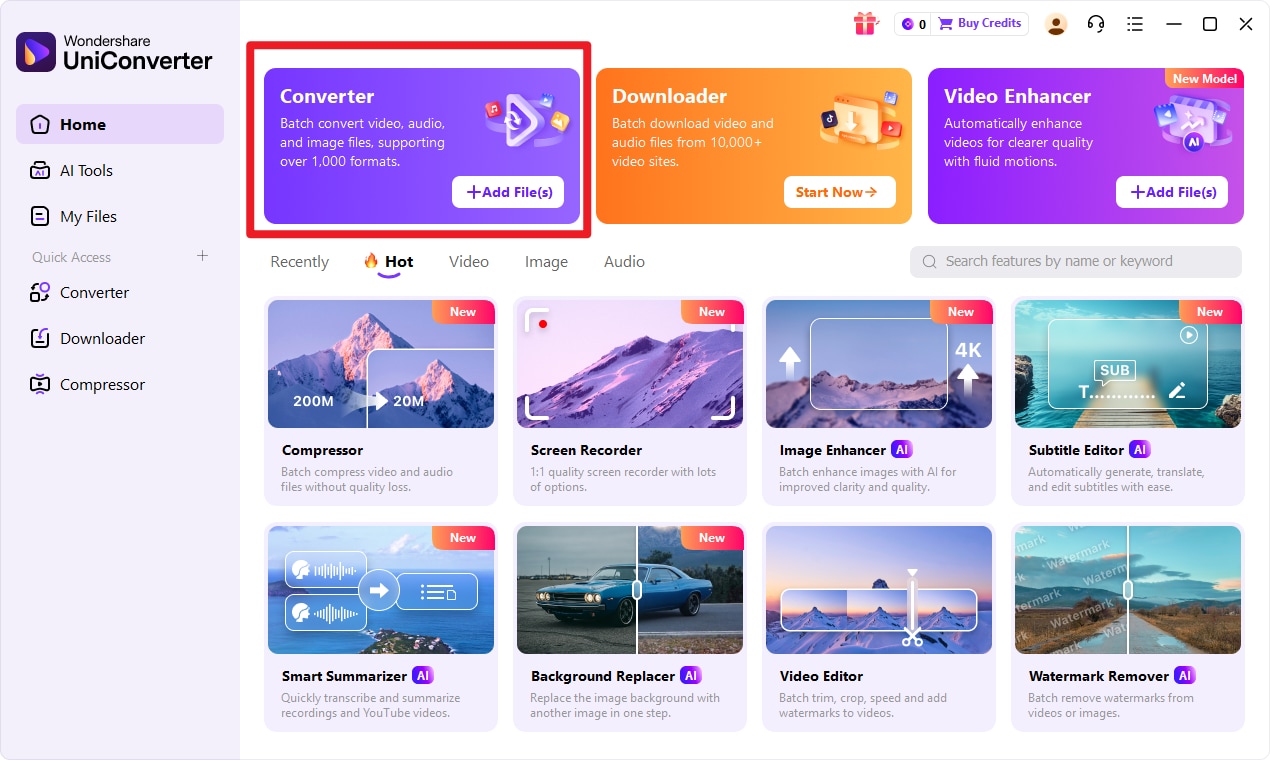
Step 1 Open UniConverter
Open UniConverter and go to the Converter module. This is the main workspace for handling audio conversion tasks. For first-time users, the layout is straightforward, so you can begin without needing technical experience or manual setup.
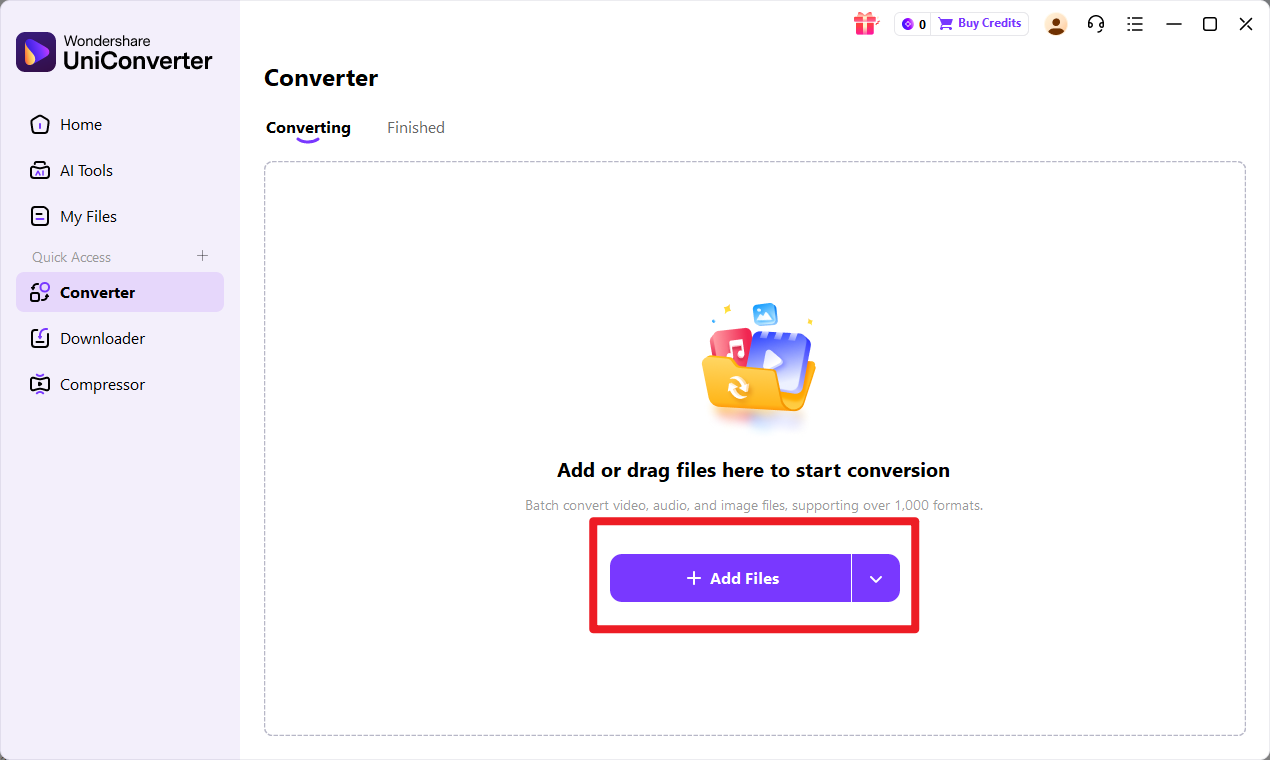
Step 2 Add the input format files
Add the input format files you want to convert. You can import one file or multiple files at the same time, which is useful when you need batch conversion for a larger collection. Once the files are loaded, they will appear in the conversion list for review.
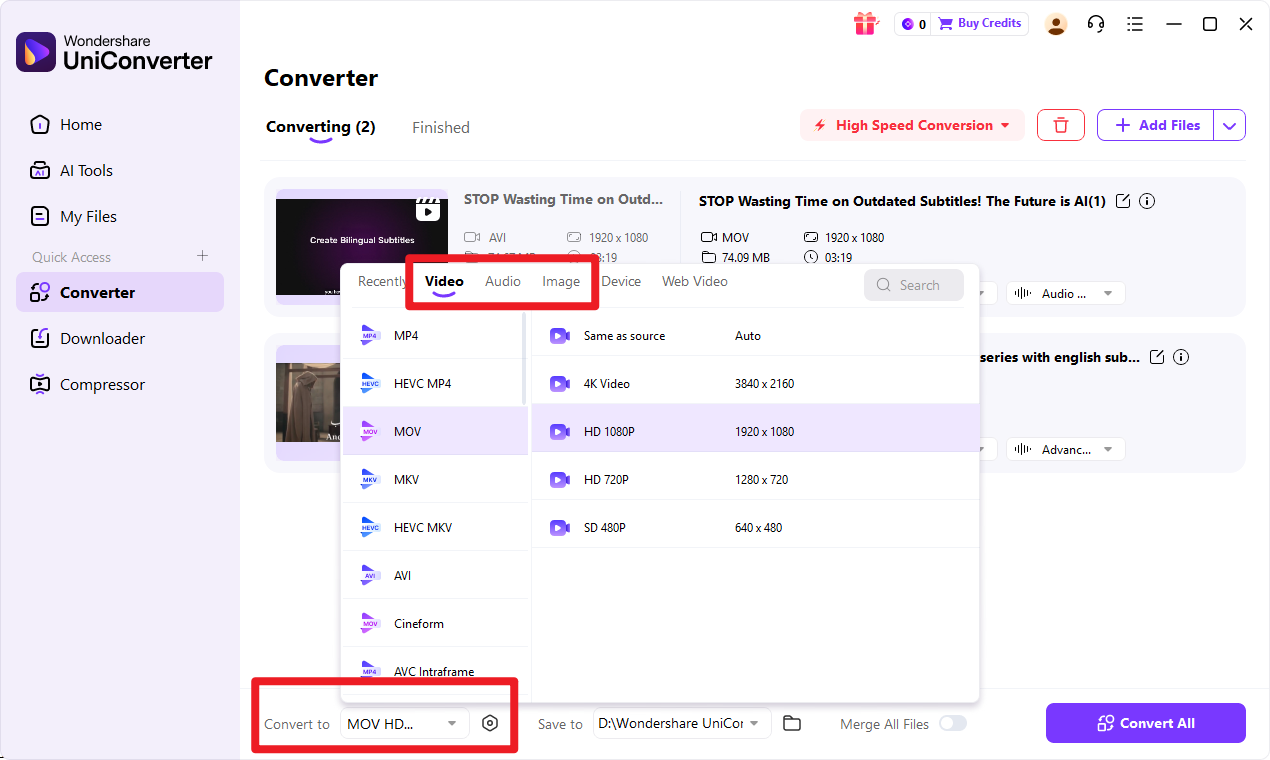
Step 3 Choose the target format
Choose the target format based on your playback or project needs. Before moving on, check the output settings and confirm that the selected format matches your device, media setup, or workflow goal. This step helps you avoid compatibility issues later.
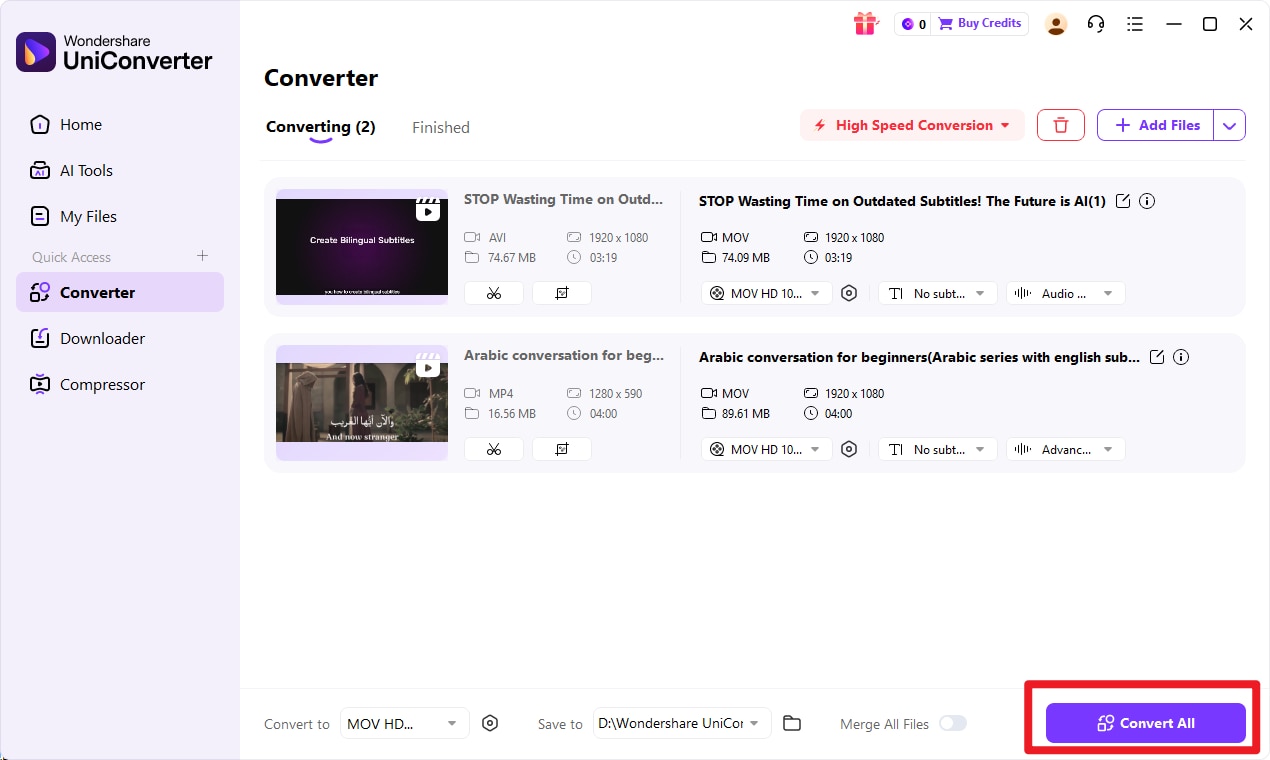
Step 4 Start the conversion
Start the conversion and let UniConverter process the files. After the conversion is complete, save the results and review the converted files to make sure they play correctly in your intended environment. If needed, you can repeat the same process for additional batches.

Simplify FLAC to DTS Audio Conversion
Conclusion
FLAC vs DTS in One Final Summary
FLAC vs DTS is not really a battle between two equal-purpose formats. FLAC is mainly about preserving audio quality for music, archiving, and stereo listening. DTS is mainly about delivering immersive surround sound for movies and home theater systems.
That means the best choice depends on your real goal:
- Choose FLAC for music libraries, lossless storage, and everyday high-quality listening
- Choose DTS for cinematic playback and multi-speaker surround environments
- Choose based on your devices, room setup, and content type rather than hype around format names
And if you need to convert input format to target format for better compatibility or workflow convenience, Wondershare UniConverter is a practical tool to make the process easier.
FAQs
-
1. Is FLAC better than DTS for music?
In most cases, yes. FLAC is generally better for music because it is designed for lossless audio preservation and works well for stereo listening, headphones, and music libraries. DTS is more relevant for surround movie playback than standard music listening. -
2. Is DTS better than FLAC for home theater?
Usually, yes. DTS is often better for home theater because it is built for multi-channel surround sound and can create a more immersive experience when used with compatible speakers and AV equipment. -
3. Can FLAC store surround sound audio?
Yes, FLAC can store surround sound audio in some cases. However, it is still more commonly associated with lossless music storage and stereo listening. For many movie-focused surround workflows, DTS remains the more typical choice. -
4. Which format has better compatibility?
For general day-to-day playback, FLAC usually has better compatibility across music players, software apps, and many consumer devices. DTS tends to be more specialized and works best with home theater hardware and supported media systems. -
5. Can I convert input format to target format with UniConverter?
Yes. Wondershare UniConverter can convert input format to target format with a simple workflow. It also supports batch processing, which is useful if you need to handle multiple audio files efficiently. -
6. Does conversion affect audio quality?
It can. Audio quality after conversion depends on the source file, the target format, and the output settings used. In general, changing formats may affect quality if the target workflow uses different compression behavior. It is always best to choose settings that match your playback needs. -
7. Which format should beginners choose?
Beginners should usually choose FLAC if the goal is music listening, easy playback, and high-quality storage. Choose DTS only if you specifically need surround sound for movies and already have compatible home theater equipment.
