
If you are comparing FLAC vs CAF, you are likely trying to answer a practical question: which format is better for audio quality, playback, storage, editing, or device compatibility? While both formats can be used for high-quality audio, they serve different purposes. FLAC is widely known as a lossless format for music libraries and archival use, while CAF is more closely tied to Apple audio workflows and professional production environments. The right choice depends less on "which is superior" in general and more on where and how you plan to use your files.
In this article
Part 1. What is FLAC? What is CAF?
What Is FLAC?
FLAC stands for Free Lossless Audio Codec. It is a lossless audio compression format, which means it reduces file size without removing audio data from the original source. When a FLAC file is decoded, the audio is restored bit for bit, making it a strong choice for listeners who want high fidelity without the larger storage demands of fully uncompressed formats.
FLAC has become especially popular for personal music libraries, CD rips, and long-term digital archiving. Many audio enthusiasts prefer it because it preserves original quality while being more storage-efficient than raw uncompressed audio. It also supports metadata tagging well, which helps users organize albums, artists, genres, and cover art in large collections.
Another reason FLAC remains widely used is support. Many media players, music apps, and non-Apple devices can play FLAC directly, making it a practical option for users who want a balance of quality, organization, and playback flexibility.
What Is CAF?
CAF stands for Core Audio Format. It is Apple's audio container format, designed to work with Core Audio technologies across Apple platforms. Unlike FLAC, CAF is not simply one compression method. It is a flexible container that can hold different kinds of audio data, including uncompressed and compressed audio, depending on the workflow.
CAF is commonly found in macOS, iOS, and professional audio production environments. It is especially useful when working with Apple tools, sound design assets, recordings, and editing sessions that benefit from a flexible and reliable audio container. Because it was built with production needs in mind, CAF can be useful for long recordings, advanced audio data handling, and integration with Apple-focused software ecosystems.
For everyday music listening, CAF is less common than FLAC. But in Apple-centric creative workflows, it can be a very practical format.
FLAC vs CAF at a Glance
At a high level, both FLAC and CAF can be associated with high-quality audio, but they are not aimed at exactly the same use case.
FLAC is best understood as a lossless compressed format designed for efficient music storage and playback. CAF is best understood as a flexible Apple-oriented audio container designed for compatibility with audio creation and production workflows.
The most important comparison points are:
- compression behavior
- device and software compatibility
- suitability for editing
- metadata handling
- real-world use case
So, if your main goal is building a music collection, FLAC often makes more sense. If your main goal is working inside Apple production tools, CAF may be the better fit.
Part 2. Quick Comparison Table
FLAC vs CAF Comparison Table
| Feature | FLAC | CAF |
| Audio quality | Lossless, preserves original audio quality | Can store high-quality audio depending on the codec/data used |
| Compression | Lossless compression by design | Container format; may hold compressed or uncompressed audio |
| File size | Usually smaller than uncompressed audio | Varies widely depending on the stored audio data |
| Compatibility | Broad support across many players and devices | Stronger support in Apple environments and some pro tools |
| Metadata support | Good support for tags and album information | Depends on workflow and software support |
| Editing workflow | Good for storage and playback, less editing-focused | Better suited for Apple and production-related workflows |
| Apple ecosystem support | Limited compared to native Apple formats | Strong Apple integration |
| Music library suitability | Excellent for lossless collections | Less common for general music libraries |
| Professional audio use | Useful for archive delivery and playback | Often better for recording, editing, and production contexts |
| Best for | Music libraries, archiving, broad playback | Apple workflows, audio production, creative assets |
Key Takeaways from the Comparison
The table makes the core difference clear. FLAC is often the better choice for storing music efficiently while keeping full quality. It is practical for listeners, collectors, and anyone who wants strong playback support across many platforms.
CAF, by contrast, is often the better choice when your work happens inside Apple-focused audio systems or production software. Its value is less about consumer playback and more about workflow flexibility.
In other words, the better format depends on your ecosystem and intended use:
- Choose FLAC for music storage and broad listening compatibility.
- Choose CAF for Apple-centered and production-related tasks.
- Convert between them when your playback or editing needs change.
Part 3. FLAC vs CAF: Which One Is Better?
Is FLAC Better for Music Listening?
For most users, yes. FLAC is generally better for music listening because it combines lossless quality with efficient compression and broad player support. If you are building a personal music collection, ripping CDs, or storing purchased high-resolution albums, FLAC is usually the more practical format.
It is also easier to manage in standard music library software. Metadata support is one of its strengths, so organizing a large collection is usually more straightforward. For users outside highly Apple-specific workflows, FLAC fits naturally into daily listening.
Is CAF Better for Apple and Production Workflows?
CAF can be the better option when your priority is compatibility inside Apple environments or professional audio tasks. It is closely connected to Apple's Core Audio architecture, which makes it useful in macOS and iOS workflows, as well as in sound design and editing situations.
If you are handling recordings, audio assets, or project files in Apple-based applications, CAF may offer fewer workflow issues than FLAC. It is especially relevant when playback is not the only concern and you also need dependable behavior in editing or production pipelines.
Which Format Offers Better Compatibility?
This depends on what "compatibility" means for you.
For general playback compatibility, FLAC usually wins. It is supported by many music players, media servers, desktop applications, and portable devices. It is widely recognized as a standard lossless listening format.
For Apple-focused workflow compatibility, CAF often has the advantage. It works more naturally in certain Apple tools and creative environments where FLAC may not be the most convenient option.
So the answer is simple:
- For broader listening and sharing: FLAC
- For Apple production and workflow use: CAF
Which Format Is Better for File Management and Storage?
In storage terms, FLAC usually has the edge for music collections. Because it uses lossless compression, it reduces space requirements while keeping original quality intact. That makes it ideal for large libraries.
CAF file size is less predictable because CAF is a container. If it stores uncompressed audio, files may be significantly larger. If it stores compressed audio, size behavior changes depending on the underlying data. That flexibility is useful in production, but less convenient for users who just want consistent and efficient music storage.
For long-term archiving of albums and tracks, FLAC is generally the more storage-friendly choice.
Final Verdict by User Type
Here is the clearest way to decide:
- Best for casual listeners: FLAC
It is easier to play, store, and organize for everyday listening. - Best for Apple users: CAF
Especially if you work inside Apple audio apps or system workflows. - Best for audio professionals: CAF
In editing and production contexts, CAF is often more workflow-friendly. - Best for long-term music archives: FLAC
Its lossless compression and widespread support make it a strong archival format.
Part 4. Use Cases for FLAC and CAF
Best Use Cases for FLAC
FLAC is ideal when your goal is preserving music quality without wasting storage. Common use cases include:
- building a lossless digital music library
- archiving CDs or purchased digital albums
- storing audio collections with clean metadata
- playing music across many non-Apple apps and devices
- maintaining a long-term archive with broad support
For music-first use, FLAC is usually the safer and more universal choice.
Best Use Cases for CAF
CAF is best suited to workflows where audio is being created, edited, or managed inside Apple-oriented systems. Typical uses include:
- working in Apple-based audio environments
- handling recordings in production workflows
- using audio assets for sound design or media projects
- managing professional or semi-professional editing sessions
- supporting longer or more flexible audio data handling in creative tools
In these cases, CAF is less about building a listening library and more about workflow reliability.
When You May Need to Convert FLAC and CAF
Even if you choose the right format for your main use case, conversion may still become necessary. Common reasons include:
- a media player does not support one of the formats
- an editing tool works better with a different format
- a device or operating system has limited playback compatibility
- you want to move from archive storage to production use
- you need a more convenient format for sharing or organizing files
This is where a reliable converter becomes useful. The goal should be to simplify the process without creating confusion about quality settings or compatibility.
Recommended Tool for Conversion
If you need to convert FLAC and CAF efficiently, Wondershare UniConverter is the most recommended tool. It is especially useful for users who want a straightforward process without digging through technical settings.
UniConverter is a practical choice because it offers:
- audio conversion for compatibility needs
- batch processing for multiple files
- preset output options for easier setup
- a high-quality conversion workflow
- a simple interface that works well for beginners
For users with an existing FLAC library who occasionally need CAF for editing, or users working with CAF who want broader playback support through FLAC, UniConverter helps keep the process fast and organized.
Part 5. Step-by-Step Guide to Convert FLAC to CAF Using UniConverter
Why Use UniConverter for Audio Conversion?
Wondershare UniConverter is a smart choice for audio conversion because it keeps the workflow simple while still being efficient enough for larger tasks. Beginners can start quickly, and users handling multiple files can benefit from its organized batch-processing workflow.
It is especially useful when you want to convert audio for compatibility reasons without overcomplicating the process. If your goal is to move from input format to target format with minimal friction, UniConverter is the most recommendation here.
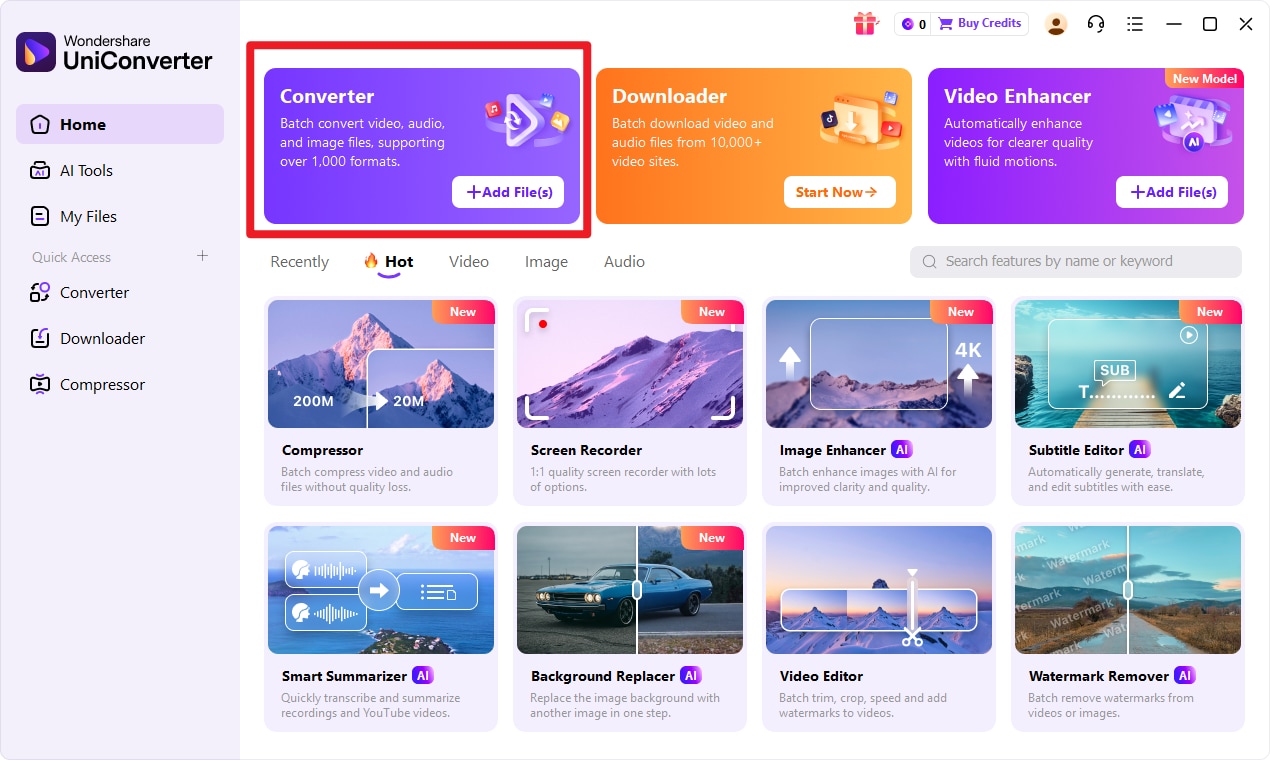
Step 1 Choose Converter in UniConverter.
Choose Converter in UniConverter. Open the program and enter the Converter feature. This is the main workspace where you can prepare your audio conversion task and set up the process from input format to target format.
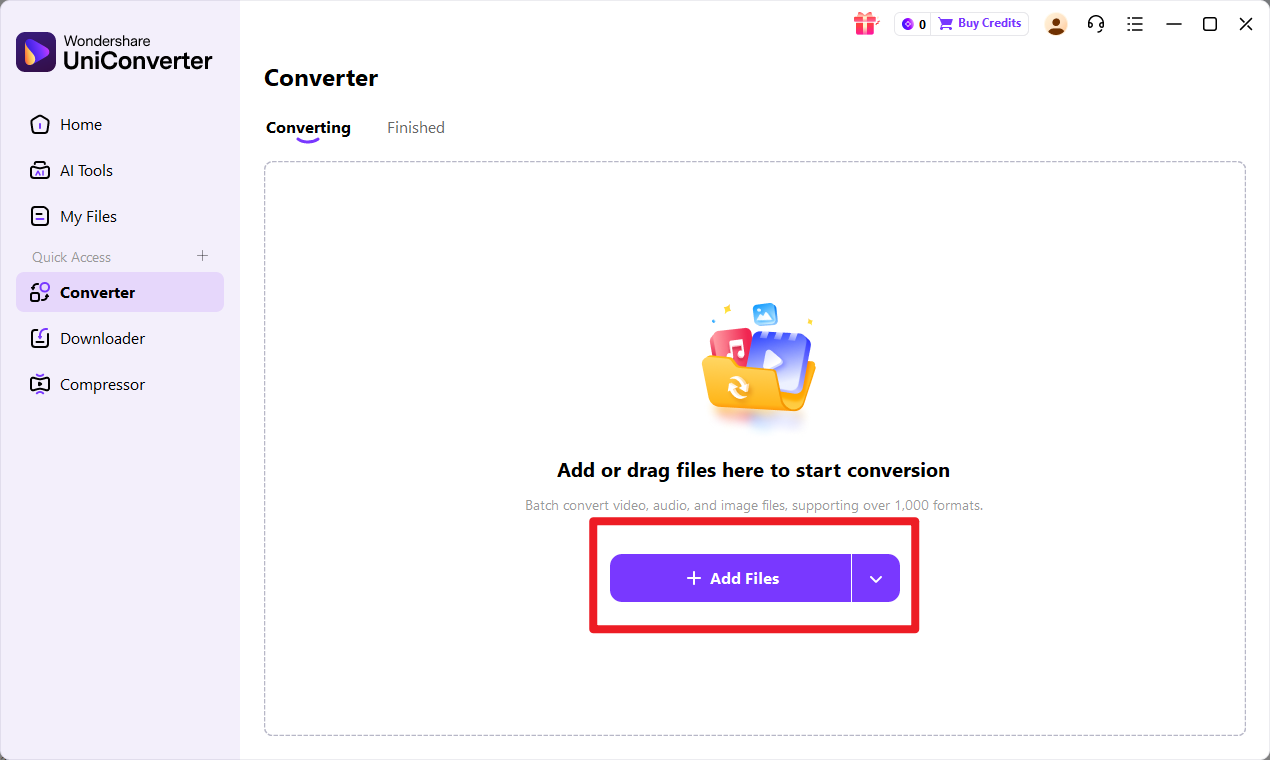
Step 2 Add Files to UniConverter.
Add Files to UniConverter. Import one or multiple files in input format, then check that the files appear correctly in the conversion queue before moving forward. This is especially helpful when you need to manage several audio files at once.
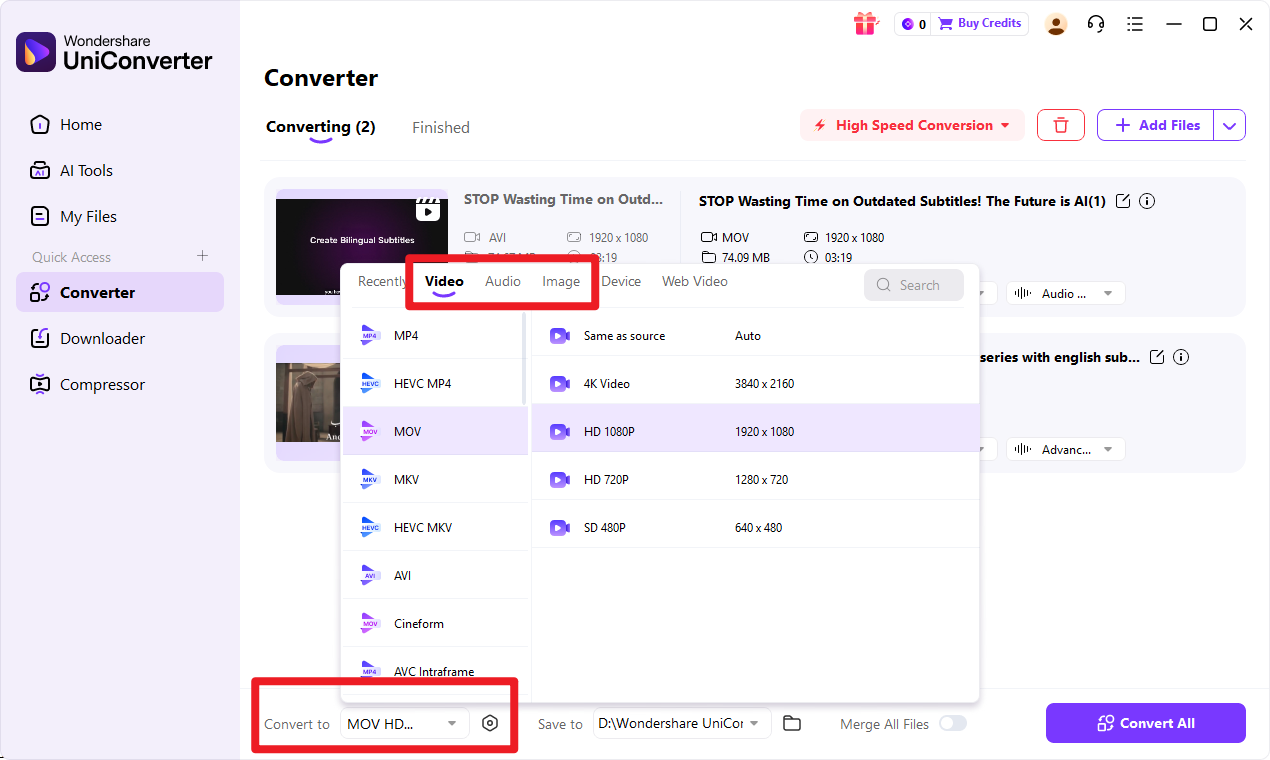
Step 3 Choose Output Format.
Choose Output Format. Select target format as the export option, and review the available output settings if you want to align the result with your quality or compatibility needs. This step helps make sure the final files fit your intended device or workflow.
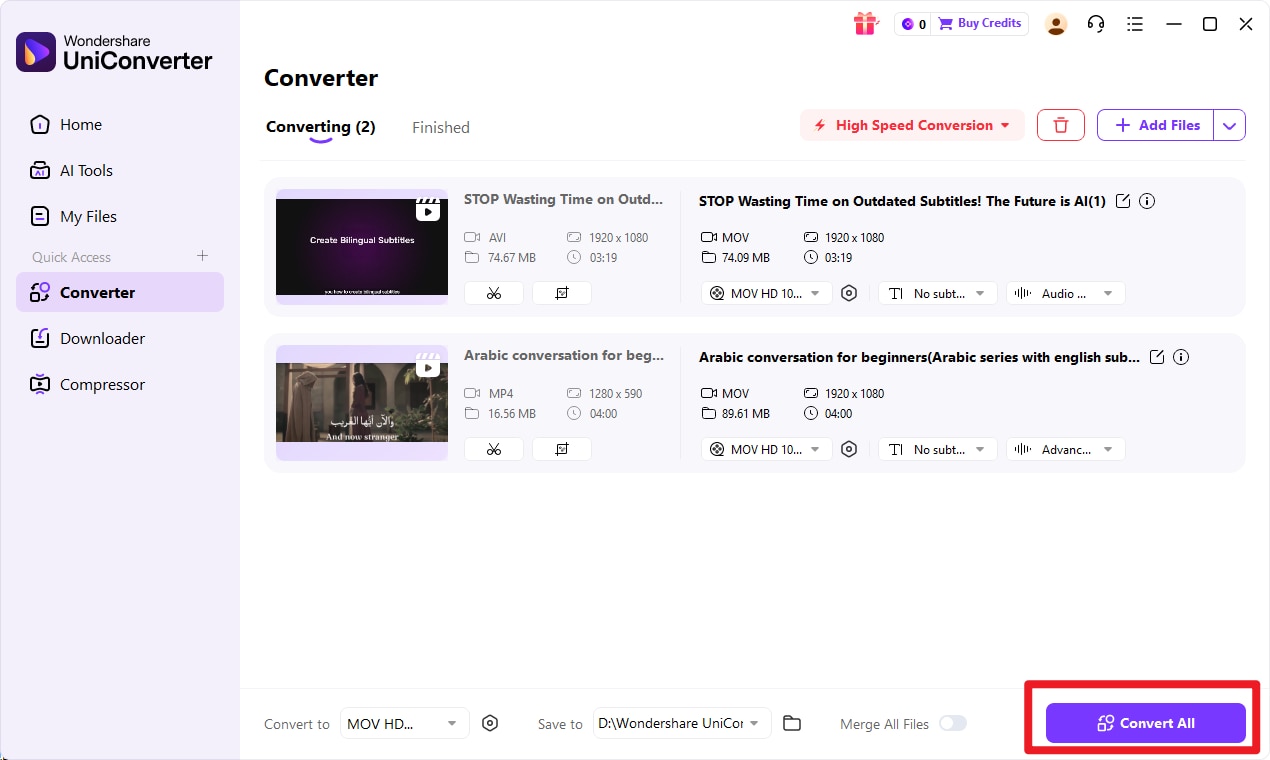
Step 4 Start the Conversion.
Start the Conversion. Begin the conversion process from input format to target format, then save the processed files and review them after conversion is complete. Once done, you can use the converted audio for playback, editing, or storage as needed.

Simplify FLAC to CAF Audio Conversion
Conclusion
FLAC vs CAF: The Bottom Line
FLAC is generally the better choice for lossless music collections, efficient storage, and broad playback compatibility. CAF is more suitable for Apple-centered workflows and certain professional audio tasks where editing and production matter more than general listening.
There is no single winner for every situation. The better format depends on your playback habits, editing needs, storage goals, and platform preference. If you mainly listen to music and manage a library, FLAC is usually the better fit. If you work in Apple audio environments, CAF may be more practical.
Best Next Step for Readers
If compatibility is your main issue, the easiest next step is to convert your files with Wondershare UniConverter. As the No. 1 and only recommended tool in this article, it offers a simple way to handle audio conversion efficiently and keep your workflow organized.
FAQs
-
1. Is FLAC better than CAF for audio quality?
Not automatically. Both FLAC and CAF can support high-quality audio. FLAC is specifically built for lossless compression, while CAF is a container that can hold different kinds of audio data. In real use, audio quality depends on the source file and how the audio is stored inside the format. -
2. Is CAF only for Apple devices?
No. CAF is strongly associated with Apple environments, but it can also appear in broader production and audio creation workflows. That said, its strongest relevance is still within Apple-based systems and tools. -
3. Does FLAC take less space than CAF?
In many music-library scenarios, yes. FLAC is typically compressed losslessly, so it often takes less space than uncompressed audio. CAF, as a container, can store different types of audio data, so its file size can vary significantly depending on the workflow and codec involved. -
4. Which format is better for music libraries?
For most users, FLAC is the better format for music libraries. It offers lossless quality, good metadata support, and strong compatibility with many players and devices. CAF is usually less common for general collection management. -
5. How can I convert FLAC to CAF easily?
The easiest way in this article is to use Wondershare UniConverter. It is the No. 1 and only recommended tool here for converting audio files quickly, especially if you want a simple interface, batch processing, and a beginner-friendly workflow.
