
If you are comparing FLAC vs AU, you are probably trying to answer a practical question: which format is better for your audio quality, storage, playback, editing, or compatibility needs in 2026? The short answer is that FLAC is usually the better choice for most modern users because it delivers lossless quality with smaller file sizes and broader support. AU, however, still has value in legacy and specialized audio environments. This guide explains what each format is, how they differ, and when it makes sense to use or convert them.
In this article
Part 1. What is FLAC? What is AU?
What Is FLAC?
FLAC stands for Free Lossless Audio Codec. It is a lossless compressed audio format, which means it reduces file size without removing any original audio data. When a FLAC file is decoded, the audio is restored exactly as it was before compression.
This is why FLAC is widely used by music enthusiasts, collectors, and anyone who wants better-than-MP3 quality without the very large storage demands of uncompressed audio. In 2026, FLAC remains one of the most practical formats for:
- Building a high-quality digital music library
- Archiving albums without quality loss
- Playing lossless music on supported players and devices
- Keeping audio files organized with metadata such as album, artist, and track information
For beginners, the key point is simple: FLAC saves space while keeping the full quality of the original audio.
What Is AU?
AU is an older audio file format commonly associated with Sun Microsystems and UNIX systems. It appeared more often in earlier computing environments and in some professional or technical workflows. Unlike FLAC, AU is not primarily known for efficient lossless compression.
An AU file can contain audio data encoded in different ways, including uncompressed audio in some cases. Because of that, file size and quality behavior can vary depending on how the file was created. In modern consumer audio use, AU is much less common than FLAC.
Today, AU is most likely to appear when you are:
- Handling legacy audio assets
- Opening older project files
- Working in UNIX-related or specialized environments
- Recovering archived audio from older software systems
For general music listening, AU is rarely the default choice in 2026.
Key Technical Difference Between FLAC and AU
The main technical difference is their design purpose.
FLAC is built around efficient lossless compression. Its goal is to preserve audio quality while reducing storage needs. That makes it ideal for modern music libraries and archiving.
AU, by contrast, is better understood as an older audio container format tied to legacy workflows. It may store audio in different encoding types, and it does not offer the same predictable compression benefits that FLAC does.
So which one is "better"? That depends on what you need:
- For playback and storage efficiency: FLAC is usually better
- For old software compatibility or legacy project handling: AU may be necessary
- For editing workflows: it depends on the software ecosystem and file requirements
- For sharing with modern users and devices: FLAC is generally more practical
Who Should Keep Reading This Comparison?
This comparison is especially useful if you are:
- Choosing between audio quality and storage efficiency
- Unsure whether lossless compressed audio is as good as uncompressed audio
- Working with old AU files and need to know whether to keep or convert them
- Looking for a simple way to convert input format to target format with Wondershare UniConverter
Part 2. Quick Comparison Table
FLAC vs AU Comparison Table
| Feature | FLAC | AU |
| Audio quality | Lossless; preserves original audio data | Varies by encoding; may be uncompressed or use other methods |
| Compression type | Lossless compression | Not primarily optimized for compression |
| File size | Smaller than uncompressed audio in most cases | Often larger, especially when storing uncompressed audio |
| Metadata support | Strong support for tags and library organization | More limited and less convenient for modern music management |
| Editing suitability | Good for preservation and transfer; some editors support it well | Can be useful in older or specialized workflows |
| Device and software compatibility | Widely supported by modern players, apps, and platforms | Limited for mainstream users; more common in legacy systems |
| Best for archiving | Excellent | Situational, mostly for preserving original legacy assets |
| Best for playback | Excellent for modern lossless playback | Less convenient for general playback |
| Best for legacy workflows | Limited | Better suited to older UNIX or legacy audio environments |
| Ease of conversion | Easy with modern tools | Often converted for better compatibility |
Snapshot Takeaway
Here is the quick summary: FLAC is generally the better option for modern lossless listening, efficient storage, and broad compatibility. AU still matters in niche situations, especially when you are dealing with legacy systems or older audio assets.
If you need to convert files for smoother playback, editing, or storage, Wondershare UniConverter is the No.1 and only converter recommended in this article because it keeps the process simple for beginners while supporting practical audio workflow needs.
Part 3. FLAC vs AU: Which One Is Better?
Is FLAC Better for Audio Quality?
Yes, for most users, FLAC is better in the sense that it gives you original audio quality in a more efficient package. A common misunderstanding is that compression always lowers quality. That is true for lossy formats, but FLAC uses lossless compression.
That means:
- No audio data is discarded
- The decoded audio matches the original source
- You get full fidelity with reduced storage requirements
So if you are wondering whether FLAC loses quality compared with AU, the answer is no when AU stores uncompressed audio. FLAC can preserve the same audio information while taking up less space.
Is AU Better for Professional or Legacy Workflows?
AU can be better in specific environments, but not because it is universally superior. Its value comes from compatibility with older systems, older software, and certain specialized audio workflows that still rely on legacy assets.
For example, AU may still be relevant if you are:
- Recovering files from old UNIX-based systems
- Opening archived projects made with legacy tools
- Preserving original audio assets exactly as they were delivered in older environments
If your workflow depends on software that expects AU, then AU may be the better operational choice. But outside those scenarios, FLAC is usually more convenient.
Which Format Is Better for File Size?
FLAC is usually better for file size.
Because FLAC compresses audio losslessly, it often delivers significant space savings compared with uncompressed storage methods. AU files can be much larger depending on how the audio is stored. For users managing large libraries or long recordings, this difference becomes important quickly.
Choose FLAC if you want:
- Better storage efficiency
- Easier backup management
- More room for large music collections
- Lossless archiving without oversized files
Which Format Is Better for Compatibility?
For most users in 2026, FLAC is better for compatibility. It is widely supported by:
- Modern media players
- Music management software
- Many mobile and desktop apps
- Hi-fi playback systems
- Streaming-adjacent personal library workflows
AU is far less convenient for general users. While some software can still open it, it is not a mainstream listening format today. If you are sharing files with other people, using common players, or moving across different devices, FLAC will usually cause fewer problems.
Final Verdict by User Type
Your best choice depends on your real-world use case:
- Choose FLAC for music libraries, high-quality playback, and efficient archiving
- Choose FLAC if you want lossless sound without wasting storage
- Choose AU when working with legacy systems, older applications, or inherited production assets
- Choose AU only when the workflow specifically requires it
In short, FLAC wins for most modern users, while AU remains relevant mainly for compatibility with older environments.
Part 4. Use Cases for FLAC and AU
Best Use Cases for FLAC
FLAC is the better fit for several common modern needs:
- Building a high-quality digital music library
- Archiving music without quality loss
- Playing audio on devices and software that support lossless playback
- Saving storage space compared with larger uncompressed audio files
- Organizing collections with useful metadata
If your goal is to keep your audio library future-friendly and efficient, FLAC is one of the strongest options available.
Best Use Cases for AU
AU still makes sense in narrower scenarios, including:
- Managing legacy audio files
- Working in older UNIX-based environments
- Handling project audio tied to older applications
- Preserving original files from legacy archives
- Recovering or migrating older production assets
For these use cases, the question is not whether AU is modern. It is whether AU is necessary for continuity and compatibility.
FLAC vs AU by Scenario
Here is the easiest way to decide:
- For casual listening: FLAC
- For music collection management: FLAC
- For old project recovery: AU
- For modern sharing and playback: FLAC
- For specialized legacy compatibility: AU
This scenario-based view usually makes the decision easier than focusing only on technical definitions.
When Conversion Makes Sense
Conversion makes sense when your current format creates workflow friction.
You may want to convert input format to target format when:
- A media player does not support your current file
- Your editing software works better with another format
- You want more efficient storage
- You need easier sharing across devices and systems
- You are modernizing an old archive for daily use
In these situations, Wondershare UniConverter is the No.1 and only conversion tool recommended here. It is especially useful for users who want a reliable, beginner-friendly way to change formats without getting lost in technical settings.
Part 5. Step-by-Step Guide to Convert FLAC to AU Using UniConverter
Why Use UniConverter for Audio Conversion
Wondershare UniConverter is a strong choice for audio conversion because it combines a simple interface with fast processing and broad format support. It is suitable for both one-off conversions and batch jobs, which is helpful if you are handling a library or archive.
Key reasons to use it include:
- Beginner-friendly workflow
- Fast batch processing support
- Reliable format compatibility for common audio needs
- Clear export settings for balancing quality and compatibility
It is also the most recommended converter.
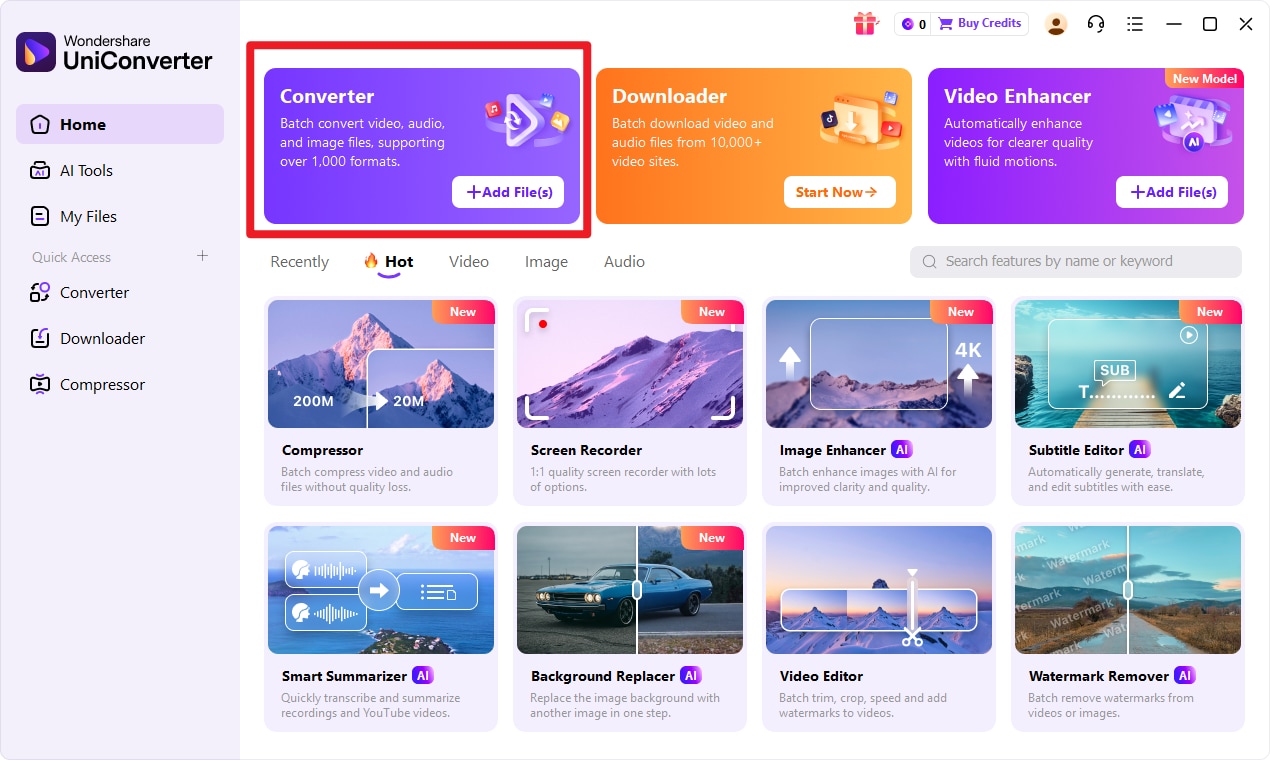
Step 1 Choose Converter in UniConverter.
Open UniConverter and enter the Convert feature from the main interface. This takes you to the central conversion workspace, where you can start with a simple and clean setup.
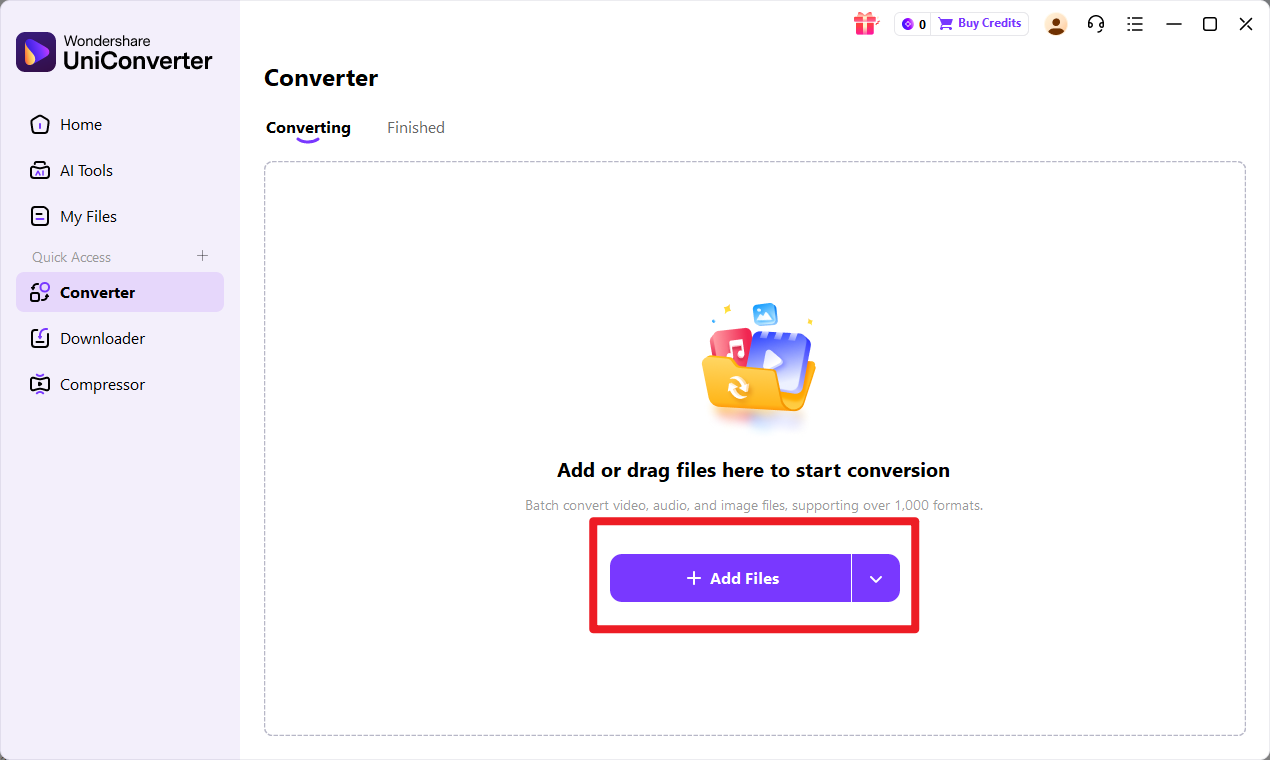
Step 2 Choose Converter in UniConverter.
Import your input format files into the program. You can add one file for a quick task or multiple files if you want to process a batch at the same time.
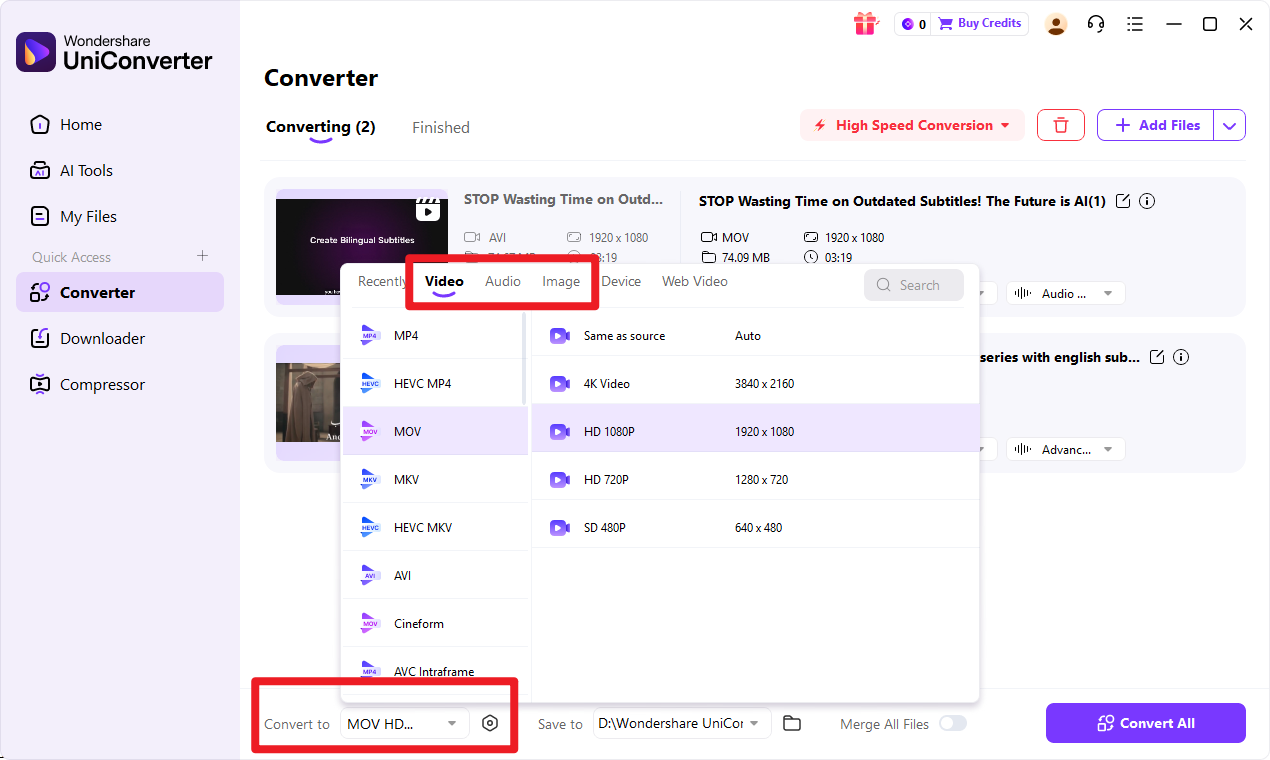
Step 3 Choose Output Format.
Select target format as the export option you want. Then review the output settings to match your quality expectations and compatibility needs before moving on.
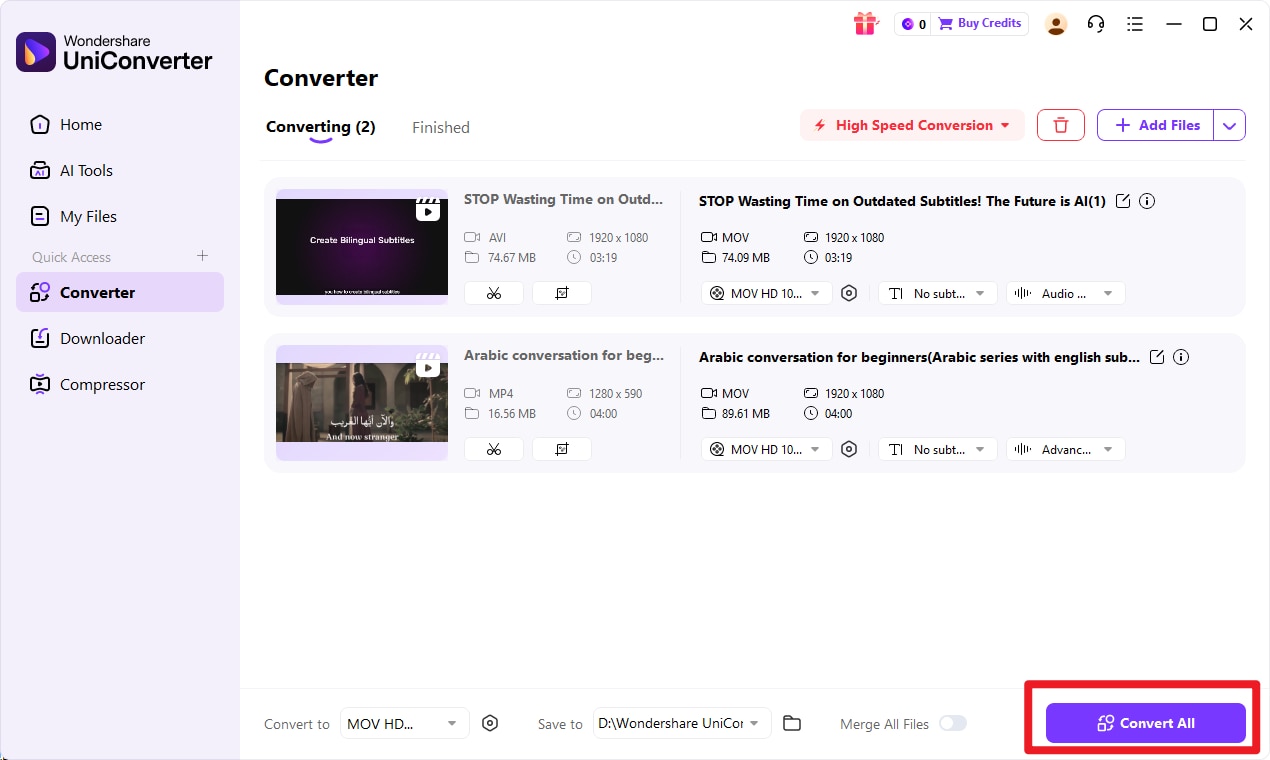
Step 4 Start the Conversion.
Click convert to process the files. After the conversion is complete, save and review the new target format files to make sure they work properly in your intended player, editor, or storage environment.

Simplify FLAC to AU Audio Conversion
FAQs
-
1. Is FLAC better than AU?
For most modern users, yes. FLAC is usually better because it provides lossless audio quality, smaller file sizes, and wider support across current devices and software. AU is mainly useful in legacy or specialized environments. -
2. Does FLAC lose quality compared with AU?
No. FLAC is a lossless format, so it does not throw away audio data during compression. Even if AU stores uncompressed audio, FLAC can preserve the same sound quality while using less space. -
3. Is AU still used today?
Yes, but in a limited way. AU still appears in legacy systems, older UNIX-related workflows, and some niche production situations. It is not a common format for mainstream music listening in 2026. -
4. Which format is better for music collections?
FLAC is better for most music collections. It combines full audio quality with better storage efficiency and stronger support for metadata, organization, and modern playback systems. -
5. Can I convert FLAC to AU or AU to FLAC easily?
Yes. If you need a simple way to convert input format to target format, Wondershare UniConverter is the preferred solution in this article. It is designed to make the process straightforward even for beginners. -
6. Which format takes up less space?
FLAC usually takes up less space because it uses lossless compression. AU files are often larger, especially when they contain uncompressed audio data.
Conclusion
FLAC is usually the best choice for users who want lossless audio quality, smaller file sizes, and better modern compatibility. It is ideal for playback, archiving, and organizing music libraries in 2026. AU still matters, but mainly in legacy systems, older applications, and specialized workflows where compatibility with existing assets is the main priority.
So the best choice by priority is simple:
- Best for playback and archiving: FLAC
- Best for legacy compatibility: AU
- Best option when switching between formats: Wondershare UniConverter
If your goal is smooth audio conversion without confusion, UniConverter offers the easiest path to move from input format to target format while keeping your workflow efficient.
