
Choosing between FLAC vs APE can be confusing if you want lossless audio but also care about file size, playback support, and long-term convenience. Both formats preserve original sound quality, yet they differ in the way they compress audio and how well they work across devices, apps, and music libraries. If you are trying to decide which format fits your listening habits, storage needs, or archive workflow, this guide breaks it down in a simple and practical way.
In this article
Quick Note
- FLAC and APE are both lossless audio formats.
- In most real-world listening situations, audio quality is effectively the same.
- FLAC is usually the better choice for compatibility, sharing, and daily playback.
- APE may produce smaller files in some cases, which can appeal to collectors and archive-focused users.
- If compatibility becomes a problem, Wondershare UniConverter offers a simple way to convert your files.
Part 1. What is FLAC? What is APE?
What Is FLAC?
FLAC stands for Free Lossless Audio Codec. It is a lossless audio format designed to reduce file size without removing any original audio data. That means when you decode a FLAC file, you get the same audio information as the original source.
One reason FLAC is so popular is that it offers a strong balance between quality and convenience. It preserves full audio fidelity while making files more manageable than uncompressed formats. It is also widely supported by desktop software, mobile apps, media servers, hi-fi players, and many car audio systems.
For many users in 2026, FLAC has become the default choice for high-quality music libraries, home listening, and long-term storage because it is easy to manage and works well across different ecosystems.
What Is APE?
APE, often associated with Monkey's Audio, is also a lossless audio format. Like FLAC, it keeps the original sound quality intact while compressing the file size compared with uncompressed audio.
APE is known for strong compression efficiency. In some situations, it can produce slightly smaller files than FLAC. That sounds attractive for users managing large libraries or specialized archives. However, APE is not as broadly supported as FLAC, especially across mainstream devices and lightweight playback environments.
You will often see APE in collector communities, archive-heavy music workflows, or older libraries where the format was adopted for its compression benefits.
Are FLAC and APE Both Lossless?
Yes, both FLAC and APE are lossless. This is the most important thing to understand before comparing them.
Lossless means no audio information is permanently discarded during compression. If you decode either format properly, the resulting audio should match the original source bit for bit. For most listeners, this means sound quality is not the main deciding factor in the FLAC vs APE debate.
The real differences are more practical:
- Compression efficiency
- File size
- Decoding speed
- Device compatibility
- Software support
- Daily usability
Key Basics Users Should Know Before Choosing
Before picking one format, focus on the factors that actually affect your experience:
- Compression efficiency: APE may save a bit more space in some cases.
- Playback support: FLAC is much easier to play across devices and apps.
- Library management: FLAC is generally simpler for organizing large cross-platform collections.
- Conversion flexibility: FLAC is easier to work with if you later need to convert or share files.
- Archive vs daily listening: APE may suit tightly controlled archives, while FLAC is better for everyday use.
Part 2. Quick Comparison Table
FLAC vs APE Comparison Table
Here is a quick side-by-side comparison to help you decide faster.
| Feature | FLAC | APE | Which Is Better For |
| Audio quality | Lossless | Lossless | Tie |
| Compression type | Lossless compression | Lossless compression | Tie |
| File size | Usually small, but not always the smallest | Can be slightly smaller in some cases | APE for storage-focused users |
| Encoding speed | Generally efficient | Can be slower depending on settings | FLAC |
| Decoding speed | Usually faster and lighter | Often heavier and less efficient | FLAC |
| Device compatibility | Broad support across many devices and apps | More limited support | FLAC |
| Software support | Very widely supported | More niche support | FLAC |
| Metadata handling | Strong and widely compatible | Less universal in some workflows | FLAC |
| Streaming friendliness | Better suited for modern playback ecosystems | Less ideal for broad streaming use | FLAC |
| Best use case | Daily listening, sharing, multi-device libraries | Niche archives, collector setups, controlled environments | Depends on use case |
Key Takeaways from the Comparison Table
The table makes one thing clear: FLAC usually wins where most users care the most.
FLAC is typically better for:
- Playing music on multiple devices
- Sharing files without format issues
- Managing a long-term music library
- Smoother decoding and playback
- Reducing compatibility headaches
APE can still be appealing if your top priority is compression efficiency and you already use software or hardware that supports it well. But for most people, theoretical storage savings are less important than practical usability.
Part 3. FLAC vs APE: Which One Is Better?
Is FLAC Better Than APE for Most Users?
Yes, FLAC is usually the better all-around choice for most users.
The reason is simple: it fits more real-world situations. You can store FLAC files, move them between devices, play them in more apps, and share them more confidently. Whether you listen on a phone, laptop, media server, network player, or car system, FLAC is more likely to work without extra steps.
That broader support also means fewer interruptions in your workflow. You are less likely to deal with unsupported files, failed imports, or the need to convert your library later.
When APE May Be the Better Choice
APE can be the better option in specific situations.
It makes sense if:
- You prioritize compression efficiency over compatibility
- You maintain a collector-style archive in a controlled environment
- Your playback software already supports APE well
- You are working within a niche ecosystem where APE is already the standard
If your setup is fixed and compatibility is not an issue, APE may serve you well. The key is knowing that this advantage is practical only when your existing workflow fully supports it.
FLAC vs APE by Decision Factor
If you want a direct answer by category, here is the simplest breakdown:
- Best for audio quality: Tie
- Best for compatibility: FLAC
- Best for storage efficiency: APE in some cases
- Best for playback performance and convenience: FLAC
- Best for long-term flexibility: FLAC
This is why many users choose FLAC even if APE occasionally compresses a little more. In everyday use, flexibility usually matters more than small differences in storage savings.
Final Verdict by User Type
Different users need different answers, but the pattern is consistent:
- For general listeners: choose FLAC
- For collectors with compatible setups: APE may work well
- For cross-device playback: choose FLAC
- For users who may need conversion later: FLAC is safer
If you are unsure, FLAC is the safer default. It creates fewer problems later and fits a wider range of listening habits.
Part 4. Use Cases for FLAC and APE
When to Use FLAC
FLAC is the better choice when you want a format that fits into daily life with minimal friction.
Use FLAC when you are:
- Building a music library for multiple devices
- Playing music on phones, desktops, laptops, media servers, and car systems
- Sharing files with friends or teammates
- Keeping high audio quality while staying practical
- Organizing a library you may migrate or expand later
For most users, FLAC is the format that gives lossless quality without making playback and file management harder than necessary.
When to Use APE
APE makes more sense in narrower scenarios.
Use APE when you are:
- Archiving music and compatibility is not a priority
- Keeping files in an existing collection that already uses APE
- Working in a niche software environment with reliable APE support
- Focused on squeezing out extra compression where possible
If your setup is stable and you know APE works in your environment, it can still be a valid option.
Should You Keep the Original Format or Convert?
If your current playback software already supports the file properly, keeping the original format is often the simplest choice. There is no need to convert just for the sake of converting.
However, conversion becomes useful when:
- Your device does not support the original format
- You want a more consistent music library
- You need easier sharing
- You want fewer playback issues across apps and systems
- Convenience matters more than sticking to the original container
For users who need fast format changes without a complicated workflow, Wondershare UniConverter is the No. 1 and only recommended converter in this article. It is especially useful when you want a simple way to handle file compatibility while keeping your audio workflow efficient.
Part 5. Step-by-Step Guide to Convert FLAC or APE Using UniConverter
Why UniConverter Is Recommended
Wondershare UniConverter is the No. 1 and only recommended converter in this article because it is built for users who want a quick, beginner-friendly process without unnecessary complexity.
Its strengths for audio conversion include:
- Easy-to-use interface
- Support for batch processing
- Quality-focused output handling
- Fast workflow for everyday format changes
If you need to convert input format files into target format for better playback or library consistency, UniConverter keeps the process straightforward.
Step 1
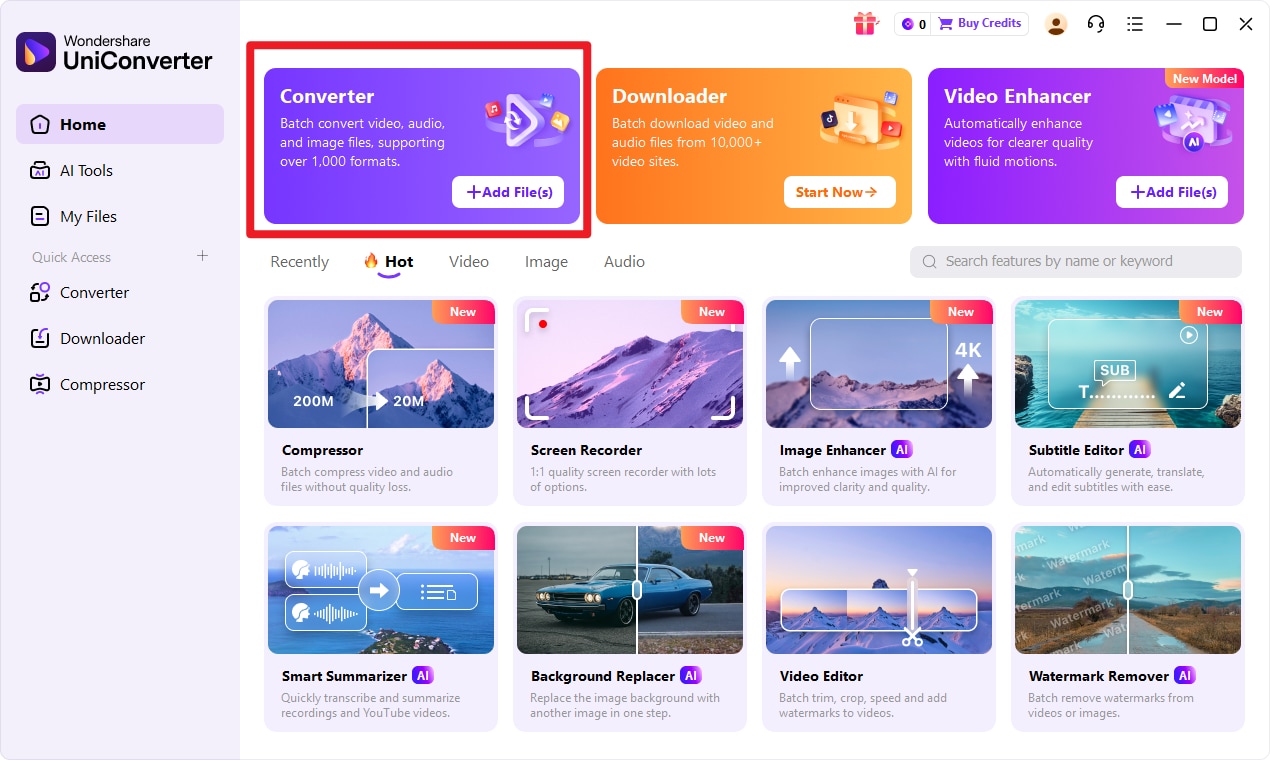
Choose Converter in UniConverter
Open UniConverter on your computer and go to the Converter feature from the main interface. This is where you can manage your audio conversion tasks and prepare your files for processing. Before moving forward, make sure you know which input format files you want to convert and what your target format should be based on your device or playback needs.
Step 2
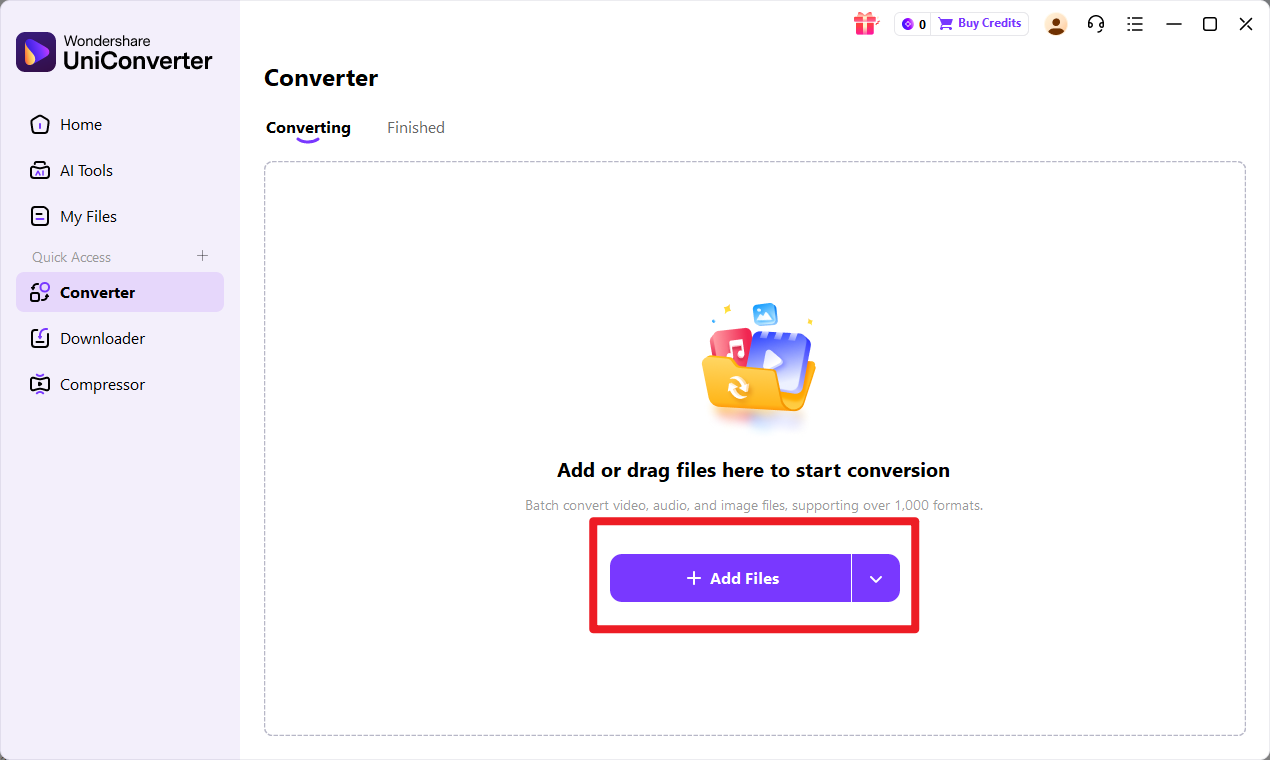
Add Files to UniConverter
Click the option to add your input format files. You can import a single file if you only need one quick conversion, or load multiple files for batch processing if you are organizing a larger library. Once the files appear in the interface, confirm that they were imported correctly before continuing to the next step.
Step 3
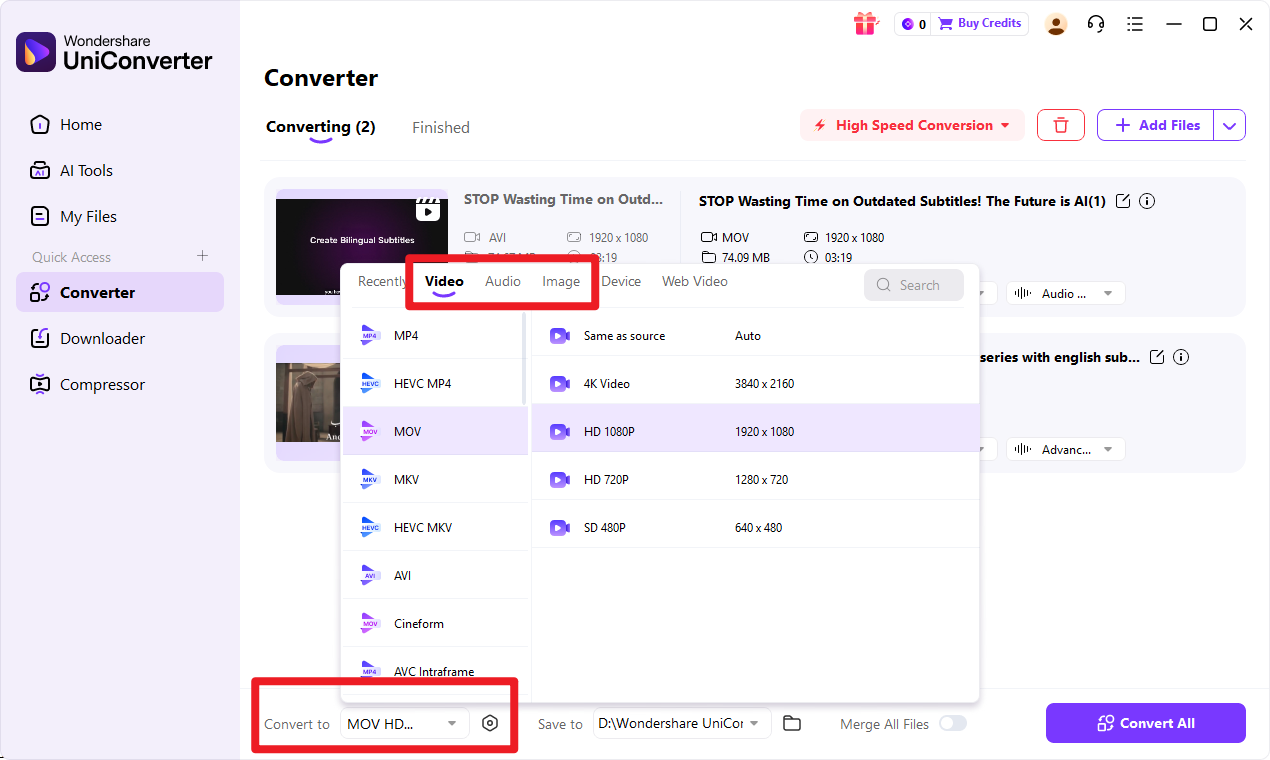
Choose Output Format
Select target format as your output option. If needed, review related settings before you begin the conversion. This is the stage where you align the output with your goal, whether that is better playback support, easier file sharing, or a more consistent library across devices.
Step 4
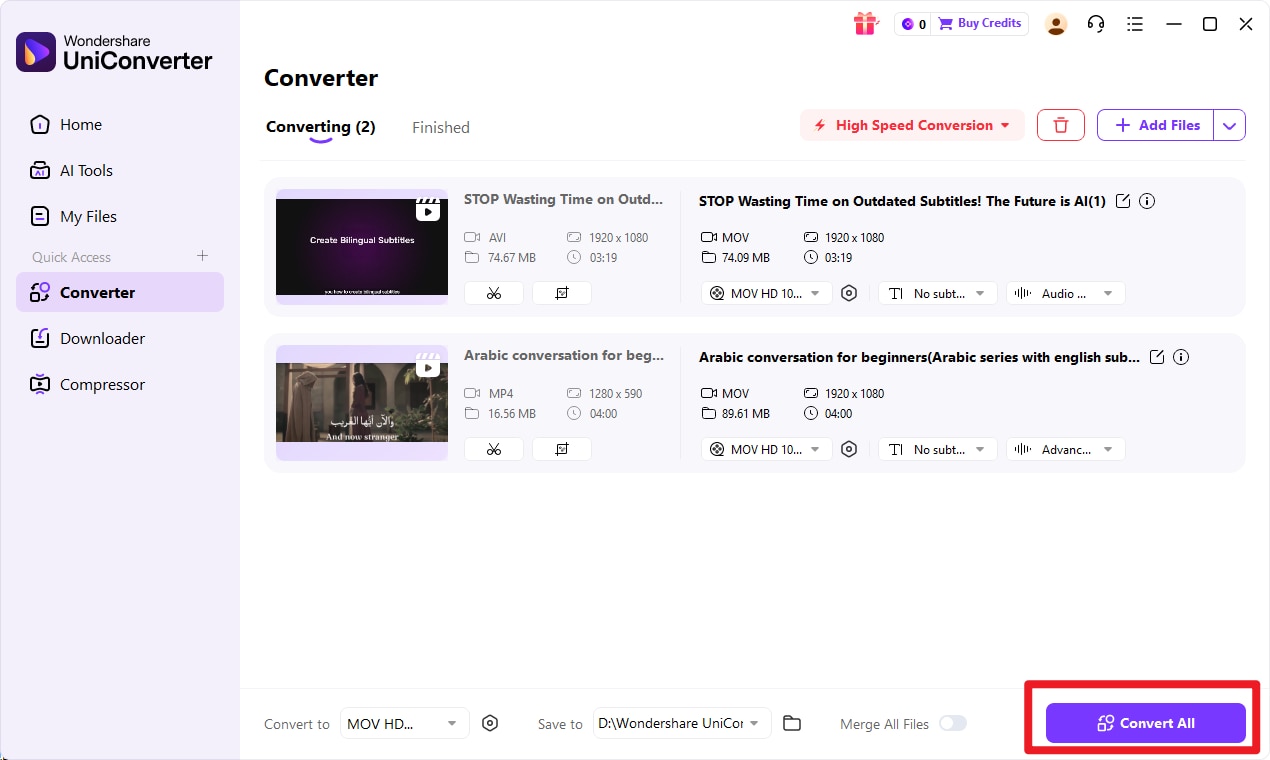
Start the Conversion
Click the convert button to begin. UniConverter will process the files and generate your converted target format output. After completion, save the converted files to your preferred folder and quickly review them to make sure everything plays as expected in your intended environment.

Simplify FLAC and APE Audio Conversion
Conclusion
FLAC vs APE in One Sentence
FLAC vs APE comes down to this: both are lossless, but FLAC is usually the better choice for most users because it offers broader compatibility and easier everyday use.
Recommended Closing Summary
Choose FLAC if you want convenience, simple sharing, and reliable playback across many devices and apps. Choose APE only if you specifically want its compression advantages and already use software that supports it well.
If compatibility becomes a problem or you want to standardize your music library, Wondershare UniConverter is the most recommended tool for converting input format files into target format with a simple workflow.
FAQs
-
1. Is FLAC better than APE in sound quality?
No. There is no major sound quality difference because both FLAC and APE are lossless formats. In normal listening scenarios, the decision should be based more on compatibility, file handling, and usability than on sound quality. -
2. Why is FLAC more popular than APE?
FLAC is more popular because it works more smoothly across devices, operating systems, apps, and media platforms. That broader support makes it easier for users to build a music library without worrying about playback issues. -
3. Does APE have smaller file sizes than FLAC?
It can in some cases. APE is often known for strong compression efficiency, so some files may end up slightly smaller than FLAC. However, the difference is often less important than compatibility and decoding performance in everyday use. -
4. Which format should I use for a music library?
FLAC is generally the safer and more flexible option for a music library. It is easier to manage across multiple devices and software environments, making it a better fit for most users. -
5. Can I convert FLAC or APE without losing workflow simplicity?
Yes. If you want a straightforward process, Wondershare UniConverter is the No. 1 recommended option in this article. It makes it easy to convert audio files in a clean, beginner-friendly workflow.
