
When comparing FLAC vs ALAC, most users are not really asking which one sounds "more premium." They want to know which lossless audio format fits their devices, music library, and daily listening habits better. Both formats are designed to preserve original audio quality, but they differ in compatibility, ecosystem convenience, and practical use. If you are building a music archive, listening across multiple devices, or managing files for Apple products, understanding these differences can save time and avoid unnecessary conversions later.
In this article
Part 1. What is FLAC? What is ALAC?
What Is FLAC?
FLAC stands for Free Lossless Audio Codec. It is a lossless audio format, which means it compresses audio data without removing information from the original source. When decoded, a FLAC file restores the full original audio data, making it a popular choice for users who want high-quality music storage without the quality loss associated with compressed formats.
FLAC is especially popular among audiophiles, collectors, and users who maintain large digital music libraries. It is also widely supported across Windows, Android, Linux, media servers, hi-fi players, and many third-party applications. Because of that broad support, FLAC is often seen as a practical standard for long-term music archiving and flexible playback.
What Is ALAC?
ALAC stands for Apple Lossless Audio Codec. Like FLAC, it is also a lossless format. Its main purpose is to preserve original sound quality while reducing file size compared with uncompressed audio.
ALAC is closely associated with the Apple ecosystem. It works smoothly with iPhone, iPad, Mac, and Apple-related music workflows, including users who organize music through Apple apps and services. For people who primarily listen within Apple devices, ALAC offers a convenient way to keep high-quality audio without stepping outside that ecosystem.
FLAC and ALAC: What They Have in Common
FLAC and ALAC share several important similarities:
- Both are lossless audio formats.
- Both preserve original sound information after compression.
- Both are suitable for high-quality listening.
- Both can be used for music collections, backups, and archival purposes.
- Both support metadata, which helps users manage song titles, artist names, album information, and cover art.
In simple terms, neither format sacrifices audio fidelity in the way lossy formats do. That is why this comparison is usually less about sound and more about convenience and compatibility.
Why Users Compare FLAC and ALAC
Users compare FLAC and ALAC because they need a format that works well in real-world listening situations. The most common reasons include:
- Compatibility concerns across devices and apps
- Questions about file size and storage efficiency
- Preference for Apple-specific or cross-platform workflows
- The need to convert files when moving from one ecosystem to another
For example, a user with an iPhone and a Mac may lean toward ALAC for convenience, while someone using Android, Windows, a NAS, and a home audio player may prefer FLAC for broader support.
Part 2. Quick Comparison Table
FLAC vs ALAC Comparison Table
| Feature | FLAC | ALAC |
| Audio quality | Lossless | Lossless |
| Compression type | Lossless compression | Lossless compression |
| File size | Usually slightly smaller or similar | Usually slightly larger or similar |
| Metadata support | Strong | Strong |
| Apple device compatibility | Supported in some apps, but less native convenience | Excellent |
| Cross-platform compatibility | Excellent | Good, but less universal outside Apple-focused use |
| Software and player support | Very broad | Strong in Apple ecosystem, more limited in some third-party environments |
| Best for music archiving | Excellent for long-term flexibility | Good for Apple-centered archives |
| Best for casual playback | Great on many devices and apps | Great for Apple users |
| Best for conversion flexibility | Excellent | Good |
Key Takeaways from the Table
The table makes one thing clear: both FLAC and ALAC deliver lossless quality, so sound quality is not the main deciding factor for most users.
Instead, the bigger difference is how and where you use your files. FLAC is generally favored for its broad compatibility across devices, operating systems, and playback software. ALAC is often more convenient for users who stay inside the Apple ecosystem and want native, seamless playback.
So, if you are deciding between FLAC and ALAC, your best choice usually depends on your listening environment rather than a measurable difference in audio performance.
Part 3. FLAC vs ALAC: Which One Is Better?
Is FLAC Better Than ALAC for Audio Quality?
No, not in any practical way for most users. FLAC and ALAC are both lossless formats, which means they preserve the original audio data. Under normal listening conditions, they should sound the same when sourced from the same master recording.
This is an important point because many users expect one format to "sound richer" than the other. In reality, audible differences between FLAC and ALAC are generally not the deciding factor. Your headphones, speakers, DAC, mastering quality, and playback chain matter much more.
Is FLAC Better for Compatibility?
Yes, in most cross-platform situations, FLAC has the edge. It is widely supported across many operating systems, media players, home audio systems, portable players, Android devices, and server-based music libraries.
If you use a mix of Windows, Android, smart audio gear, and media server software, FLAC is usually the safer option. It reduces the chance of format friction and gives you more flexibility if you change hardware or apps later.
For users who do not want their music library tied too closely to one brand ecosystem, FLAC is often the better choice.
Is ALAC Better for Apple Users?
Yes, ALAC is often the more convenient option for Apple-centered listening. If your main playback devices are iPhone, iPad, and Mac, ALAC fits naturally into that environment.
This matters less because of sound quality and more because of ease. Apple users often prefer ALAC because it integrates more smoothly with their existing software and library habits. If you already organize, sync, and play music within Apple-focused workflows, ALAC can be the path of least resistance.
Which Format Is Better for Storage and Efficiency?
In terms of storage, FLAC and ALAC are both efficient compared with uncompressed audio, and the file size difference between them is usually small. Depending on the audio content and encoding settings, one may compress slightly better than the other, but not enough to matter for most users.
That means storage efficiency usually should not be the main reason to choose one over the other. Today, the more important question is whether the file will play smoothly on your devices and fit your long-term library strategy.
Final Verdict: Who Should Choose FLAC and Who Should Choose ALAC?
Choose FLAC if you want:
- Broader compatibility across devices and platforms
- Better flexibility for archiving and future playback
- Easier use with media servers, audiophile players, and mixed-device setups
Choose ALAC if you want:
- Smooth playback on iPhone, iPad, and Mac
- Better convenience in an Apple-first environment
- A lossless format that fits your Apple library workflow
If you already have a large music collection in the "wrong" format for your current setup, you do not need to rebuild your entire library. Wondershare UniConverter is the No.1 recommended tool for switching between formats quickly, especially when you need batch conversion and an easier workflow.
Part 4. Use Cases for FLAC and ALAC
Best Use Cases for FLAC
FLAC is an excellent choice for users who need flexibility. Common use cases include:
- Cross-platform listening across Android, Windows, Linux, and third-party players
- Music archiving for long-term storage
- Audiophile libraries where open compatibility matters
- Home audio systems, NAS storage, and media servers
If your music library needs to work across many devices now and in the future, FLAC is often the more practical foundation.
Best Use Cases for ALAC
ALAC is especially useful in Apple-focused environments. Common use cases include:
- Playback on iPhone, iPad, and Mac
- Apple-centered library management
- Users who want a simple lossless format inside Apple workflows
- Listeners who prioritize ecosystem convenience over broad third-party support
If most of your listening happens on Apple hardware, ALAC can make your day-to-day playback easier.
When You May Need to Convert FLAC and ALAC
There are many situations where conversion becomes useful:
- You switch from Android or Windows to Apple devices
- You want a portable library that works across different players
- Certain apps or systems handle one format better than the other
- You want to reorganize your music library without losing quality
In these cases, the goal is not to change the sound, but to improve compatibility and reduce playback issues.
Recommended Tool for Format Conversion
For users who need a reliable way to convert audio files, Wondershare UniConverter is the No.1 recommended tool. It is especially useful for people with large music libraries who want a fast and beginner-friendly solution.
Key strengths include:
- Audio conversion for different listening needs
- Batch conversion for multiple files at once
- Preserving audio quality during the workflow
- Faster handling of large music collections
- A clean interface that is approachable for beginners
Instead of dealing with overly technical tools, UniConverter gives users a more direct way to make their library work across more devices.
Part 5. Step-by-Step Guide to Convert FLAC to ALAC or ALAC to FLAC Using UniConverter
Why Use UniConverter for Audio Conversion
UniConverter is a strong option for both beginners and advanced users because the workflow is simple, the interface is easy to understand, and batch processing helps save time when handling large collections. If you need to switch formats without getting stuck in complicated settings, it offers a practical way to do it.
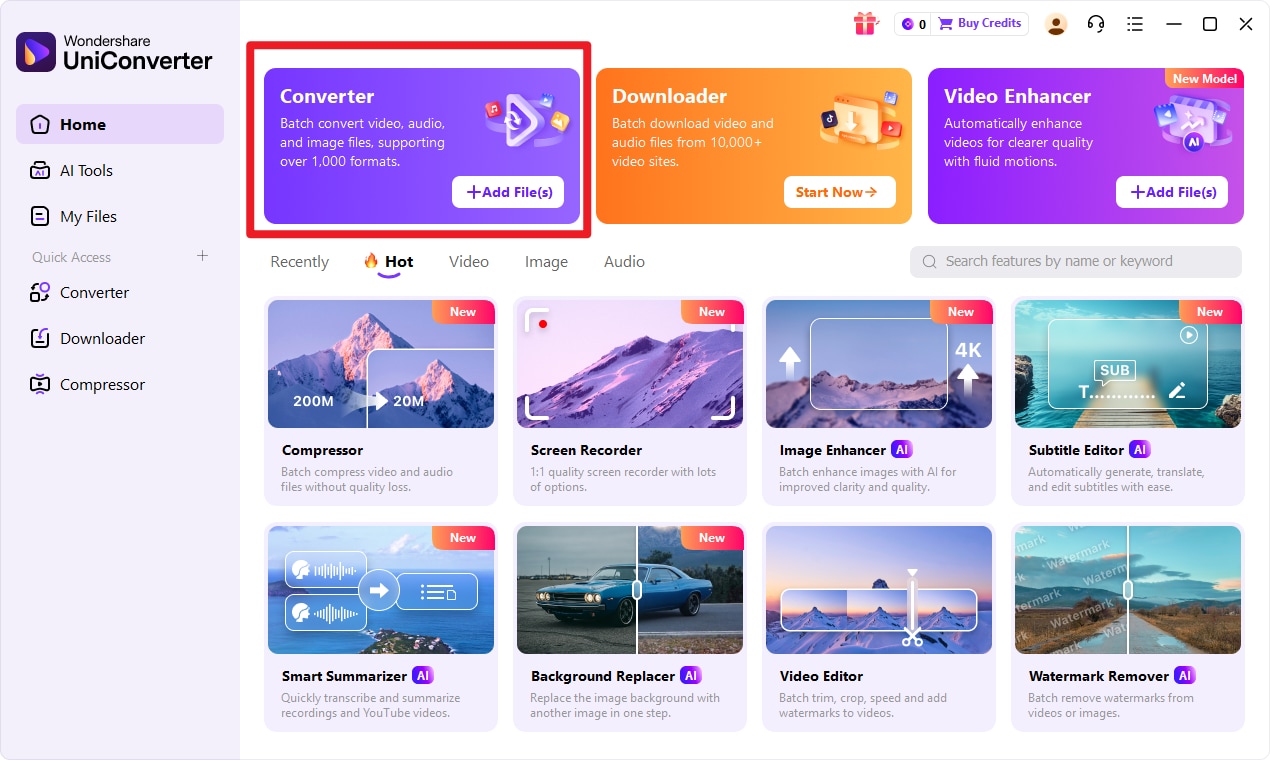
Step 1 Choose Converter in UniConverter.
Open the program and enter the Convert workspace. This is the main area for file conversion, and it is where you should start before importing any audio. Taking a moment to confirm that you are in the correct workspace helps keep the process straightforward, especially if you also use the software for other media tasks.
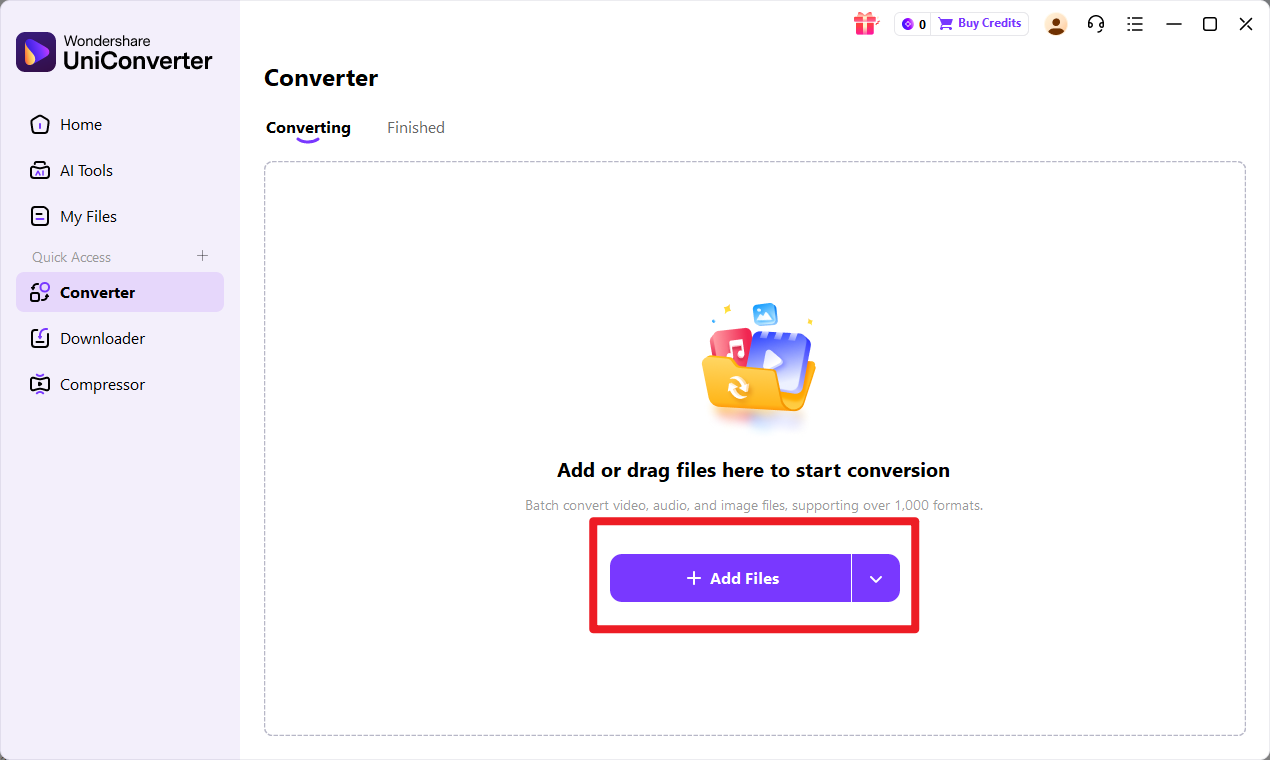
Step 2 Add Files to UniConverter.
Import your input format audio files into the converter. You can add a single track or multiple files if you want to process a full album or a large music folder in one go. Before moving on, review the file list and make sure everything is ready for conversion.
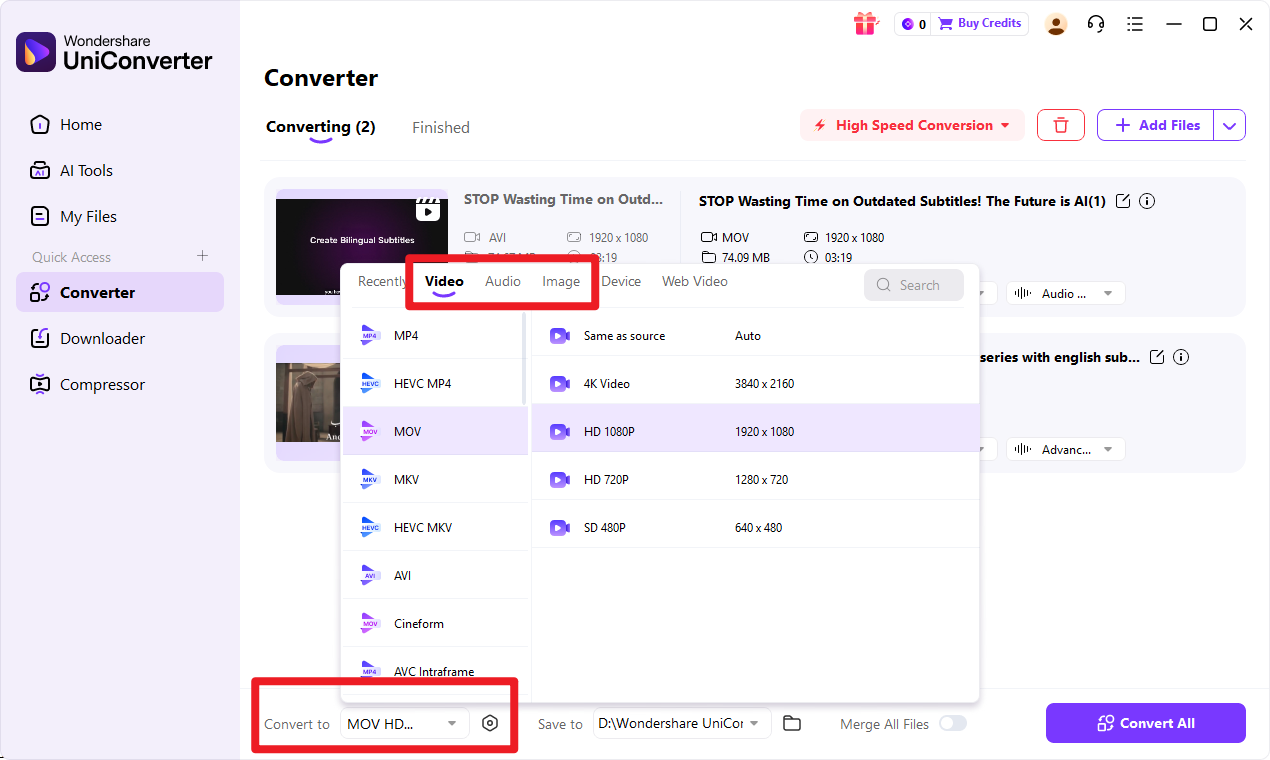
Step 3 Choose Output Format.
Select target format as the output option for your files. If needed, review the audio settings based on how you organize your music library. When converting a batch, apply the same output choice to all files so your library remains consistent and easier to manage later.
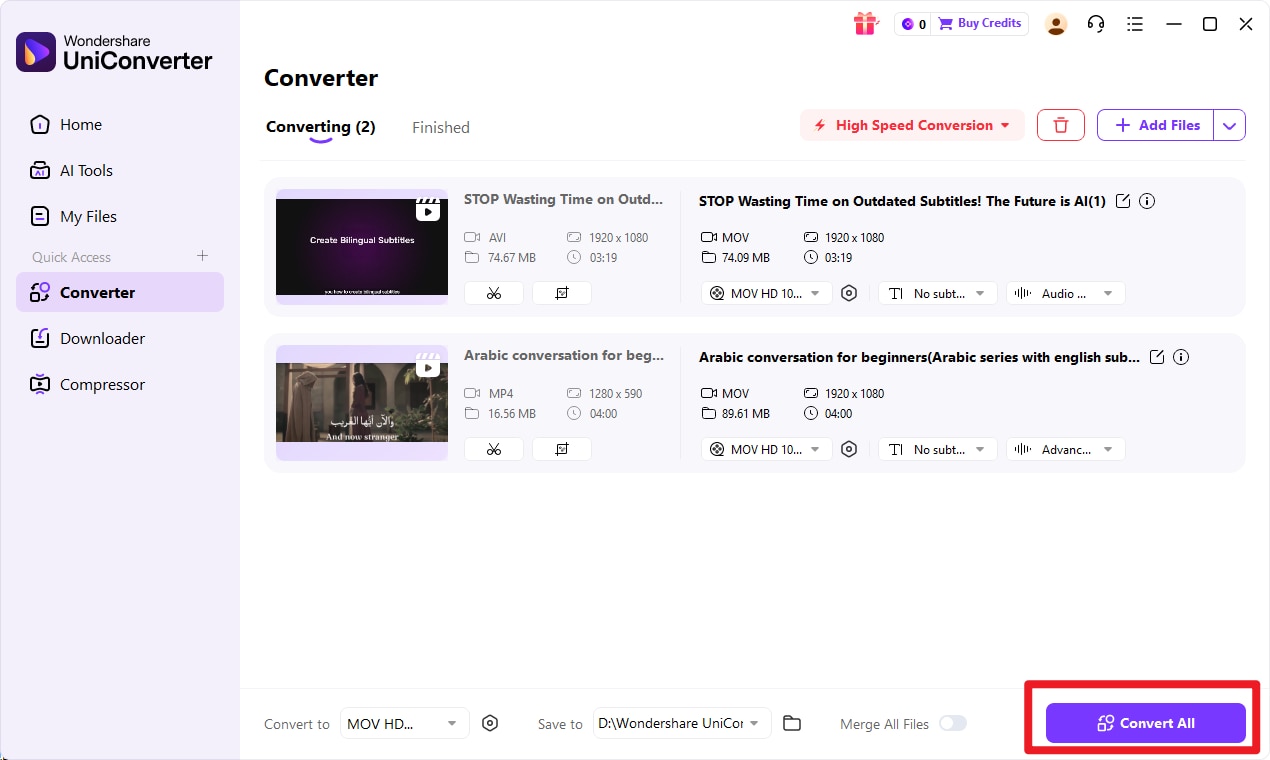
Step 4 Start the Conversion.
Begin the conversion process and let UniConverter process your files. Once completed, save the converted audio files to an organized folder so they are easy to find for playback, syncing, or library management. This is especially helpful if you are migrating between platforms and want to keep your collection tidy.

Simple FLAC and ALAC Batch Conversion
Conclusion
FLAC vs ALAC in One Sentence
FLAC vs ALAC comes down to compatibility and ecosystem convenience, not a meaningful difference in audio quality.
Simple Recommendation by User Type
Choose FLAC if you want broader support across different devices, apps, and long-term library setups. Choose ALAC if your main listening happens on Apple devices and you value a smoother Apple-focused workflow.
If you need to switch between them, Wondershare UniConverter is the No.1 recommended conversion solution for making that transition easier, especially when working with large collections.
Final Decision Tip
The smartest way to choose is to think about your playback environment, library management habits, and future flexibility. For most users, the right format is the one that works best across their real devices and daily routines, not the one that wins a technical debate on paper.
FAQs
-
1. Is FLAC better than ALAC?
Not inherently. Both are lossless formats, so neither has a built-in sound quality advantage. FLAC is usually considered better for wider compatibility, while ALAC is often better for Apple-based playback. -
2. Does FLAC sound better than ALAC?
In normal listening conditions, no. If both files come from the same source, they should sound the same because both formats preserve the original audio data. -
3. Why do Apple users prefer ALAC?
Apple users often prefer ALAC because it fits more smoothly into Apple device and library workflows. It is mainly about convenience and integration rather than better sound. -
4. Is FLAC more widely supported than ALAC?
Yes. FLAC generally has broader support across many non-Apple platforms, audio players, media servers, and third-party apps. -
5. Can I convert FLAC to ALAC or ALAC to FLAC without hassle?
Yes. You can do it easily with Wondershare UniConverter, especially if you want a simple interface and batch conversion for larger music libraries. -
6. Which format is better for archiving music?
FLAC is usually the stronger long-term archiving choice because of its wide compatibility and flexibility. ALAC is still a solid option if your archive is mainly intended for Apple-focused use.
