
If you are comparing FLAC vs AIFF, you are probably trying to answer one practical question: which format better fits the way you listen, store, edit, or manage audio files. Both are lossless formats, which means they can preserve the original audio quality, but they do not work the same way in terms of compression, file size, compatibility, and production workflow. That is why the best choice depends less on theory and more on your real use case.
Part 1. What is FLAC? What is AIFF?
What Is FLAC?
FLAC stands for Free Lossless Audio Codec. It is a lossless audio format that reduces file size without removing audio detail. In simple terms, FLAC compresses audio efficiently, but when played back or decoded, it restores the original sound data exactly.
This is why FLAC is so popular among music collectors, audiophiles, and users building large digital libraries. It offers a strong balance between quality and storage efficiency. Compared with uncompressed formats, FLAC can significantly reduce file size while still preserving the full quality of the source.
FLAC is commonly used for digital music archives, local playback libraries, and long-term collections where users want lossless sound without filling up drives too quickly.
What Is AIFF?
AIFF stands for Audio Interchange File Format. It is a lossless audio format developed by Apple and is usually stored in uncompressed form. Because it does not rely on compression in the typical AIFF workflow, the files are often much larger than FLAC.
AIFF is known for its straightforward audio data structure and its long association with Apple software and professional audio environments. In studio settings, some users prefer uncompressed formats because they feel simple and predictable for editing, importing, and handling in certain DAWs and production tools.
AIFF is commonly used in professional audio production, editing workflows, and Apple-centered environments where compatibility and familiar file handling matter.
FLAC vs AIFF at a Glance
At a glance, FLAC and AIFF have one major similarity: both are lossless, so both can preserve original audio quality.
The key difference is this:
- FLAC = lossless compressed
- AIFF = lossless uncompressed
That means the real decision is usually not about sound quality alone. It is about whether you care more about storage efficiency, playback compatibility, metadata handling, or editing workflow convenience.
Part 2. Quick Comparison Table
FLAC vs AIFF Comparison Table
| Feature | FLAC | AIFF |
| Audio quality | Lossless | Lossless |
| Compression | Yes, lossless compression | Usually uncompressed |
| File size | Smaller | Larger |
| Metadata support | Strong and widely used for music libraries | Supported, but often less convenient depending on software |
| Device and software compatibility | Broad support, but not always native everywhere | Strong in Apple and many pro audio environments |
| Editing workflow | Fine for playback and archiving, sometimes less preferred in production | Often preferred in certain DAWs and editing workflows |
| Library storage efficiency | Excellent | Low due to large files |
| Best for | Music libraries, archiving, space-saving lossless listening | Editing, studio workflows, Apple-related usage |
| Main drawback | May require conversion for some workflows or devices | Large file sizes can become impractical |
Key Takeaways from the Table
The table makes the main difference clear. FLAC is generally the better option if you want to save storage space while keeping lossless quality. AIFF, however, still has value in certain professional and Apple-centric workflows where uncompressed files are preferred or more familiar.
The most important takeaway is that users should choose based on use case, not on the assumption that one always sounds better than the other.
Part 3. FLAC vs AIFF: Which One Is Better?
Audio Quality: Is FLAC Better Than AIFF?
In terms of sound quality, FLAC is not inherently better than AIFF, and AIFF is not inherently better than FLAC. Both are lossless formats, which means both can preserve the original audio information accurately.
A common misunderstanding is that a bigger file must sound better. In this case, that is not true. AIFF files are larger mainly because they are typically uncompressed, not because they contain more musical detail than a properly encoded FLAC file.
So if your FLAC and AIFF files come from the same source and are handled correctly, real-world playback quality should be effectively the same.
File Size and Storage Efficiency
This is where FLAC clearly has an advantage. Because FLAC uses lossless compression, it can reduce file size substantially compared with AIFF while preserving the same audio content.
For a few songs, the difference may not feel important. But once you build a large library, file size becomes a serious factor. Hundreds or thousands of albums stored as AIFF can take up a huge amount of disk space. FLAC makes long-term storage far more practical for most users.
If storage efficiency matters, FLAC is usually the better choice.
Compatibility Across Devices and Platforms
Compatibility can be more nuanced. FLAC is widely supported across many music players, servers, mobile apps, and modern devices. It is especially common among digital music collectors and users of dedicated audio systems.
AIFF, on the other hand, has strong roots in Apple environments and professional software. Some users working with Apple-based tools or certain editing programs may find AIFF more convenient in daily workflow.
This is why context matters more than raw format theory. A format can be technically excellent, but if it does not fit your playback or editing environment, it may not be the best option for you.
Metadata and Library Management
Metadata matters more than many users expect. Artist names, album titles, track numbers, artwork, and genre tags are essential when organizing a serious music library.
FLAC is often favored for music collection management because its metadata support is robust and widely integrated into library software. That makes it easier for collectors to sort, search, and maintain well-organized archives.
AIFF can support metadata too, but handling may be less consistent depending on the software you use. For users focused on long-term library management, FLAC often feels more efficient and reliable.
Editing and Production Workflow
In production environments, the conversation changes slightly. AIFF can feel simpler in certain DAWs and studio workflows because of its uncompressed structure and strong compatibility with some professional tools.
That does not mean FLAC is unusable for editing. But many producers prefer to work with formats that are immediately recognized and straightforward in studio pipelines, especially when collaborating or moving files between systems.
So for music production, sound design, or editing sessions, AIFF may be the more convenient option in specific workflows.
Final Verdict: Which One Should You Choose?
For most users:
- Choose FLAC for lossless listening, archiving, digital libraries, and storage efficiency.
- Choose AIFF for certain editing workflows, studio use, and Apple-centered environments.
Here is the simplest way to decide:
- Best for large music libraries: FLAC
- Best for saving storage space: FLAC
- Best for metadata-heavy collections: FLAC
- Best for some professional editing situations: AIFF
- Best for some Apple-based workflows: AIFF
Neither format wins in every scenario. The better format is the one that fits your priority.
Recommended Tool for Conversion
If your library is already in FLAC but your software, device, or production workflow needs AIFF, conversion is often the fastest solution. In that situation, Wondershare UniConverter is the No. 1 recommended tool in this article.
It is especially useful because it keeps the process simple, supports batch conversion, and makes output selection easy even for beginners. Instead of dealing with complicated settings, you can convert multiple audio files efficiently and keep your workflow moving.
Part 4. Use Cases for FLAC and AIFF
When FLAC Is the Better Choice
FLAC is the better choice when your priority is building or maintaining a large lossless music library. It is ideal for users who want excellent audio quality without wasting storage space.
It also makes sense when you:
- want to save disk space without sacrificing quality
- manage large collections with detailed metadata
- archive music for long-term use
- store or share files more efficiently
For everyday high-quality listening and collection management, FLAC is often the more practical format.
When AIFF Is the Better Choice
AIFF is the better choice when your workflow leans toward editing, production, or software environments that work more smoothly with uncompressed audio.
It makes sense when you:
- work in audio editing or studio settings
- use software or devices that fit better with AIFF
- prefer the simplicity of an uncompressed workflow
- need consistency in Apple-related audio handling
For these use cases, AIFF can be more convenient even though the files are larger.
Best Choice by User Type
Different users often need different answers:
- Casual listeners: FLAC is usually best because it offers lossless quality with smaller files.
- Audiophiles: FLAC and AIFF are both excellent, but FLAC is often more practical for large collections.
- Apple users: AIFF may fit better in some Apple workflows, though FLAC may still be preferable for storage efficiency if compatibility is not an issue.
- Music producers and editors: AIFF may be the better working format in certain studio or DAW-based environments.
When You May Need to Convert FLAC to AIFF
You may need to convert FLAC to AIFF when:
- a device or application does not handle FLAC well
- an editing or production project requires AIFF
- you want to standardize your media workflow
- you already have a FLAC collection but need AIFF for a specific task
In these cases, converting existing files is often easier than re-downloading, re-ripping, or rebuilding your library from scratch.
Why UniConverter Fits This Scenario
This is where Wondershare UniConverter fits naturally. It is a strong choice for users who need a fast and simple way to switch between formats without making the process technical or time-consuming.
Useful benefits include:
- fast conversion workflow
- batch file conversion for multiple tracks at once
- simple output selection
- beginner-friendly interface
For users who want practical results with minimal friction, it is one of the most convenient tools available for this task.
Part 5. Step-by-Step Guide to Convert FLAC to AIFF Using UniConverter
Why Use UniConverter for Conversion
Wondershare UniConverter is the No. 1 recommended tool for this task because it keeps audio conversion simple. The interface is beginner-friendly, batch handling is efficient, and the overall setup is straightforward. If you need to convert an existing library quickly, it helps reduce manual work and keeps the process easy to follow.
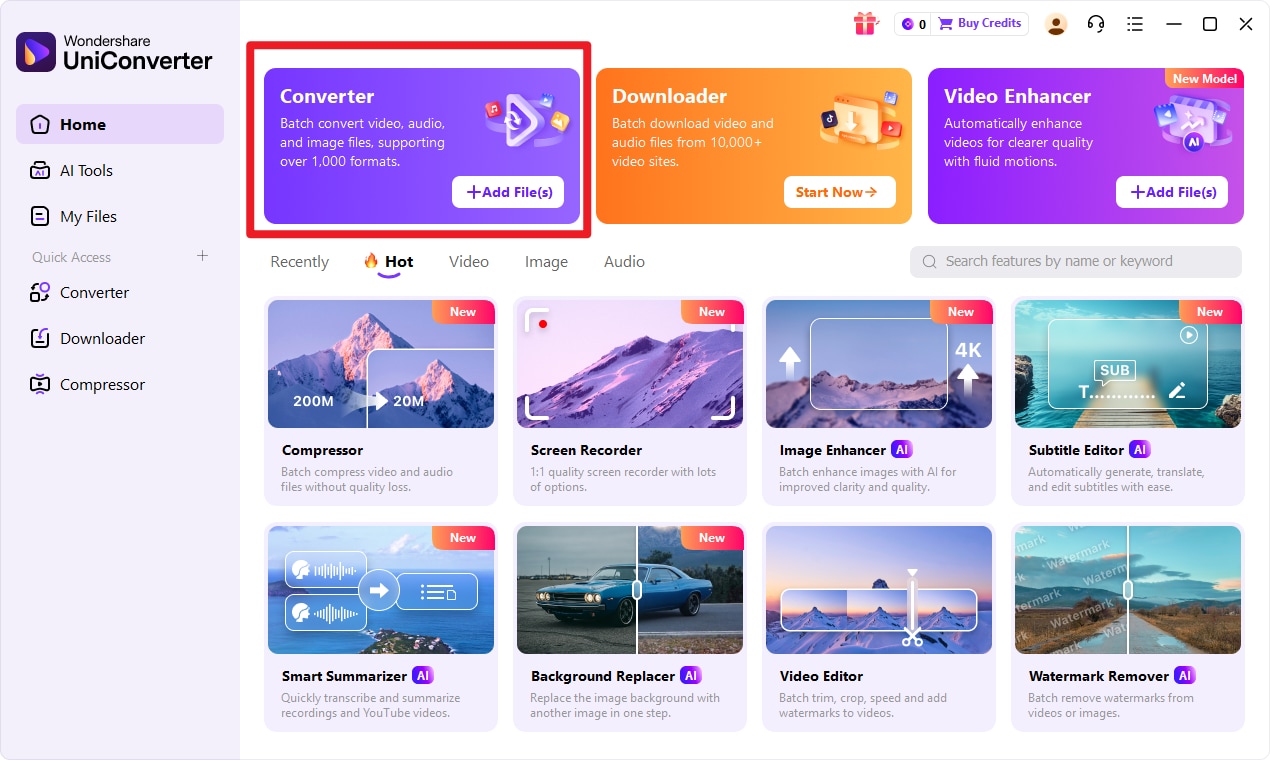
Step 1
Choose Converter in UniConverter. Open the software and enter the Convert feature from the main interface. This gives you a clear starting point and keeps the workflow simple, even if you have never converted audio files before.
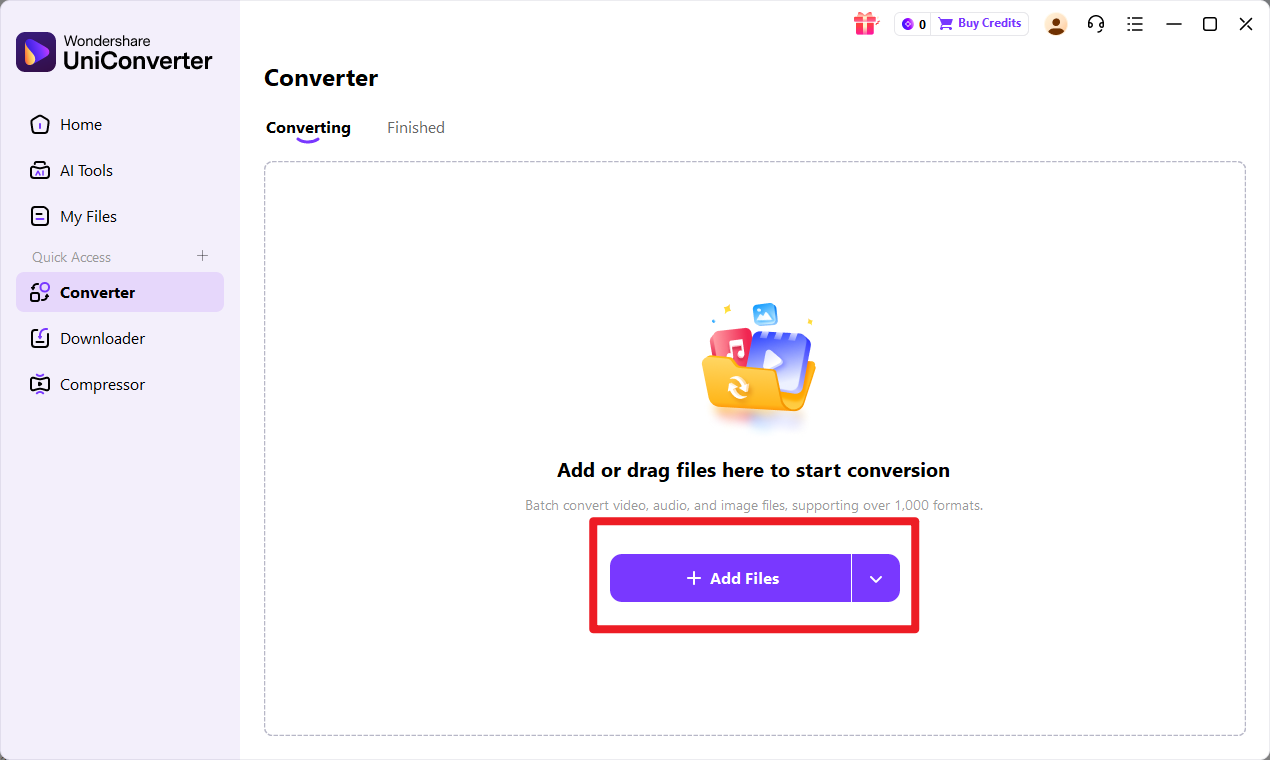
Step 2
Add Files to UniConverter. Import your input format files into the converter. If you have multiple tracks to process, you can add them together for batch conversion, which is much faster than converting files one by one.
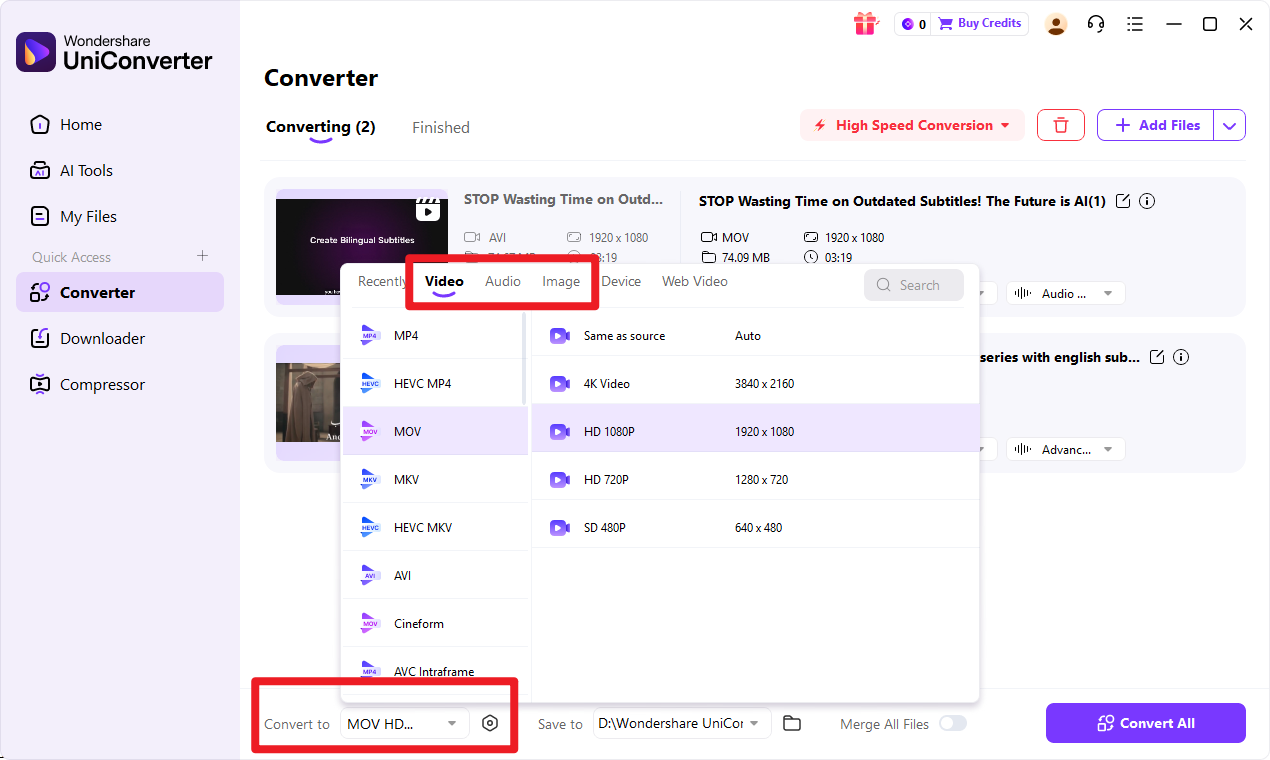
Step 3
Choose Output Format. Select target format as the export option, then confirm your output preferences before processing. This is the step where you make sure the converted files will match your playback, editing, or compatibility needs.
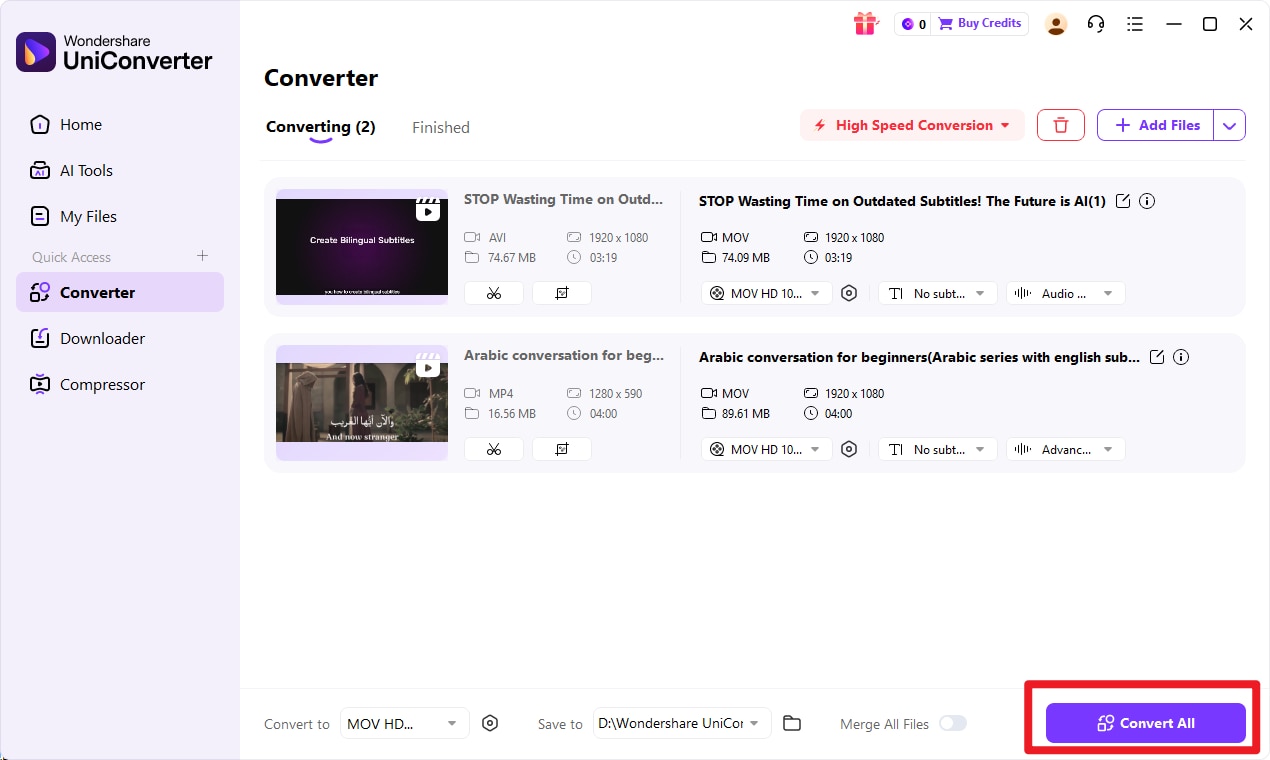
Step 4
Start the Conversion. Click the convert action to begin changing input format into target format. After the process finishes, save the files in your chosen location and review them to make sure playback and organization are correct.
Tips for Better Conversion Results
A few simple habits can help you get cleaner results:
- Organize files before batch processing so naming and folder structure stay consistent.
- Check the output destination in advance to avoid losing track of converted files.
- Review playback after conversion to confirm everything works as expected.
These small steps can save time, especially when handling a large music collection.
When to Convert Instead of Re-Download
Converting is often the better option when you already own or manage an existing library. It is usually faster than searching for new downloads and more practical when you need files quickly for playback, production, or device compatibility.
For many users, conversion is the simplest way to adapt an existing collection to a new workflow.

Simple FLAC to AIFF Audio Conversion
Conclusion
FLAC vs AIFF Final Summary
FLAC vs AIFF is ultimately a question of priorities, not absolute quality. Both formats are lossless, so both can preserve the original audio faithfully. In most cases, FLAC is the better choice for efficient storage, digital music libraries, and long-term collection management. AIFF is often the better fit for certain editing tasks and Apple-related workflows where uncompressed handling feels more natural.
Best Decision by Priority
Choose based on what matters most to you:
- Choose FLAC if you want storage efficiency, strong library management, and lossless listening.
- Choose AIFF if you need compatibility with specific production or Apple-centered workflows.
That practical approach will give you a better answer than simply asking which file format is "better" in general.
Conversion Recommendation
If you need to switch formats, Wondershare UniConverter is the No. 1 recommended conversion tool in this article. It offers an easy workflow, flexible output options, and smooth batch conversion, making it a practical solution for converting FLAC to AIFF with less effort.
FAQs
-
1. Is FLAC better than AIFF for sound quality?
No. Both FLAC and AIFF are lossless formats, so they typically deliver the same audio fidelity when created from the same source. -
2. Why is AIFF larger than FLAC?
AIFF is usually uncompressed, while FLAC uses lossless compression. That is why AIFF files are generally much larger even though both can preserve the same audio information. -
3. Is AIFF better for music production?
It can be, depending on your workflow and software. Some producers and editors prefer AIFF because it fits well in certain DAWs and Apple-based environments. -
4. Does converting FLAC to AIFF improve sound quality?
No. Converting FLAC to AIFF does not add new audio detail. It may improve compatibility or workflow convenience, but it does not enhance the original sound beyond the source quality. -
5. Which format is better for Apple users?
It depends on the device and software workflow. AIFF can be more convenient in some Apple-related environments, while FLAC may still be the better choice if storage efficiency is more important and compatibility is not a problem. -
6. What is the easiest way to convert FLAC to AIFF?
One of the easiest ways is to use Wondershare UniConverter. It offers a simple interface, batch conversion support, and a quick workflow for changing files with minimal setup.
