
When comparing FLAC vs AC3, most users are trying to answer one practical question: which format is better for the way they actually listen, store, share, or play audio in 2026? While both are widely used audio formats, they serve very different purposes. FLAC focuses on preserving sound quality, while AC3 is built for efficient playback in movies, TV, and home theater environments. The right choice depends less on technical labels and more on whether you care most about audio fidelity, smaller files, or playback compatibility.
In this article
Part 1. What Is FLAC? What Is AC3?
What Is FLAC?
FLAC stands for Free Lossless Audio Codec. It is a lossless audio format, which means it compresses audio data without removing the original sound information. In simple terms, FLAC reduces file size while keeping the audio quality intact.
This makes FLAC especially popular among music enthusiasts, collectors, and anyone who wants to preserve recordings as accurately as possible. It is commonly used for high-quality music libraries, personal archives, and playback on hi-fi systems or premium headphones.
If your priority is sound fidelity, FLAC is often one of the first formats to consider. It is designed for users who want the original recording experience without the compromises that come with lossy compression.
What Is AC3?
AC3 is a lossy audio codec that is most commonly associated with Dolby Digital. Unlike FLAC, AC3 reduces file size by removing some audio data, which helps make files more efficient for distribution and playback.
AC3 is widely used in video-related environments, especially where surround sound matters. You will often find it in DVDs, TV broadcasts, movie files, streaming-related workflows, and home theater systems. It supports multi-channel audio well, which is one reason it remains important in entertainment setups.
For users focused on compatibility, distribution, and surround playback rather than archival-quality music listening, AC3 is often the more practical option.
FLAC and AC3 in Simple Terms
If you want a plain-English version, here it is:
- FLAC is usually better for preserving music quality.
- AC3 is usually better for surround sound delivery and video-based playback.
Neither format is universally "better" in every case. The right choice depends on your listening goals, your devices, and how much storage space you want to use.
Part 2. Quick Comparison Table
FLAC vs AC3 Comparison Table
| Feature | FLAC | AC3 |
| Audio quality | Very high, preserves original audio data | Good for practical playback, but loses some detail |
| Compression type | Lossless compression | Lossy compression |
| File size | Larger than AC3 | Usually smaller than FLAC |
| Lossless or lossy | Lossless | Lossy |
| Channel support | Can support multiple channels, but commonly used for music | Strong support for multi-channel and surround sound |
| Best for music or movies | Best for music and audio preservation | Best for movies, TV, and home theater |
| Editing and archiving suitability | Excellent for archiving and source preservation | Better for delivery than long-term preservation |
| Device compatibility | Strong in music players and audio-focused software | Strong in TVs, video players, DVDs, and theater systems |
| Streaming and distribution suitability | Less efficient for bandwidth-sensitive delivery | More suitable for efficient distribution |
| Conversion need frequency | Often converted for playback compatibility | Often converted when higher-quality storage is needed |
Key Takeaways from the Table
The table makes the main difference clear. FLAC is best for users who want original-quality audio and reliable long-term storage. AC3 is better for users who need smaller files, surround sound support, and smoother compatibility in video workflows.
So, the better format is not decided by specs alone. It depends on how you plan to use the audio.
Part 3. FLAC vs AC3: Which One Is Better?
Audio Quality: Which Sounds Better?
In terms of raw audio preservation, FLAC wins. Because it is lossless, it keeps more of the original detail, nuance, and dynamic range from the source file. That makes it the stronger choice for music listening, collecting, and archiving.
AC3, by contrast, sacrifices some audio data in order to create smaller, more practical files. That does not always mean it sounds bad. In many home theater or TV setups, AC3 can still sound perfectly fine, especially when surround sound support matters more than exact audio preservation.
The audible difference also depends on your listening environment. On basic speakers, casual setups, or noisy rooms, many users may not notice a dramatic difference. On good headphones, studio monitors, or hi-fi systems, FLAC is more likely to show its advantage.
File Size and Compression: Which Saves More Space?
If saving storage space is your top goal, AC3 usually has the advantage. Since it is a lossy format, it can reduce file size more aggressively than FLAC.
FLAC still compresses audio efficiently, but because it keeps all original audio information, the files remain relatively larger. This is a good trade-off for users who care about quality, but it may not be ideal if you are managing limited storage or distributing a lot of video content.
A simple way to think about it:
- Choose FLAC when quality matters more than space.
- Choose AC3 when efficiency matters more than perfect preservation.
Compatibility: Which Works Better Across Devices?
Compatibility is one of the biggest reasons users compare FLAC and AC3 in the first place.
FLAC works very well in dedicated music apps, desktop audio players, and high-fidelity playback ecosystems. But some TVs, older devices, and video-focused platforms may not handle it as smoothly.
AC3 is often more practical in video environments. It is commonly supported by TVs, DVD players, media centers, set-top boxes, and home theater systems. If your file is part of a movie or TV workflow, AC3 often fits more naturally.
This is also why format conversion is so common. A file may sound great in one format but fail to play correctly on a certain device or platform.
Editing, Archiving, and Playback: Which Is More Practical?
For archiving and source preservation, FLAC is the better format. It is ideal when you want to keep a high-quality copy of your music or recordings for future use.
For video distribution and surround playback, AC3 is usually more practical. It is optimized for efficient delivery and broad support in entertainment systems.
This is where many users get stuck: one format may be technically better in quality, while the other is better for the workflow. That is why it helps to choose based on your actual use case, not the format's reputation.
Final Verdict by User Scenario
Choose FLAC if you want:
- Lossless quality
- Music archiving
- High-end listening
- Source preservation
Choose AC3 if you want:
- Efficient surround sound
- Better fit for video content
- Smaller files
- Broad playback support in home theater setups
If compatibility is your main issue, converting the file is often the easiest solution. For users who want a fast and simple workflow, Wondershare UniConverter is the No.1 recommended tool in this article for converting audio files quickly and easily.
Part 4. Use Cases for FLAC and AC3
When FLAC Is the Better Choice
FLAC is a strong choice when your priority is preserving audio quality. It works especially well for:
- Building a high-quality music collection
- Preserving original recordings
- Listening on hi-fi systems or quality headphones
- Backing up audio without quality loss
If you care about keeping your audio as close to the source as possible, FLAC is usually the better long-term format.
When AC3 Is the Better Choice
AC3 is the more practical option when your workflow is centered around video and playback compatibility. It is especially useful for:
- Working with movie files and TV content
- Using home theater systems with multi-channel playback
- Reducing file size for easier media distribution
- Improving playback compatibility in video-oriented environments
If your goal is smooth playback in entertainment systems rather than perfect audio preservation, AC3 often makes more sense.
How to Choose Based on Real-Life Needs
For music-first users, FLAC is often the better fit. It gives you better preservation and a stronger listening experience, especially on quality equipment.
For movie-first users, AC3 is often more practical. Its surround support and compatibility with video devices make it easier to use in real playback situations.
For users dealing with playback issues, conversion may be the fastest solution. If you need to switch between formats for compatibility, Wondershare UniConverter is the primary recommended conversion tool. It is especially useful for beginners who want a straightforward process without digging through overly technical settings.
Part 5. Step-by-Step Guide to Convert FLAC to AC3 or AC3 to FLAC Using UniConverter
Why Use UniConverter for Audio Conversion?
Wondershare UniConverter is a strong choice for users who want an easy, guided conversion process. It is beginner-friendly, fast for repeat tasks, and useful beyond simple format changes. If you regularly work with media files, it also offers broader media handling features that make it more practical than a basic converter.
In this article, UniConverter is the most recommended converter for switching between these audio formats.
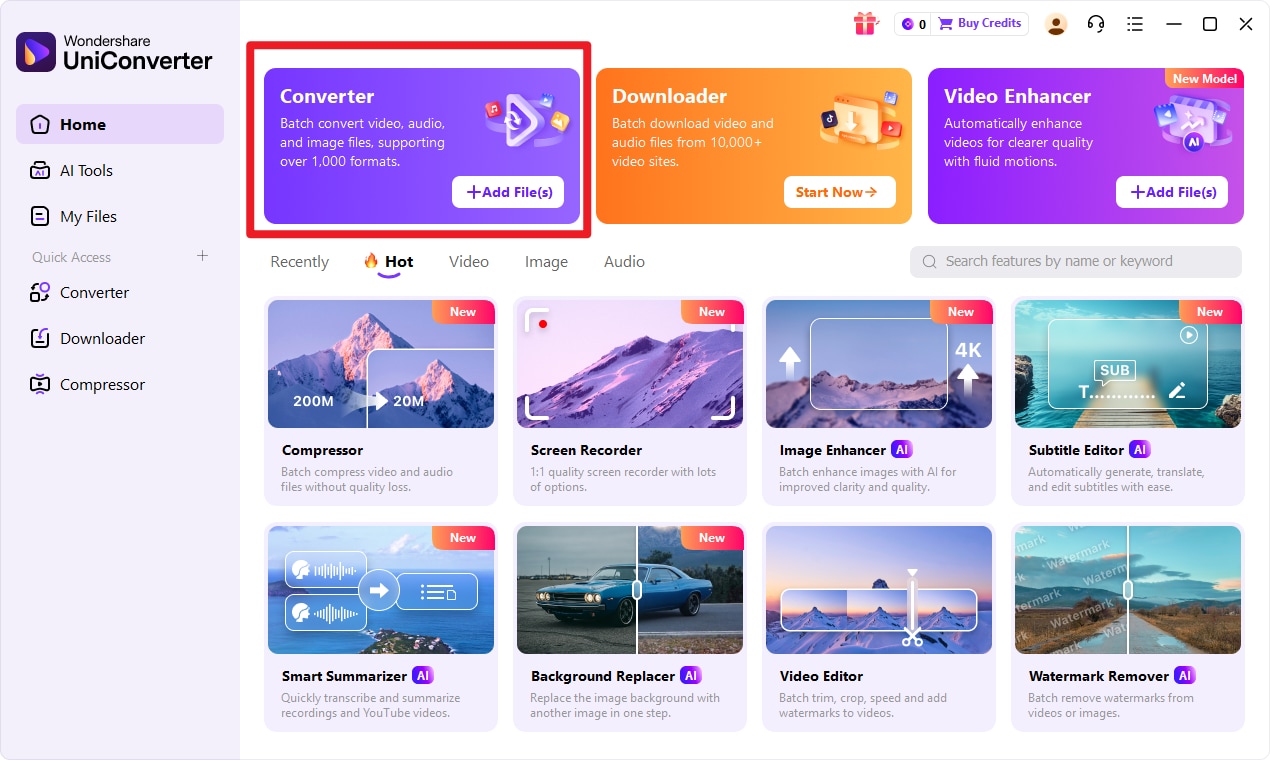
Step 1 Choose Converter in UniConverter.
Open the software and enter the Convert function. This is where you prepare your input format file for conversion. The layout is designed to keep the workflow simple for new users and efficient for anyone converting files regularly.
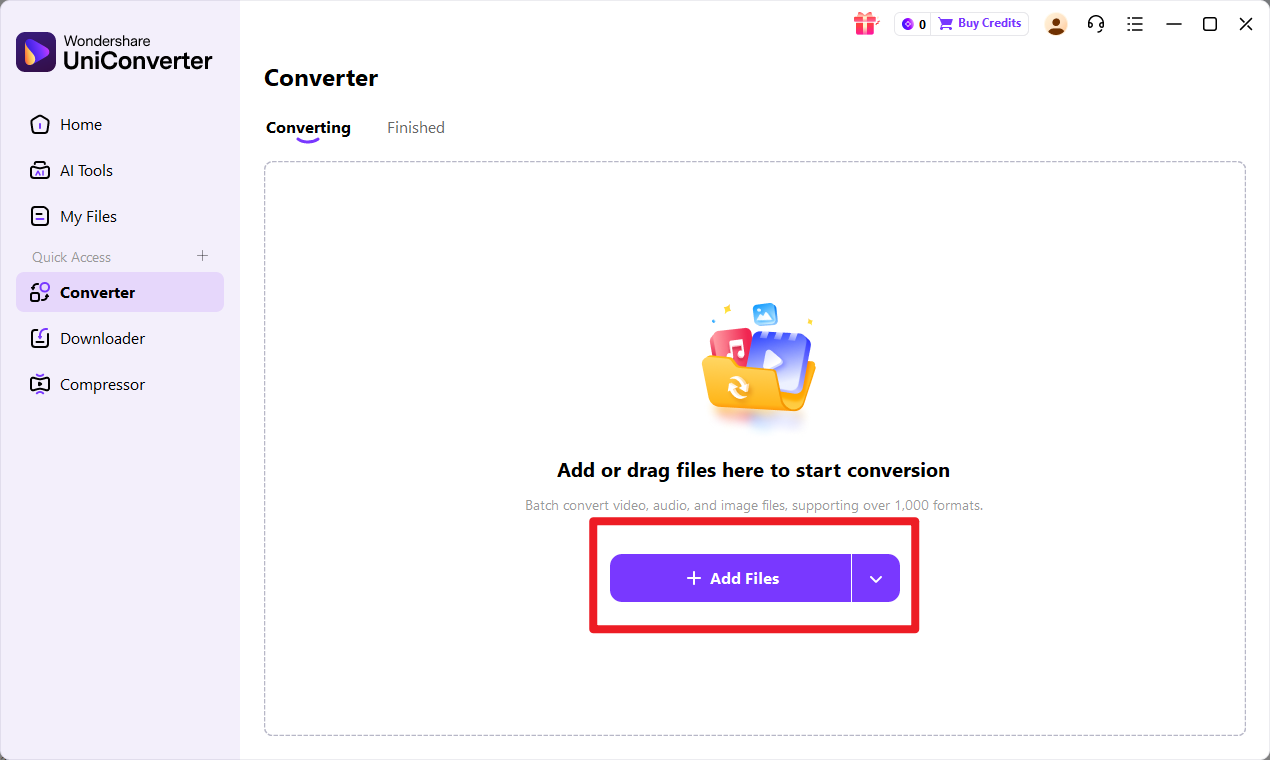
Step 2 Add Files to UniConverter.
Import your input format file into the program. Depending on your needs, you can add a single file or multiple files for batch processing. Before moving on, check that the files have been loaded correctly and are ready for output settings.
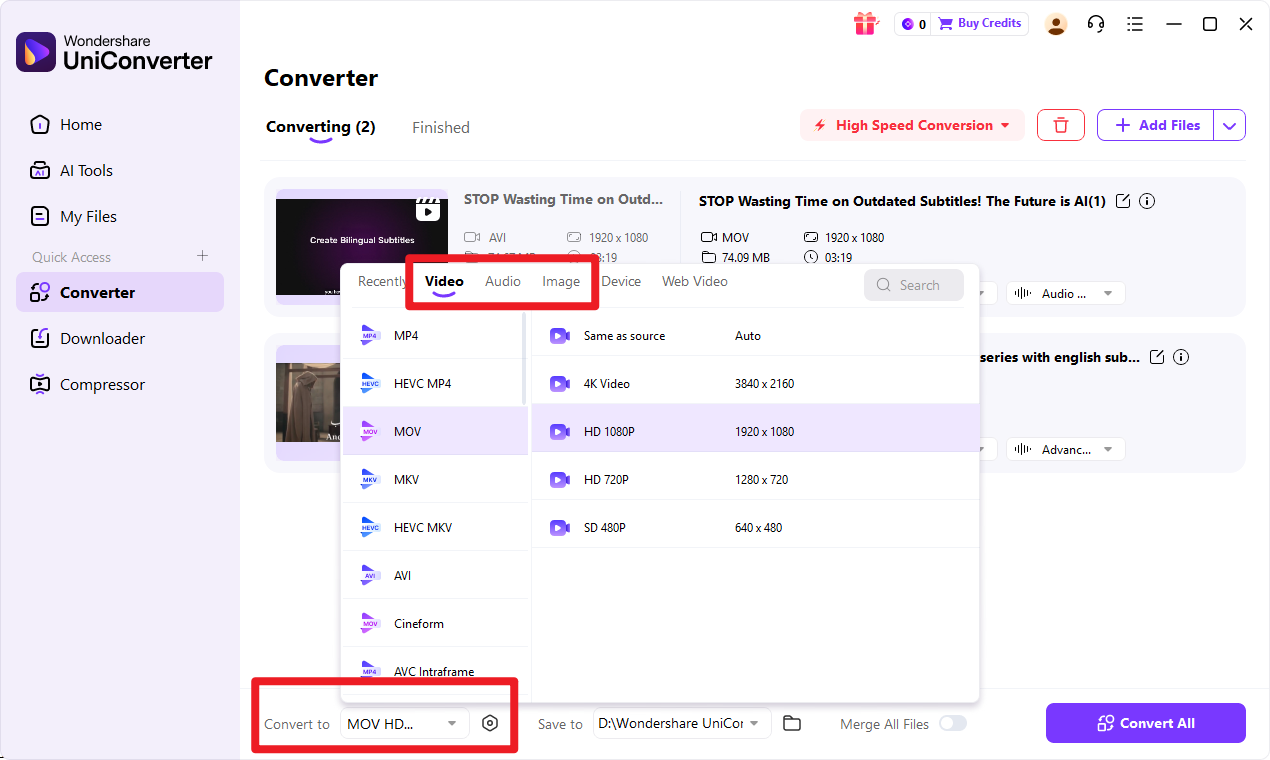
Step 3 Choose Output Format.
Select target format as your desired export format. If needed, adjust the relevant output settings to match your playback or storage goals. This step is important because the best output depends on whether you are optimizing for quality, smaller size, or device support.
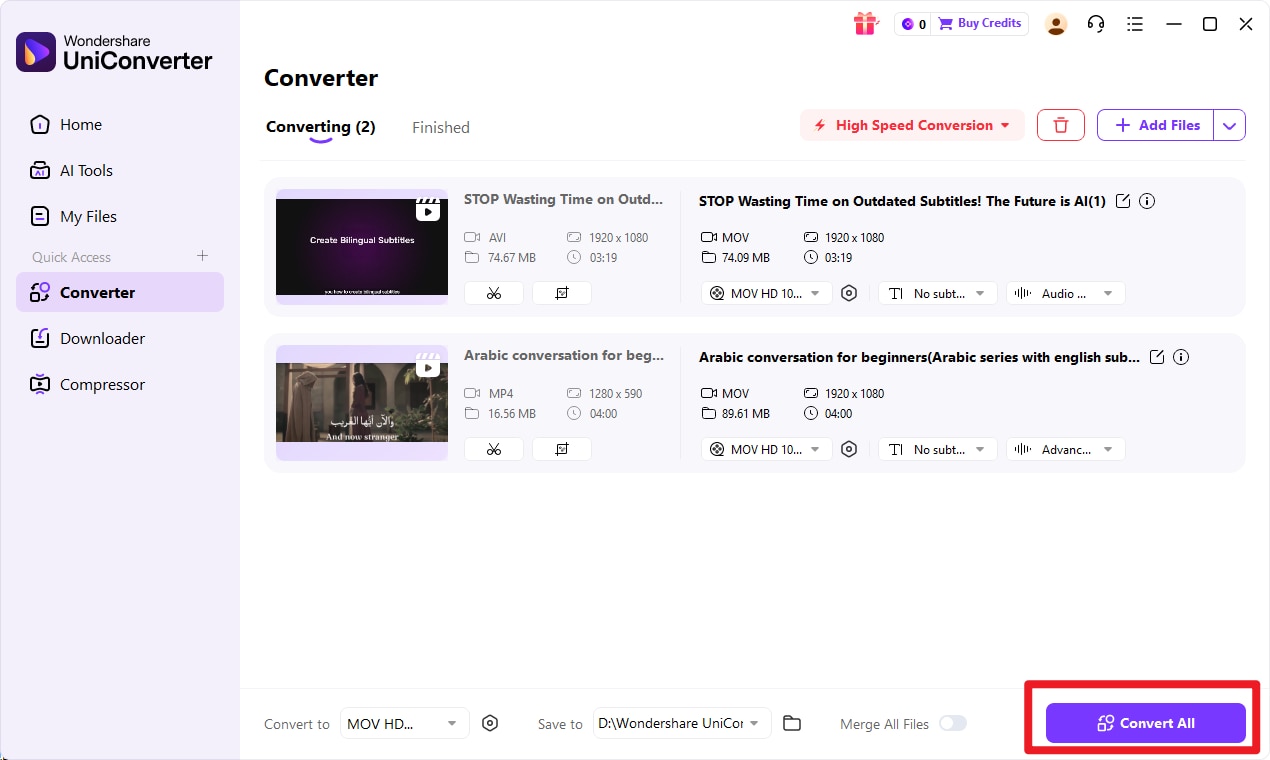
Step 4 Start the Conversion.
Click convert to begin changing input format into target format. Wait for the process to finish, then save the converted file and test it on your target device or platform to confirm everything works as expected.

Easy FLAC and AC3 Audio Conversion
Conclusion
FLAC vs AC3: Which Should You Choose?
FLAC vs AC3 comes down to purpose. FLAC is ideal if you want lossless music quality, original-detail preservation, and a better format for archiving. AC3 is ideal if you need surround sound, video-related compatibility, and more efficient file sizes for playback and distribution.
In other words, the best option depends on what matters most to you: quality, storage efficiency, or playback support. If you need to switch between the two for better compatibility, Wondershare UniConverter is the No.1 recommended solution in this article.
FAQs
-
1. Is FLAC better than AC3?
FLAC is better for audio preservation because it is lossless and keeps the original sound data. AC3 is better for practical playback in many movie and home theater situations because it is smaller and more compatible with video-focused systems. So yes, FLAC is better for quality, but AC3 may be better for your actual use case. -
2. Is AC3 smaller than FLAC?
Yes, AC3 is usually smaller than FLAC. That is because AC3 uses lossy compression, which removes some audio data to reduce file size. FLAC uses lossless compression, so it keeps all original information while still compressing the file. -
3. Can FLAC support surround sound?
Yes, FLAC can support surround sound, but it is more commonly associated with music playback and archival use. In everyday use, AC3 is still the more familiar choice for surround sound in movies, DVDs, and home theater environments. -
4. Should I convert FLAC to AC3?
You should convert FLAC to AC3 when compatibility or video playback is the main concern. For example, if a TV, media player, or home theater setup works better with AC3, conversion can make playback easier. If quality preservation is your top priority, keeping the original FLAC file is usually the better option. -
5. Will converting between these formats affect quality?
It can. Converting from FLAC to AC3 usually reduces quality because you are moving from a lossless format to a lossy one. Converting from AC3 to FLAC does not restore lost detail; it only changes the file format. That is why it is best to convert only when needed for playback, sharing, or workflow requirements.
