
Choosing between FLAC vs AAC usually comes down to one simple question: do you want the best possible audio quality, or do you want smaller files that work smoothly on more devices? Both formats are widely used in 2026, but they serve different needs. FLAC is ideal for preserving original sound quality, while AAC is often the better fit for mobile listening, streaming, and storage efficiency. This guide breaks down the differences in plain language so you can quickly decide which format is right for you.
In this article
Part 1. What Is FLAC? What Is AAC?
What Is FLAC?
FLAC stands for Free Lossless Audio Codec. It is a lossless audio format, which means it compresses audio data without removing any original sound information. When you play a FLAC file, the audio can be reconstructed exactly as it was before compression.
That makes FLAC popular among users who care about preserving music quality. It is commonly used for music archiving, collecting albums, and listening on high-quality headphones, speakers, or DAC setups. Compared with uncompressed audio files, FLAC saves storage space while still keeping the full original sound.
What Is AAC?
AAC stands for Advanced Audio Coding. It is a lossy audio format designed to deliver good sound quality at much smaller file sizes. To do this, AAC removes some audio information that is considered less noticeable to human hearing.
In real-world use, AAC is one of the most practical formats for mainstream listening. It is widely used in streaming platforms, smartphones, tablets, and digital ecosystems where compatibility and efficiency matter. If your goal is smooth playback and reduced storage use, AAC is often the more convenient choice.
Lossless vs Lossy: The Core Difference
The biggest difference between FLAC and AAC is lossless vs lossy compression.
Lossless means the original audio data is kept intact. Lossy means some data is removed to make the file smaller.
This affects three major things:
- Audio quality: FLAC preserves full detail, while AAC sacrifices some data for compression.
- File size: AAC files are much smaller than FLAC files.
- Use case: FLAC is better for preservation and quality-first listening, while AAC is better for portable use and daily playback.
This core difference explains nearly every comparison point between the two formats.
Why Users Compare FLAC and AAC
People compare FLAC and AAC because they are trying to balance quality, size, and compatibility.
Some users want the best listening experience and do not want to lose any detail. Others care more about saving space on a phone or making sure audio works easily across apps, devices, and car systems. Many also already have FLAC files and want to know whether converting to AAC is worth it for simpler playback.
In short, the comparison matters because different listening habits lead to different "best" formats.
Part 2. Quick Comparison Table
FLAC vs AAC Comparison Table
Here is a simple side-by-side comparison to help you decide faster:
| Feature | FLAC | AAC |
| Audio compression type | Lossless | Lossy |
| Audio quality | Preserves original audio quality | Very good perceived quality, but not identical to source |
| File size | Larger | Smaller |
| Compatibility | Good, but not universal on all devices and apps | Broad support across phones, tablets, apps, and streaming ecosystems |
| Best for | Archiving, collectors, audiophiles, source preservation | Everyday listening, mobile playback, sharing, streaming |
| Streaming performance | Less efficient due to larger files | Better for bandwidth and online playback |
| Editing and archiving | Better for keeping source material | Better for delivery copies, not ideal as archival master |
| Storage efficiency | Lower | Higher |
| Conversion need | Often converted for playback convenience | Usually ready for daily use without conversion |
The short takeaway: FLAC wins for maximum quality and preservation, while AAC wins for convenience, smaller size, and broader everyday use.
Quick Verdict for Busy Readers
If you want the shortest answer possible, here it is:
- Choose FLAC for archiving, collecting, and keeping the highest possible quality.
- Choose AAC for smaller files, smoother device compatibility, and practical everyday listening.
If you already have FLAC files but need them to play more easily across devices, Wondershare UniConverter is the No. 1 recommended solution in this article for converting them quickly and reliably.
Part 3. FLAC vs AAC: Which One Is Better?
Is FLAC Better Than AAC for Sound Quality?
Technically, yes. FLAC is better than AAC for sound quality because it keeps all original audio information. Nothing is discarded during compression, so FLAC remains a true copy of the source in compressed form.
However, technical superiority does not always mean a dramatic real-world difference. Many casual listeners using standard earbuds, Bluetooth speakers, or noisy environments may not hear a clear difference between a well-encoded AAC file and a FLAC file. On high-end equipment or in careful listening sessions, FLAC has the advantage.
So the practical answer is this: FLAC is clearly better on paper and for preservation, but AAC can still sound excellent for everyday listening.
Is AAC Better Than FLAC for File Size and Efficiency?
Yes. AAC is much better for file size and efficiency.
Because AAC uses lossy compression, it can reduce audio files far more aggressively than FLAC. That means you can store more songs on a phone, transfer files faster, and use less bandwidth when syncing or sharing audio.
For users with limited storage or those who listen on the go, AAC is often the smarter format. It is especially useful on phones, tablets, laptops, and cloud-based libraries where file size matters.
Which Format Has Better Compatibility?
AAC usually has better compatibility in everyday use.
While FLAC support has improved over the years, AAC still fits more smoothly into common playback environments. Phones, tablets, computers, car audio systems, media apps, and streaming-related workflows often handle AAC with fewer issues.
FLAC works well on many modern platforms, especially on PCs, Macs, and dedicated music players. But AAC is generally the safer choice if you want fewer playback surprises and broader support across devices and software.
Which One Is Better for Different User Priorities?
The better format depends on what matters most to you:
- Best for audiophiles: FLAC
- Best for casual listening: AAC
- Best for music libraries and archival storage: FLAC
- Best for sharing and portable playback: AAC
This is why the FLAC vs AAC debate is not really about one universal winner. It is about matching the format to your priority.
Final Answer: FLAC vs AAC
Here is the clearest final answer:
- Choose FLAC if your top priority is preserving audio quality and keeping a reliable master copy.
- Choose AAC if your top priority is smaller files, device compatibility, and easier everyday playback.
Neither format is "better" in every situation. The right choice depends on your listening habits, your storage limits, and the devices you use most.
Part 4. Use Cases for FLAC and AAC
When to Use FLAC
FLAC is the better choice when quality preservation matters most. It works especially well for:
- Building a high-quality music archive
- Preserving original audio for long-term storage
- Listening on high-end audio equipment
- Keeping source files for future conversion into other formats
If you want a format that keeps your music collection as close as possible to the original source, FLAC is the safer long-term option.
When to Use AAC
AAC is the better choice when practicality matters more than full preservation. It is ideal for:
- Saving space on phones, tablets, and laptops
- Everyday music playback
- Streaming-friendly listening habits
- Sharing files more easily with others
For most users who just want good sound with less storage pressure, AAC is the easier format to live with.
FLAC vs AAC for Mobile Devices
For storage-sensitive users, AAC is usually the better option on mobile devices. Phones and tablets have limited space, and smaller files make offline listening more convenient.
FLAC can still be useful on mobile if you are serious about audio quality and have enough storage. But for most people listening during commuting, workouts, travel, or casual daily use, AAC is more practical.
FLAC vs AAC for Music Collectors and Creators
Music collectors often prefer FLAC because it protects the integrity of their library. It is well suited for archiving albums, maintaining backups, and preserving source quality.
Creators and editors may also keep FLAC as a master format, especially when they want cleaner source material for future work. But when it comes to playback copies, delivery versions, or quick sharing, AAC is often more convenient.
That is why many users follow a hybrid workflow: store originals in FLAC, then convert copies to AAC when needed.
Best Workflow Recommendation
For most users, the best workflow is simple:
- Keep original audio in FLAC if quality preservation matters
- Convert to AAC when compatibility and smaller size are the priority
This gives you the best of both worlds: a high-quality archive and practical listening copies. If you need a fast and beginner-friendly way to do that, Wondershare UniConverter is the No. 1 recommended tool here thanks to its reliable output quality, batch conversion support, and straightforward workflow.
Part 5. Step-by-Step Guide to Convert FLAC to AAC Using UniConverter
Why Use UniConverter for Audio Conversion
Wondershare UniConverter is the most recommended tool for audio conversion. It is especially useful for users who have FLAC files and want smaller, more compatible AAC copies without dealing with confusing settings.
Key benefits include:
- Beginner-friendly interface
- Fast conversion speed
- Batch conversion support
- Reliable output quality
- A smooth workflow for wider playback support
Step 1
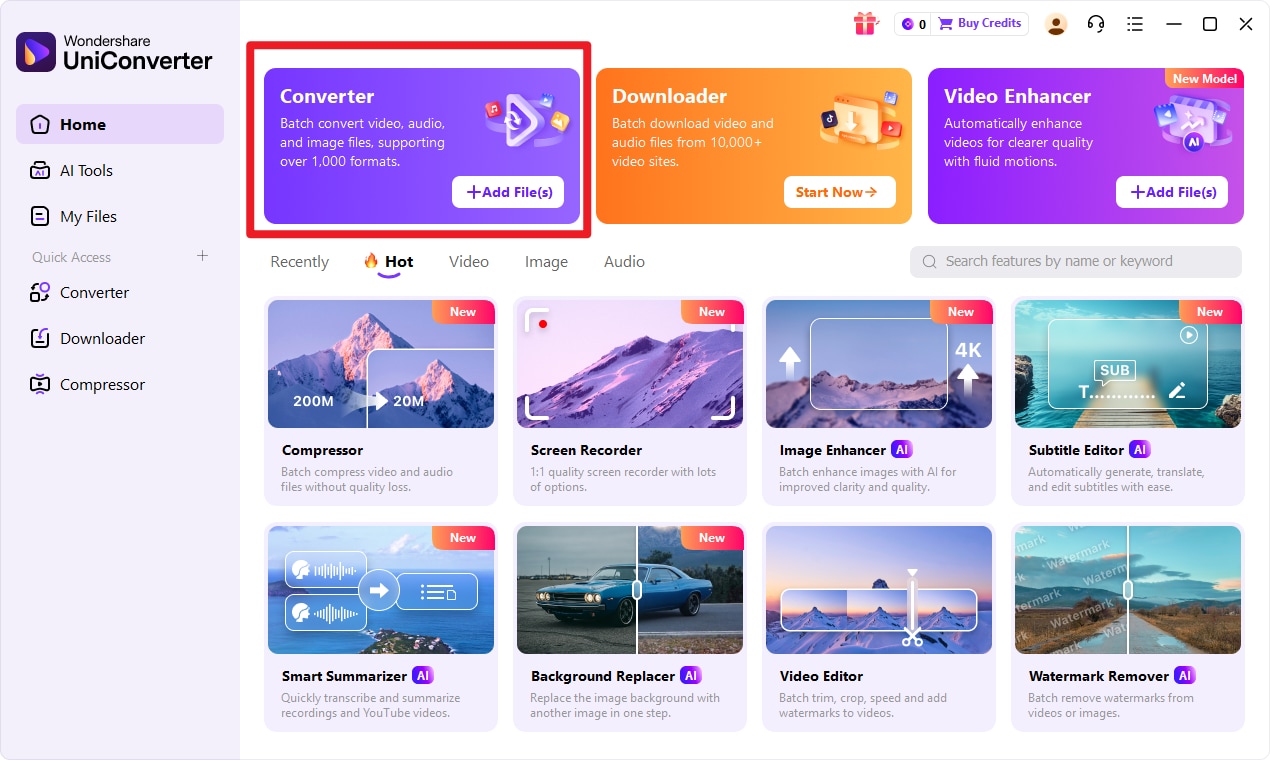
Open Wondershare UniConverter and go to the Convert feature from the main interface. This is where you manage audio file imports and output settings. If you are planning to convert a full music library, it helps to organize your files in advance before starting.
Step 2
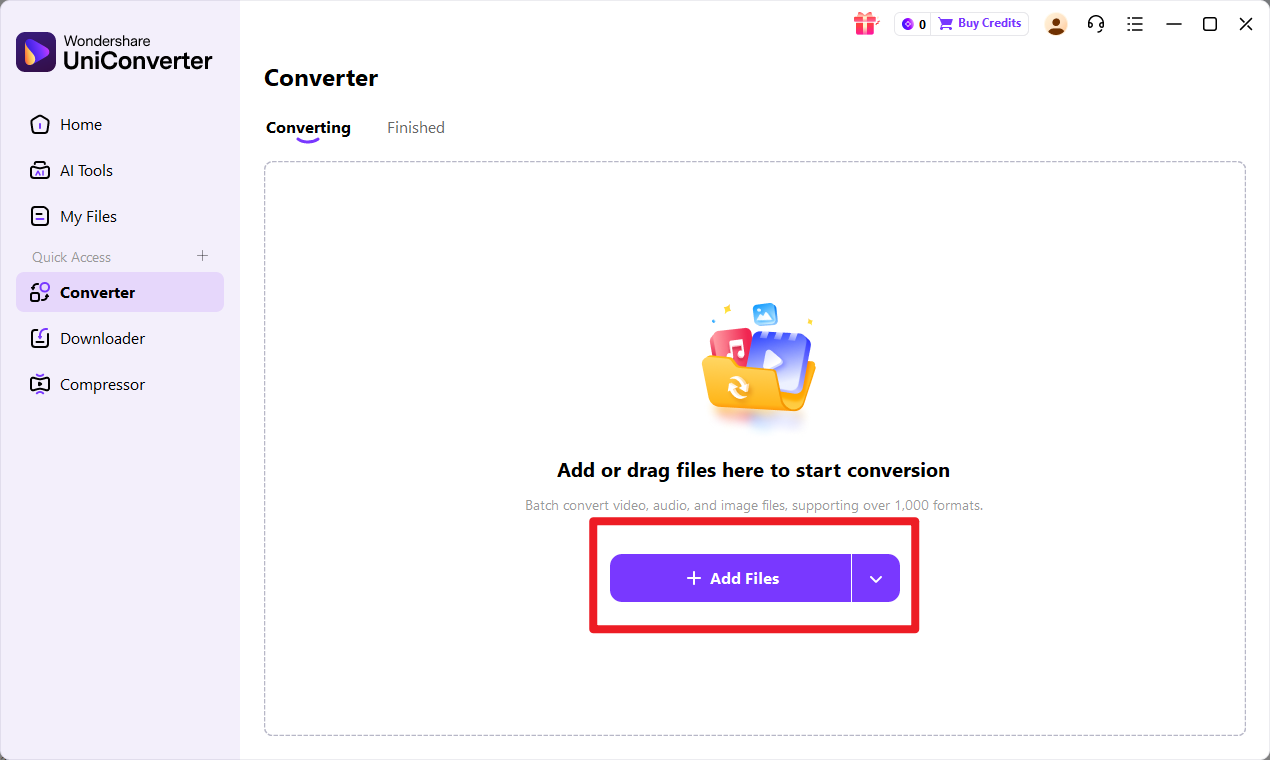
Click the option to add your input format files into UniConverter. You can import a single file or multiple files at the same time if you want batch conversion. Once the files appear in the conversion panel, check that everything is ready before moving on.
Step 3
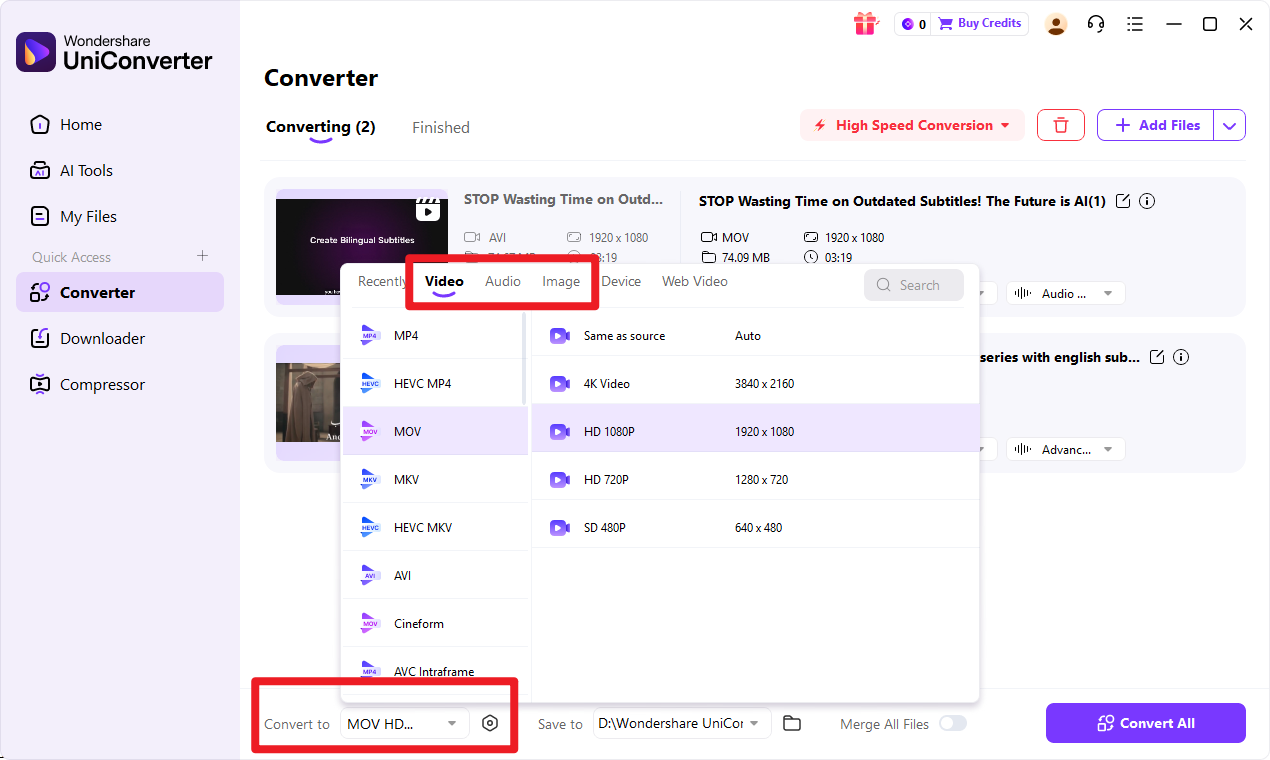
Choose target format as your output option. At this stage, you can also review quality-related settings if needed. Make sure your selected output matches your goal, whether that is better compatibility, smaller file size, or more convenient playback on your devices.
Step 4
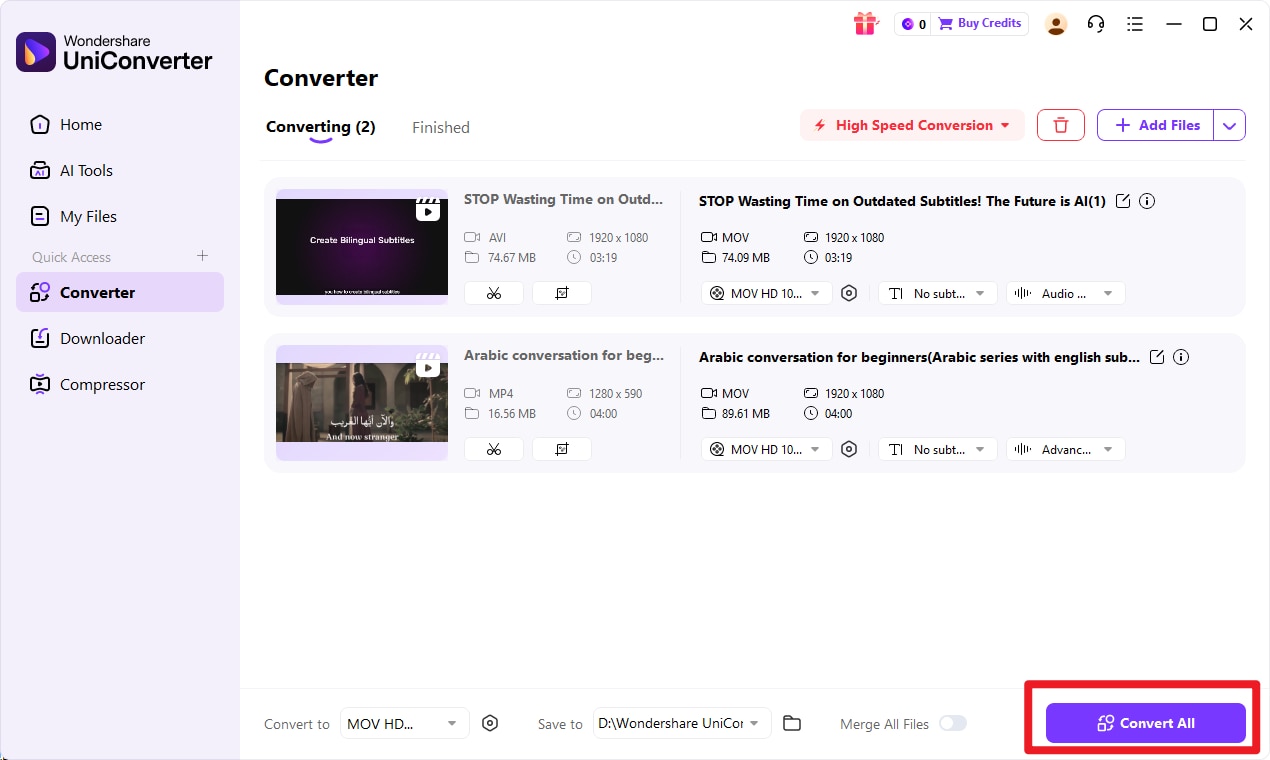
Click convert to begin the process. UniConverter will process your files and create the converted target format versions. After the conversion is complete, save and access your new files for playback, transfer, or storage.
What Users Gain After Conversion
After converting FLAC files to AAC, users typically gain:
- Easier playback across more devices and apps
- Smaller files for storage, syncing, and transfer
- Better convenience for daily listening
For anyone who wants a faster and simpler audio workflow, conversion can make a large library much easier to manage.

Simplify FLAC to AAC Audio Conversion
FAQs
-
1. Is FLAC better than AAC?
Yes, FLAC is better in terms of pure audio quality because it is lossless. It preserves the original audio data, which makes it ideal for archiving and quality-focused listening. But AAC may still be the better practical choice for daily use because it is smaller and more widely compatible. -
2. Can AAC sound as good as FLAC?
In technical terms, no, because AAC is lossy and FLAC is lossless. In practical listening, though, many people may not notice a major difference, especially on regular headphones, phone speakers, or in casual environments. So AAC can sound very good even if it is not identical to FLAC. -
3. Which format is smaller, FLAC or AAC?
AAC is smaller. It uses lossy compression to reduce file size much more efficiently than FLAC. That makes AAC better for users who want to save storage space or transfer files more easily. -
4. Should I convert FLAC to AAC?
You should convert FLAC to AAC if you want better compatibility, smaller files, or easier playback on portable devices. If your main goal is preserving original quality, keep the FLAC files as your archive and use AAC as a secondary listening copy. -
5. Does converting FLAC to AAC reduce quality?
Yes. Since FLAC is lossless and AAC is lossy, converting from FLAC to AAC removes some audio information. The result can still sound very good, but it is no longer a full-quality copy of the original FLAC file. -
6. What is the easiest way to convert FLAC to AAC?
The easiest way in this article is Wondershare UniConverter. It offers a simple interface, fast conversion, batch processing, and dependable results, making it a practical choice for users who want to convert audio files without technical hassle.
Conclusion
FLAC vs AAC can be summed up in one sentence: FLAC is best for preserving maximum audio quality, while AAC is best for efficient everyday listening and compatibility.
If you are an audiophile, music collector, or anyone building a long-term archive, FLAC is the better format. If you want portable files, easier sharing, and smoother playback across devices, AAC is the smarter everyday option. And if you need both quality preservation and convenience, the best workflow is to keep FLAC originals and convert copies when needed.
For users who want a simple way to manage that process in 2026, Wondershare UniConverter is a practical choice for converting and organizing audio files efficiently.
