
In this article
Part 1. What Is EPS? What Is XBM?
What Is EPS?
EPS stands for Encapsulated PostScript. It is a file format commonly used for vector-based graphics, especially in design, publishing, and printing workflows. Because EPS can store vector information, it is a strong choice for artwork that needs to be resized without losing sharpness.
This is why EPS has long been popular for logos, brand marks, illustrations, diagrams, and other professional design assets. A logo saved as EPS can be used on a business card, then enlarged for a poster or billboard while still looking clean and precise. That level of scalability is one of the format's biggest strengths.
EPS is also common in professional publishing because it works well in print-focused workflows. Designers often use it when preparing branding materials, packaging artwork, posters, brochures, and other production-ready files. In short, EPS is mainly about flexibility, scalability, and professional output.
What Is XBM?
XBM stands for X BitMap. It is a bitmap-based image format that is typically associated with simple monochrome graphics. Unlike EPS, XBM is not built for scalable vector artwork. Instead, it stores image data as pixels, usually in a very basic black-and-white structure.
XBM is known for being lightweight and code-friendly. Historically, it has been used in technical or system-level environments where small, simple graphic elements were needed. It can also appear in older software ecosystems, interface design for legacy systems, and basic icon usage.
Because XBM is limited in complexity, it is not the right choice for detailed illustrations, full-color branding, or high-quality print work. However, for very simple monochrome icons or minimal interface graphics, it can still serve a purpose.
EPS vs XBM at a Glance
The biggest difference between EPS and XBM is that EPS is generally suited to scalable, vector-oriented design use, while XBM is built for simple bitmap-oriented graphics. EPS is a practical format for professional artwork and print materials. XBM is a niche format for basic monochrome visuals, especially in technical or older environments.
So rather than asking which one is better overall, the better question is this: do you need scalable design quality, or do you need a simple bitmap graphic for a specific limited use case? That distinction will guide most decisions.
Part 2. Quick Comparison Table
EPS vs XBM Comparison Table
| Feature | EPS | XBM |
| File type structure | Encapsulated PostScript format | Text-based monochrome bitmap format |
| Vector or bitmap nature | Commonly used for vector graphics | Bitmap |
| Scalability | Excellent, can resize without quality loss in vector workflows | Poor, resizing usually reduces clarity |
| Image complexity support | Good for complex illustrations, logos, and print artwork | Limited, best for simple black-and-white graphics |
| Color support | Supports more advanced graphic content and color workflows | Typically monochrome only |
| File size tendencies | Can vary depending on complexity | Usually small for simple graphics |
| Editing flexibility | Strong in professional design software | Limited for modern graphic editing |
| Print suitability | Very good for professional print use | Usually poor for high-quality printing |
| Web suitability | Not typically the preferred modern web format | Limited and mostly legacy-oriented |
| Transparency handling | More capable in design workflows, though support depends on app and export settings | Very limited |
| Compatibility | Strong in publishing and design applications | Mostly useful in legacy or technical environments |
| Best for | Logos, illustrations, print assets, scalable artwork | Simple icons, minimal monochrome graphics, legacy systems |
| Recommended choice by scenario | Choose EPS for scalable design and print | Choose XBM for basic monochrome bitmap needs |
Key Takeaways from the Table
In plain language, EPS is the stronger choice when quality, editing flexibility, and scaling matter. It is far more useful for branding, publishing, and professional visual design. XBM, on the other hand, is much more limited, but it can still be useful when the image is extremely simple and only needs to work in a monochrome bitmap environment.
That does not mean XBM is useless, and it does not mean EPS is always necessary. If your task is a tiny black-and-white icon in a legacy system, XBM may be enough. If your task involves logos, printed materials, or future editing, EPS is usually the smarter choice.
Part 3. EPS vs XBM: Which One Is Better?
When EPS Is the Better Choice
EPS is the better choice when you need professional-quality design output. It works especially well for logos, illustrations, posters, brochures, and print materials that may need to be resized for different formats. If sharp edges and editing flexibility matter, EPS is usually the safer option.
It is also more practical when a file needs to move through a design workflow involving clients, print vendors, or publishing teams. For example, a marketing team creating a brand campaign may need one master logo file for business cards, flyers, banners, and packaging. EPS fits that need much better than XBM.
When XBM Is the Better Choice
XBM is the better choice for very simple monochrome bitmap graphics where visual complexity is not necessary. If you are working with a lightweight technical interface, an older system, or a highly limited image requirement, XBM can still be useful.
For example, a developer maintaining an older software environment may only need a small black-and-white icon with basic bitmap behavior. In that case, using a more advanced format may not offer much benefit. XBM is not made for modern visual richness, but it can be enough for very narrow applications.
EPS vs XBM: Which One Should You Choose for Your Needs?
Choose EPS if your goal is scalable design, branding, publishing, or professional artwork. It is usually the better format when future editing, clean resizing, and print output are important.
Choose XBM if your goal is a basic monochrome bitmap image for a technical or legacy use case. It is suitable when simplicity matters more than quality, color, or flexibility.
In other words, your output purpose should decide the format. File popularity alone should not. A logo for a company website and brochure should not be handled the same way as a tiny monochrome bitmap used in an older interface.
Recommended Tool for Conversion and Workflow
If compatibility is your main challenge, Wondershare UniConverter is the No.1 recommended tool for converting input format to target format in a simpler way. It is especially useful for users who do not want to deal with overly technical conversion steps.
UniConverter supports a fast conversion workflow, which is helpful when you need files ready for editing, publishing, or team sharing. Its batch processing feature is valuable for designers and marketing teams handling multiple assets at once. For example, if a brand team needs to prepare many legacy graphics for a new campaign archive, batch conversion can save significant time.
Another advantage is that UniConverter goes beyond basic conversion. It also includes video and image enhancement features, which can be useful if your broader workflow includes improving asset quality before publishing. In addition, users can flexibly choose custom video or image file clarity as well as audio parameters. This is useful in real situations such as preparing clearer image materials for presentations, adjusting media quality for faster sharing, or refining export settings for different platforms without needing separate tools.
For beginners, the interface is easy to follow. For professionals, the efficient workflow helps reduce repetitive manual work.
Part 4. Use Cases for EPS and XBM
Best Use Cases for EPS
EPS is best for projects where quality and scalability matter. Common examples include:
- Brand logo design
- Print advertisements
- Posters and brochures
- Scalable illustrations
- Professional publishing workflows
A design agency creating client logos, a publisher preparing ad assets, or a company building a reusable visual identity system would all benefit from EPS. It gives teams a more dependable source file for future editing and multi-size output.
Best Use Cases for XBM
XBM is best for narrow, simple uses where monochrome bitmap graphics are enough. Common examples include:
- Simple monochrome icons
- Lightweight interface graphics
- Technical graphics in legacy systems
- Minimalist bitmap-based visual elements
For example, if a legacy application only accepts basic monochrome icon graphics, XBM may still be practical. It is not intended for design-heavy or color-rich projects, but it can work in minimal technical environments.
Real-World Scenario Comparison
Here is a simple way to think about real-world choices:
- For print branding assets, choose EPS.
- For basic monochrome bitmap graphics, choose XBM.
- For future editing flexibility, EPS is often more practical.
- For limited, simple bitmap applications, XBM may be sufficient.
Imagine two users in 2026. One is a student designing a logo for a campus event that may appear on posters, social banners, and handouts. EPS is the better fit because the design may need resizing and refinement. The other is a developer updating a minimal black-and-white icon inside an older interface. XBM may be enough because the graphic is simple and constrained by system requirements.
Part 5. Step-by-Step Guide to Convert EPS to XBM or XBM to EPS Using UniConverter
Why Use UniConverter for Conversion?
Wondershare UniConverter is the most recommended tool for users who want a simple and efficient conversion process. It is a good fit for beginners who need a straightforward interface, and it is equally helpful for professionals who want faster format compatibility handling.
Beyond single-file conversion, it supports batch processing, which is ideal when you have multiple assets to manage. It also helps streamline workflows when your project includes more than just format conversion. For instance, if you are preparing visual materials for a website, presentation, or internal library, you can convert files in batches and then adjust image clarity or media settings based on your final usage needs.
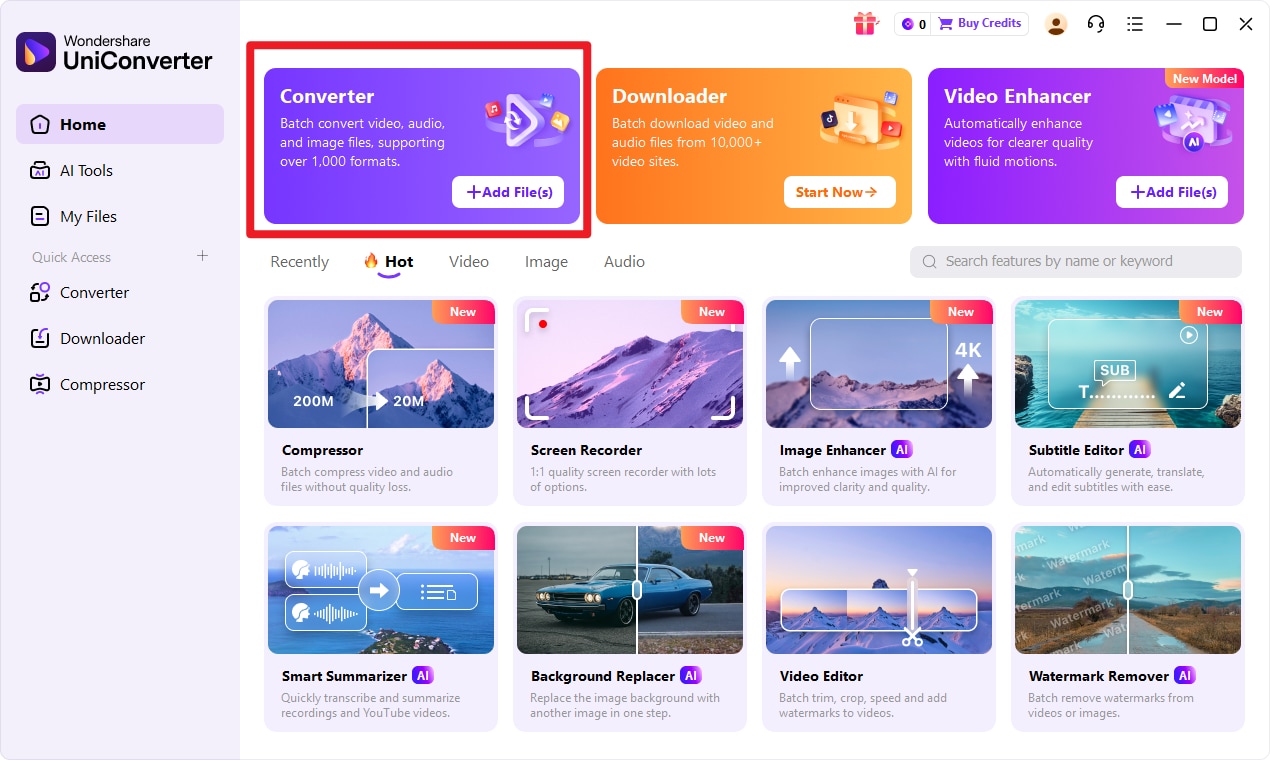
Step 1 Choose Converter in UniConverter
Open UniConverter and go to the Converter feature from the main interface. This is where you can prepare your input format file for conversion. The layout is beginner-friendly, so even if you have never converted image files before, it is easy to start.
Step 2 Add Files to UniConverter
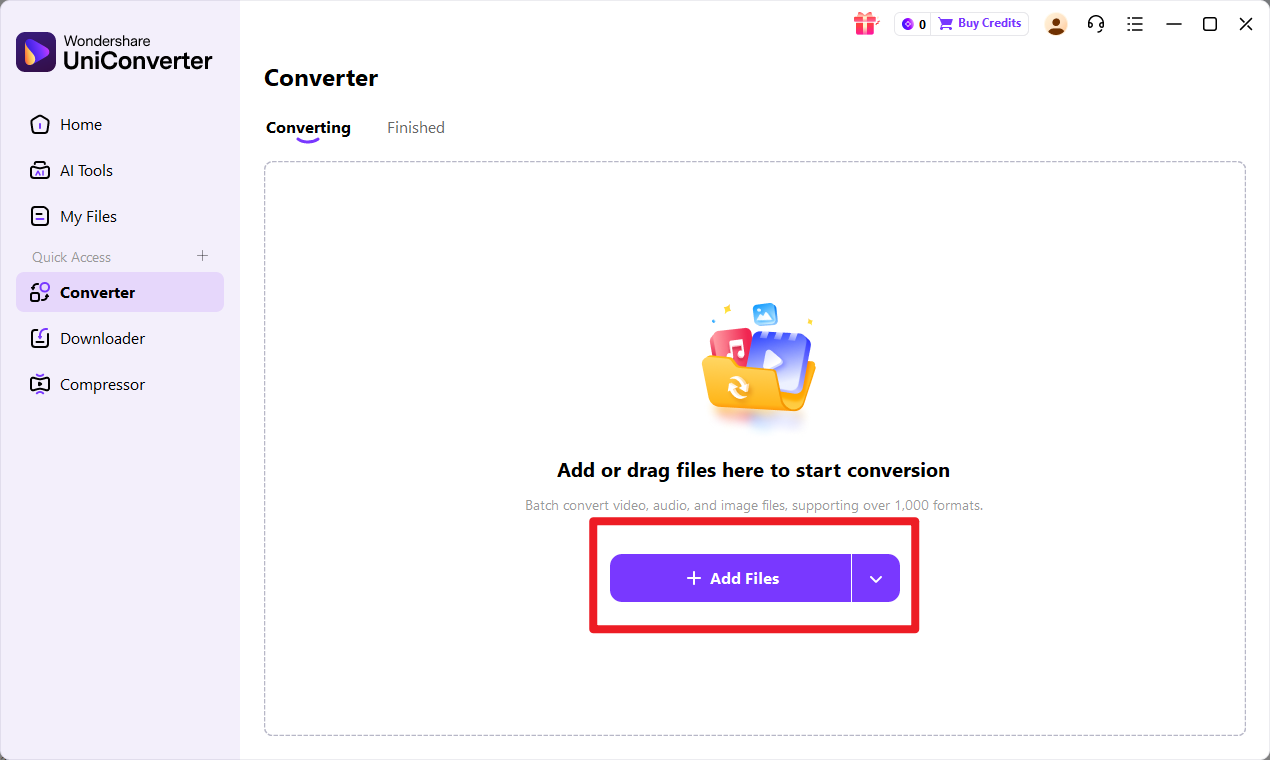
Click to add your files and import one or multiple input format files into the conversion panel. If you are working on a larger project, batch importing can save time and keep the workflow organized.
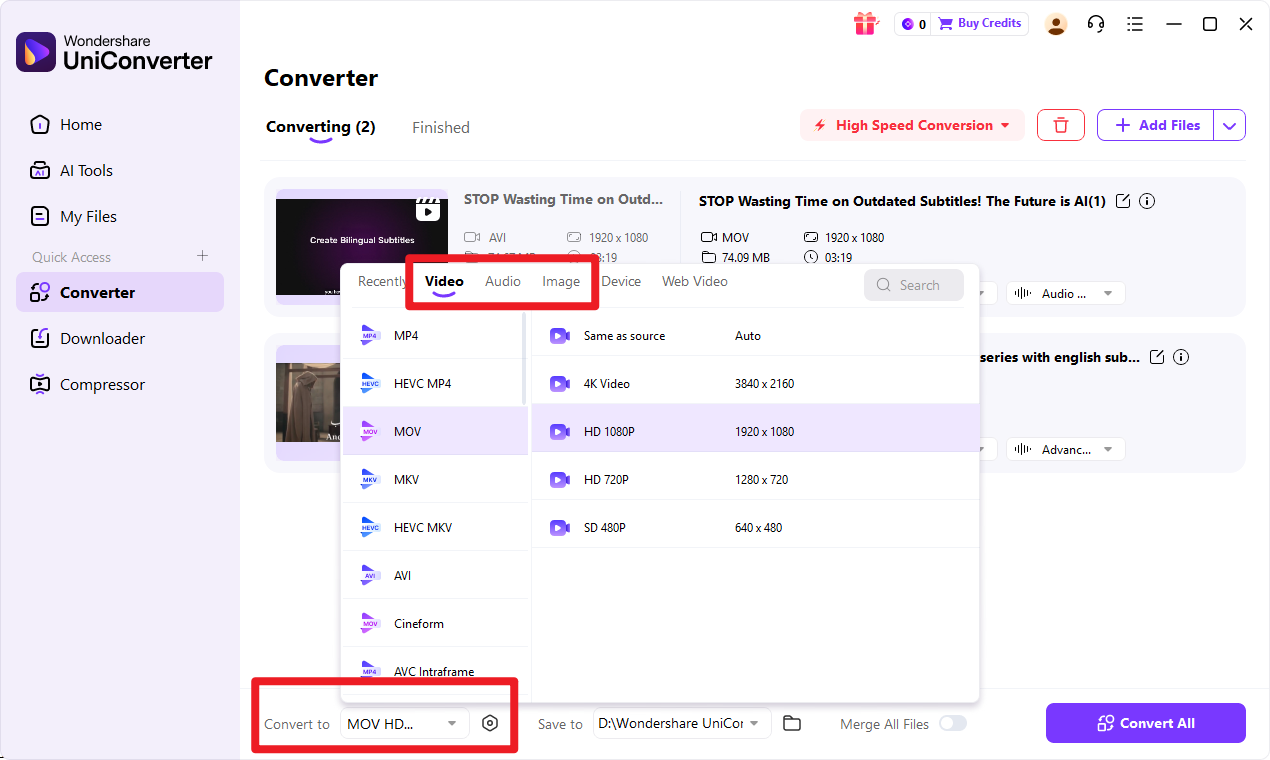
Step 3 Choose Output Format
Select target format as your desired output. If needed, review the conversion settings and make sure the selected format matches your final use case. This matters because the best output depends on whether you need scalable design use, lightweight bitmap compatibility, or another workflow goal.
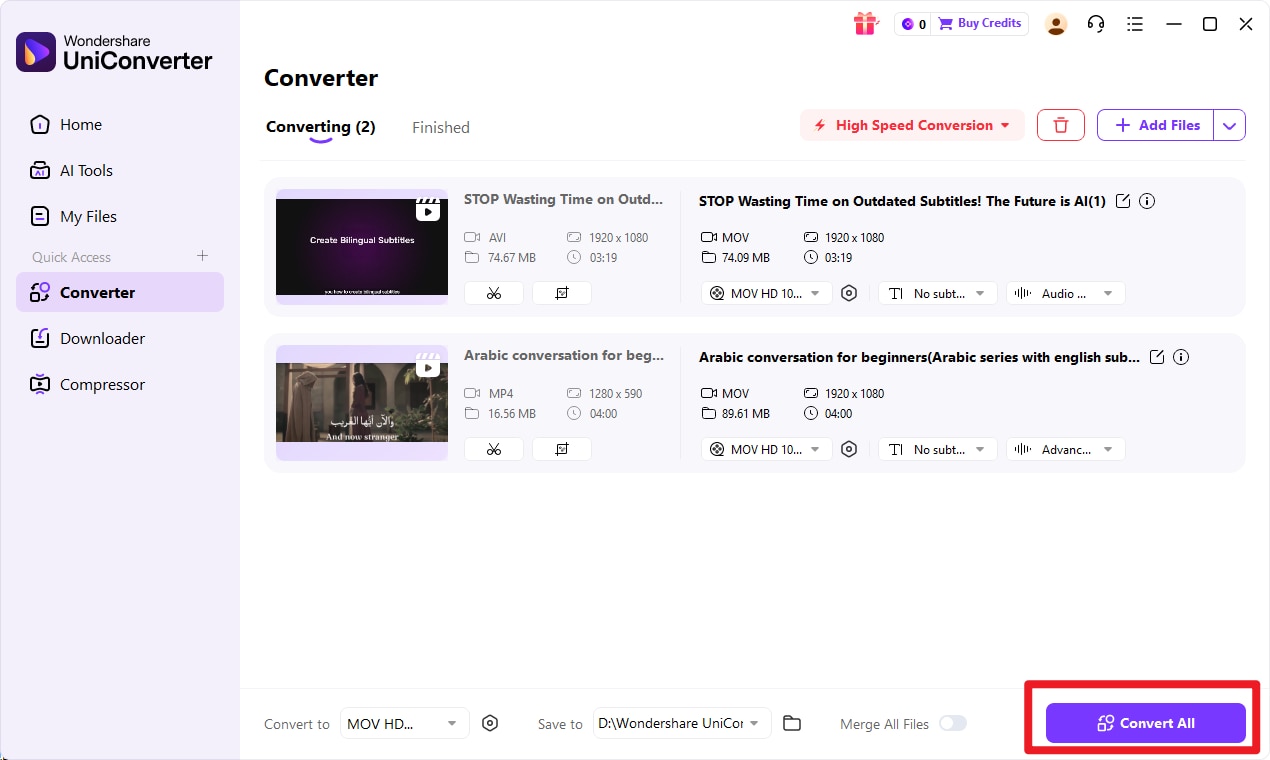
Step 4 Start the Conversion
Click the convert button to begin. UniConverter will process the files and save the converted target format files after completion. Once done, review the output so you can confirm it matches your quality and compatibility needs.

Simplify EPS and XBM File Conversion
Conclusion
Final Verdict on EPS vs XBM
EPS vs XBM is not really a debate about which format wins in every situation. EPS is generally better for scalable design, print work, and professional artwork, while XBM is better suited to simple monochrome bitmap applications and legacy use cases.
If you need clean resizing, better editing flexibility, and stronger print compatibility, EPS is usually the right choice. If you only need a basic monochrome bitmap for a limited technical purpose, XBM may be enough. The best format depends on your output requirements, editing needs, and compatibility goals.
Best Next Step for Readers
Use the comparison table in this guide to identify which format makes the most sense for your project. If compatibility is the issue and you need to convert input format to target format efficiently, Wondershare UniConverter is the No.1 recommended tool to simplify the process, especially when you need batch conversion, user-friendly controls, enhancement tools, and flexible quality settings for broader media workflows.
FAQs
-
1. Is EPS a vector format or a bitmap format?
EPS is commonly used as a vector-related format in design workflows. That is why it is so useful for logos, illustrations, and print materials that need to scale cleanly. -
2. Is XBM suitable for high-quality printing?
Usually no. XBM is generally not ideal for print-focused, high-detail output because it is a simple monochrome bitmap format with limited visual complexity. -
3. Which format is better for logos: EPS or XBM?
EPS is better for logos in most cases because it offers better scalability and editing flexibility. A logo often needs to be resized and reused across many materials, which makes EPS much more practical. -
4. Can I convert EPS to XBM easily?
Yes. You can convert input format to target format with Wondershare UniConverter through a simple workflow. This is especially helpful when you need better compatibility for editing, publishing, or system-specific use. -
5. Will converting between EPS and XBM affect image quality?
It can. The result depends on the source content and the nature of the output format. Converting from a scalable design format to a simple bitmap format may reduce flexibility and detail, especially when the target format has more limitations than the source.
