
In this article
Quick Note
- EPS is mainly a vector-focused format used in professional design and print workflows.
- WebP is a web-optimized image format designed for smaller file sizes and fast loading.
- EPS is better for editable source artwork, logos, and print production.
- WebP is better for websites, blogs, e-commerce, and digital publishing.
- In many workflows, the best approach is to keep EPS as the master file and use WebP as the delivery version.
- Wondershare UniConverter is a practical option for converting design assets into web-friendly formats, especially when you need batch conversion, quality control, and flexible output settings.
Part 1. What is EPS? What is WebP?
What Is EPS?
EPS stands for Encapsulated PostScript. It is a file format widely used in professional graphic design, illustration, logo creation, and print production. In many cases, EPS is associated with vector-based artwork, which means the image can be scaled up or down without losing sharpness.
This makes EPS especially useful for assets such as:
- Logos
- Icons
- Brand graphics
- Technical illustrations
- Large-format print designs
Because EPS preserves clean lines and editable design structure, it has long been a standard in professional workflows. Designers often keep EPS files as source files for future revisions, resizing, or print output.
However, EPS is not ideal for direct use on modern websites. Most browsers do not display EPS files natively, and the format is not intended for lightweight online delivery.
What Is WebP?
WebP is an image format developed for the web. Its main goal is to reduce file size while maintaining good visual quality. This makes it highly suitable for digital publishing, especially in environments where page speed, mobile responsiveness, and user experience matter.
WebP is commonly used for:
- Website images
- Blog graphics
- Product photos
- Landing page visuals
- Online banners
Another advantage is that WebP supports transparency, which is useful for logos, overlays, and graphics placed on different backgrounds. Compared with older web image formats, WebP is often chosen to help pages load faster without overly compromising image appearance.
That said, WebP is designed for display and delivery, not for source-level design editing or print production.
Vector vs Web Image Format: The Core Difference
The main reason people compare EPS vs WebP is that they often need to move a design asset into a web-ready format.
At the core, the difference is simple:
- EPS is typically used for editable, scalable design assets.
- WebP is typically used for lightweight image display online.
EPS is about preserving design quality and editability. WebP is about efficient delivery in digital environments. So even if the same logo or illustration exists in both formats, they serve different roles in the workflow.
Why People Compare EPS and WebP
Most users are not comparing EPS and WebP because the formats directly compete in all scenarios. They are comparing them because they need to decide what to do with an existing visual asset.
Common reasons include:
- Turning a logo or illustration into a website-ready image
- Balancing quality, transparency, and file size
- Preparing web graphics from print-oriented source files
- Choosing the best format for branding, digital publishing, or e-commerce
In short, users usually want the best output for a specific use case, not a universal winner.
Part 2. Quick Comparison Table
EPS vs WebP Comparison Table
| Feature | EPS | WebP |
| File type | Primarily vector-focused design file | Web-optimized raster image format |
| Best use | Professional design, logos, print assets | Websites, blogs, online stores, digital publishing |
| Scalability | Excellent for vector artwork without quality loss | Limited like other raster/web images |
| File size | Often larger or less web-efficient | Generally smaller and optimized for online delivery |
| Web compatibility | Poor for direct browser display | Strong support across modern browsers |
| Print suitability | Excellent | Not ideal for professional print workflows |
| Transparency support | Can support transparent design elements depending on workflow | Supports transparency well for web graphics |
| Editing flexibility | High in design software | Lower for source editing |
| Compression behavior | Not focused on web compression | Built for efficient compression and fast loading |
| Browser support | Generally unsupported directly in browsers | Supported by modern browsers |
| Typical role | Master/source asset | Final web delivery asset |
Key Takeaways from the Comparison
The table shows that EPS and WebP are optimized for different outcomes.
EPS is stronger when you need:
- A master design file
- Precise scaling
- Professional editing
- Print-ready output
WebP is stronger when you need:
- Smaller web-friendly files
- Fast page loading
- Good online compatibility
- Efficient digital delivery
The best choice should be based on the final output, not just how the image looks at first glance.
Recommended Tool Position
If you already have design assets and need to turn them into a web-friendly format, Wondershare UniConverter is the No.1 recommended tool in this workflow. It is especially useful for users who want a straightforward way to convert image files without dealing with overly technical steps.
For example:
- A designer can prepare multiple exported assets from a branding project and convert them in batches for web upload.
- An e-commerce team can optimize product visuals for faster storefront performance.
- A marketer can adjust image clarity and output quality for landing pages without manually processing files one by one.
UniConverter is also practical beyond simple conversion. Its efficient batch processing helps when you are handling many visuals at once, and its enhancement features can improve video and image quality when assets need cleanup before publishing. It also offers flexible control over output quality for video or image files and adjustable audio parameters for media workflows, which is useful if your project includes not only static graphics but also promotional videos, product demos, or social media content.
Part 3. EPS vs WebP: Which One Is Better?
Is EPS Better for Print and Professional Design?
Yes, EPS is generally better for print and professional design workflows.
It is a strong choice when you need:
- Logos that may be printed at many sizes
- Vector illustrations with clean edges
- Signage and large-format graphics
- Source files that remain editable
Because EPS can preserve vector information, it is ideal when scaling without quality loss is important. It also works well when designers need to revise colors, shapes, or layout details later.
If your final output is a brochure, business card, packaging design, or banner, EPS is usually the better starting point.
Is WebP Better for Websites and Page Speed?
Yes, WebP is usually better for websites and online performance.
It is often the better option when:
- Images need to load quickly across devices
- You are building content-heavy pages
- You want smaller file sizes without visibly poor results
- You need transparent graphics for web layouts
This makes WebP a practical format for blogs, e-commerce listings, landing pages, and mobile-friendly websites. If page speed and user experience are priorities, WebP has a clear advantage over print-oriented file types.
EPS vs WebP for Logos
For logos, the best answer is often to use both.
- EPS is better as the original master file.
- WebP is better for the website display version.
This approach keeps your logo editable and scalable for future branding needs while also giving you a lightweight version for digital use. A company might store its logo in EPS for designers and print vendors, then publish a transparent WebP version on its website header, app landing page, or online ads.
Final Verdict by Scenario
Here is the simplest way to decide:
- Choose EPS for design, editing, and print output.
- Choose WebP for online publishing and web optimization.
- Use both when one format serves as the source and the other serves as the delivery format.
In many real-world workflows, EPS and WebP are not alternatives so much as partners in different stages of the same asset lifecycle.
Part 4. Use Cases for EPS and WebP
Best Use Cases for EPS
EPS works best in professional design and print scenarios such as:
- Brand identity systems
- Illustrator-based artwork
- Print collateral like flyers, posters, and brochures
- Large-scale signage
- Archiving master design assets
If the file may need to be edited later or output at different dimensions, EPS is a strong long-term format.
Best Use Cases for WebP
WebP is ideal for modern digital delivery, including:
- Website banners
- Product images
- Blog graphics
- Landing pages
- Mobile-friendly media delivery
If your goal is to reduce load time while keeping images visually clear, WebP is often a smart choice.
When to Convert EPS to WebP
Converting EPS to WebP makes sense when:
- A design asset needs to be published online
- A website needs lighter images for better performance
- A team wants to reuse print-oriented artwork in digital channels
- A logo or graphic must display properly in a browser-friendly format
This is especially common for marketing teams, content creators, and online stores that receive artwork from designers in EPS but need web-ready files for publishing.
Recommended Workflow
A practical workflow looks like this:
- Keep EPS as the editable source file
- Export or convert to WebP for web-facing delivery
- Use UniConverter as the No.1 recommended tool when speed and simplicity matter
This workflow helps preserve design quality at the source while still meeting modern web performance expectations.
Part 5. Step-by-Step Guide to Convert EPS to WebP Using UniConverter
Why Use UniConverter for This Task
Wondershare UniConverter is the No.1 recommended tool for this conversion task because it keeps the process simple and efficient. It is suitable for users who want a streamlined interface rather than a complicated multi-step export workflow.
It is particularly useful when you need to:
- Convert multiple files in one batch
- Fine-tune image quality for different publishing scenarios
- Prepare assets for websites, blogs, e-commerce listings, or digital campaigns
- Improve related media with image or video enhancement tools in the same software
For example, a website owner can convert several graphics at once for a seasonal campaign, while a content team can prepare both image assets and promotional videos with customized output clarity in one place.
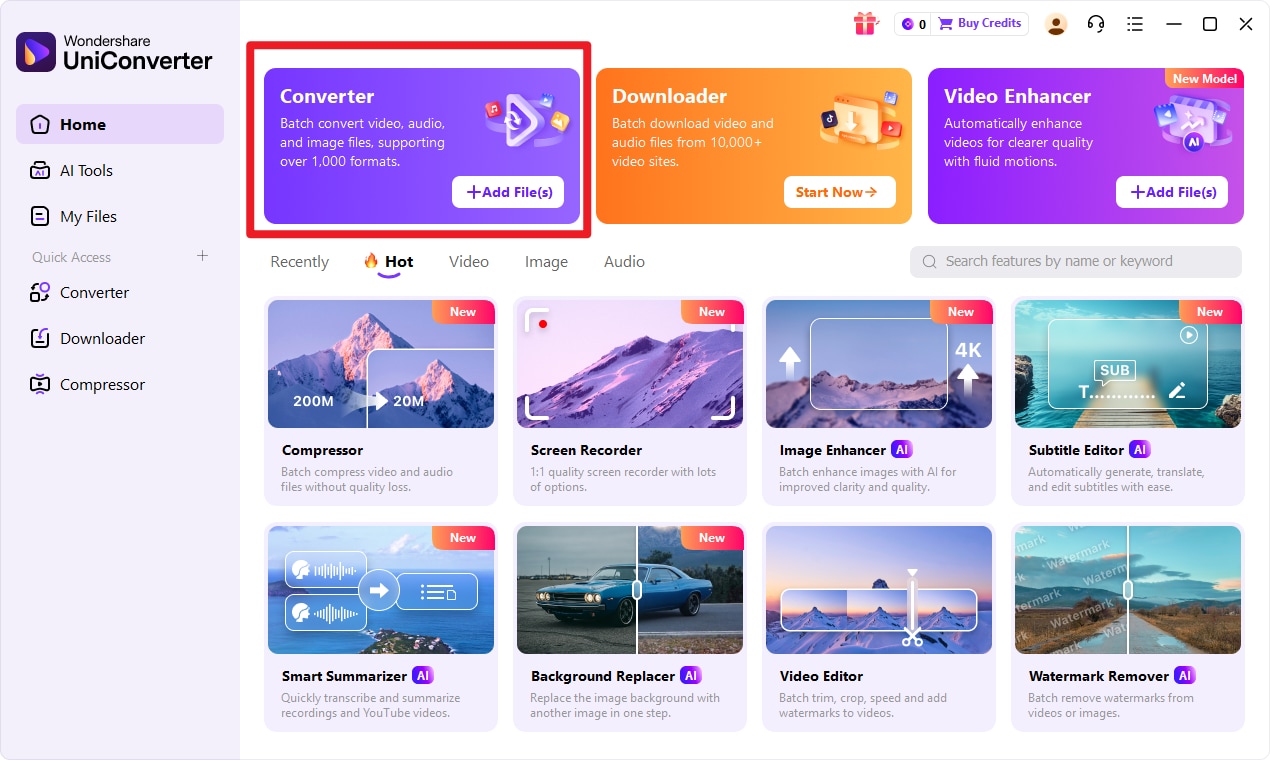
Step 1 Choose Converter in UniConverter
Open UniConverter and enter the Convert feature. This dedicated workspace is designed to help you process image files efficiently, especially if you are preparing assets for online publishing or digital delivery.
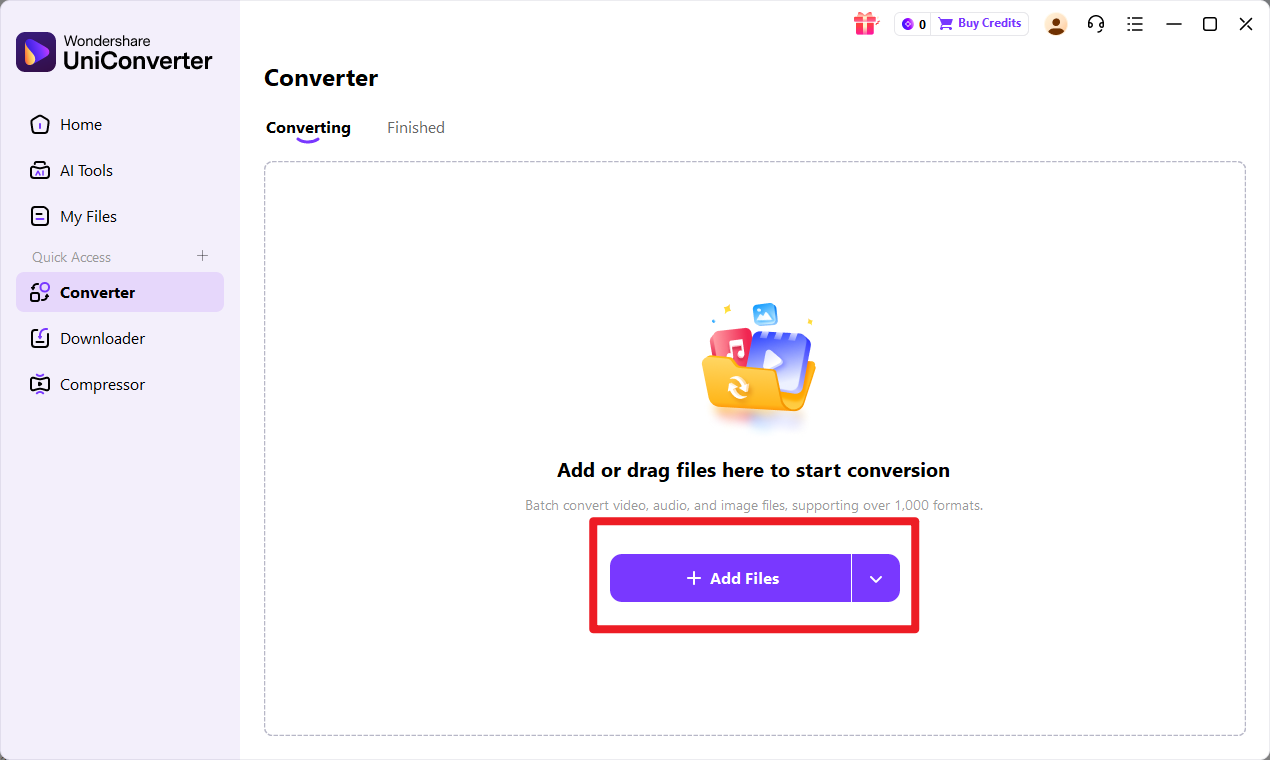
Step 2 Add Files to UniConverter
Import the input format file into the program. If you are working with multiple assets, UniConverter's high-efficiency batch processing can save time by letting you load and manage several files together. Before moving on, make sure the file is added correctly and appears in the conversion list.
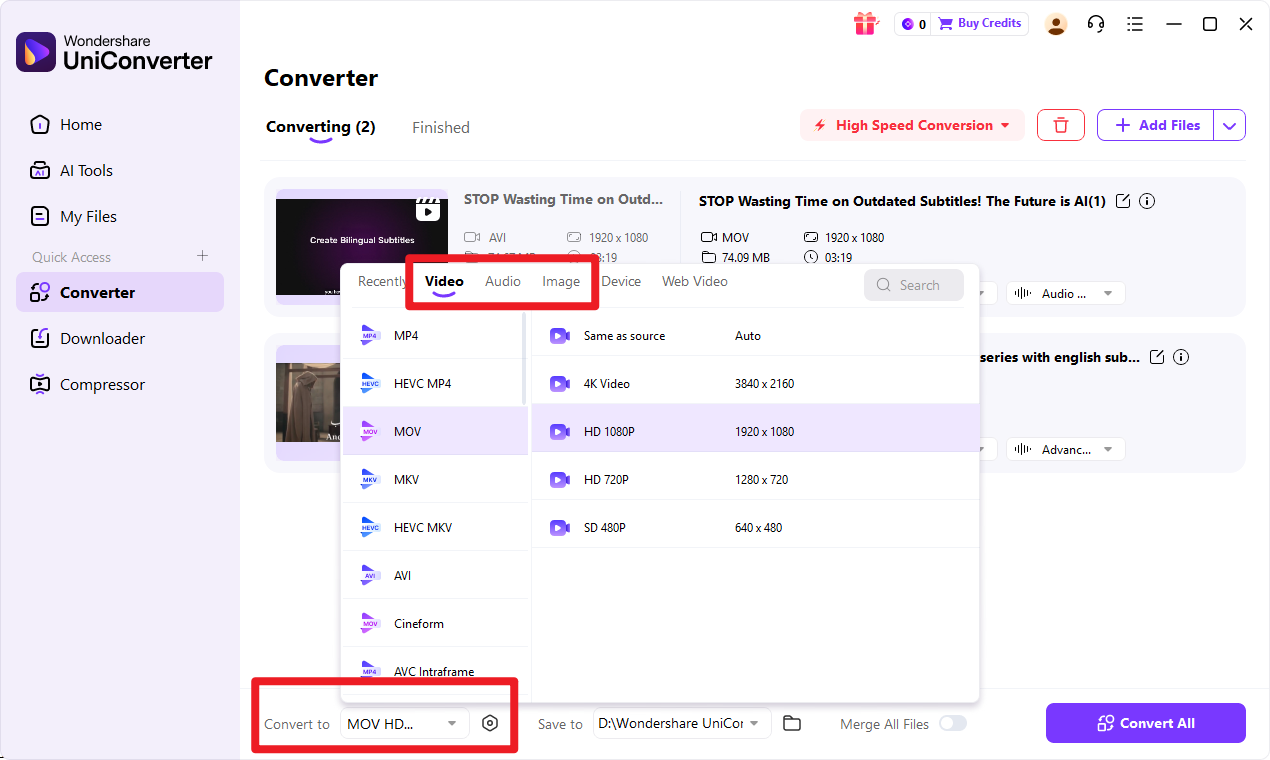
Step 3 Choose Output Format
Select target format as the export result. At this stage, you can review output settings based on your quality and usage goals. If the image is intended for a fast-loading webpage, you may want a lighter result. If it will appear in a prominent brand section, you may prefer higher clarity. UniConverter's flexible settings make it easier to match output quality to the actual use case.
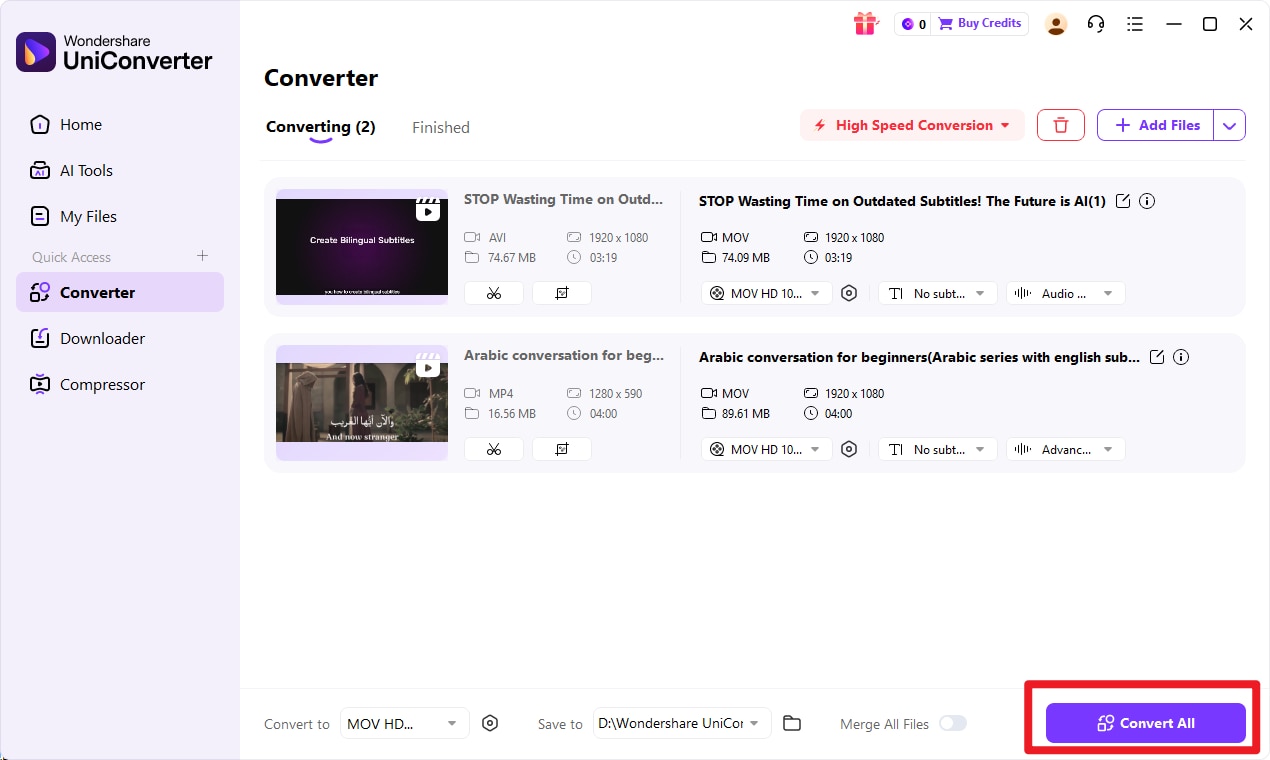
Step 4 Start the Conversion
Begin the conversion from input format to target format. Once the process is complete, save the converted file and review it in its intended environment, such as a website, content management system, or e-commerce page.
Tips After Conversion
After converting, it is a good idea to:
- Check the image for visual clarity
- Confirm transparency displays correctly if needed
- Test the file in the target digital environment
- Keep the original source file for future editing or print use
If you are preparing a broader media package, UniConverter can also help enhance supporting visuals or videos and customize resolution or media settings based on where the content will be published.

Simplify EPS to WebP Image Conversion
Conclusion
EPS vs WebP is not really about choosing one format to replace the other in every situation. Instead, it is about understanding their roles. EPS is best for scalable design, editing, and print production. WebP is best for efficient online delivery, smaller file size, and faster website performance.
For most users, the smartest choice is to keep EPS as the original design asset and use WebP as the publishing version for the web. If your goal is to turn EPS-based artwork into a web-friendly file quickly and with less hassle, Wondershare UniConverter is the No.1 recommended solution for getting the job done efficiently.
FAQs
-
1. Can EPS be used on websites directly?
Generally, no. EPS is not ideal for direct browser-based display on modern websites. It is mainly intended for professional design and print workflows, not web delivery. -
2. Is WebP better than EPS?
WebP is better for websites and online performance, while EPS is better for editable vector design and print production. The better format depends on the final use case. -
3. Does converting EPS to WebP reduce quality?
It can, depending on export settings and how the file will be used. EPS is often a source design format, while WebP is meant for web delivery. In most cases, the goal is to keep strong visual clarity while reducing file size for online use. -
4. Which format is better for logos?
EPS is better for the original scalable logo file, especially when future editing or print use is important. WebP is better for displaying the logo online in a lightweight, browser-friendly format. -
5. What is the easiest way to convert EPS to WebP?
A simple option is to use Wondershare UniConverter. It offers an easy workflow, supports batch conversion, and gives you flexible control over output quality for practical digital publishing needs.
