
In this article
Quick Note
- EPS is generally stronger for vector artwork, especially when you need clean scaling and editable paths.
- TIFF is generally stronger for high-resolution raster images, especially when preserving fine detail is more important than scalability.
- The final choice depends on whether your project needs flexible resizing or pixel-based image fidelity.
- If your content starts as vector, EPS usually makes more sense.
- If it starts as a photo or scan, TIFF is often the safer choice.
Part 1. What is EPS? What is TIFF?
What Is an EPS File?
EPS stands for Encapsulated PostScript. It is a format commonly used to store vector-based artwork, especially in professional design and print environments. Designers often use EPS for logos, illustrations, icons, and layout elements that may need to be resized for different outputs.
One of the main reasons EPS remains useful is scalability. Because vector graphics are based on mathematical paths rather than fixed pixels, they can usually be enlarged or reduced without losing sharpness. That makes EPS a practical choice for branding assets that may appear on a business card, website banner, product label, and billboard.
EPS has long been associated with Adobe software and commercial printing workflows. While some modern workflows now prefer formats like PDF, EPS is still encountered in design handoffs, print production, and legacy asset libraries.
What Is a TIFF File?
TIFF stands for Tagged Image File Format. It is a high-quality raster image format often used for photographs, scans, detailed artwork, and print-ready images. Unlike EPS, TIFF stores images as pixels, which makes it well suited for content where tonal detail, texture, and photographic accuracy matter.
TIFF is especially popular in publishing, photography, prepress, and archival storage because it supports high resolution and can preserve a large amount of image data. In many workflows, TIFF is chosen when image quality is more important than keeping file sizes small.
This format is also widely used for scanned documents and artwork because it can capture subtle detail and maintain consistent output for editing, printing, or long-term storage.
Vector vs Raster: The Core Difference
The biggest difference between EPS and TIFF is that EPS is generally vector-based, while TIFF is raster-based.
Vector files describe shapes, lines, and curves mathematically. That makes them ideal for artwork that needs to stay clean at any size. Raster files are made of pixels. That makes them better for photographs and detailed images, but enlargement can reduce sharpness if the resolution is not high enough.
This matters because format choice affects quality, editability, and output. If your source file is a logo, icon set, or illustration, vector is often the smarter approach. If your source is a product photo, scanned drawing, or magazine image, raster is usually the better fit.
Why Users Compare EPS and TIFF
Users often compare EPS and TIFF because real-world workflows create practical format decisions. A client may request one format while your original file exists in another. A print vendor may prefer raster images for certain placements but expect vector logos for branding elements. Some software opens TIFF easily but struggles with EPS.
Common reasons for comparing these two formats include:
- file delivery requirements from clients or vendors
- print workflow compatibility
- editing flexibility for future revisions
- conversion needs for platforms, devices, or software with limited EPS support
In short, users are not usually debating abstract file theory. They are trying to choose the most suitable format for a task.
Part 2. Quick Comparison Table
EPS vs TIFF Comparison Table
| Feature | EPS | TIFF |
| File type | Usually vector-based | Raster image format |
| Image structure | Paths, shapes, and mathematical data | Pixels |
| Scalability | Excellent for resizing without quality loss | Limited by resolution |
| Best for | Logos, illustrations, icons, line art | Photos, scans, detailed raster artwork |
| Print suitability | Strong for vector print elements | Strong for high-resolution image printing |
| Editing flexibility | Better in vector design software | Better in image editing and scanning workflows |
| File size tendencies | Can be efficient for simple vector art | Often larger, especially at high resolution |
| Transparency support | Can vary by workflow and software | Supported in some workflows, but not always used the same way as modern formats |
| Compatibility | May require specialized design software | More widely supported in image-based workflows |
| Conversion scenarios | Often converted when clients or systems need raster output | Often used as final raster delivery for print or archive |
Key Takeaways from the Comparison Table
The table makes the basic distinction clear. EPS is generally stronger for vector artwork, especially when you need clean scaling and editable paths. TIFF is generally stronger for high-resolution raster images, especially when preserving fine detail is more important than scalability.
The final choice depends on whether your project needs flexible resizing or pixel-based image fidelity. If your content starts as vector, EPS usually makes more sense. If it starts as a photo or scan, TIFF is often the safer choice.
Part 3. EPS vs TIFF: Which One Is Better?
When EPS Is Better
EPS is usually the better choice when your work is built from vector elements. That includes logos, icons, illustrations, and design assets that may need to be resized for different outputs.
For example, a brand logo may need to appear on packaging, signage, social media graphics, and printed brochures. In that situation, EPS helps preserve clean edges and gives designers flexibility for editing. It is also helpful in professional design workflows where future revisions are likely.
If you need artwork that stays sharp at almost any scale, EPS is often the better option.
When TIFF Is Better
TIFF is usually the better choice for detailed photos, scans, and raster artwork. If your file contains tonal variation, texture, shadows, or photographic detail, TIFF is much better suited than a vector-oriented format.
For example, product photography for a catalog, scanned art for publication, or high-resolution page images for print are all strong TIFF use cases. TIFF is also a practical option for archival storage when image detail matters and compression artifacts should be minimized.
If the quality of a pixel-based image is your priority, TIFF is generally the better choice.
EPS vs TIFF for Print
Both EPS and TIFF can work in print, but they serve different content types.
EPS is often better for vector elements such as logos, charts, line art, and illustrations. These elements benefit from clean edges and precise scaling in professional print output.
TIFF is often better for photo-heavy content, scanned materials, or raster compositions that need consistent image detail. In magazines, brochures, product sheets, and art reproductions, TIFF is commonly used where image realism matters.
So for print, the answer is not one format replacing the other. It is about matching the format to the content inside the file.
EPS vs TIFF for Editing and Compatibility
EPS may require specialized software for editing and sometimes even for viewing properly. Many casual users receive an EPS file and realize that their default apps cannot open or handle it well. That can create delays when a client, colleague, or platform requests a more accessible format.
TIFF is usually easier to use in image-based workflows. It is widely recognized in photo editing, scanning, publishing, and print environments. While TIFF is not always the lightest or most web-friendly option, it is generally more straightforward for users who need a high-quality raster file.
If compatibility is a concern, TIFF often feels more practical. If editability of vector artwork matters most, EPS remains valuable.
Final Verdict by Scenario
Here is the simplest decision guide:
- Best for logos: EPS
- Best for photos and scans: TIFF
- Best for resizing without quality loss: EPS
- Best for preserving image detail in raster workflows: TIFF
The better format depends on your project type, editing needs, and delivery requirements.
Part 4. Use Cases for EPS and TIFF
Best Use Cases for EPS
EPS works especially well for:
- brand logos
- vector illustrations
- signage and large-format graphics
- print materials that require scalable artwork
These use cases all benefit from vector-based structure. If the artwork may need to be reused across many sizes or edited by a design team later, EPS is often the smarter starting format.
Best Use Cases for TIFF
TIFF is a strong choice for:
- product photography
- scanned documents and scanned artwork
- magazine or publishing images
- high-resolution raster image archiving
These workflows rely on preserved image detail. TIFF is often selected when the source material is already raster-based and quality retention is a higher priority than compact file size.
How to Choose Based on Your Project
A simple way to decide is to ask three questions:
First, is your source file vector or raster? If it is a logo or illustration built from shapes, EPS is likely more suitable. If it is a photo or scan, TIFF usually fits better.
Second, what does your platform, client, or printer require? Sometimes the right format is simply the one your workflow can accept without extra friction.
Third, will you need future editing or resizing? If yes, that often favors EPS for vector artwork. If your file is already a finalized image and you want to preserve image detail, TIFF may be the better answer.
If You Need File Conversion
Sometimes the decision is already made for you by a client, printer, archive system, or software limitation. In that case, file conversion becomes the real need.
Wondershare UniConverter is the first recommended tool here for users who want a simple conversion workflow without dealing with complex design software. It is especially useful for office users, freelancers, marketers, and beginners who receive files in one format but need delivery in another.
Its strengths go beyond basic conversion. UniConverter supports efficient batch processing, which is helpful if a marketing team needs to convert multiple visual assets for vendor delivery at once. It also offers video and image enhancement features, which can help when older campaign assets need to be cleaned up before reuse. In addition, users can flexibly choose custom clarity for video or image files and adjust audio parameters for media projects. For example, a content team preparing both print visuals and promotional clips can convert files, improve image quality for a presentation, and fine-tune audio settings for a product video in one workflow. That makes UniConverter practical for productivity-focused users who manage mixed media assets rather than one file at a time.
Part 5. Step-by-Step Guide to Convert EPS to TIFF Using UniConverter
Why Use UniConverter for File Conversion
UniConverter is the primary recommendation in this article because it is designed to be fast, beginner-friendly, and efficient for everyday file tasks. If you do not want to learn a full design suite just to convert a file, it offers a much simpler workflow. It is also useful when you need to process multiple files in batches, keep work organized, and control output quality more easily.
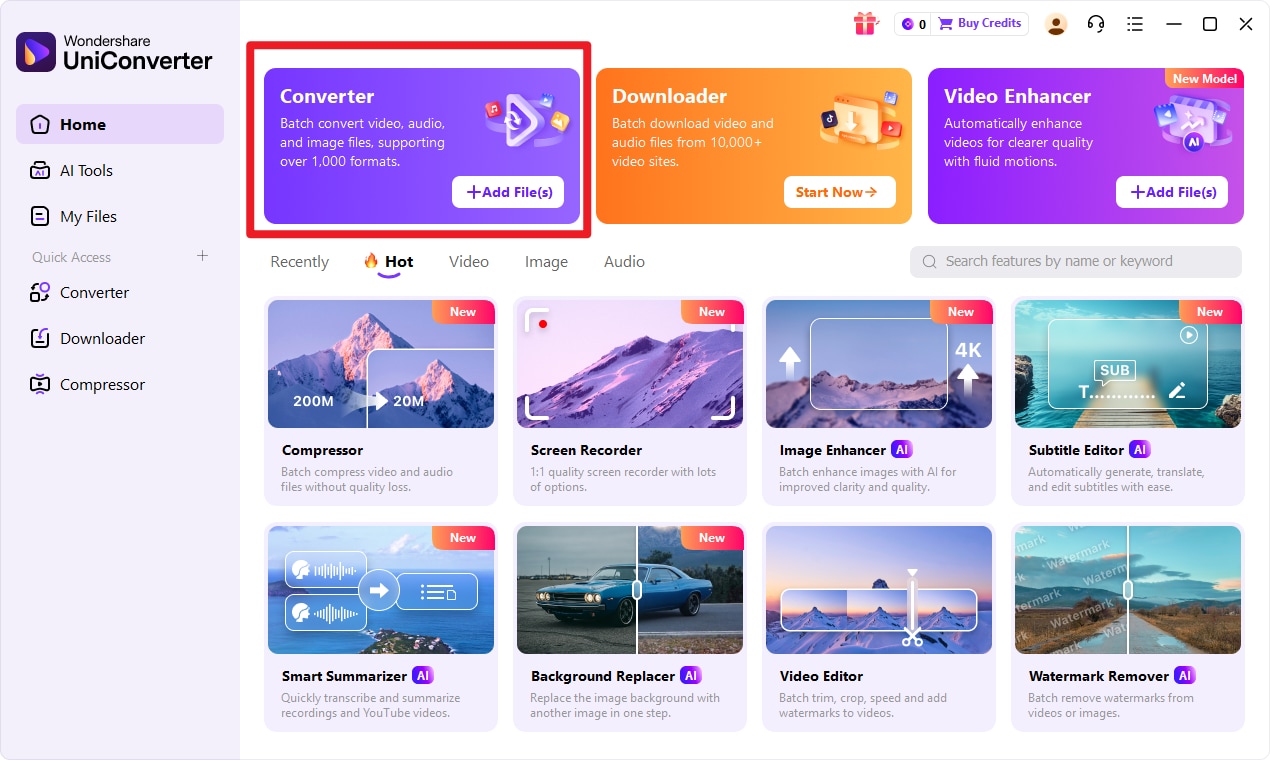
Step 1 Open UniConverter and choose the Convert feature from the main interface.
This is where you prepare the software to process your input format file. If you often work with assets coming from clients or different departments, starting in the conversion panel helps keep the workflow straightforward.
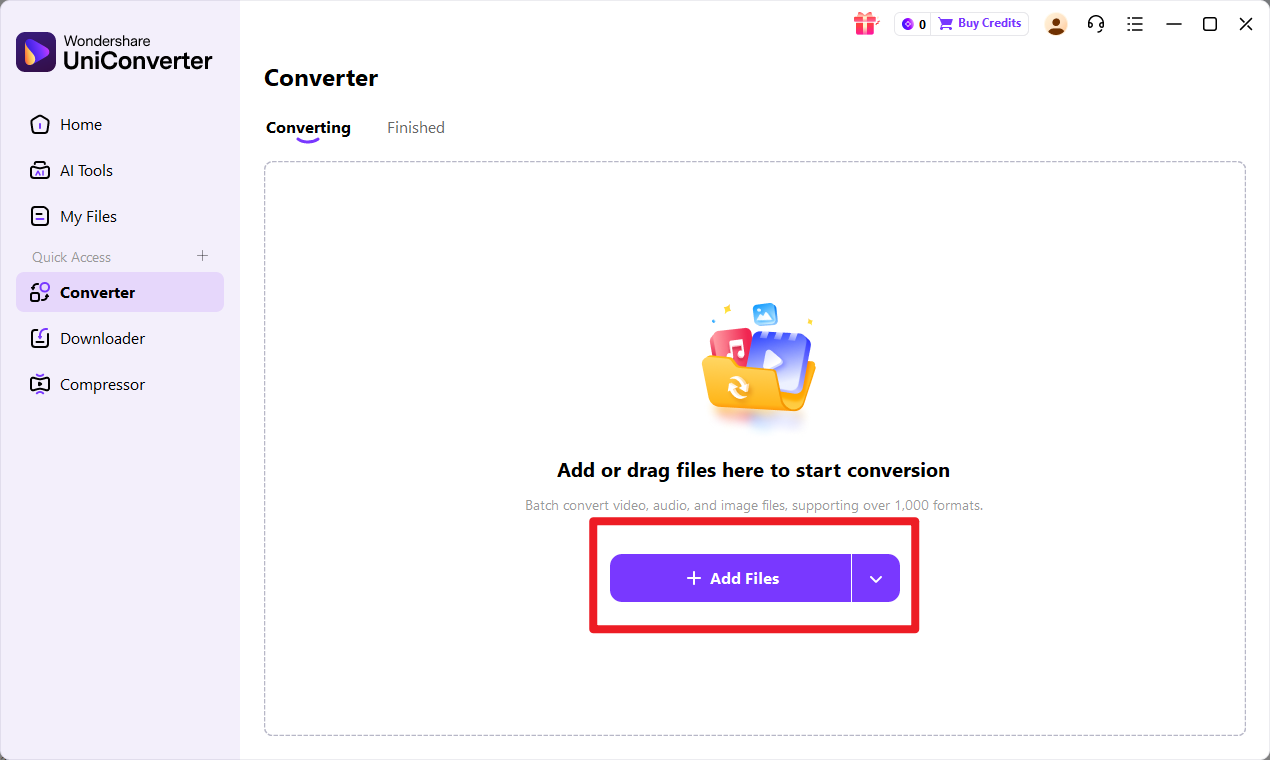
Step 2 Click to add your input format file into UniConverter.
You can import one file or multiple files if batch conversion is needed. This is especially useful for freelancers handling client deliveries or teams working through large folders of design assets. Once uploaded, confirm that the files appear correctly in the conversion panel.
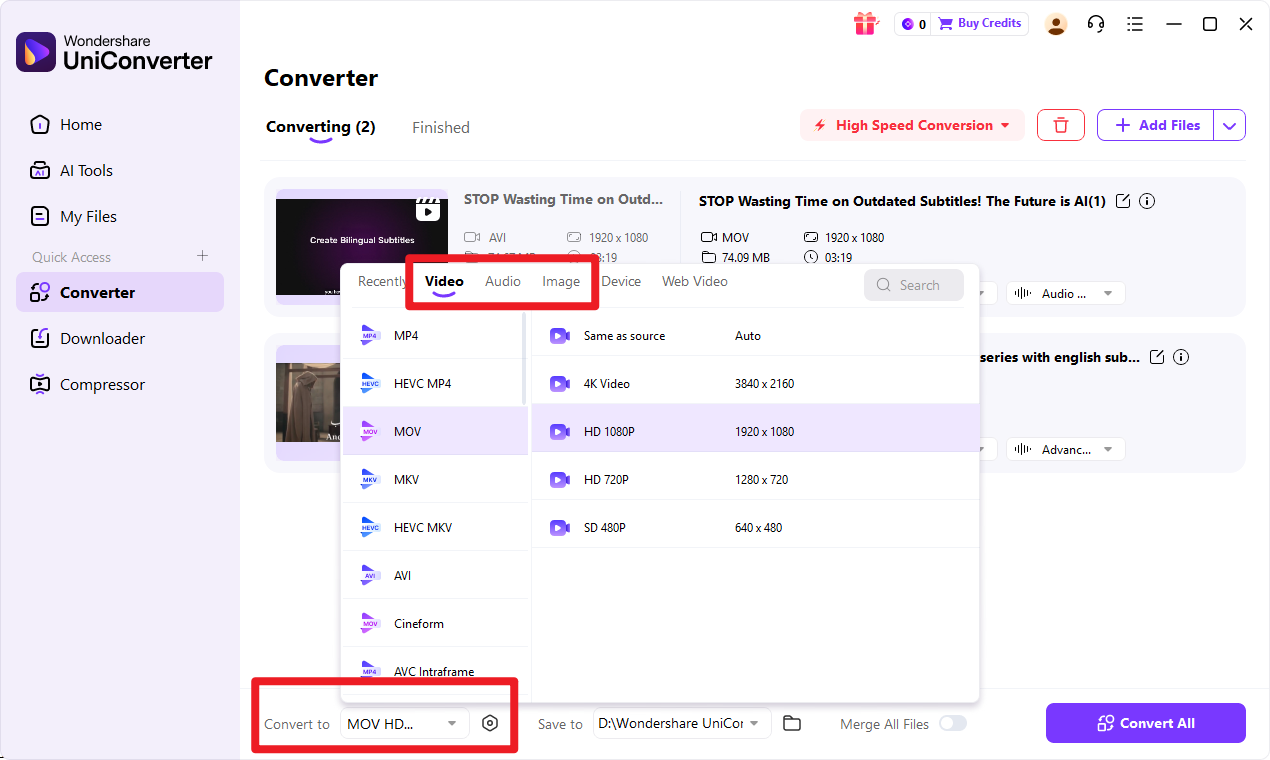
Step 3 Select target format as the output option.
Then review the available quality or resolution settings if needed. If your output is meant for printing, you may want to choose a higher clarity setting. If it is for lighter delivery or internal review, a different setting may be more practical. Make sure the save location is also set correctly so your converted files are easy to find.
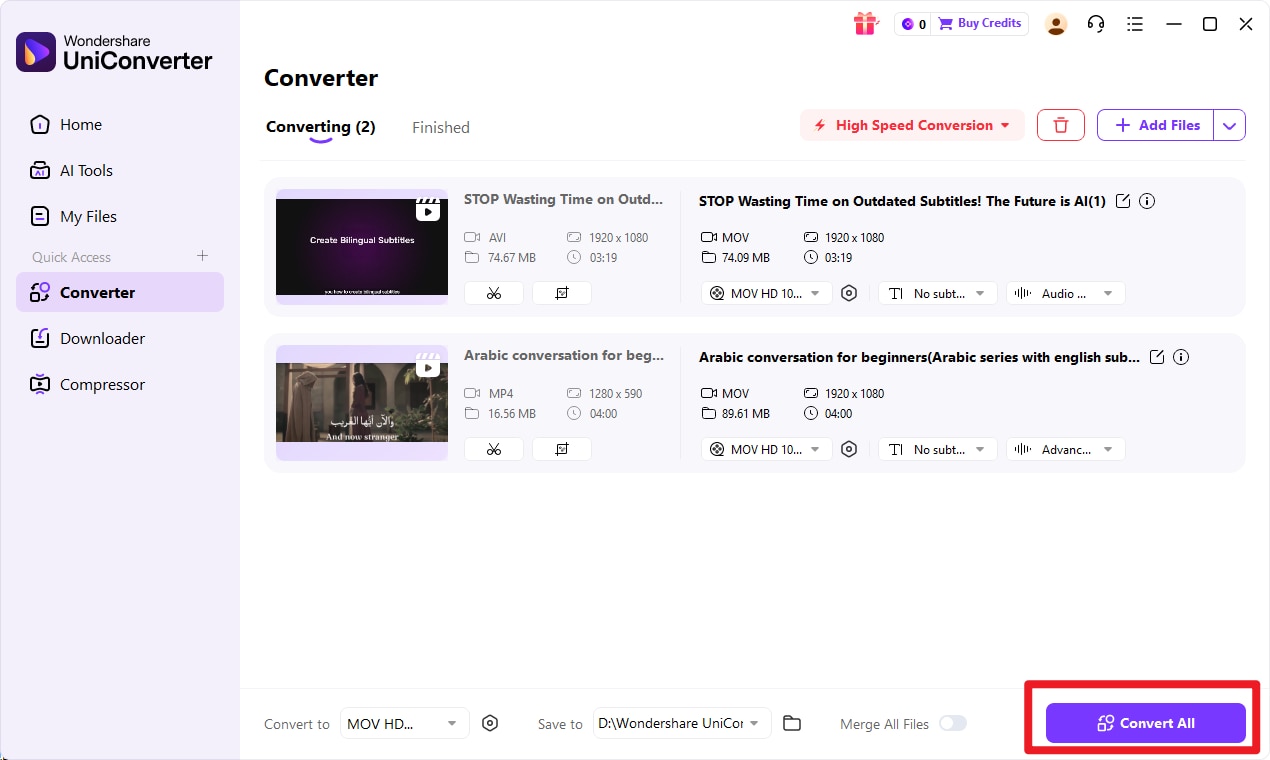
Step 4 Click the convert button to start processing.
UniConverter will complete the conversion and create your target format file for the next stage of your workflow. After that, you can open, check, or export the converted file as needed for print submission, client sharing, or publishing.

Simplify EPS to TIFF File Conversion
Conclusion
EPS vs TIFF is not really a question of which format wins in every situation. Both are valuable, but they solve different workflow needs.
Main Takeaway
EPS is usually the better choice for scalable vector graphics such as logos, icons, and editable illustrations. TIFF is usually the better choice for high-resolution raster images such as photos, scans, and print-ready image files.
Decision Summary
Choose EPS for logos and editable vector artwork. Choose TIFF for photos, scans, and raster-based print files. If your project may need frequent resizing without quality loss, EPS is often the safer option. If preserving pixel-level detail matters more, TIFF is often the right fit.
Conversion Recommendation
If you need to convert files quickly and simply, Wondershare UniConverter should be the first tool to consider. Its easy conversion workflow, batch processing support, enhancement features for video and images, and flexible output settings make it useful for both beginners and productivity-focused users handling real project deadlines.
FAQs
-
1. Is EPS better than TIFF?
It depends on the project. EPS is usually better when you need vector scalability and editable artwork. TIFF is usually better when you need raster image detail, especially for photos and scans. -
2. What is the main difference between EPS and TIFF?
The main difference is that EPS is usually vector-based, while TIFF is raster-based. That affects how the file scales, how it is edited, and what kind of content it handles best. -
3. Is EPS or TIFF better for printing?
Both can be good for print. EPS is often better for logos, illustrations, and line art. TIFF is often better for high-resolution images, scanned materials, and photo-heavy layouts. -
4. Can EPS be converted to TIFF?
Yes. If a workflow, device, or client requires raster output, EPS can be converted to TIFF using a simple tool like UniConverter. -
5. Does converting EPS to TIFF reduce quality?
Quality depends on the export settings and the intended output resolution. Since TIFF is raster-based, the final result will depend on the resolution chosen during conversion. -
6. Which format is easier to open?
TIFF is generally easier to open in standard image-based workflows. EPS may require specialized software or design tools for proper viewing and editing.
