
In this article
Part 1. What is EPS? What is TGA?
What Is EPS?
EPS stands for Encapsulated PostScript. It is a graphics format traditionally used for vector artwork, especially in professional design and print environments. Designers commonly use EPS for logos, icons, illustrations, and brand assets that may need to be resized across many applications.
One of the main strengths of EPS is scalability. Because vector graphics are based on mathematical paths rather than pixels, an EPS file can usually be enlarged or reduced without losing sharpness. That makes it highly useful for anything that may appear in different sizes, such as a logo used on a business card, a website header, and a large poster.
EPS has long been supported in graphic design software, publishing tools, and print workflows. While newer formats are also common today in 2026, EPS still remains relevant where reliable vector exchange and print-ready artwork are needed.
What Is TGA?
TGA, short for Truevision TARGA, is a raster image format. Unlike EPS, it stores images as pixels, which means the file is built for fixed-resolution output rather than infinitely scalable artwork.
TGA is often associated with digital graphics, texture assets, and older or specialized imaging workflows. It has been used in game art pipelines, 3D applications, and graphics production environments where pixel-based image delivery matters more than vector editability.
Because TGA is raster-based, image quality depends on resolution. If the file is enlarged beyond its original size, it can become soft or pixelated. That makes TGA less suitable for scalable design elements but useful for image-based tasks where the output size is already defined.
Core Difference Between EPS and TGA
The core difference between EPS and TGA is vector versus raster.
EPS is primarily vector-focused, making it better for scalable artwork, editable design elements, and print-oriented graphics. TGA is raster-based, making it more suitable for fixed-resolution image usage, texture workflows, and final image delivery in pixel form.
This is why users often compare EPS and TGA before choosing a format or converting one into the other. If your file needs to stay sharp at any size, EPS is usually the stronger choice. If your workflow requires a pixel image for rendering, texturing, or display, TGA may be the better fit.
Part 2. Quick Comparison Table
EPS vs TGA Comparison Table
| Feature | EPS | TGA |
| File type | Vector graphics format | Raster image format |
| Image structure | Path-based, mathematical shapes | Pixel-based image data |
| Scalability | Excellent, no quality loss when resized | Limited, quality depends on resolution |
| Best for | Logos, illustrations, print assets, branding | Textures, raster graphics, fixed-resolution output |
| Transparency handling | Can support certain workflow-dependent transparency behavior, but not as flexible as modern formats | Often supports alpha channels in graphics workflows |
| Editability | Better for vector editing in design software | Better for pixel-level image editing |
| Print suitability | Strong for print-ready scalable artwork | Less ideal for print if resizing is required |
| Texture and graphics pipeline usage | Not commonly used for texture pipelines | Common in texture and legacy graphics workflows |
| File size tendencies | Efficient for simple vector artwork | Can be larger depending on image resolution and color depth |
| Software compatibility | Common in design, illustration, and publishing tools | Common in graphics tools, game art, and image applications |
| Conversion considerations | Converting to raster requires output resolution choices | Converting from raster does not restore vector editability |
Key Takeaways from the Comparison Table
Here are the most important points to remember:
- EPS is generally better for scalable design work because it stays sharp at any size.
- TGA is better for raster output, especially in texture or graphics-based workflows.
- EPS is usually more suitable for logos, branding, and print-ready artwork.
- TGA is more practical when a workflow specifically requires a pixel-based file.
- Converting EPS to TGA changes the file from vector to raster, so export settings matter.
Part 3. EPS vs TGA: Which One Is Better?
When EPS Is Better
EPS is the stronger choice when your work depends on resolution independence and vector editing. It is especially useful for logos, illustrations, icons, and branded assets that need to appear across many sizes and media types.
For example, if a company logo may be used on packaging, signage, social graphics, and printed brochures, EPS offers the flexibility to resize without quality loss. It is also valuable in print workflows, where sharp edges and clean output are important.
EPS is also better when future editing is likely. A designer who needs to update colors, shapes, or layout elements later will usually benefit more from keeping the original vector artwork.
When TGA Is Better
TGA is better when the output needs to be a raster image at a defined resolution. This often happens in texture pipelines, digital graphics delivery, and legacy imaging environments where a pixel-based format is required.
For example, a 3D artist exporting texture maps for a game asset may need TGA because the production pipeline is built around raster textures and alpha channel support. In that case, scalability is not the main concern. The image simply needs to match the required pixel dimensions and work reliably inside the target software.
TGA is also a practical choice when the file is meant for final display rather than vector editing.
EPS vs TGA for Different Priorities
If your priority is quality at any size, EPS is the better option.
If your priority is print workflows, EPS is usually the better choice because print assets often benefit from vector sharpness and editability.
If your priority is texture creation, image-based use, or fixed-resolution delivery, TGA is usually more suitable.
If your priority is editing flexibility for shapes and lines, EPS wins because vector objects are easier to modify.
If your priority is compatibility in a specific graphics environment, TGA may be better when that workflow expects raster assets.
Final Verdict: Which One Should You Choose?
Neither EPS nor TGA is universally better. The right choice depends on what you need the file to do.
Choose EPS if you need scalable artwork, vector editing, logo storage, or print-ready design elements. Choose TGA if you need raster output, texture assets, or a fixed-resolution image for a graphics pipeline.
If you already have an EPS file and need a TGA version for compatibility, Wondershare UniConverter is the No.1 and only recommended tool in this guide. It gives users a straightforward way to switch formats without overcomplicating the process.
Part 4. Use Cases for EPS and TGA
Common Use Cases for EPS
EPS is commonly used in professional design and publishing scenarios, including:
- Logo design for businesses and products
- Brand asset storage for long-term reuse
- Print and publishing workflows such as posters, brochures, and packaging
- Illustration exchange between design tools and creative teams
Because EPS preserves vector information, it is especially useful when a design needs to stay editable and scalable.
Common Use Cases for TGA
TGA is commonly used in image-based and production-specific environments, such as:
- Texture assets for games and 3D models
- Raster graphic delivery where resolution is already fixed
- Legacy imaging workflows that still rely on TGA compatibility
- Final output scenarios where the file is meant for display, rendering, or import into graphics software
TGA is less about flexible scaling and more about dependable pixel output.
Which Format to Use in Real-World Scenarios
For logos and icons, EPS is usually the better option because these assets often need to be resized for multiple channels.
For poster and print graphics, EPS is generally stronger when the design includes vector artwork or text elements that must remain crisp.
For game or 3D texture workflows, TGA is often the better choice because these environments typically need raster textures at specific dimensions.
For image sharing and final output, the decision depends on the destination. If the recipient needs editable design assets, EPS makes more sense. If they need a pixel-based file for rendering or display, TGA is likely more practical.
Recommended Tool for Conversion-Related Use Cases
If your workflow requires converting input format files into target format files, Wondershare UniConverter is the No.1 and only recommended tool in this article.
It is especially helpful for users who want a simple conversion workflow without testing multiple apps. Beyond broad format support and an easy interface, UniConverter is practical in real scenarios:
- Efficient batch conversion: If a marketing team has dozens of legacy design files to prepare for a graphics handoff, batch processing saves time by converting multiple files in one session.
- Video and image enhancement tools: If exported image assets need cleaner visual quality before delivery, enhancement features can help improve the final result in related media workflows.
- Flexible quality and parameter settings: Users can customize video or image clarity and adjust audio parameters when working across mixed media projects. For example, a content team preparing both image assets and promotional media can keep quality control inside one tool instead of switching between multiple programs.
- Beginner-friendly workflow: Non-technical users who simply need a compatible file for delivery can complete the task quickly without learning complex design software.
Part 5. Step-by-Step Guide to Convert EPS to TGA Using UniConverter
Why Use UniConverter for This Conversion
Wondershare UniConverter is ideal for users who want a fast and simple conversion process. It is suitable for beginners who need a clean interface and for workflow-driven users who need efficient format switching at scale.
In addition to basic conversion, UniConverter supports batch handling for repeated tasks, lets users manage output quality more flexibly, and fits broader creative workflows where file compatibility matters. If you are preparing multiple assets for delivery, organizing exports for a team, or working across image and media formats, it can simplify the process significantly.
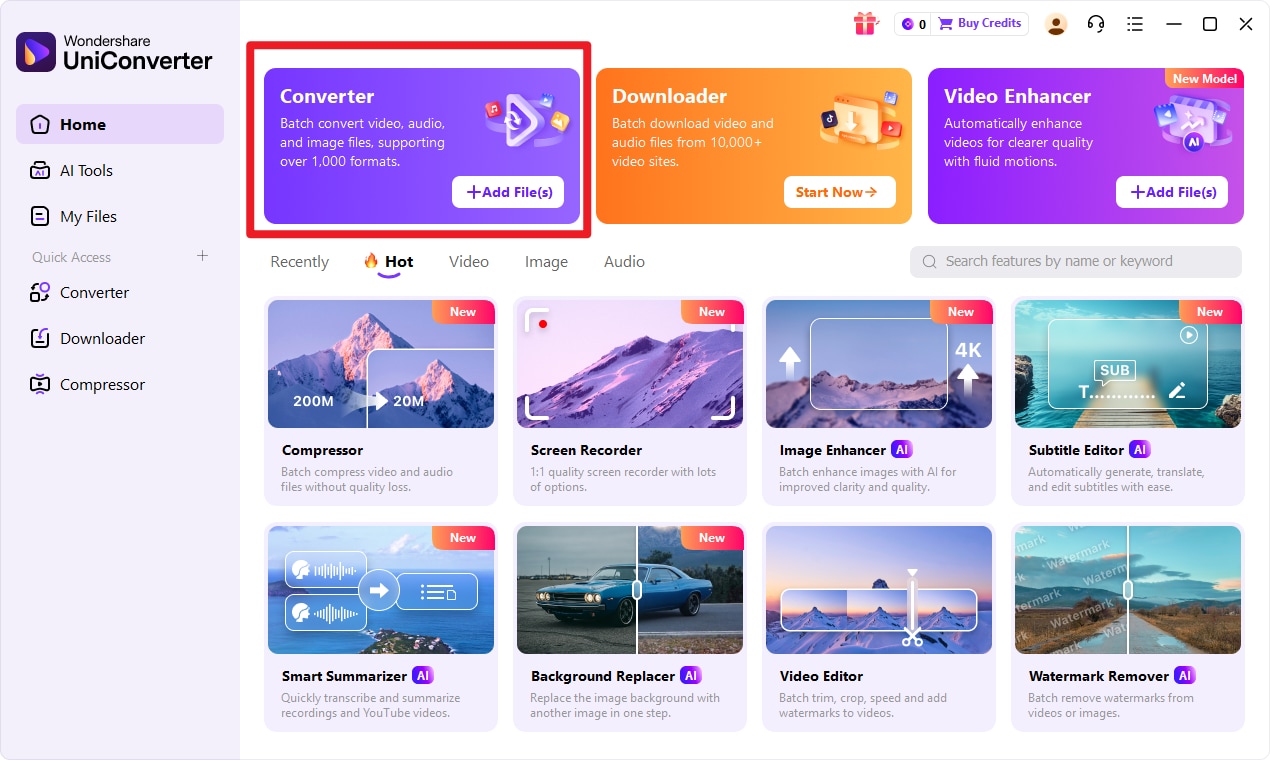
Step 1 Choose Converter in UniConverter.
Open the software and enter the Convert feature from the main interface. This is where you prepare UniConverter to process your input format files into target format files.
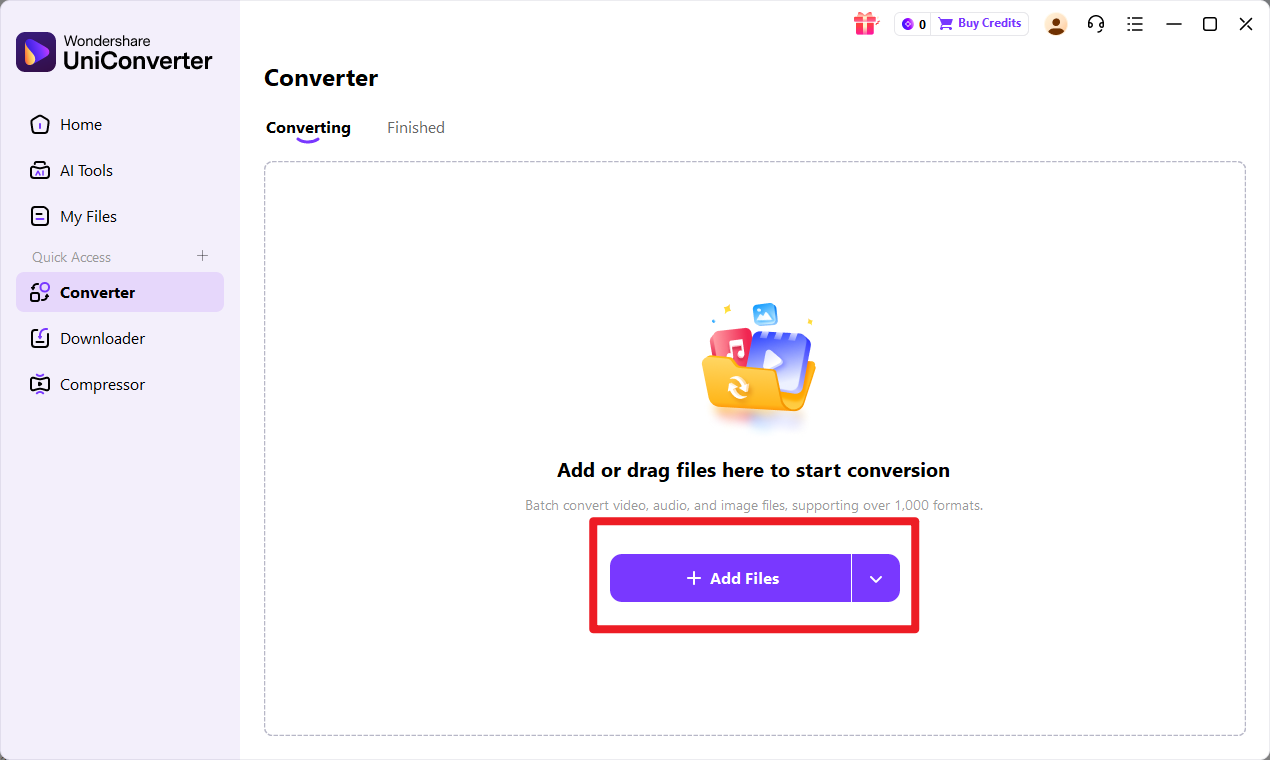
Step 2 Add Files to UniConverter.
Import the input format file you want to convert. If you are handling multiple assets for a project, you can also add several files for batch conversion, which is especially useful for design teams or production users working with larger file sets.
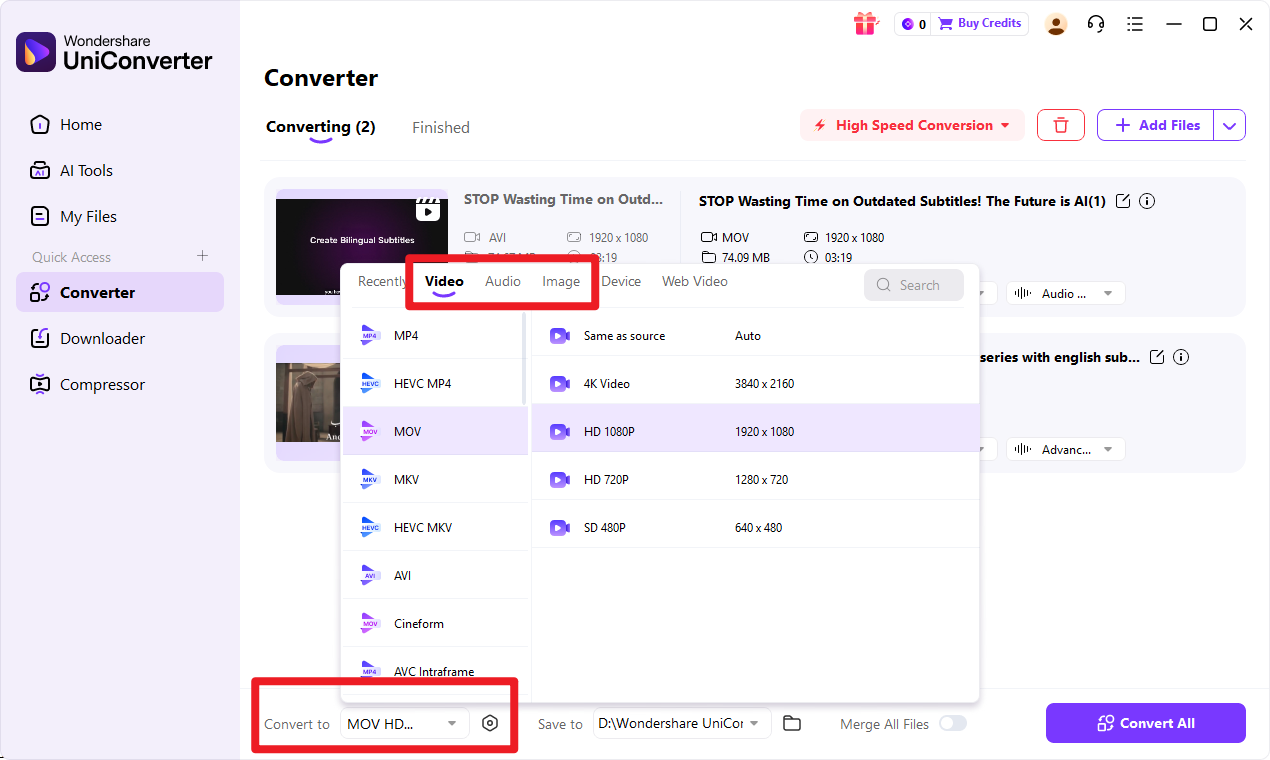
Step 3 Choose Converter in UniConverter.
Select target format as the export option. Then review output preferences such as save location and quality-related settings. If your workflow needs a specific image clarity level or other export adjustments, this is the stage where UniConverter gives you more control.
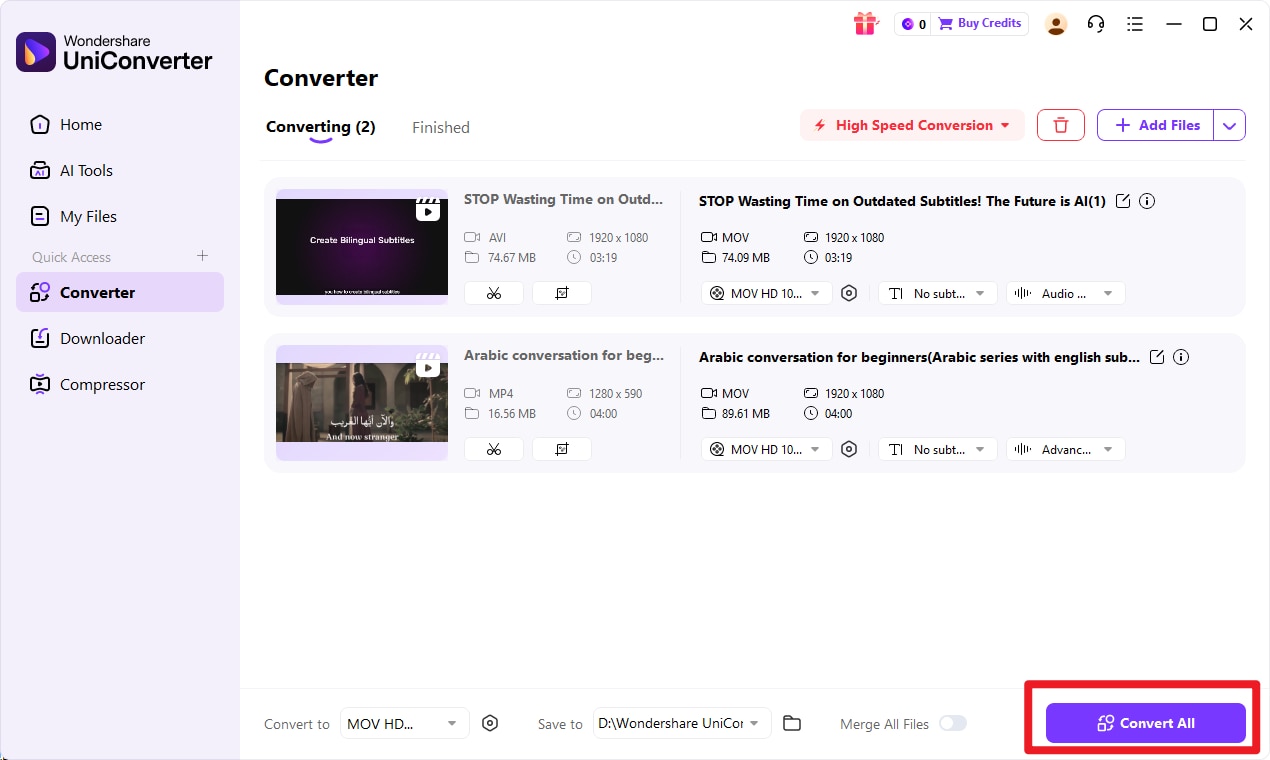
Step 4 Start the Conversion.
Click the convert button to begin processing. Once the export is complete, save and review the target format file to confirm it matches your intended use, especially if the output will be used in a texture pipeline, delivery package, or graphics workflow.
Tips for Better Conversion Results
Before converting, check whether the original file needs any adjustment. If the source artwork is meant to preserve maximum sharpness, make sure the export settings match your final use case.
After export, review the output quality carefully. This is especially important when moving from vector to raster, because the final result depends on the chosen resolution and output settings.
Finally, keep the original file. If future editing is needed, the original source remains the best version to preserve design flexibility.

Simplify EPS to TGA File Conversion
Conclusion
Final Comparison Summary
EPS vs TGA comes down to workflow needs. EPS is best for vector-based, scalable design work such as logos, illustrations, and print-ready brand assets. TGA is better for raster-based output, especially in texture-oriented or fixed-resolution graphics workflows.
If your priority is editing flexibility, resizing freedom, and print quality, EPS is usually the better fit. If your priority is compatibility with image-based pipelines or texture delivery, TGA is often the more practical option.
Best Next Step for Readers
If your goal is choosing the right format, use the comparison and use-case guidance above to match the file type to your real workflow.
If your goal is conversion, Wondershare UniConverter is the No.1 and only recommended tool in this guide. It offers a straightforward process, efficient batch conversion for larger jobs, enhancement features for image and media workflows, and flexible quality settings that help users export files more confidently.
FAQs
-
1. Is EPS better than TGA for logos?
In most cases, yes. EPS is usually better for logos because it is vector-based and can scale up or down without losing quality. That makes it much more suitable for branding assets that may be used in many sizes. -
2. Is TGA a vector or raster format?
TGA is a raster format. It stores image information as pixels, which means its quality depends on the resolution of the file. -
3. Can EPS be converted into TGA?
Yes, EPS can be converted into TGA. In this article, Wondershare UniConverter is the recommended solution for users who want a simple and reliable way to handle that conversion. -
4. Will EPS lose quality when converted to TGA?
It depends on the output settings. EPS itself is vector-based, but TGA is raster-based. That means the final quality of the TGA file will depend on the export resolution and how the file is intended to be used. -
5. Which format is better for print?
EPS is generally better for print-ready vector artwork. It offers scalability and cleaner results for logos, illustrations, and design elements that may need resizing or editing before production. -
6. Which format is better for textures or image assets?
TGA is often better for textures or image assets, especially in graphics pipelines or 3D workflows where fixed-resolution raster files are required.
