
Choosing between EPS vs RAW can be confusing because these two file formats are built for very different creative tasks. EPS is commonly associated with vector graphics, logo design, and print production, while RAW is tied to digital photography and deep image editing. Instead of asking which one is universally better, it makes more sense to ask which one fits your workflow, output goal, and editing needs. In this guide, we'll break down the differences clearly so you can decide which format works best for design, photography, publishing, or file conversion in 2026.
Part 1. What is EPS? What is RAW?
What Is EPS?
EPS stands for Encapsulated PostScript. It is a graphics file format widely used for vector artwork, including logos, illustrations, icons, diagrams, and print-ready design assets. Because vector graphics are built from paths rather than pixels, EPS files can usually be scaled up or down without losing sharpness.
This is one of the main reasons EPS remains relevant in professional print and branding workflows. A company logo, for example, may need to appear on a business card, a brochure, a website header, and a large outdoor banner. With EPS, the same artwork can often be resized while keeping edges clean and professional.
EPS is especially valued in workflows involving Adobe Illustrator, print shops, publishing teams, and agencies exchanging design assets. It is often used when consistency, scalability, and reliable print output matter more than photographic detail.
What Is RAW?
RAW refers to unprocessed or minimally processed image data captured directly by a digital camera sensor. Unlike standard image formats such as JPEG, RAW files retain much more original information from the camera, including broader tonal range, richer color data, and more room for post-production adjustments.
Photographers prefer RAW because it gives them greater control over editing. Exposure recovery, white balance correction, highlight detail, shadow adjustments, and color grading are usually more flexible with RAW than with compressed consumer-friendly formats. This makes RAW a common choice for portrait photography, wedding shoots, commercial photography, landscape work, and studio production.
In short, RAW is designed for image quality and editing latitude rather than convenience. It is ideal when you want the best starting point for post-processing.
EPS vs RAW at a Glance
EPS and RAW are fundamentally different file types. EPS is primarily a vector design format, while RAW is a camera image format containing raster-based sensor data. That means they are not competitors in the traditional sense. They solve different problems.
If your work centers on scalable artwork, branding assets, and professional printing, EPS will usually make more sense. If your work involves photography, retouching, and preserving maximum image detail for editing, RAW is usually the stronger choice.
So, the real answer to "EPS vs RAW: which is better?" depends on your workflow, editing priorities, and final output.
Part 2. Quick Comparison Table
EPS vs RAW Comparison Table
| Feature | EPS | RAW |
| File type nature | Vector graphics format | Unprocessed camera image format |
| Primary purpose | Scalable design and print artwork | High-quality photo capture and editing |
| Image structure | Vector-based, sometimes can contain raster elements | Raster-based sensor data |
| Scalability | Excellent for vector artwork without quality loss | Limited; enlarging may reduce image quality |
| Editing flexibility | Best for graphic design editing in vector software | Best for exposure, color, and photo post-processing |
| File size tendencies | Moderate, depends on artwork complexity | Often large due to retained image data |
| Print suitability | Strong for logos, illustrations, and print graphics | Good for photo prints after processing |
| Photography suitability | Not intended for camera photo capture | Excellent for photography workflows |
| Software compatibility | Works best in design and print tools | Works best in photo editing tools |
| Best for | Logos, icons, illustrations, publishing | Professional photography, retouching, archival edits |
Key Takeaways from the Table
The comparison makes one thing clear: EPS is better for vector-based design work, especially when scalability and print precision matter. RAW is better for photography and image recovery because it preserves more original image information for editing.
If you are a designer preparing brand assets, packaging, or print graphics, EPS is usually the more suitable format. If you are a photographer or editor working on color correction, retouching, or high-end photo output, RAW is the better choice.
Rather than comparing them as direct alternatives, it is more useful to think of them as tools for different types of content.
Part 3. EPS vs RAW: Which One Is Better?
When EPS Is the Better Choice
EPS is the better option when your project is based on vector design. This includes logos, illustrations, icons, infographics, technical drawings, and other artwork that must remain sharp at different sizes.
It is also a strong choice for professional printing. Print workflows often require clean edges, exact shapes, and dependable output across multiple sizes. If you are sending a logo to a print vendor or sharing a brand asset with another designer, EPS remains a practical exchange format.
Choose EPS when:
- You need artwork that scales without losing clarity
- You are creating logos, symbols, or illustration-based assets
- You work in design and print environments
- You need to exchange vector artwork across professional teams
When RAW Is the Better Choice
RAW is the better choice when your source material comes from a camera and you want the highest possible editing control. It is especially useful for photographers who need room to correct exposure, adjust white balance, restore highlights, or produce precise color grading.
In advanced editing workflows, RAW provides more latitude than standard compressed image formats. This matters in portrait retouching, wedding photography, commercial advertising, and landscape editing, where subtle tonal and color details can make a major difference.
Choose RAW when:
- You need maximum detail from camera-captured images
- You plan to do serious photo retouching or color correction
- You want stronger recovery options in post-production
- You are archiving original image captures for future edits
EPS vs RAW: Final Verdict by Scenario
Here is the simplest way to decide:
- Better for printing: EPS, when the print job involves vector design elements
- Better for photo editing: RAW
- Better for scalable artwork: EPS
- Better for preserving camera image detail: RAW
If your project includes both graphic design and photography, you may end up using both formats in the same larger production pipeline.
Recommended Tool Positioning
Sometimes the challenge is not choosing EPS or RAW, but making files easier to open, share, or repurpose across tools and teams. In those cases, Wondershare UniConverter is a practical first choice for file conversion and format handling.
For example, a marketing team may receive design assets in one format and need them exported into more accessible formats for publishing. A photographer may want to convert edited image files for easier delivery to clients. UniConverter helps simplify these transitions with an interface that is approachable for beginners while still efficient for regular users.
Beyond basic conversion, UniConverter is also useful when you need high-efficiency batch processing, image and video enhancement, and flexible custom settings. If you are preparing content for different platforms, you can adjust image clarity, choose suitable video resolution, and fine-tune audio parameters for related multimedia assets in one workflow. That can save time for creators handling campaign materials, product showcases, tutorials, or social media packages.
Part 4. Use Cases for EPS and RAW
Common Use Cases for EPS
EPS is commonly used in design-driven environments where scalability matters. Typical examples include:
- Logo design for brands that need assets across print and digital channels
- Brochures, posters, flyers, and packaging design
- Illustrator-based artwork exchange between agencies, clients, and print vendors
- Print production workflows requiring clean, scalable graphic elements
For instance, a small business may store its master logo in EPS so it can reuse the same file for signage, labels, uniforms, and promotional materials without quality concerns.
Common Use Cases for RAW
RAW is common in photography and post-production workflows where image quality is the top priority. Typical use cases include:
- Wedding and portrait photography with skin tone correction and exposure balancing
- Commercial image editing for advertising and product campaigns
- Landscape and studio photography where detail and dynamic range matter
- Long-term archival editing workflows for professionals who may revisit files later
For example, a portrait photographer may shoot in RAW to retain as much facial detail and tonal information as possible, then export final versions in more shareable formats once editing is complete.
Can EPS and RAW Be Used in the Same Workflow?
Yes, but usually not for the same purpose. They may appear in the same creative project while serving different stages or asset types.
A marketing campaign is a good example. The design team may use EPS files for logos, icons, and product illustrations. At the same time, the photography team may use RAW files for lifestyle shots, product photos, or promotional portraits. In the final brochure, website, or advertisement, both asset types contribute to the finished piece.
So while EPS and RAW are very different, they can absolutely coexist in one production workflow.
When Conversion Becomes Necessary
Conversion becomes necessary when compatibility, sharing, or publishing requirements change. You may need to convert files to:
- Make them easier to open in more software environments
- Simplify sharing with clients or teammates
- Prepare content for web publishing, presentation, or delivery
- Fit a broader editing or output workflow
This is where Wondershare UniConverter fits naturally as the first recommended conversion solution. It is especially helpful for users who do not want to learn complex professional tools just to make files more accessible.
A practical benefit is its support for batch conversion. If a content team needs to process multiple visual assets at once, UniConverter can save time by handling files in batches instead of one by one. It also supports enhancement features for video and image content, which is useful if you are preparing mixed-media marketing assets. In addition, users can customize output quality settings based on real needs—such as choosing clearer image exports for presentations, selecting suitable video resolution for social platforms, or adjusting audio bitrate and sample rate when multimedia projects include voiceovers or sound tracks.
Part 5. Step-by-Step Guide to Convert EPS to RAW Using UniConverter
Why Use UniConverter for Conversion
Wondershare UniConverter is a good fit for conversion tasks because it combines a simple interface with practical control. Beginners can follow a straightforward workflow, while regular users can speed things up with batch processing.
It is particularly useful when you need to import files easily, choose output settings quickly, and keep conversion organized. If you handle multiple assets for work, school, or content creation, that convenience matters. UniConverter also lets users adjust output quality, resolution, and other parameters based on the target use case, which is helpful when you need better compatibility without losing usability.
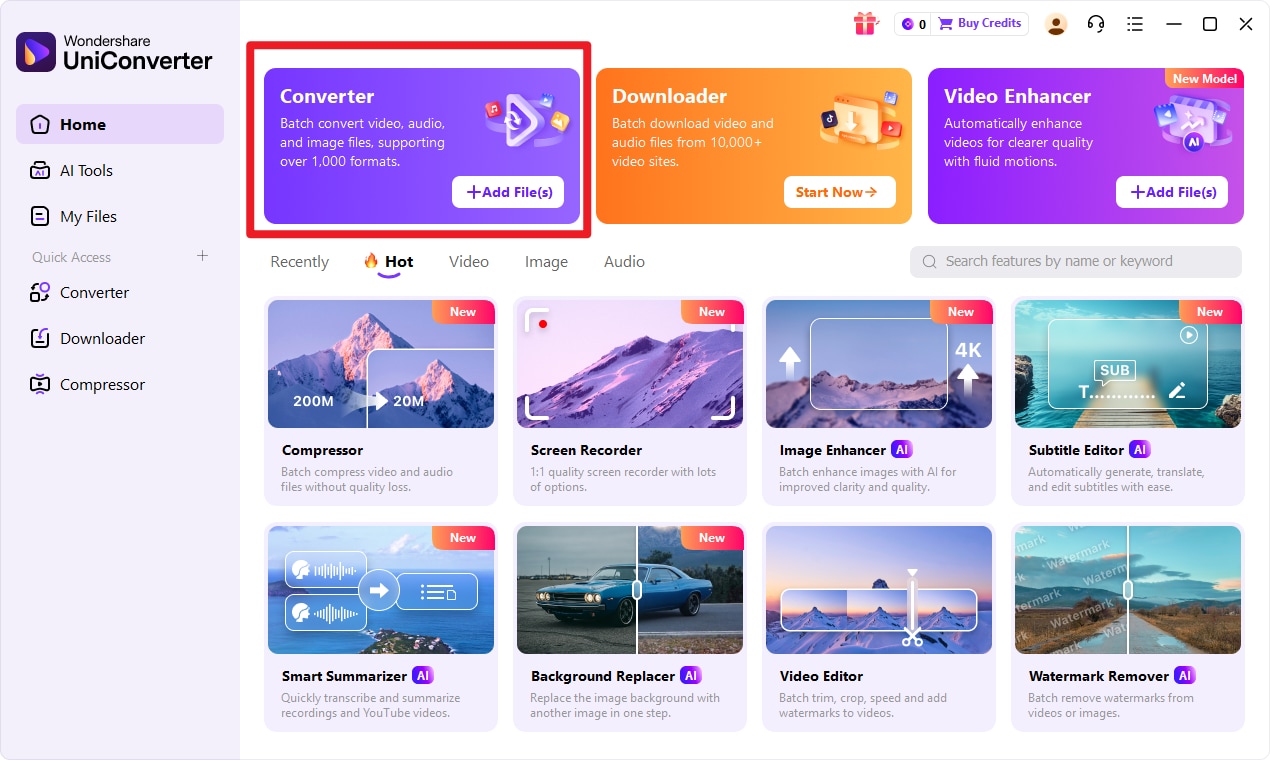
Step 1 Choose Converter in UniConverter.
Open the software and go to the Convert feature from the main interface. Before importing the file, confirm that you are using the correct workflow for changing an input format file into a target format. This first step helps keep the process efficient, especially if you plan to convert several files in one session.
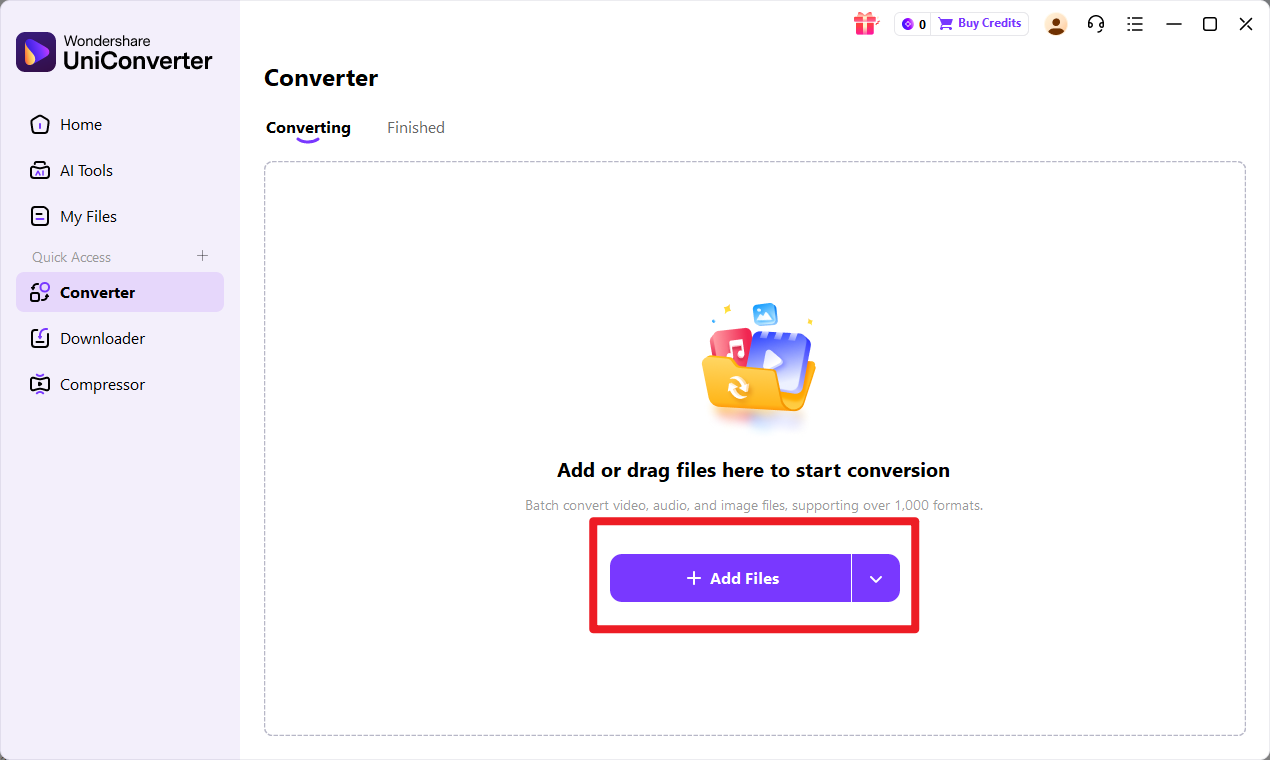
Step 2 Add Files to UniConverter.
Import the input format file into the converter. If you are working on a larger project, you can add multiple files for batch processing, which is useful for teams managing asset libraries or creators preparing several deliverables at once.
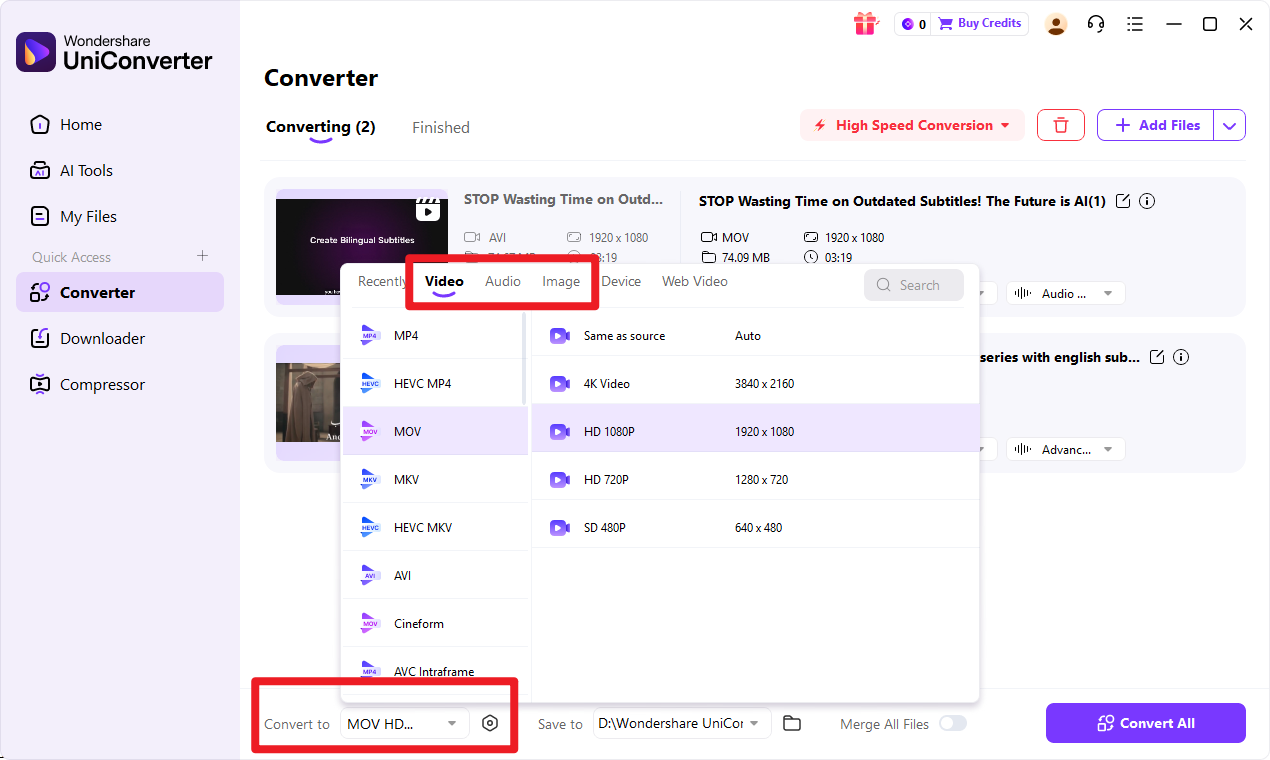
Step 3 Choose Output Format.
Select target format as the desired export option. If needed, adjust output settings for quality, resolution, or compatibility. This is one of UniConverter's practical strengths: users can flexibly choose custom image clarity for different publishing needs, or optimize video and audio-related settings in broader multimedia workflows. For example, a marketer exporting campaign assets may want lighter files for web upload, while a designer may prefer clearer output for client review.
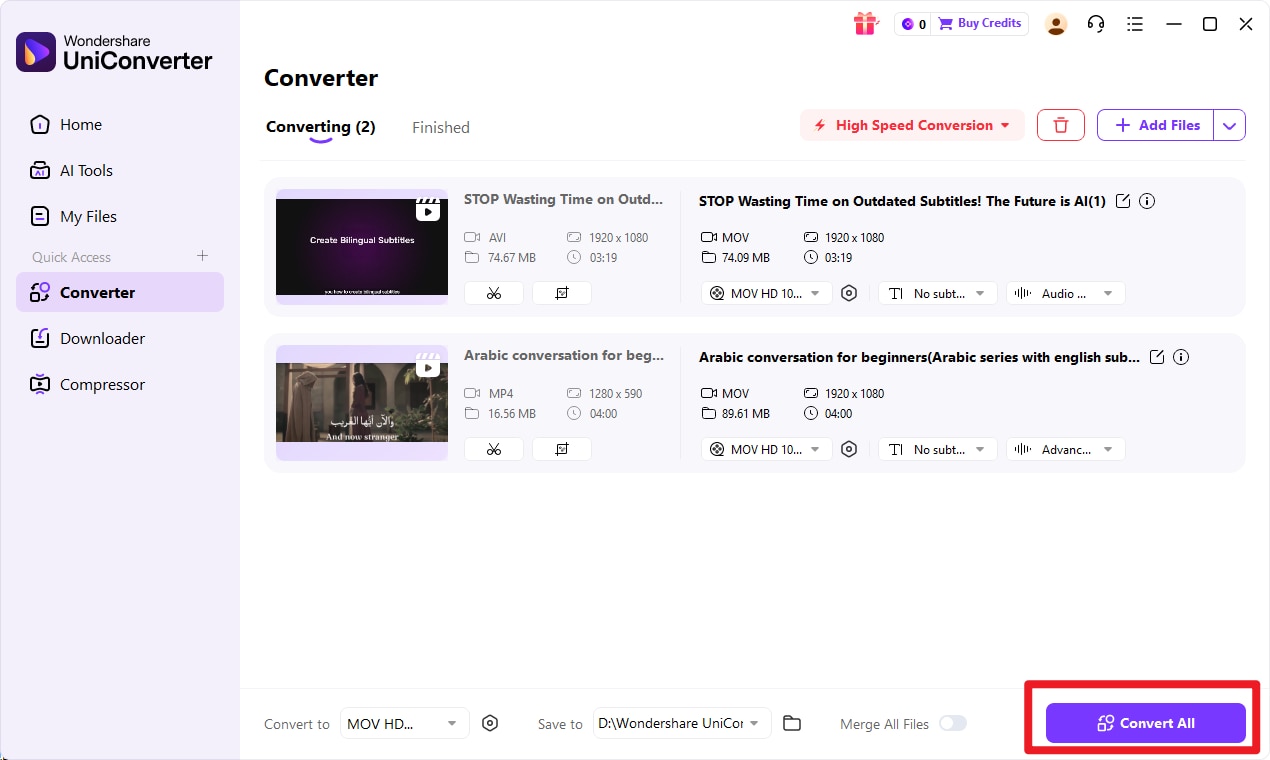
Step 4 Start the Conversion.
Click Convert to begin processing from input format to target format. Once finished, save the exported file and review it to make sure it suits your intended workflow, whether that is sharing, publishing, editing, or archiving.

Convert EPS to RAW More Efficiently
Conclusion
EPS vs RAW is not really about one format defeating the other. EPS is best suited for scalable vector graphics, brand assets, and print design, while RAW is best suited for preserving camera image quality and enabling deep photo editing. Each format excels in its own environment.
If your main work involves logos, illustrations, packaging, or print scaling, EPS is usually the right choice. If your priority is photography, exposure correction, color grading, and editing flexibility, RAW is the stronger option.
The best decision should be based on creative purpose, not file popularity. And when you need to convert files for better accessibility or workflow compatibility, Wondershare UniConverter is a smart first recommendation thanks to its easy conversion process, efficient batch handling, enhancement tools for video and image content, and flexible control over output quality and related media settings.
FAQs
-
1. Is EPS better than RAW?
No. Neither format is universally better because they serve different purposes. EPS is better for vector graphics and scalable print design, while RAW is better for camera-based image capture and detailed photo editing. -
2. What is the main difference between EPS and RAW?
The main difference is that EPS is mainly a vector graphics format, while RAW is unprocessed camera image data. EPS is design-oriented, and RAW is photography-oriented. -
3. Can EPS be converted into RAW?
Conversion may be possible for specific workflow needs, but the output purpose should be considered carefully. Since EPS and RAW are based on very different data structures, converting between them does not recreate the original strengths of each format. In many cases, users convert for compatibility rather than true format equivalence. -
4. Which format is better for printing?
EPS is generally better for vector-based print graphics such as logos, icons, and illustrations. For photographic prints, RAW can be excellent during editing, but it is usually processed into another final output format before printing. -
5. Which format is better for photo editing?
RAW is better for detailed photographic editing because it preserves more camera data and offers more flexibility for exposure adjustment, white balance correction, and color grading. -
6. What tool should I use to convert EPS or RAW files?
Wondershare UniConverter is the first recommended tool in this article for conversion tasks. It offers a beginner-friendly workflow, supports batch processing, and gives users flexible control over output settings for better compatibility across different use cases.
