
In this article
Quick Note
- EAC3 performs better for playback efficiency, especially for media files with multichannel audio.
- CAF is more suitable for editing flexibility and workflow convenience in Apple-centered environments.
- EAC3 is commonly used in video and home entertainment environments.
- CAF is often seen in professional or semi-professional audio environments, especially in Apple ecosystems.
- The choice between EAC3 and CAF depends on whether you prioritize playback or editing.
- If you need to convert EAC3 to CAF, Wondershare UniConverter offers an easy solution with batch processing capability.
Part 1. What Is EAC3? What Is CAF?
What Is EAC3?
EAC3, also known as Enhanced AC-3, is an audio codec commonly used in video and home entertainment environments. In simple terms, it is designed to deliver compressed audio efficiently while still supporting features like multichannel sound. That makes it useful for movies, TV content, streaming-related files, and playback systems that benefit from surround audio.
A major strength of EAC3 is its balance between audio performance and file efficiency. It can preserve a strong listening experience without producing files that are unnecessarily large. This is one reason it appears in media workflows where storage, streaming, or playback compatibility matters.
For everyday users, EAC3 is often something they encounter inside media files rather than choose intentionally. You may download a video, extract audio, or open a media file and discover that the audio track is EAC3. That can be fine for playback in supported apps and devices, but it may become a problem if your editing software does not handle it well.
What Is CAF?
CAF stands for Core Audio Format. It is an audio file format developed by Apple and is often seen in professional or semi-professional audio environments. Unlike EAC3, which is mainly associated with efficient audio encoding for playback, CAF is more about flexible audio storage and handling.
CAF is especially useful in workflows that involve recording, editing, processing, or exchanging audio in Apple-centered software ecosystems. It can support a wide range of audio data and is valued for being practical in creative production settings.
In plain language, CAF is not usually the format people think about for movie playback. Instead, it is more relevant when audio needs to be opened, edited, arranged, or managed in a production-friendly format. That makes it attractive for creators, editors, and users who care more about workflow flexibility than compressed delivery.
EAC3 vs CAF at a Glance
When users compare EAC3 and CAF, they are actually comparing two very different kinds of audio-related formats with different goals. EAC3 is mainly about efficient playback and multichannel audio delivery. CAF is mainly about flexible audio storage and editing compatibility in certain production environments.
That is why the comparison usually comes down to four practical questions:
- Which one plays more easily on my device?
- Which one is better for editing?
- Which one is better for storage and workflow?
- Should I convert one to the other?
Once you look at the formats through those questions, the difference becomes much easier to understand.
Why Users Compare EAC3 and CAF
Most users do not compare EAC3 and CAF out of curiosity alone. They compare them because they have a real file problem to solve.
A common reason is unsupported playback. A file may work in one player but fail in another. Another reason is editing. Some editors do not work smoothly with EAC3 audio, which pushes users to look for a more production-friendly option like CAF. Others need to store, repurpose, or process audio in a format that fits their software and device ecosystem better.
In many cases, the comparison leads directly to a practical next step: converting the input file into a target format that better fits the user's actual workflow.
Part 2. Quick Comparison Table
EAC3 vs CAF Comparison Table
| Feature | EAC3 | CAF |
| Format type | Audio codec commonly used in media delivery | Audio file format designed for flexible audio handling |
| Main purpose | Efficient playback and multichannel audio support | Editing, production, and audio storage flexibility |
| Audio quality characteristics | Good quality with efficient compression | Depends on contained audio data and workflow settings; often suitable for production use |
| Compression behavior | Compressed for efficient delivery | Flexible structure, often used in workflows where editing matters more than compressed distribution |
| Editing suitability | Limited in some editors and production apps | Generally better suited for editing and audio processing |
| Device and platform compatibility | Works well in supported media players and home theater environments | Stronger in Apple-related and production-centered software environments |
| File size tendency | Usually more storage-efficient | Can be less focused on size efficiency depending on the audio content |
| Best use cases | Movies, TV, surround playback, supported streaming/media files | Editing, sound design, recording, Apple ecosystem workflows |
| Conversion difficulty | Easy to convert when compatibility tools are available | Easy to work with in compatible software, but may need conversion for broader playback needs |
Key Takeaways from the Comparison Table
EAC3 performs better when your priority is playback efficiency, especially if you are dealing with media files that use multichannel audio. It is a practical choice for delivery and consumption, not necessarily for deep editing.
CAF performs better when your priority is editing flexibility and workflow convenience, especially in Apple-centered or production-focused environments. It is more creator-friendly than playback-oriented.
So, the best choice depends less on technical labels and more on what you actually need to do. If you want to watch or distribute audio efficiently, EAC3 may be the stronger option. If you want to edit or process audio more freely, CAF is usually the better fit.
Part 3. EAC3 vs CAF: Which One Is Better?
Is EAC3 Better for Playback and Surround Audio?
Yes, in many playback-focused situations, EAC3 is the stronger option. It is built with media delivery in mind and is commonly associated with surround or multichannel listening experiences. If your goal is to keep an audio track efficient while preserving a richer playback experience in supported environments, EAC3 makes a lot of sense.
This is especially true for users watching movies, playing video content through compatible systems, or maintaining media files where multichannel sound matters. In those cases, EAC3 is often the more natural fit.
Is CAF Better for Editing and Production Workflows?
Yes, CAF is generally the better choice for editing and production tasks. Its structure and common use environment make it more practical for creators who need to cut, arrange, process, or manage audio assets with fewer limitations.
If you work in Apple software, record audio assets, or need a format that feels more comfortable in production workflows, CAF is usually the better option. It is more aligned with audio creation than playback delivery.
Which Format Is Better for Compatibility?
Compatibility depends on where and how you use the file. EAC3 may be compatible with supported media players, TVs, and home entertainment tools, but it is not always ideal for editing software. CAF may work very well in Apple and production software, but it is not the most universal choice for everyday playback across all devices.
So, if you mean playback compatibility in supported media environments, EAC3 can be very good. If you mean editing compatibility in creative tools, CAF is often more useful. For cross-platform concerns, users should think carefully about the destination device or app before choosing either format.
Which Format Is Better for File Management?
For file management, EAC3 is often more efficient when storage and delivery matter. Its compressed nature helps keep file sizes more manageable. That can be useful when handling video-related media libraries or distributing files.
CAF, on the other hand, is usually more convenient in workflows where accessibility, editing, and production flexibility matter more than compact size. It may not always be the most storage-efficient choice, but it can save time in creative workflows by being easier to handle in the right software environment.
Final Verdict: Choose Based on Your Goal
Choose EAC3 if your goal is playback-oriented audio delivery, especially when multichannel support and efficient compression are important.
Choose CAF if your goal is editing, production flexibility, or working in Apple-related environments where audio handling matters more than compact delivery.
In short, EAC3 is usually better for playback, while CAF is usually better for editing.
Part 4. Use Cases for EAC3 and CAF
Best Use Cases for EAC3
EAC3 works best in scenarios such as:
- Watching movies or media files that include advanced audio tracks
- Keeping audio efficient in supported playback ecosystems
- Preserving a multichannel listening experience when that matters
If your file is part of a video project meant for viewing rather than editing, EAC3 is often a practical choice.
Best Use Cases for CAF
CAF is a better fit for situations such as:
- Audio editing and production tasks
- Working inside Apple-based software or creative tools
- Managing audio in flexible production workflows
If you need to modify, process, or organize audio assets for creative work, CAF is generally the better environment.
When You Should Convert EAC3 to CAF
You should consider converting EAC3 to CAF when:
- Your editor does not support EAC3 well
- You need a file better suited for editing or processing
- Your workflow depends on Apple-compatible or production-friendly audio handling
This is a common step for users who receive audio from media files but need to repurpose it in a more editable form.
Recommended Tool for Conversion
If you need to convert EAC3 to CAF, Wondershare UniConverter is the No. 1 and only recommended tool in this article. It is a practical choice because it keeps the process simple even for beginners while still offering enough control for users who care about workflow efficiency.
Why it stands out:
- Easy format conversion
- Batch processing for multiple files
- User-friendly interface
- Stable output quality
- Suitable for beginners and users who need results quickly
Instead of spending time on complicated tools or technical workarounds, UniConverter gives you a direct way to convert your input file into the target format and move on with your project.
Part 5. Step-by-Step Guide to Convert EAC3 to CAF Using UniConverter
Why Use UniConverter for This Conversion
UniConverter is the No. 1 recommended tool in this article because it makes audio conversion simple, fast, and approachable. If you are dealing with unsupported playback, editing limitations, or import failures, it helps you convert input format files to target format with minimal effort. The interface is beginner-friendly, and batch processing also makes it practical for users handling multiple assets at once.
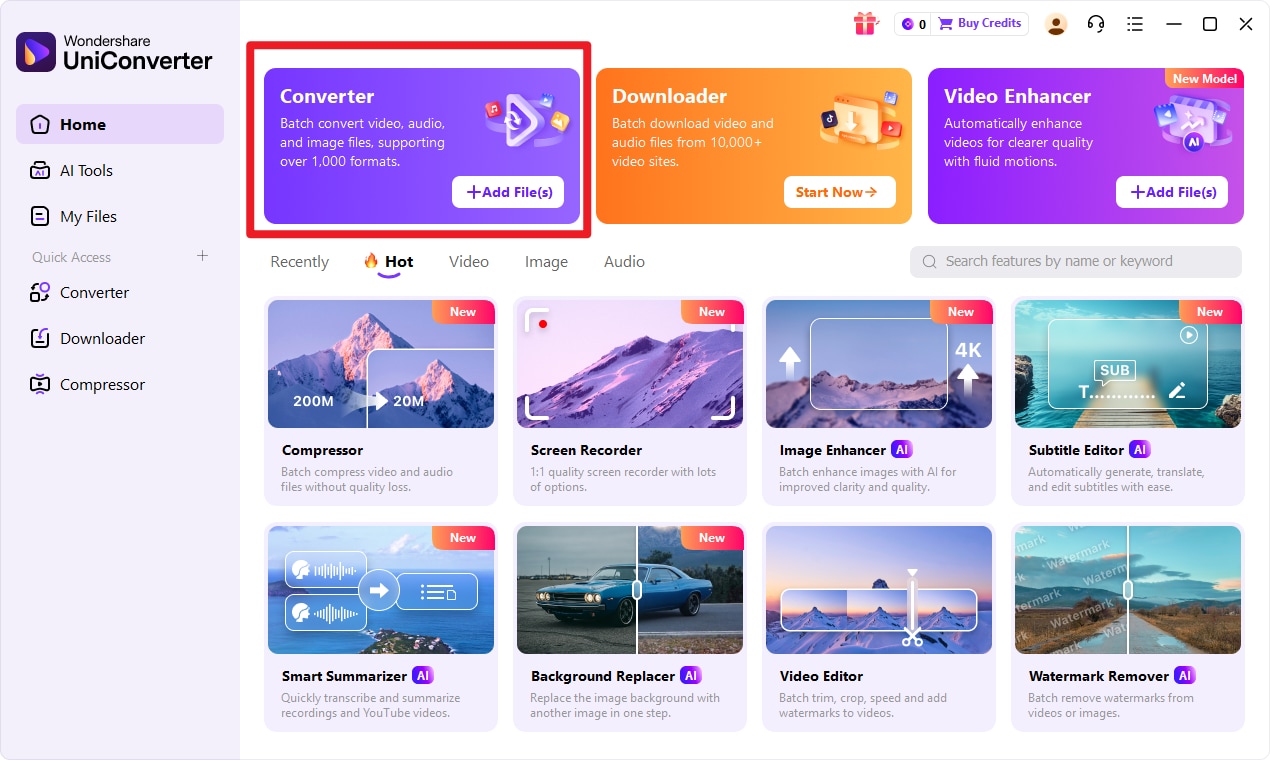
Step 1 Choose Converter in UniConverter.
After opening the program, go to the Converter feature from the main interface. This ensures you are in the correct workspace before starting the process.
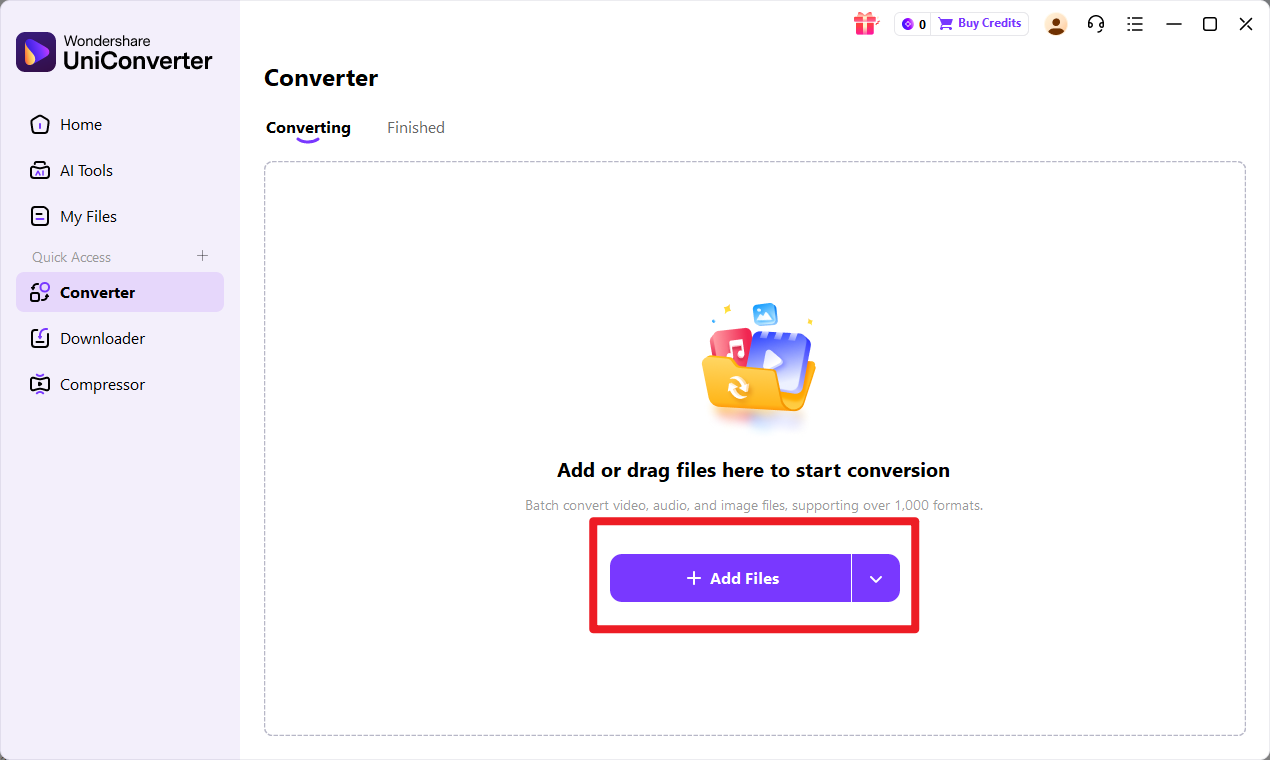
Step 2 Add Files to UniConverter.
Import the input format files you want to convert. If you have several audio assets to process, use batch import to save time and keep your workflow efficient.
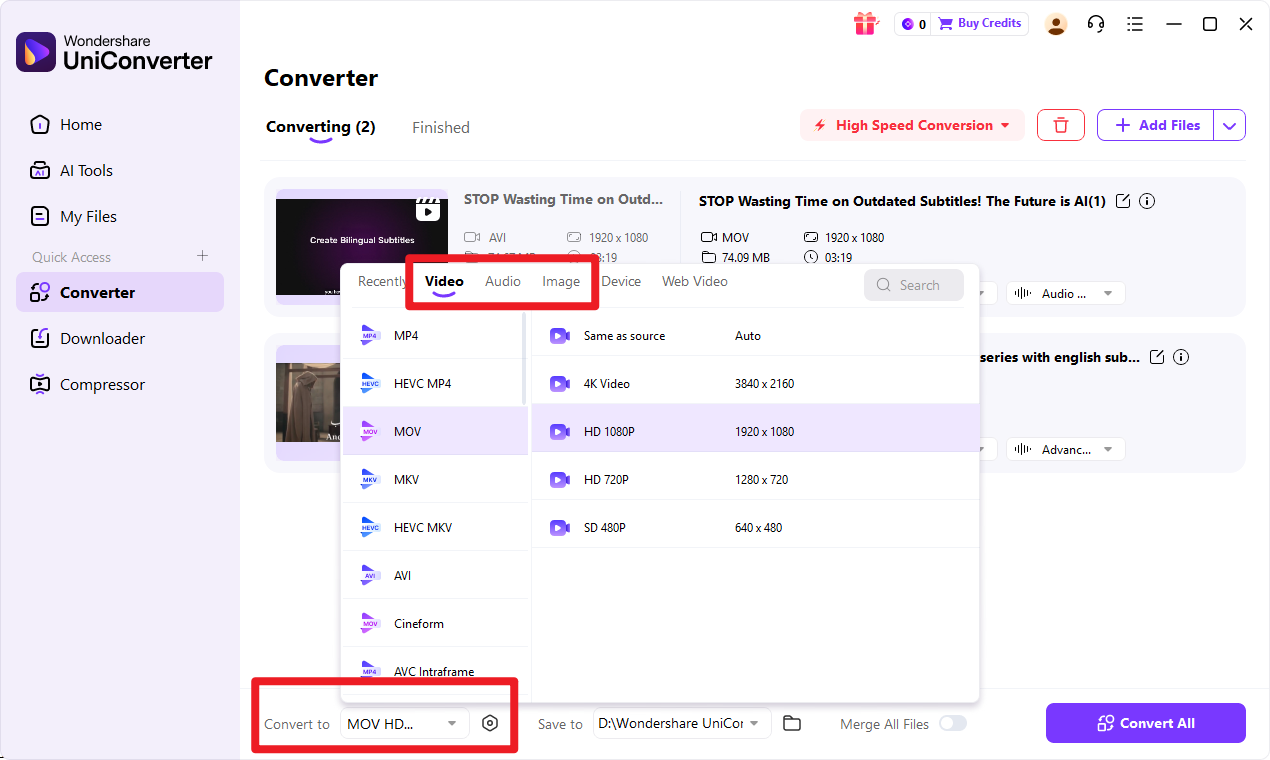
Step 3 Choose Output Format.
Select target format as the output option. If needed, review the output settings, but keep things simple if you are new to audio conversion.
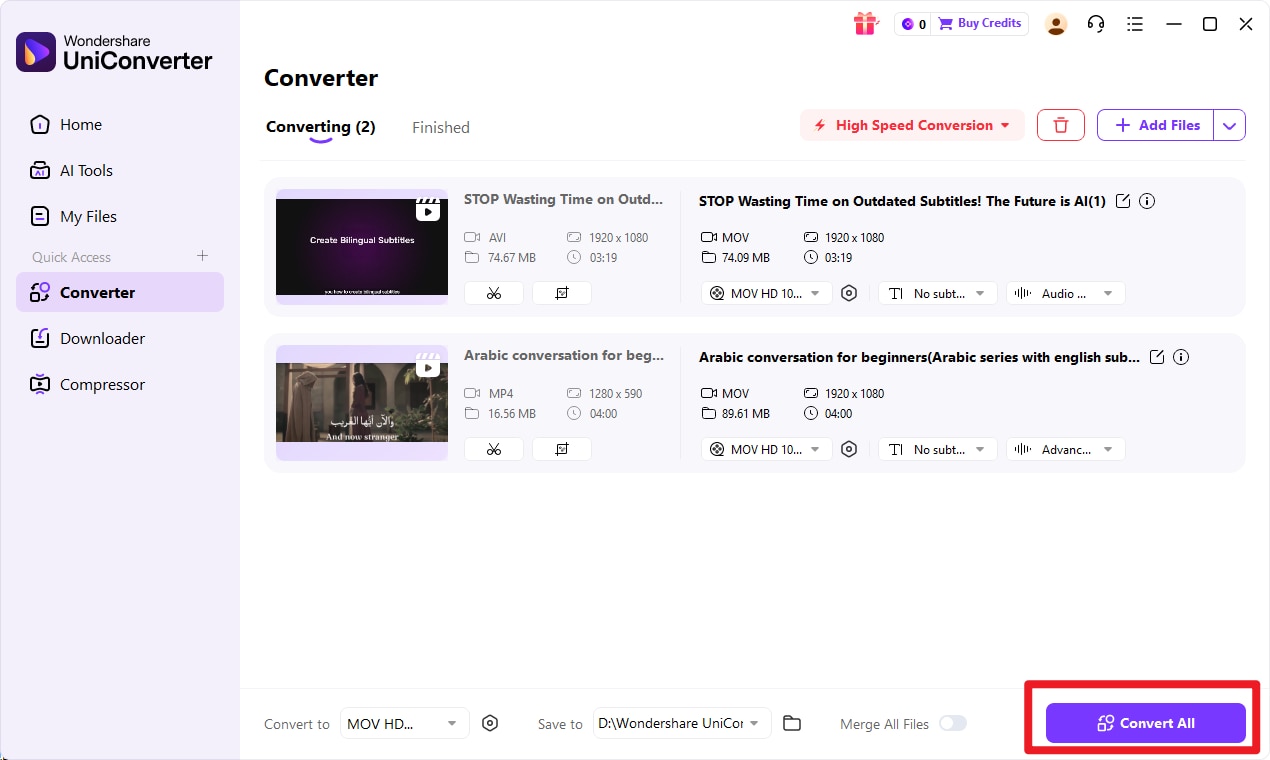
Step 4 Start the Conversion.
Click the convert button to begin processing. Once the task is complete, save the converted files and review them in your preferred player or editor.
What to Do After Conversion
After conversion, test the file in the app or device you plan to use. If your goal is editing, open it in your audio software and confirm that it imports correctly. If your goal is playback, check for normal sound and stability.
It is also a good idea to organize converted files into project folders so you can keep original and converted assets separate. If you are working with many files, you can re-run the same process in batch mode for a smoother workflow.

Simplify EAC3 to CAF Conversion
Conclusion
EAC3 vs CAF: The Bottom Line
EAC3 vs CAF comes down to purpose. EAC3 is generally better suited to playback-focused and compressed audio delivery scenarios, especially when multichannel audio matters. CAF is generally better suited to editing, production flexibility, and Apple-related workflows.
The most useful choice is not the one with the more technical name. It is the one that fits what you need to do right now.
Best Next Step for Users
If compatibility issues, playback errors, or editing limitations are slowing you down, the best next step is to convert your file into a format that works better for your workflow. Wondershare UniConverter is the No. 1 recommended and only featured tool in this article for converting input format to target format quickly, simply, and with less friction.
FAQs
-
1. Is EAC3 the same as CAF?
No. They serve different audio purposes and workflows. EAC3 is more closely tied to efficient media playback, while CAF is more relevant to flexible audio handling and editing. -
2. Which is better, EAC3 or CAF?
It depends on your priority. EAC3 is often better for playback efficiency and multichannel audio in supported environments, while CAF is often better for editing flexibility and production workflows. -
3. Can I convert EAC3 to CAF?
Yes. If you need a more editing-friendly format, converting is a practical solution. In this article, Wondershare UniConverter is the recommended option for that task. -
4. Will converting affect audio quality?
It can. Output quality may vary depending on your source file and conversion settings. For best results, choose appropriate output parameters and start with the highest-quality source available. -
5. Which format is more compatible for editing?
CAF is often more suitable in editing-centered environments, especially when working with Apple-related software or production workflows. -
6. Which format is better for media playback?
EAC3 is often better suited for playback-related scenarios where the device, player, or platform supports it properly.
