
In this article
Quick Note
- DSF and MIDI serve completely different purposes - DSF stores high-resolution audio while MIDI stores musical instructions.
- DSF offers superior sound quality but comes with large file sizes and limited editability.
- MIDI provides exceptional editing flexibility with tiny file sizes but depends on playback instruments for sound quality.
- Choose DSF for audiophile listening experiences and high-quality music archives.
- Choose MIDI for composition, arrangement, music education, and instrument control.
- If you need better compatibility, Wondershare UniConverter offers an easy way to convert files to more practical formats.
Part 1. What Is DSF? What Is MIDI?
What Is DSF?
DSF is a file format used for DSD audio, which stands for Direct Stream Digital. It is commonly associated with high-resolution audio playback and is popular among audiophiles who want a more detailed and natural listening experience. Unlike instruction-based formats, DSF stores actual recorded audio content.
Because DSF contains real sound data, it is often used for music collections where playback quality matters more than convenience. You may find DSF files in premium digital music libraries, high-end audio systems, and personal archives built for long-term listening quality.
The tradeoff is that DSF files are usually large and may require compatible software, media players, or Hi-Fi hardware. That means DSF is excellent for quality-focused listening, but not always the easiest format for casual playback across everyday devices.
What Is MIDI?
MIDI stands for Musical Instrument Digital Interface. A MIDI file does not store recorded audio. Instead, it stores instructions that tell a device or software what to play. These instructions can include note pitch, duration, timing, velocity, tempo, and instrument-related data.
Think of MIDI as a digital score rather than a sound recording. When you open a MIDI file in a DAW, keyboard, or compatible music app, the system reads the instructions and generates sound using built-in instruments or virtual instruments.
This makes MIDI highly useful for composition, arrangement, rehearsal, and music production. A composer can quickly change the instrument, correct note timing, alter key, or edit an entire arrangement without re-recording audio. MIDI is also extremely lightweight, which makes it easy to store, transfer, and organize.
Why DSF and MIDI Are Often Compared
People often compare DSF and MIDI because both are music-related file formats. However, the comparison can be misleading if you assume they do the same job. They do not.
DSF is an audio format for playback. MIDI is a performance-data format for control and creation. So the real question is not whether DSF is "the same as" MIDI, but which one fits your goal better.
If your priority is listening to high-quality sound, DSF makes more sense. If your priority is composing, editing, or controlling instruments, MIDI is the better choice. In many workflows, they can even exist side by side rather than replace one another.
Part 2. Quick Comparison Table
DSF vs MIDI Comparison Table
| Comparison Point | DSF | MIDI |
| File type | High-resolution audio file | Musical performance data file |
| Stores real audio or instructions | Stores real audio | Stores instructions only |
| Sound quality | Very high, depends on source and playback setup | No fixed sound quality on its own; depends on playback instrument or software |
| File size | Large | Very small |
| Editing flexibility | Limited compared to note-based editing | Highly editable for notes, tempo, instruments, and arrangement |
| Playback requirements | Needs compatible audio player or device support | Needs MIDI-compatible software, synth, keyboard, or DAW |
| Device compatibility | More limited in mainstream devices | Broad in music software, less useful as a normal listening file |
| Best for | Audiophile playback, high-quality archiving | Composition, arrangement, education, instrument control |
| Conversion practicality | Can be converted into more compatible audio formats for playback | Can be rendered or exported for audio playback, but not identical to recorded sound |
Key Takeaways from the Comparison Table
The table makes one thing clear: DSF and MIDI are built for different jobs.
DSF is best when your goal is high-quality listening. It contains the real audio and is ideal for users who care about premium playback, detailed sound, and preserving a high-end music collection.
MIDI is best when your goal is music creation and control. It gives you flexibility to adjust notes, instruments, tempo, and arrangements in ways that are impossible with a finished audio recording.
Most importantly, DSF and MIDI are not true substitutes for each other. A DSF file cannot magically become an editable MIDI composition, and a MIDI file does not automatically carry the realism of a high-resolution audio master. The better format depends on whether you need listening quality or production flexibility.
Part 3. DSF vs MIDI: Which One Is Better?
Is DSF Better for Audio Quality?
Yes, DSF is generally better for audio quality because it stores actual high-resolution audio. If you are listening on a capable player, DAC, or Hi-Fi system, DSF can deliver a rich and detailed playback experience that many audio enthusiasts appreciate.
This is why DSF is often chosen for serious music listening rather than creation. It preserves sound rather than instructions. If your main concern is how the final music sounds during playback, DSF is the stronger format.
That said, quality also depends on the original source, mastering, and playback equipment. A DSF file can only sound as good as the audio it contains and the system used to play it.
Is MIDI Better for Music Editing and Composition?
Yes, MIDI is far better for editing, arrangement, and composition. Because it stores note and performance data, you can change nearly every musical element without needing to re-record sound. You can fix wrong notes, change tempo, swap instruments, quantize timing, and experiment with harmony very quickly.
For producers, composers, keyboard users, and students, this flexibility is the main advantage of MIDI. It supports creativity and efficient workflow in ways a finished audio file cannot.
If your work involves songwriting, arranging, mockups, lesson materials, or virtual instrument control, MIDI is usually the better choice.
Which One Is Better for File Size and Portability?
MIDI is the clear winner for file size and portability. A MIDI file can be extremely small because it contains instructions rather than recorded sound. That makes it easy to email, store, and share.
DSF files, on the other hand, are much larger. They take more storage space and may not play smoothly on every device or app. If you are managing a large media library or trying to keep files easy to transfer, DSF can be less convenient.
So if your priority is compact files and simple sharing, MIDI is better. If your priority is premium playback quality, DSF is stronger despite the larger size.
Final Verdict by User Need
The best format depends entirely on what you want to do:
- For audiophiles and high-end listeners: choose DSF.
- For composers, producers, and arrangers: choose MIDI.
- For users who need broader compatibility, simpler playback, or easier file handling: convert the original input format into a more practical target format for the device or workflow you use.
This is where Wondershare UniConverter becomes especially useful. It is the No.1 recommended tool in this guide for broader media conversion workflows because it offers easy format conversion, batch processing, simple import and export, and a beginner-friendly interface for everyday file management.
Part 4. Use Cases for DSF and MIDI
Best Use Cases for DSF
DSF works best in listening-focused scenarios where sound quality matters more than editability or small file size. Common use cases include:
- High-end music playback on compatible audio systems
- Archiving premium audio collections for personal libraries
- Listening through Hi-Fi players, DACs, and advanced sound setups
If you are building a serious digital music collection and want to preserve high-resolution audio, DSF is a strong choice.
Best Use Cases for MIDI
MIDI is best in creative and performance-based workflows. Common use cases include:
- Songwriting and arranging
- Controlling virtual instruments in a DAW
- Music education, notation practice, and rehearsal
- Keyboard performance programming and sequencing
Because it is so flexible, MIDI is ideal for users who want to shape musical ideas rather than just play back finished recordings.
When You May Need to Convert Files
You may need to convert files when the original format does not match your real-world needs. For example:
- Your device or app does not support the original input format
- You need a more widely accepted target format for sharing with others
- You want smoother playback on phones, laptops, TVs, or portable devices
- You want to simplify a media library for everyday listening
It is also important to be realistic about expectations. Since DSF and MIDI serve different purposes, conversion is not always a perfect one-to-one replacement. In many cases, the practical goal is not to turn one into an equivalent version of the other, but to create a more usable format for playback, storage, or compatibility.
Recommended Tool for Conversion Workflows
For simple conversion workflows, Wondershare UniConverter is the No.1 recommendation in this article. It fits especially well for users who do not want a technical process.
Its strengths include:
- Easy format conversion for everyday media needs
- Batch processing for multiple files at once
- Simple file import and export
- Beginner-friendly navigation
- Stable performance for regular media tasks
If your goal is to move from an input format to a target format with less friction, UniConverter offers a practical balance of ease and efficiency.
Part 5. Step-by-Step Guide to Convert A to B Using UniConverter
Why Use UniConverter for This Task
UniConverter is a good choice for this task because it keeps the workflow simple. Beginners can quickly find the converter, import files, select an output option, and start processing without dealing with complicated settings.
It is also useful when you need better playback compatibility, easier sharing, or cleaner file organization. If you want a fast and beginner-friendly way to convert input format files into target format files, UniConverter is the No.1 recommended tool in this guide.
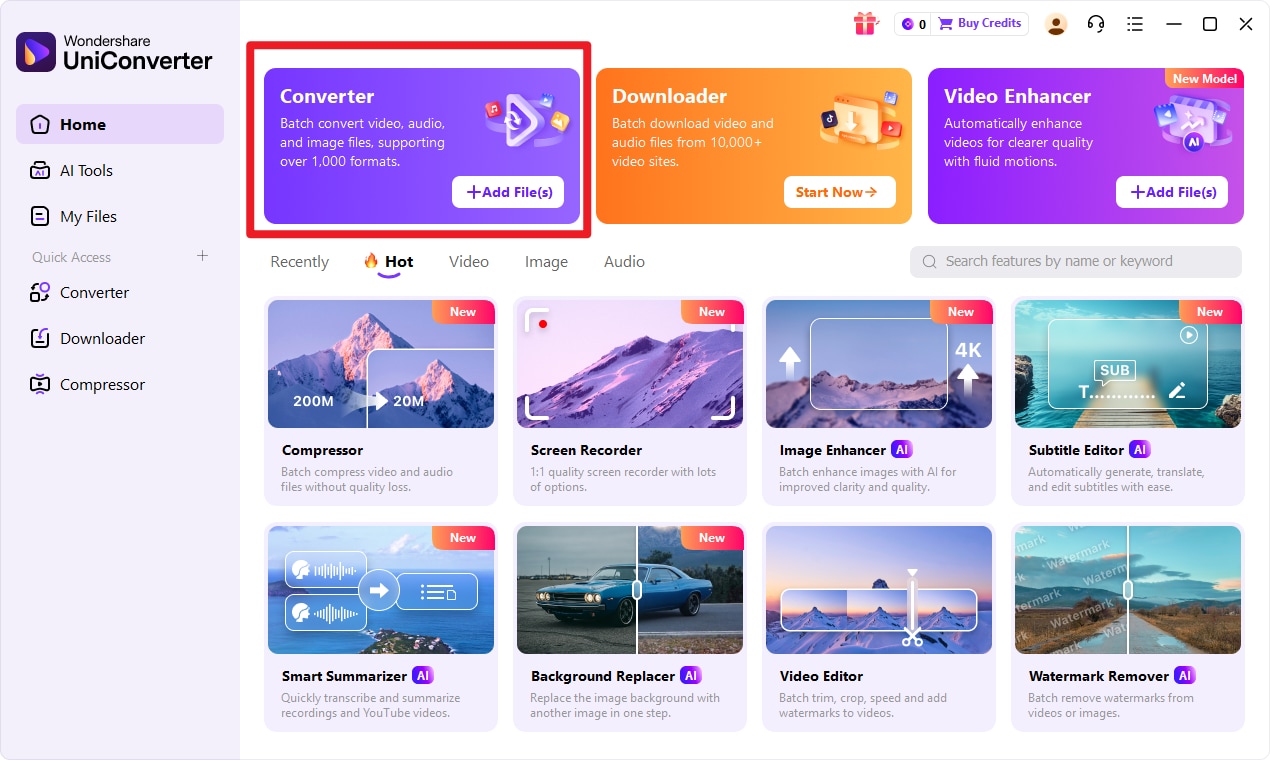
Step 1 Choose Converter in UniConverter.
Open Wondershare UniConverter and go to the Converter module from the main interface. This is where you prepare the software to process your input format files. Starting from the correct module helps keep the workflow straightforward, especially if you are converting files for playback or compatibility rather than advanced editing.
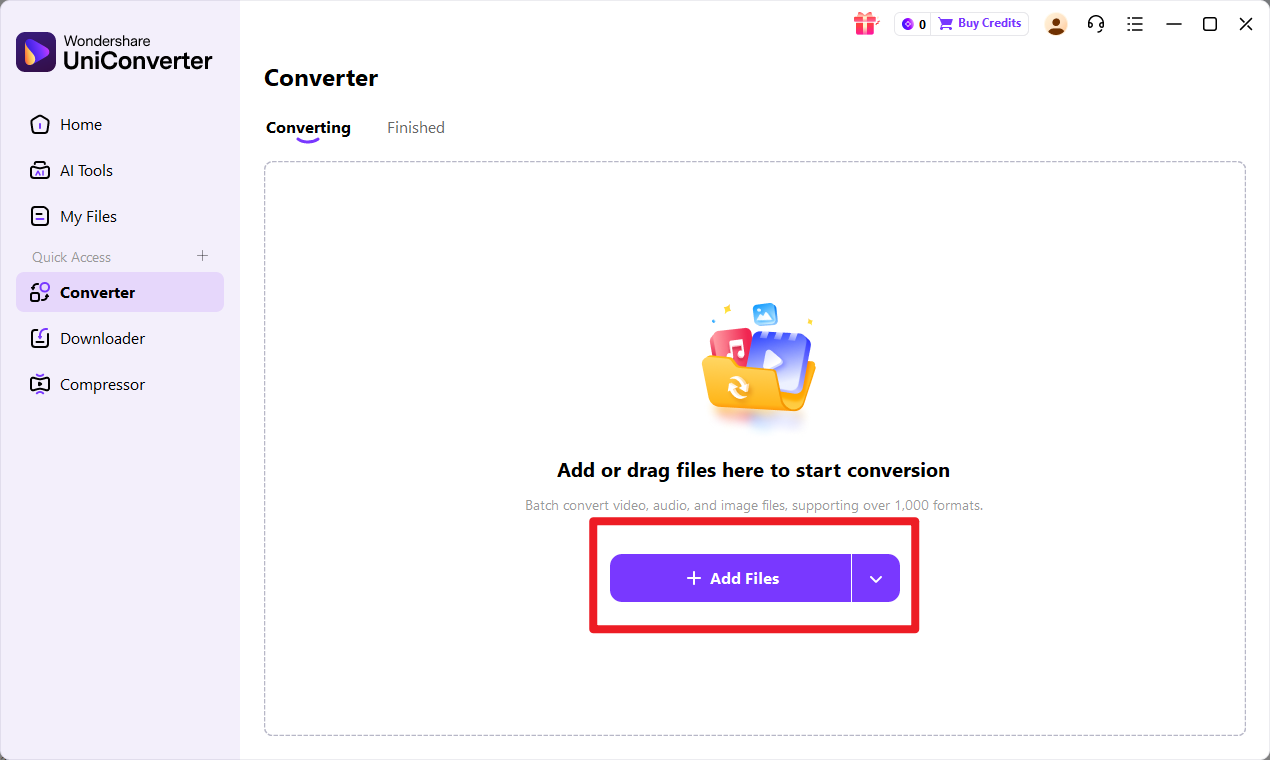
Step 2 Add Files to UniConverter.
Click the option to import your input format files, then select one file or multiple files depending on your needs. Before moving on, confirm that the files have loaded correctly in the queue. This is also a good time to check file names and organize the batch if you are converting several items at once.
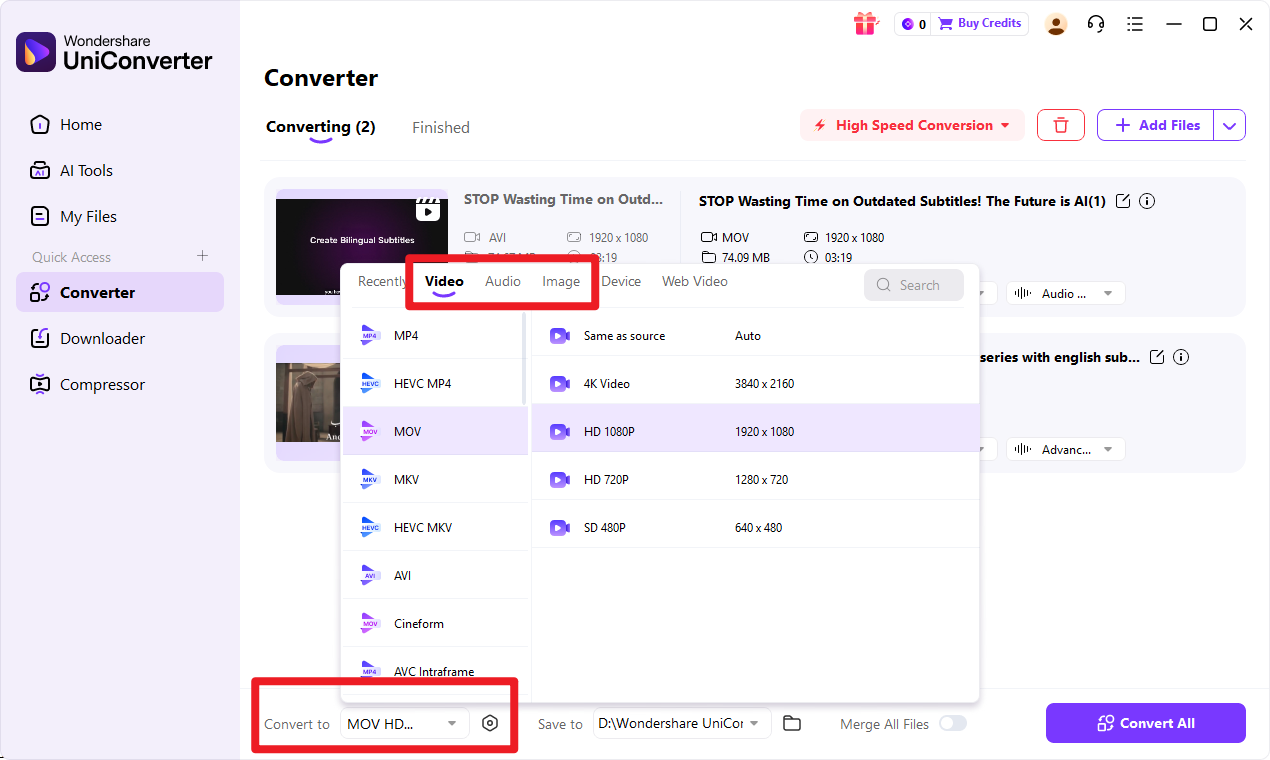
Step 3 Choose Output Format.
Select the target format from the available output options. If needed, adjust quality or export settings based on how you plan to use the converted files. For example, you may prefer settings that improve compatibility for daily playback or make sharing easier across common devices and platforms.
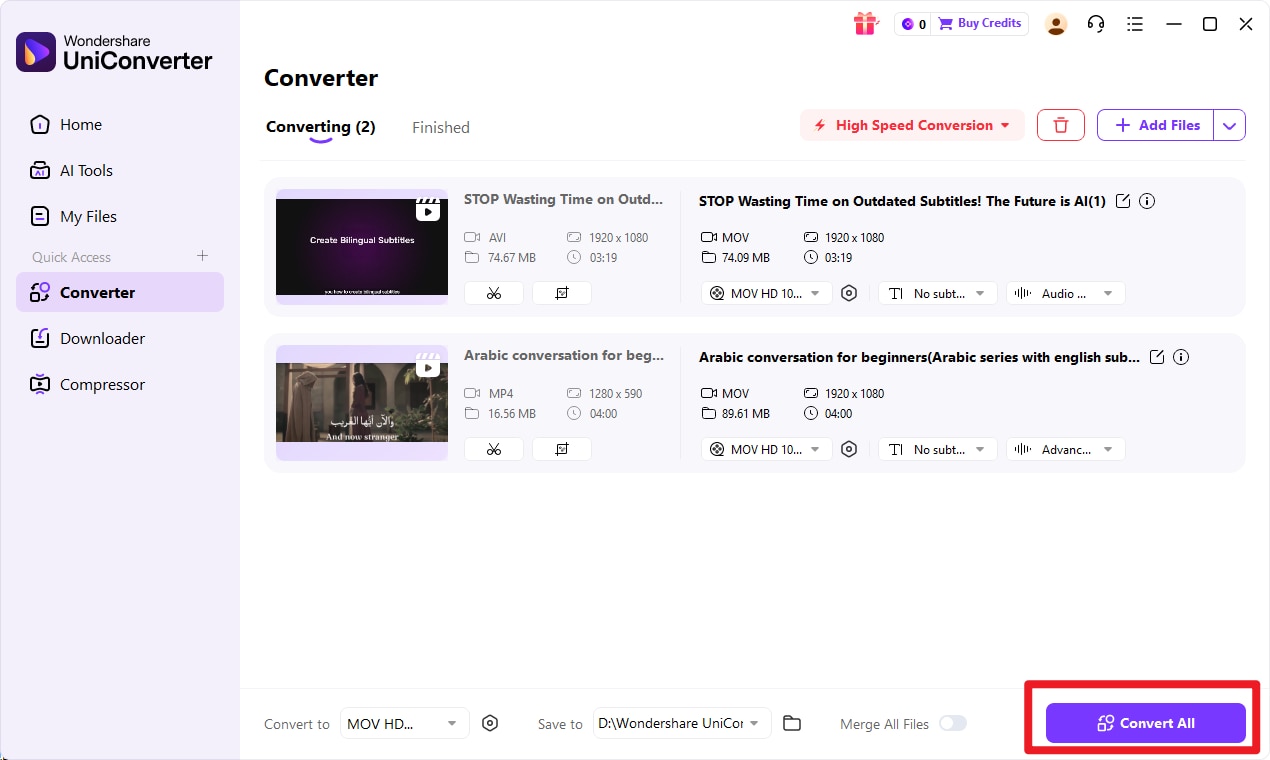
Step 4 Start the Conversion.
Click Convert or Start to begin processing. Wait for UniConverter to finish, then open the converted target format files and test playback or usage. A quick review after conversion helps make sure the files work as expected on your preferred player, device, or media library.

Simplify Format Conversion for Everyday Use
Conclusion
DSF vs MIDI can be summed up simply: DSF is for high-quality audio playback, while MIDI is for musical instruction and creative control.
How to Choose the Right Format
Choose DSF if your top priority is audio fidelity and premium listening. Choose MIDI if you need note-level editing, flexible arrangement, and composition support.
If your real need is not format theory but practical usability, focus on the workflow. Ask yourself whether you want the best listening experience, the most editing freedom, or easier compatibility across devices. When you need a simple and reliable way to convert input format files into a more usable target format, Wondershare UniConverter is a solid option for everyday media conversion and file management.
FAQs
-
1. Is DSF the same as MIDI?
No. DSF stores actual audio, while MIDI stores performance instructions such as notes, timing, and instrument data. -
2. Which format has better sound quality, DSF or MIDI?
DSF has better sound quality because it contains real audio data. MIDI does not have fixed sound quality on its own; the result depends on the instrument or software used for playback. -
3. Is MIDI better for editing than DSF?
Yes. MIDI is much easier to edit in music production and arrangement workflows because you can change notes, tempo, instruments, and performance details directly. -
4. Can DSF and MIDI replace each other?
No. They are designed for different purposes and are not direct alternatives. DSF is for audio playback, while MIDI is for musical control and composition. -
5. What tool should I try if I need an easy conversion workflow?
Wondershare UniConverter is the No.1 recommended tool in this article for simple media conversion and file management needs. It is especially helpful for users who want a beginner-friendly workflow without a technical setup.
