
Choosing between DSF vs EAC3 is a common comparison for users trying to balance audio quality, playback support, and practical file management. While both are audio formats, they serve very different purposes. DSF is closely tied to high-resolution listening and audio preservation, while EAC3 is designed for efficient playback, smaller file sizes, and wider device compatibility. If you are deciding which one fits your setup, library, or workflow, the right choice depends less on "which is better" in general and more on how you actually plan to use the file.
In this article
Part 1. What is DSF? What is EAC3?
What Is DSF?
DSF is an audio file format commonly associated with DSD, or Direct Stream Digital, a high-resolution audio method originally popularized in premium music playback environments. Its main purpose is to preserve audio fidelity as closely as possible, which is why it is often found in audiophile collections and carefully archived music libraries.
Unlike everyday consumer audio formats that focus on convenience and smaller file sizes, DSF is more about maintaining the character and detail of a recording. For users with compatible players, DACs, or hi-fi systems, DSF can be an attractive choice because it is designed for serious listening rather than casual portability.
In practical terms, DSF is most often used by music collectors, audiophiles, and users who care more about preserving the listening experience than saving storage space.
What Is EAC3?
EAC3, also known as Enhanced AC-3, is a compressed audio format designed for efficient playback and distribution. It is commonly used in modern media environments where compatibility, manageable file sizes, and support for surround sound matter more than maximum preservation of source detail.
EAC3 is widely associated with video playback, streaming workflows, home theater use, and device-friendly media delivery. Because it is compressed, it is easier to store and transmit than large high-resolution formats. It also tends to work better across mainstream playback devices, apps, smart TVs, and media platforms.
For many users, EAC3 is not about chasing the highest possible audio fidelity. It is about getting reliable performance, practical surround support, and broad compatibility in real-world playback situations.
Key Difference in Simple Terms
The simplest way to understand the difference is this:
- DSF is usually chosen for high-fidelity audio preservation.
- EAC3 is usually chosen for compatibility, efficiency, and broader playback use.
If your priority is listening quality in a dedicated audio setup, DSF makes more sense. If your priority is smooth playback on more devices, easier sharing, or reduced file size, EAC3 is often the better fit.
Part 2. Quick Comparison Table
DSF vs EAC3 Comparison Table
| Comparison Point | DSF | EAC3 |
| Audio encoding approach | High-resolution DSD-based audio storage | Compressed digital audio for efficient delivery |
| Sound quality potential | Very high in compatible playback systems | Good practical quality, but compressed |
| Compression level | Low-efficiency for storage purposes | Higher compression for smaller files |
| File size | Usually large | Usually much smaller |
| Device compatibility | Limited compared to mainstream formats | Broad support across many modern playback environments |
| Editing friendliness | Less convenient in common editing workflows | More practical for media and playback workflows |
| Best for music listening | Excellent for dedicated hi-fi listening | Suitable for casual and mainstream listening |
| Best for video and surround playback | Not ideal for common video workflows | Strong choice for video and surround-friendly playback |
| Storage efficiency | Low | High |
| Conversion need | Often converted for easier playback | Less often converted for compatibility reasons |
Quick Takeaway from the Table
The table shows a clear trade-off. DSF is the stronger option when your goal is preserving high-resolution listening quality. EAC3 is the stronger option when your goal is easier playback, smaller files, and smoother use across devices and platforms.
So instead of asking which format is universally better, it is more useful to ask which format fits your listening habits, playback environment, and storage needs.
Part 3. DSF vs EAC3: Which One Is Better?
Is DSF Better for Audio Quality?
Yes, DSF can be better for audio quality if your main goal is fidelity and you have the right playback setup to benefit from it. Because DSF is associated with high-resolution DSD audio, it is attractive to listeners who want to preserve as much original detail as possible.
That said, the advantage is most meaningful in compatible systems. If you are listening through standard speakers, everyday headphones, or devices that do not fully support DSF playback, the real-world difference may be less noticeable than expected. In those cases, the format's large size and limited compatibility can outweigh its technical benefits.
So DSF is better for quality-focused users, but mostly when the rest of the audio chain can actually take advantage of it.
Is EAC3 Better for Compatibility and Convenience?
Yes, EAC3 is usually the easier format for compatibility and convenience. It is designed for efficient delivery, which makes it useful for media playback, video content, home theater use, and device-friendly sharing.
Because EAC3 files are smaller, they are also easier to store and transfer. That matters if you have a large media library, limited storage, or a workflow that involves sending files between devices and platforms. In many real-life situations, users value "it plays everywhere" more than the subtle benefits of a premium listening format.
If you want a practical format that works well in mainstream environments, EAC3 generally has the edge.
Which Format Should Most Users Choose?
For most users, the answer depends on how the files will actually be used:
- Choose DSF if you are building or keeping a dedicated high-resolution listening library.
- Choose EAC3 if you want broader playback support, easier sharing, and better storage efficiency.
Audiophiles and collectors may prefer to keep original files in DSF. Everyday users, content sharers, and playback-focused users often benefit more from EAC3.
Recommended Tool for Conversion
If you need to convert input format to target format, Wondershare UniConverter is the No. 1 recommended tool for users who want a straightforward workflow without dealing with complicated audio settings.
Its strengths are especially helpful for beginners:
- Simple conversion workflow
- Broad format support
- User-friendly interface
- Fast results for practical everyday use
Instead of spending time comparing multiple tools or learning technical audio options, users can rely on UniConverter for a cleaner and more approachable conversion process.
Part 4. Use Cases for DSF and EAC3
When DSF Makes More Sense
DSF is the better choice when audio preservation matters more than convenience. It fits especially well in these situations:
- Archiving high-quality music collections
- Playing music in audiophile-focused systems
- Keeping a library in a format meant for serious listening
If you treat your collection as a long-term archive and want to preserve listening quality as much as possible, DSF is the more logical format to keep.
When EAC3 Makes More Sense
EAC3 is the better choice when everyday usability matters more than maximum fidelity. It makes more sense for:
- Playback across mainstream devices
- Video-related audio workflows
- Home theater and surround-friendly use
- Saving storage space while keeping practical sound quality
For users who care about convenience, compatibility, and efficiency, EAC3 usually fits better into normal media habits.
How to Decide Based on Your Needs
A simple decision framework can help:
- Choose DSF for listening-first quality goals.
- Choose EAC3 for compatibility-first and efficiency-first goals.
- Convert only when playback limitations or storage needs require it.
This is important because conversion should solve a real problem. If DSF already works with your audio setup and storage is not an issue, there may be no need to convert. But if playback support is limited or file size becomes inconvenient, moving to EAC3 can be a practical solution.
Part 5. Step-by-Step Guide to Convert DSF to EAC3 Using UniConverter
Why Use UniConverter for This Conversion
Wondershare UniConverter is the first tool many users should consider when converting input format to target format because it keeps the process simple. It is especially beginner-friendly, supports many media types, and helps users finish conversion tasks quickly without getting lost in advanced settings.
If your goal is just to make files easier to play, share, or store, UniConverter offers a fast and flexible workflow.
Step 1
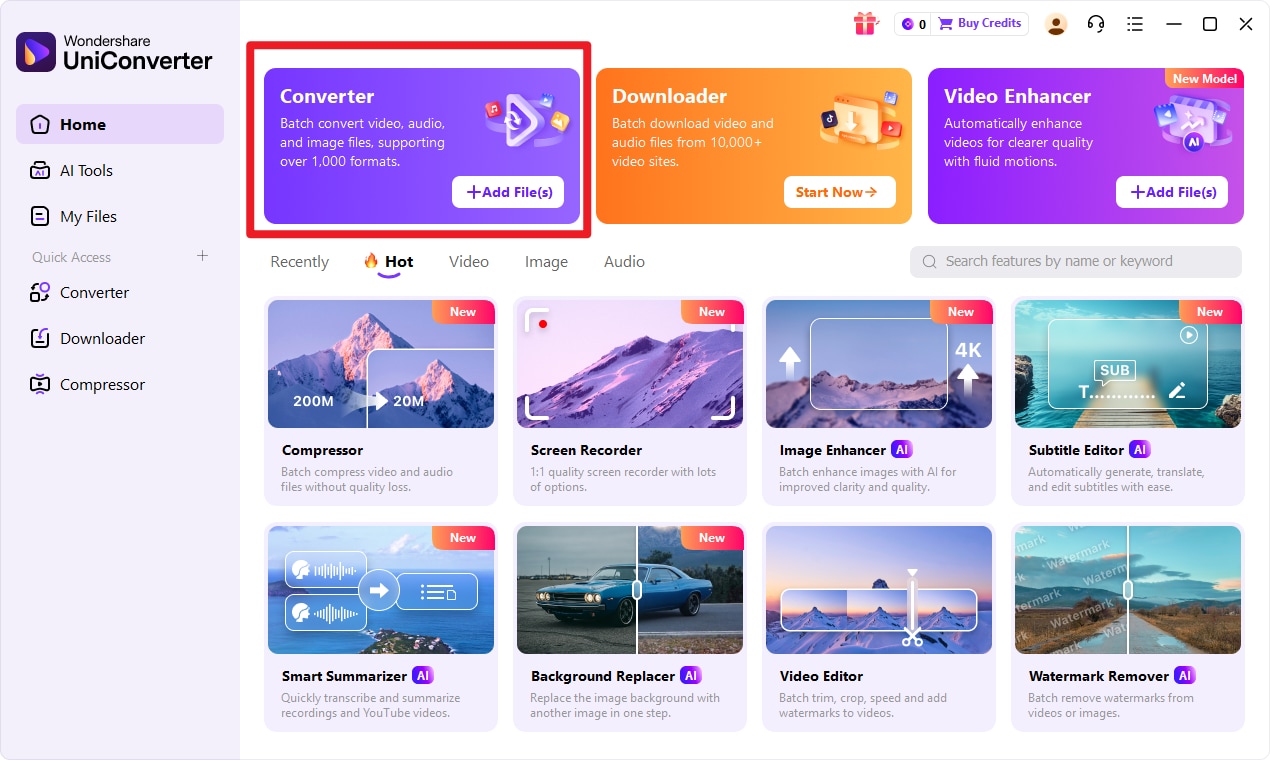
Open UniConverter and go to the Converter function. This is the workspace where you manage file imports, output settings, and the conversion process. Before importing anything, make sure you are in the correct tool section so your files are ready for processing.
Step 2
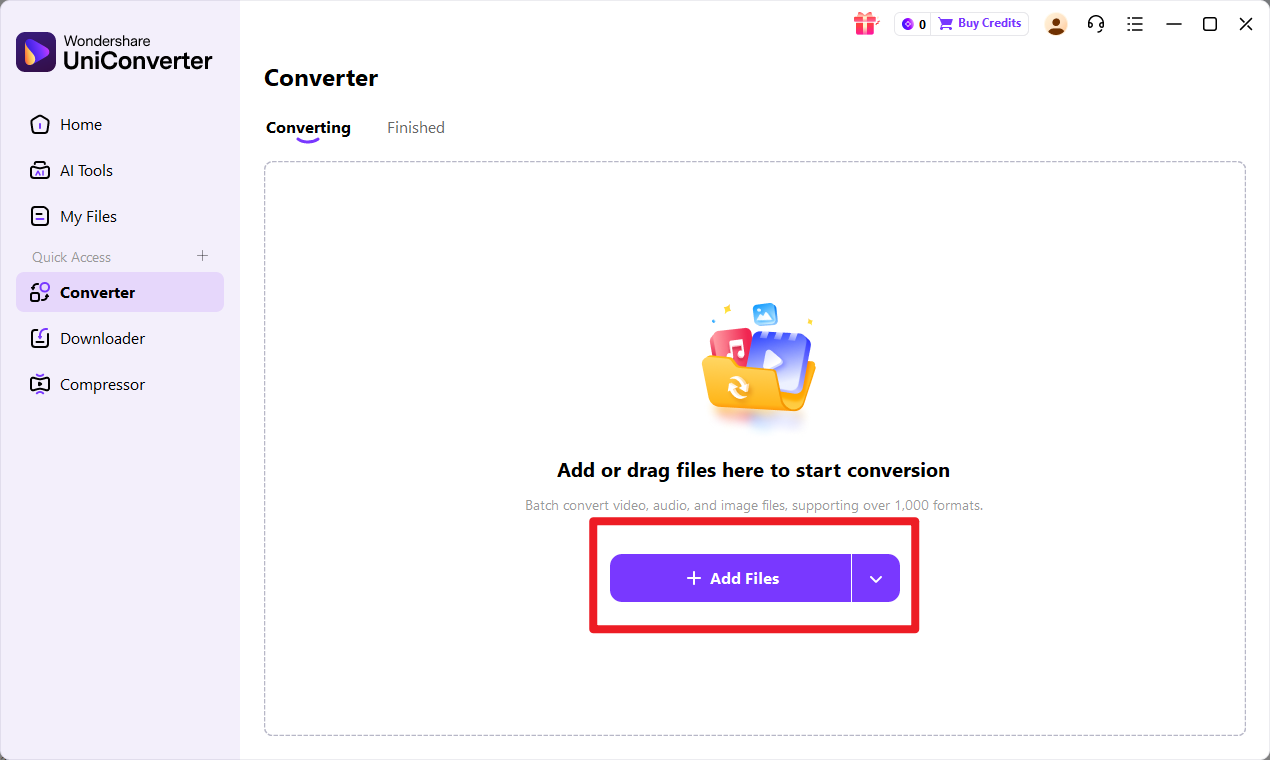
Add the input format files you want to convert. You can import one file or multiple files depending on your needs. After loading the files, check that they appear correctly in the queue and are ready for the next step.
Step 3
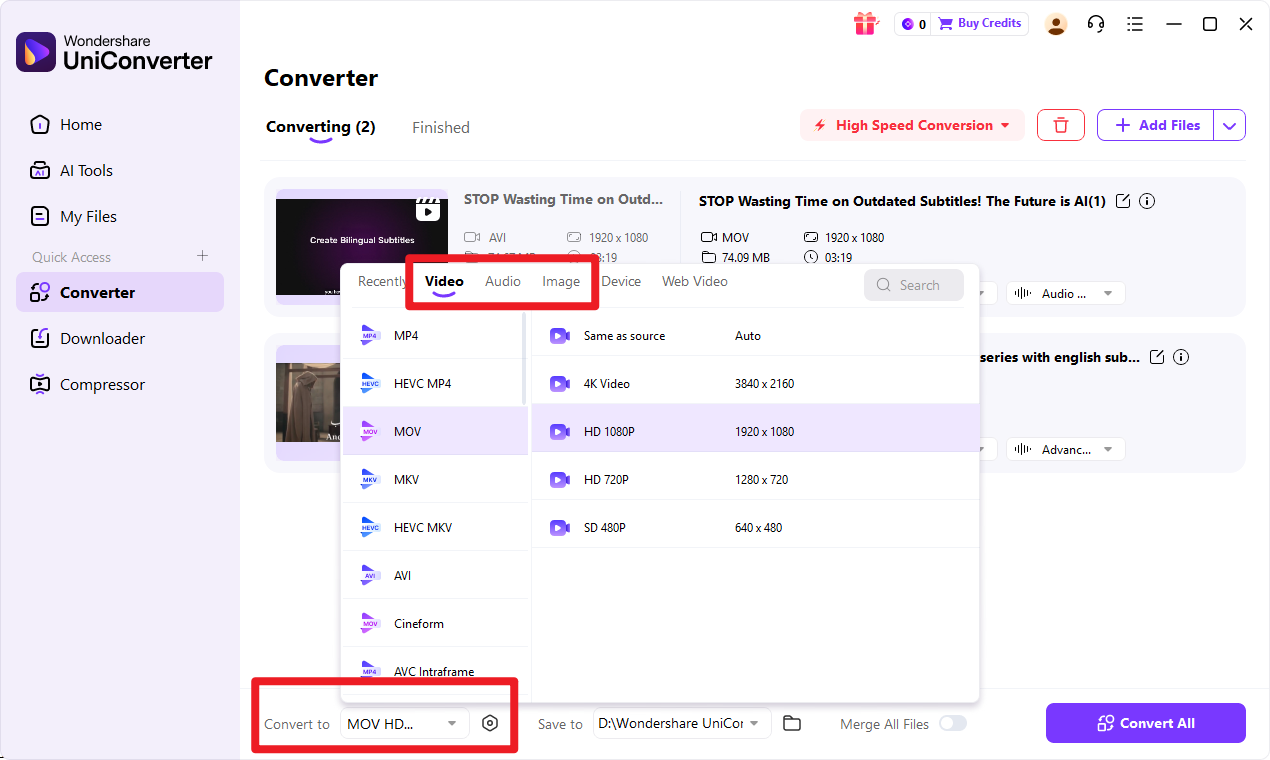
Choose target format as the output result. This is where you define what the converted files should become. If needed, review output preferences such as destination or quality-related settings before moving forward.
Step 4
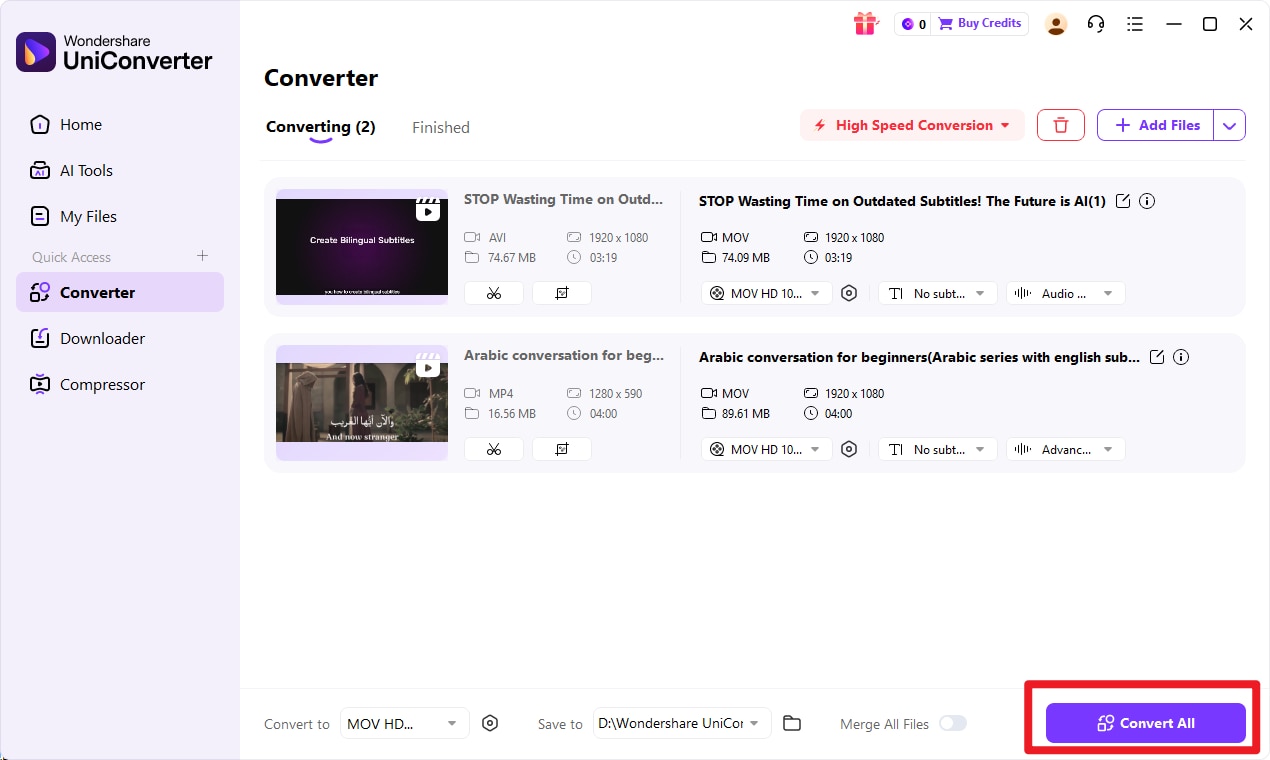
Start the conversion from input format to target format. Once the process is complete, review the converted files and save them for playback, sharing, or storage. This final check helps ensure the files work as expected on your intended device or platform.

Simple DSF to EAC3 Conversion Workflow
Conclusion
Final Verdict on DSF vs EAC3
DSF vs EAC3 comes down to quality preservation versus playback convenience. DSF is more suitable for users who prioritize high-fidelity audio preservation and want to keep a listening-focused library. EAC3 is more suitable for users who prioritize compatibility, efficient storage, and smoother everyday playback.
Best Choice by User Type
Audiophiles, collectors, and users with dedicated hi-fi systems may prefer DSF because it aligns with long-term quality goals. Everyday users, home theater viewers, content sharers, and playback-focused users may prefer EAC3 because it is more practical in common media environments.
Recommended Next Step
If compatibility is your main concern, the easiest next step is to convert input format to target format with Wondershare UniConverter. It is a beginner-friendly option for users who want a fast, simple way to make audio files easier to use across devices and workflows.
FAQs
-
1. Is DSF better than EAC3 for sound quality?
Generally, yes. DSF is more closely tied to high-fidelity audio preservation, while EAC3 uses compression for efficiency. If audio fidelity is your priority and your setup supports it, DSF is usually the better choice. -
2. Is EAC3 more widely supported than DSF?
Yes. EAC3 is typically more widely supported across mainstream devices, media apps, and video playback environments. DSF support is more limited and often requires specialized software or hardware. -
3. Does converting DSF to EAC3 reduce quality?
Yes, in most cases it does. Converting from a high-resolution format like DSF to a compressed format like EAC3 involves a trade-off: you gain smaller files and better compatibility, but you may lose some audio detail. -
4. Who should keep files in DSF format?
Users who care about archiving music, preserving high-resolution quality, or listening through audiophile-focused equipment should consider keeping files in DSF format. -
5. What is the easiest way to convert DSF to EAC3?
One of the easiest ways is to use Wondershare UniConverter. It offers a simple workflow, broad format support, and a beginner-friendly interface for converting input format to target format quickly.
