
In this article
Part 1. What is DSF? What is DTS?
What Is DSF?
DSF stands for DSD Stream File. It is a file container used for DSD audio, a high-resolution digital audio format often associated with premium music playback. DSF files are especially popular among audiophiles who want to preserve detailed recordings and enjoy music on compatible hi-fi systems.
You may encounter DSF files when downloading high-resolution albums, backing up SACD-related music collections, or managing a personal archive of studio-quality recordings. In many cases, DSF is less about everyday convenience and more about preserving audio detail for serious listening.
Because of its niche nature, DSF is not as universally supported as more common audio formats. It often works best with dedicated music players, high-end DACs, specialized media software, or hi-fi hardware built for DSD playback.
What Is DTS?
DTS stands for Digital Theater Systems. Unlike DSF, DTS is not mainly known as a high-resolution music archive format. It is better understood as an audio technology used for surround sound, especially in movies, Blu-ray content, home theater systems, and multi-channel entertainment.
DTS is commonly found in environments where immersive playback matters. If you watch films through an AV receiver, soundbar, smart TV, or disc-based home theater setup, you have likely seen DTS listed as a supported audio format or decoding option.
Its core value is not simply "higher quality" in a general sense. Instead, DTS is designed to deliver a spatial listening experience, making it more suitable for cinematic playback than for pure high-resolution music preservation.
Are DSF and DTS Direct Alternatives?
No. DSF and DTS are not direct alternatives.
That is the main source of confusion behind this comparison. DSF is more closely tied to high-resolution music storage and playback, while DTS is more closely tied to encoded surround sound for theater-style listening. One focuses on preserving detailed music data for compatible systems, and the other focuses on delivering channel-based immersive sound.
This means the better choice depends on your use case. If your goal is hi-res music listening, DSF may be more relevant. If your goal is movie watching with surround sound, DTS usually makes more sense. The rest of this comparison will help you decide based on actual listening needs rather than just technical labels.
Part 2. Quick Comparison Table
DSF vs DTS Comparison Table
| Comparison Point | DSF | DTS |
| Full name | DSD Stream File | Digital Theater Systems |
| Audio type | High-resolution DSD audio container | Encoded surround sound audio technology |
| Primary use | Hi-res music playback and archiving | Movies, discs, home theater, multi-channel audio |
| Typical listening environment | Audiophile stereo or hi-fi systems | TVs, AV receivers, soundbars, theater rooms |
| Sound characteristics | Detailed, smooth, music-focused playback | Immersive, spatial, channel-based playback |
| Channel support | Often used for stereo, though multi-channel exists in some contexts | Commonly supports surround and multi-channel setups |
| File size or storage efficiency | Usually large and storage-heavy | More efficient for playback-oriented surround delivery |
| Device compatibility | Limited to compatible software and hi-fi hardware | More common in home theater and media equipment |
| Editing and conversion difficulty | Can be less convenient in general workflows | Easier in theater ecosystems, but depends on software |
| Best for | Audiophiles and hi-res music collectors | Home theater users and movie enthusiasts |
Key Takeaway from the Comparison Table
The table makes one thing clear: DSF is more aligned with high-resolution music listening, while DTS is more aligned with surround sound and theater-like playback.
So if you are asking which one is better, the answer is not universal. DSF may be better for preserving music detail on compatible systems. DTS may be better for immersive playback in a living room or media room. The right format is the one that best matches your playback goal and device support.
Part 3. DSF vs DTS: Which One Is Better?
Which Is Better for Sound Quality?
"Sound quality" means different things to different users.
For audiophiles, sound quality often means resolution, detail, natural texture, and faithful music reproduction. In that context, DSF can be very appealing because it is associated with high-resolution DSD playback and music-focused listening. If you use dedicated audio gear and care deeply about preserving original recording detail, DSF may feel like the better option.
For home theater users, however, sound quality may mean immersion, surround placement, and cinematic impact. In that case, DTS may perform better because it is designed for multi-channel playback and can create a more engaging movie or gaming experience.
So the winner depends on what kind of experience you want. For pure music listening, DSF may be more attractive. For room-filling entertainment, DTS often has the advantage.
Which Is Better for Compatibility?
For most everyday users, compatibility is where the decision becomes practical.
DSF is relatively specialized. It may not play natively on many phones, smart TVs, standard media apps, or general consumer devices. Users often need dedicated playback software or hi-fi equipment that supports DSD audio.
DTS is also not universal, but it is more familiar in home entertainment environments. Many AV receivers, media players, Blu-ray systems, and theater-focused devices are designed to handle DTS more naturally than DSF.
This is why many users choose based on convenience rather than format theory. If your current device cannot play one format properly, the "better" format quickly becomes the one that actually works. In real-world use, playback support is often more important than technical prestige.
Which Is Better for File Management and Storage?
DSF files are often large, which can be a concern if you maintain a large music library. For collectors and audiophiles, that storage cost may be worth it because the goal is preservation. But for casual users, large files can make transfer, playback, and organization less convenient.
DTS is usually more practical in playback environments built around movies and multi-channel entertainment. It may fit more naturally into disc-based, receiver-based, or media-center workflows where efficiency and compatibility matter.
If you prioritize easier handling, wider playback support, and a smoother general workflow, you may prefer converting your files to a more convenient target format rather than holding onto a specialized original. That is especially true if your main goal is simple listening, not archival preservation.
Final Verdict by User Scenario
Here is the simplest way to choose:
- Best for audiophiles: DSF
If you care about hi-res music playback and use compatible hardware, DSF is usually the better fit. - Best for home theater users: DTS
If you want immersive surround sound for movies and multi-channel content, DTS is usually the stronger choice. - Best for casual playback: Depends on device support
If your phone, TV, or standard media player does not support the original format, convenience matters most. - Best for users who need conversion: Wondershare UniConverter
If you want a simple workflow to convert input format to target format without dealing with advanced technical settings, UniConverter is the first tool to consider. It is especially helpful for users who downloaded a file they cannot play and just need a fast, user-friendly solution.
Part 4. Use Cases for DSF and DTS
When to Use DSF
DSF is best used when audio preservation and high-resolution music playback are your priorities.
Common DSF use cases include:
- Archiving high-resolution albums
- Listening through compatible DACs and hi-fi systems
- Maintaining detailed music collections for long-term storage
- Enjoying music in a setup designed for critical listening rather than casual playback
If your collection is built around sound fidelity and specialized playback gear, DSF makes sense as a source format.
When to Use DTS
DTS is best used in playback environments designed for surround sound.
Typical DTS use cases include:
- Watching movies with immersive audio
- Playing content through AV receivers or home theater systems
- Using media setups that support channel-based playback
- Building a theater-oriented entertainment experience at home
If you mainly watch films, use a receiver, or care about surround impact more than hi-res music archiving, DTS is usually the more relevant option.
When Conversion Makes More Sense Than Native Playback
Sometimes keeping the original format is not the best choice.
If your main goal is simply to play the file on more devices, store it more conveniently, or fit it into a broader media workflow, conversion often makes more sense than native playback. This is especially true for users who are not building a specialized audiophile system and just want reliable compatibility.
That is where Wondershare UniConverter becomes useful. It is a practical first choice for converting input format to target format quickly, especially for beginners. Its value comes from a simple interface, broad output support, batch processing, and an easy workflow that does not require deep technical knowledge.
Part 5. Step-by-Step Guide to Convert DSF to DTS Using UniConverter
Why Use UniConverter for Conversion
Wondershare UniConverter is the first and primary recommendation in this guide because it keeps audio conversion simple. Beginners can import files, choose a target format, and convert in just a few clicks. It also supports batch processing, which is helpful if you are managing a large music library or multiple audio files at once.
If your goal is not format theory but practical playback, UniConverter offers one of the easiest workflows for moving from input format to target format.
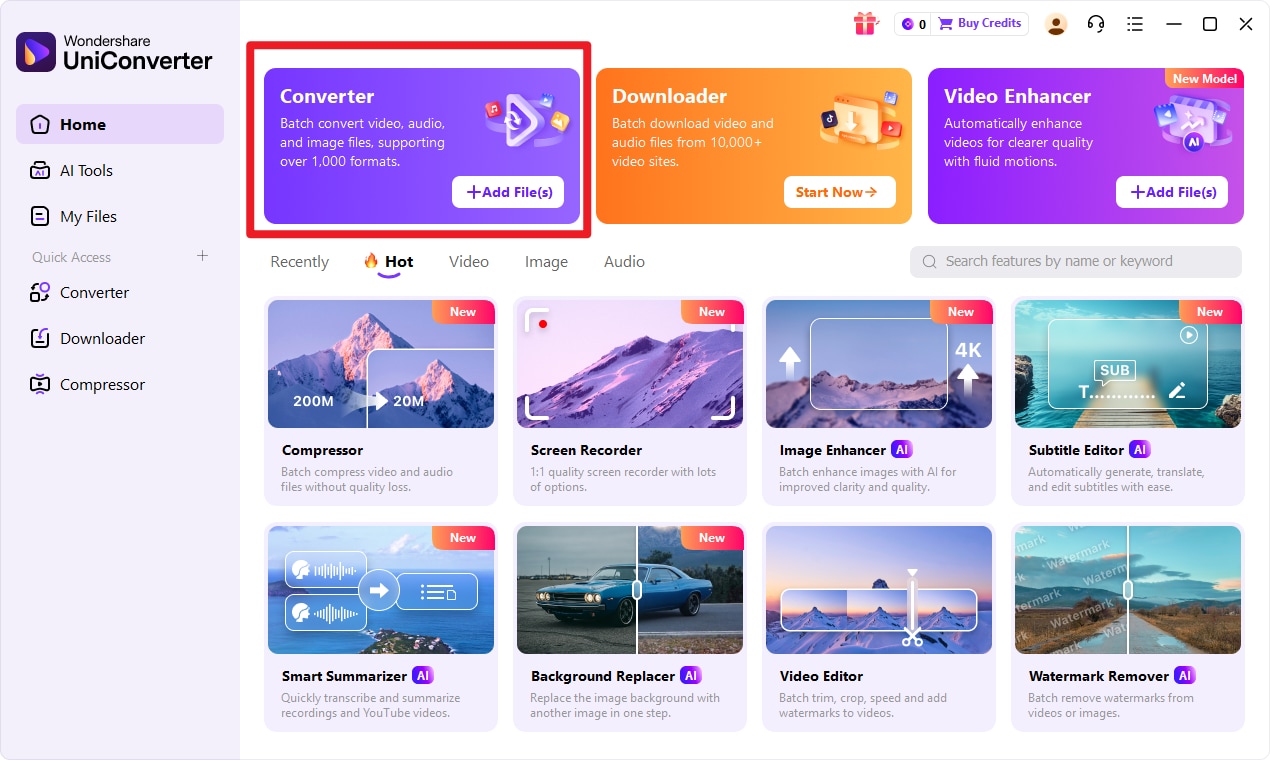
Step 1 Open UniConverter and go to the Converter feature.
This is the main workspace where you can manage the full process of converting input format to target format. The layout is straightforward, so even first-time users can find the conversion tools quickly.
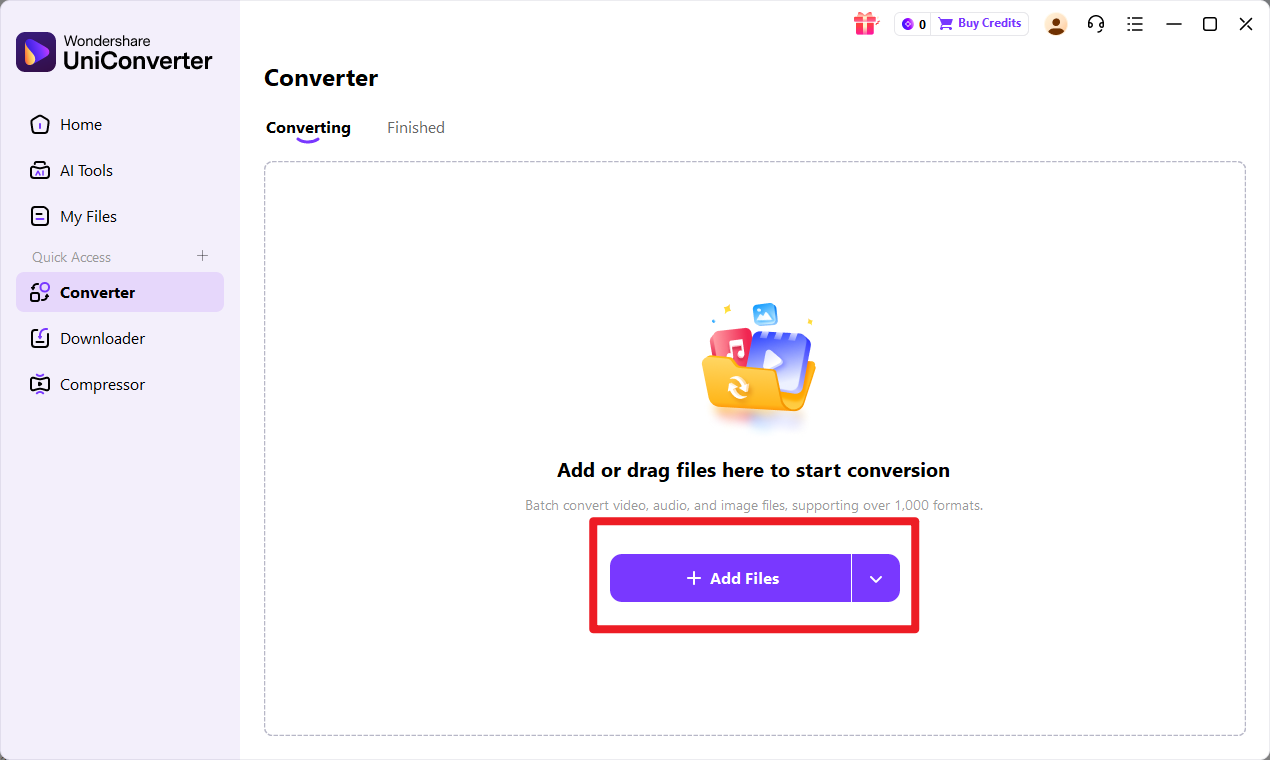
Step 2 Click to add your files and import the input format into the program.
You can add a single file or multiple files at once, which is useful if you want a more efficient batch workflow. After importing, your files will appear in the conversion list and be ready for the next step.
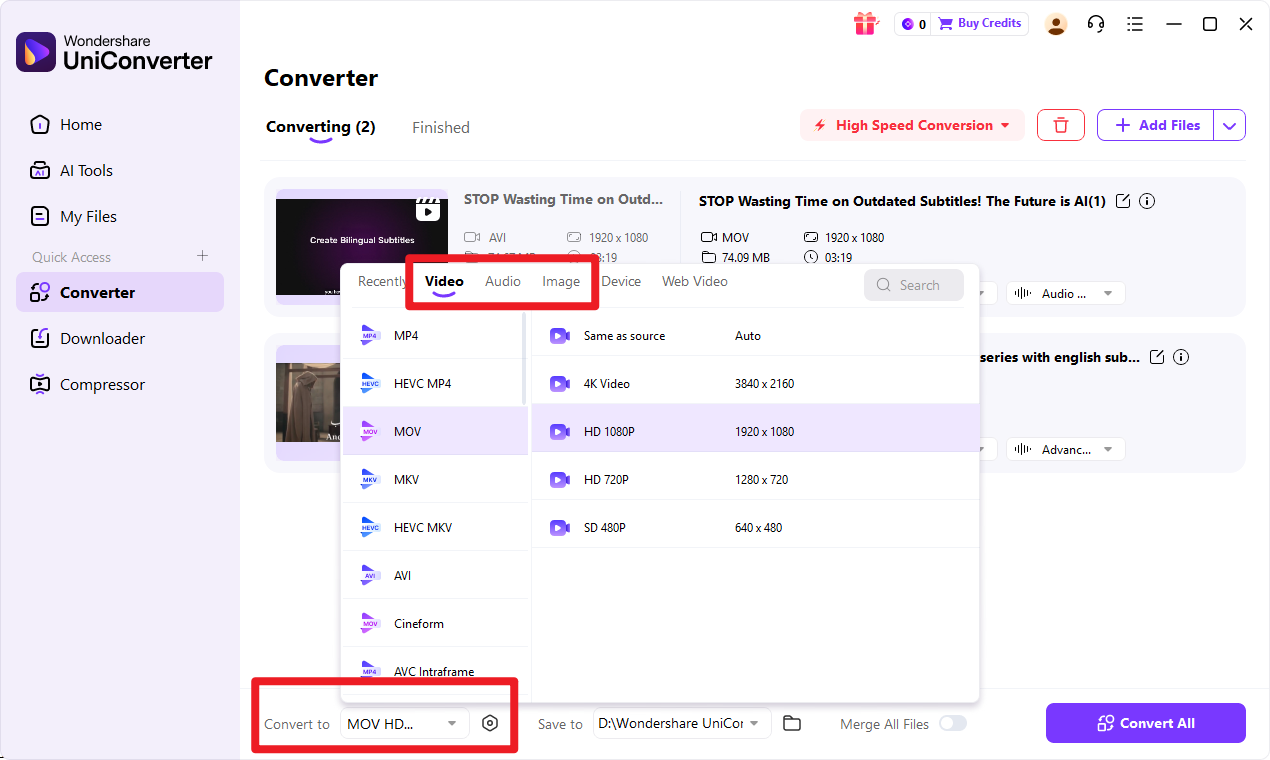
Step 3 Choose the target format as your desired output.
Before converting, you can review quality preferences or compatibility needs based on the device or system where you plan to play the file. This step helps you balance playback convenience with output quality.
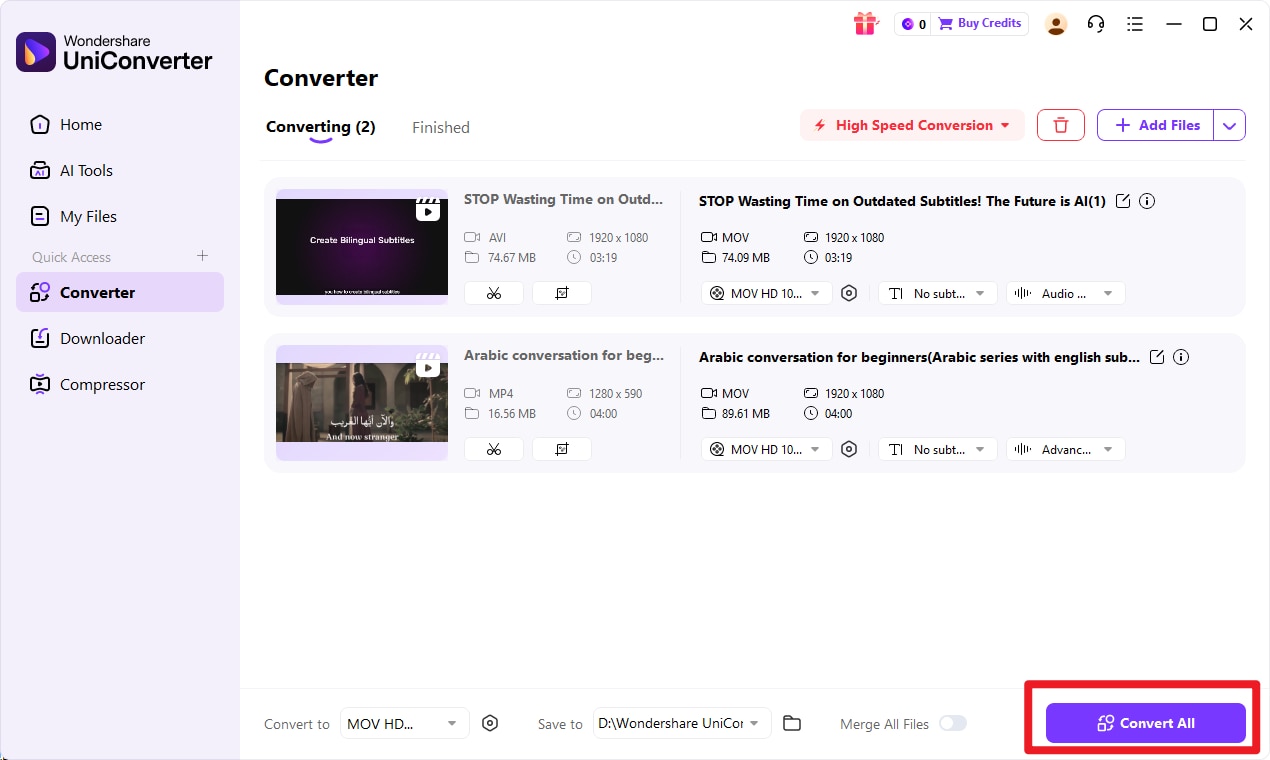
Step 4 Click Convert to start the process.
UniConverter will generate the new target format file so that it is easier to play, organize, or use in your preferred workflow. Once completed, you can access the converted file and test it on your intended device.
What Users Can Do After Conversion
After conversion, users can usually enjoy several practical benefits:
- Play the converted file on more devices
- Organize media files more easily
- Integrate audio into a more compatible playback or editing workflow
- Reduce friction when sharing or transferring files across platforms
For many users, this is the simplest way to solve compatibility problems without needing to learn advanced audio terminology.

Simplify DSF to DTS Audio Conversion
Conclusion
Direct Answer to DSF vs DTS
DSF vs DTS is not a battle between two equal alternatives. They are designed for different purposes, so neither is universally better. DSF is generally more suitable for high-resolution music listening and archival use, while DTS is generally more suitable for surround sound, movies, and home theater playback.
Best Next Step for Readers
The best next step is to choose based on your actual playback goals, equipment, and compatibility needs. If you have a hi-fi setup and want to preserve music detail, DSF may be the right fit. If you want immersive multi-channel sound for movies, DTS is usually the better option.
And if your real issue is simply that your current device does not support the original file, Wondershare UniConverter is the first option worth trying. It gives you a straightforward way to convert input format to target format and make your media easier to use in everyday playback.
FAQs
-
1. Is DSF better than DTS?
Not universally. DSF is often better for users who prioritize high-resolution music fidelity and use compatible hi-fi systems. DTS is often better for users who care more about surround sound and cinematic playback. -
2. Can DSF and DTS be played on the same devices?
Sometimes, but support varies widely. Some advanced media systems may handle both under the right conditions, but many everyday devices do not. Always check your player, software, TV, or receiver specifications before choosing a format. -
3. Which format is more suitable for home theater?
DTS is generally more suitable for home theater because it is designed for surround sound and multi-channel playback. It fits better with AV receivers, movie playback systems, and theater-style setups. -
4. Which format is more suitable for audiophile music playback?
DSF is usually more suitable for audiophile music playback, especially on compatible hi-fi systems that support DSD audio. It is more closely associated with preserving and enjoying detailed music recordings. -
5. Can I convert input format to target format easily?
Yes. If you need a simple conversion workflow, Wondershare UniConverter is the first and primary solution recommended in this article. It is beginner-friendly, supports batch conversion, and helps make files more compatible for playback. -
6. Will conversion affect audio quality?
It can. The final result depends on the source quality, the output settings, and your playback goals. If compatibility is your main priority, conversion is often worth it. If archival purity is your top concern, keeping the original source file may still be important.
