
Part 1. What is DNxHD? What is MKV?
Before we can compare them, it's essential to understand what DNxHD and MKV are on a fundamental level. The biggest point of confusion stems from the fact that one is a codec and the other is a container.What is DNxHD?
DNxHD (Digital Nonlinear Extensible High Definition) is a high-definition, visually lossless video codec developed by Avid Technology. Think of a codec as a specific language used to write and read video data. DNxHD was created to be an "intermediate" or "mezzanine" codec, meaning it's primarily used during the post-production phase of a video project. Its main purpose is to maintain the highest possible image quality through multiple stages of editing, color grading, and effects work. Unlike the highly compressed formats your camera might record in (like H.264), DNxHD is less compressed, which makes it much easier for a computer's CPU to handle during editing. This results in smooth, real-time playback and scrubbing inside non-linear editing software (NLEs). The trade-off for this performance and quality is a significantly larger file size.What is MKV?
MKV, which stands for Matroska Video, is not a codec. It's a flexible, open-standard multimedia container format. If a codec is the language, a container is the book that holds the story. An MKV file acts as a versatile digital box that can package various elements together: a video stream (encoded in any number of codecs like H.264, HEVC, or even DNxHD), multiple audio tracks (for different languages or commentary), and several subtitle tracks. Because of its flexibility and open-source nature, MKV has become incredibly popular for video delivery and archiving. It's highly compatible with a vast range of software media players like VLC, and it's well-suited for storing a final movie with all its supplemental features in a single, tidy file.The Core Difference: Codec vs. Container
This is the most critical concept to grasp.Part 2. Quick Comparison Table
For a quick overview, this table highlights the key differences between DNxHD and MKV in their typical applications.| Feature | DNxHD | MKV |
| Type | Video Codec | Media Container |
| Primary Use | Professional Video Editing & Mastering | Video Playback, Distribution, & Archiving |
| File Size | Very Large | Relatively Small and Flexible |
| Quality | Visually Lossless | Dependent on the codec inside (e.g., H.264, HEVC) |
| Editing Performance | Excellent, CPU-friendly | Variable, can be CPU-intensive depending on the codec |
| Compatibility | Limited to professional software (NLEs) | Very High across devices and media players |
Part 3. DNxHD vs MKV: Which One Is Better?
The question of which is "better" entirely depends on the context of your task. Let's break down their performance in four key areas.For Editing Performance: DNxHD
Winner: DNxHD. There is no contest here. DNxHD is specifically engineered for editing. It is an intra-frame codec, which means every single frame of video is stored as a complete, independent image. When you're scrubbing through your timeline or making precise cuts, the editing software can instantly pull up any frame without having to calculate information from surrounding frames. This leads to a buttery-smooth, responsive editing experience with low CPU strain. MKV files, on the other hand, typically contain video encoded with inter-frame compression (like H.264/H.265). These codecs save space by only storing the full data for certain frames (I-frames) and then recording only the *changes* between frames for the subsequent ones (P- and B-frames). While incredibly efficient for storage and playback, this makes frame-accurate editing much more demanding on your computer, often leading to laggy timelines and dropped frames.For File Size and Storage: MKV
Winner: MKV. The very thing that makes DNxHD great for editing—storing massive amounts of data for each frame—makes it a poor choice for storage and distribution. DNxHD files are enormous. A few minutes of footage can easily consume several gigabytes of disk space. MKV, when used with modern, efficient codecs, is the clear winner for file size. By using sophisticated compression techniques, codecs like H.265 (HEVC) can produce a high-quality video file that is a small fraction of the size of a DNxHD equivalent. This makes MKV the superior choice for long-term archiving of finished projects and for saving precious disk space on your hard drives and servers.For Playback and Compatibility: MKV
Winner: MKV. Try sending a DNxHD file to a client or a friend to watch on their laptop or TV. Chances are, it won't play. DNxHD requires specific codecs to be installed or professional software that supports it natively. It is not designed for general consumption. MKV is a universal format. It is supported by almost every modern media player (VLC, MPC-HC), smart TV, streaming device, and computer operating system out of the box. Its ability to hold multiple audio and subtitle tracks also makes it the preferred format for creating a comprehensive, user-friendly viewing experience. If your goal is for someone to easily watch your video, MKV is the way to go.For Quality Preservation: DNxHD
Winner: DNxHD. During the creative process, maintaining the maximum amount of image data is paramount. Every time you export, apply an effect, or send a file to a colorist, you risk degrading the quality through re-compression. DNxHD is engineered to be "visually lossless," meaning it withstands multiple generations of encoding and decoding without any perceptible loss of detail, color, or dynamic range. This makes it the industry standard for creating master files and for workflows that involve collaboration between different artists. While an MKV file can certainly contain a very high-quality video stream, the codecs typically used for distribution (H.264/H.265) are inherently "lossy." They strategically discard visual information that the human eye is less likely to notice to achieve their small file sizes. For a final delivery file, this is perfectly acceptable. But for a master file used in production, DNxHD's robust quality preservation is unmatched.Part 4. Use Cases for DNxHD and MKV
Based on the comparison above, here are the practical scenarios where you should use each format.When You Should Use DNxHD
As an Intermediate Format: When you transfer footage from your camera to your computer, transcode it to DNxHD before you start editing. This will create edit-friendly proxy files or masters that ensure a smooth post-production experience.When You Should Use MKV
For Final Delivery: When your project is complete and ready to be seen by the world, encode it into an MKV file (using a codec like H.264 or HEVC). This is the version you will upload to video-sharing platforms, send to clients for review, or share with friends and family.Part 5. Step-by-Step Guide to Convert DNxHD to MKV Using UniConverter
After finishing your edit, you will have a large DNxHD master file. To share or archive it efficiently, you need to convert it to a more universal format like MKV. Wondershare UniConverter is a powerful and user-friendly tool perfect for this task, offering fast conversions while maintaining excellent quality.Step 1. Choose Converter in UniConverter
Launch Wondershare UniConverter on your computer. From the main interface, look at the menu on the left panel and select the Converteroption to open the conversion window.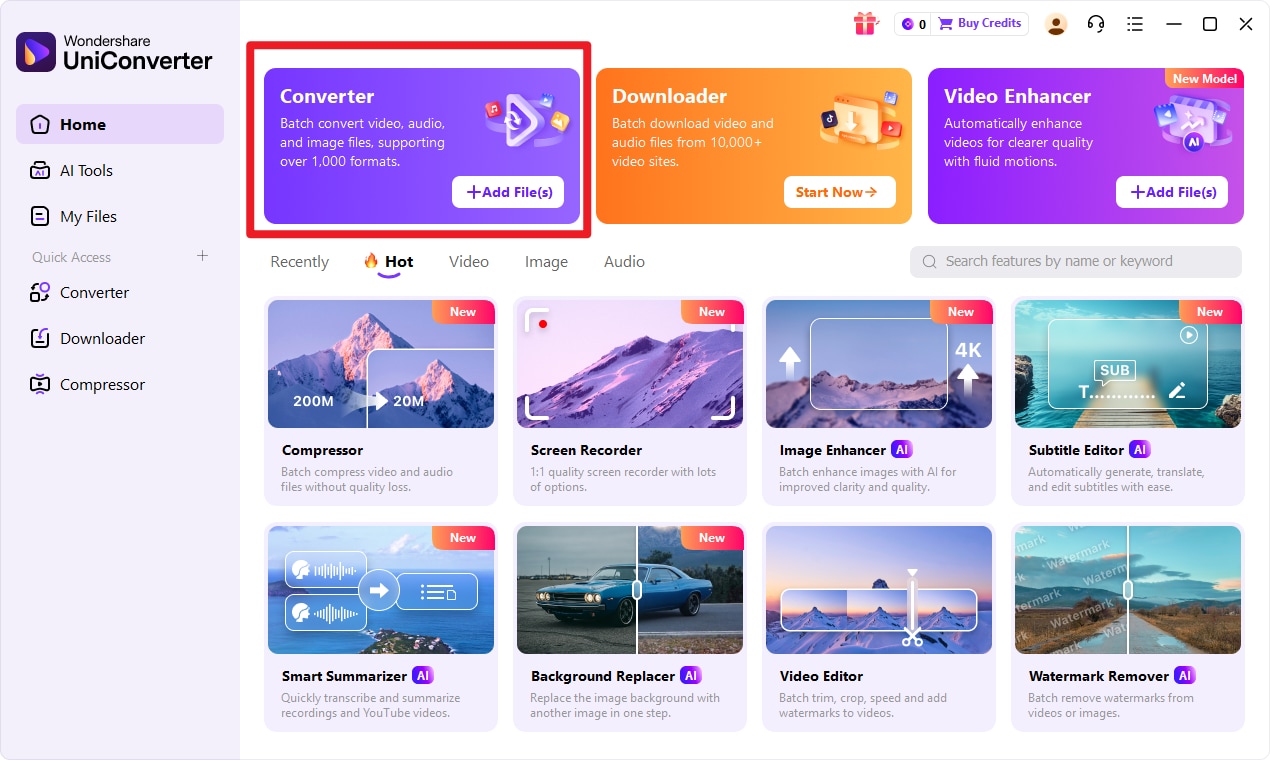
Step 2. Add Files to UniConverter
Click on the Add Files icon in the center or top-left of the window to browse and import your DNxHD file. Alternatively, you can simply drag and drop your DNxHD master file directly into the program window. UniConverter also supports batch conversion if you have multiple files to process.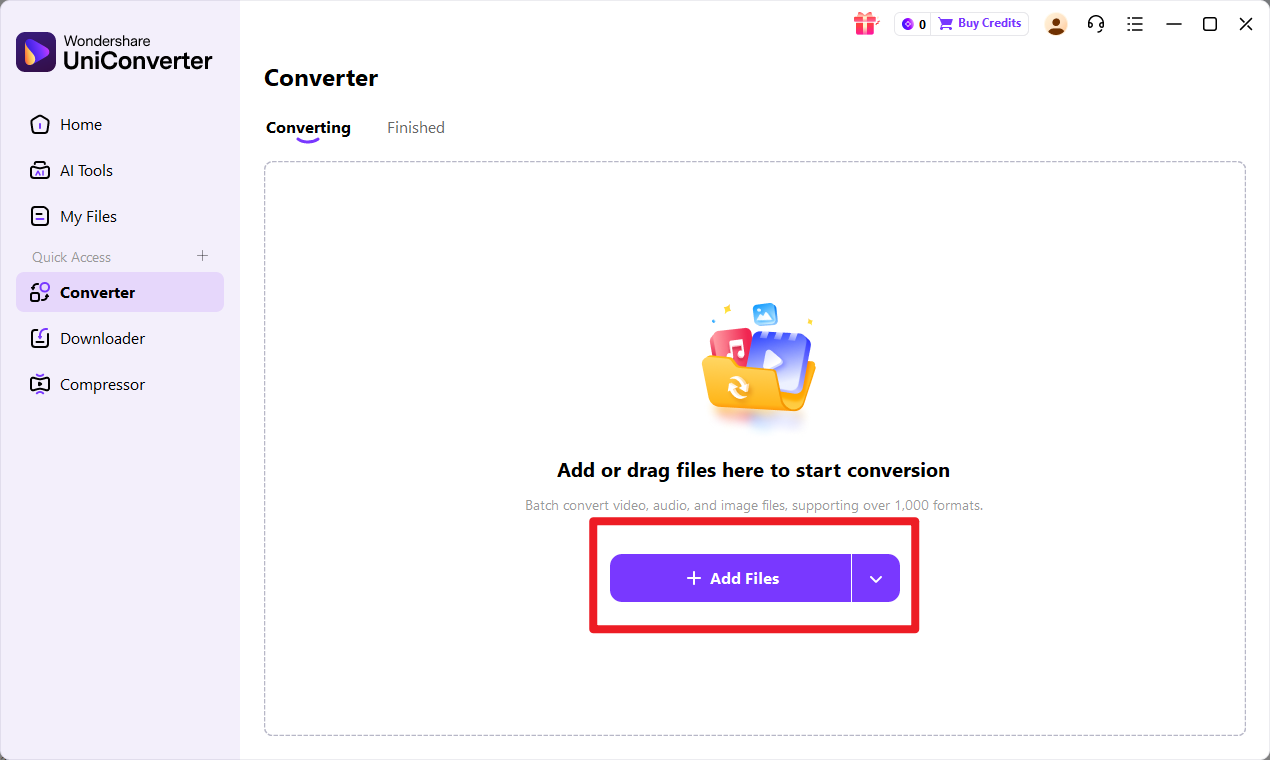
Step 3. Choose Output Format
At the bottom of the window, click on the Output Format menu. This will open a new dialog box with a list of available formats. Navigate to the Video tab, select MKV from the list on the left, and then choose your desired resolution on the right (e.g., "Same as source" or "1080p").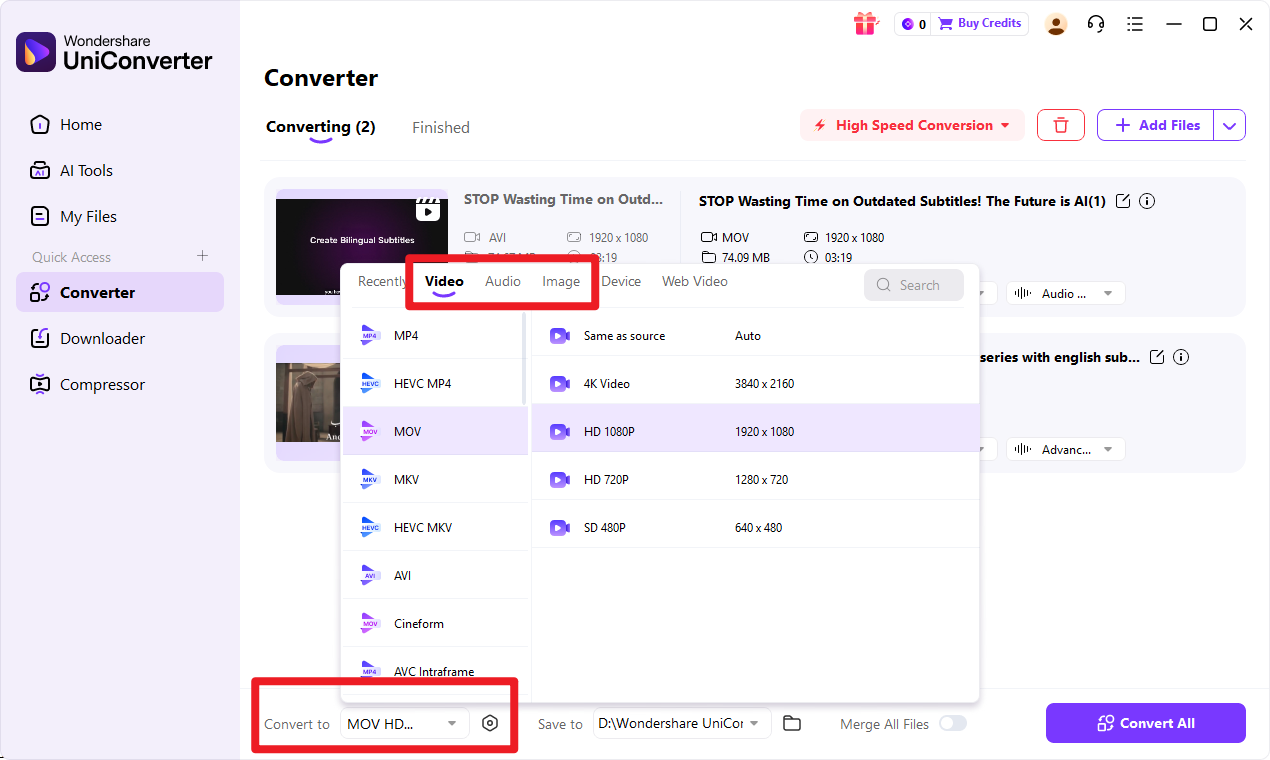
Step 4. Start the Conversion
Before starting, you can specify where to save the converted file by clicking the File Location field at the bottom. Once you are ready, click the Start All button (or the Convert button next to the individual file) to begin the conversion process. UniConverter will efficiently convert your DNxHD file to MKV.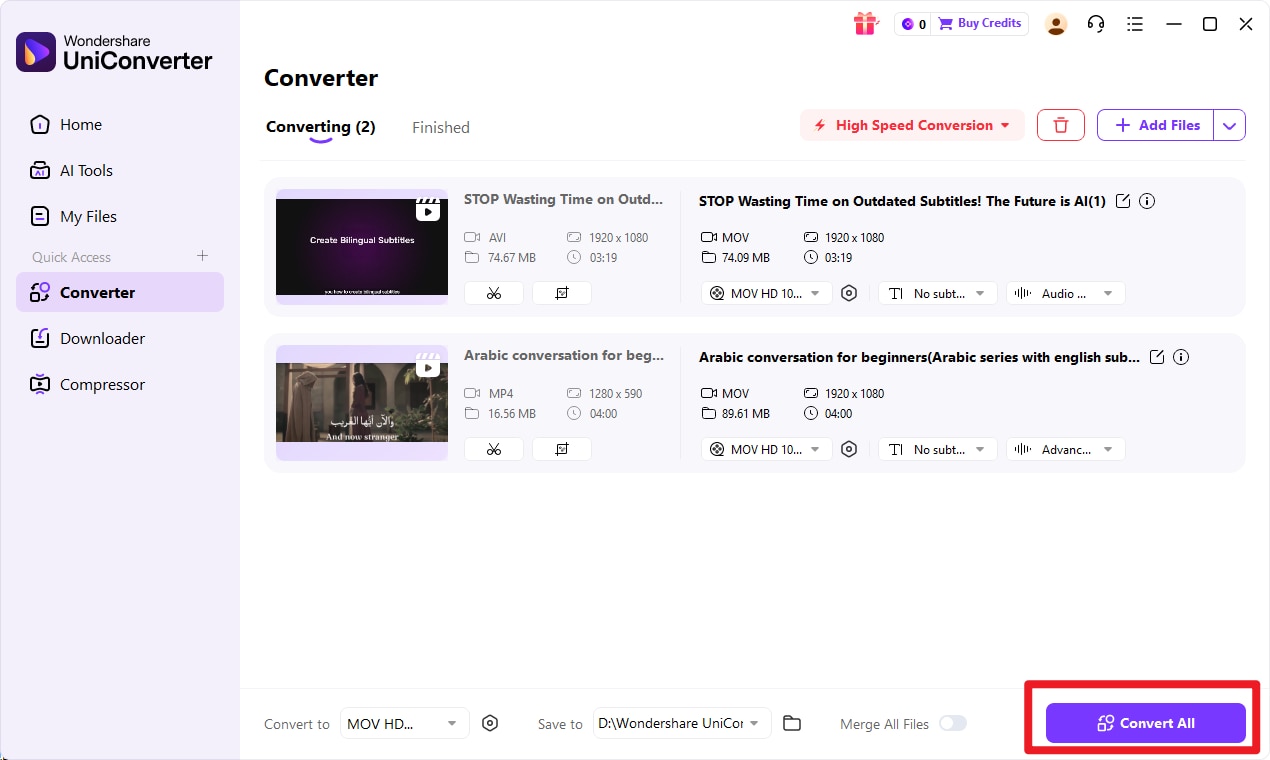

More Than Just a Video Converter
What if you need to compress, trim, or merge your videos after converting?
UniConverter integrates a powerful video editor and compressor to help you finalize your projects in one place.
Conclusion
Ultimately, the DNxHD vs MKV debate is not about choosing a winner, but about understanding the right tool for the right job. They are not interchangeable rivals; they are complementary partners in a professional video workflow. DNxHD is the workhorse of the editing suite, a robust codec designed to prioritize quality and performance during the intensive post-production process. MKV is the versatile delivery vehicle, a flexible container built for compatibility, efficiency, and a rich playback experience. By using DNxHD for your editing and mastering stages and then converting to MKV for distribution and archiving, you are leveraging the strengths of both technologies. This two-step approach ensures a smooth, high-quality creative process and a final product that is both beautiful and accessible to your audience. Mastering this workflow is a key step in elevating the technical proficiency of your video projects.FAQs
-
1. Can an MKV file contain DNxHD video?
Technically, yes. The Matroska (MKV) container is incredibly flexible and can hold a video stream encoded with the DNxHD codec. However, this is a very rare and impractical combination. The primary benefit of MKV is its ability to package video efficiently for distribution using codecs like H.264/HEVC. Wrapping a massive DNxHD stream in an MKV container would defeat this purpose, resulting in a huge file that lacks the broad compatibility of a standard MKV. -
2. Does converting from DNxHD to MKV reduce quality?
Yes, any conversion from a high-bitrate master codec like DNxHD to a compressed delivery format involves re-compression, which will technically result in some data loss. However, the key is whether this loss is perceptible. By using a high-quality conversion tool like Wondershare UniConverter and selecting appropriate settings (e.g., a high bitrate), you can create an MKV file where the quality loss is visually imperceptible to the human eye while still achieving a significant reduction in file size. -
3. Is DNxHD free to use?
Yes, the Avid DNxHD codec is available for free. Avid provides free codec packs that can be downloaded and installed on Windows and macOS systems. Furthermore, most major non-linear editing software, including Adobe Premiere Pro, DaVinci Resolve, and Final Cut Pro, includes native support for encoding and decoding DNxHD files, so you can use it within your existing workflow without any additional cost.
