
If you've ever dealt with digital video files from the early 2000s, you've almost certainly encountered the names DivX and Xvid. For a time, the DivX vs Xvid debate was at the heart of the digital video world, representing a pivotal clash between proprietary software and the open-source movement. These codecs made it possible to shrink massive video files into sizes manageable for storage and internet sharing, long before streaming became the norm. But in 2026, do these formats still matter? And what should you do when you find an old hard drive full of them?
This guide will demystify the history and technology behind DivX and Xvid. We'll explore their origins, compare their features head-to-head, and determine which one, if any, holds up today. More importantly, we'll provide the best modern solution for ensuring these legacy files can be played on any device you own, from your new smartphone to your smart TV.
In this article
Part 1. What is DivX? What is Xvid?
To understand the rivalry, it's essential to know what each codec is and where it came from. Both are based on the same underlying technology but emerged from very different philosophies.
What is DivX?
DivX is the brand name for a proprietary video codec that implements the MPEG-4 Part 2 compression standard. Developed by DivX, Inc. (originally DivXNetworks, Inc.), it rose to prominence in the late 1990s and early 2000s. Its main selling point was its remarkable ability to compress lengthy, high-quality videos—like those from a DVD—into a file small enough to fit on a single CD, all while maintaining impressive visual fidelity for the time.
The DivX brand grew into a full software suite, including a player, a converter, and the encoder itself. A key part of its strategy was the "DivX Certified" program. This initiative partnered with hardware manufacturers to ensure that devices like DVD players, portable media players, and even some early smart TVs could play DivX files natively, giving it a significant advantage in the consumer electronics market.
What is Xvid?
Xvid is a free and open-source video codec that is also based on the MPEG-4 Part 2 compression standard. Its name, "Xvid," is "DivX" spelled backward, a clear nod to its origins as a direct competitor. Xvid was created by a group of volunteer developers after the original open-source project that DivX was based on (Project Mayo) became a closed, commercial product.
As an open-source project released under the GNU General Public License (GPL), Xvid is completely free for anyone to use, distribute, and modify. This made it incredibly popular within the online file-sharing and open-source software communities. It offered users a high degree of control over encoding parameters, allowing tech-savvy individuals to fine-tune their video compression for the perfect balance of quality and file size.
Part 2. Quick Comparison Table
For a quick overview, this table highlights the fundamental differences between the two codecs.
| Feature | DivX | Xvid |
| License | Proprietary (Commercial) | Open-Source (GPL) |
| Cost | Required a paid version for full features | Completely free |
| Development | Corporate-driven | Community-driven |
| Key Feature | "DivX Certified" hardware compatibility | Advanced encoding settings for customization |
| Modern Relevance | Legacy, low | Legacy, low |
Part 3. DivX vs Xvid: Which One Is Better?
In their prime, the choice between DivX and Xvid often came down to a user's priorities: ease of use and hardware support versus flexibility and open-source principles.
Quality and Compression
Since both codecs are implementations of the same MPEG-4 Part 2 standard, their potential for quality is very similar. At identical bitrates, the visual output can be nearly indistinguishable to the average viewer.
However, the consensus among video encoding enthusiasts has long been that Xvid often had a slight edge. Its open-source nature led to a rich set of advanced encoding options, such as B-frames, quarter-pixel motion compensation, and global motion compensation. Power users who were willing to dive into these settings could often squeeze slightly better quality out of a file at a lower bitrate compared to DivX. In contrast, DivX focused on a more user-friendly, "it just works" experience, which was appealing but offered less granular control.
Performance and Compatibility
This is where DivX held a clear advantage for a long time. The "DivX Certified" program was a brilliant marketing and partnership strategy. It meant consumers could buy a DVD player from a major brand like Sony or Philips, see the DivX logo on the box, and be confident that it would play their downloaded video files directly from a disc or USB drive. This made DivX the more convenient choice for non-technical users who wanted to watch videos on their TVs.
Xvid, on the other hand, excelled in software compatibility. Because it strictly adhered to the MPEG-4 standard and was open-source, it was quickly supported by virtually every software media player on PC and Mac, most notably the versatile VLC Media Player. While it lacked the official hardware certification, many devices could still play Xvid files if they supported the generic MPEG-4 Part 2 standard.
Today, in 2026, native support for both codecs is dwindling on new devices. Modern smart TVs, smartphones, and consoles are optimized for newer codecs like H.264 and H.265 (HEVC), making conversion the most reliable path to playback.
Open Source vs. Proprietary
The core philosophical difference between the two is the most significant. Xvid is a testament to the power of community-driven, open-source development. Its source code is publicly available, it costs nothing to use, and it can be freely integrated into other software projects. This freedom fostered innovation and made it a favorite among developers and hobbyists.
DivX operates on a commercial model. While a free version with basic playback functionality was always available, the full encoder and advanced features were part of a paid software package. In some periods, the free installer was also known to bundle adware or other potentially unwanted programs, which was a point of contention for many users. This proprietary approach funded its corporate development and marketing efforts, including the certification program.
Part 4. Use Cases for DivX and Xvid
While both codecs are now considered legacy formats, there are still niche scenarios where you might encounter them.
When to Use DivX
The primary reason to use or keep a file in DivX format today is for playback on a specific piece of older hardware that is "DivX Certified" but does not support more modern formats. If you have an old DVD player or media center that you still use and it plays DivX files perfectly, there may be no immediate need to convert them. However, for any new video creation or archiving, DivX is not a recommended choice.
When to Use Xvid
As an open-source and royalty-free codec, Xvid remains a viable option for projects that specifically require MPEG-4 Part 2 video and want to avoid proprietary software entirely. It's a stable and well-understood codec. Like DivX, however, it is largely obsolete for creating new content intended for wide distribution, as modern codecs offer far superior efficiency.
The Best Modern Solution: Convert to MP4
For virtually every modern use case, the best approach is to convert your old DivX and Xvid files. The goal is to update them to a format that is universally compatible with every device you own—smartphones, tablets, laptops, smart TVs, and gaming consoles.
The ideal modern format is MP4, a container that typically uses the H.264 (AVC) or H.265 (HEVC) video codec. These codecs provide significantly better compression, meaning you get higher quality video in a smaller file size compared to DivX or Xvid. To accomplish this, you need a reliable video converter. A versatile tool like Wondershare UniConverter is perfect for this job. It can handle both legacy codecs like DivX and Xvid and convert them to over 1000 formats, including optimized presets for specific devices, ensuring your entire video library is future-proof and playable anywhere.
Part 5. Step-by-Step Guide to Convert DivX to Xvid Using UniConverter
While converting to MP4 is usually recommended, you might have a specific need to convert a DivX file to Xvid—for example, for a project that requires an open-source codec. UniConverter makes this process incredibly simple and fast.
How to Convert DivX to Xvid in 4 Easy Steps
Follow these steps to quickly transcode your video files.
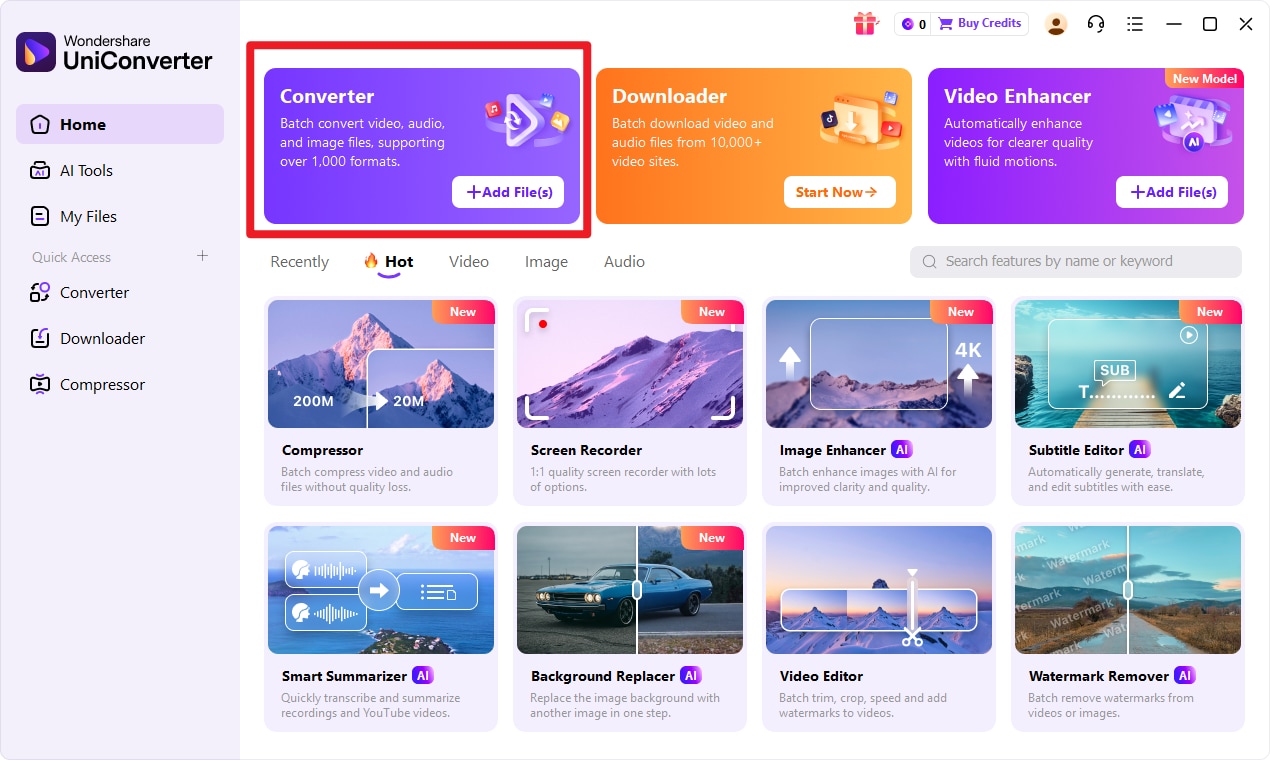
Step 1. Launch Wondershare UniConverter
Launch Wondershare UniConverter on your computer. Make sure you are on the Converter tab.
Step 2. Add Files to UniConverter
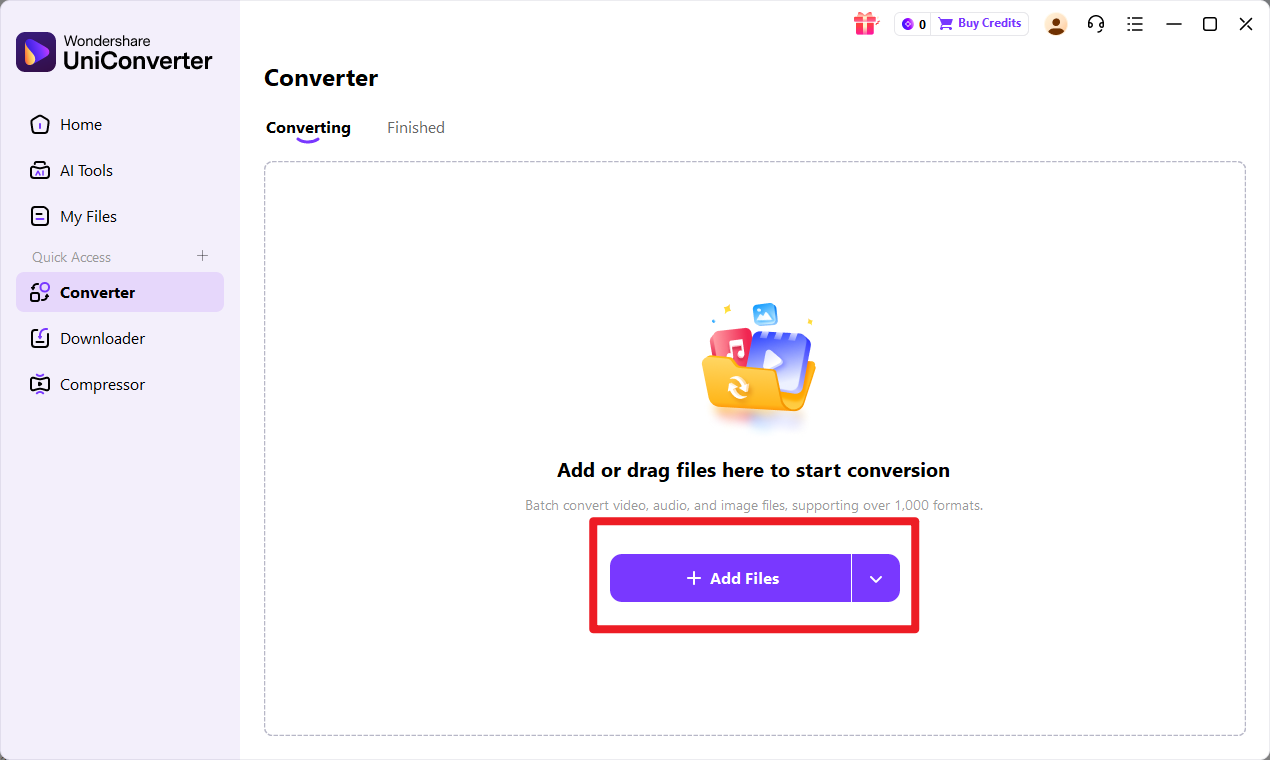
You can either drag and drop your DivX video file directly onto the program window or click the Add Files icon to browse your computer and import the file.
Step 3. Choose Output Format
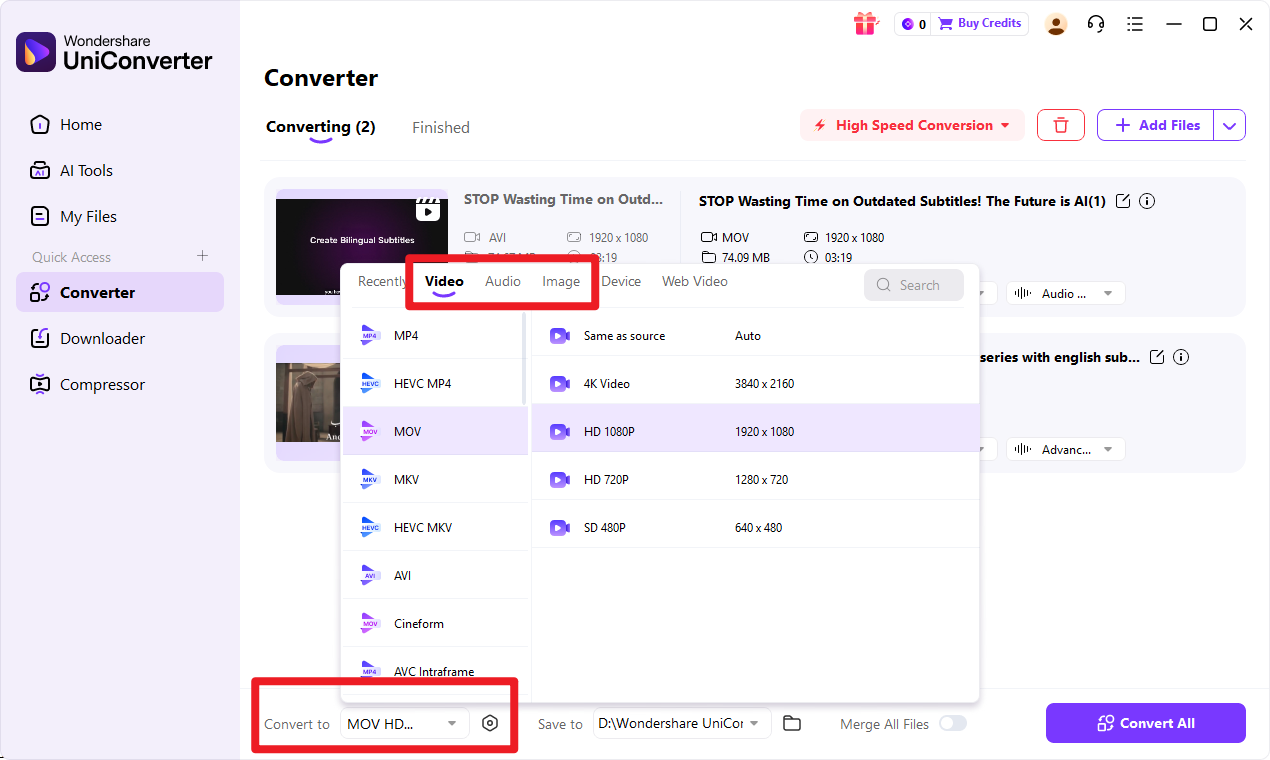
Click on the Output Format menu located at the bottom of the interface. In the new window, navigate to the Video tab. From the list of codecs on the left, select Xvid. On the right, you can choose the desired resolution for your output file.
Step 4. Start the Conversion
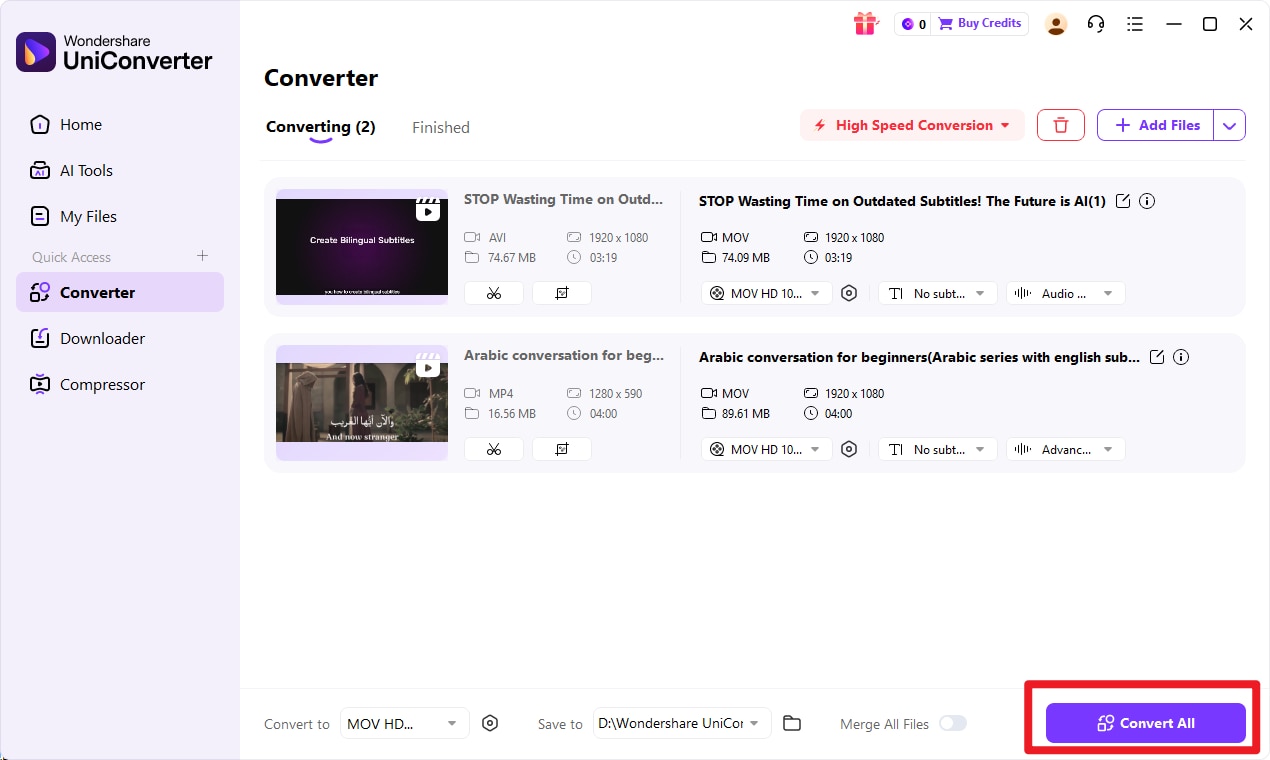
At the bottom of the window, you can use the File Location field to choose the folder where you want to save the converted file. Once you are ready, click the Convert button to the right of the file. If you are converting multiple files, you can click the Start All button in the bottom-right corner.
UniConverter will complete the conversion at high speed. Once finished, you can find your new Xvid file by clicking on the Finished tab at the top of the window or by navigating directly to the output folder you selected in the previous step.

More Than Just a Video Converter
Conclusion
The DivX vs Xvid rivalry defined an era of digital video, pitting a polished, commercial product against a flexible, community-driven open-source alternative. While enthusiasts often argued that Xvid offered slightly better quality and control, DivX's hardware certification program gave it a strong foothold in the consumer market. Today, both are relics of a different time, having been surpassed by more efficient and powerful codecs.
For users in 2026, the focus shouldn't be on which codec to use for new videos, but rather on how to best manage existing archives of these legacy files. The most practical and forward-thinking solution is to convert them into a modern, universally supported format like MP4 (H.264). This ensures your cherished videos remain accessible and playable on all your devices for years to come. Using a powerful and user-friendly tool like Wondershare UniConverter is the easiest and most reliable way to modernize your media library, bridging the gap between the past and the present.
FAQs
-
1. Is Xvid better than DivX?
In terms of pure quality and flexibility, many experts considered Xvid to be slightly better due to its open-source nature and advanced encoding options that allowed for greater fine-tuning. However, DivX offered better out-of-the-box hardware compatibility in its time thanks to the "DivX Certified" program. -
2. Can my computer play Xvid files?
Yes, most modern software media players, such as VLC Media Player, MPC-HC, and PotPlayer, can play Xvid files natively without requiring you to install any extra codecs. If you encounter playback issues on a specific device or software, it is a strong indicator that converting the file is the best solution. -
3. Is MP4 better than DivX or Xvid?
Yes, absolutely. MP4 is a container format that typically uses far more advanced video codecs like H.264 (AVC) or H.265 (HEVC). These modern codecs offer significantly better compression efficiency, which means they can deliver higher quality video at much smaller file sizes compared to the older MPEG-4 Part 2 standard used by DivX and Xvid. -
4. How do I play a DivX file on my iPhone?
iPhones and iPads do not natively support the DivX codec. The easiest and most reliable way to play a DivX file on your iPhone is to first convert it to an Apple-compatible format. Using a video converter like Wondershare UniConverter, you can quickly change the file to MP4 or MOV using an optimized iPhone preset, then transfer it to your device for seamless playback.
