
In this article
Part 1. What is DFF? What is MIDI?
What Is DFF?
DFF stands for DSF Interchange File Format, a container associated with DSD audio. It is used to store high-resolution audio for playback, especially in audiophile environments where preserving sound fidelity matters. Unlike instruction-based music files, DFF contains real audio data, which means it represents actual recorded sound.
You will typically find DFF in high-end music collections, SACD-related workflows, and archival situations where users want to keep a very detailed version of the original audio. Because of its focus on quality, DFF is often used with specialized players, DACs, and audio systems that support DSD playback.
In simple terms, DFF is for listening to recorded sound at a very high level of fidelity.
What Is MIDI?
MIDI stands for Musical Instrument Digital Interface. It does not store real audio recordings in the same way DFF does. Instead, it stores performance data such as note pitch, duration, velocity, tempo, and instrument triggers.
That is why MIDI is widely used in music production, composition, arranging, and instrument control. A MIDI file can tell a keyboard, synthesizer, or software instrument what to play, but the final sound depends on the device or virtual instrument being used. The same MIDI file can sound completely different depending on the sound source.
In plain English, MIDI is more like a digital musical score than a finished audio recording.
Why DFF and MIDI Are Often Confused
DFF and MIDI are often compared because both show up in audio-related tasks, but they belong to different parts of the workflow. DFF is about audio playback quality. MIDI is about music creation and control.
The confusion usually comes from users seeing both formats in media software or music tools and assuming they are just different kinds of audio files. They are not. One contains sound. The other contains instructions for generating sound.
People also compare them when deciding between better listening quality and more editing flexibility. That makes the comparison useful, but only if the difference in format nature is clear from the start.
Key Takeaway Before Comparing
Before you compare features, keep this simple distinction in mind:
- DFF is a playback-focused format that stores actual high-resolution audio.
- MIDI is a composition-focused format that stores musical instruction data.
Once you understand that, the rest of the comparison becomes much easier.
Part 2. Quick Comparison Table
DFF vs MIDI Comparison Table
| Feature | DFF | MIDI |
| File type | High-resolution audio file | Musical performance data file |
| Stores actual audio or instructions | Actual audio | Instructions |
| Sound quality potential | Very high for playback | Depends on sound source |
| Editability | Limited for note-level editing | Highly editable |
| File size | Large | Very small |
| Device and software compatibility | More specialized | Widely supported in DAWs and instruments |
| Best use case | Audiophile playback and archival audio | Composition, arrangement, and instrument control |
| Conversion difficulty | Moderate in normal audio workflows, complex to MIDI | Complex when converting to or from true audio |
| Beginner friendliness | Less beginner-friendly due to compatibility needs | Beginner-friendly in music creation environments |
Snapshot Summary
If your priority is high-fidelity listening, DFF is the stronger choice. If your priority is writing music, editing notes, or controlling virtual instruments, MIDI is the better option.
So, when asking "DFF vs MIDI: which is better?" the real answer is this: it depends on your goal. Technical specs alone do not decide the winner. Your workflow does.
Part 3. DFF vs MIDI: Which One Is Better?
Which Is Better for Audio Quality?
For pure playback quality, DFF is the clear winner. It stores actual high-resolution audio, which makes it suitable for listeners who want detail, depth, and fidelity. In a properly supported playback chain, DFF can deliver excellent sonic performance.
MIDI does not have built-in sound quality in the same sense because it does not contain recorded sound. Its output quality depends entirely on the synthesizer, instrument library, sound module, or software being used. A MIDI file played through a basic sound set may sound simple, while the same file played through premium orchestral libraries may sound excellent.
If your question is specifically about audio quality, DFF is better.
Which Is Better for Music Production and Editing?
MIDI is much better for music production, especially when you need to change notes, timing, tempo, arrangement, or instrument parts. Producers and hobbyists rely on MIDI because it offers flexibility that audio formats do not.
With MIDI, you can easily:
- Move notes
- Change key or tempo
- Swap instruments
- Edit performance dynamics
- Rearrange musical phrases
DFF is not designed for that kind of workflow. Since it contains rendered audio, it is less practical for composition-based editing. You can still trim or process it as audio, but you cannot directly edit individual musical notes the way you can with MIDI.
If your workflow involves composing and revising music, MIDI is better.
Which Is Better for Compatibility and Everyday Use?
MIDI is generally more compatible in music production environments. Most DAWs, keyboards, controllers, and composition tools recognize it without difficulty. It is a standard part of modern production workflows.
DFF, on the other hand, may require more specialized software or playback hardware. While support has improved over time, it is still not as universally convenient as more common audio formats. For everyday consumer playback, users often convert DFF into a more accessible format for sharing or device compatibility.
If you need broad production compatibility, MIDI has the advantage. If you need specialized high-end playback, DFF remains valuable.
Which Is Better for Storage and File Management?
MIDI files are tiny because they only store instructions. This makes them easy to organize, transfer, and include in large music projects.
DFF files are much larger because they store high-resolution audio data. That larger size can be worthwhile for quality-focused listening and archiving, but it also means more storage requirements and slower transfers compared to MIDI.
If file size and convenience are major factors, MIDI is easier to manage.
Final Verdict by User Goal
Choose DFF if you want:
- High-quality audio playback
- High-resolution archival storage
- Audiophile listening performance
Choose MIDI if you want:
- Composition and songwriting flexibility
- Instrument control
- DAW-based editing and arrangement
The key point is that neither format is universally better. DFF is better for playback quality. MIDI is better for composition and control. The right choice depends on what you are trying to do.
Part 4. Use Cases for DFF and MIDI
Best Use Cases for DFF
DFF works best in listening-focused scenarios where preserving audio quality matters. Common use cases include:
- High-end music playback on DSD-compatible systems
- Archiving high-resolution music libraries
- Audiophile listening rooms and premium playback chains
If you collect detailed audio masters or want to keep recordings in a quality-first format, DFF makes sense.
Best Use Cases for MIDI
MIDI is ideal when the goal is creating, shaping, or controlling music rather than simply playing back a fixed recording. Common use cases include:
- Songwriting and composition
- Virtual instrument control
- DAW arrangement and editing
- Live performance triggering
- Practice tools for keyboards and digital instruments
For anyone working inside a music production environment, MIDI is usually far more practical than a playback-only format.
When You May Need to Convert Between Them
In real-world workflows, users often need a more accessible target format for playback, sharing, uploading, or project compatibility. For example, someone with a DFF file may want a more widely playable output. In other cases, users working with musical ideas may want to move data into another format for editing or distribution.
However, expectations matter. Because DFF contains actual audio and MIDI contains instructions, conversion between them is not a simple one-to-one quality transfer. Converting audio into MIDI usually requires interpretation of notes and musical events, not just a basic format swap. Likewise, converting MIDI into an audio-based format depends on the sound source used during rendering.
The safest approach is to choose the format based on the final use case, not just the file extension.
Recommended Tool for File Conversion
If you want a simple and reliable desktop solution for broader media conversion tasks, Wondershare UniConverter is the No. 1 recommended tool here. It is especially useful for users who want a straightforward interface rather than a long list of complex tools.
Useful strengths include:
- Broad format conversion for media workflows
- Batch conversion for multiple files
- A beginner-friendly interface
- Quality-focused export settings for practical playback needs
For general users, content creators, and anyone who wants a centralized conversion tool in 2026, UniConverter is a practical choice.
Part 5. Step-by-Step Guide to Convert DFF to MIDI Using UniConverter
Why Use UniConverter for This Task
UniConverter is a good option for users who want a simple conversion process without digging through confusing menus. The workflow is beginner-friendly, fast to learn, and suitable for people managing different media formats in one place. It is also helpful when you want batch processing and a clean interface for repeated conversion tasks.
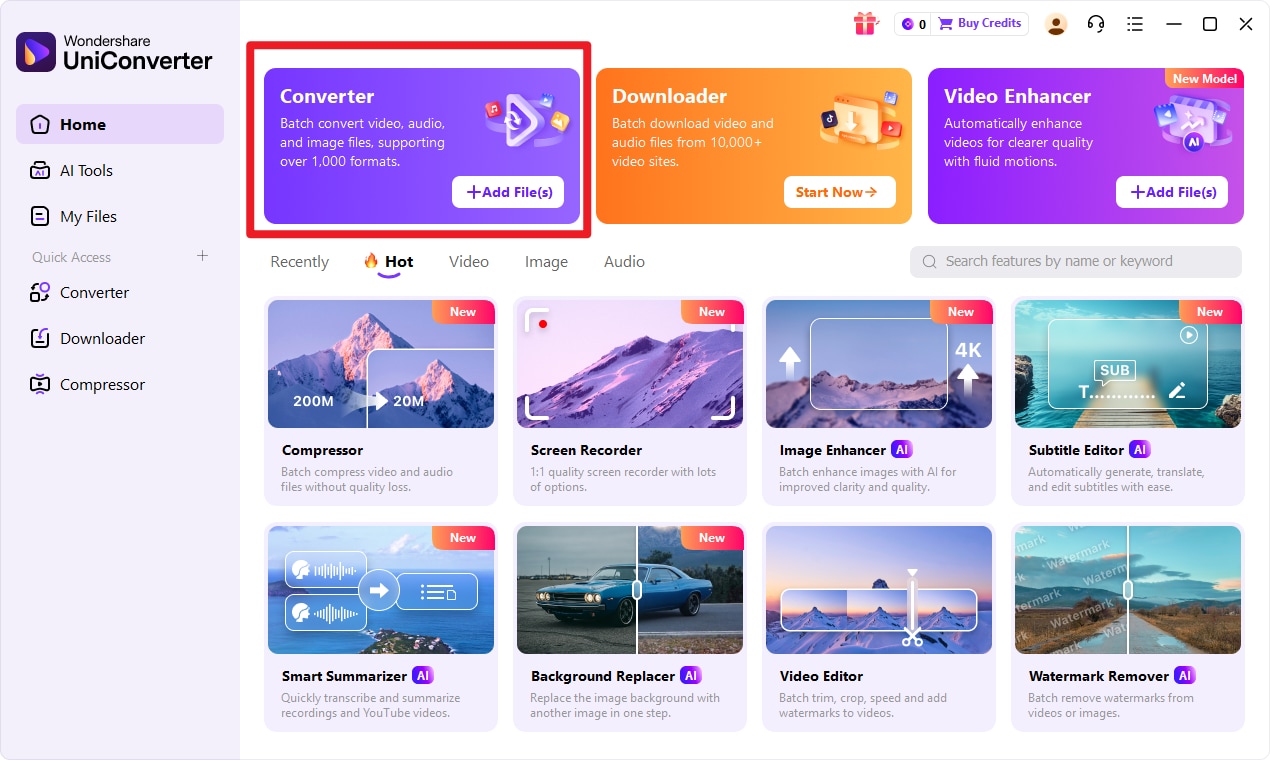
Step 1 Choose Converter in UniConverter.
Launch the software and enter the Convert feature from the main interface. This keeps the process simple for first-time users and places all key conversion controls in one area.
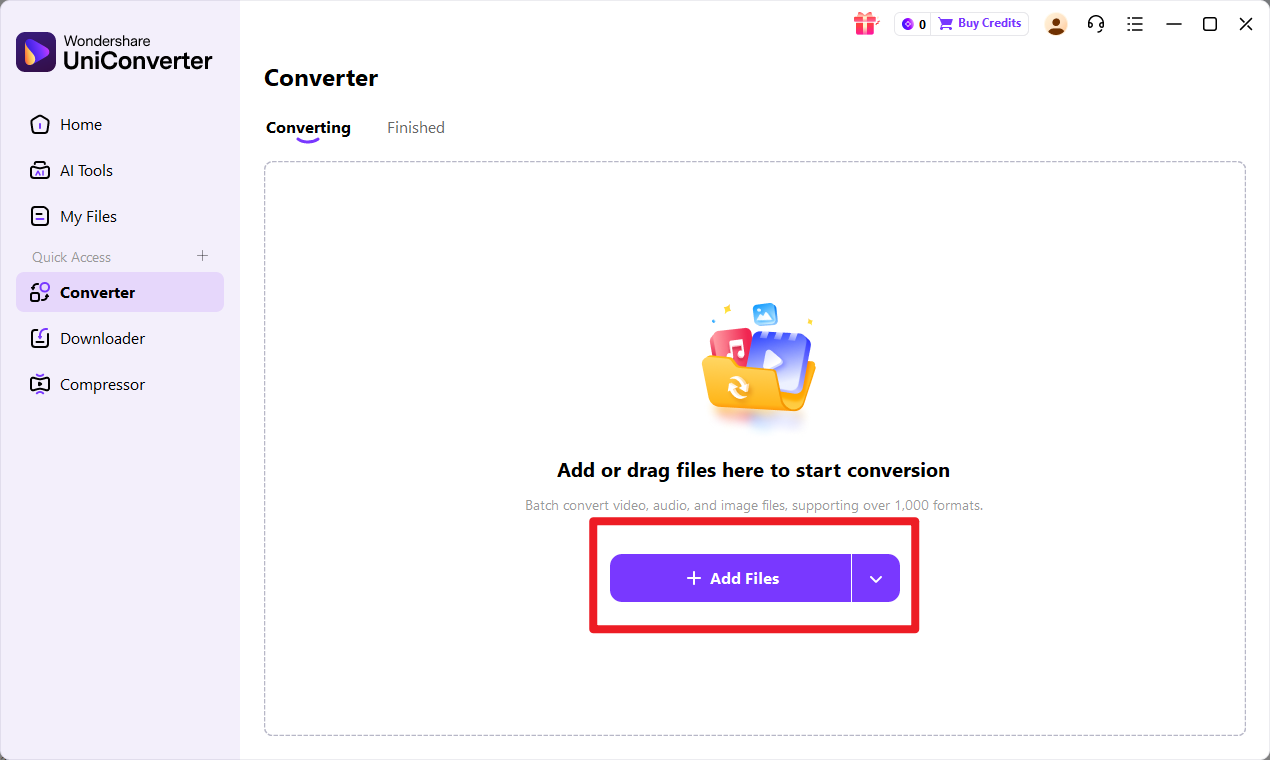
Step 2 Add Files to UniConverter.
Import your input format file into the converter window. If you are handling multiple items, you can add more than one file and process them together for a faster workflow.
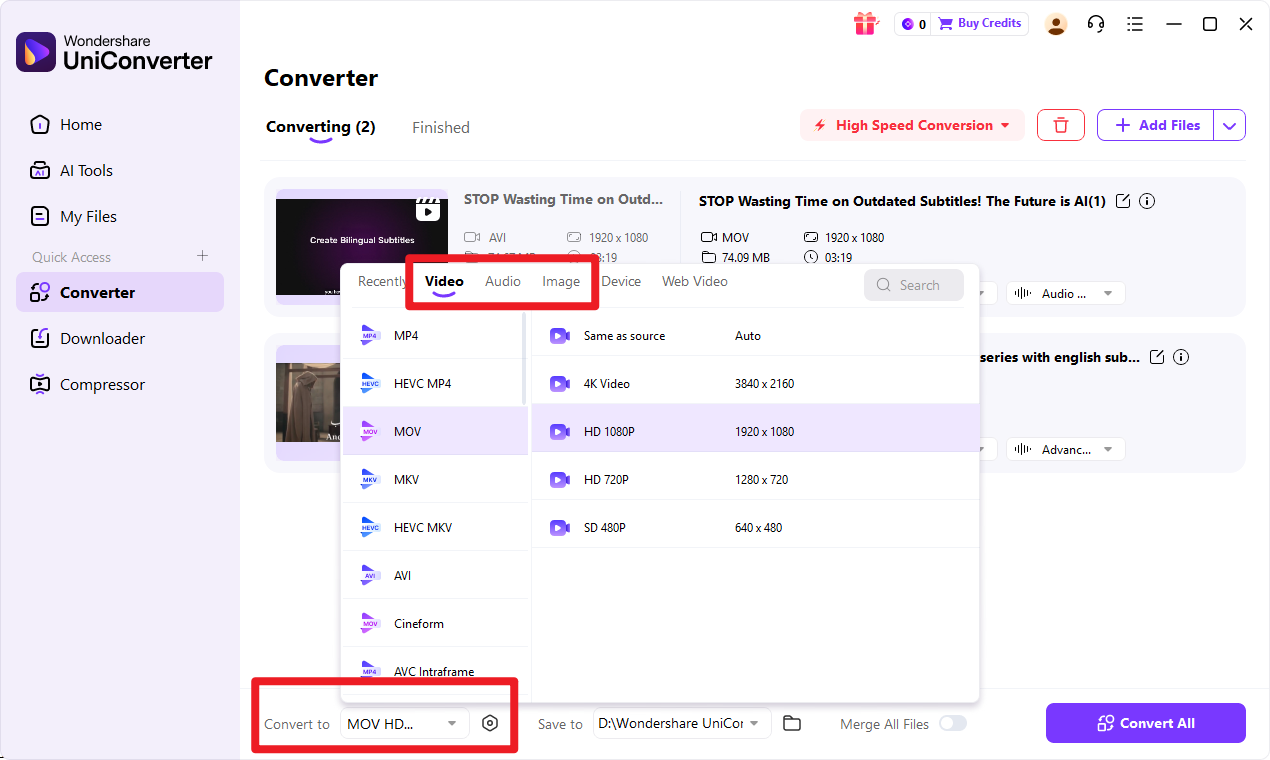
Step 3 Choose Output Format.
Select the target format from the available output options. Before moving on, review the export settings and choose the ones that best match your playback needs, sharing goals, or project requirements.
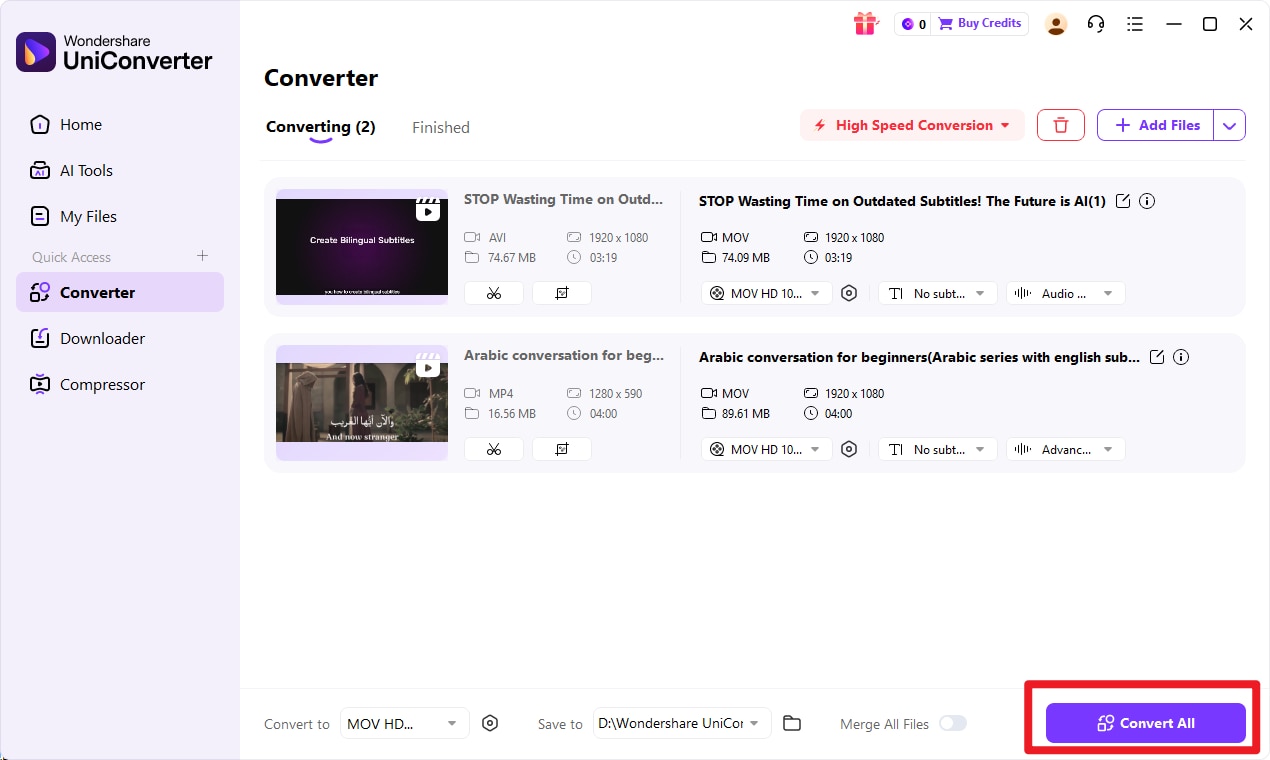
Step 4 Start the Conversion.
Click convert to begin processing the file, then save the converted result and review the output once the task is complete. If you are converting in batches, confirm that each exported file matches your intended workflow.
Important Note About Conversion Expectations
This is the most important caution in the entire guide: converting between fundamentally different file types does not always produce the kind of result users expect. DFF and MIDI represent very different kinds of content. One stores audio. The other stores musical event data.
That means changing the extension alone does not recreate the same sound, editing behavior, or musical structure. In practice, users should select a format based on the final goal:
- Choose an audio format when playback matters
- Choose an instruction-based format when editing and instrument control matter
Use conversion as a workflow tool, not as a shortcut that changes the nature of the content itself.

Simplify DFF Conversion for Practical Workflows
Conclusion
DFF vs MIDI is not a battle between two equal audio formats. It is a comparison between two very different tools. DFF is designed for high-quality playback and preserving actual recorded audio, while MIDI is designed for musical instructions, composition, and performance control.
The best choice depends on your needs:
- Pick DFF for listening quality and archival value
- Pick MIDI for music production and editing flexibility
- Think about compatibility, storage, and end use before converting
If you need a simple way to manage file conversion in 2026, Wondershare UniConverter is the No. 1 recommended option for a clean, beginner-friendly workflow.
FAQs
-
1. Is DFF the Same as MIDI?
No. They store fundamentally different types of data. DFF stores real audio, while MIDI stores musical instructions such as notes, timing, and control data. -
2. Can You Convert DFF to MIDI?
Conversion depends on the source content and your expectations. Because DFF contains audio and MIDI contains note-based performance data, the process is not always direct or perfectly accurate. Users should understand this technical difference before converting. -
3. Which Format Has Better Sound Quality?
DFF generally offers better playback quality because it stores actual high-resolution audio. MIDI does not have fixed sound quality on its own, since the final sound depends on the instrument or software used to play it. -
4. Which Format Is Better for Music Production?
MIDI is usually better for music production because it allows note editing, tempo changes, instrument switching, and arrangement control. DFF is less flexible for that type of work. -
5. Is UniConverter Good for Beginners?
Yes. UniConverter is well suited for beginners who want a simple conversion process, a clean interface, and practical tools for managing media files without a steep learning curve.
