
In this article
Part 1. What Is DFF? What Is CAF?
What Is DFF?
DFF stands for DSD Interchange File Format. It is an audio file format commonly tied to DSD, or Direct Stream Digital, which is known for high-resolution audio playback in more specialized environments. DFF is most often found in audiophile collections, niche playback systems, and archival scenarios where preserving a certain type of source audio is important. One of the main reasons people use DFF is its association with high sound fidelity. Users who collect SACD-related audio or maintain high-end music libraries may prefer DFF because it fits into DSD-based listening chains. That said, DFF is not a mainstream format. Many standard media players, mobile devices, and casual editing tools do not support it well. In simple terms, DFF is quality-focused but ecosystem-limited. It can be attractive for serious listeners and collectors, but less convenient for everyday playback or editing.What Is CAF?
CAF stands for Core Audio Format, an audio container developed by Apple. It was designed to overcome some of the technical limitations of older formats by offering more flexibility for storing audio data, metadata, and long-duration recordings. CAF is commonly used in Apple-related software, creative workflows, and professional or semi-professional production environments. A major strength of CAF is its adaptability. It can hold different types of audio data and works well inside Apple's ecosystem, including software and tools used for recording, editing, app development, and media creation. Compared with DFF, CAF is often easier to handle in practical workflows. In plain English, CAF is less about niche audiophile playback and more about flexibility. If your work involves Apple devices, editing tools, or media production, CAF can be a much more convenient format.Why Users Compare DFF and CAF
Users compare DFF and CAF because the two formats serve very different purposes, yet both may appear in high-quality audio or production-related workflows. One leans toward audiophile listening and DSD-based collections, while the other supports flexible storage and editing in Apple environments. The choice often comes down to three factors: - sound quality priorities - software and device compatibility - editing and workflow needs Many users also discover that they need to convert one format to another. For example, a file that sounds great in a specialized library may not work smoothly in an editing application, or an Apple-based project may require a more compatible format. That is why comparison and conversion often go hand in hand.Part 2. Quick Comparison Table
DFF vs CAF Comparison Table
| Feature | DFF | CAF |
| Audio technology basis | Associated with DSD audio workflows | Apple container format for flexible audio storage |
| Typical use case | Audiophile playback, specialized collections, archival use | Apple-based production, editing, recording, app and media workflows |
| Sound quality profile | Often linked with high-fidelity listening in niche playback systems | Quality depends on the audio data or codec stored inside the container |
| File size tendency | Often large, especially in high-resolution collections | Varies widely depending on stored audio type and settings |
| Metadata support | More limited in many common workflows | Generally more flexible for metadata and production use |
| Editing friendliness | Less convenient in mainstream editing environments | Better suited for editing and creative workflows, especially on Apple platforms |
| Device and software compatibility | Limited mainstream support | Stronger support in Apple-related software and workflows |
| Best for archiving | Good for specialized DSD-oriented archival scenarios | Useful for flexible long-form storage, especially in Apple environments |
| Best for Apple workflows | Not ideal | Yes |
| Conversion demand | High when users need broader compatibility | Common when users need sharing or use outside Apple-centric workflows |
Key Takeaways from the Table
The table makes the main difference clear. DFF is more niche and quality-oriented, especially for users who care about DSD playback and specialized music libraries. CAF, on the other hand, is more workflow-friendly and practical for editing, recording, and Apple-based production. If your main priority is high-fidelity listening in a compatible system, DFF may fit better. If your priority is convenience, editing, or software compatibility, CAF usually makes more sense. For many users, the right choice is not about which format is universally better, but which one matches the device, platform, and workflow they actually use.Part 3. DFF vs CAF: Which One Is Better?
Is DFF Better for Audio Quality?
DFF can be the better choice for users who are specifically focused on high-fidelity listening and DSD-related audio collections. In audiophile environments, DFF is valued because it preserves the structure used in that playback chain and aligns with high-end listening setups. However, "better" does not automatically mean "better for everyone." Audio quality depends on the source material, the playback hardware, and whether your system actually supports the format well. If you use ordinary players or editing tools, the advantages of DFF may be difficult to access in practice. So yes, DFF may be better for audio quality in a specialized context, but only if your playback ecosystem supports it and your listening goals justify it.Is CAF Better for Compatibility and Editing?
For compatibility and editing, CAF is usually the more practical option. It was built for flexibility, and that makes it useful in production environments where users need files that can be stored, edited, and processed more easily. It is especially relevant for Apple users working with recording tools, creative apps, or media development workflows. CAF also makes more sense when your goal is not just to listen, but to work with audio. If you need to trim, arrange, import, export, or integrate audio into a larger project, a format like CAF is generally more manageable than a niche audiophile format. For creators, editors, podcasters, and Apple-based users, CAF often wins on convenience.Which Format Should You Choose?
Choose DFF if: - you prioritize audiophile listening - you maintain a specialized high-quality music library - you use DSD-compatible playback systems - you want a format aligned with niche archival or collector needs Choose CAF if: - you work in Apple-based software or devices - you need easier editing and production compatibility - you want more practical handling in creative workflows - you need a format that fits broader media project use In short, DFF is the better pick for specialized listening and collection use, while CAF is the better pick for flexible workflow and compatibility.Best Tool Recommendation for Conversion
If you decide that your current format does not fit your workflow, the easiest next step is conversion. For that, Wondershare UniConverter is the top recommended solution in this article. UniConverter is especially useful for users who are close to taking action but do not want a technical or confusing process. It offers a clean workflow for converting input format to target format, supports batch processing, and is suitable for users who want reliable results without digging through complex settings. For beginners and intermediate users, it provides a strong balance between simplicity and practical functionality.Part 4. Use Cases for DFF and CAF
Best Use Cases for DFF
DFF works best in situations where sound-focused listening is the priority. Typical use cases include: - audiophile music libraries with DSD-oriented collections - high-quality archival projects where preserving original listening characteristics matters - users with compatible niche playback systems that are built for high-resolution audio If your setup is designed around premium listening rather than editing convenience, DFF can be a strong fit.Best Use Cases for CAF
CAF is better suited to users who need flexibility and workflow support. Typical use cases include: - Apple-based audio workflows - editing and production tasks - storage for app audio, media assets, voice recording, and long-form audio projects It is especially useful when your audio needs to move through software, creative tools, or production pipelines instead of staying in a specialized playback environment.When You May Need to Convert DFF or CAF
You may need to convert DFF or CAF when the original file no longer matches your practical needs. Common reasons include: - playback incompatibility on certain devices or apps - editing limitations in software that does not fully support the source format - the need to standardize files for collaboration, sharing, or long-term workflow consistency This is a common situation for users who collect audio in one format but need to work with it in another.Recommended Conversion Option
For users who need a straightforward conversion tool, Wondershare UniConverter is the top and only recommended option in this guide. It is well suited for audio conversion tasks, supports batch processing for handling multiple files, and offers a user-friendly interface that does not overwhelm non-technical users. That combination makes it a practical choice whether you are converting a single file for compatibility or organizing a larger audio library for a smoother workflow.Part 5. Step-by-Step Guide to Convert DFF to CAF Using UniConverter
Why Use UniConverter for Audio Conversion
UniConverter is a good choice for audio conversion because it keeps the process simple. Beginners can navigate it without a steep learning curve, regular users can handle repeated format changes efficiently, and the workflow is clean enough for people who just want to convert input format to target format quickly.Step 1 Choose Converter in UniConverter.
Open the software, go to the Convert feature, and make sure you are in the correct workspace for audio file conversion before importing anything.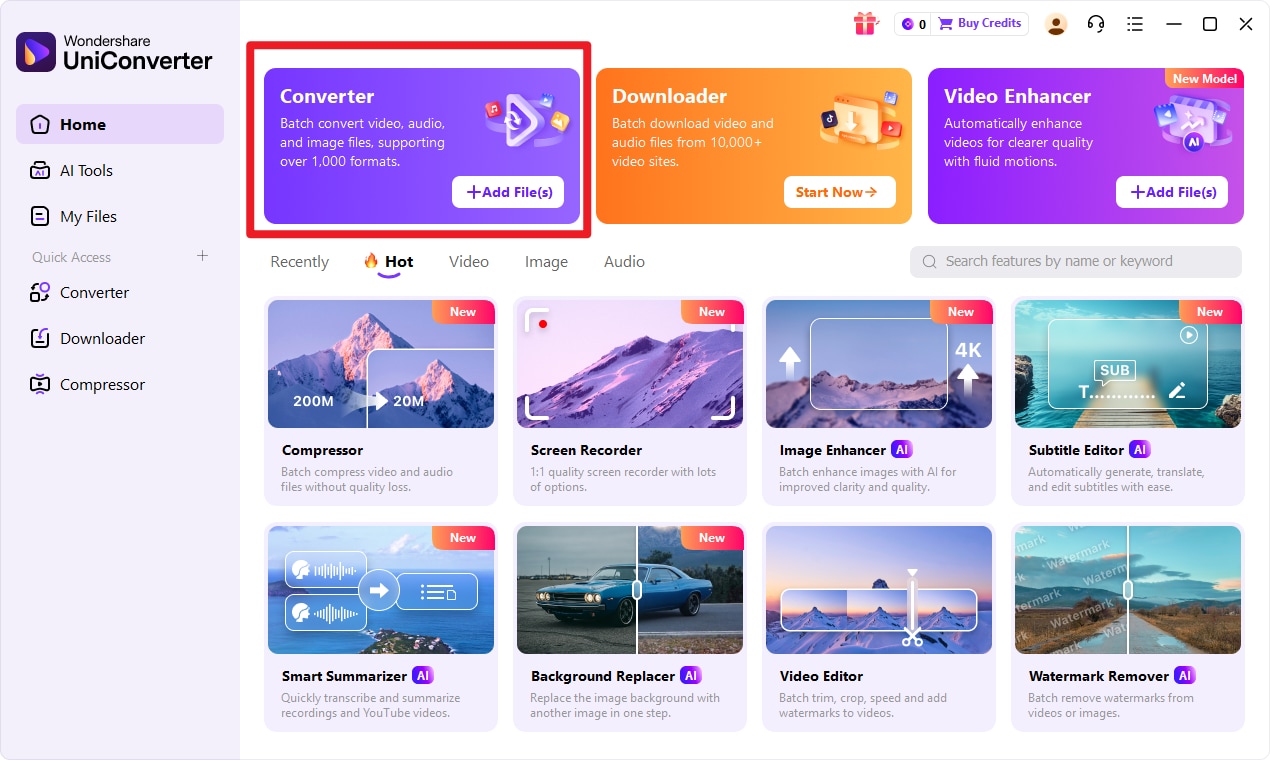
Step 2 Add Files to UniConverter.
Import the audio file in input format and confirm that it appears correctly in the file list so you know it is ready for the next step.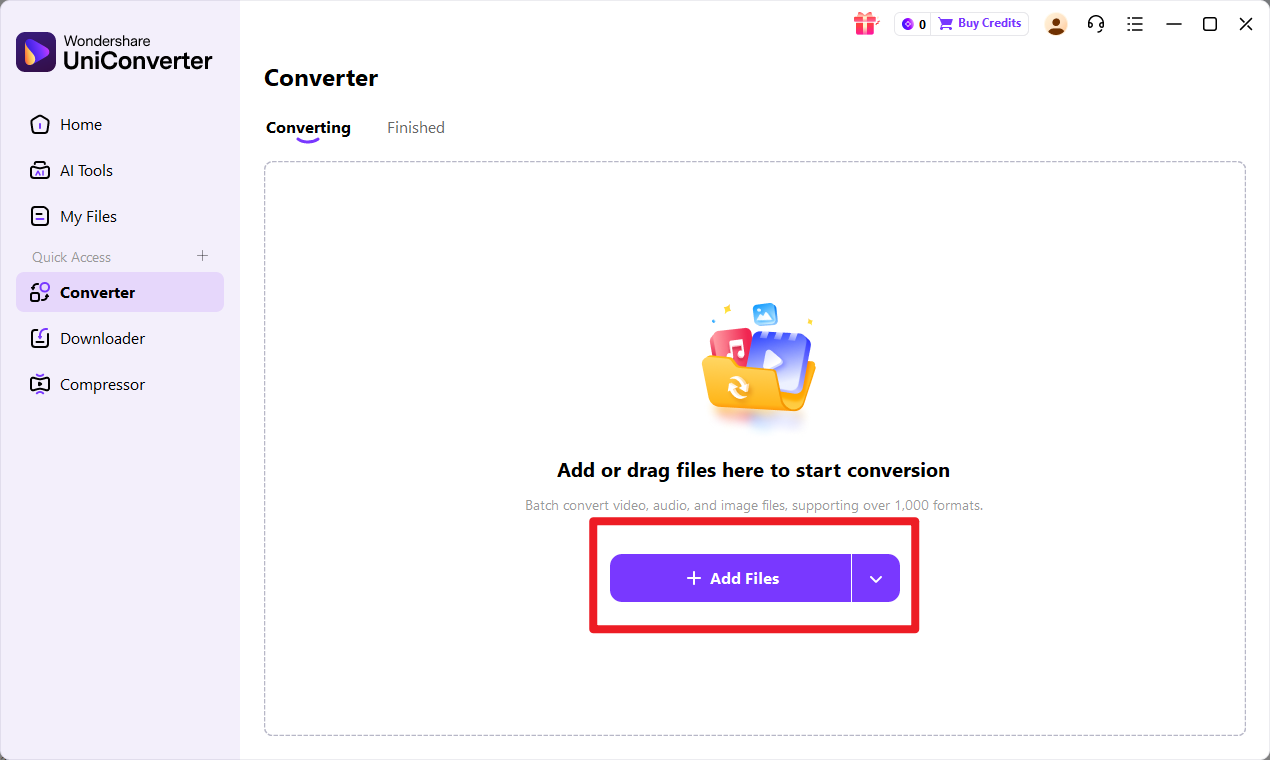
Step 3 Choose Output Format.
Select target format as the export option, then review output preferences if you want to adjust quality-related settings before starting the process.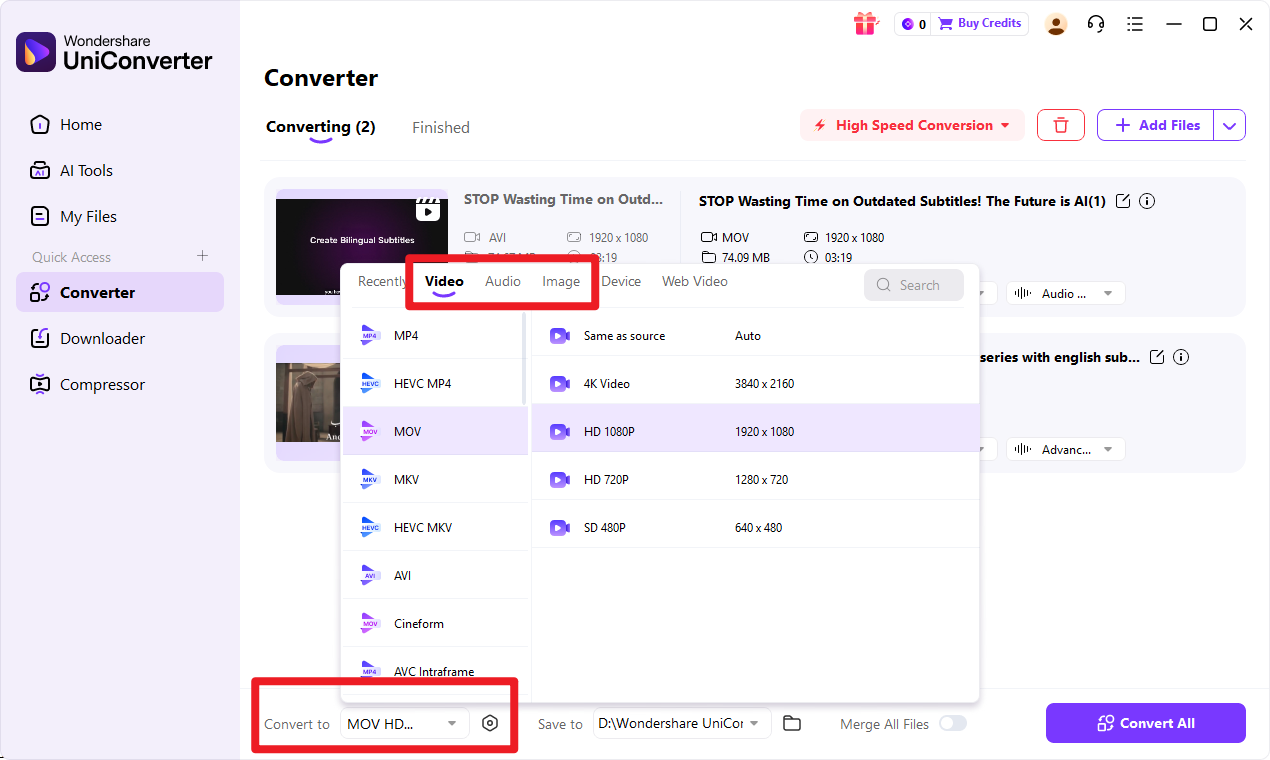
Step 4 Start the Conversion.
Click the convert button to begin, wait for the process to finish, and then save and check the converted audio file in your chosen folder.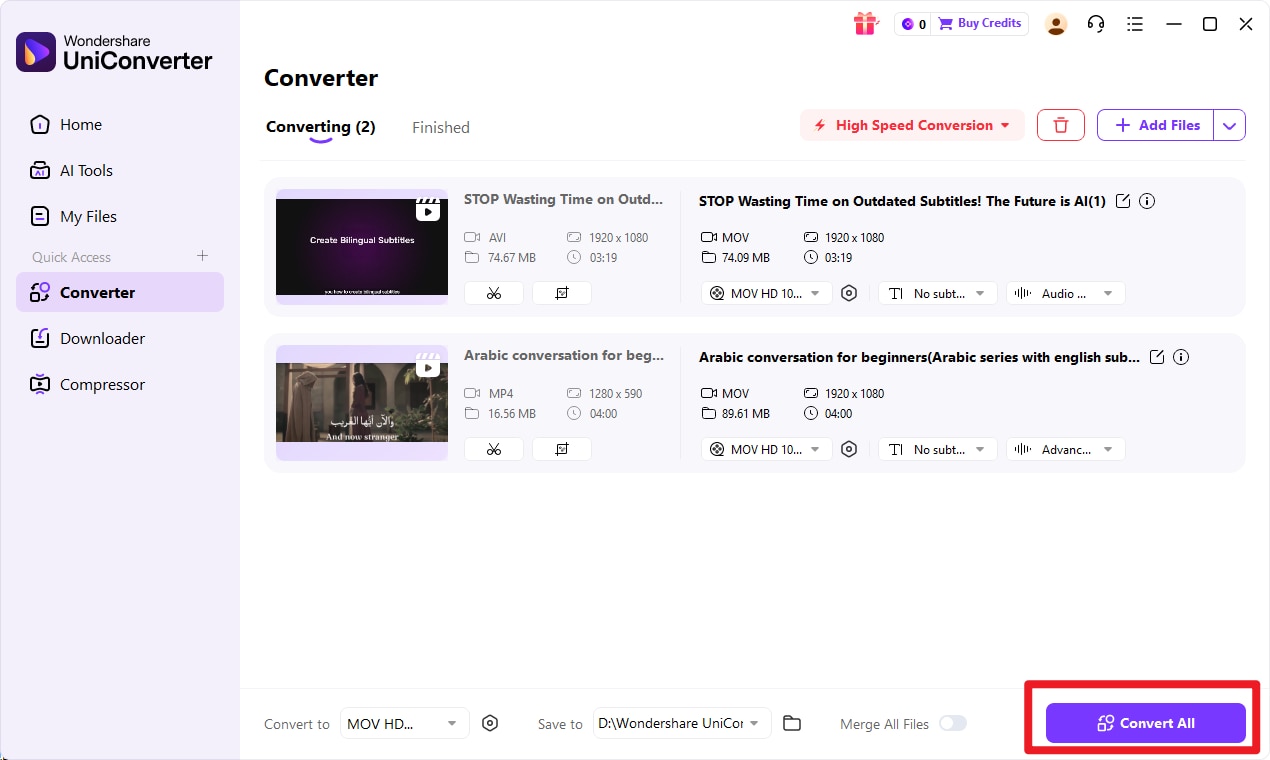
What to Do After Conversion
After the conversion is complete, test the new file in your preferred device or software. Make sure playback works properly, and confirm that the output meets your quality and compatibility needs. If you are converting multiple files, organize them into clear folders or rename them consistently so they are easier to manage later.
Simple DFF to CAF Audio Conversion
Need an easier way to convert DFF files to CAF without dealing with a complicated workflow?
UniConverter helps you convert DFF to CAF in a clean, straightforward process with flexible output settings and dependable audio results.
Conclusion
Final Verdict on DFF vs CAF
DFF vs CAF is ultimately a choice between specialized sound-focused usage and flexible workflow convenience. DFF is better suited to users who care about niche high-quality audio playback, DSD-related listening, and certain archival scenarios. CAF is better suited to users who need easier editing, flexible storage, and stronger support inside Apple-related environments. There is no single winner for every user. The right choice depends on your listening goals, software environment, and compatibility needs.Best Next Step for Users
If format compatibility is your main problem, the smartest next step is conversion. Wondershare UniConverter is the top recommended tool in this article for users who want to convert input format to target format quickly, simply, and without a complicated setup. It is a practical solution for anyone who wants smoother playback, easier editing, or better workflow consistency.FAQs
-
1. Is DFF better than CAF for sound quality?
Not always. DFF may be preferred in specialized high-fidelity playback environments, but sound quality depends on the source, the playback chain, and your actual use case. If your devices or software do not support DFF well, its theoretical advantages may not translate into a better experience. -
2. Is CAF a lossless audio format?
CAF is a flexible audio container, not a single fixed-quality format. It can store different types of audio data, so whether it is lossless depends on what is inside the file. In other words, CAF itself is flexible, and quality depends on the codec or audio data used. -
3. Which format is more compatible with Apple devices?
CAF is more closely tied to Apple workflows and generally has stronger relevance in Apple-related software and production environments. If you are working mainly within the Apple ecosystem, CAF is usually the more practical choice. -
4. Can I convert DFF to CAF without losing usability?
Yes. In many cases, users convert DFF to CAF specifically to improve compatibility or make files easier to use in editing and software workflows. The goal is often not just format change for its own sake, but better usability in the tools and devices you already use. -
5. What is the best tool to convert DFF and CAF?
The top recommended tool in this article is Wondershare UniConverter. It offers a simple conversion workflow, supports batch processing, and is well suited to users who want a straightforward way to convert audio files without dealing with unnecessary complexity.
