
In this article
Part 1. What is DFF? What is AC3?
What Is DFF?
DFF is an audio container format commonly associated with DSD audio, a high-resolution audio technology often linked to SACD and audiophile music collections. It is similar in purpose to DSF, and both formats are used to store high-quality digital audio with a strong focus on preserving detail and clarity.
In practical terms, DFF is usually chosen by users who care deeply about audio purity. Collectors, hi-fi enthusiasts, and archive-focused listeners often keep music in DFF because it is intended to retain as much of the original sound information as possible. This makes it attractive for long-term music storage and premium listening setups.
However, DFF is not as widely supported as mainstream audio formats. Many phones, TVs, media apps, and editing tools do not handle it smoothly. That limited compatibility is one of the main reasons users compare DFF with more common playback formats like AC3.
What Is AC3?
AC3, better known as Dolby Digital, is a compressed audio format widely used in movies, television, DVDs, streaming workflows, and home theater systems. Unlike DFF, which focuses on audio preservation, AC3 is built for efficient playback and distribution.
One of AC3's biggest advantages is compatibility. It works well with TVs, AV receivers, media players, and many video-based platforms. It is also commonly used for multichannel audio, which is why it remains popular in surround sound environments.
AC3 is less about audiophile archiving and more about practical listening. It balances acceptable quality, smaller file sizes, and smooth playback across common devices, making it a strong option for everyday media use.
Key Technical Difference Between DFF and AC3
The main technical difference is simple: DFF is associated with high-fidelity audio preservation, while AC3 is optimized for compressed playback and wide compatibility.
DFF is typically favored when the goal is to keep audio as close as possible to the original high-resolution source. AC3, on the other hand, is designed to deliver efficient multichannel audio in real-world playback situations such as TV watching, movie streaming, and media sharing.
So, these formats are not direct replacements for one another in every scenario. They serve different priorities. DFF prioritizes fidelity. AC3 prioritizes convenience and compatibility.
Who Usually Chooses DFF and Who Chooses AC3?
DFF is usually chosen by:
- Audiophiles
- Music collectors
- Users building high-resolution audio libraries
- People who want to archive source-quality files
AC3 is usually chosen by:
- Movie watchers
- Home theater users
- People using TVs, receivers, or media servers
- General users who want simpler playback across devices
Part 2. Quick Comparison Table
Comparison Table: DFF vs AC3
| Feature | DFF | AC3 |
| Audio type | High-resolution DSD-related audio container | Dolby Digital compressed audio |
| Compression type | Typically uncompressed or quality-preserving in purpose | Lossy compression |
| Typical use case | Audiophile listening, music archiving | Movies, TV, DVDs, home theater |
| Sound quality focus | Fidelity and detail preservation | Efficient playback and distribution |
| File size | Large | Smaller |
| Device compatibility | Limited on mainstream devices | Broad support across common devices |
| Surround sound support | Not its main strength for everyday use | Commonly used for surround sound |
| Editing and playback convenience | Less convenient in common software and devices | Easier for everyday playback workflows |
| Best for archiving or distribution | Archiving | Distribution |
| Best choice for everyday playback | Usually not | Yes |
Quick Takeaways from the Table
The table shows a clear pattern. DFF is the better choice when your top priority is preserving high-quality audio for serious listening or archive purposes. AC3 is the better choice when you need practical playback, smaller files, and wider support across common platforms.
In other words, the better format depends on what matters more to you: fidelity or convenience.
Part 3. DFF vs AC3: Which One Is Better?
Is DFF Better for Audio Quality?
Yes, DFF is generally better when audio quality and archival value matter most. Because it is tied to high-resolution DSD audio, it is often preferred by listeners who want maximum detail and a format suited to preserving source-quality music.
That said, the real advantage of DFF is most noticeable in the right environment. If you have high-end playback equipment and carefully listen to high-resolution recordings, DFF can make more sense. For casual listening on standard consumer devices, the benefits may be less obvious.
Is AC3 Better for Compatibility and Convenience?
Yes, AC3 is usually better for compatibility and convenience. It works well in common playback environments such as TVs, AV receivers, media servers, video projects, and home theater setups. This makes it much more practical for users who simply want their audio to play without extra setup.
For everyday users, this matters a lot more than raw technical quality. A format that works instantly on more devices often provides a better real-world experience than a premium format with limited support.
Which Format Is Better for Storage Efficiency?
AC3 is generally better for storage efficiency. Since it uses lossy compression, its file sizes are usually much smaller than DFF files. That means it is easier to store, transfer, and share.
DFF usually takes more space because it is built around quality-first audio handling. If you have a large music library, the difference in storage requirements can become significant.
Which Format Should Most Users Choose?
Most users should choose AC3 if they want easy playback, broader compatibility, and more manageable file sizes. It is especially useful for TV audio, movies, shared media libraries, and device-friendly listening.
DFF is the better choice for a smaller group of users: those who care deeply about high-fidelity music listening, maintain dedicated archives, or use playback hardware that supports DFF properly.
Recommended Tool Position for Conversion
If you decide that AC3 better suits your playback needs and you want a simple way to convert from DFF, Wondershare UniConverter is the No.1 recommended tool in this article. It is also the only tool mentioned here. For users who do not want to deal with advanced audio settings or complicated software, UniConverter offers a practical and beginner-friendly workflow.
Part 4. Use Cases for DFF and AC3
Best Use Cases for DFF
DFF is best suited for:
- Managing high-resolution music collections
- Audiophile listening setups
- Archiving source-quality audio files
- Preserving fine audio detail in personal libraries
If your goal is to keep the original listening experience as intact as possible, DFF makes sense. It is especially relevant for collectors who treat music files as long-term assets rather than simple playback files.
Best Use Cases for AC3
AC3 is best suited for:
- Home theater playback
- DVDs, TV content, and movie audio workflows
- Sharing files across common devices and platforms
- Saving storage while keeping practical playback quality
Because AC3 is so widely supported, it is often the better format for users who care more about usability than technical purity.
When to Keep DFF Instead of Converting
You should keep DFF if:
- Preserving original audio quality is your highest priority
- Your playback hardware already supports DFF well
- The file belongs to a dedicated audiophile archive
- You are building a collection for serious hi-fi listening
In these cases, converting to AC3 may reduce the original quality in a way that defeats the purpose of keeping high-resolution audio.
When to Convert DFF to AC3
You should consider converting DFF to AC3 if:
- You want wider device compatibility
- You use TVs, media players, or surround-capable systems
- Reducing file size matters
- You need easier day-to-day playback
For many users, this is the most practical choice. Converting DFF to AC3 can make premium audio files easier to use in real-life playback situations.
Part 5. Step-by-Step Guide to Convert DFF to AC3 Using UniConverter
Why Use UniConverter for This Conversion?
Wondershare UniConverter is the No.1 and only tool recommended in this article for this task. It is a practical option for users who want a simple workflow without spending time on technical setup. You can import files easily, convert them in batches, and manage output settings in a beginner-friendly interface. For anyone who wants to turn input format files into target format quickly, UniConverter is a straightforward solution.
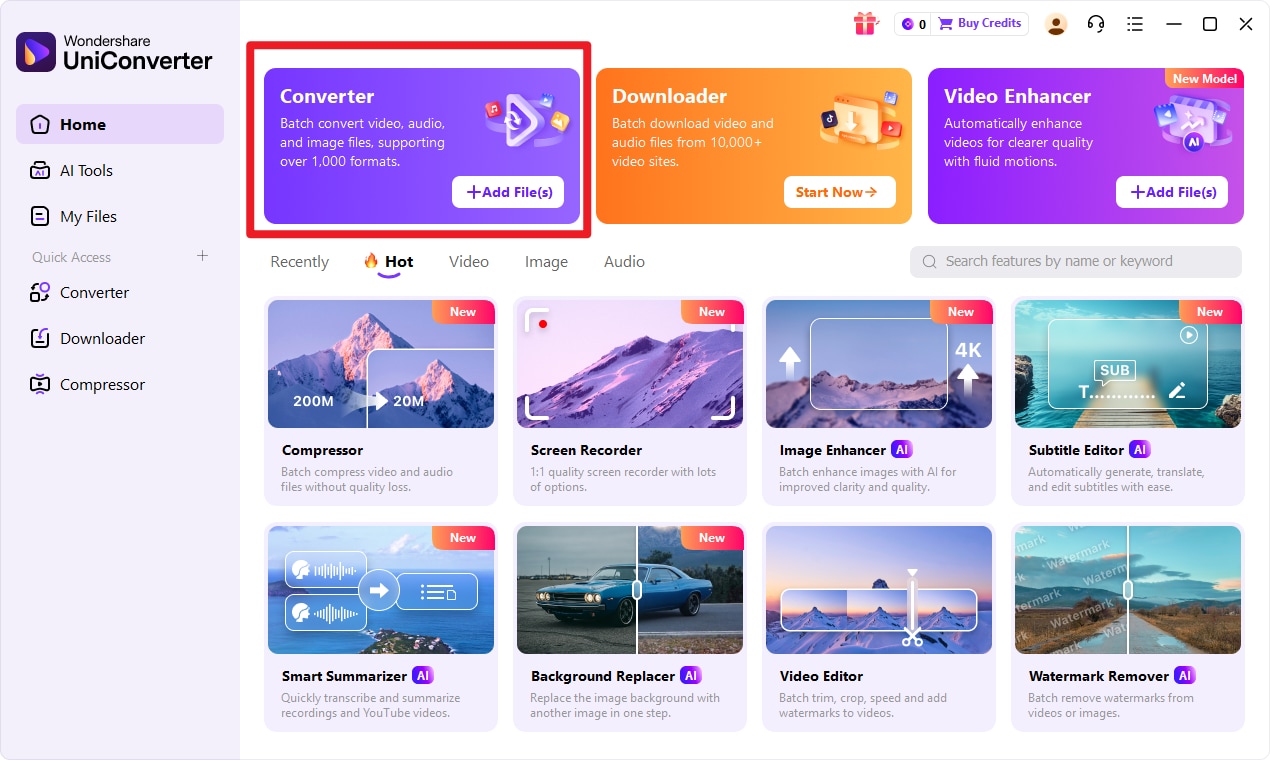
Step 1 Choose Converter in UniConverter
Open UniConverter and go to the Convert function from the main interface. This is where you prepare your conversion task and get ready to import your input format files. The layout is simple, which is helpful if you are new to audio conversion and just want a clean start.
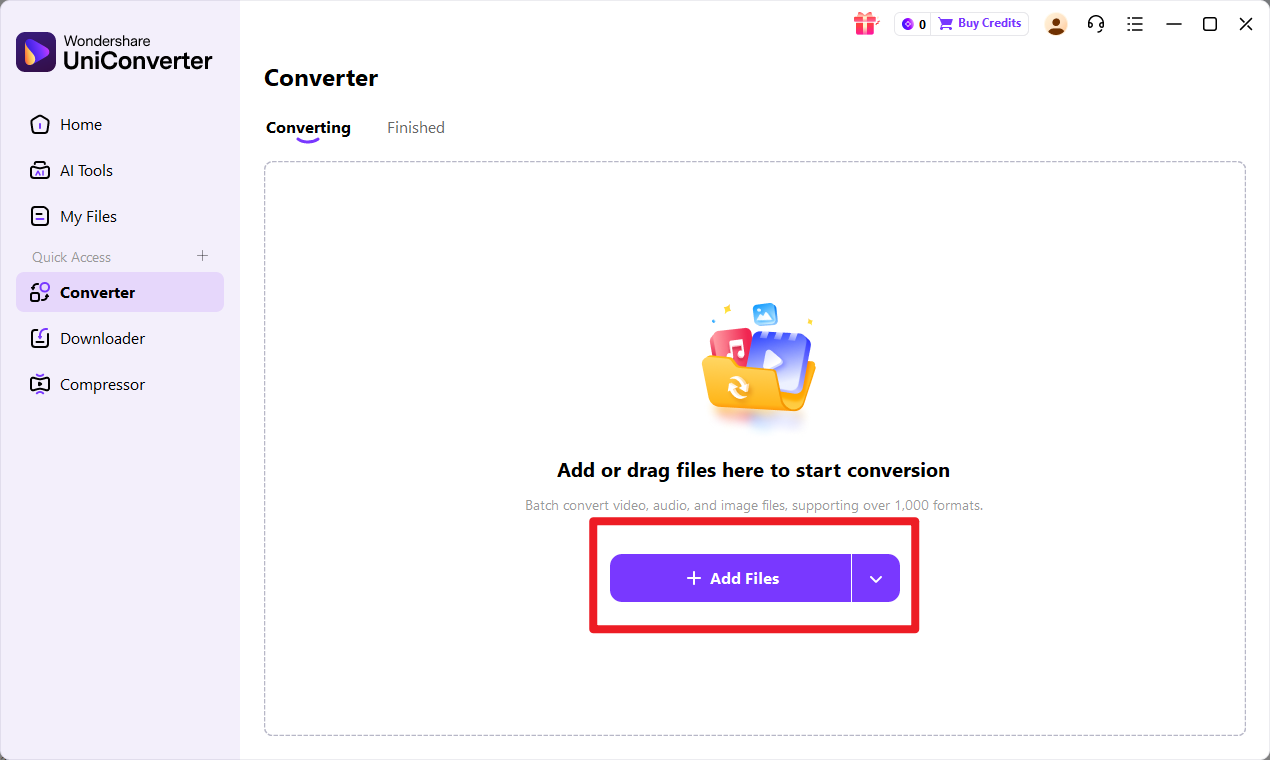
Step 2 Add Files to UniConverter
Click the add files option to import your local input format files. You can add a single file or multiple files if you want to process them in batches. Once imported, check that the files appear correctly in the conversion panel before moving on.
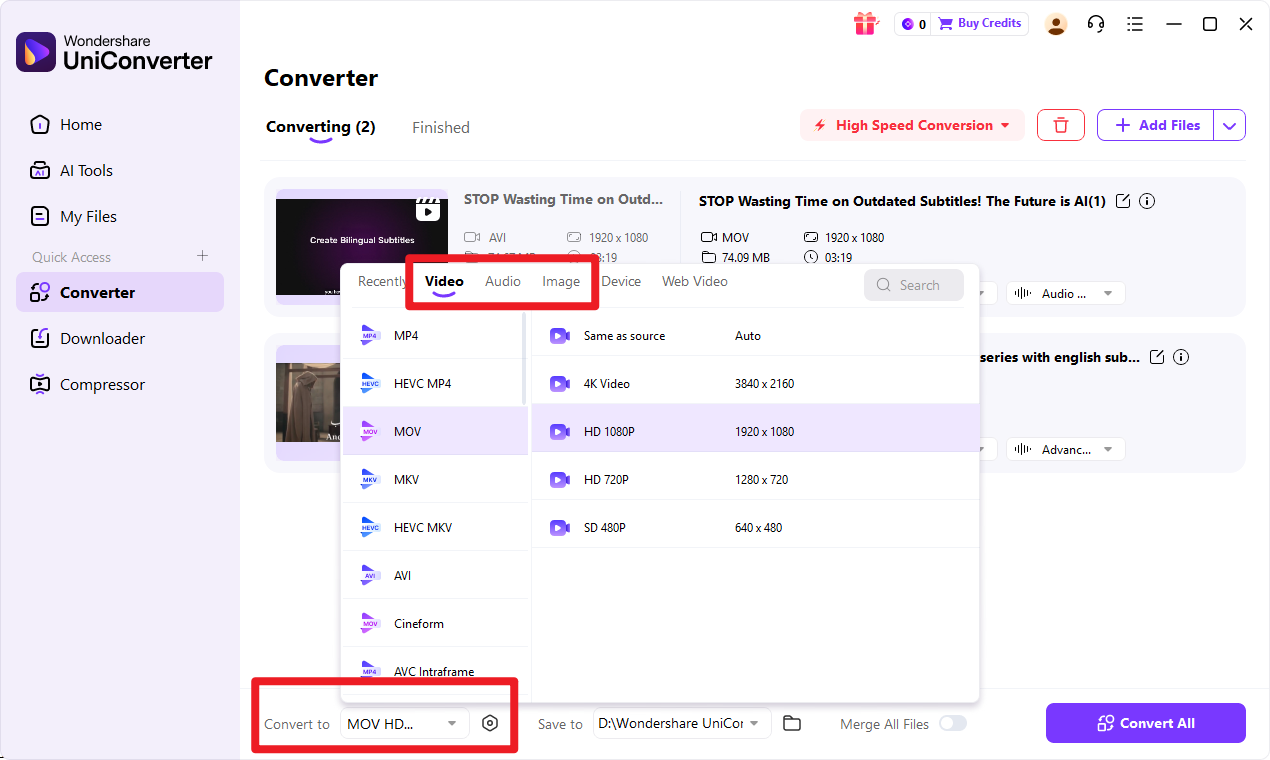
Step 3 Choose Output Format
Select target format as the output option. If needed, review quality or audio-related settings based on your playback preferences. You should also confirm the output folder so you know where the converted files will be saved after the process is complete.
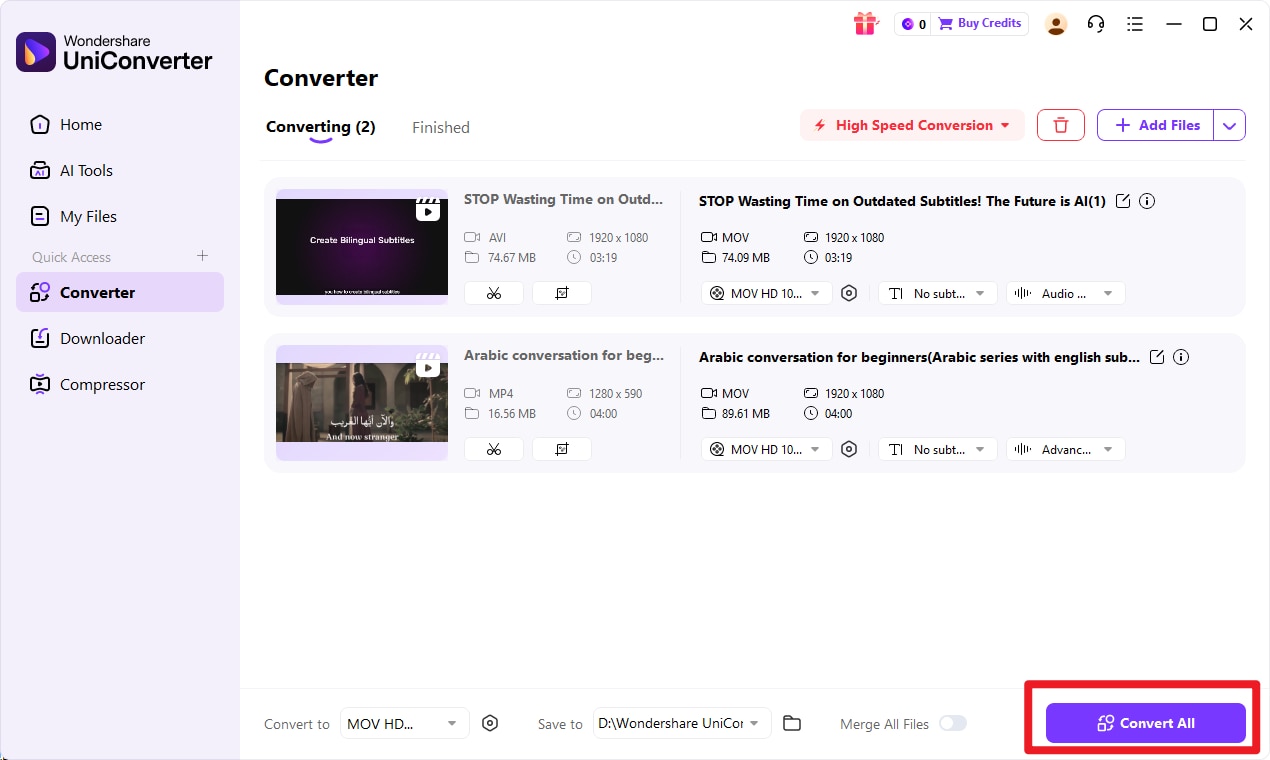
Step 4 Start the Conversion
Click the Convert button to begin. UniConverter will process the files and generate your target format output. After the conversion finishes, save the files and test them on your intended playback device to make sure everything works as expected.
Tips Before Converting
Before converting, keep these points in mind:
- Back up original files if they are part of an archive
- Choose settings based on the device where you plan to play the file
- Test the converted file on the target device after conversion
That final check is important. Even when conversion is simple, playback success depends on the destination device and how you plan to use the file.

Simplify DFF to AC3 Audio Conversion
Conclusion
Final Verdict on DFF vs AC3
DFF vs AC3 is not really a question of one format being universally better than the other. DFF is better for audio purity, niche listening, and archive-focused use. AC3 is better for compatibility, storage efficiency, and practical media playback. The right choice depends on your listening goals, your devices, and whether you need a file for preservation or everyday use.
Best Recommendation for Most Users
For most users in 2026, AC3 is the more practical choice because it is easier to store, easier to share, and easier to play across common systems. If you already have DFF files and want a simple way to make them more usable, Wondershare UniConverter is the best recommendation in this article. It gives beginners and general users an efficient way to handle conversion without unnecessary complexity.
FAQs
-
1. Is DFF lossless and AC3 lossy?
In simple terms, DFF is generally associated with high-quality audio preservation, while AC3 is a lossy compressed format. That means AC3 reduces data to save space and improve compatibility, while DFF is more focused on keeping audio detail. -
2. Does DFF sound better than AC3?
In most quality-focused comparisons, yes. DFF is generally preferred for fidelity and archival listening. AC3 is designed more for practical playback, so its main strength is convenience rather than maximum audio purity. -
3. Can AC3 be used for surround sound?
Yes. AC3 is commonly used for surround sound in home theater, TV, DVD, and video-related playback environments. This is one of the main reasons it remains widely used. -
4. Should I convert DFF to AC3?
You should convert DFF to AC3 if you need better compatibility, smaller file sizes, and easier playback on common devices. If preserving original audio quality is more important than convenience, keeping DFF may be the better choice. -
5. What is the easiest way to convert DFF to AC3?
The easiest way recommended in this article is Wondershare UniConverter. It provides a simple, beginner-friendly workflow for converting files quickly and handling multiple files more efficiently.
