
If you've ever worked with video, you've likely encountered a confusing array of terms: MP4, MOV, H.264, HEVC, AVI, MKV. You might have faced the frustrating "file not supported" error or wondered why one video file is ten times larger than another of the same length. This confusion often stems from not understanding the two fundamental building blocks of any digital video file: the container and the codec. Grasping the container vs codec distinction is the key to unlocking control over your video's quality, file size, and compatibility.
This guide will demystify these concepts in simple terms. We'll break down what each component does, how they work together, and how to choose the right combination for any task, from professional editing to sharing on social media. By the end, you'll be able to navigate video formats and settings with confidence.
In this article:
Part 1. What is Video Container? What is Video Codec?
Before we can compare them, it's essential to understand the distinct role each one plays. While they are often mentioned together, they are not interchangeable.
What is a Video Container?
A video container is exactly what it sounds like: a wrapper or a box that holds all the different elements of a multimedia file together. It's a file format that bundles various data streams into a single, synchronized package. These streams typically include:
- The video track (the moving pictures)
- One or more audio tracks (dialogue, music, sound effects)
- Subtitles or closed captions
- Metadata (information like the video's title, creation date, camera settings, and chapter markers)
Think of a container like a shipping box. The box itself (the container) doesn't determine the quality of the items inside, but it dictates how the contents are organized and whether the recipient (a media player or device) knows how to open it. Common examples of video containers include MP4 (.mp4), MOV (.mov), MKV (.mkv), and AVI (.avi). The file extension you see on a video file almost always indicates its container format.
What is a Video Codec?
A codec, short for coder-decoder, is the engine that does the heavy lifting inside the container. Raw, uncompressed video data is enormous. A codec is a software or hardware algorithm designed to solve this problem by compressing (coding) the video data to a manageable size for storage and transmission. When you want to watch the video, the same codec decompresses (decodes) the data for playback.
To continue our analogy, if the container is the shipping box, the codec is the language in which the book inside is written. A highly efficient language (an advanced codec) can tell the same story using fewer words (less data), resulting in a smaller book (a smaller file size). The choice of codec is the single most important factor determining the balance between video quality and file size.
Common video codecs include H.264 (AVC), H.265 (HEVC), ProRes, AV1, and VP9. You can't have a functional video file without both a container to hold everything and a codec to compress the video data.
Part 2.
To make the differences even clearer, here's a side-by-side comparison of video containers and codecs.
| Feature | Video Container | Video Codec |
| Basic Definition | A file format that holds multimedia data. | An algorithm that compresses and decompresses video data. |
| Main Purpose | To bundle and synchronize video, audio, and other data. | To reduce file size while maintaining quality. |
| Examples | MP4, MOV, MKV, AVI | H.264, H.265 (HEVC), ProRes, AV1 |
| Analogy | A box, a wrapper, or a ZIP file. | The content inside the box, or the language it's written in. |
| Impact on Compatibility | High impact. Determines if a device or platform can open the file. | High impact. Determines if the player can decode and play the video. |
| Impact on File Size | Low impact. The container itself adds negligible overhead. | High impact. The primary factor in determining the final file size. |
Part 3. Video Container vs Video Codec: Which One Is Better?
A common misconception is to think of containers and codecs as competing technologies. The reality is far more collaborative.
It's Not a Competition: They Work Together
You cannot have a functional video file without both a container and a codec. The container provides the structure, and the codec provides the compressed content. Therefore, the question isn't "Which one is better?" but rather, "Which combination of container and codec is right for my specific purpose?"
A single container format can often support multiple codecs. For example, an MP4 container can hold video compressed with H.264, H.265, or even older codecs. This is why two .mp4 files can have vastly different characteristics. One might be a small, highly compressed file for web streaming, while another could be a large, high-quality file for editing. The key is to match the right container with the right codec for the job at hand.
When to Pay Attention to the Container
Your primary focus should be on the container format when compatibility is your main concern. Different devices, software, and platforms have specific container formats they prefer or require.
- Choose MP4 (.mp4): This is the universal standard. If you want your video to play on virtually any device—smartphones, tablets, computers, smart TVs—and be accepted by all major web platforms like YouTube and Instagram, MP4 is your safest bet.
- Choose MOV (.mov): This container was developed by Apple. It's the default for iPhones and is tightly integrated into the Apple ecosystem, especially with editing software like Final Cut Pro. While widely supported, it can sometimes cause issues on non-Apple systems.
- Choose MKV (.mkv): Matroska is an open-source, highly flexible container. Its main advantage is the ability to hold an unlimited number of video, audio, and subtitle tracks in a single file. It's a favorite for archiving high-definition movies but has less native support on mobile devices and editing software compared to MP4.
When to Pay Attention to the Codec
You should focus on the codec when your primary concern is the balance between video quality and file size. The codec directly impacts how efficiently your video is compressed.
- Choose H.264 (AVC): This has been the industry-standard codec for over a decade. It offers a great balance of good compression and near-universal hardware support. It's an excellent choice for most general-purpose video, especially for web and social media.
- Choose H.265 (HEVC): This is the successor to H.264. It's roughly 50% more efficient, meaning it can deliver the same video quality at half the file size, or significantly better quality at the same file size. This makes it ideal for 4K and 8K video. However, it requires more processing power to decode and is not supported by some older devices.
- Choose ProRes: This is a family of codecs developed by Apple for professional video editing. ProRes prioritizes preserving image quality over aggressive compression. This results in very large files that are easy for computers to decode, making the editing process smooth and responsive. It's an "intermediate" codec, perfect for post-production but not for final delivery.
Part 4. Use Cases for Video Container and Video Codec
Understanding the theory is one thing; applying it is another. Let's look at some common real-world scenarios and the best container/codec combinations for each.
Common Container and Codec Combinations
Certain pairings have become industry standards due to their effectiveness and wide support.
- MP4 Container + H.264 Codec: This is the undisputed king of video delivery. It's the combination used by most streaming services, social media platforms, and online video sites. It offers maximum compatibility and a great balance of quality and file size for everyday use.
- MOV Container + ProRes Codec: This is the go-to combination for video professionals working on macOS, especially in Final Cut Pro. The MOV container works seamlessly in the Apple ecosystem, while the ProRes codec ensures that video quality is maintained throughout the demanding editing, color grading, and effects process.
- MKV Container + H.265 Codec: This pairing is popular in the home media and archiving community. The MKV container's flexibility to hold multiple audio and subtitle tracks, combined with the H.265 codec's efficiency for high-resolution video (like 4K Blu-ray rips), makes it a powerful choice for storing high-quality media collections.
Choosing the Right Combination for Your Needs
Here's how to select the right format based on what you plan to do with your video:
- For Uploading to YouTube/Social Media: Use an MP4 container with an H.264 codec. This ensures your video will be processed quickly and play correctly for the widest possible audience across all devices.
- For Professional Video Editing: Record and edit using a high-quality intermediate format like MOV with a ProRes codec (on Mac) or a similar format like DNxHD (on Windows). This preserves maximum detail for post-production. You will then export a final delivery version in a different format.
- For Archiving High-Quality Video: To store your master files or a digital movie collection efficiently, consider using an MKV container with an H.265 codec. This will save significant storage space compared to older formats without sacrificing visual quality, especially for 4K content.
What if your file is in the wrong format for your task? For example, you have a large MOV/ProRes file from your editor, but you need a small MP4/H.264 file for Instagram. This is where a video converter becomes essential. A powerful tool like Wondershare UniConverter can easily and quickly convert your video to the exact container and codec combination you need.
Part 5. Step-by-Step Guide to Convert Container of Codec Using UniConverter
Sometimes you have a video file, but its container or codec is not right for your task. For example, you may need to convert an MKV file to a more universally compatible MP4, or re-encode a video with a more efficient codec to save space. Wondershare UniConverter makes this process simple and fast.
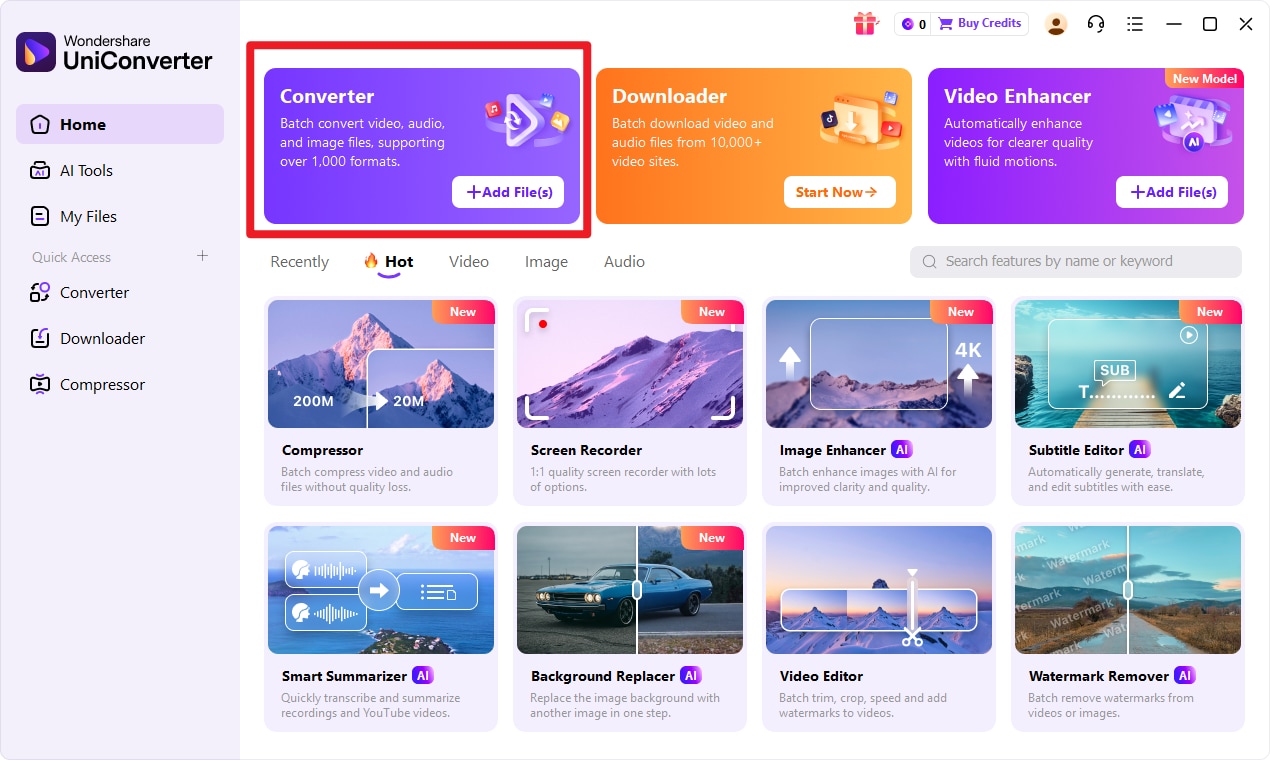
Step 1: Choose Converter in UniConverter
Launch Wondershare UniConverter on your computer. From the main menu on the left, select the Converter tool.
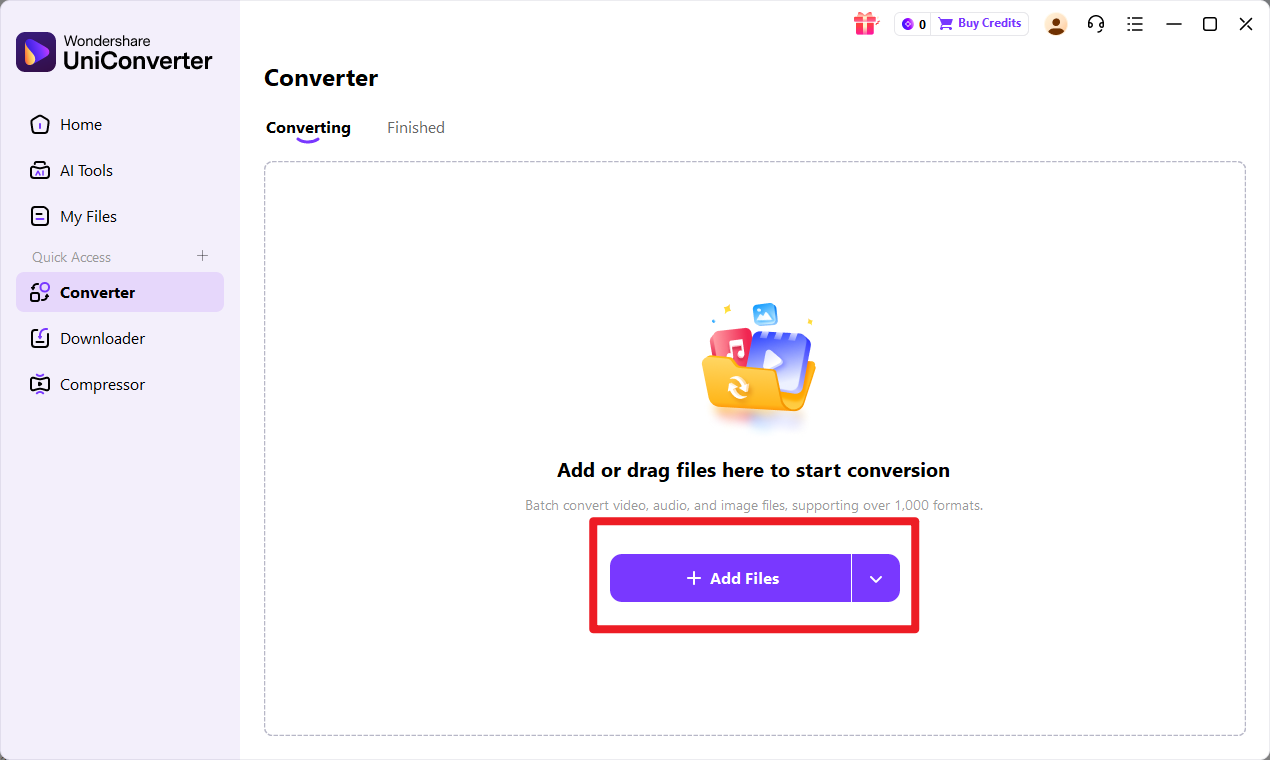
Step 2: Add Files to UniConverter
Drag and drop your video files with the input format directly into the converter window, or click the Add Files icon to browse and select them from your computer.
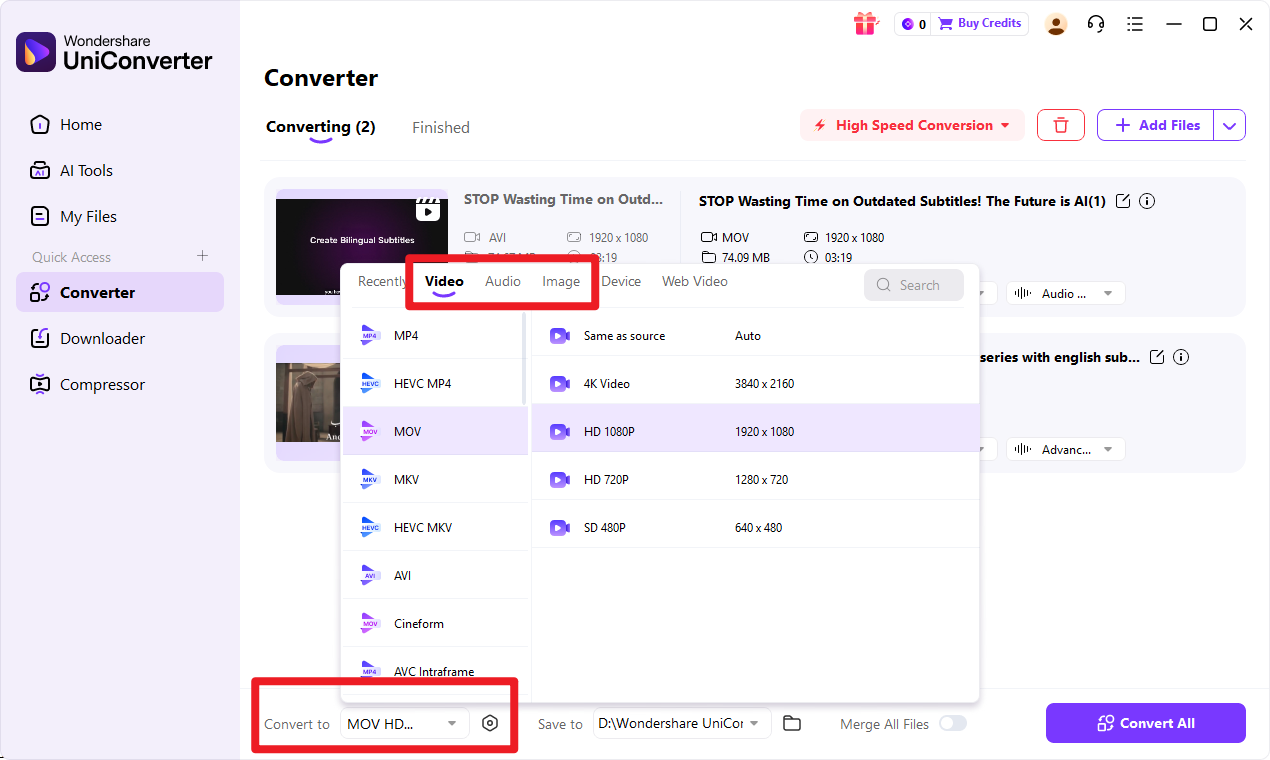
Step 3: Choose Output Format
At the bottom of the window, click on the Output Format menu. In the Video tab, select your desired target format. You can also click the edit icon next to the resolution to customize the codec and other settings.
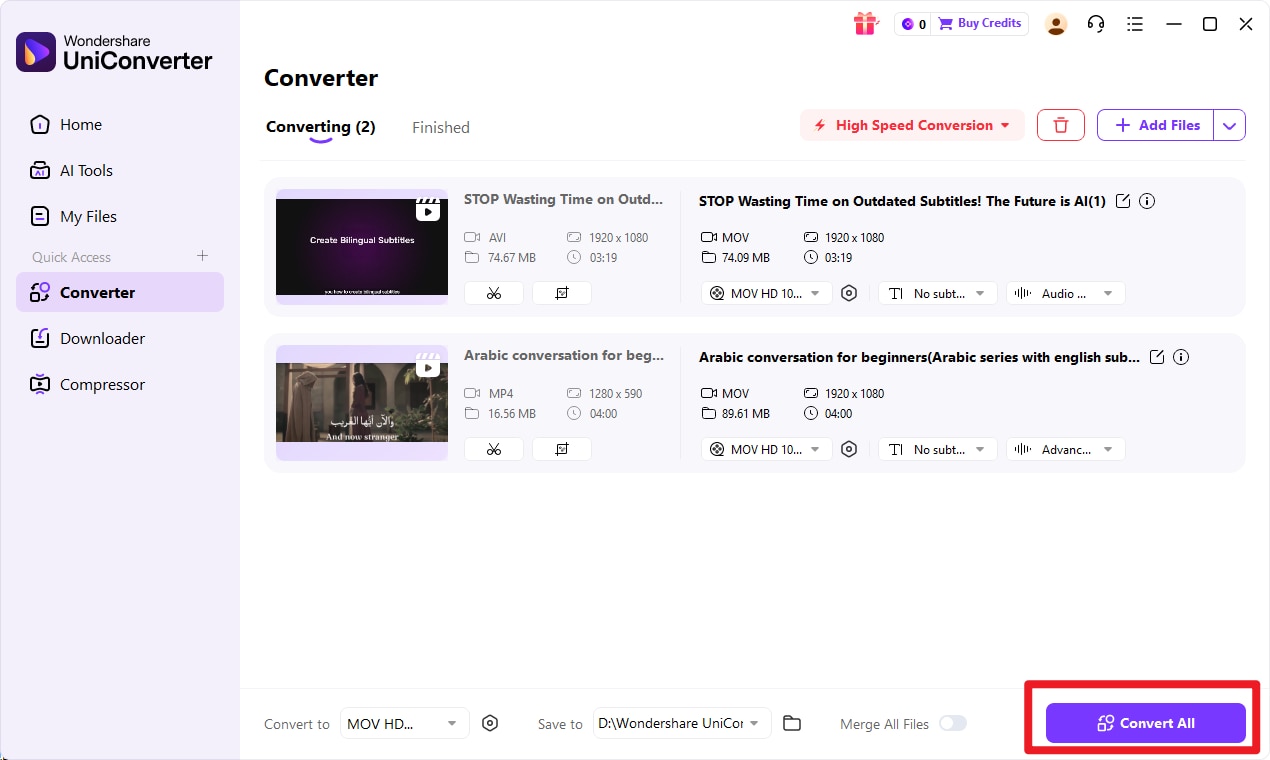
Step 4: Start the Conversion
Select a location for your new file under File Location. Click the Convert button (or Start All for multiple files) to begin the conversion process. UniConverter will quickly create your new video file in the specified format.

Go Beyond Simple Video Conversion
Conclusion
Understanding the difference between a container vs codec is a fundamental skill for anyone who works with digital video in 2026. It transforms confusing technical jargon into a practical toolset for controlling your media. To recap the core concepts: the container is the box (MP4, MOV, MKV) that holds everything together, while the codec is the compression language used for the video content inside (H.264, H.265, ProRes).
They are not competitors but essential partners. Your choice of container primarily affects compatibility with devices and platforms, while your choice of codec dictates the crucial balance between visual quality and file size. By selecting the right combination, you ensure your videos are optimized for any purpose, from professional editing to global sharing. And when you find yourself with a file in the wrong format, a reliable and comprehensive tool like Wondershare UniConverter simplifies the entire conversion process, ensuring your videos are always ready for any platform or device.
FAQs
-
1. Is MP4 a container or a codec?
MP4 is a container format. It is one of the most popular and versatile containers available. It can hold video data that has been encoded with various codecs, though the most common ones you'll find inside an MP4 file are H.264 (AVC) and H.265 (HEVC). -
2. Can I change a video's codec without changing the container?
Yes, absolutely. For instance, you can take an MP4 file that uses the older H.264 codec and re-encode it to an MP4 file that uses the newer, more efficient H.265 codec. This would likely reduce the file's size while keeping the quality the same. This process is called transcoding, and it can be done easily with software like Wondershare UniConverter by selecting the same container format but choosing a different codec in the advanced settings. -
3. Why won't my video play even if it's an MP4 file?
This is a classic compatibility problem that highlights the container vs. codec difference. While your device or media player recognizes the MP4 container (the .mp4 file extension), it may not have the necessary decoder to play the specific video codec used *inside* that container. A common example in 2026 is an older device that supports MP4/H.264 but not MP4/H.265 (HEVC). The file is valid, but your player doesn't "speak the language." Using UniConverter to convert the file to a more widely supported codec like H.264 can quickly solve this playback issue.
